PLASTIC SURGERY
Signature Surgery / Eyes · Sunken Upper Eyelids
Structural Eyelid
Double Eyelid Surgery
We approach double eyelids through structure, beyond the crease. If the upper eyelids are sunken, we address the cause within the same treatment plan.
This may vary depending on your condition and the extent of surgery.
We look beyond the double eyelid crease.
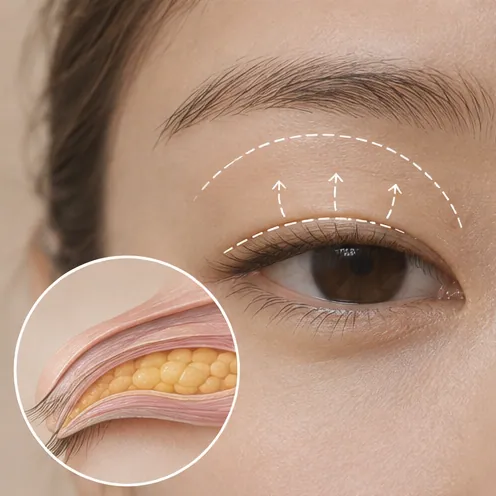
Key Questions Answered
Double eyelids · Sunken upper eyelids, what do we check first?
We assess not only upper eyelid volume but also eyelid-opening strength, excess skin, orbital fat position, and brow position. Along with appearance, we evaluate tissue condition, function, and factors affecting recovery.
— Excess Skin
— Eyelid-opening strength
— Orbital fat position
— Eyebrow Position
YOUR CONCERN
Do any of these concerns
sound familiar?
“My upper eyelids look sunken and make me look tired.”
“I have multiple eyelid creases.”
“My eyes also look sleepy.”
We consider how the eyes open and close, along with the crease.
We check how your eyes open and close, compensatory eyebrow movement, and skin condition. During consultation, we distinguish changes in appearance from functional discomfort.
VITAL SIGNATURE 01 · EYE
We approach double eyelids through structure, beyond the crease.
Creating a new crease involves assessing eyelid skin, fat, and eyelid-opening strength together.
01
Crease and Excess Skin
Skin thickness and the amount of excess skin guide the crease height and fixation method.
02
Cause of hollowing
We distinguish between insufficient fat, a change in fat position, and weak eyelid-opening strength.
03
Additional Correction Needed
When needed, we plan fat repositioning · fat grafting · ptosis repair together.
DOCTOR’S NOTE
Sunken upper eyelids do not mean we simply add volume.
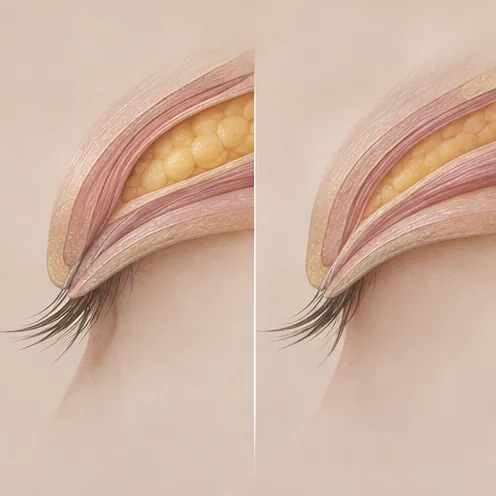
For the upper eyelids, we check hollowing, excess skin, brow position, eyelid-opening function, vision, eyelid closure, and dry eye symptoms. When eyelid-opening strength is weak, the eyelid rolls upward and inward, making the hollowing look much more pronounced than it actually is. We therefore evaluate function first, return the eyelid to its proper position, and then reassess volume. These criteria were developed through a review of 384 cases of sunken upper eyelids over the past 10 years.
— Dr. Hyungwoo Yim
MYTH → FACT
“Can sunken upper eyelids be treated simply by filling them with fat or filler?”
Many cases of upper eyelid hollowing involve a structural problem caused by weak eyelid-opening strength. Adding volume without correcting function can make the eyelids heavier, worsen a sleepy appearance, or create uneven contours.
IN HIS WORDS
The Story of Cave Salamanders
“They say salamanders in caves without light eventually lose their vision because they have no use for their eyes. When a drooping eyelid covers the eye like a roof, it is like leaving a window blind halfway down.”
THE DETAIL
Dynamic and Static Creases
The aim is to create a dynamic crease that folds with muscle movement only when the eyes open and unfolds when they close, rather than a static crease that stays pinched even with the eyes closed. Following the natural anatomical movement makes a difference 5 or 10 years later.
RELATED RESEARCH
ASLS Korea 2021 · Sunken Upper Eyelids treatment in Asian patients
Semin Plast Surg 2015 · The Evolution of Looks and Expectations of Asian Eyelid and Eye Appearance
Double Eyelids,
What does the surgery involve?
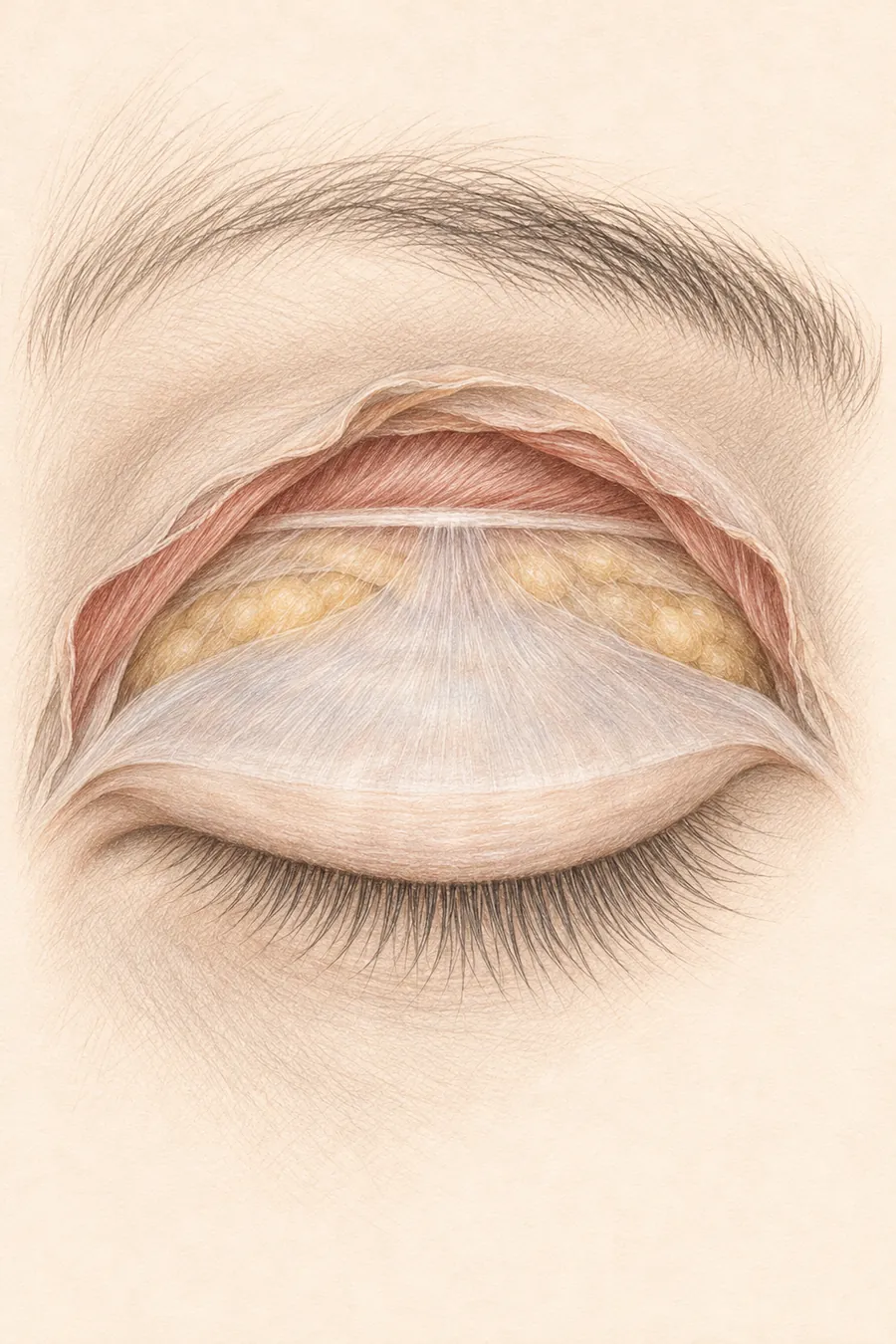
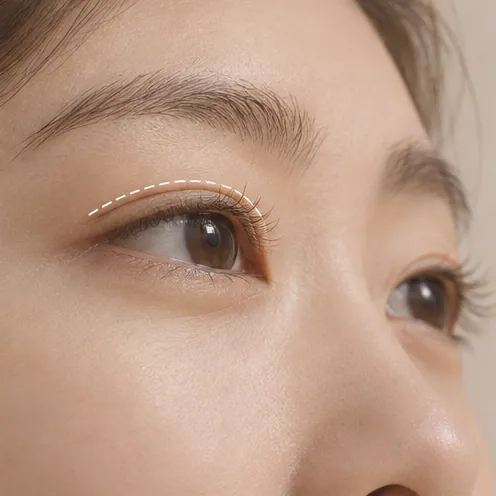
Double eyelid surgery creates a crease where the upper eyelid folds when the eye opens. Although it may seem to involve only choosing the height and shape of a crease, the appropriate method actually depends on skin thickness, the amount of excess skin, fat thickness, eyelid-opening strength, and brow position. These conditions determine whether a suture, partial-incision, or incisional technique is used. A double eyelid crease also helps lift the eyelashes away from the eye and open the field of vision, so we consider both appearance and function.
- A dynamic crease
- A crease that folds only when the eye opens and unfolds when it closes. This is how a natural double eyelid crease moves.
- Static Crease
- An indentation that remains even when the eye is closed. It can look like a pinched mark when the skin is tightly anchored to deeper tissue.
- In-Out Crease · Out Crease
- An in-out crease begins inside the epicanthal fold at the inner corner of the eye; an out crease begins outside it.
- Suture Technique
- A technique that secures the crease by passing sutures through small openings without making a long skin incision.
For Double Eyelids,
in Lower Blepharoplasty
We Plan How the Crease Looks With the Eyes Closed
Even if a crease looks attractive with the eyes open, a pinched mark that remains when they close can make the eyelids look operated on. A natural double eyelid crease folds with the action of the eyelid-opening muscle and unfolds when the eye closes. We therefore choose the fixation position and depth to allow the crease to fold with muscle movement, without tightly anchoring the skin to deeper tissue. This difference becomes more apparent several years later than immediately after surgery.
A Double Eyelid Crease Also Helps Open the Field of Vision
When upper eyelid skin hangs over the eye, the eyelashes can rub against the eye and obstruct vision. This can lead to unconscious use of the forehead muscles and sometimes eye and neck fatigue. Because a double eyelid crease helps lift the skin and eyelashes, we also assess how much of the eye is visible when planning its shape. If a vision problem is suspected, we recommend a separate ophthalmologic evaluation.
Skin and Tissue Determine Whether to Use Sutures or Incisions
The suture technique involves less scarring but is suited to eyelids with thin skin, minimal sagging, and adequate eyelid-opening strength. If the skin is thick or there is substantial excess skin and fat, sutures alone may have difficulty holding the crease, so we consider a partial-incision or incisional technique. Choosing based only on incision length can result in a crease that loosens or eyelid thickness that remains unchanged. We assess the eyelid condition first to select the method.
We Remove Skin Within the Limits of Full Eyelid Closure
Many patients worry that double eyelid surgery will completely change the shape of their eyes. The goal is to preserve their original appearance while reducing the heaviness and shadowing caused by sagging. Removing too much skin can cause lagophthalmos, or incomplete eyelid closure, and dry eyes. We therefore measure the eyelids both closed and open and remove only the amount needed.
If One Crease Looks Larger, We Measure Eyelid-Opening Strength
When patients come in because one double eyelid crease looks larger, the cause is often that the eye on that side opens less and the brow lifts to compensate, rather than a problem with the crease itself. The appearance that concerns them is a result rather than the cause. Correcting only the crease may allow the difference to reappear, so we first measure how much of the eye is visible. Even so, we do not lead with ptosis repair alone; we first listen to what concerns the patient most and explain the cause.
We Match the Crease Shape to the Face
Out creases were more common in the past, while requests for in-out creases have increased substantially. Patients in Korea tended to prefer in-out creases, while those in China and Western countries tended to prefer out creases. These days, some international patients also request the Korean style. However, trends and celebrity photos do not set the standard. We determine the crease height and starting point according to the proportions of each face.
The Surgical Process Varies
Depending on Your Condition
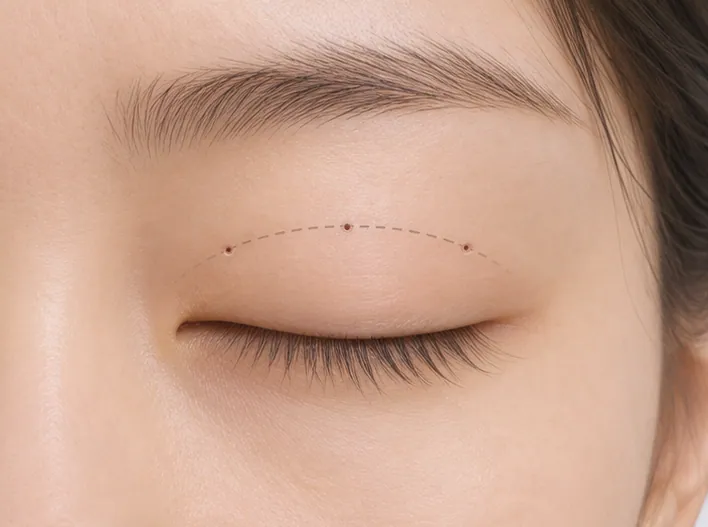
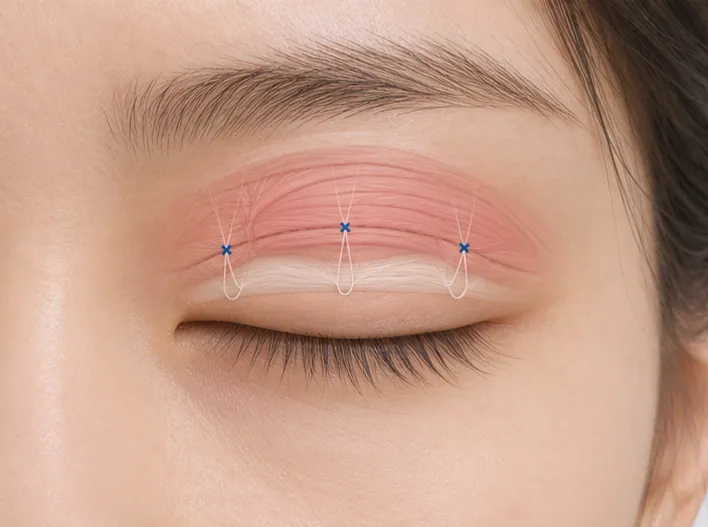
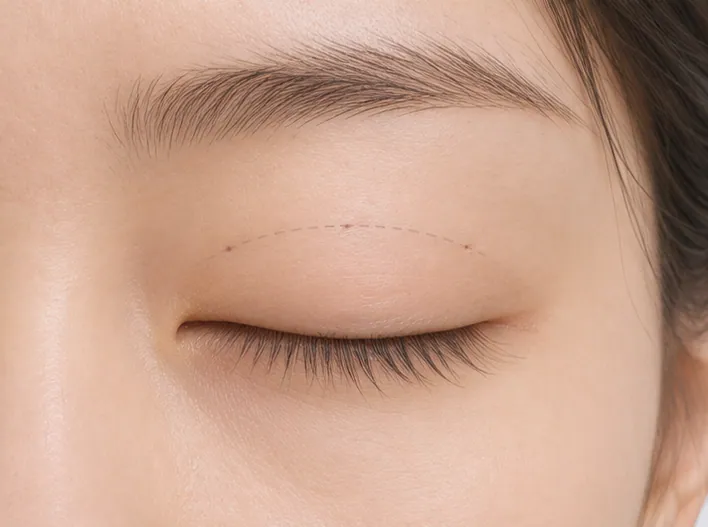
Eyelids With Thin Skin and Little Excess Skin
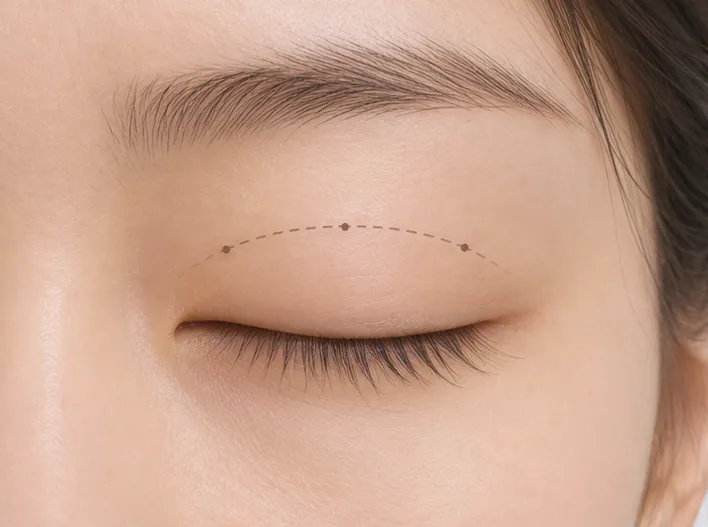 1
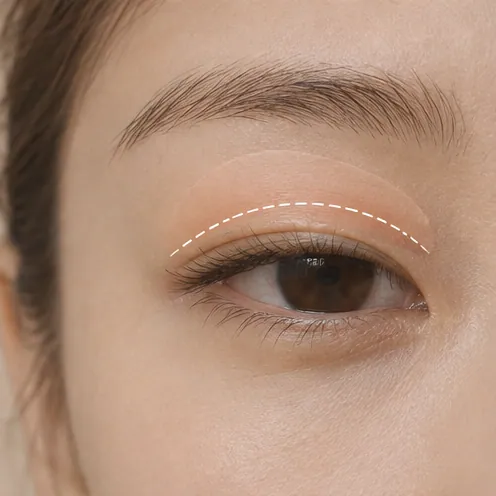
We observe the eyes open and closed and mark the crease height with a dotted line.
 2
We make several small openings along the crease to create a path for the sutures.
 3
We pass sutures through the inside of the eyelid to connect and secure the skin to deeper tissue.
 4
We bury the knots beneath the skin and check the height and symmetry after swelling subsides.
Eyelids With Some Excess Skin or Fat
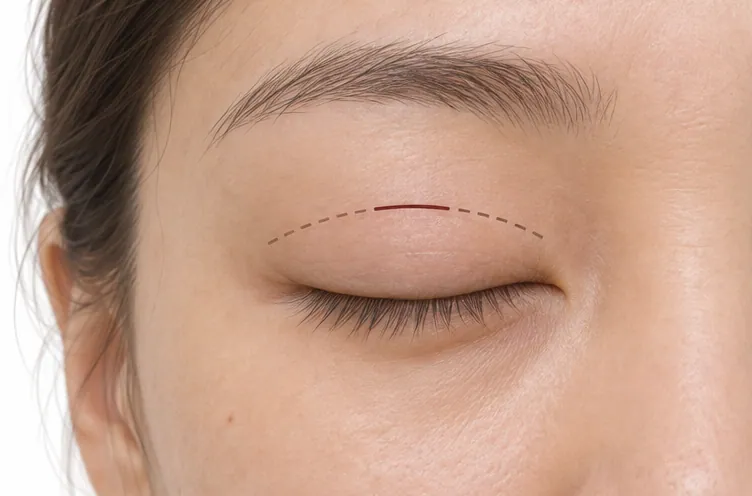 1
We design the crease and mark a short incision segment in the center.
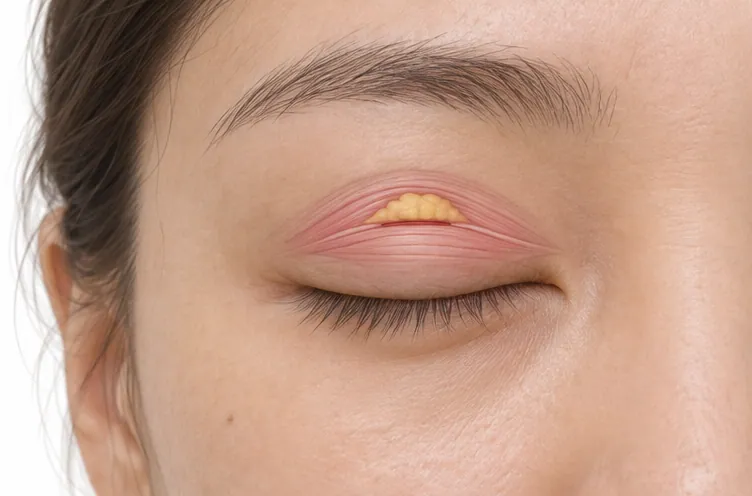 2
We incise only the marked segment to examine the underlying muscle and fat.
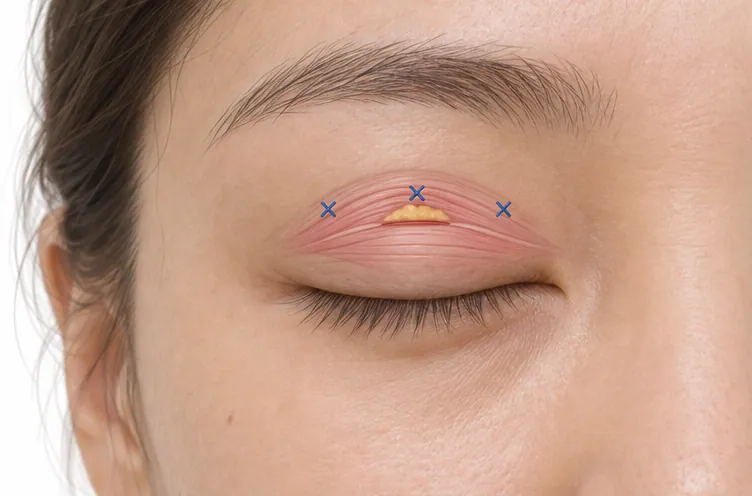 3
We trim a small amount of excess tissue and secure the crease to deeper tissue at the planned height.
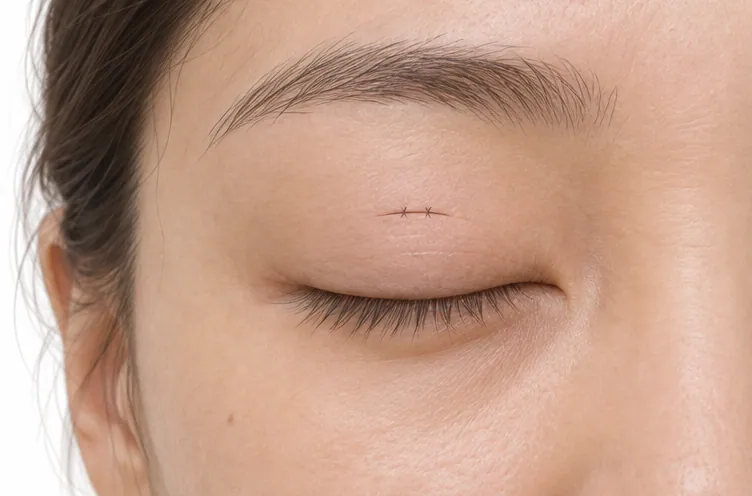 4
We close with fine sutures and remove them on days 5–7.
Eyelids With Substantial Sagging Skin or Both Hollowing and Eyelid-Opening Weakness
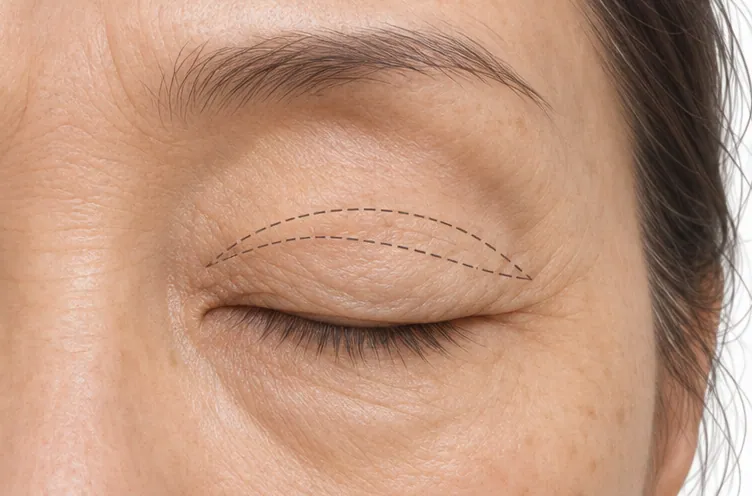 1
We assess excess skin, eyelid-opening strength, and hollowing, then mark the width of skin to remove.
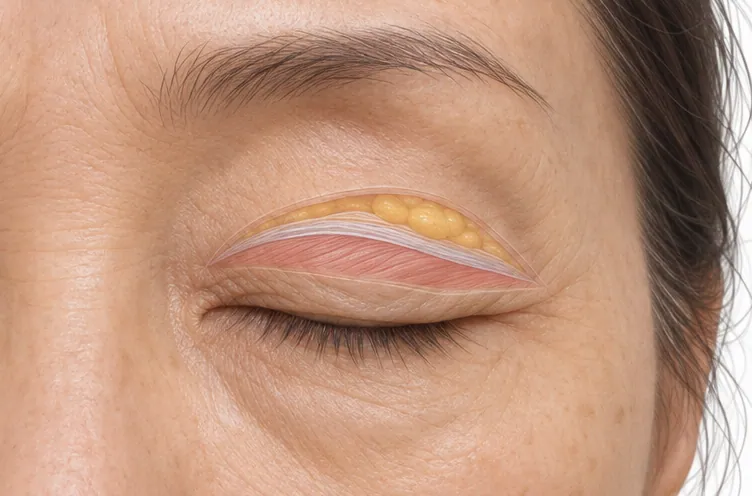 2
We incise along the markings and remove excess skin and orbicularis oculi muscle as needed.
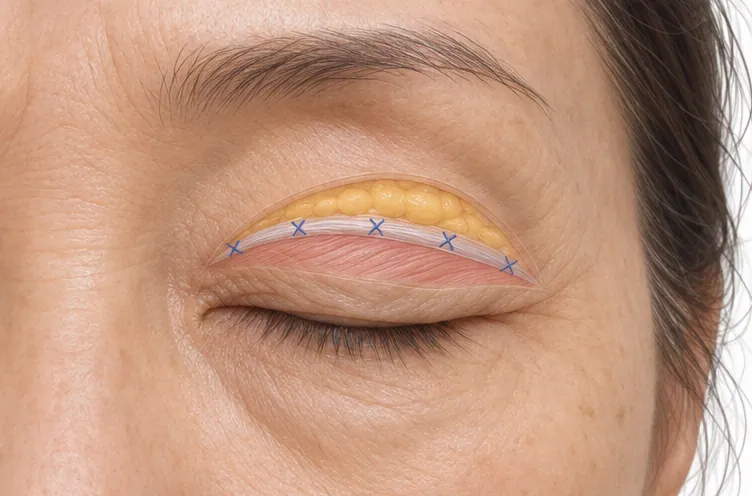 3
If needed, we add ptosis repair or eyelid fat repositioning.
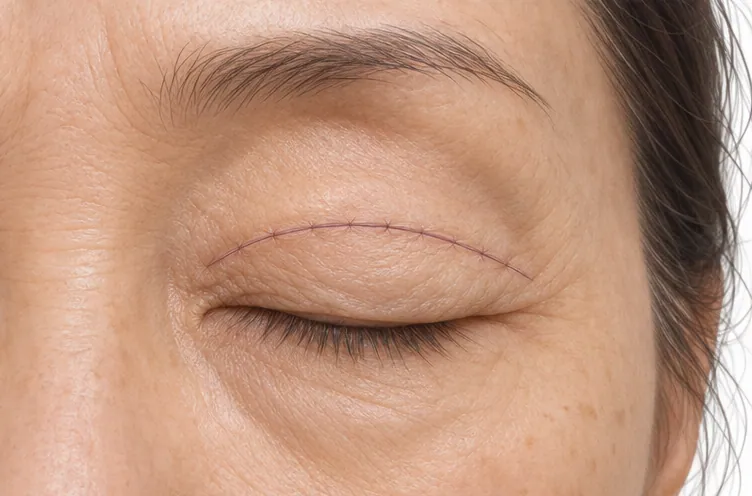 4
We secure the crease to deeper tissue so it folds when the eye opens, then close the incision.
Illustration for explanation · Not an actual patient. This is a simplified description of typical steps. The actual technique and extent of surgery are determined after examination.
EYE CATEGORY
We Consider Four Categories of Eyelid Surgery Based on Your Condition.
01
Basic Eyelid Surgery
Double Eyelid Surgery · Upper Blepharoplasty · Men's Eyelid Surgery
02
Combined Correction
Addressing sunken upper eyelids · ptosis along with the crease
03
Revision surgery
Reviewing previous surgical records and tissue condition first
04
Complex Reconstruction
Focused on reconstruction after repeated surgeries · reduced function
LINE VS STRUCTURE
Assessing the Crease Alone and Assessing the Structure Together
A · LINE-FOCUSED
When Creating Only a New Crease
1
A New Crease Alone
01 The cause of hollowing may remain.
02 The crease may look loose if eyelid-opening strength is weak.
03 Multiple creases may recur.
B · VITAL STRUCTURAL
When Assessing the Structure Together
1
2
3
Hollowing · Eyelid-Opening Strength
01 We set the crease height according to the amount of excess skin.
02 For hollowing, we assess whether repositioning or added volume is needed.
03 We check eyelid-opening function to determine whether correction is needed.
This simplified diagram is intended to aid understanding and is not an exact anatomical illustration.
1
Eyebrow Position
2
Hollow Areas
3
Eyelid Height
4
Eyelid Muscle Strength · Excess Skin
Structural Eyelid
Sunken upper eyelids can result not only from insufficient fat, but also from fat shifting backward.
When the eyelid-opening muscle, or levator, weakens, the eyelid rolls upward and orbital fat shifts backward, making the area beneath the brow look hollow. Before creating a crease, we check this structure first and, when needed, address fat repositioning and ptosis repair within the same plan.
Suture Removal
5–7 days
Return to Daily Activities
After 2–3 days
WHAT WE CHECK
We Do Not Add Volume Based Only on the Depth of the Hollow.
Volume and Tissue Position
We assess both insufficient fat and changes in tissue position.
Eyelid-Opening Function
We examine eyelid position to check for functional factors such as ptosis.
Skin · Brows · Previous Surgery
The approach varies with excess skin, brow position, and scar condition.
DOCTOR'S DECISION
When choosing an approach, Dr. Hyungwoo Yim
looks at three things first.
If Eyelid-Opening Function Is Involved
We assess the need for functional correction and review how the planned correction would affect volume.
If Additional Volume Is Needed
After examining tissue that can be preserved or repositioned, we determine whether supplemental methods such as microfat grafting are appropriate.
If You Have Had Previous Treatment
We determine the treatment sequence after checking the effects of existing injected materials or surgery and the state of tissue recovery.
You do not need to decide on surgery the day of your consultation.

When
to consider a consultation
- When your eyelids cover your eyelashes, making your eyes look heavy
- When prolonged use of double eyelid tape or glue causes recurring eyelid eczema
- When you engage your forehead to open your eyes
- When differences in the size of your eyelid creases bother you
- When you want more defined eyes while maintaining your overall appearance
When
Surgery is not our first recommendation
- When inflammation, such as eyelid eczema or a stye, needs treatment first
- When a condition such as thyroid eye disease or glaucoma needs evaluation first
- When you cannot set aside the time needed for recovery
- When the changes you expect exceed what is medically possible
Preparing for surgery and
recovery by stage
- 3–4 days after surgery
Swelling and bruising are at their worst during this time. Sleep with your head elevated. For 2–3 days after surgery, apply cold compresses gently, keeping ice from touching your skin or eyes directly. Starting on day 4, use warm compresses.
- Days 5–7
If an incision was made, the stitches are removed. Keep the surgical area dry until then. Avoid eye makeup, eyelash extensions, and contact lenses for 2 weeks, and saunas and Korean bathhouses for 1–2 weeks. You can resume light daily activities after 2–3 days, although swelling and bruising may remain.
- 3 weeks–3 months
During this period, the tissue may feel firm and tight. This is part of the healing process, so decisions about revision surgery are not based solely on appearance at this stage. Avoid strenuous exercise, rubbing or tightly closing your eyes, and sleeping face down for 1 month after surgery.
- 3 months–1 year
The tissues soften, redness fades, and the two sides gradually become more balanced. We check your progress at 1 · 3 · 6 months · 1 year.

No smoking · No alcohol
You will be advised before surgery to avoid alcohol and smoking for 2–4 weeks afterward, as they can affect bleeding and wound healing.
Medications · Supplements
We recommend stopping herbal medicines and supplements such as omega-3 when possible because they may increase bleeding. Please tell us about every medication you take.
Medical history
Thyroid eye disease, glaucoma, severe dry eye, autoimmune disease, or anticoagulant use may be reasons to postpone or avoid surgery.
Eye care habits
Limit contact lens use as much as possible, use artificial tears frequently, and avoid rubbing your eyes. Tell us if you have used double eyelid tape or glue.
Recovery timelines are general estimates and vary by individual. Contact us immediately for sudden severe pain, decreased vision, bleeding that does not stop, or rapidly worsening swelling on one side.
FOLLOW THE CHANGE
We also document
and monitor changes after treatment.
01
STEP 01
Documenting your condition before treatment
We review previous treatments, your current condition, and the changes you hope to see.
02
STEP 02
Checking early responses · Wound healing
We explain precautions and symptoms that require contacting us.
03
STEP 03
Comparing appearance and function
Along with photos, we assess discomfort and changes in function.
04
STEP 04
Assessing additional care
We do not recommend the same additional treatments for everyone.
TREAT
Up to 3 months
Swelling · Bruising care, wound · Scar checks, and laser treatment for scars · Recovery when needed
ACTIVATE
After the recovery period
Consider regenerative care such as Re2O · PRP based on your individual condition
LAST
6 months–1 year
Scheduled follow-ups (1 week · 1 · 3 · 6 months · 1 year), skin · Firmness care
Care is determined after an examination based on the extent of surgery and your recovery. The same care is not recommended for everyone.
LIMITS & RISKS
Along with possible improvements,
we explain the limitations and risks.
Swelling
Bruising
Asymmetry
Crease Changes
Scarring
Undercorrection or Overcorrection
Do not wait if you have these symptoms
If you experience sudden severe pain, decreased vision · An obstructed field of vision, bleeding that does not stop, or rapidly worsening swelling on one side, contact us immediately instead of waiting for your appointment.
This is not a complete list of possible risks. Risks may vary depending on your health, previous treatments, and the technique and extent of surgery. Surgical results vary by individual.
IN HIS WORDS
Surgery just because it is trendy
is not something we do.
“
Surgery should not be done just because it is trendy. Western facial anatomy projects farther forward, so surgery that extends the outer corners of the eyes may suit some people. But for someone with a flatter face and prominent cheekbones, it may make the face look wider. We need to consider whether the surgery suits your face.
Doctor Interview · 2026.10
“
If someone comes in because their eyelid creases are uneven, I should not focus only on ptosis just because I notice it. I explain the cause, but addressing that person's needs comes first.
Doctor Interview · 2026.10
Dr. Hyungwoo Yim, Medical Director · Based on the doctor's own answers. The actual scope of care is determined after an examination.
RELATED SURGERY
Common questions
during consultations
Why do you recommend an incisional procedure when I want a non-incisional procedure?
If the skin is thick or there is a lot of excess skin and fat, a crease secured with sutures may not hold well. We explain which approach suits your eyelids, weighing scarring against crease longevity, and decide together.
Can frequent eye rubbing cause my eyelid crease to come undone?
It can. Inside the eyelid is a thin, elastic-like muscle that helps open the eye, and rubbing stretches this tissue each time. This can cause an existing crease to come undone and lead to ptosis that was not there before. If your eyes itch, avoid rubbing them. Close them briefly and use artificial tears.
If I bring a celebrity photo, can my eyes look exactly like theirs?
Photos help communicate the look you want, but we cannot recreate someone else's eyes exactly. What surgery can do is find a crease height and shape that suit your current facial proportions.
Returning to your original concern
“My upper eyelids look sunken and make me look tired.”
Hollow upper eyelids can result from fat shifting backward, not just a lack of fat. Weakness in the muscles that open the eyes can also make the eyelids look hollow. The approach depends on the cause, so it is difficult to decide based on photos alone.
Three things we check first during your consultation
- Whether the ability to open the eyes is also involved
- Whether there is tissue that can be preserved or repositioned
- Whether previous injections or surgery have left any effects
When booking ‘Please assess my hollow eyelids and eye-opening strength first’Leave this brief note, and we can start your consultation with that concern.
These are our principles of care. The actual approach is determined after an examination. You do not need to decide the day of your consultation.
Related Treatments
Q & A
Before you decide,
frequently asked questions
Q
Does double eyelid surgery also correct vision?
−
A
Double eyelid surgery does not guarantee improved vision or prevention of astigmatism. Changes in vision or eye symptoms may require a separate ophthalmologic evaluation.
Q
Can fat grafting alone correct hollow eyes?
−
A
Hollowing can involve several causes, including a lack of fat, changes in tissue position, and reduced eye-opening strength, so we first identify the causes.
Q
Are the cost, number of treatments, and recovery period fixed?
−
A
They depend on the examination findings and the scope of treatment. Exact costs and scheduling are discussed during the consultation after your examination.
Q
Can a treatment plan be finalized through a photo consultation alone?
−
A
Photos serve as a reference. A treatment plan should be determined after an in-person assessment of function, tissue condition, and overall health, along with a thorough explanation.
DOCTOR'S COLUMN DOCTOR'S COLUMN DOCTOR'S COLUMN
Must Read
Care Notes Written by the Doctor · Please Read Before Your First Visit
No.1
No.3
VIEW MORE →
RESERVATION
You do not need to decide the day of your consultation.
Organize questions about this page without entering your name, contact information, or medical history. This does not submit an appointment request.