PLASTIC SURGERY
MEDICAL COLUMN
Questions Answered Directly by the Doctor Before You Decide on Surgery
Lower Blepharoplasty
Articles
Under-Eye Fat Repositioning and Lower Eyelid Surgery: Why Fat Alone Should Not Guide Your Choice
We do not start by deciding on fat removal or repositioning simply because the under-eye area bulges. Fat protrusion, hollows, excess skin, lower eyelid support, and the condition of the eye's surface must be assessed together before discussing the surgical approach and extent.
Medically reviewed by Dr. Hyungwoo Yim, Medical Director (board-certified plastic surgeon) · Published October 6, 2026 · Last reviewed November 11, 2026
SHORT ANSWER
First, the Short Answer
- We do not start by choosing surgery to remove or move fat simply because the under-eye area bulges.
- Under-eye bags often develop because the membrane supporting the fat (the orbital septum) weakens and the hollows and cheeks below it change together, rather than because of the amount of fat alone.
- We therefore assess protrusion, hollows, excess skin, and lower eyelid support separately. At VITAL, we first consider preserving the fat in place and reinforcing the membrane.
- Removing too much skin can cause the lower eyelid to droop or turn outward, so we address only as much skin as necessary.17
“Doctor, will removing just the bulging fat make my under-eye area flat?”
This is a paraphrase of a question we often hear during consultations.
Answering this question starts with identifying which under-eye structures are causing your concern, rather than naming a procedure. This article first explains why bulging occurs and how we assess it, then covers the options, risks, and recovery. Section 03 explains which option VITAL considers first: removing fat, moving it, or leaving it in place.
01Why do under-eye bags develop? Fat is not the only factor
Answer Under-eye bags often develop because the membrane supporting the fat (the orbital septum) weakens and the hollows and cheeks below it change together, rather than because of the amount of fat alone. When the membrane loosens, the fat behind it appears to push forward. If the hollow below it deepens, the difference in contour becomes more noticeable.
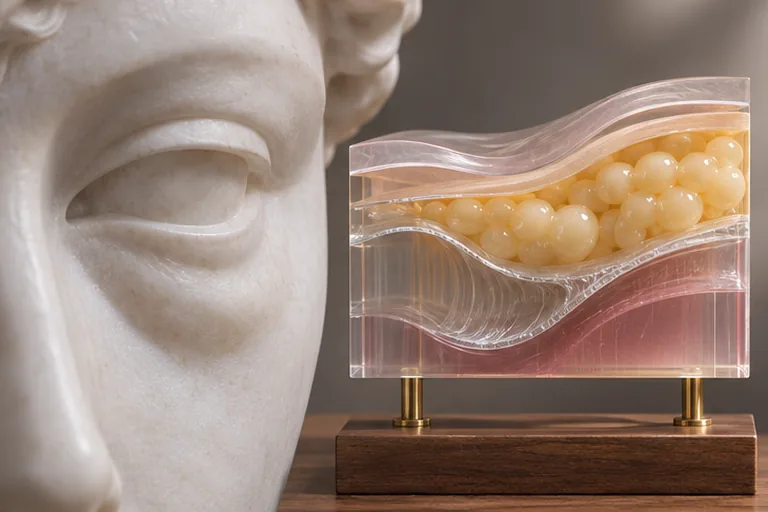
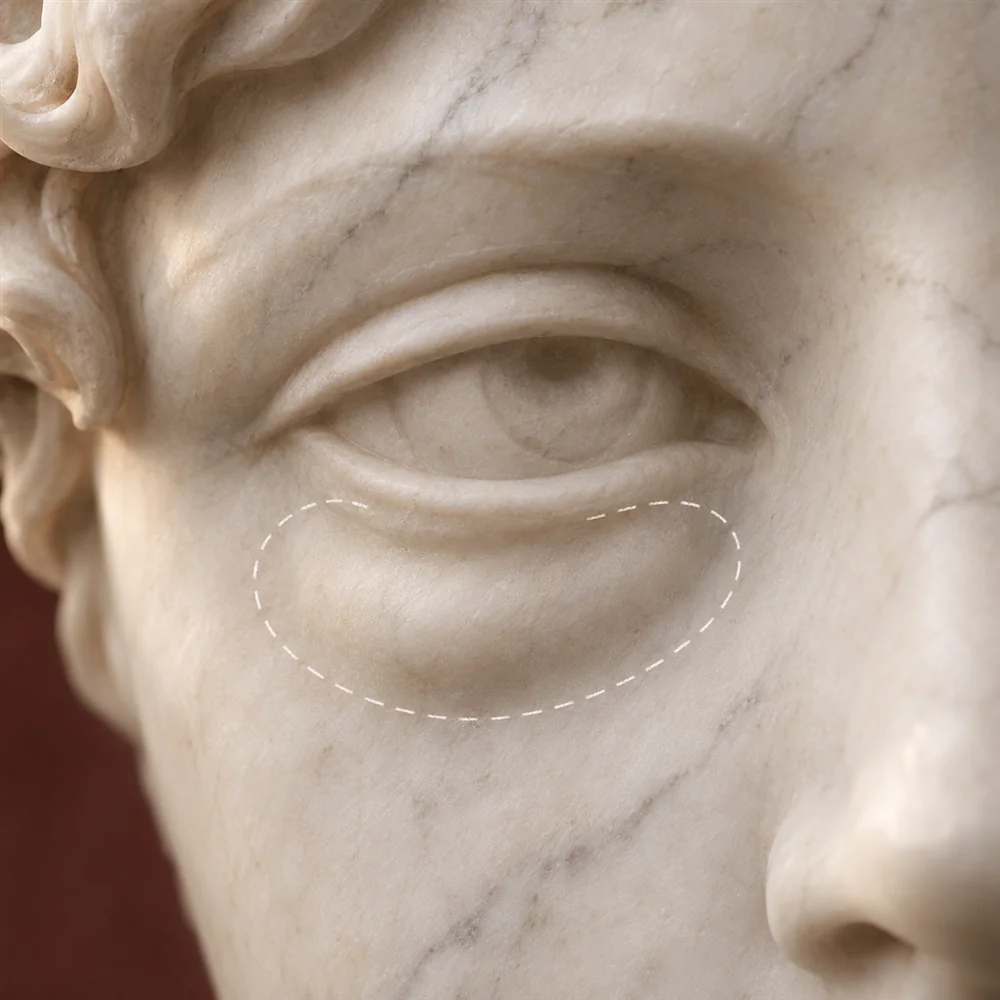
“Will removing just the bulging fat make the area flat?” “Which is right for me: fat repositioning or lower blepharoplasty?” Both questions may seem to be about choosing a procedure, but the first step is identifying which under-eye structures are causing your concern. This article is not a guide to choosing surgery from photos alone. It explains what to ask about the reasoning behind a recommendation during your consultation.
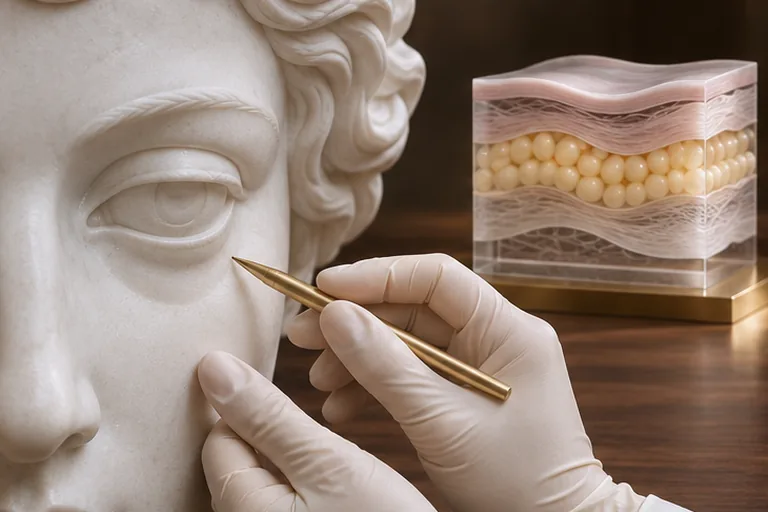
The lower eyelid can be viewed as three layers. The outer layer consists of skin and the muscle that closes the eye (the orbicularis oculi). The middle layer includes fat and the thin membrane in front of it that holds it back (the orbital septum). The inner layer consists of the plate that provides the eyelid's framework and the conjunctiva. When the membrane loosens, the fat behind it appears to push forward. If the hollow below it deepens, the difference in contour becomes more noticeable.1
In East Asians, under-eye fat commonly appears to protrude even at a young age. A study analyzing CT scans of 224 people ages 20–79 at a hospital in Japan found fat protrusion even in younger people, while the position of the bony rim beneath the eye changed little with age. The researchers interpreted this as suggesting that inherent anatomy had a greater influence than age. However, this was a retrospective study of data from a single hospital.2
Dr. Hyungwoo Yim compares this to a tent. If you remove only the supplies inside the tent (fat) because there are too many, the outer fabric (skin) becomes more wrinkled. To smooth the under-eye area, the internal structures corresponding to the tent ropes need to be lifted and the thinning fabric reinforced. In other words, removing or spreading out fat alone without considering cheek sagging or skin elasticity can leave loose skin with fine lines or make the transition to the cheek look more unnatural.
The under-eye area and cheek form a connected structure. Based on his clinical experience, Dr. Yim explains that when the bone beneath the eye is set farther back, the tissues may be more affected by gravity and sag sooner.
“I assess under-eye fat, excess skin, lower eyelid support, and cheek position as one connected structure.” (Dr. Hyungwoo Yim, Medical Director)
Key point Removing or spreading out fat alone can leave loose skin with fine lines or make the transition to the cheek look more unnatural, so we assess the under-eye area and cheek as a connected structure.
How do we identify the main issue in your under-eye area, and what do we assess?
02What do we assess? Protrusion, hollows, skin, and support
Answer We assess protrusion, hollows, excess skin, and lower eyelid support separately. Being told only that you have “too much fat” does not adequately explain why a particular procedure is recommended.
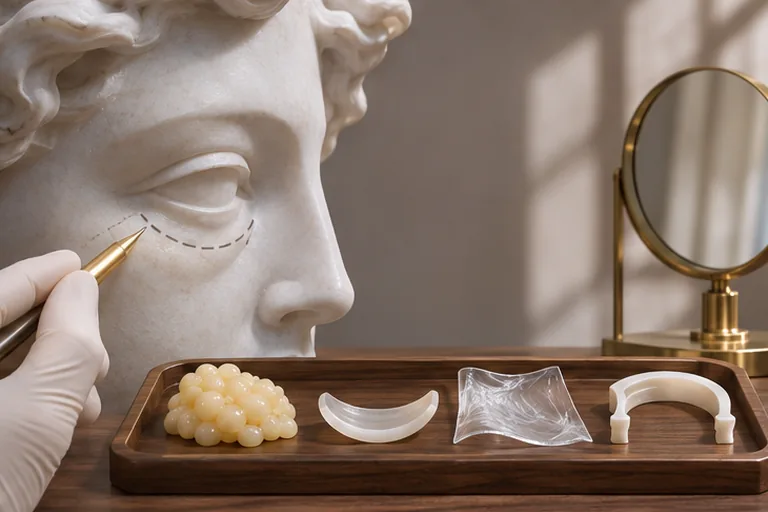
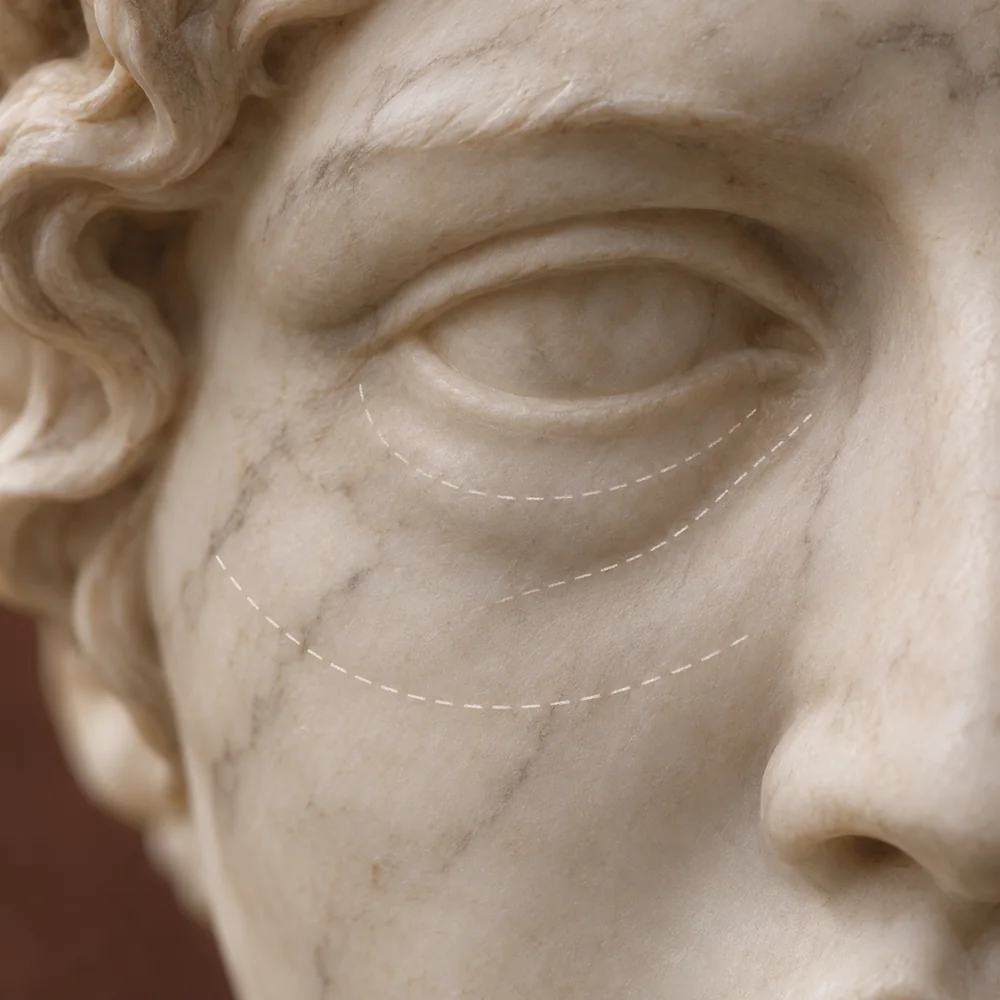
The same concern—“my under-eye area looks tired”—can involve different conditions. A literature review on lower blepharoplasty recommends assessing lower eyelid position, skin, fat protrusion (which may be more noticeable when looking up), tear troughs, visible white below the iris, dry eyes, horizontal eyelid laxity, and cheek projection together. Being told only that you have “too much fat” does not adequately explain why a particular procedure is recommended.1
At VITAL, we mark the boundary between protrusion and hollows while you are seated and assess the elasticity of the skin and orbicularis oculi muscle by touch. When you lie down, the fat shifts backward and can appear less prominent than it actually is. Whether to make a skin incision is determined through an examination rather than a fixed measurement, and we explain the reasoning during your consultation.
Everyone has some natural asymmetry beneath the eyes. A Korean study of 267 patients who underwent lower blepharoplasty found that the left lower orbital rim was farther back than the right in 96% of patients. If this difference is overlooked and both sides are treated identically, asymmetry may become more noticeable after surgery, so we assess it beforehand.12
A mirror or selfie cannot establish how well your eyelids are supported. During your consultation, ask, “In my case, which is the main issue: protrusion, hollows, skin, or support?” Several issues may coexist, but that does not mean every area needs surgery at once.
| What we check | How we assess it | What can happen if overlooked |
|---|---|---|
| Protrusion | We assess how far the fat protrudes and where it protrudes while you are seated. | When you lie down, the fat shifts backward and can appear less prominent than it actually is. |
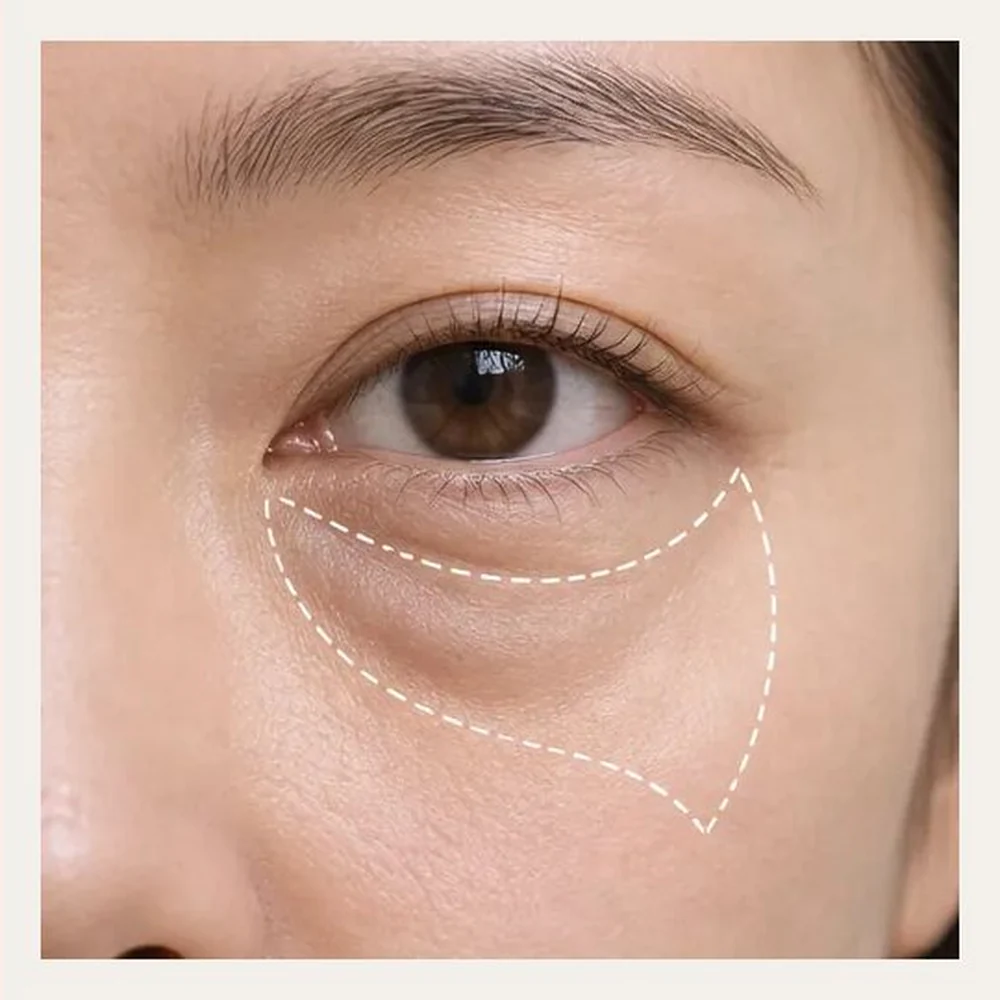
| Hollows | We assess the hollow line beneath the bulge along with the transition to the cheek. | Reducing only the protruding fat can make the groove more visible. |
| Skin | We check for laxity and fine lines and assess elasticity by touch. | Removing too much skin can cause the lower eyelid to droop or turn outward. |
| Support | We assess how firmly the lower eyelid rests against the eye, along with dryness and eyelid closure. | Lower eyelid drooping can develop when the skin, muscle, and supporting structures weaken together. |
Key point Several issues may coexist, but that does not mean every area needs surgery at once.
During your consultation, you can say, “I read your article on under-eye anatomy. Please explain which should be assessed first in my case: protrusion, hollows, skin, or support.” We will walk you through the assessment in the order presented in this article.
Once the assessment is complete, should the fat be removed, moved, or left in place?
03Removing fat, moving it, leaving it in place, or choosing not to have surgery now
Answer VITAL currently does not perform repositioning that involves bringing fat out and moving it. We first consider preserving the fat in place and reinforcing the membrane. This is because Dr. Yim has frequently seen repositioned fat adhered to the tissues in front of it during revision surgery.


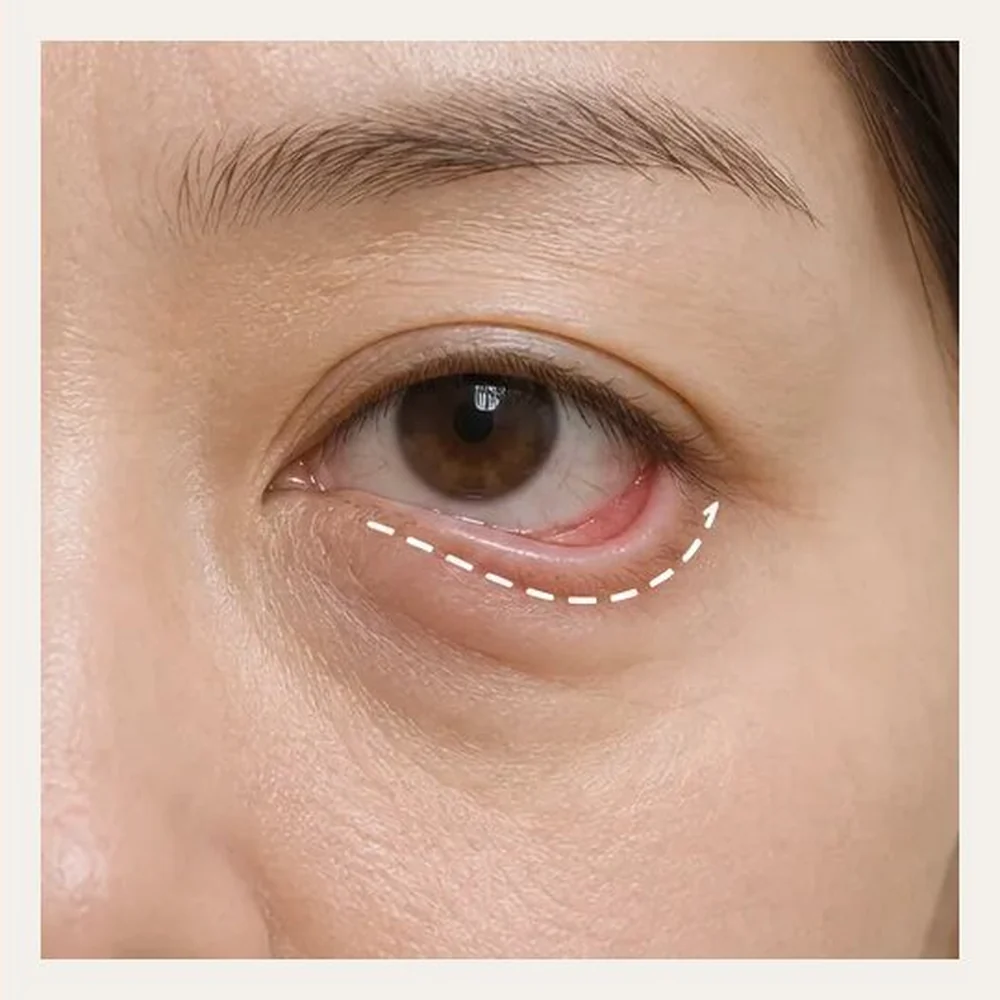
First, let's distinguish the terms. “Fat repositioning” describes how the fat is handled, while “lower blepharoplasty” refers to lower eyelid surgery as a whole. The surgeon can approach through the conjunctiva inside the eyelid, leaving no skin incision, or through the skin just below the eyelashes. Whether to remove, reposition, or leave the fat in place is a separate decision from the surgical approach.1
Evidence is accumulating for leaving the fat in place and reinforcing the orbital septum, the membrane that supports it. In a study of 26 patients, fat was removed on one side and preserved with septal reinforcement on the other. At an average follow-up of 11.3 years, bulging had recurred on 30.8% of the sides with fat removal and 7.7% of the sides with reinforcement.4 Another study comparing 40 patients found a greater reduction in shadowing with fat preservation: 34.6%, compared with 15.5% with fat removal. Swelling and bruising also resolved sooner. Both studies were small, and both used fat removal as the comparison.5
There is also a trend toward handling the fat less. An East Asian research team that treated 913 patients according to severity tightened only the septum, without removing fat, when there was little fat and no hollow. They stated that when the decision is uncertain, doing less is preferable.3 In an Italian study of 280 surgical patients, only 68 actually had fat removed.6
Repositioning fat toward the tear trough is widely used to fill the hollow, and large studies have reported outcomes. An analysis of 33 studies on fat grafting and repositioning, involving 4,671 patients, reported an overall complication rate of 11.2%, dissatisfaction with correction or contour irregularities in 6.2%, and revision surgery in 2.4%. Because techniques varied across studies, these figures are difficult to treat as a single estimate. We did not find a study directly comparing fat repositioning with septal reinforcement.9
VITAL currently does not perform fat repositioning that brings the fat out and moves it, and considers preservation first. Dr. Yim explains that during revision surgery, he has often seen repositioned fat adhering to the tissues in front of it. Because a muscle that moves the eye passes between the fat compartments, scarring around this area may cause eye discomfort. This judgment is based on his clinical experience; published research has not established which method is superior.
“If we remove only the under-eye fat without considering the hollow tear trough or sagging cheeks, the boundary may become more pronounced, or the area may look hollow. That is why I assess fat bulging and hollowing, excess skin, lower eyelid support, the contour from the lower eyelid to the cheek, and midface sagging together.” (Dr. Hyungwoo Yim)
Choosing not to have surgery now is also an option. We do not recommend immediate surgery when dark circles are caused by pigmentation or visible blood vessels, when lack of sleep and swelling are the main causes, when remaining under-eye filler needs evaluation first, or when the ocular surface or eyelid support needs assessment first.
- Fat removal: If a tear trough is also present, hollowing may become more noticeable.
- Fat repositioning: VITAL currently does not use this method.
- Fat preservation · Septal reinforcement: If cheek sagging is substantial, we also evaluate the midface.
- Deferring surgery: Address pigmentation, swelling, filler, and ocular surface issues first.
Key point Whether to remove, reposition, or leave the fat in place is a separate decision from the surgical approach, and choosing not to have surgery now is also an option.
What risks should you understand first, regardless of the method?
04What are the risks? Understanding lower eyelid drooping and ectropion first
Answer A major concern in lower blepharoplasty is a change in lower eyelid position. Removing too much skin can cause the lower eyelid to pull down or turn outward, so only as much skin as necessary is treated.


A major concern in lower blepharoplasty is a change in lower eyelid position. This includes lower eyelid retraction, which exposes more of the white below the eye; ectropion, in which the eyelid turns outward; and lagophthalmos, or incomplete eye closure. Dryness and excessive tearing may follow. Bruising, swelling, asymmetry, scarring, infection, and bleeding can also occur. Rare cases of bleeding behind the eye that can threaten vision have also been reported.1
“When skin removal is needed, I explain both the reason and the alternatives.” (Dr. Hyungwoo Yim)
A study of 46 patients referred for revision surgery because of lower eyelid retraction found that all had undergone lower blepharoplasty through a skin incision. Weakness of the orbicularis oculi muscle, insufficient skin, volume loss, and eyelid laxity were common. Significant internal scarring was found in only 17% of the eyelids.7 A study of 288 patients treated through a transconjunctival approach reported no clinical lower eyelid retraction, even when the septum was manipulated.8 This may suggest that retraction occurs when the skin, muscle, and supporting structures are compromised together, rather than from the septum alone.
In a study of 280 surgical patients, three men developed ectropion and underwent revision surgery.6 In the study of 913 patients, temporary changes in eyelid position occurred in 1.31%, and all returned to their original position within three months.3 An analysis of U.S. registry data involving 368,623 patients found that strabismus was diagnosed within three years in 2.0% of lower blepharoplasty patients and 1.5% of upper blepharoplasty patients. Because the data did not distinguish surgical techniques, the cause cannot be determined.10
These figures reflect the patients and methods in each study and cannot be applied directly to your individual risk. The literature review we referenced also states that there is no consensus on a single method suitable for everyone.1
If you experience sudden vision changes, severe pain, rapidly worsening swelling on one side, or bleeding that will not stop after surgery, do not assume it is part of recovery. Contact your surgical clinic or emergency care immediately. It is a good idea to confirm how to reach emergency help before surgery.
Key point If you experience sudden vision changes, severe pain, rapidly worsening swelling on one side, or bleeding that will not stop after surgery, do not assume it is part of recovery. Contact us immediately.
What does recovery after surgery look like?
05What does recovery involve?
Answer Swelling and bruising peak on days 3–4. From three weeks to three months, the tissues may feel firm and tight. These are healing responses, so we do not decide on revision surgery based on appearance alone during this period.

At VITAL, transconjunctival lower blepharoplasty takes about 30 minutes, while incisional lower blepharoplasty takes about 1 hour. Patients go home the same day after local anesthesia or sedation. Swelling and bruising are usually worst on days 3–4, and stitches are removed on days 5–7 if an incision was made.
Between 3 weeks and 3 months, the tissue tightens and pulls as it heals. This is part of the healing process, so a decision about revision surgery is not made based on appearance alone during this time. Between 3 months and 1 year, the tissue softens and redness decreases. Follow-up visits are scheduled at 1, 3, and 6 months and at 1 year. Sauna use is recommended after 1–2 weeks, and strenuous exercise after 1 month.
Tearing may also change temporarily. A small study measuring 52 eyes in 26 patients found that tear meniscus height decreased with the skin-incision approach and increased with the transconjunctival approach, then returned to the normal range with both methods around three months.11 In the study of 913 patients, most temporary dry eye symptoms also resolved within one month.3 This recovery timeline is a general guide and varies with the extent of surgery and your health.
Key point This recovery timeline is a general guide. Follow-up visits are scheduled at one, three, and six months and one year.
What should you ask during a consultation?
06What do we assess during a consultation?
Answer Start by asking which factor is mainly responsible for your concern: bulging fat, hollowing, excess skin, or support. Having a consultation does not mean you need to decide that day.
The questions below are intended to help you prepare for a consultation, based on assessment criteria used in published studies. They are not a checklist recommending a particular surgery. Please tell us in advance if you have thyroid disease, glaucoma, severe dry eye, or take blood-thinning medication, as these may be reasons to postpone or avoid surgery.
Having a consultation does not mean you need to decide that day. You can take time to decide after receiving separate explanations of the changes needed and the burden of additional treatment, and understanding which changes may be difficult to achieve.
What the doctor looks at first
- If bulging fat is the main cause, We first assess whether reinforcing the orbital septum can address both the bulging and the hollows.
- If sagging skin is also present, We limit skin removal to what is needed and explain whether additional support is appropriate.
- If cheek sagging is also present, We explain whether to combine surgery with a midface lift or perform it alone.
These are general care principles. The actual decision is made after an examination.
- Which factor is mainly responsible for my concern: bulging fat, hollowing, excess skin, or support?
- With the proposed method, where will the incision be, how will the skin and fat be handled, and how will support be reinforced?
- How do dry eye, filler, and previous surgery affect the plan and risks?
- Which changes may be difficult to achieve, what are the main complications, when are follow-up visits, and how do I reach you in an emergency?
Key point You can take time to decide after receiving separate explanations of the changes needed and the burden of additional treatment, and understanding which changes may be difficult to achieve.
Here is the answer to our opening question: “Will removing just the bulging fat make my under-eye area flat?” Bulging often develops because the septum supporting the fat weakens and the tear trough and cheek below it change together, rather than because of the amount of fat. That is why we do not choose fat removal or repositioning simply because there is bulging. We assess protrusion, the tear trough, excess skin, and lower eyelid support separately. I examine under-eye fat, excess skin, lower eyelid support, and cheek position as one connected structure.
— Dr. Hyungwoo Yim
At your consultation, you can say, “I read your article on under-eye anatomy. Please explain what you need to assess first to determine whether leaving the fat in place is right for me.” We will walk you through the assessment in the order presented in this article.
READ NEXT
Read Next
FAQ
Frequently Asked Questions
Is age alone used to choose between fat repositioning and lower blepharoplasty?
No. The decision is based on an examination of actual excess skin, the relationship between fat and hollows, and eyelid support and function, rather than age. Research also suggests that protruding under-eye fat is common in East Asians even at a young age.12
Does removing more fat lead to a better result?
Removing more fat does not necessarily produce a more appropriate result. Surrounding hollows and volume must be considered along with the bulging, and one long-term study found less recurrence when fat was preserved. Another report found that 68 of 280 patients needed fat removal.46
Does VITAL perform under-eye fat repositioning?
We currently do not perform repositioning that involves bringing fat out and moving it. We first consider preserving the fat in place and reinforcing the membrane. If the cheeks are also sagging, we explain after an examination whether the midface should be addressed as well.
My under-eye area became bulging or uneven again after fat repositioning.
We first assess adhesions and the remaining fat, then consider reinforcing the membrane rather than repeating fat repositioning. It may be better to wait for the tissues to stabilize before a revision to correct the contour, so we also assess your stage of recovery.
Will surgery get rid of dark circles too?
If the darkness is caused by pigmentation or blood vessels showing through thin skin, structural surgery will not resolve it. We first distinguish the main cause by changing the lighting and gently stretching the skin.
Can the studies tell me how long my recovery will take?
The studies in this article alone cannot establish an individual's recovery time. After an examination, confirm a timeline suited to the extent of your surgery, your health, and your recovery progress.
BEFORE CONSULTATION
What to Prepare Before Your Consultation
- Current under-eye photosPlease prepare makeup-free photos taken in natural light: one facing forward and one looking up.
- Previous treatment and surgery historyWrite down when and how you had under-eye fillers, laser treatments, or previous eye surgery, as best you remember.
- Eye health and medicationsPlease tell us about dry eyes, contact lens use, any history of thyroid disease or glaucoma, and any blood-thinning medications or supplements you take.
- The one thing that concerns you mostStart the consultation by telling us which concerns you most: bulging, hollowness, or wrinkles.
- Time available for recoveryPlease allow for 3–4 days of significant swelling, suture removal, and follow-up visits at 1, 3, and 6 months.
REFERENCES
References
- Bhattacharjee K, Ghosh S, Ugradar S, Azhdam AM. Lower eyelid blepharoplasty: An overview. Indian J Ophthalmol. 2020;68(10):2075-2083. doi:10.4103/ijo.IJO_2265_19 (Read the full article)
- Kato K, Okuda I. Characteristics and Age-Related Changes in Orbital Fat Protrusion in East Asians: A Retrospective 3-Dimensional Computed Tomography-Based Study. Aesthet Surg J Open Forum. 2025. doi:10.1093/asjof/ojaf122 (View abstract)
- Liu J, Huang C, Song B. A graded approach in East Asian personalized lower blepharoplasty: A retrospective study spanning 12 years. Indian J Ophthalmol. 2022. doi:10.4103/ijo.ijo_222_22 (Read the full article)
- Parsa AA, Lye KD, Radcliffe N, Parsa FD. Lower blepharoplasty with capsulopalpebral fascia hernia repair for palpebral bags: a long-term prospective study. Plast Reconstr Surg. 2008. doi:10.1097/01.prs.0000304469.81239.f0 (View abstract)
- Etman AG, Badawy MS, Setta HS, Magdy A, El-Badawy A. Evaluation of Fat Excision versus Sparing in Lower Blepharoplasty Using Orbital Gray Scale Analysis. Plast Reconstr Surg Glob Open. 2022. doi:10.1097/GOX.0000000000004530 (Read the full article)
- Klinger M, Vinci V, Romeo MA, et al. Surgical Tips for Aesthetic Lower Lid Blepharoplasty: Prevention of Round Eye. Plast Reconstr Surg Glob Open. 2023. doi:10.1097/GOX.0000000000005092 (Read the full article)
- Griffin G, Azizzadeh B, Massry GG. New insights into physical findings associated with postblepharoplasty lower eyelid retraction. Aesthet Surg J. 2014. doi:10.1177/1090820X14544306 (View abstract)
- Schwarcz R, Fezza JP, Jacono A, Massry GG. Stop Blaming the Septum. Ophthalmic Plast Reconstr Surg. 2016. doi:10.1097/IOP.0000000000000420 (View abstract)
- Xu Z, Zheng F, Zhao X, et al. Complications of Fat Grafting and Repositioning for Correction of Lower Eyelid Pouch With Tear Trough Deformity or Lid-Cheek Junction: A Systematic Review. Ann Plast Surg. 2024. doi:10.1097/SAP.0000000000004022 (View abstract)
- Oke I, Elze T, Miller JW, et al. The Incidence of Strabismus After Upper and Lower Blepharoplasty in the United States. Ophthalmic Plast Reconstr Surg. 2024. doi:10.1097/IOP.0000000000002617 (View abstract)
- Lee SM, Chung SJ, Park JS, Lew H. Changes in Tear Meniscus Height Following Lower Blepharoplasty as Measured by Optical Coherence Tomography. Korean J Ophthalmol. 2018. doi:10.3341/kjo.2017.0125 (Read the full article)
- Kim KK, Byun JS. A Morphologic Classification and Surgical Algorithm for Lower Eyelid Asymmetry in Primary Lower Blepharoplasty. Plast Reconstr Surg Glob Open. 2026. doi:10.1097/GOX.0000000000007958 (View abstract)
The findings in these papers reflect the participants and conditions of each study and do not mean that every individual will have the same results.
More articlesVITAL Plastic Surgery Medical Articles
DOCTOR'S NOTE
Removing the load alone
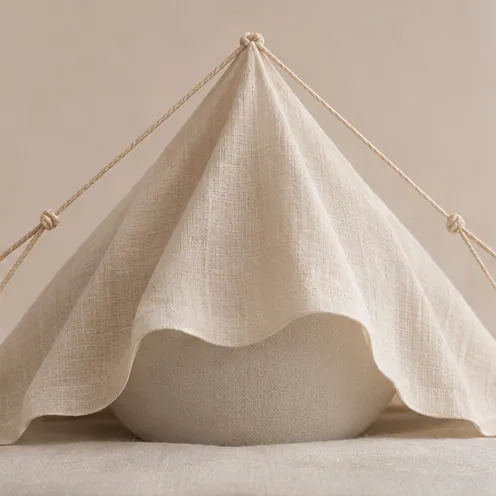
won’t straighten the tent.
“
If a tent holds too much baggage (fat), simply removing the baggage can leave the outer fabric (skin) more wrinkled. To smooth the under-eye area, the internal structures that act like tent ropes need to be lifted, and the thinning fabric needs reinforcement.
Dr. Hyungwoo Yim · Approach to Care
Dr. Hyungwoo Yim, Medical Director · Based on the doctor's own answers. The actual scope of care is determined after an examination.
1
Under-Eye Fat Bulging
2
Tear Trough
3
Cheek (Midface) Position
4
Lifting the Midface as Well
Lower Lid
Removing the gear alone won't straighten the tent.

Removing or spreading out fat without considering cheek sagging or skin elasticity may leave the under-eye skin loose with fine wrinkles, or make the transition to the midface look less natural.
Once you feel fully informed, schedule a consultation.
Under-eye fat repositioning and lower blepharoplasty: Why fat alone should not determine your choice Book a Consultation
You do not need to decide the day of your consultation.