PLASTIC SURGERY
All Treatments / Eyes · Upper Eyelid Hollowness
Sunken Upper Eyelid
Sunken Eye Surgery
When hollow upper eyelids make you look tired and older, we first identify the cause before adding volume.
Suture Removal
5–7 days
Return to Daily Activities
After 2–3 days
This may vary depending on your condition and the extent of surgery.
We do not add volume based on the depth of the hollowness alone.
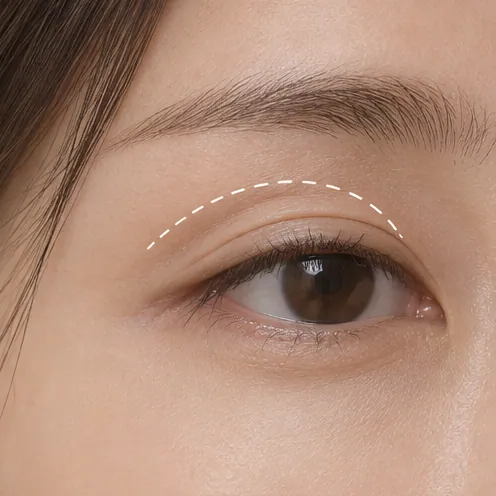
Key Questions Answered
Can fat grafting treat sunken eyes?
Hollow upper eyelids should not simply be filled with fat. When the muscles that open the eyes are weak, the eyelid tissues roll upward, making the hollowness appear deeper than it is. In these cases, fat grafting alone can make the eyelids heavier and leave a sleepy appearance. We first assess function and restore the eyelids to their proper position, then reassess volume.
— Eyelid-opening strength
— Skin · Muscle · Fat
— Effects of previous surgery
YOUR CONCERN
Do any of these concerns
sound familiar?
“My upper eyelids are so hollow that I look older and tired.”
“I have multiple eyelid creases, or my crease has faded.”
“I had filler or fat grafting, but the area is uneven.”
Correcting upper eyelid hollowness,
What does the surgery involve?
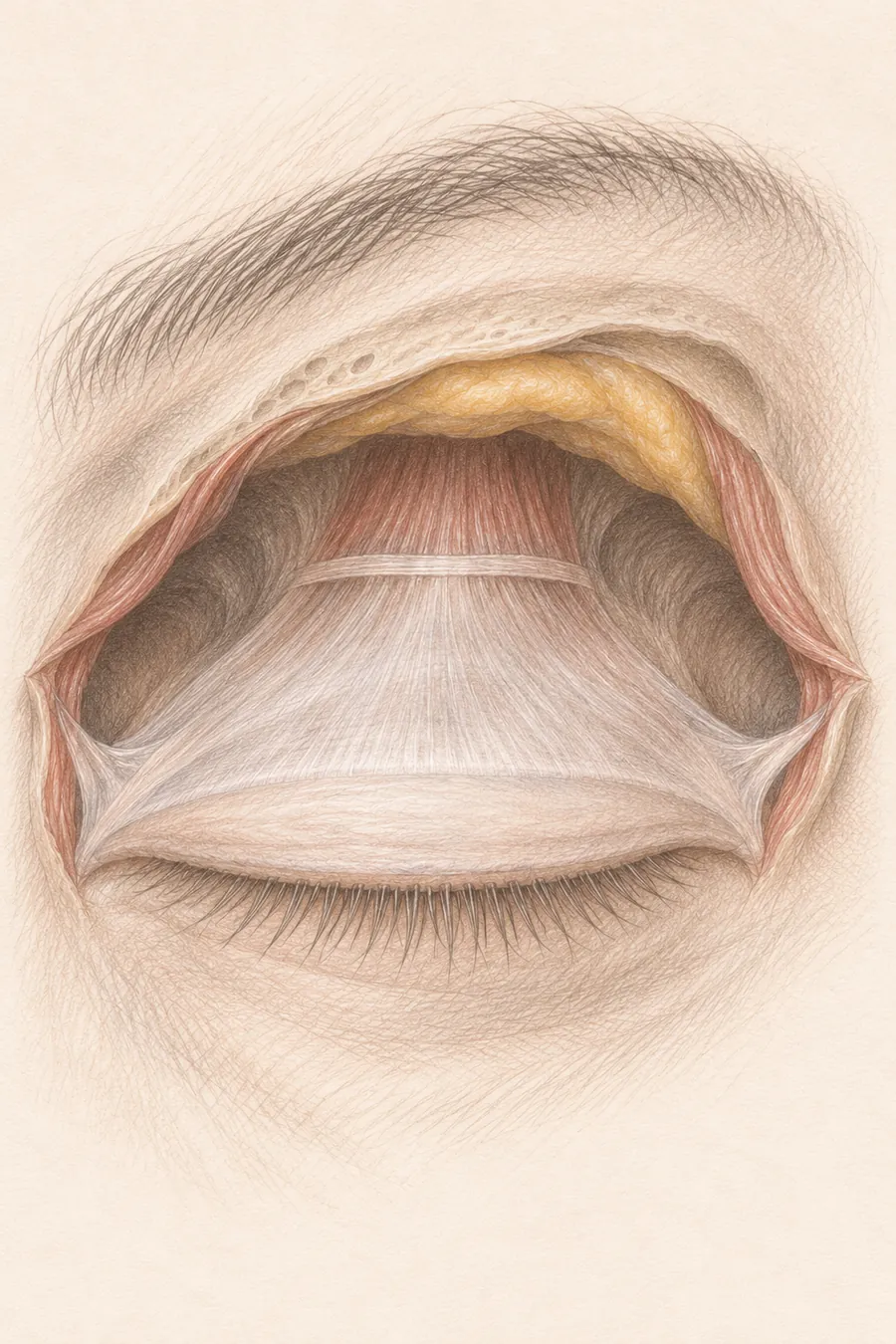
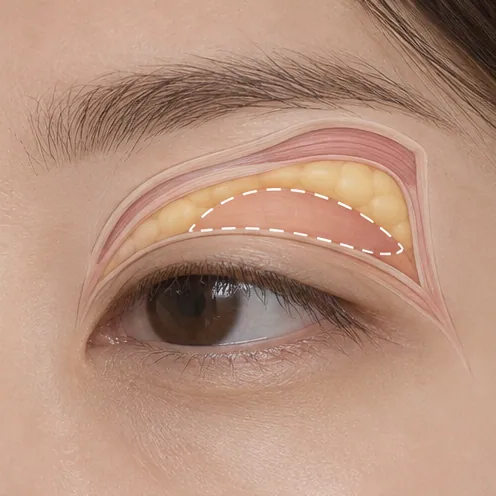
Sunken eyes refer to hollow upper eyelids that create a tired, older appearance. A lack of volume can be the cause, but often, weakness in the muscles that open the eyes causes tissues inside the eyelids to roll upward, making the hollowness appear deeper than it is. Previous surgery may also have substantially reduced fat or tissue, so we identify the cause before adding volume. Using criteria from a paper reviewing 384 patients treated for sunken eyes over the past 10 years, we assess the skin, fat, and eyelid-opening function layer by layer.
- Front Layer
- This consists of the skin and orbicularis oculi muscle. We preserve the remaining tissue without excessive removal.
- Middle Layer
- This is the layer containing fat. We assess fat position and volume deficits to consider repositioning or supplementation.
- Back Layer
- This consists of the eyelid-opening muscle and its aponeurosis. We correct impaired function.
- Microfat Grafting
- Your own fat is processed into small particles and injected into hollow areas in small amounts. The graft undergoes a process in which only some of the fat survives.
When correcting upper eyelid hollowness,
in Lower Blepharoplasty
we assess the skin, fat, and eyelid-opening strength by layer
In the front layer, we preserve the remaining skin and orbicularis oculi muscle without excessive removal. In the middle layer, we assess fat position and volume deficits to consider repositioning or supplementation. In the back layer, we assess eyelid-opening function and correct the muscle and aponeurosis if needed. Problems in all three layers can coexist, so we do not assign each patient to just one category.
We correct eyelid position before adding volume
When eyelid-opening strength is weak, tissues inside the eyelid are pulled upward, making the upper eyelid look hollow. Adding only fat or filler in this condition can make the eyelids heavier and harder to open, leave a sleepy appearance, and cause skin bunching or unevenness. We therefore correct eyelid position with ptosis surgery before reassessing volume. Fat grafting and Re2O are then considered as supplementary treatments.
Our assessment sequence is based on records from 384 patients
Our recently published upper eyelid paper included 384 patients treated for sunken eyes over the past 10 years; 33.9% underwent revision surgery. Younger patients and those having their first surgery were relatively uncommon. This means a considerable number of patients seek treatment for hollowness that worsened after previous surgery, so we always assess the effects of prior surgery and the extent of tissue damage during consultation.
Fat grafting and Re2O have different roles
Fat grafting is considered when there is an actual deficit in soft tissue volume. We explain both the uncertainty of fat survival and the possibility of surface irregularities. Re2O is a powder made from human dermis with the cells removed and can be understood as a material that supplements the dermis. We do not use it as a volume replacement equivalent to fat grafting, but as a supplementary treatment to support the condition of the skin and soft tissue.
The effects of previous surgery change the plan
When hollowness results from extensive removal of skin or fat, treatment involves more than simply filling the area. We assess the effects of excessive tissue removal and prior correction of eyelid-opening function, then consider releasing adhesions and supplementing tissue. If healing is still underway, it may be better to wait for the tissue to stabilize. We first explain what can be improved and the limitations.
Habitual eye rubbing worsens hollowness
Rubbing the eyes causes an eczema-like thickening of the eyelid skin called lichenification, loosens the eyelid crease, makes the eyes look increasingly sleepy, and worsens hollowness with age. As the hollowness deepens, it further affects the eyelid-opening muscle, continuing a vicious cycle. During surgery, the internal tissues of eyes that have been rubbed for years are readily distinguishable. We provide guidance to help prevent this habit from continuing after surgery.
A Word from the Doctor
Dr. Hyungwoo Yim’s own words from his blog and interviews.
01What We Treat
“Patients come to me for treatment of hollow eyes. But I don’t treat hollow eyes. We treat the underlying structure that makes the eyes look hollow.”
If the fabric of a tent sags, will replacing it with thicker fabric make it taut again? If the poles are leaning, they need to be straightened.
02What to Watch for in Fat Grafting
“Plastic surgery is also the art of adding, but The technique of removing it is much more difficult.”
Fat grafting above the eyes requires the right amount of fat in the right layer, and restraint is essential. Problems begin the moment you think, ‘A little more will make it look better.’
Dr. Hyungwoo Yim, Medical Director
The Surgical Process Varies
Depending on Your Condition
When weak eyelid-opening strength causes a hollow appearance
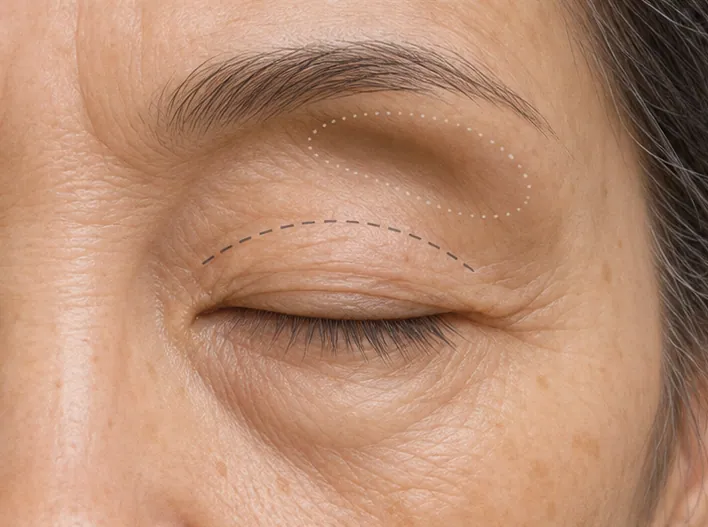 1
We measure MRD1 and eyelid-opening muscle function and plan the incision
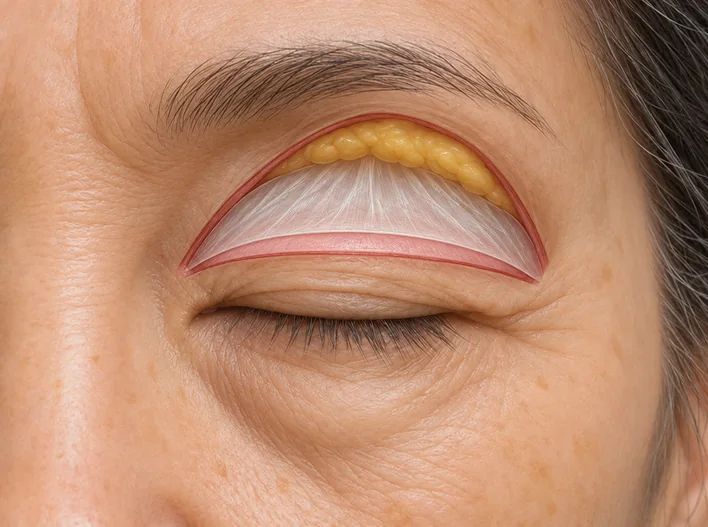 2
We make an incision along the eyelid crease without excessively removing skin or orbicularis oculi muscle
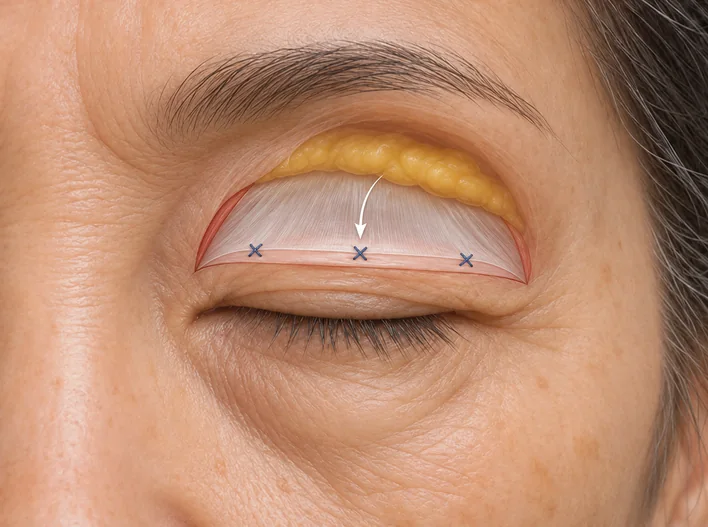 3
We correct the eyelid-opening muscle and aponeurosis to raise the eyelid to its proper position
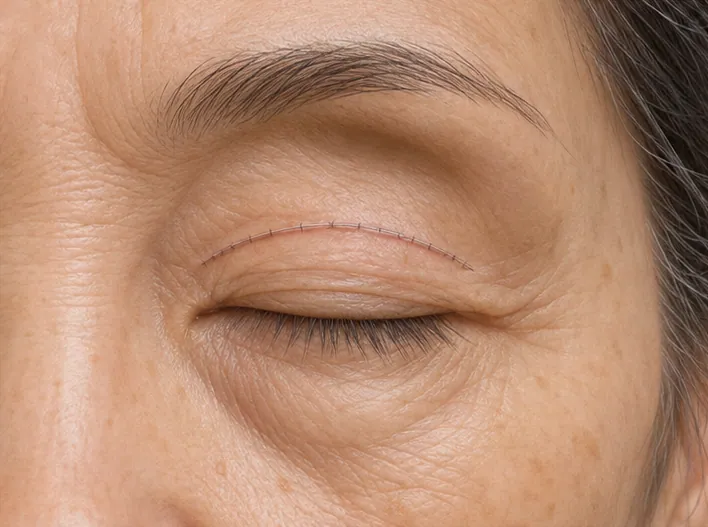 4
We reassess the remaining hollowness before closing the incision
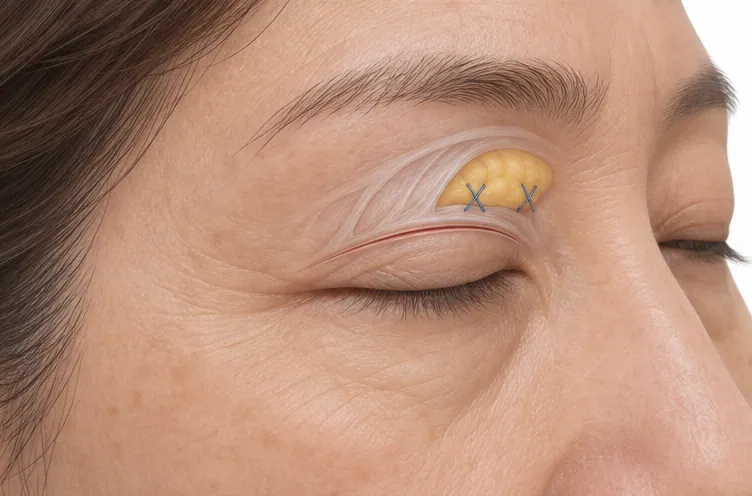
When fat is out of position
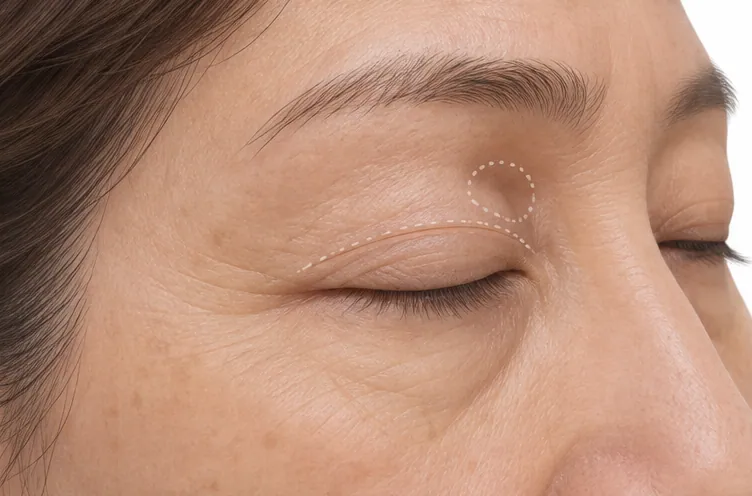 1
We mark the hollow areas and the location of the remaining fat
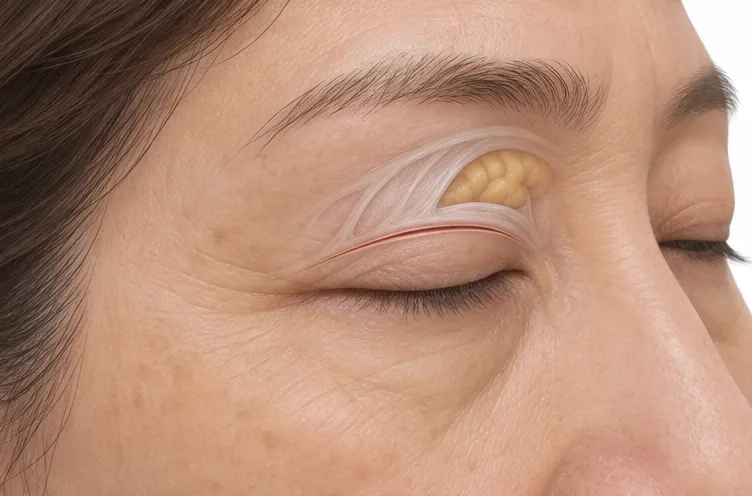 2
We access the fat inside the eyelid through the eyelid crease
 3
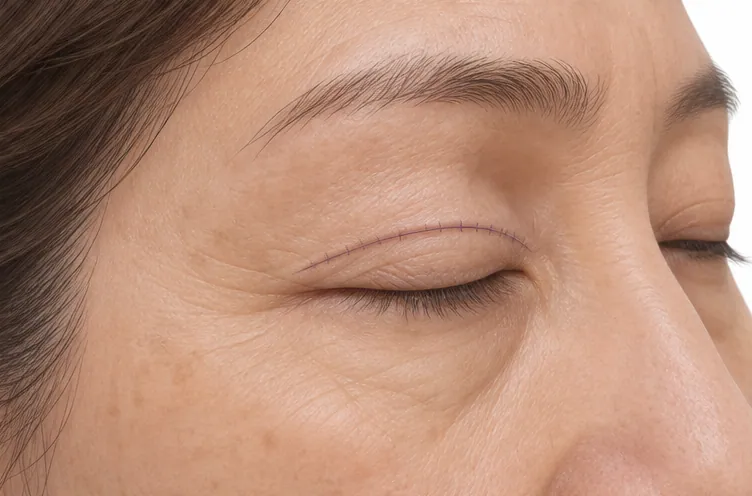
We move fat that has receded backward into the hollow area and secure it
 4
We check eyelid-opening movement and surface contour before closing the incision
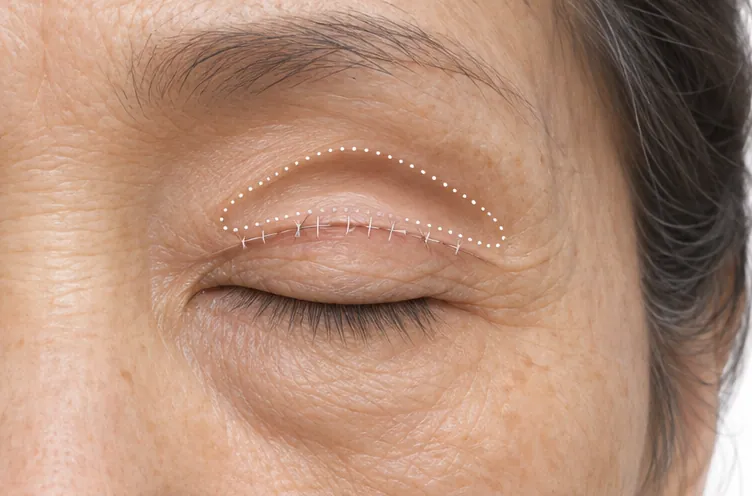
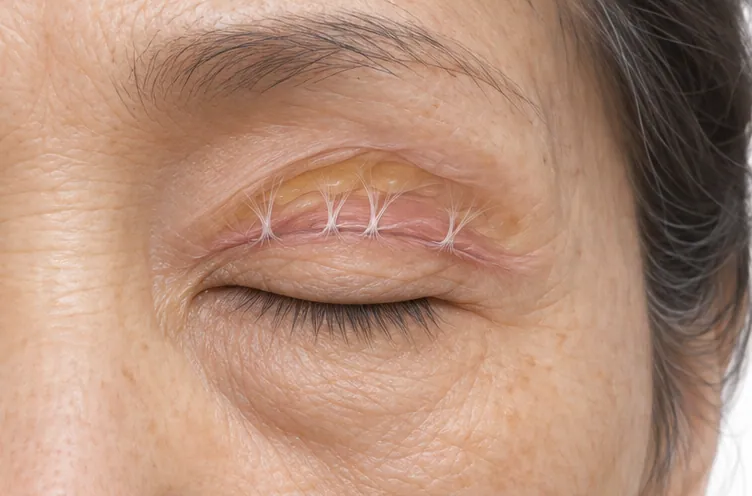
When volume is insufficient or hollowness follows previous surgery
 1
We mark adhesions from previous surgery and the extent of the volume deficit
 2
We access the area through the incision and release adherent tissue
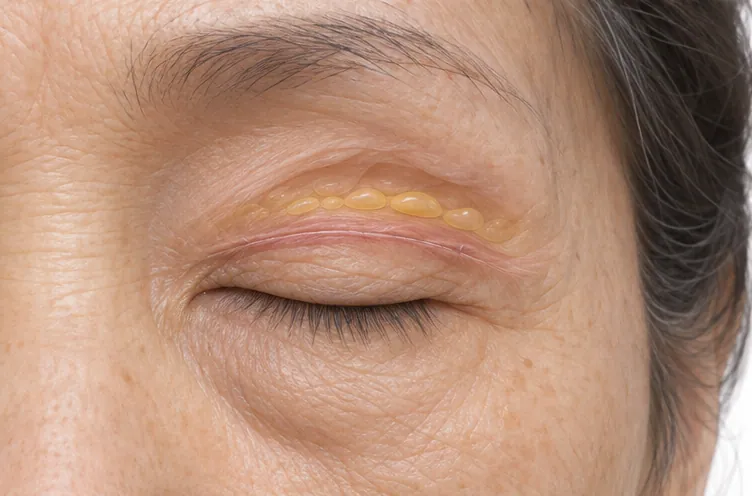 3
We place microfat into the deficient areas in small, divided amounts
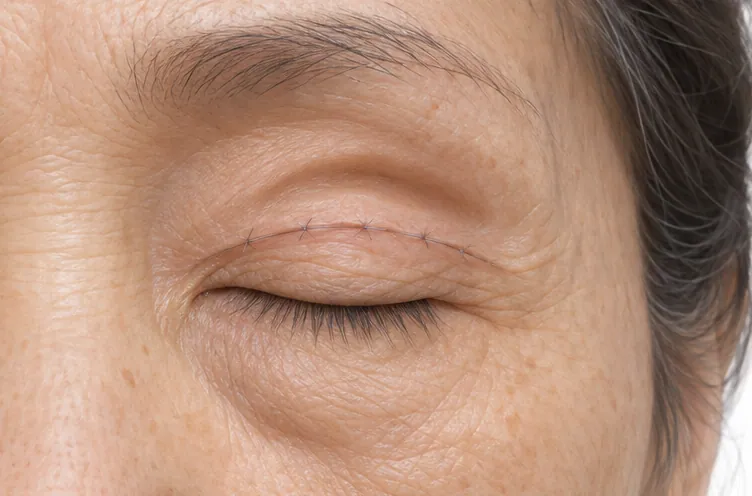 4
After closing the incision, we monitor healing and consider Re2O as a supplementary treatment if the skin is thin
Illustration for explanation · Not an actual patient. This is a simplified description of typical steps. The actual technique and extent of surgery are determined after examination.
DOCTOR’S NOTE
We separately assess which tissues to preserve, which to reposition, and how much volume to add.
We assess more than the depth of the hollowness or the volume deficit. Our evaluation includes the condition of the skin, muscle, and fat; eyelid-opening function; the effects of previous surgery; and the extent of tissue damage. We treat the cause rather than routinely filling the area with filler or fat. Our approach follows an algorithm developed from treating 384 patients with upper eyelid hollowness over the past 10 years.
— Dr. Hyungwoo Yim
MYTH → FACT
“Do sunken eyes just need filling?”
Adding excessive filler or fat without improving muscle strength can make the eyes harder to open, worsen a sleepy appearance, and cause skin bunching or unevenness.
IN HIS WORDS
We observe the moment you open your eyes
“To identify the cause, we need to see whether the structures inside the eyelid are pulled upward and the hollowness deepens when you open your eyes, rather than assessing the eyelids only at rest.”
THE DETAIL
384 cases · 33.9% revision surgery
In our recently compiled paper, 33.9% of 384 upper eyelid hollowness cases treated over 10 years involved revision surgery. Treatment sequence matters more in eyes that have undergone previous treatment.
RELATED RESEARCH
ASLS Korea 2021 · Sunken Upper Eyelids treatment in Asian patients
1
Eyebrow Position
2
Hollow Areas
3
Eyelid Height
4
Eyelid Muscle Strength · Excess Skin
Why It Sinks
We do not add volume based on the depth of the hollowness alone.
Upper eyelid hollowness results from a combination of insufficient fat, changes in fat position, and weakened eyelid-opening strength. If the hollowness deepens when you open your eyes, functional correction comes first.
Suture Removal
5–7 days
Return to Daily Activities
After 2–3 days
VITAL PROTOCOL
How we assess upper eyelid hollowness
STEP 01
Personalized, Detailed Assessment of Sunken Eyes
We assess volume, tissue position, eyelid-opening strength, skin, eyebrows, and previous surgery together.
STEP 02
Functional Correction First
If ptosis is involved, we first correct the eyelid position with ptosis surgery.
STEP 03
Repositioning · Supplementation
For remaining hollowness, we consider fat repositioning, microfat grafting, and, when needed, Re2O (mADM).
STEP 04
Follow-Up Records
We document progress at 1, 3, and 6 months and 1 year to assess changes in volume and function.
The sequence and extent of treatment vary depending on each patient's condition.
WHAT WE CHECK
Similar hollowness can have different causes
Volume and Tissue Position
We distinguish between insufficient fat and changes in fat position.
Eyelid-Opening Function
We assess eyelid position and movement for signs of ptosis.
Skin Laxity and Eyebrow Position
We assess both overhanging skin and lowered eyebrows.
Vision · Eye Closure · Dryness
We check for functional discomfort and assess the ocular surface.
Previous Surgery · Injected or Implanted Materials
We assess the effects of existing filler, fat grafting, and surgery.
Extent of Tissue Damage
We assess adhesions, scarring, and the stage of healing.

When
to consider a consultation
- When hollow upper eyelids make you look tired
- When hollowness has worsened after previous surgery
- When difficulty opening the eyes accompanies hollowness
- When multiple eyelid creases form and the upper eyelids look hollow
- When the eyes still look heavy and sleepy after fat or filler injections
When
Surgery is not our first recommendation
- When you want only volume added without assessing eyelid-opening strength
- When you are still healing from your previous surgery
- When the desired change exceeds what can be safely achieved
- When remaining upper eyelid filler requires assessment and consideration of dissolving it first
WHEN WE WAIT
In These Cases
We do not recommend immediate surgery.
When tissue is still recovering from previous surgery
When functional correction is needed before adding volume
When the changes you expect are beyond what is medically possible
When a more urgent health issue is identified
Preparing for surgery and
recovery by stage
- 3–4 days after surgery
This is when swelling and bruising are at their worst. Sleep with your head elevated. For the first 2–3 days after surgery, apply a cold compress gently, without letting ice touch your skin or eyes directly. Starting on day 4, use a warm compress. While you cannot close your eyes completely, use artificial tears frequently and apply eye ointment before bed.
- Days 5–7
If an incision was made, the stitches are removed. Until then, keep water away from the surgical area. Avoid eye makeup, eyelash extensions, and contact lenses for 2 weeks, and saunas and Korean bathhouses for 1–2 weeks. If you had fat grafting, do not press on your upper eyelids for 2 weeks, and start warm compresses and sauna use as directed by your doctor. You can resume light daily activities after 2–3 days, though swelling and bruising may remain.
- 3 weeks–3 months
During this period, the tissue may feel firm and tight. This is part of the healing process, so decisions about revision surgery are not based solely on appearance at this stage. Avoid strenuous exercise, rubbing or tightly closing your eyes, and sleeping face down for 1 month after surgery.
- 3 months–1 year
The tissues soften, redness fades, and the two sides gradually become more balanced. We check your progress at 1 · 3 · 6 months · 1 year.
No smoking · No alcohol
You will be advised before surgery to avoid alcohol and smoking for 2–4 weeks afterward, as they can affect bleeding and wound healing.
Medications · Supplements
We recommend stopping herbal medicines and supplements such as omega-3 when possible because they may increase bleeding. Please tell us about every medication you take.
Medical history
Thyroid eye disease, glaucoma, severe dry eye, autoimmune disease, or anticoagulant use may be reasons to postpone or avoid surgery.
Eye care habits
Limit contact lens use as much as possible, use artificial tears frequently, and avoid rubbing your eyes. Tell us if you have used double eyelid tape or glue.
Recovery timelines are general estimates and vary by individual. Contact us immediately for sudden severe pain, decreased vision, bleeding that does not stop, or rapidly worsening swelling on one side.
LIMITS & RISKS
Along with possible improvements,
we explain the limitations and risks.
Asymmetry
Undercorrection or Overcorrection
Unevenness
Resorption
Swelling
Bruising
Difficulty Closing the Eyes
Do not wait if you have these symptoms
If you experience sudden severe pain, decreased vision · An obstructed field of vision, bleeding that does not stop, or rapidly worsening swelling on one side, contact us immediately instead of waiting for your appointment.
This is not a complete list of possible risks. Risks may vary depending on your health, previous treatments, and the technique and extent of surgery. Surgical results vary by individual.
Common questions
during consultations
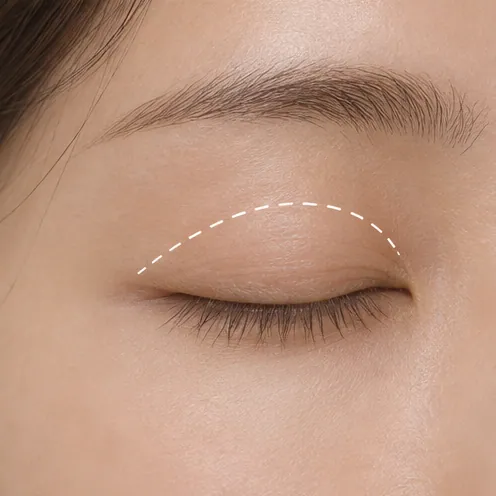
Does combining the procedure with ptosis surgery change recovery?
Because more eyelid tissue is involved, swelling and bruising are greater. If true ptosis is present, both eye opening and appearance may change. However, dry eyes and incomplete eye closure can occur after surgery, so we explain these possibilities beforehand.
Will all the grafted fat remain?
Not all of the fat remains. Some is absorbed, which may reduce the effect by 30–50%. The final amount of fat that has taken is assessed after 3–6 months; if a second graft is needed, it can be discussed then. Some of the transferred fat settles in place, and the surface may feel uneven. Rather than adding an excessive amount, the fat is distributed where it is needed.
Will Re2O fill hollow upper eyelids?
Re2O supplements the dermis rather than filling volume. We therefore do not use it to fill the depth of the hollowness, but consider it as a supplementary treatment to support tissue condition when the skin is thin or damaged.
Related Reading
Q & A
Before you decide,
frequently asked questions
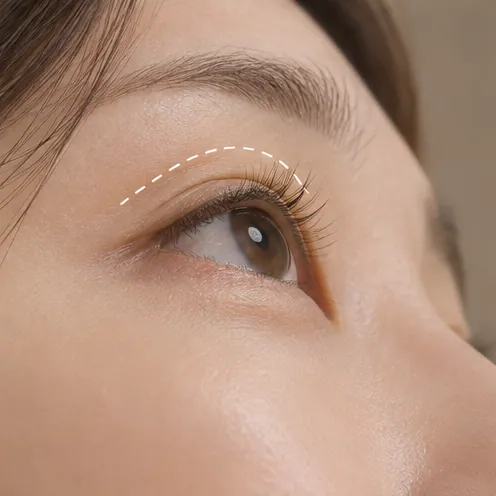
Q
Can fat grafting alone correct hollow eyes?
−
A
If the muscles that open your eyes are weak, fat grafting alone may make your eyelids feel heavier and leave a sleepy appearance. We first assess eyelid function and correct eyelid position with ptosis repair, then reassess volume. Fat grafting or Re2O is considered as a supplemental treatment.
Q
Can I Have Revision Surgery If I Have Had Surgery Before?
−
A
Yes, but adhesions and structural changes from the previous surgery must be assessed accurately. We consider your surgical records, current symptoms, and stage of tissue healing—at least 6 months to 1 year or longer after surgery—to honestly explain the limitations and expected benefits of additional surgery.
Q
When can I return to work, wear makeup, and exercise?
−
A
Stitches are usually removed 5–7 days after surgery. You can return to light work after 2–3 days, but most swelling and bruising improves over 2–6 weeks. Avoid eye makeup, eyelash extensions, and contact lenses for 2 weeks; saunas and Korean bathhouses for 1–2 weeks; and strenuous exercise for 1 month. If you had fat grafting, start warm compresses and sauna use as directed by your doctor.
Q
What Symptoms Should Prompt Me to Contact the Clinic Immediately After Surgery?
−
A
If you experience sudden, severe pain in one eye, decreased vision, an obstructed field of vision, bleeding that will not stop, or rapidly increasing swelling, contact us immediately rather than waiting for your scheduled appointment.
Q
Isn’t fat grafting alone enough?
−
A
It depends on the cause of the hollowing. We assess whether eyelid function and tissue position contribute, then determine whether volume restoration is needed and when it should be performed.
Q
Do you combine upper eyelid surgery with ptosis repair?
−
A
We consider this when a functional assessment indicates it is needed. Having hollow eyelids does not mean everyone needs the same combination of procedures.
Q
Can surgery be finalized through a photo consultation alone?
−
A
Photos are only a reference. An in-person examination is needed to assess tissue condition and function, taking your current health and previous treatments into account.
Q
Are surgical results and recovery times the same for everyone?
−
A
No. Results and recovery speed vary depending on your individual condition and the extent of surgery. Risks include bleeding, infection, scarring, and asymmetry.
AFTER SURGERY
After correction of hollow upper eyelids, care continues with VITAL LASTING CARE.
~ 1 WEEK
Check the wound · bleeding · infection · early function, remove sutures
1 MONTH
Early scar contracture: assess tightness · firmness and begin regenerative care if needed
3 MONTHS
Peak contracture · transition phase: assess remodeling and consider continued injections · laser treatment
6 MONTHS
Compare with initial photos and decide whether additional treatment is needed
1 YEAR
Check tissue maturation · long-term progress
RELATED SURGERY
Related Procedures
DOCTOR'S COLUMN DOCTOR'S COLUMN DOCTOR'S COLUMN
Must Read
Care Notes Written by the Doctor · Please Read Before Your First Visit
No.1
No.3
VIEW MORE →
RESERVATION
You do not need to decide the day of your consultation.
Organize questions about this page without entering your name, contact information, or medical history. This does not submit an appointment request.