PLASTIC SURGERY
All Procedures / Eyes · Male Eyelid Surgery
Male Eyelid
Male Eyelid Surgery
The goal is to relieve eyelid hooding and help your eyes feel more comfortable, rather than create a crease.
Suture Removal
5–7 days
This may vary depending on your condition and the extent of surgery.
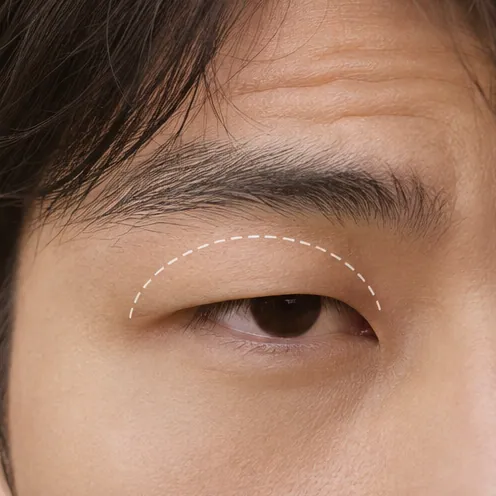
This is surgery to open hooded eyes, rather than create a double eyelid crease.
Key Questions Answered
Do men really need double eyelid surgery?
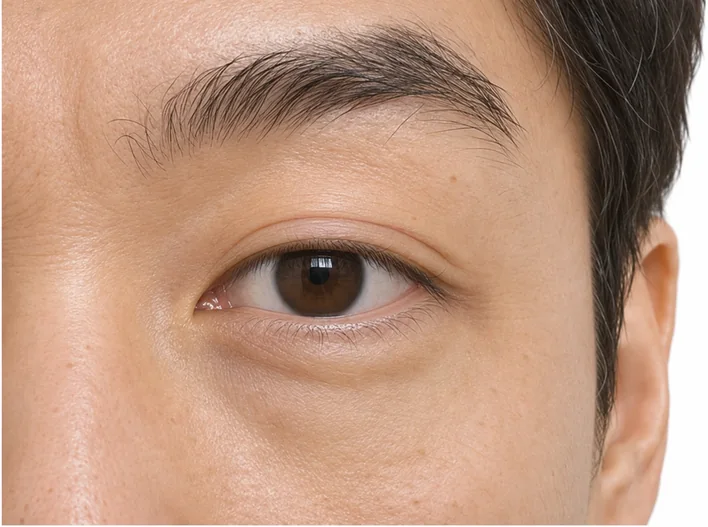
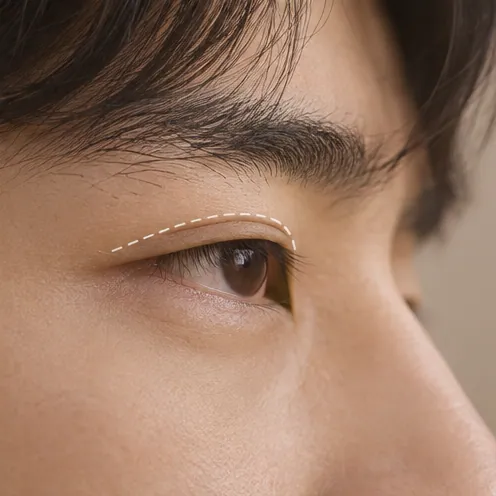
With aging or hooding of skin on eyelids without a crease, the eyelashes can poke the eyes and the skin can obstruct vision, causing you to use your forehead muscles without realizing it. The goal of male eyelid surgery is to address hooding rather than create a crease. When needed, correction can preserve an eyelid without a visible crease or create a hidden crease.
— Hooding
— Eyelash direction
— Forehead Muscle Use
YOUR CONCERN
Do any of these concerns
sound familiar?
1
Eyebrow Position
2
Hollow Areas
3
Eyelid Height
4
Eyelid Muscle Strength · Excess Skin
“I don’t want it to look like I had surgery.”
“My eyes look sleepy and make my expression look heavy.”
“My eyelashes poke my eyes.”
We first listen to your preferences, including no visible crease or a hidden crease.
We check how your eyes open and close, compensatory eyebrow movement, and skin condition. During consultation, we distinguish changes in appearance from functional discomfort.
Male eyelid surgery,
What does the surgery involve?
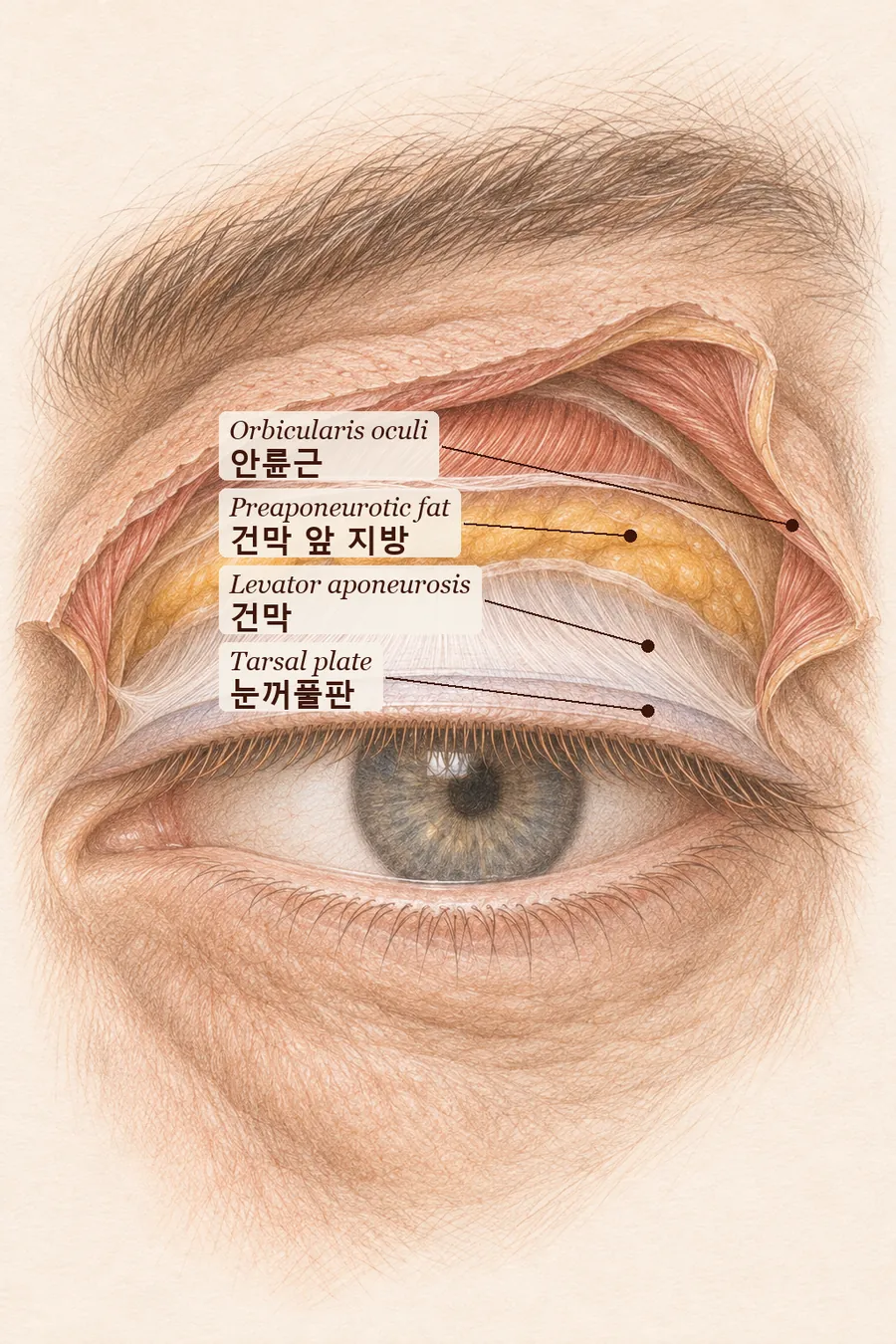
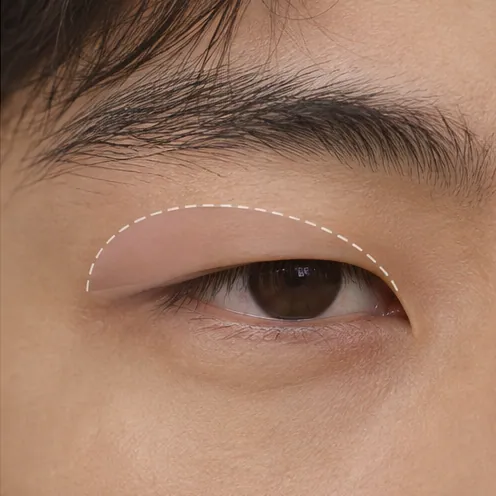
The goal of male eyelid surgery is to address hooding so the eyes feel more comfortable and look more alert, rather than create a double eyelid crease. When the eyelids cover the pupils, you may use your forehead muscles to compensate, which can lead to eye and neck pain and difficulty seeing. Correction can also preserve an eyelid without a visible crease or create a hidden crease, so the decision to have surgery is based on functional problems more than appearance. Thick skin or lowered brows are common, so we also consider which approach is appropriate.
- Correction with no visible crease · Hidden crease
- This approach either avoids creating a visible crease or places it very low. It addresses functional problems while reducing visible signs of surgery.
- Pseudoptosis
- This is a condition in which drooping skin covers the pupil even though eyelid muscle strength is normal. Removing excess skin may help.
- Habitual brow raising
- This is the habit of using the forehead muscles to raise the brows because the eyes do not open fully. Over time, it leaves forehead wrinkles.
In male eyelid surgery
in Lower Blepharoplasty
Even if your family encouraged the visit, we start by explaining with photos
Most men are brought in by their families and initially say they are fine. Many come because people around them have mentioned a problem with their eyes. Reviewing photos together and explaining how much the eyelids cover the pupils helps distinguish areas that need treatment from those that do not. If there is no functional problem and little discomfort, we explain that observation is an option.
We view hooding as a functional issue more than an appearance issue
With aging or hooding of skin on eyelids without a crease, the eyelashes can poke the eyes and the skin can obstruct vision. This can cause you to use your forehead muscles without realizing it, leading to eye and neck pain or fatigue. Some people also feel their eyesight has worsened, so we recommend an ophthalmic evaluation when needed. That is why consultation begins by measuring how much of the pupil is exposed, rather than focusing on crease shape.
Correction is also possible without a visible crease
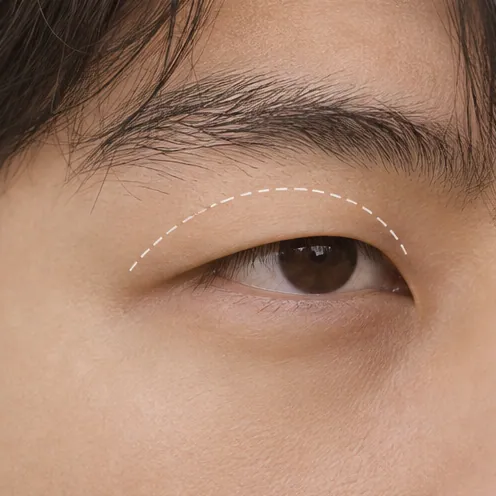
A double eyelid crease is not required for male eyelid surgery. Hooding can be addressed while preserving an eyelid without a visible crease or creating a very low, hidden crease, reducing concerns about a change in appearance. We determine the crease height together by considering how the pupils and eyelids will look when the eyes are open. If you prefer a visible crease, we plan accordingly.
Thick eyelids affect the choice of approach
Men often have thick skin and tissue beneath the brows, so heaviness may remain even after skin is removed along the eyelid crease. In these cases, we consider a subbrow lift, which involves an incision beneath the brow to lift sagging skin and muscle layers and secure them toward the forehead muscle. We weigh the incision scar along the brow border against the ability to avoid creating a double eyelid crease.
The brows may lower as the forehead muscles relax
If you have long relied on raising your brows to open your eyes, your brows may lower after eyelid surgery as you use your forehead muscles less. This can bring the eyes and brows closer together and change your appearance. Accounting for this change before surgery helps determine the appropriate amount of skin to remove and the crease height.
The Surgical Process Varies
Depending on Your Condition
When skin covers the eyes
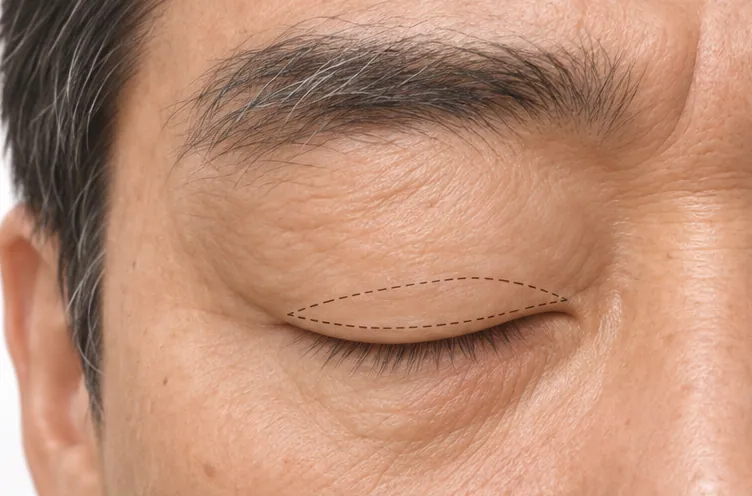 1
We assess excess skin and brow position, then mark the width of skin to remove
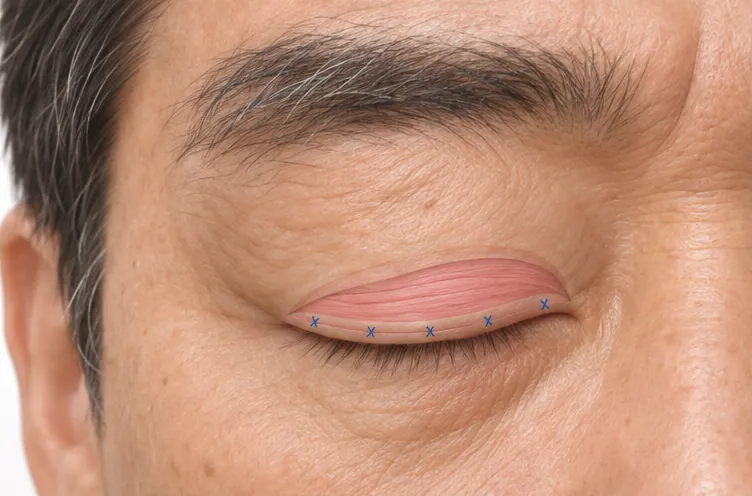 2
We make an incision along a low crease and remove excess skin and orbicularis oculi muscle
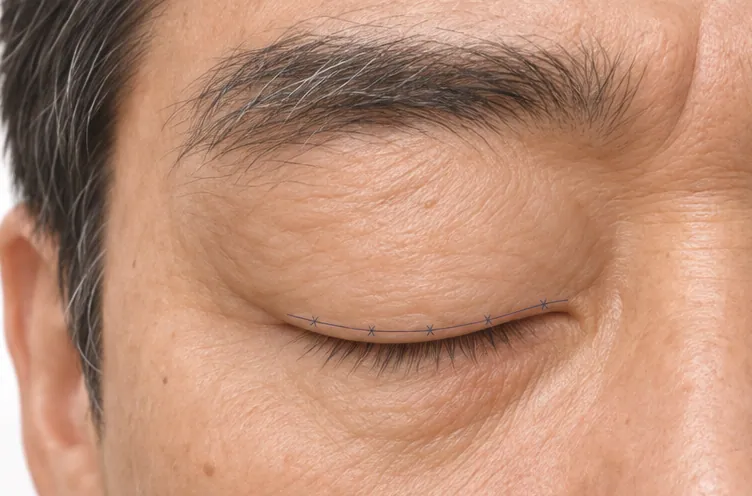 3
We secure the tissues so the crease is hidden or low, then close the incision
When the eyelids are thick and you do not want a double eyelid crease
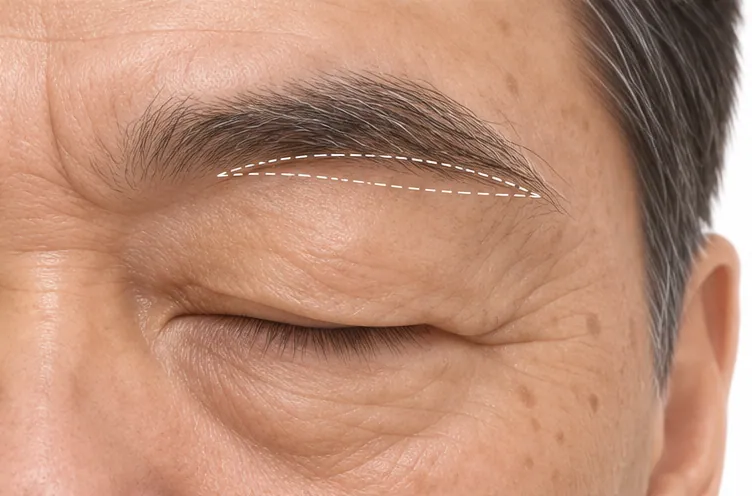 1
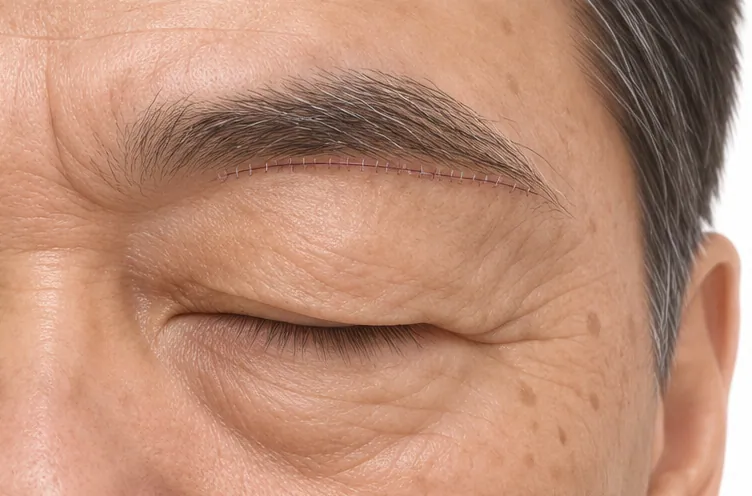
The incision is marked along the lower border of the eyebrow
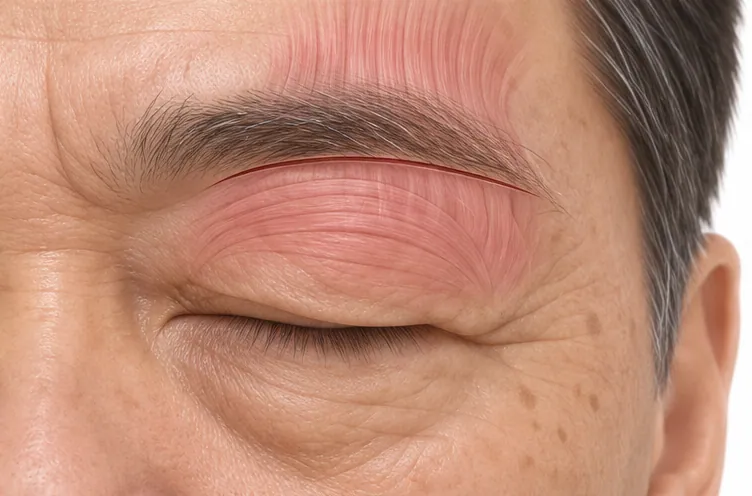 2
An incision is made along the markings to remove drooping skin
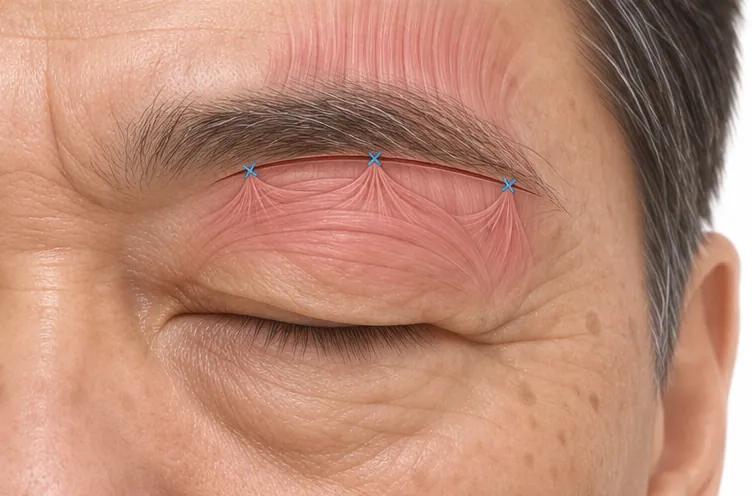 3
The orbicularis oculi and muscle layer are pulled upward and secured toward the frontalis
 4
The incision is closed with fine sutures along the eyebrow border
When eyelid muscle strength is weak
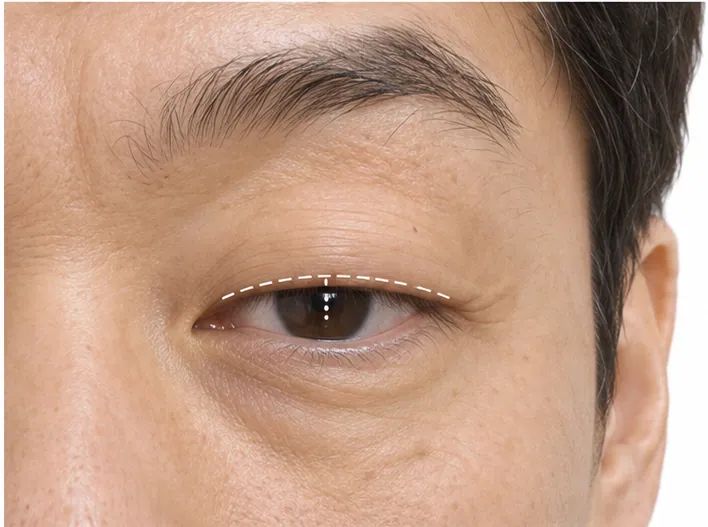 1
We measure MRD1 to check for ptosis and mark a low incision line
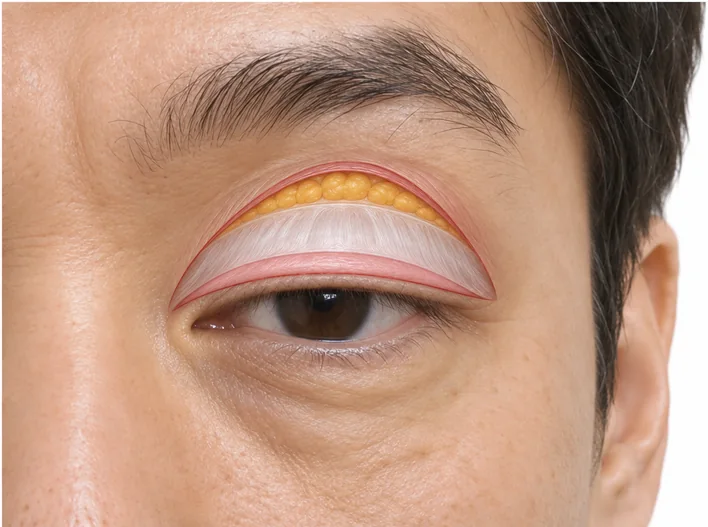 2
We make the incision and locate the eyelid-lifting muscle and its aponeurosis
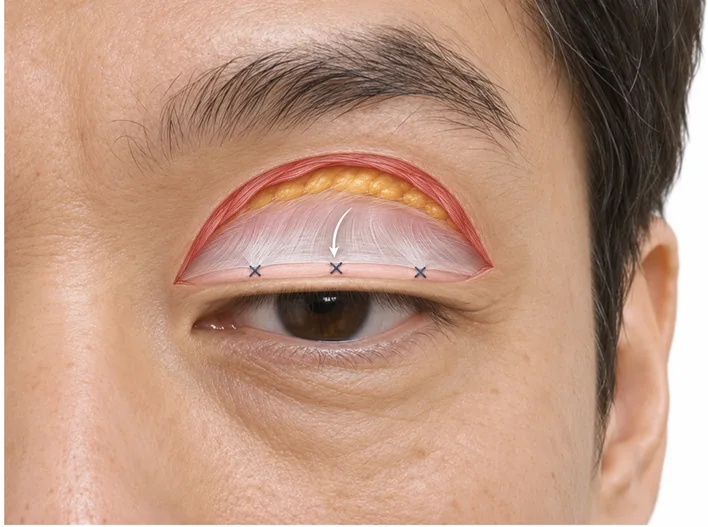 3
We secure the aponeurosis to the tarsal plate inside the eyelid to adjust eyelid height
 4
We form a hidden crease and close the incision
Illustration for explanation · Not an actual patient. This is a simplified description of typical steps. The actual technique and extent of surgery are determined after examination.
DOCTOR’S NOTE
We first listen to how you want to look. No visible crease · A hidden crease are also options.
A double eyelid crease is more than a cosmetic feature. It also helps lift the eyelashes away from the eyeball as the eyelid moves up and down. Together, we look for a way to address functional problems without unwanted cosmetic changes.
— Dr. Hyungwoo Yim
MYTH → FACT
“Does male eyelid surgery look obvious?”
There are ways to address hooding while preserving an eyelid without a visible crease or creating a hidden crease.
IN HIS WORDS
Window blinds
“When a drooping eyelid covers the pupil, it is like leaving a window blind halfway down. Raising the blind is the first step toward protecting your field of vision.”
THE DETAIL
A dynamic crease
For a result that does not look obvious, the crease should fold naturally only when the eyes open and unfold when they close.
VITAL PROTOCOL
Our approach to male eyelid surgery
STEP 01
Understand your preferred appearance
We first ask whether you prefer no visible crease, a hidden crease, or a visible crease.
STEP 02
Assess hooding · Function
We check eyelash direction, vision obstruction, and forehead muscle use.
STEP 03
Choose an approach
We determine the extent of skin removal, crease formation, or ptosis repair needed.
STEP 04
Follow-Up
We document swelling and how the crease settles.
WHAT WE CHECK
We focus on hooding before the crease
Skin hooding
We check whether skin hangs over the eyelashes.
Eyelash direction
We check whether the eyelashes poke the eyeball.
Eyelid Muscle Strength
We check for accompanying ptosis.
Forehead Muscle Use
We check for compensatory habits.
Your preferred appearance
We decide together how visible the crease should be.
Skin thickness
This affects how the crease is secured.

When
to consider a consultation
- When you are often told your eyes look sleepy
- When you have deep forehead wrinkles and opening your eyes takes effort
- When your eyelashes poke your eyes or your vision feels obstructed
- When you want to avoid visible signs of surgery
When
Surgery is not our first recommendation
- When there is no functional problem and little discomfort
- When you still do not want surgery after the explanation
- When it is difficult to allow enough time for recovery
- When health conditions such as high blood pressure or diabetes need to be controlled first
WHEN WE WAIT
In These Cases
We do not recommend immediate surgery.
When your desired appearance differs greatly from what is medically achievable
When it is difficult to allow enough time for recovery
When symptoms require an ophthalmologic evaluation first
Preparing for surgery and
recovery by stage
- 3–4 days after surgery
This is when swelling and bruising are at their worst. Sleep with your head elevated. For the first 2–3 days after surgery, apply a cold compress gently, without letting ice touch your skin or eyes directly. Starting on day 4, use a warm compress. While you cannot close your eyes completely, use artificial tears frequently and apply eye ointment before bed.
- Days 5–7
If an incision was made, the stitches are removed. Keep the surgical area dry until then. Avoid eye makeup, eyelash extensions, and contact lenses for 2 weeks, and saunas and Korean bathhouses for 1–2 weeks. You can resume light daily activities after 2–3 days, although swelling and bruising may remain.
- 3 weeks–3 months
During this period, the tissue may feel firm and tight. This is part of the healing process, so decisions about revision surgery are not based solely on appearance at this stage. Avoid strenuous exercise, rubbing or tightly closing your eyes, and sleeping face down for 1 month after surgery.
- 3 months–1 year
The tissues soften, redness fades, and the two sides gradually become more balanced. We check your progress at 1 · 3 · 6 months · 1 year.
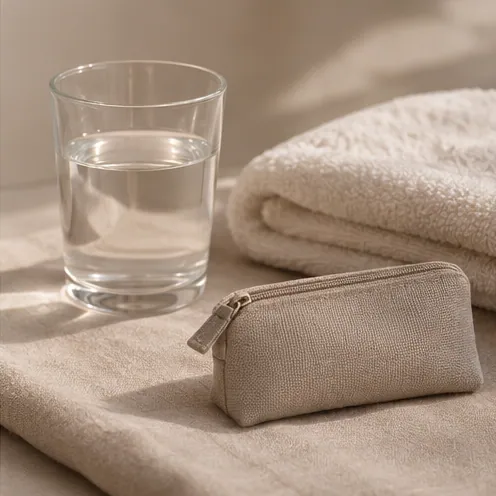
No smoking · No alcohol
You will be advised before surgery to avoid alcohol and smoking for 2–4 weeks afterward, as they can affect bleeding and wound healing.
Medications · Supplements
We recommend stopping herbal medicines and supplements such as omega-3 when possible because they may increase bleeding. Please tell us about every medication you take.
Medical history
Thyroid eye disease, glaucoma, severe dry eye, autoimmune disease, or anticoagulant use may be reasons to postpone or avoid surgery.
Eye care habits
Limit contact lens use as much as possible, use artificial tears frequently, and avoid rubbing your eyes. Tell us if you have used double eyelid tape or glue.
Recovery timelines are general estimates and vary by individual. Contact us immediately for sudden severe pain, decreased vision, bleeding that does not stop, or rapidly worsening swelling on one side.
LIMITS & RISKS
Along with possible improvements,
we explain the limitations and risks.
Asymmetry
Crease Changes
Swelling
Bruising
Scarring
Undercorrection
Do not wait if you have these symptoms
If you experience sudden severe pain, decreased vision · An obstructed field of vision, bleeding that does not stop, or rapidly worsening swelling on one side, contact us immediately instead of waiting for your appointment.
This is not a complete list of possible risks. Risks may vary depending on your health, previous treatments, and the technique and extent of surgery. Surgical results vary by individual.
Common questions
during consultations
Can I return to work after three days off without visible signs of surgery?
We cannot guarantee that you will be ready to return to in-person work after just three days off. A week off may allow you to consider some eyelid procedures, but swelling and bruising may remain. Two weeks or more provides more flexibility. If you have an important event, please schedule a consultation well in advance.
Can you improve eyelid muscle function without creating a double eyelid crease?
This is often possible. During ptosis repair, we can plan a low, hidden crease or one that is not visible. The eyelid still needs a place to fold when the eye opens, so we assess the appropriate height together during the examination.
Will my appearance change?
Your appearance may change somewhat as previously covered pupils become more visible and raised brows lower. The goal is to reduce a heavy or sleepy appearance within your natural features, rather than make you look like someone else.
Related Treatments
Q & A
Before you decide,
frequently asked questions
Q
People say men don’t need double eyelid surgery. Do I really need it?
−
A
Hooding can obstruct vision and cause you to use your forehead muscles. The goal is to address functional problems, which can also be done without a visible crease.
Q
Where Are Eyelid Surgery Incisions Made, and How Do the Scars Change?
−
A
Incisions are placed along less noticeable boundaries, such as a natural crease, just below the eyelashes, or the conjunctiva inside the eyelid. They may be red initially but gradually fade as the tissue settles.
Q
When can I return to work?
−
A
You can return to light work 2–3 days after surgery, but most swelling and bruising improve over 2–6 weeks. If your job involves meeting people frequently, it is advisable to allow extra time in your schedule. Stitches are usually removed 5–7 days after surgery. Recovery varies from person to person.
AFTER SURGERY
After male eyelid surgery, your care continues with VITAL LASTING CARE.
~ 1 WEEK
Check the wound · bleeding · infection · early function, remove sutures
1 MONTH
Early scar contracture: assess tightness · firmness and begin regenerative care if needed
3 MONTHS
Peak contracture · transition phase: assess remodeling and consider continued injections · laser treatment
6 MONTHS
Compare with initial photos and decide whether additional treatment is needed
1 YEAR
Check tissue maturation · long-term progress
IN HIS WORDS
To ease discomfort,
rather than enhance your appearance.
“
Men are often brought in by their families. When we show them the problem in photos and explain it, they understand.
Doctor Interview · 2026.10
Dr. Hyungwoo Yim, Medical Director · Based on the doctor's own answers. The actual scope of care is determined after an examination.
RELATED SURGERY
DOCTOR'S COLUMN DOCTOR'S COLUMN DOCTOR'S COLUMN
Must Read
Care Notes Written by the Doctor · Please Read Before Your First Visit
No.1
No.3
VIEW MORE →
RESERVATION
You do not need to decide the day of your consultation.
Organize questions about this page without entering your name, contact information, or medical history. This does not submit an appointment request.