PLASTIC SURGERY
All Treatments / Surgery
Lowering the double eyelid crease
We first determine whether swelling or structural factors are responsible, then discuss how much the crease can be lowered.
This may vary depending on your condition and the extent of surgery.
Double Eyelid Crease Lowering,
What does the surgery involve?
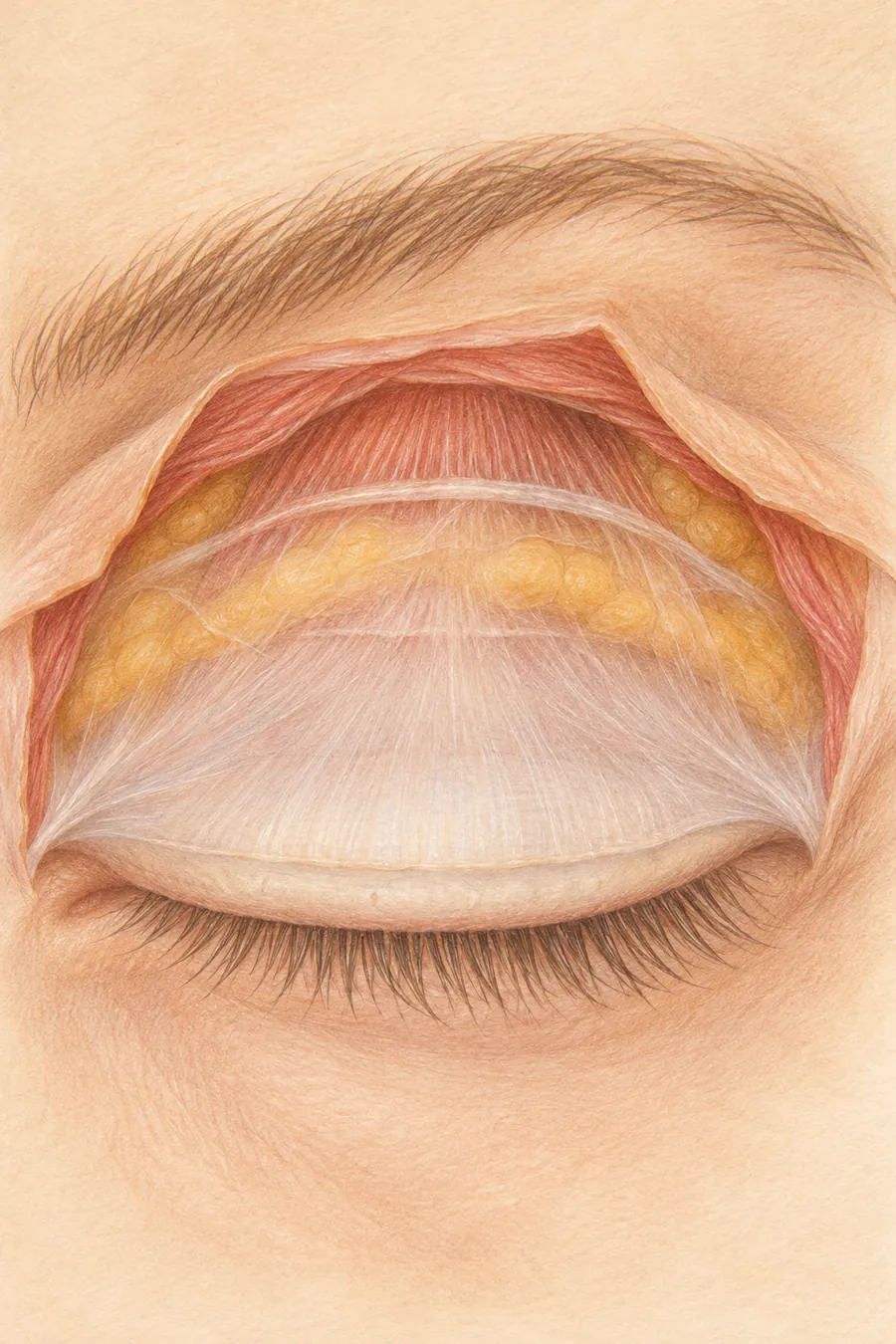
When the double eyelid crease is set high and the skin beneath it forms a thick fold, the eyes may look swollen even when open. This is often called “sausage eyes.” It takes several months for the shape to settle after eyelid surgery, so the appearance may be due to swelling, depending on the timing. If it persists over time, structural factors such as crease position, adhesions, tissue thickness, or eyelid lifting strength may be involved. The amount of skin remaining determines how much the crease can be lowered, so we begin by assessing the possible range together.
- “Sausage Eyes”
- A term for eyes that look swollen because the skin below the double eyelid crease forms a thick fold. It is not a medical term.
- Excess Skin
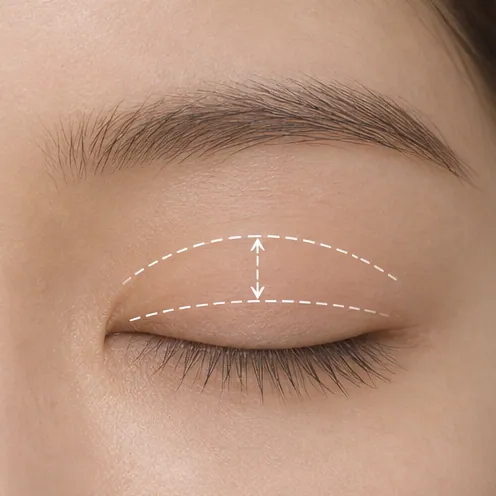
- The length of eyelid skin available when the eyes are closed. To lower the crease, enough skin must remain below the new crease.
- Adhesions
- Areas where tissues have stuck together after surgery. A high crease usually has adhesions at that level that must be released before it can be lowered.
For Double Eyelid Crease Lowering,
in Lower Blepharoplasty
We First Distinguish Swelling From Structural Issues
Even when the initial shape is visible after eyelid surgery, swelling takes several months to subside and tissues need time to settle. Revision surgery may take longer. From 3 weeks to 3 months, tissues tend to become firm, making the crease look thick. We therefore ask when the surgery was performed first and consider structural issues when enough time has passed without change. Cosmetic revisions are better performed after the tissues have stabilized.
A Thick Appearance Can Have Several Causes
The crease itself may be fixed too high, or deep adhesions may pull the skin beneath it upward into a fold. Thick muscle and fat, or weak eyelid lifting strength that prevents the skin from unfolding fully, can also contribute. Excessive tissue removal can cause hollowing that makes the crease look deeper. Each cause requires a different approach, so the plan is not limited to lowering the crease.
Enough Skin Must Remain to Lower the Crease
To lower the crease, there must be skin between the new crease and the eyelashes, as well as enough skin to close the eyes. If enough skin is available, we consider removing a strip that includes the previous crease and scar. If little skin is available, we consider releasing adhesions and securing the crease at a lower position without removing skin. The limit is the point at which the eyes can still close properly.
Adhesions Must Be Released and Tissue Placed Between the Layers
Even after the adhesions forming the high crease are released, the tissues may stick together again in the same place if the space is left unfilled. One approach is to reposition eyelid fat or nearby tissue between the released layers. If there is not enough tissue, fat grafting may also be considered. The exact extent of the adhesions can only be determined during surgery, so we explain beforehand which parts of the plan may change.
Lowering Alone May Not Be Enough When Eyelid Lifting Strength Is Weak
When eyelid lifting strength is weak, the skin is not pulled upward enough, making the area below the crease look thick. Simply lowering the crease in this situation may make the eyes look less open, so we measure MRD1 to determine whether to include ptosis correction. However, ptosis correction involves additional manipulation of eyelid tissue, which can cause more swelling and bruising, as well as dryness or incomplete eyelid closure.
Scars Are Assessed Separately Based on Their Condition
We assess the healing stage of the previous scar and any tissue shortage to decide whether scar treatment or surgical correction is appropriate. Redness and firmness may last for several months or longer, and the same laser is not used at the same time for every scar. Injection and laser treatments usually begin one month after surgery and need to continue consistently for at least 6 months.
The Surgical Process Varies
Depending on Your Condition
When Enough Skin Is Available
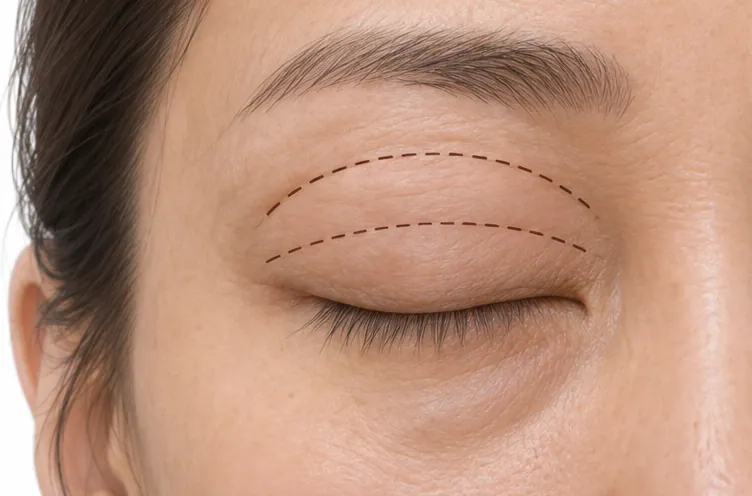 1
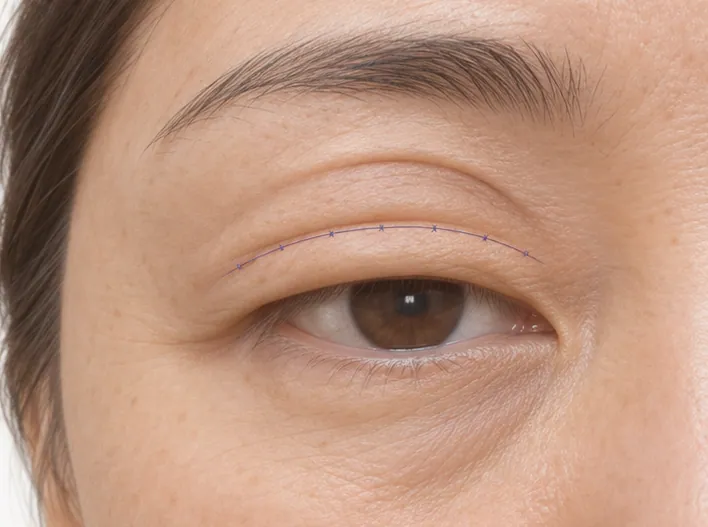
Mark both the planned lower crease and the previous crease
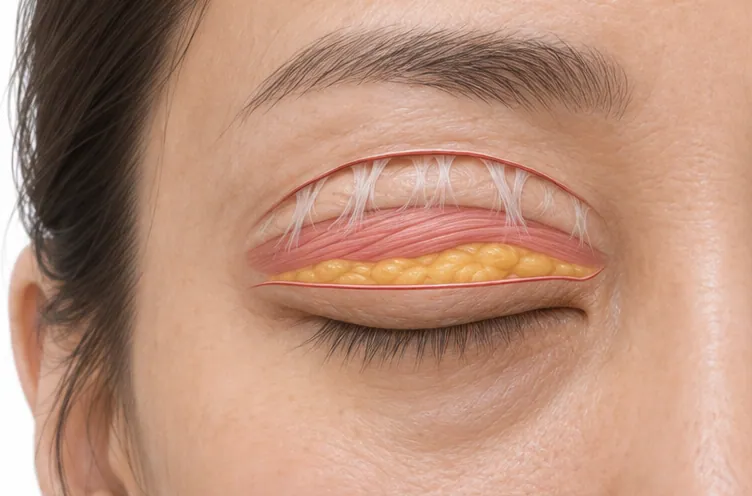 2
Remove a strip of skin that includes the previous crease and scar
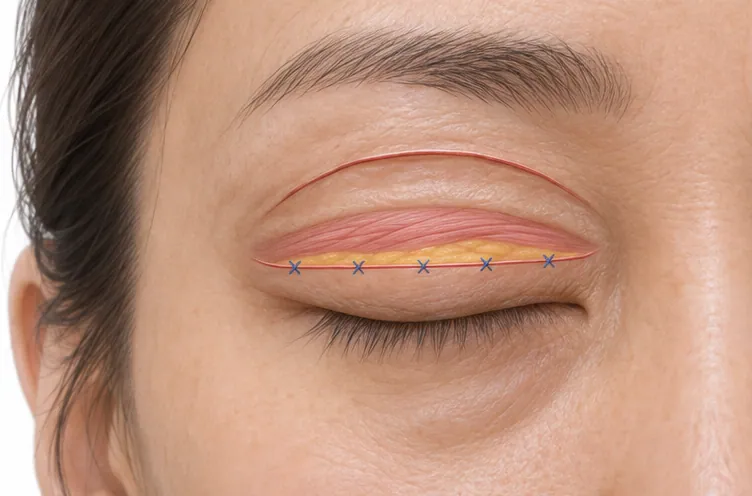 3
Release adhesions and reduce thick tissue
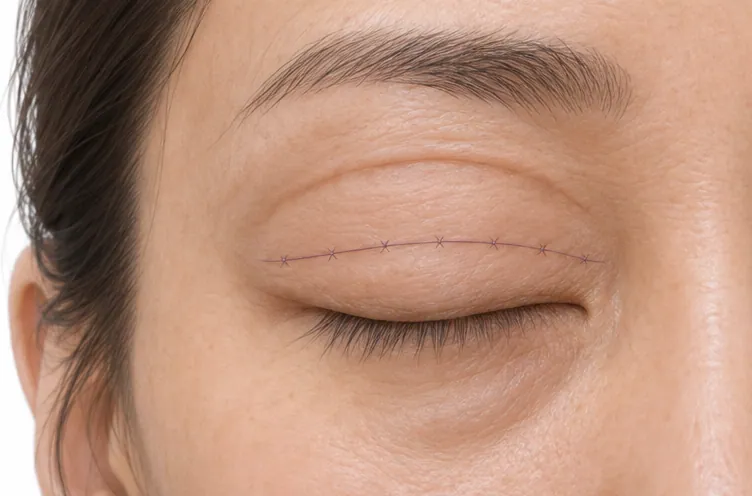 4
Secure the crease to a deeper layer at a lower position and close with sutures
When Little Skin Is Available
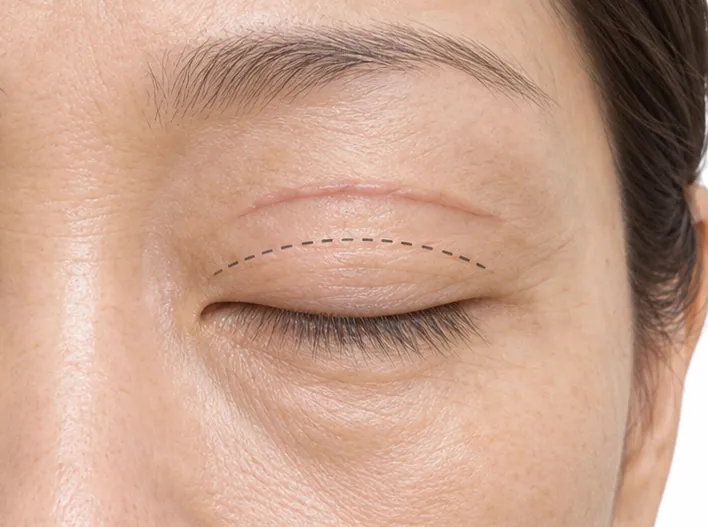 1
Measure the skin length with the eyes closed and determine how much to lower the crease
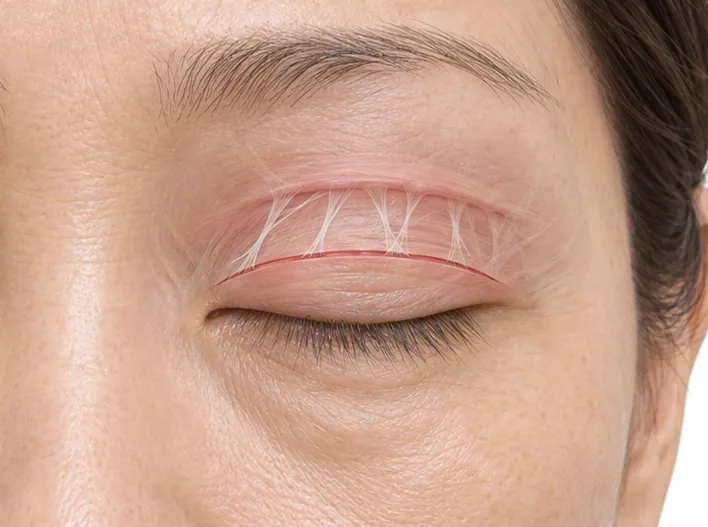 2
Make an incision at the lower position and carefully release adhesions extending upward
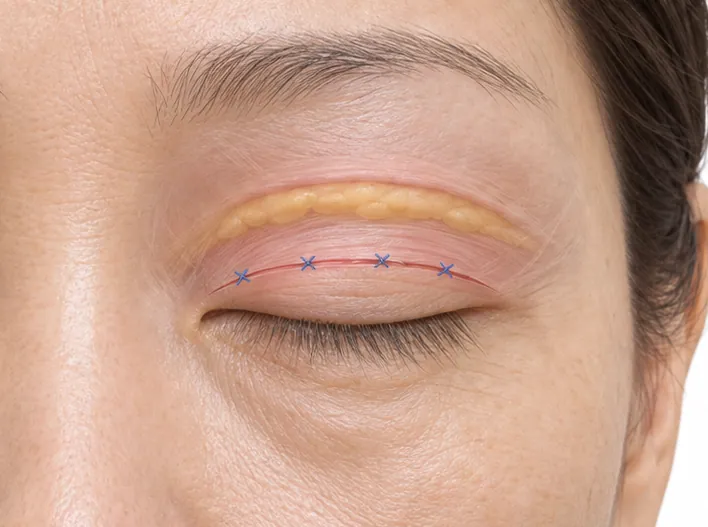 3
Reposition fat or nearby tissue between the released layers
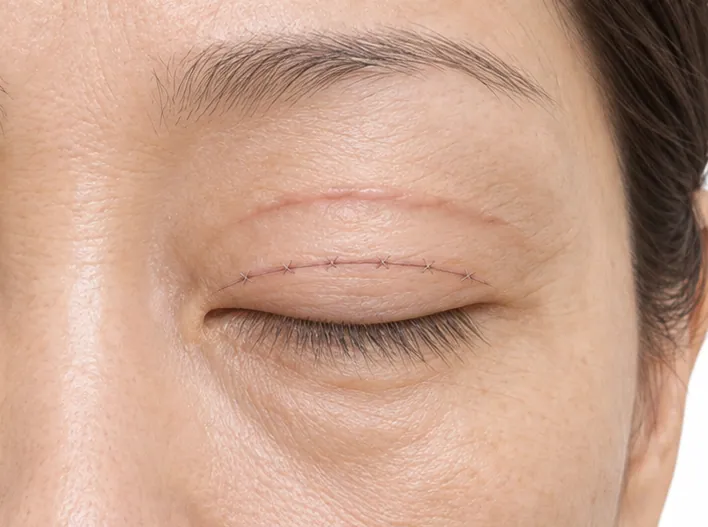 4
Secure the new crease at the lower position and close with fine sutures
When Weak Eyelid Lifting Strength Causes a Thick Appearance
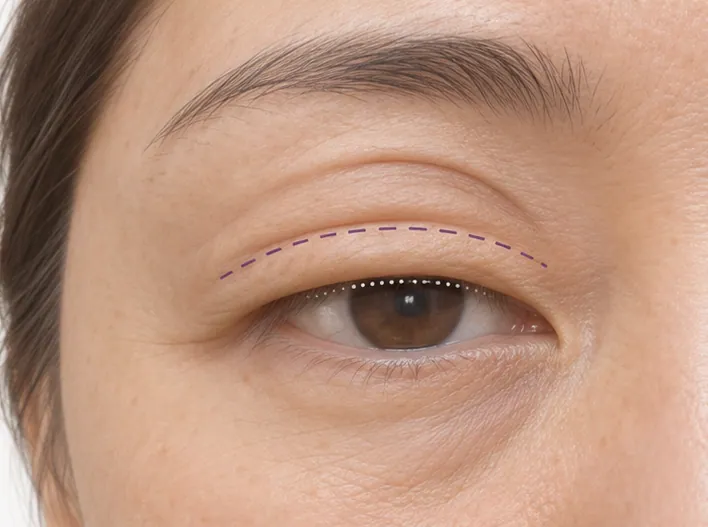 1
Measure MRD1 and available skin to determine whether to include ptosis correction
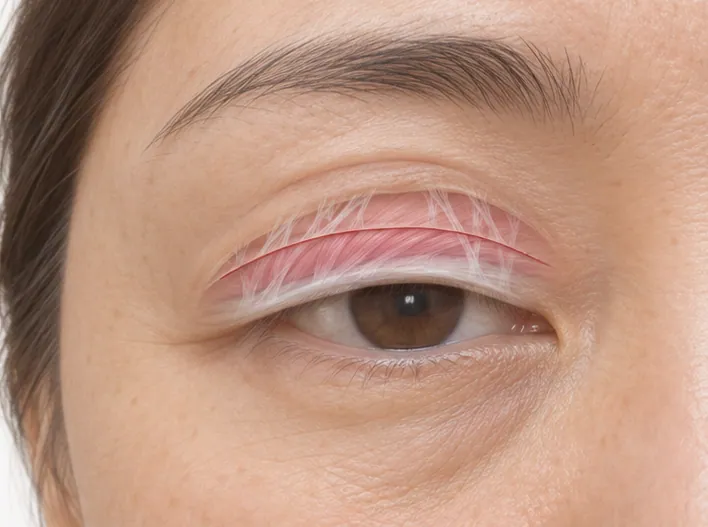 2
Make an incision along the planned lower crease and release adhesions
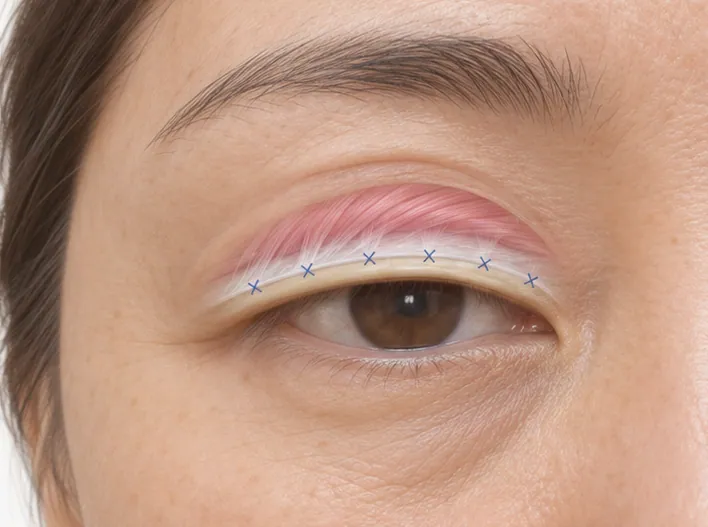 3
Adjust the eyelid lifting muscle and its aponeurosis to modify eyelid height
 4
Secure the crease again at the lower position and close with sutures
Illustration for explanation · Not an actual patient. This is a simplified description of typical steps. The actual technique and extent of surgery are determined after examination.

When
to consider a consultation
- When the crease remains high and thick after enough time has passed since surgery
- When the eyes look swollen even when open
- When the crease and scar remain unnatural-looking
- When opening the eyes feels difficult and the area below the crease looks thick
When
Surgery is not our first recommendation
- When less than 3 months have passed since surgery and the tissues are still firm
- When limited skin means lowering the crease would interfere with eyelid closure
- When the burden of additional surgery outweighs the expected improvement
- When the desired crease height is beyond what can safely be achieved
Preparing for surgery and
recovery by stage
- 3–4 days after surgery
This is when swelling and bruising are at their worst. After revision surgery, swelling, bruising, and scars may take more than twice as long to settle as after the first surgery. Rest fully for at least 2 weeks, use cold and warm compresses, and sleep with your head elevated. While your eyes cannot close completely, use artificial tears frequently and apply eye ointment before bed.
- Days 5–7
If an incision was made, your stitches will be removed. Until then, keep water away from the surgical area. Start wearing eye makeup and contact lenses after your doctor approves, usually after 2–4 weeks. Follow your doctor's instructions for scar ointment, tape, and laser treatment.
- 3 weeks–3 months
During this period, the tissue may feel firm and tight. This is a response to healing, so do not decide on another revision based on its appearance at this stage. Avoid strenuous exercise, saunas, alcohol, and smoking for 2 months.
- 3 months–1 year
The tissues gradually soften, redness decreases, and the two sides become more even. The final result is assessed after 6 months to 1 year, with follow-up visits at 1, 3, and 6 months and at 1 year.

No smoking · No alcohol
You will receive these instructions before surgery. After revision surgery, avoid alcohol and smoking for 2 months, as they affect bleeding and wound healing.
Medications · Supplements
We recommend stopping herbal medicines and supplements such as omega-3 when possible because they may increase bleeding. Please tell us about every medication you take.
Medical history
Thyroid eye disease, glaucoma, severe dry eye, autoimmune disease, or anticoagulant use may be reasons to postpone or avoid surgery.
Eye care habits
Limit contact lens use as much as possible, use artificial tears frequently, and avoid rubbing your eyes. Tell us if you have used double eyelid tape or glue.
Recovery timelines are general estimates and vary by individual. Contact us immediately for sudden severe pain, decreased vision, bleeding that does not stop, or rapidly worsening swelling on one side.
Common questions
during consultations
How much can the crease be lowered?
It is difficult to specify a number in advance. The amount the crease can be lowered depends on the length of remaining skin, the extent of adhesions, and eyelid lifting strength. During the examination, we measure the available skin with the eyes closed and explain the possible range.
Will lowering the crease leave two scar lines?
If enough skin is available to remove the previous crease, we aim to leave a single scar line. If little skin is available and a new crease is secured at a lower position, the previous scar above it may remain. We explain this before choosing the surgical approach.
How long should I wait before having surgery?
Because cosmetic revisions are better performed after the tissues have stabilized, we usually allow 6 months to a year or longer. However, the decision is based on the condition of the adhesions and tissues as well as the time elapsed. If incomplete eyelid closure leaves the cornea exposed or pain persists, an earlier evaluation is needed.
RESERVATION
You do not need to decide the day of your consultation.
Organize questions about this page without entering your name, contact information, or medical history. This does not submit an appointment request.