When your upper eyelids look hollow, should you start by adding volume? We first assess how you open your eyes, eyebrow position, and the surrounding tissues.
Medically reviewed by Dr. Hyungwoo Yim, Medical Director (board-certified plastic surgeon) · Published October 6, 2026 · Last reviewed November 11, 2026
SHORT ANSWER
First, the Short Answer
A lack of volume is not the only reason upper eyelids look hollow.
When eyelid-opening strength is weak and you use your forehead and eyebrows to open your eyes, shadows can look deeper. In these cases, reports have described substantial reductions in shadowing simply by correcting eyelid height, without adding fat 1.
That is why, before choosing a method to add volume (fat grafting or fillers), we assess eyebrow position, eyelid-opening strength, skin and fat condition, and signs of previous surgery, in that order.
Even when added volume is needed, some grafted fat is absorbed and lumps can form, so the amount and treatment sequence are determined through an examination 2.
“Doctor, my upper eyelids look deeply hollow and make me look tired. Would adding fat help?”
This is a paraphrase of a question we often hear during consultations.
When I hear this question, I first assess eyelid-opening strength before discussing fat. This article walks through the causes of hollowness (01), what to distinguish before adding volume (02), treatment options (03), limitations and risks (04), recovery and when to assess results (05), and what to review during a consultation (06). Section 02 shows how shadowing changed when eyelid height alone was corrected without adding fat.
01What causes hollow upper eyelids? There is more than one cause
Answer The causes of hollowness fall into three categories: age-related changes, weakened eyelid-opening strength, and the effects of previous surgery. That is why we ask about previous surgery and habits, rather than assessing only how deep the hollows are.
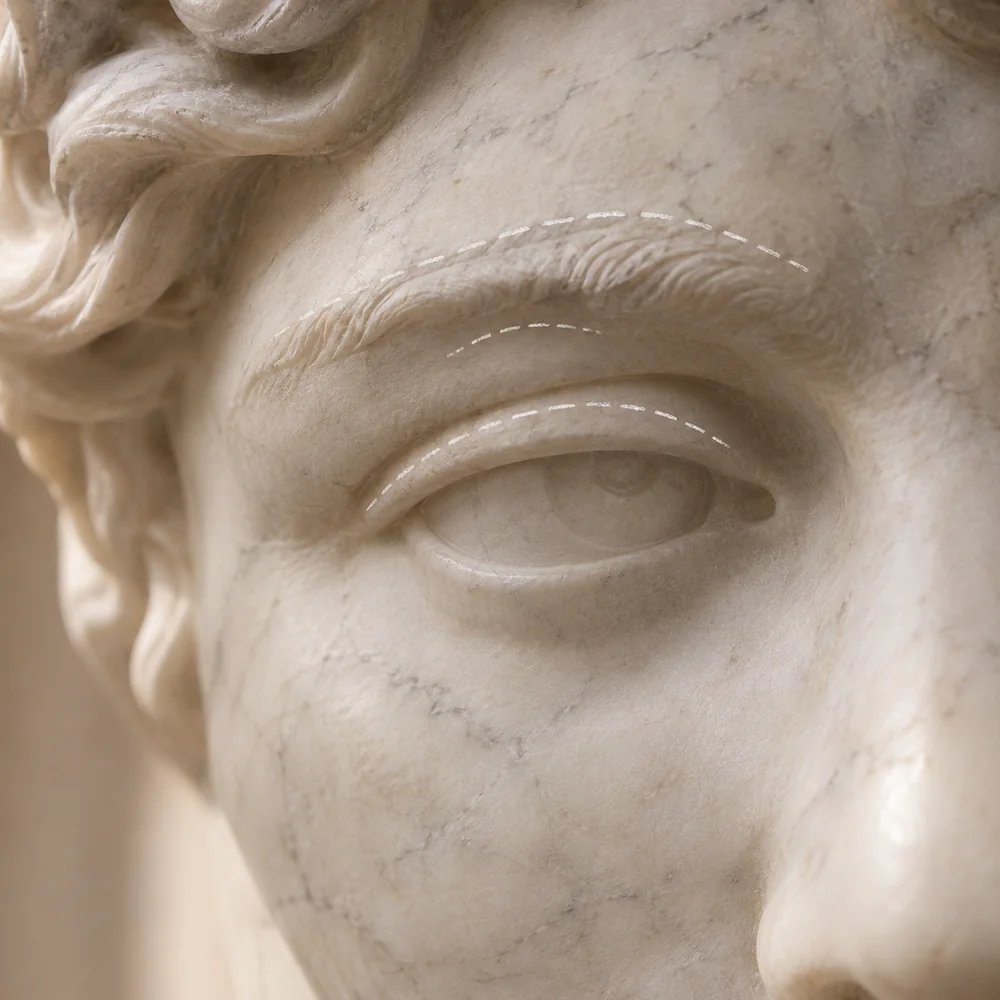
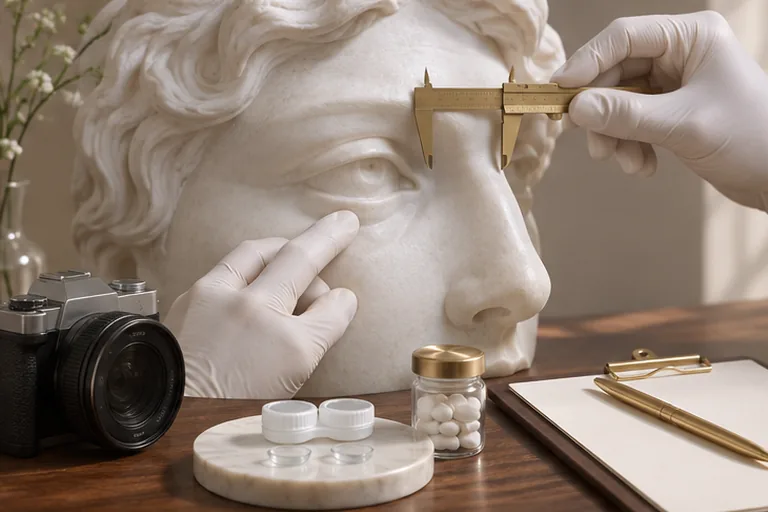
Image for illustration · A marble sculpture, not a real person
Hollow upper eyelids (superior sulcus hollowing) occur when the area between the bony rim beneath the eyebrow and the upper eyelid crease becomes sunken and shadowed. When this question comes up in the exam room, the first thing to assess is more than just how deep the hollows are.
Of 94 patients treated for hollow upper eyelids at a hospital in China, 78 (83.0%) had previously undergone upper eyelid surgery 3. These records included only patients seeking correction, so the percentage does not represent the general population. Still, it illustrates why a history of previous surgery must be checked.
Habits also play a role. Among 60 eyes in Japanese patients with both ptosis and hollow upper eyelids, long-term hard contact lens use was the cause of ptosis in 47 eyes (78.3%) 1. Based on his clinical experience, Dr. Hyungwoo Yim also considers frequent eye rubbing a factor that worsens hollowness. “There is nothing to gain from rubbing your eyes. The eyelid crease becomes less defined, styes develop, and the eyes look sleepy and hollow, creating a vicious cycle for the muscles that open the eyes. During surgery, you can see the effects in the tissues of people who rub their eyes a lot.” (Interview with Dr. Yim, October 2026)
The causes of hollowness fall into three main categories.
Age-related changes: Loss of fat inside the eyelids and surrounding soft tissue creates a hollow appearance 4.
Weakened eyelid-opening strength (ptosis): When the aponeurosis of the muscle that raises the eyelid stretches or detaches, the forehead and eyebrows compensate to open the eyes, making shadows look deeper 1.
Effects of previous surgery: Too much fat or tissue may have been removed during double eyelid surgery or upper blepharoplasty, or scar adhesions may have formed 53.
Key point For hollow upper eyelids, we first assess why the hollowness developed and any history of previous surgery, rather than focusing only on its depth.
Then what should we distinguish first, before choosing how to add volume?
02What do we distinguish before adding volume?
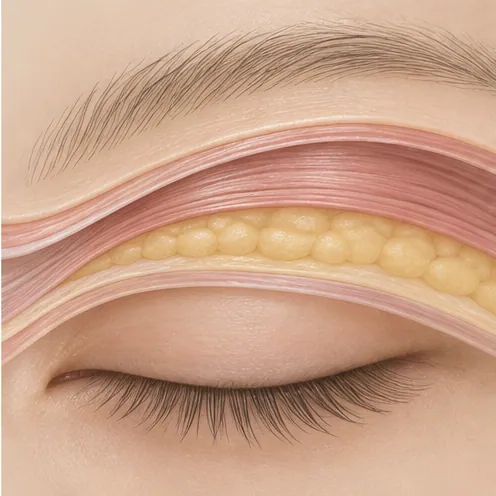
Answer Before adding volume, we distinguish areas of actual volume loss, eyelid-opening function and eyebrow position, and the condition of the skin, muscles, and fat, along with signs of previous treatment. Similar appearances do not necessarily have the same cause.
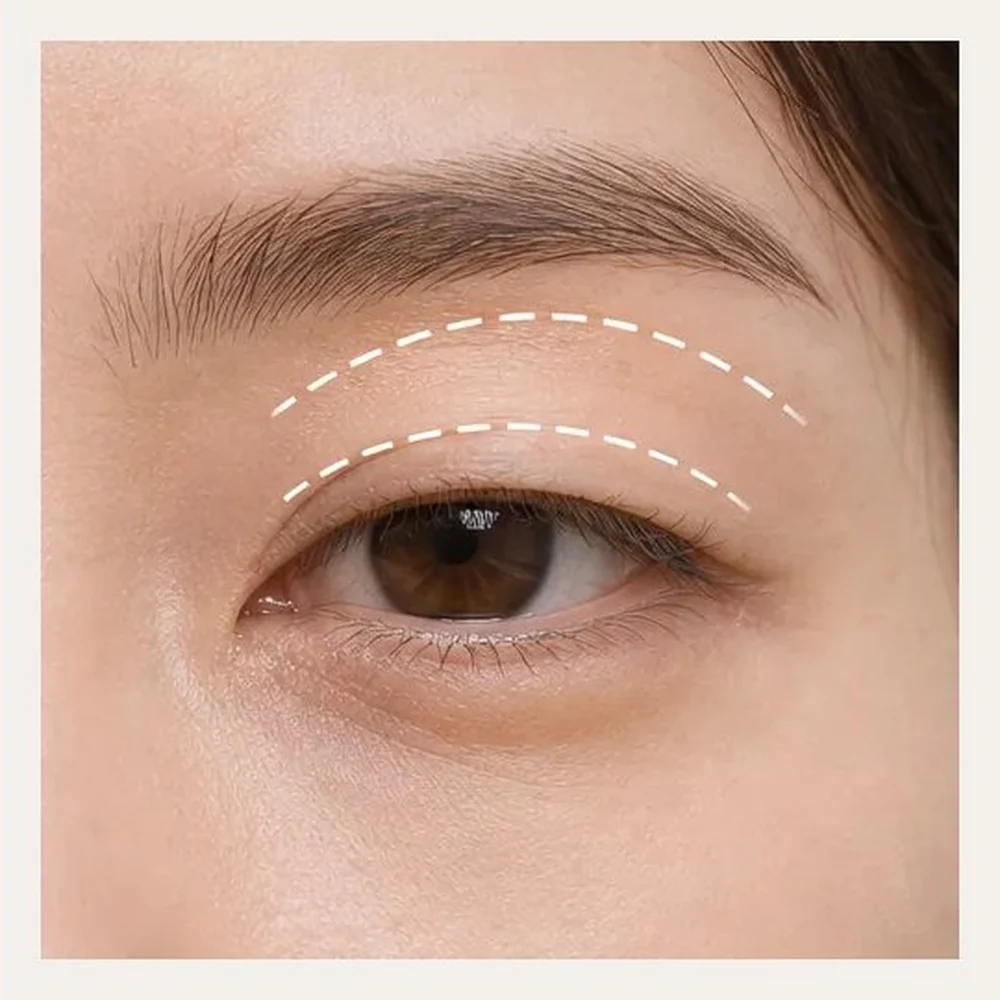
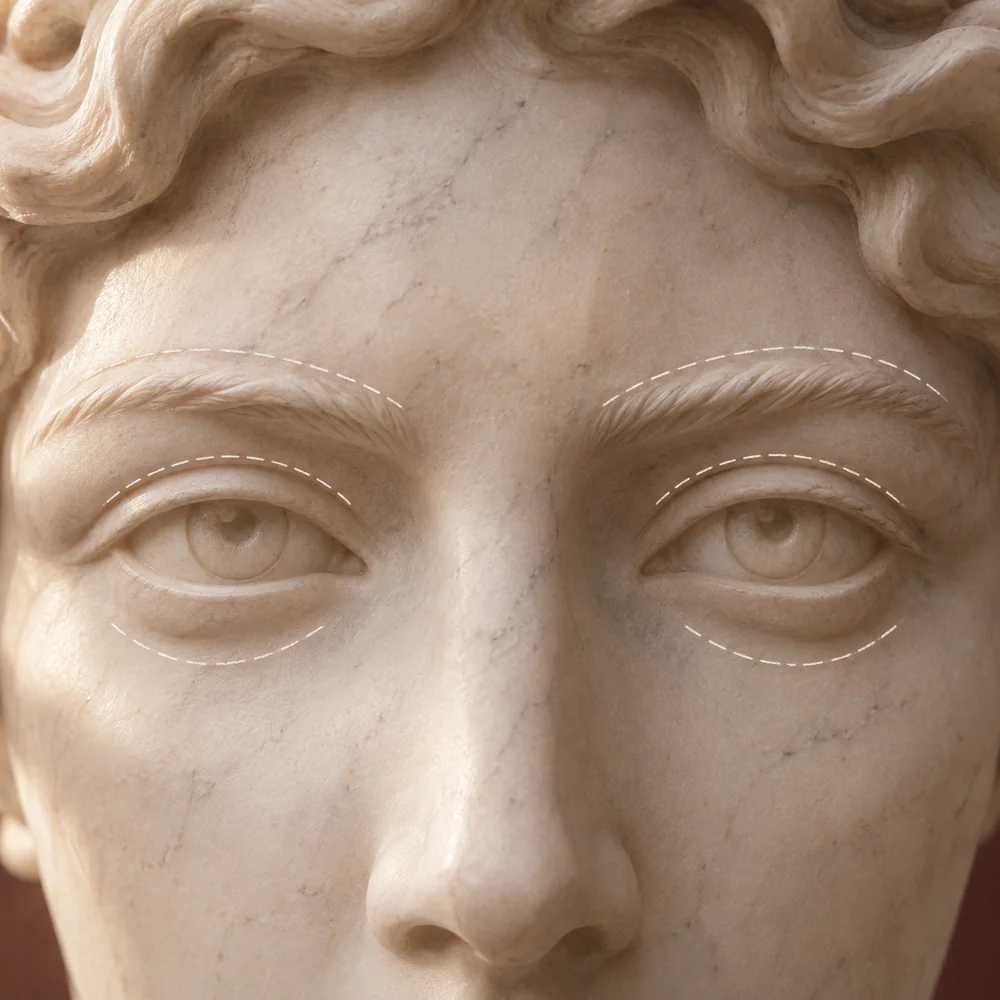
Illustration for reference · Not an actual patient
Similar appearances do not necessarily have the same cause. That is why VITAL aims to explain the different causes before choosing a procedure or surgery.
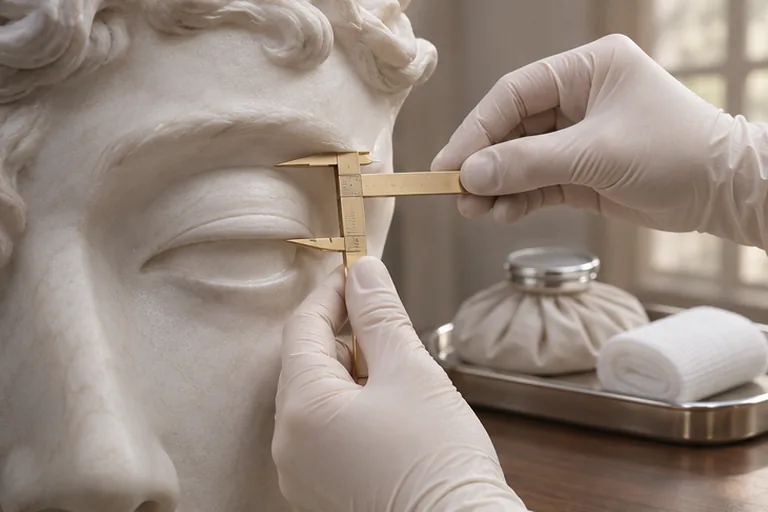
During the examination, we assess eyebrow position, hollow areas, eyelid height, eyelid-opening strength, and available skin, in that order. Eyelid height is commonly measured using MRD1 (the distance from the center of the pupil to the upper eyelid margin). Dr. Hyungwoo Yim explains that identifying the cause requires observing whether the structures inside the eyelid are pulled upward and the hollowness deepens when the eyes open, rather than assessing them only at rest.
For example, if a window looks crooked, you would not simply change the size of the glass. Just as you would first check the frame's position, we assess the structures that open the eyes and the surrounding tissues before discussing upper eyelid volume. This analogy does not replace a diagnosis; each person's cause must be determined through an examination.
There is evidence supporting this sequence. In a Japanese study of 32 patients (60 eyes) with both hollow upper eyelids and ptosis, levator surgery alone was performed without adding fat. At 3 months, average MRD1 increased from 1.06 mm to 3.49 mm, eyebrow height decreased from 21.19 mm to 17.33 mm, and the upper eyelid shadow area measured in photographs decreased from 79.83 mm² to 22.37 mm² 1. As the eyes opened properly, the elevated eyebrows lowered and the hollowness decreased. The study was limited to patients with ptosis and had a short follow-up of 3 months.
That is why we distinguish three things before adding volume.
We identify where volume is actually lacking.
We check whether eyelid-opening function and eyebrow position affect the appearance.
We assess the condition of the skin, muscles, and fat, along with signs of previous treatment.
What we check
How we assess it
What can happen if overlooked
Eyelid-opening strength
We measure eyelid height (MRD1) and check whether the structures inside the eyelid are pulled upward and the hollowness deepens when the eyes open.
Adding only fat or filler can make the eyelids heavier and harder to open, leaving a sleepy appearance.
Signs of previous surgery
Along with surgical records, we assess adhesions, scarring, and the position of the levator aponeurosis.
If the aponeurosis is tethered by scar tissue, the treatment plan may need to focus on releasing adhesions and correcting the eyelid-opening structures before adding volume.
Stage of tissue recovery
We check whether the tissues have had at least 6 months to a year or longer to recover after previous surgery.
Otherwise, revision surgery may be planned based only on the appearance while the tissues are still firm and tight.
Remaining filler
We check whether any filler remains in the upper eyelids.
Otherwise, a necessary initial assessment of remaining filler and consideration of dissolving it may be skipped.
Eye rubbing · Contact lenses
We ask how long you have worn contact lenses and whether you rub your eyes frequently.
As hollowness worsens, it can further affect the muscles that open the eyes, continuing a vicious cycle.
During your consultation, you can say, “I read your article on hollow upper eyelids. Please first check whether my issue is volume loss or eyelid-opening weakness.” We will walk through the assessment in the order described here.
Key point Before discussing upper eyelid volume, we assess the structures that open the eyes and the surrounding tissues.
Once the causes have been distinguished, when should ptosis correction, fat repositioning, fat grafting, or fillers be considered?
03How do ptosis correction, fat repositioning, fat grafting, and fillers differ?
Answer Depending on the cause and severity, options include observation, ptosis repair, fat repositioning, autologous fat grafting, combined surgery, and fillers. VITAL considers fat grafting and Re2O adjunctive options to assess after correcting eyelid position.
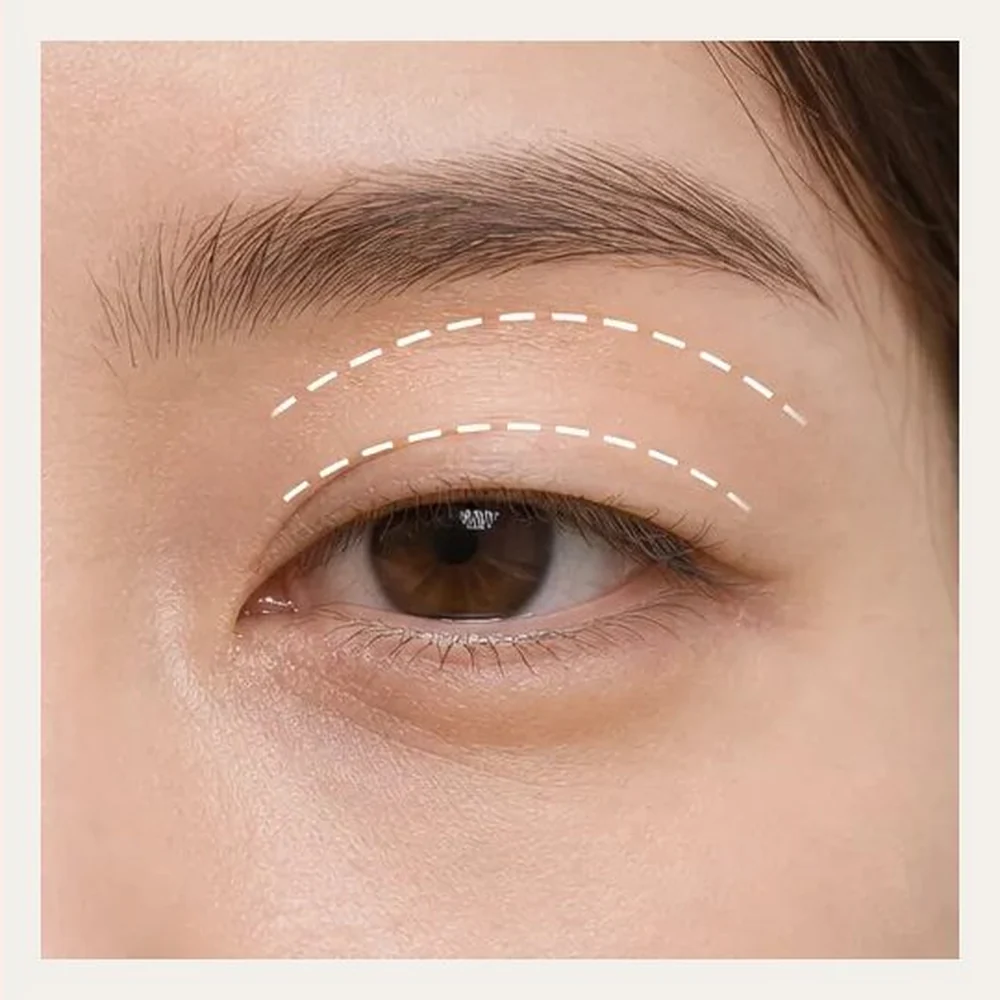
Illustration for reference · Not an actual patient
Before reviewing the options, hollowing after previous surgery needs separate consideration. In a study examining 48 eyes with both hollowing and ptosis after cosmetic upper eyelid surgery, all 48 had a levator aponeurosis that had detached from its normal position and become tethered to scar tissue where fat had been removed. None of the 33 control eyes showed this detachment 5. In these cases, treatment may need to release adhesions and repair the structures that open the eye before adding volume.
VITAL considers fat grafting and Re2O adjunctive options to assess after correcting eyelid position. Re2O is made from human dermis with the cells removed. It is considered for supporting thin skin and soft tissue rather than replacing volume.
Options based on the cause and severity include the following.
Observation for now: If hollowing is mild and there is no difficulty opening the eyes, we also discuss the option of having no procedure or surgery. If tissue is still healing after previous surgery, waiting for it to stabilize may be preferable.
Ptosis repair: This is considered first when weak eyelid elevation makes the upper eyelid look hollow 1.
Fat repositioning: Your own fat within the eyelid is moved into the hollow area. In the Park classification, which grades hollowing by depth, grades 1 and 2 (less than 1 cm deep) tend to respond well to repositioning alone. However, repositioning alone is considered insufficient for grade 3 (1 cm or deeper) and grade 4, which also involves ptosis 6.
Autologous fat grafting: Your own fat is divided into small parcels and injected in small amounts. This is considered when there is an actual volume deficit. Some of the grafted fat is absorbed 2.
Combined surgery: In a study of 79 patients with deep grade 3 or 4 hollowing who underwent double eyelid surgery, fat repositioning, and autologous fat grafting together, with ptosis repair when needed, satisfaction at 1 year was 92%, recurrence within 1 year was 6%, and complications occurred in 5% 6.
Fillers: These add volume without surgery, but the upper eyelid is considered an area at high risk for vascular complications because of its extensive blood vessel network 7.
Key point Hollowing after previous surgery is assessed separately, and fat grafting and Re2O are considered after correcting eyelid position.
If you choose a treatment to add volume, what limitations and risks should you understand?
04What are the limitations and risks of adding volume?
Answer Treatments that add volume can affect eyelid-opening function, and it is difficult to predict how much grafted fat will remain. If eyelid elevation is weak, adding volume alone can make the eyelids heavier, make the eyes harder to open, and leave a sleepy appearance.
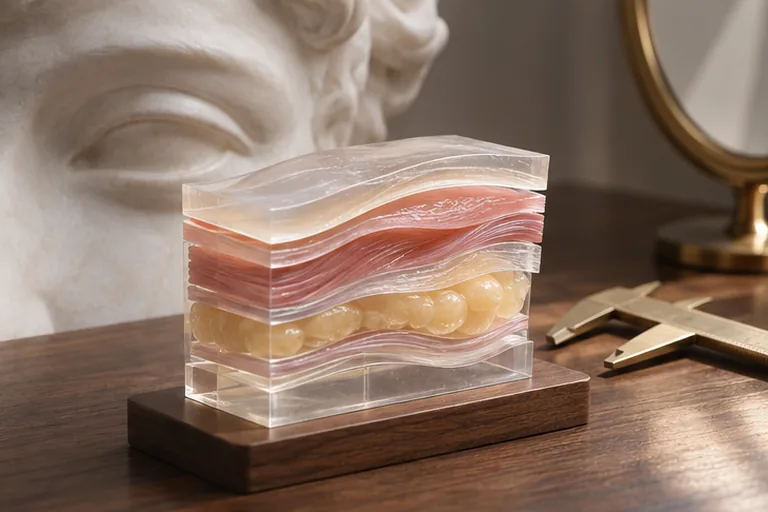
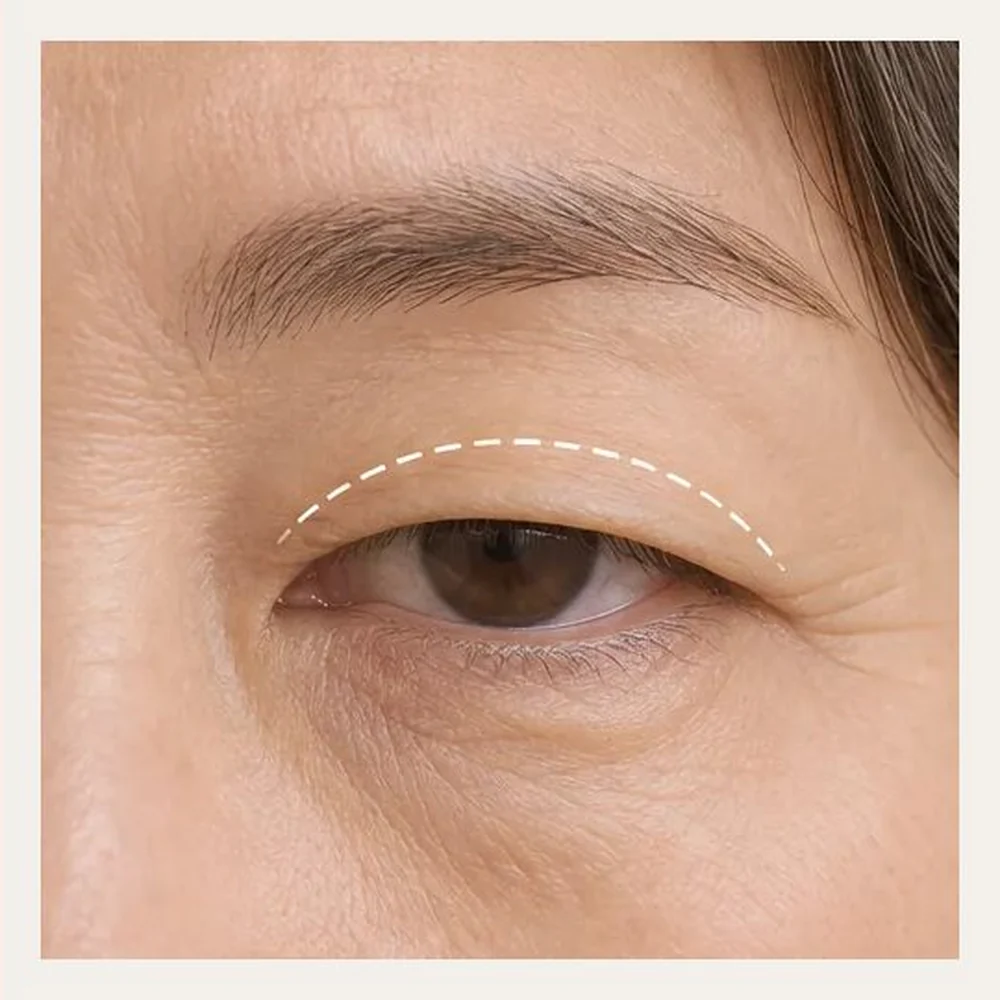
Staged image for illustrative purposes
Dr. Hyungwoo Yim avoids starting with fillers or fat grafting based solely on the depth of hollowing or a volume deficit. If eyelid elevation is weak, adding volume alone can make the eyelids heavier, make the eyes harder to open, and leave a sleepy appearance.
A Chinese study reporting on five patients who developed ptosis after autologous fat injections into the upper eyelids found that all five required surgery to remove the injected fat. Some also underwent levator aponeurosis repair 8. This case report cannot establish how often this occurs, but it shows that treatments that add volume can affect eyelid-opening function.
It is also difficult to predict how much grafted fat will remain. In a study of 33 patients who underwent microfat grafting around the eyes, fat absorption was 19.6% at 3 months and 32.2% at 12 months or later. The overall complication rate was 12% (4 patients), including two patients with palpable lumps in the upper eyelids 2. Other researchers have reported absorption rates of 45–60% for free fat grafts 6, so the figures vary considerably across studies.
The upper eyelid is considered an area where filler entering a blood vessel can lead to rare but serious complications, such as blindness or cerebrovascular problems 7. Surgery also carries risks, including bleeding, infection, scarring, asymmetry, undercorrection, and overcorrection. Results and recovery times vary by individual. Most of the studies on hollow eyelids cited in this article retrospectively reviewed records from a single hospital; they were not randomized comparisons that could establish which method is superior.
Key point Surgery also carries risks, including bleeding, infection, scarring, asymmetry, undercorrection, and overcorrection. Results and recovery times vary by individual.
When can the results be assessed after surgery?
05How long does recovery take, and when can results be assessed?
Answer Stitches are usually removed after 5–7 days, and the final assessment is made after 6 months to 1 year. This is because fat absorption can continue beyond 3 months.
According to VITAL's guidelines, stitches are usually removed 5–7 days after surgery. Returning to light work is recommended after 2–3 days, and makeup can be worn starting the day after stitch removal. Swelling is usually at its worst on days 3–4. Sauna use can resume after 1–2 weeks, and strenuous exercise after 1 month. Recovery varies from person to person.
In the study of 79 patients who underwent combined surgery, stitches were removed at 1 week, swelling had decreased substantially by 1 month, and the double eyelid crease had stabilized around 3 months 6. A study using ultrasound measurements in 35 patients (70 eyes) with moderate hollowing also found no difference between 3 and 6 months 4.
However, because fat absorption can continue beyond 3 months 2, additional volume is considered no earlier than 3 months 6 , and the final assessment is made after 6 months to 1 year. Before revision surgery, we also check whether the tissue has had at least 6 months to 1 year or longer to heal after the previous surgery.
If you experience sudden, severe pain in one eye, decreased vision, an obstructed field of vision, bleeding that will not stop, or rapidly increasing swelling, contact the clinic immediately rather than waiting for your scheduled appointment.
Key point Additional volume is considered no earlier than 3 months, and the final assessment is made after 6 months to 1 year.
What should be checked and what should you ask during a consultation?
06What should be checked during a consultation, and what should I ask?
Answer During the consultation, we take standardized photographs, assess the strength of the muscles that open the eyes, and examine fat bulging and hollowing by touch. We also review previous surgeries and procedures, contact lens use, eye-rubbing habits, and medications.
During the consultation, we take standardized photographs from the front and at 45- and 90-degree angles, as well as with the eyes closed and open. We assess the strength of the muscles that open the eyes and examine fat bulging and hollowing by touch. We also review previous surgeries and procedures, contact lens use, eye-rubbing habits, and medications.
What the doctor looks at first
Eyelid-opening strength I check whether hollowing becomes more pronounced as the internal eyelid structures are pulled upward when the eyes open, rather than simply assessing the eyelids at rest.
Skin · muscle · fat We assess each layer separately to determine which tissues to preserve, which to reposition, and where to add volume.
Effects of previous surgery We assess both the effects of previous surgery and the extent of tissue damage.
These are general care principles. The actual decision is made after an examination.
When Dr. Hyungwoo Yim reviewed the records of 384 patients he had treated for upper eyelid hollowing over the past 10 years, 33.9% involved revision surgery. The treatment sequence matters even more for eyes that have been treated before.
This question can help guide your consultation: “Is the hollowing I see caused by a lack of volume, or could the way I open my eyes or my eyebrow position also play a role?” After hearing the explanation, you can discuss whether you need added volume, whether eyelid function should be assessed first, or whether observation is appropriate for now.
The appropriate method, expected changes, potential side effects, and course of recovery vary by individual. This article outlines what to assess and in what order during a consultation, rather than recommending treatment.
Key point This article outlines what to assess and in what order during a consultation, rather than recommending treatment.
Here is my answer to the opening question: “The area above my eyes looks deeply hollow and makes me look tired. Should I have fat added?” A lack of volume is not the only reason the upper eyelids can look hollow. Weak eyelid elevation can make hollowing appear more severe than it actually is. Adding volume alone in this situation can make the eyelids heavier and leave a sleepy appearance. That is why I assess the skin, muscle, and fat, eyelid-opening function, and the effects of previous surgery together, then reassess volume after restoring eyelid position. Even when added volume is needed, some of the grafted fat will be absorbed, so the amount and treatment sequence are determined through an examination. Treating the cause first, rather than automatically adding fillers or fat, is the principle I follow.
— Dr. Hyungwoo Yim
At your consultation, you can say, “I read the article on hollow upper eyelids. Please explain what you would assess first in my case.” We will walk you through the evaluation in the order described here.
The condition of the skin, fat, and muscles, along with the way the eyes open, can affect appearance. We do not decide on injections or fat grafting simply because the eyelids look hollow. Reports have described a substantial reduction in shadowing after correcting weak eyelid elevation 1.
Do you also check for ptosis?
We examine eyelid-opening strength, compensatory movements, and eyelid closure. We distinguish functional problems from the need for added volume and explain the order of treatment.
Can every issue be addressed at once?
Depending on the burden of treatment and the stage of recovery, the treatment scope can be reduced or divided into stages. We consider both the correction needed and the tissues to preserve. Deep hollowing may remain in part or require additional volume even when several methods are combined 6.
Can I expect my vision to improve?
Cosmetic changes are different from treatment for vision problems or eye diseases. We cannot say that double eyelid surgery or treatment for hollow upper eyelids will improve vision or astigmatism. Vision problems also require evaluation by an ophthalmologist.
Will all the grafted fat stay?
Some of the fat is absorbed. In one study, 19.6% was absorbed at 3 months and 32.2% at 12 months or later 2, and absorption rates vary considerably across studies. For this reason, fat is placed in small parcels and small amounts, and the need for additional volume is assessed after monitoring the results.
Can I have another correction if I have had eyelid surgery before?
It is possible, but adhesions and structural changes from previous surgery must be accurately diagnosed. In eyes with both hollowing and ptosis after surgery, there have been reports of the levator aponeurosis becoming tethered by scar tissue and detached 5. We review your surgical records, current symptoms, and stage of tissue healing (at least 6 months to a year or more after surgery) to explain the limitations and expected benefits of additional surgery.
BEFORE CONSULTATION
What to Prepare Before Your Consultation
Front-view photo · Eyes openPlease bring recent photos and, if available, photos taken before the hollowing developed. Comparing them helps us understand when the changes began.
Records of previous eye surgery · TreatmentsWrite down when, where, and how you were treated, including whether you received filler or fat injections.
Contact lenses · Eye drops · Daily habitsTell us how long you have worn contact lenses and what type, which eye drops you use, and whether you rub your eyes frequently.
Discomfort when opening your eyesWrite down what you usually notice, such as whether you tense your forehead, your eyelids feel heavy, or your vision is obstructed.
The one thing that concerns you mostMake it your first question at your consultation.
Hollow Upper Eyelids: What to Check Before Adding Volume
When your upper eyelids look hollow, should replacing lost volume come first? We first assess how you open your eyes, your eyebrow position, and the surrounding tissues separately.
VITAL Plastic Surgery · Based on an interview with Dr. Hyungwoo Yim
Staged image for illustration · Not an actual patient photo
“My upper eyelids look hollow. Can I just add volume?”
When this question comes up during a consultation, the first thing to assess is more than just how deep the hollowing is.
Do you engage your forehead muscles when opening your eyes? Where do your eyebrows sit? What is the condition of your skin and fat? Hollowing that looks similar may have different explanations.
Similar appearances do not necessarily have the same cause. That is why VITAL aims to explain the different causes before choosing a procedure or surgery.
Even when hollowing looks the same, the order of assessment may differ.
Before adding volume, we distinguish among three factors.
01We identify where volume is actually lacking.
02We check whether eyelid-opening function and eyebrow position affect the appearance.
03We assess the condition of the skin, muscles, and fat, along with signs of previous treatment.
“For hollow upper eyelids, identify the cause before adding volume.”Dr. Hyungwoo Yim · Assessment criteria drawn from a previous clinical interview
For example, when a window looks crooked, you would not simply change the size of the glass. Just as you would check the frame's position first, we assess the structures involved in opening the eyes and the surrounding tissues before discussing upper eyelid volume.
This analogy does not replace a diagnosis. The cause in each individual must be determined through an examination.
Staged image to aid understanding · Not an actual patient photo
A Question to Ask Before Choosing Treatment
“Is the hollowing I see due to volume loss, or are the way I open my eyes and my eyebrow position also involved?”
After hearing the explanation, you can discuss whether you need a treatment to add volume, whether eyelid function should be assessed first, or whether observation is appropriate for now.
The appropriate method, expected changes, potential side effects, and course of recovery vary by individual. This article outlines what to assess and in what order during a consultation, rather than recommending treatment.
This draft article was adapted from an interview with the doctor and existing VITAL patient information. It is pending final review by the medical team. The actual diagnosis and treatment plan are determined after an in-person examination.
DOCTOR'S NOTE
For hollow upper eyelids,
identify the cause before adding volume.
“
We assess more than the depth of hollowing or volume loss. We also evaluate the condition of the skin, muscle, and fat, eyelid-opening function, and the effects of previous surgery. We avoid automatically treating every case with filler or fat.
Dr. Hyungwoo Yim · Approach to Care
Dr. Hyungwoo Yim, Medical Director · Based on the doctor's own answers. The actual scope of care is determined after an examination.
1
Eyebrow Position
2
Hollow Areas
3
Eyelid Height
4
Eyelid Muscle Strength · Excess Skin
Upper Lid
For hollow upper eyelids, identify the cause before adding volume.
Rubbing your eyes offers no benefit. It can make the eyelid crease less defined, cause styes, and make the eyes look sleepy and hollow, creating a cycle that also affects the eyelid-opening muscles. During surgery, I can see signs of frequent rubbing in the tissue.
Once you feel fully informed,
schedule a consultation.
Hollow Upper Eyelids: What to Check Before Adding Volume
Book a Consultation
You do not need to decide the day of your consultation.