PLASTIC SURGERY
MEDICAL COLUMN
Questions Answered Directly by the Doctor Before You Decide on Surgery
Eyes
Articles
Double Eyelid Surgery Swelling: When Does It Go Down?
Swelling and bruising after double eyelid surgery are usually at their worst on days 3–4. You can resume light daily activities after 2–3 days, though some swelling and bruising may remain. If an incision was made, stitches are removed on days 5–7. Avoid eye makeup, eyelash extensions, and contact lenses for 2 weeks.
VITAL Plastic Surgery Medical Information · Published 2026.11.23 · Last reviewed 2026.11.23
SHORT ANSWER
First, the Short Answer
- Swelling and bruising after double eyelid surgery are usually at their worst on days 3–4. You can resume light daily activities after 2–3 days, though some swelling and bruising may remain. If an incision was made, stitches are removed on days 5–7. Avoid eye makeup, eyelash extensions, and contact lenses for 2 weeks.
- Even after the major swelling subsides, the tissue may feel firm and tight between 3 weeks and 3 months. Over 3 months to 1 year, the tissue softens, redness decreases, and the two sides gradually become more even. For this reason, we do not judge the final result based solely on how it looks during this period.
- VITAL Plastic Surgery selects a buried suture, partial-incision, or incisional technique based on the skin, fat, and strength of the muscles that open the eyes. At 1, 3, and 6 months and 1 year, the clinic checks swelling, the eyelid crease, eye closure, and dryness.
“After double eyelid surgery, how many days will I need to take off because of the swelling, and when will it start to look natural?”
This is a paraphrase of a question we often hear during consultations.
To answer this question, we first need to distinguish where your current concern comes from. We will explain each point below, then return to the original question at the end.
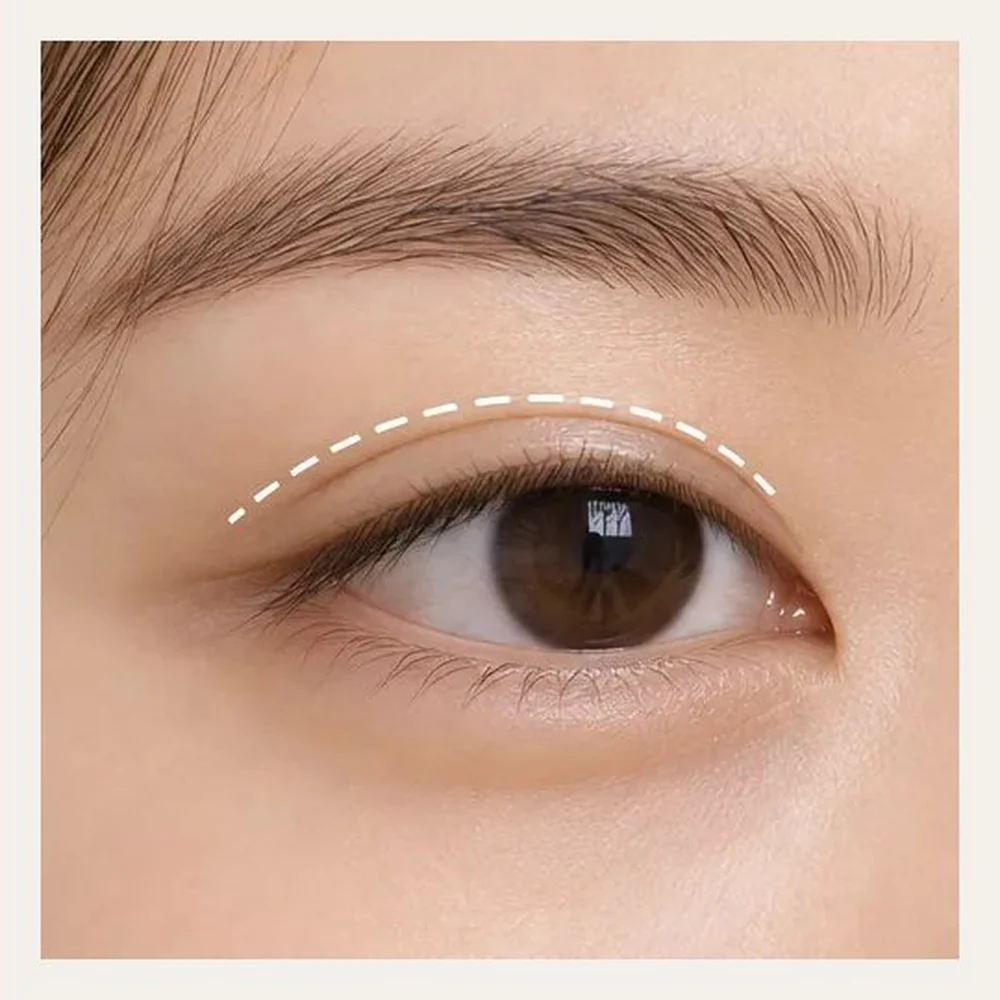
01When does swelling after double eyelid surgery peak, and when does it go down?
Answer Swelling and bruising peak 3–4 days after surgery. From 3 weeks to 3 months, the tissue may feel firm and tight, followed by a period from 3 months to 1 year when it gradually softens.
Swelling and bruising after double eyelid surgery do not appear all at once. They gradually increase and are at their worst on days 3–4. You can resume light daily activities after 2–3 days, though some swelling and bruising may still remain. If an incision was made, stitches are removed on days 5–7. Avoid eye makeup, eyelash extensions, and contact lenses for 2 weeks.
Recovery continues even after visible swelling and bruising have gone down. Between 3 weeks and 3 months, the tissue goes through a period of firmness and tightness. Between 3 months and 1 year, the tissue softens, redness decreases, and the two sides gradually become more even. For this reason, patients are advised that it takes several months for the double eyelid crease to settle.
The double eyelid crease is also a structure that lifts the eyelashes and opens up the field of vision. During recovery, the clinic checks not only the appearance but also whether the eyes close properly and feel dry. This is why follow-up visits assess discomfort and changes in function as well as photographs.
The table below shows the average recovery timeline described by VITAL Plastic Surgery; individual experiences vary. If sunken eyes or weak eye-opening strength are also corrected, the area treated is larger, which may increase swelling and the amount of care needed.
| Timing | What Happens | What to Keep in Mind |
|---|---|---|
| 3–4 days after surgery | When swelling and bruising are most pronounced | Sleep with your head slightly elevated; apply cold compresses gently |
| After 2–3 days | Light daily activities are possible; swelling and bruising may remain | Avoid rubbing your eyes |
| Days 5–7 | Suture removal if an incision was made | Eye makeup · contact lenses after 2 weeks |
| 3 weeks–3 months | A period of tissue firmness and tightness | Sauna after 1–2 weeks; strenuous exercise after 1 month |
| 3 months–1 year | The tissue softens, redness decreases, and the two sides gradually become more even | Follow-ups at 1, 3, and 6 months and 1 year |
In Simple Terms Recovery after double eyelid surgery is similar to a newly folded crease in paper. A fresh fold looks thick and raised at first, then gradually becomes a natural-looking crease as it is repeatedly pressed and unfolded over time. Just as you would not judge the thickness of a fold after only a few days, the final result should not be judged by its appearance while swelling remains.
Key points Swelling peaks on days 3–4, and it takes several months for the crease to settle naturally.
Does swelling differ between the non-incisional and incisional methods?
02Is swelling different with the buried suture and incisional techniques?
Answer The non-incisional method does not require a visit to remove skin stitches, but swelling and bruising can occur with either method. The more tissue involved, the greater the swelling may be.
The non-incisional method uses small openings to place sutures that secure the eyelid crease without making a long incision in the skin. The knots are buried beneath the skin, so there is no need to remove skin stitches. The partial-incision method uses a short incision in the center to examine and secure the underlying muscle and fat. The incisional method removes excess skin and orbicularis oculi muscle (the muscle that circles the eye) as needed along the marked line. Stitches are removed on days 5–7 after either method.
A systematic review of 29 randomized controlled studies involving 2,287 patients who had eyelid and periocular surgery found less swelling when only skin was removed than when both skin and muscle were removed1. This means that the more tissue involved, the greater the swelling may be.
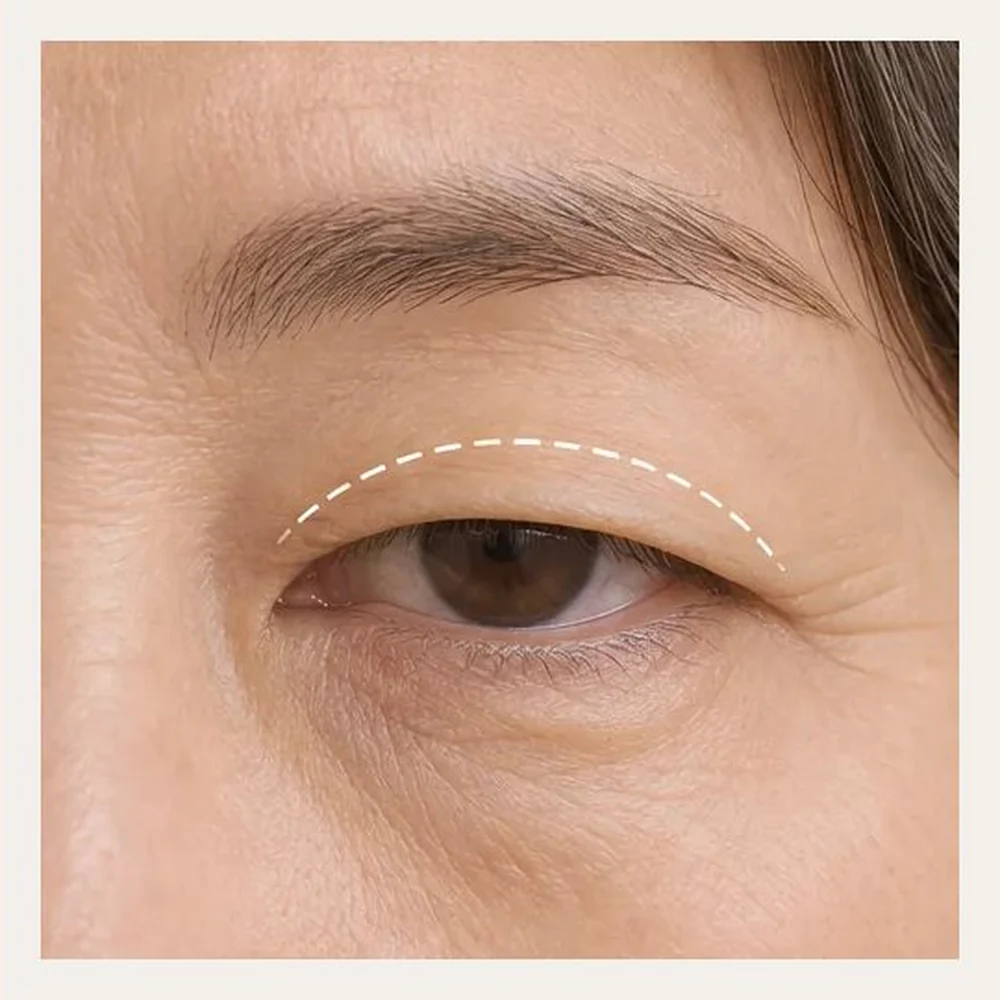
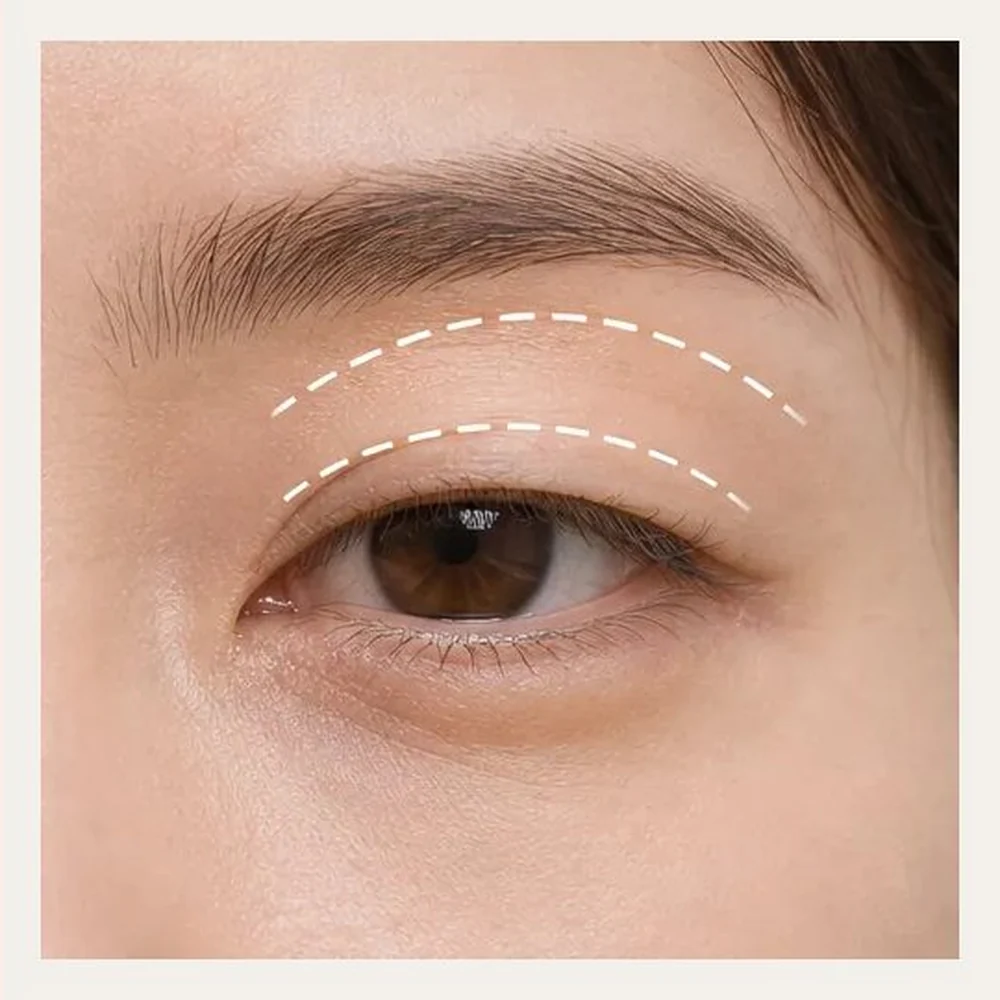
The choice of method, however, depends on the condition of the eyelids, not the amount of swelling. The non-incisional method is suitable for eyes with thin skin, little sagging, and adequate eyelid-opening strength. If the skin is thick or there is substantial excess skin and fat, sutures alone may have difficulty holding the crease, so a partial-incision or incisional method may be considered. Choosing a method to reduce swelling when it is not suited to the eyes may cause the crease to come undone or leave thick eyelids unchanged.
If a sunken appearance or difficulty opening the eyes is also present, adding ptosis correction or eyelid fat repositioning increases the area treated and may lead to more swelling and a greater need for aftercare. Before surgery, excess skin, eyelid-opening strength, and the cause of the sunken appearance are assessed to decide which additional procedures to perform. The recovery timeline is also explained based on the extent of the procedures.
| Category | Non-incisional | Partial-incision | Incisional |
|---|---|---|---|
| How it works | Sutures are placed through small openings to secure the crease, with knots buried beneath the skin | A short incision in the center allows the muscle and fat to be examined before the crease is secured | An incision is made along the marked line, and excess skin and orbicularis oculi muscle are removed before the crease is secured |
| Suitable eyes | Eyes with thin skin, little sagging, and adequate eyelid-opening strength | Eyelids With Some Excess Skin or Fat | Eyes with substantial sagging skin, a sunken appearance, or difficulty opening the eyes |
| Skin stitches | No removal needed | Removed on days 5–7 | Removed on days 5–7 |
| Swelling and bruising | Can occur; most severe on days 3–4 | Most severe on days 3–4 | Most severe on days 3–4; may be greater with more additional corrections |
Key points The method is chosen based on the condition of the eyelids, not swelling. With any method, swelling is greatest on days 3–4.
What can help swelling go down faster?
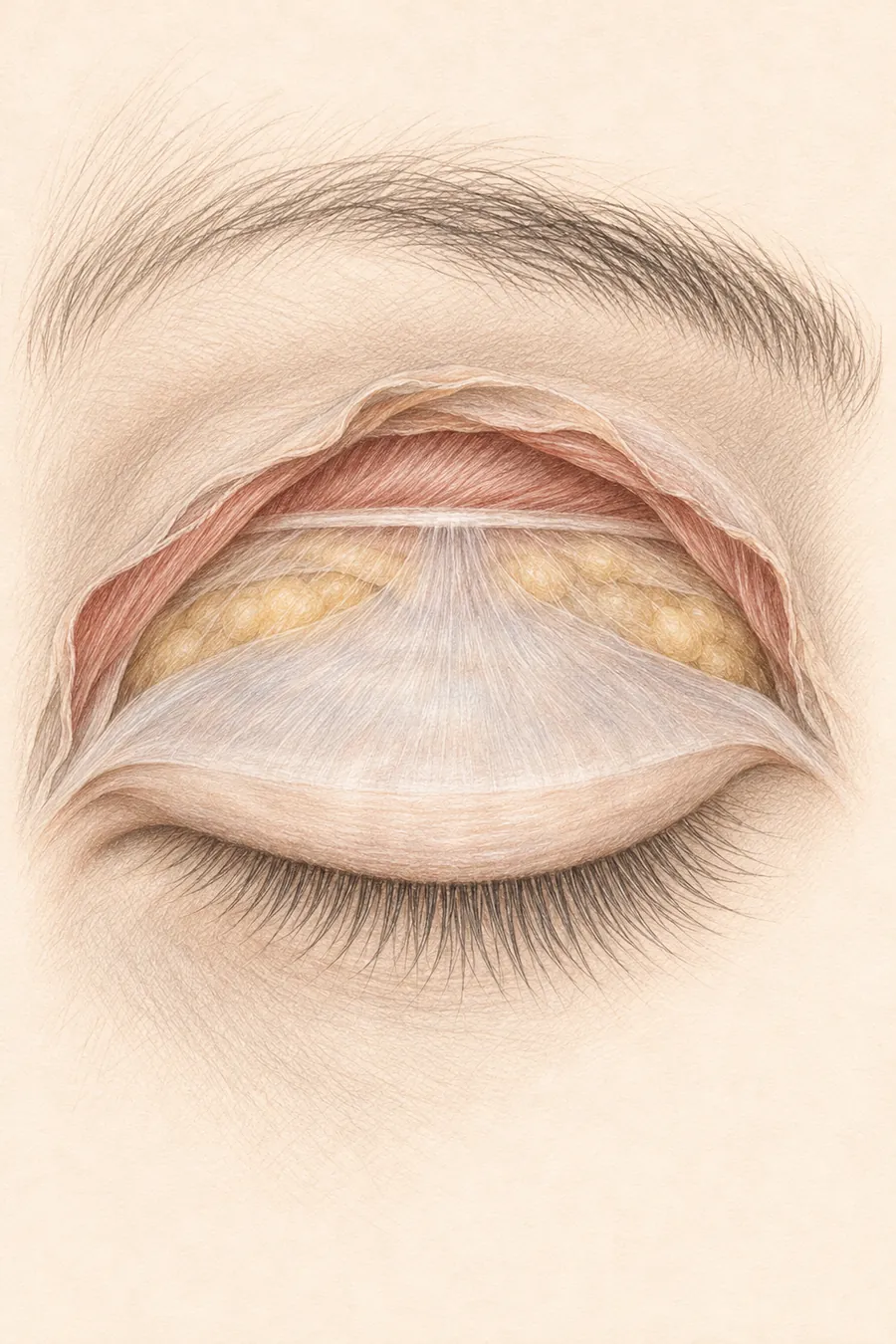
03What can I do to reduce swelling faster?
Answer For the first 3–4 days, rest with your head slightly elevated, apply cold compresses gently without letting ice touch your skin or eyes directly, and avoid rubbing your eyes.
During the first 3–4 days, when swelling is increasing, it is best to sleep with your head slightly elevated. When you lie down with your head low, swelling can more easily collect in your face. Apply cold compresses gently without letting ice touch your skin or eyes directly, and do not press hard on your eyelids.
In the systematic review mentioned earlier, cold compresses helped relieve symptoms for a short time, while herbal and complementary treatments such as arnica and bromelain showed no clear effect1. This means that cold compresses are a helpful part of basic care, but they do not make swelling go away all at once.
Rather than taking supplements said to help with swelling, we recommend stopping herbal medicines and supplements such as omega-3 when possible because they may increase the tendency to bleed. We advise all patients to stop smoking and drinking alcohol before surgery because both affect bleeding and wound healing.
You continue to use your eyes during recovery. Try to limit contact lens use, use artificial tears often, and continue to avoid rubbing your eyes throughout your recovery.
- Sleep with your head slightly elevated for the first 3–4 days
- Apply cold compresses gently without letting ice touch your skin or eyes directly
- Avoid rubbing your eyes and use artificial tears often
- Limit contact lens use as much as possible
- Stop herbal medicines and supplements such as omega-3 until you have discussed them with your doctor
Key points Elevating your head, applying gentle cold compresses, and avoiding rubbing your eyes are basic care measures. There is no way to make swelling go away all at once.
Why does the crease still look thick and my eyelid feel firm after 3 weeks?
04Why is the crease still thick and the eyelid firm after 3 weeks?
Answer From 3 weeks to 3 months, the tissue can feel lumpy and tight. This is a response to the healing process, so revision surgery is not decided based on how the eyes look at this stage alone.
Around 3 weeks, when the bruising has faded and the eyes may appear healed on the outside, the eyelids can feel firm to the touch or tight. Scar contracture, in which scar tissue shrinks and pulls on the surrounding tissue, is often noticeable between 3 weeks and 3 months after surgery.
During this period, your eyes may temporarily close less completely, or the crease may look unnatural. These are responses to the healing process, and operating again too soon can cause more tissue damage. At VITAL Plastic Surgery, we monitor whether the tissue softens and the eyes become more symmetrical over 3 months to 1 year.
While swelling remains, it is difficult to accurately assess the height and symmetry of the creases. Whether the surgery was performed using the non-incisional or incisional technique, we reassess the height and symmetry after the swelling has subsided. The decision about whether to operate again is made after the tissue has stabilized; the timing is explained separately in the article on when to have double eyelid revision surgery.
If the crease is tied tightly to a deep layer, it may leave a pinched-looking mark even when the eyes are closed. At VITAL Plastic Surgery, the fixation point and depth are chosen so the crease folds only when the eyes open and smooths out when they close. This difference becomes more apparent several years later than immediately after surgery. This is another reason not to judge the result based only on its appearance early in recovery.
Key points Firmness and tightness from 3 weeks to 3 months may be part of the healing process, so the result is not judged by appearance alone during this time.
Does it mean something is wrong if the swelling is different on each side?
05Is it a problem if one side is more swollen than the other?
Answer Differences between the two sides can appear during recovery, but rapidly worsening swelling on one side, sudden severe pain, or decreased vision are symptoms that require you to contact the clinic immediately.
Swelling and bruising may not subside in the same way on both sides. The two sides may gradually become more alike over 3 months to 1 year, so early differences alone are not enough to determine whether recovery is normal. If one eye originally opened less and you raised your eyebrow to compensate, there may have been a difference between the two sides before surgery. This is one reason the amount of the eye visible is measured before surgery.
There are also times when you should not wait. In a survey study of members of the American Society of Ophthalmic Plastic and Reconstructive Surgery covering 269,433 cosmetic eyelid surgeries, orbital hemorrhage, or bleeding behind the eye, occurred in about 1 in 2,000 cases (0.055%), and vision was not recovered in about 1 in 22,000 cases2. Most occurred within the first 3 hours after surgery, and the risk decreased substantially after 24 hours, although some occurred several days later2.
Although rare, these symptoms must not be overlooked. If you have sudden severe pain, decreased vision or an obstructed field of vision, bleeding that does not stop, or rapidly worsening swelling on one side, contact the clinic immediately rather than waiting for your appointment.
Key points Differences between the two sides can be common during recovery, but contact the clinic immediately if one side swells rapidly and hurts or your vision becomes blurry.
When can I wear makeup or contact lenses and exercise?
06When can I start wearing makeup and contact lenses and exercising?
Answer Eye makeup and contact lenses are recommended after 2 weeks, sauna use after 1–2 weeks, and strenuous exercise after 1 month. Limit contact lens use as much as possible during recovery.
You can resume light daily activities and return to work after 2–3 days, though some swelling and bruising may remain. It is best to allow extra time before events where your face will be visible. Avoid eye makeup, eyelash extensions, and contact lenses for 2 weeks.
You may use a sauna after 1–2 weeks and resume strenuous exercise after 1 month. Limit contact lens use as much as possible. When you can wear them again depends on the condition of your eyes, so please check at your follow-up appointment. You will be instructed to abstain from alcohol before surgery. Because alcohol affects bleeding and wound healing, it is best to discuss when to drink again based on your recovery.
Please tell us before surgery if you have used double eyelid tape or glue for a long time. If you have had recurring eyelid eczema, we will first assess the condition of your skin.
If skin is removed, you may find that your eyes do not close all the way or feel dry during recovery. Skin is removed only within a range that allows your eyes to close properly, but please be sure to mention it at your follow-up if your eyes continue to sting or feel difficult to close.
Key points As a general guideline, resume eye makeup and contact lens use after 2 weeks, and strenuous exercise and sauna use after 1–2 weeks. Other activities are determined based on your recovery.
Is double eyelid surgery performed under sedation, and can I go home the same day?
07Is double eyelid surgery performed under sedation, and can I go home the same day?
Answer At VITAL Plastic Surgery, double eyelid surgery is performed under sedation. You can go home after we confirm in the recovery room that it is safe to do so, and you should avoid driving that day.
Sedation uses medication to put you in a sleep-like state while you continue to breathe on your own. Local anesthesia is also used at the surgical site. Your blood pressure, pulse, oxygen saturation, and breathing are monitored continuously during surgery, and the medication dose is adjusted as needed.
After surgery, we manage pain and nausea in the recovery room and check the surgical site for bleeding or swelling. You can go home once we confirm it is safe to do so. Sedation can temporarily affect judgment and balance, so avoid driving and making important decisions that day. It is safer to go home with someone accompanying you.
Before surgery, do not eat or drink starting at the time specified by the clinic. Please tell us in advance about any medications you regularly take, allergies, snoring or sleep apnea, and alcohol and tobacco use so that your anesthesia can be managed safely.
Key points The procedure is performed under sedation, and you can go home after we confirm in the recovery room that it is safe to do so. It is safer to have someone accompany you that day.
08Three things we check first during your consultation
What we assess first during consultation
- Skin thickness and the amount of excess skin
- Eyelid lifting strength and eyebrow position
- Whether hollowness is caused by a lack of fat or a change in its position
These are general care principles. The actual decision is made after an examination.
When other care is needed first Thyroid eye disease, glaucoma, severe dry eye, autoimmune disease, or the use of anticoagulants may be reasons to postpone or avoid surgery, so these must be evaluated first. If a vision problem is suspected, we also recommend a separate eye examination.
Here is the answer to the initial question: “How many days will I need to take off because of swelling after double eyelid surgery, and when will my eyelids start to look natural?” Swelling and bruising are usually at their worst on days 3–4. You can return to light daily activities after 2–3 days, and if an incision was made, stitches are removed on days 5–7. It takes several months for the crease to settle into a natural appearance. Firmness lasting from 3 weeks to 3 months can be part of the healing process, so avoid judging the results too soon.
— VITAL Plastic Surgery
When booking, simply let us know, “I’d like to discuss the method and recovery timeline that are right for my eyelids first.” We can start there during your consultation. You do not need to make a decision on the day of your consultation.
Related ReadingDouble Eyelid Surgery · Sunken Eyes: Care InformationWhen to Have Double Eyelid Revision SurgeryPtosis Repair vs. Double Eyelid SurgeryLowering the double eyelid crease
READ NEXT
Read Next
FAQ
Frequently Asked Questions
How many days does double eyelid swelling usually take to go down?
Swelling and bruising are at their worst 3–4 days after surgery and decrease afterward. You can resume light daily activities after 2–3 days, although some swelling may remain. It takes 3 months to 1 year for the tissue to soften and the two sides to become more even.
Is there almost no swelling with the non-incisional method?
Swelling and bruising can also occur with the non-incisional method. There are no skin stitches to remove, but swelling is at its worst on days 3–4 regardless of the method used.
When can I return to work?
You can return to light work after 2–3 days. However, some swelling and bruising may remain, so it may be more comfortable to schedule activities where your face will be visible after stitch removal (days 5–7 if you had an incision).
How long should I use cold compresses?
As a general rule, apply cold compresses gently during the first 3–4 days, when swelling is at its worst. Do not let ice touch the skin or eyes directly. We will advise you on further care after checking your eyes at your follow-up.
Will the crease become lower as the swelling goes down?
While swelling remains, it is difficult to accurately assess the height and symmetry of the crease, so we check them again after the swelling decreases. Over 3 months to 1 year, the tissue softens and the two sides gradually become more even.
When can I drink alcohol after surgery?
Rather than setting the same date for everyone, it is best to discuss it based on your recovery. We advise all patients to avoid alcohol before surgery, as alcohol affects bleeding and wound healing.
What symptoms mean I should contact you immediately?
If you experience sudden severe pain, decreased vision or an obstructed field of vision, bleeding that will not stop, or rapidly worsening swelling on one side, contact us immediately rather than waiting for your scheduled appointment.
BEFORE CONSULTATION
What to Prepare Before Your Consultation
- Use of Double Eyelid Tape or GluePlease let us know if you have used them for a long time or have had recurring eyelid eczema.
- Medications and supplements you are takingPlease tell us about everything you take, including anticoagulants, herbal medicines and supplements such as omega-3.
- Eye and Medical HistoryPlease let us know in advance if you have thyroid eye disease, glaucoma, severe dry eye or an autoimmune disease.
- Contact Lens UseIf you wear contact lenses frequently, please have glasses ready so you can reduce lens use as much as possible during recovery.
- SchedulingIt helps to plan your schedule around a return to light daily activities after 2–3 days and, if an incision is made, stitch removal on days 5–7.
REFERENCES
References
- Alamoudi A, Albishry AM, Alnabihi AN, et al. Interventions for reducing bleeding and swelling in eyelid and periocular surgeries: a systematic review of randomized controlled trials. Orbit. 2025. doi:10.1080/01676830.2025.2581622 (View abstract)
- Hass AN, Penne RB, Stefanyszyn MA, Flanagan JC. Incidence of postblepharoplasty orbital hemorrhage and associated visual loss. Ophthalmic Plastic and Reconstructive Surgery. 2004. doi:10.1097/01.iop.0000143711.48389.c5 (View abstract)
The findings in these papers reflect the participants and conditions of each study and do not mean that every individual will have the same results.
This article provides general medical information and does not replace diagnosis or treatment. Surgical results and recovery vary by individual, and complications such as bleeding, infection, scarring, and asymmetry may occur.
More articlesVITAL Plastic Surgery Medical Articles
RESERVATION
You do not need to decide the day of your consultation.
Organize questions about this page without entering your name, contact information, or medical history. This does not submit an appointment request.