PLASTIC SURGERY
MEDICAL COLUMN
Questions Answered Directly by the Doctor Before You Decide on Surgery
Revision surgery
Articles
Revision Surgery: A Faster Decision Is Not Always the Right One
We assess previous surgical records, current function, and healing progress before determining whether additional treatment is needed and when it should take place.
Medically reviewed by Dr. Hyungwoo Yim, Medical Director (board-certified plastic surgeon) · Published October 6, 2026 · Last reviewed November 11, 2026
SHORT ANSWER
First, the Short Answer
- It is generally better not to rush revision surgery to improve appearance. Between 3 weeks and 3 months after surgery, tissue becomes firm and tight, and an unnatural appearance during this period may change over time.
- However, symptoms that should not wait, such as a hematoma, infection, or vision changes, require immediate medical evaluation regardless of your scheduled appointment.
- At VITAL Plastic Surgery, we assess previous surgical records, current function, and healing progress to determine whether additional treatment is needed and when. We also explain when our recommendation is against revision surgery.
“Doctor, it has been two months since surgery, but the area feels firm and looks unnatural. Do I need another surgery now?”
This is a paraphrase of a question we often hear during consultations.
To answer this question, we first need to distinguish between discomfort that is part of healing and may improve over time and symptoms that need medical evaluation. This article begins with why it is better not to rush and when you should not wait, then explains the options, risks, and stages of recovery in order. Section 03 explains how we determine the timing of revision surgery.

01Why is it usually better not to rush revision surgery?
Answer It is generally better not to rush revision surgery to improve appearance. Operating again during this period means handling tissue that is still healing, which can increase adhesions and damage.

Operated tissue continues to change internally long after the surface has healed. As the doctor explains, between 3 weeks and 3 months after surgery, scar tissue contracts, becoming firm and tight—a phase known as scar contracture. During this period, your eyes may not close fully, the crease may look unnatural, or the tissue may feel lumpy to the touch. This is often when patients feel most anxious. The tissue then gradually softens over the period from 3 months to 1 year.
Rushing into another surgery during this period means handling tissue that is still healing, which can increase adhesions and damage. For this reason, cosmetic revisions to improve appearance are generally considered at 6 months to a year or longer, when the tissue stabilizes. This is a reference point for assessing recovery, not a fixed rule, and it varies by person and treatment area.
Research also shows that changes during recovery can continue for a long time. In a study of 36 people who underwent rhinoplasty at a plastic surgery clinic in Iran, ultrasound measurements at 1, 3, 6, and 12 months showed that nasal skin and soft tissue were thicker after revision surgery than after primary surgery at most sites and time points, and swelling also subsided more slowly1. In one study included in a literature review of 36 studies on lower eyelid surgery, 4.8% experienced temporary eyelid malposition that improved within 3 months, while 3.2% required revision surgery2. This means that not every change seen during recovery calls for revision surgery.
Key point Not every change seen during recovery calls for revision surgery.
When should you seek care immediately instead of waiting?
02When should you seek care immediately instead of waiting?
Answer Acute hematomas, infections, and vision problems require immediate evaluation. You should seek medical care for these symptoms right away, regardless of your scheduled appointment.

Not all revision surgery waits until scars have matured. An acute hematoma—a collection of blood at the surgical site—infection, or vision problems require immediate evaluation. Early evaluation is also needed if the lower eyelid is pulled down, exposing the cornea (the clear membrane over the colored part of the eye), or if pain and functional problems persist. If inflammation develops around a nasal implant, treating the inflammation and removing the implant take priority.
In the literature review on lower eyelid surgery, hematomas were reported in 15 studies, and one study reported an overall hematoma rate of 2.1%2. Although uncommon, this can occur, so it is important to recognize the signs. If you have any of the following symptoms, contact a medical facility immediately instead of waiting for your scheduled appointment.
- Sudden severe pain on one side
- Reduced vision, an obstructed field of vision, or double vision
- Bleeding that does not stop
- Swelling on one side that rapidly increases or becomes firm
- Signs of a possible infection, such as warmth or pus
Key point Not all revision surgery waits until scars have matured.

If symptoms are not urgent, what determines the timing of revision surgery?
03What determines the timing of revision surgery?
Answer Symptoms and tissue condition matter more than the calendar when determining timing. Repeating the same surgery without understanding the cause may lead to the same problem recurring.

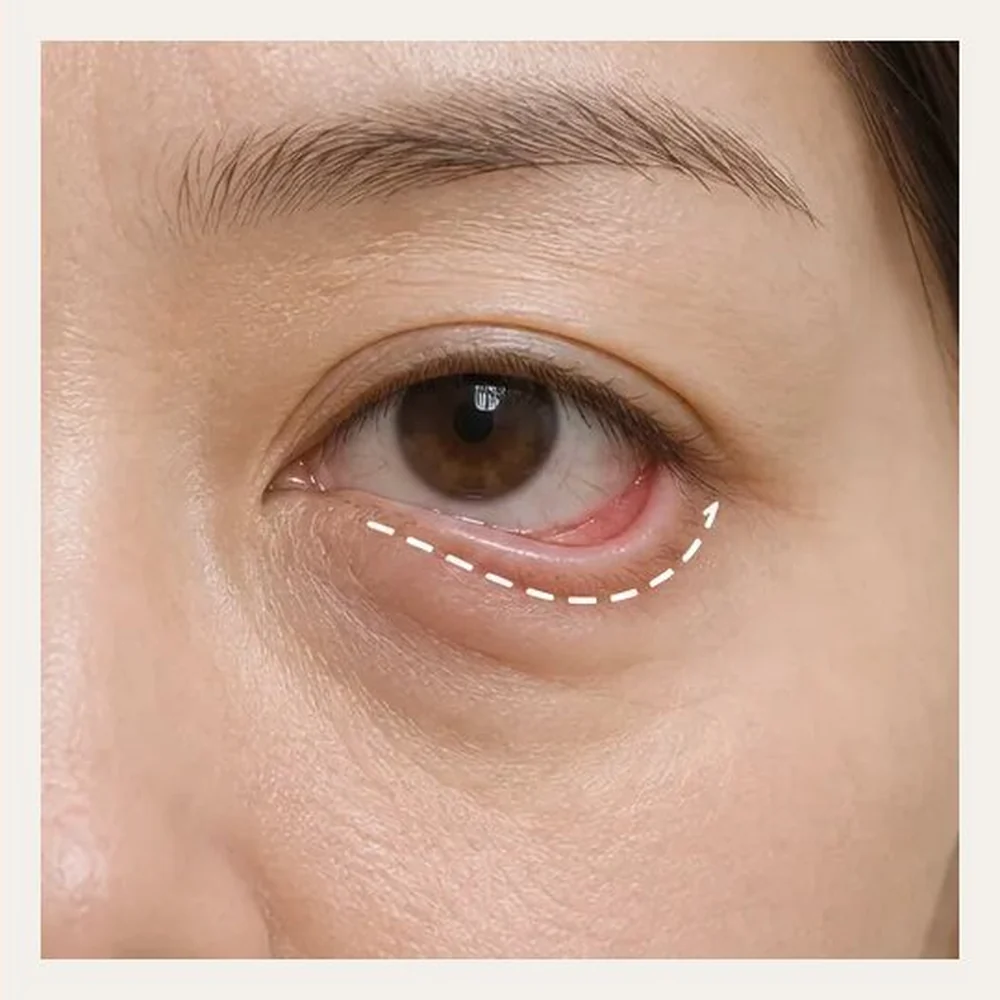
Symptoms and tissue condition matter more than the calendar when determining timing. First, we distinguish between discomfort that is part of healing and may improve over time and symptoms that need medical evaluation. Then we identify why the problem has recurred. Even when the issue is described as a “double eyelid crease that has faded,” the approach differs depending on whether the fixation has weakened, the muscles that open the eye are weak, or tissue has adhered. Repeating the same surgery without understanding the cause may lead to the same problem recurring.
“I do not determine the timing of revision surgery using a fixed waiting period. I assess the stage of recovery, the urgency of functional problems, and tissue condition together. I do not decide when to perform revision surgery based on photos alone.” (Dr. Hyungwoo Yim, Medical Director)
“For revision lower eyelid surgery, I first assess adhesions from the previous surgery and the remaining fat. I consider reinforcing the orbital septum rather than repeating fat repositioning.” (Dr. Hyungwoo Yim, Medical Director)
Previous surgical records help us understand your current tissue condition. Knowing the techniques and materials used, when surgery took place, and the changes afterward helps us estimate which tissue layers were treated. A consultation is still possible without records. In that case, we use photos showing your current condition and a physical examination to directly assess adhesions, available skin, and the strength of eye opening. We also explain what we can assess without records and the limits of that assessment.
We also check for previous fillers and other injected materials. A study of 15 patients (28 eyelids) who underwent lower eyelid surgery for persistent bulging after hyaluronic acid filler injections reported that the tissue was soft and spongy during surgery and that the boundaries between structures were poorly defined3. Although this was a small retrospective study of one surgeon’s experience, it shows that previous procedures can change the conditions for subsequent surgery. For hyaluronic acid filler, we may consider locating and dissolving it if needed. Other materials cannot be dissolved in the same way and require a separate plan.
- Whether your current discomfort is part of healing or a symptom that needs medical evaluation
- The techniques, materials, and timing of previous surgery, and subsequent changes
- The extent of adhesions and the amount of remaining tissue, such as skin and cartilage
- Functions such as opening and closing the eyes and breathing
- Previously placed materials, such as fillers and threads
- The burden of additional treatment and the extent of the expected change
Key point Even when an eyelid crease has faded, the approach depends on the cause, so we first identify why the problem has returned.
At your consultation, you can say, “I read the article on revision surgery timing. Please explain what needs attention now and what should wait in my case.” We will walk through your concerns in the order covered in this article.
While waiting for the right time, what options are there besides revision surgery?
04What options are there besides revision surgery?
Answer We compare observation, scar and skin care, other medical care, revision surgery, staged treatment, and no further treatment. A revision consultation does not have just two possible conclusions: “operate now” or “do not operate.”
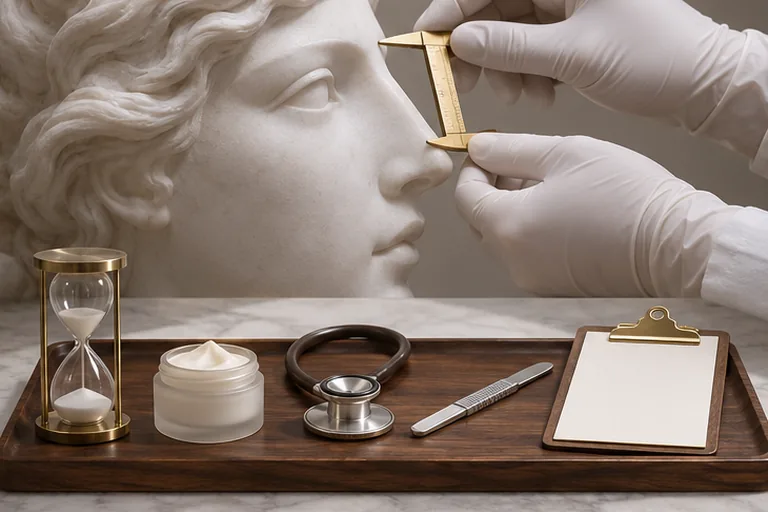
A revision consultation does not have just two possible conclusions: “operate now” or “do not operate.” We compare the options below based on the condition of your tissues and the changes you want. This process is about separating what needs attention now from what should wait, rather than asking you to simply endure discomfort.
- Observation: An option when healing is still underway and there are no urgent symptoms. We compare progress photos and decide when to reassess.
- Scar and skin care first: If scars are still red or the skin has thinned, we first consider scar care or treatment to address the underlying skin condition. Not every red scar receives the same treatment at the same time.
- Other medical care first: If you have problems with vision or eye movement, or uncontrolled high blood pressure or diabetes, we may recommend an ophthalmology evaluation or medical management first.
- Revision surgery: Considered when the cause is clear, the tissues have stabilized, and the expected changes outweigh the burden of surgery.
- Staged treatment: Although a single procedure may be preferable from the surgeon’s perspective, dividing treatment into stages is sometimes better for normal healing.
- No further treatment: An option when the burden of additional treatment outweighs the expected changes, or when the desired changes are judged difficult to achieve safely.
Key point This process is about separating what needs attention now from what should wait, rather than asking you to simply endure discomfort.
If you choose revision surgery, what limitations and risks should you understand?
05What are the limitations and risks of revision surgery?
Answer Revision surgery involves more challenging conditions than the initial surgery. There is often already less skin and tissue, and adhesions—tissues that have become stuck together after the previous surgery—make surgical dissection more difficult.
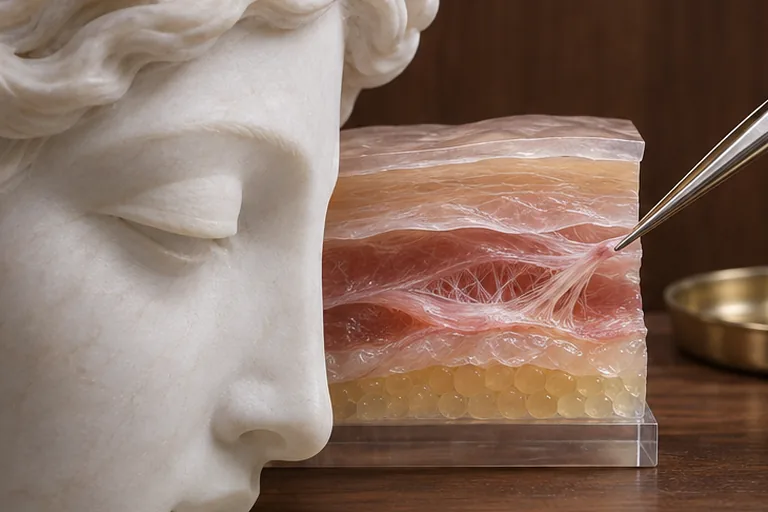
Revision surgery involves more challenging conditions than the initial surgery. There is often already less skin and tissue, and adhesions—tissues that have become stuck together after the previous surgery—make surgical dissection more difficult. This makes it difficult to promise the exact same height or shape, and if substantial tissue has been lost, restoring the original condition may be difficult. Recovery may also take longer than after the initial surgery. If a lift or reconstruction is involved, we plan for at least two weeks of flexibility in your schedule.
Further correction is not uncommon. Across 21 studies of lower eyelid surgery, revision rates ranged from 0–9%, with most below 3%2. Among 344 patients who underwent surgery on both upper eyelids under local anesthesia, 5.2% underwent an additional procedure under local anesthesia4. In a study of 37 patients who underwent upper eyelid surgery without skin removal, 13.5% had postoperative adjustments for asymmetric eyelid creases. The authors stated that these corrections could be performed 4–6 months after the initial surgery5.
When requests for revision surgery recur, we reassess the cause. Fifteen patients underwent nasal surgery after a psychiatric evaluation confirmed mild body dysmorphic disorder, a condition in which concerns about appearance significantly disrupt daily life. All were more satisfied than before surgery, but three requested revision surgery. As discussed before surgery, those revisions were not performed6. We also explain during consultation that surgery cannot resolve every concern.
Key point If substantial tissue has been lost, restoring the original condition may be difficult, and surgery cannot resolve every concern.
What should you watch for at each stage of recovery while you wait?
06What do we monitor at each stage of recovery?
Answer From 3 weeks to 3 months, tissues tend to feel firm and tight. From 3 months to 1 year, they gradually soften. This varies by the type and extent of surgery and by the individual, and we reassess at each follow-up examination.

The following is a general timeline based on the surgeon’s explanation. It varies by the type and extent of surgery and by the individual, and we reassess at each follow-up examination.
| Timing | What is happening in your body | What to do during recovery |
|---|---|---|
| Immediately after surgery–2 weeks | Swelling and bruising are most noticeable during this period. Swelling usually peaks on days 3–4. | Watch for bleeding, infection, or changes in vision. If these signs occur, contact us without waiting for your scheduled appointment. |
| 3 weeks–3 months | Scar tissue contracts, causing firmness and tightness. | Even if the appearance seems unnatural, avoid rushing into revision surgery. However, persistent corneal exposure, pain, or functional problems need prompt evaluation. |
| 3 months–1 year | Tissues gradually soften, and scars continue to change. Scars may continue changing for more than a year. | We compare progress photos and decide when to reassess. |
| 6 months–1 year and beyond | This is a reference point for assessing whether a revision to improve the shape is needed. | We consider both the timing of the previous surgery and the condition of the tissues. |
Key point These time frames are guides for assessing recovery rather than fixed rules, and they vary by person and treatment area.
What do we assess during a revision surgery consultation?
07What do we assess during a revision surgery consultation?
Answer We explain what needs attention now and what should wait. Together, we identify what can improve, what may be difficult to reverse, what care is available while you wait, and when to reassess.
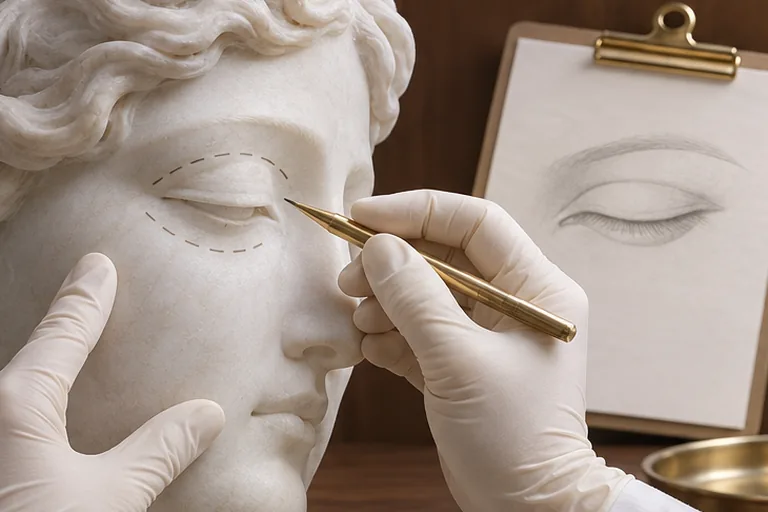
Dr. Hyungwoo Yim explains revision surgery this way: “Ultimately, revision surgery comes down to how we make time work in our favor as soft tissues heal. My approach is to use surgical skill to create a precise foundation, and compassionate care to help patients through the waiting period.”
That is why we explain during consultation what needs attention now and what should wait. Together, we identify what can improve, what may be difficult to reverse, what care is available while you wait, and when to reassess.
What the doctor looks at first
- If healing is still underway, An examination helps distinguish changes that need time from problems that need immediate attention.
- If there are problems with eye closure or eyelid position, We prioritize eye function and the condition of the eye’s surface along with appearance. We also consider care from a relevant specialist when needed.
- If the burden of additional surgery is greater, We explain whether the desired changes are achievable and may advise against immediate surgery.
These are general care principles. The actual decision is made after an examination.
- The name, timing, and materials used in your previous surgery, and your recovery afterward
- Whether your main concern now is appearance or function
- Your current stage of recovery and whether any symptoms need urgent evaluation
- How much tissue remains available and the extent of adhesions
- The expected changes and burdens of revision surgery, supportive care, and observation
- When to reassess and how to care for the area in the meantime
Key point You do not need to decide the day of your consultation.
To return to the opening question, “It has been two months since surgery, and the area feels firm and looks unnatural. Do I need another surgery now?” From 3 weeks to 3 months, tissues tend to become firm and tight, so it is generally better not to rush into revision surgery to improve the shape. However, contact us immediately if one side suddenly becomes severely swollen or you experience pain or changes in vision. I will explain whether your desired changes are achievable, and I may not recommend surgery right away.
— Dr. Hyungwoo Yim
At your consultation, you can say, “I read the article on revision surgery timing. Please first check whether what I am experiencing is part of recovery or a symptom that needs medical attention.” We will walk through your concerns in the order covered in this article.
Related ReadingAsk about both achievable changes and limitations during your consultation
READ NEXT
Read Next
FAQ
Frequently Asked Questions
How long should I wait during recovery?
The same waiting period cannot apply to every patient. We need to distinguish between issues that may improve with time and symptoms that need medical evaluation. Revisions to improve appearance are generally considered at 6 months to a year or longer, but timing is determined after assessing your stage of recovery and symptoms.
Should I put up with discomfort and wait?
If you have vision changes, sudden severe pain, persistent bleeding, or similar symptoms, contact a medical facility immediately instead of waiting for your scheduled appointment. For other discomfort, please describe it at your follow-up visit rather than judging it on your own.
Could you recommend against revision surgery?
If the burden of additional treatment outweighs the expected change, or if the tissue is still healing, observation or another type of medical care may take priority.
Why are previous records important? Is a consultation difficult without them?
The techniques and materials used, along with changes after surgery, help us understand your current tissue condition. If records are unavailable, we explain what we can assess without them and the limits of that assessment. Photos showing your current condition are the most important reference, and records are helpful if available.
It has been two months since surgery, but the area feels firm and looks unnatural.
From 3 weeks to 3 months, tissue can become firm, lumpy, and tight. Your eyes may temporarily not close fully, or the crease may look unnatural. Rushing into another surgery during this period can cause further tissue damage. However, contact us immediately if one side suddenly becomes severely swollen or you develop pain or vision changes.
Can everything be corrected in one surgery?
From the surgeon’s perspective, completing everything in one operation is preferable, but allowing for normal healing sometimes makes a staged approach better. After assessing adhesions and tissue condition, we explain how much can be done in one operation. We do not decide in advance how many operations will be needed.
BEFORE CONSULTATION
What to Prepare Before Your Consultation
- Previous surgery recordsPlease summarize what you know about the procedure name, timing, materials used, and explanations you received.
- Current and progress photosPlease bring current front and side photos, along with photos from before your initial surgery and during recovery, if available.
- Your concerns and when they beganPlease write down whether your concerns involve appearance or functions such as eye closure, vision, or breathing.
- Previous filler, thread, and injection recordsPlease tell us what materials were used, when they were placed, and whether you received dissolving injections.
- Medications and recovery schedulePlease tell us about any blood-thinning medications, whether you have high blood pressure or diabetes, and how much time you can set aside for recovery.
REFERENCES
References
- Rasti M, Rasti S, Behshadnia F. Evaluation of Skin-Soft Tissue Envelope Thickness by Ultrasonography after Primary and Revision Rhinoplasty. Aesthetic Plastic Surgery. 2023. doi:10.1007/s00266-022-03053-9 (View abstract)
- Gimenez AR, Rohrich R, Borab Z, Fisher S, Fagien S, Rohrich RJ. Safety and Complications in Lower Eyelid Blepharoplasty: A Systematic Review. Plastic and Reconstructive Surgery Global Open. 2025. doi:10.1097/GOX.0000000000007102 (Read the full article)
- Taban MR. Lower Blepharoplasty in Eyelids Previously Injected With Hyaluronic Acid Gel Filler. The American Journal of Cosmetic Surgery. 2017. doi:10.1177/0748806816687605 (View abstract)
- Eylert G, Wolfsberger C, Reischies-Meikl F, et al. The Postsurgical Clavien-Dindo Classification in Minor Surgery Can Improve Perception and Communication (Investigation on Blepharoplasty). Journal of Personalized Medicine. 2022. doi:10.3390/jpm12111900 (Read the full article)
- Goh ASC, Yong GY. Minimally Invasive Eyelid Lift: A Skin Preservation Upper Blepharoplasty. Aesthetic Surgery Journal Open Forum. 2025. doi:10.1093/asjof/ojaf107 (Read the full article)
- Shandilya M, Bourke S, Shandilya A. Surgical Rhinoplasty in Mild Forms of Body Dysmorphic Disorder: Safety, Protocols, and Long-Term Outcomes. Facial Plastic Surgery. 2024. doi:10.1055/s-0044-1779627 (View abstract)
The findings in these papers reflect the participants and conditions of each study and do not mean that every individual will have the same results.
More articlesVITAL Plastic Surgery Medical Articles
DOCTOR'S NOTE
Revision surgery is
about making time work in our favor.
“
Ultimately, revision surgery comes down to how we make time work in our favor as soft tissues heal. My approach is to use surgical skill to create a precise foundation, and compassionate care to help patients through the waiting period.
Dr. Hyungwoo Yim · Approach to Care
Dr. Hyungwoo Yim, Medical Director · Based on the doctor's own answers. The actual scope of care is determined after an examination.
RESERVATION
You do not need to decide the day of your consultation.
Organize questions about this page without entering your name, contact information, or medical history. This does not submit an appointment request.