PLASTIC SURGERY
MEDICAL COLUMN
Questions Answered Directly by the Doctor Before You Decide on Surgery
Home / Articles · Q&A / Facelift
Facelift
Mini Facelift
Incisions · Scars
Mini Facelift: Are the Incisions Really Short?
A mini facelift may be recommended for people with mild sagging. Here, the surgeon's answers explain how the front incision, the incision behind the ear, and surgery time actually differ.
Medically reviewed · Dr. Hyungwoo Yim, Medical Director (Board-Certified Plastic Surgeon)
Written by · VITAL Editorial Team | Last reviewed October 2026 | 6-minute read
SHORT ANSWER
First, the Short Answer
- The incisions are not as much shorter as you might expect.
- The main difference with VITAL's mini facelift is that the front incision does not extend into the hair-bearing scalp. The incision behind the ear and the surgery time are similar to those of a facelift.
- It is considered when sagging is limited to the midface or lower face. It is a surgery that addresses a different area, rather than one with a much faster recovery.
- The appropriate approach is determined after examining the location and extent of sagging.
“Doctor, are mini facelift incisions much shorter, and is recovery faster?”
This is a paraphrase of a question we often hear during consultations.
Answering this question starts with the location and extent of sagging, before the name of the surgery. This article first compares the two procedures, incision lengths, and surgery times in numbers, then explains the options, risks, and recovery. Section 03 describes when we consider a mini facelift.
01How does a mini facelift differ from a facelift?
Answer Both procedures reposition sagging tissue. The difference is how much of the face and neck they address together. If sagging involves the entire face and neck, we consider a facelift. If sagging is mild and limited to specific areas, we consider a mini facelift.


Both procedures reposition sagging tissue. The difference is how extensive an area they address together.
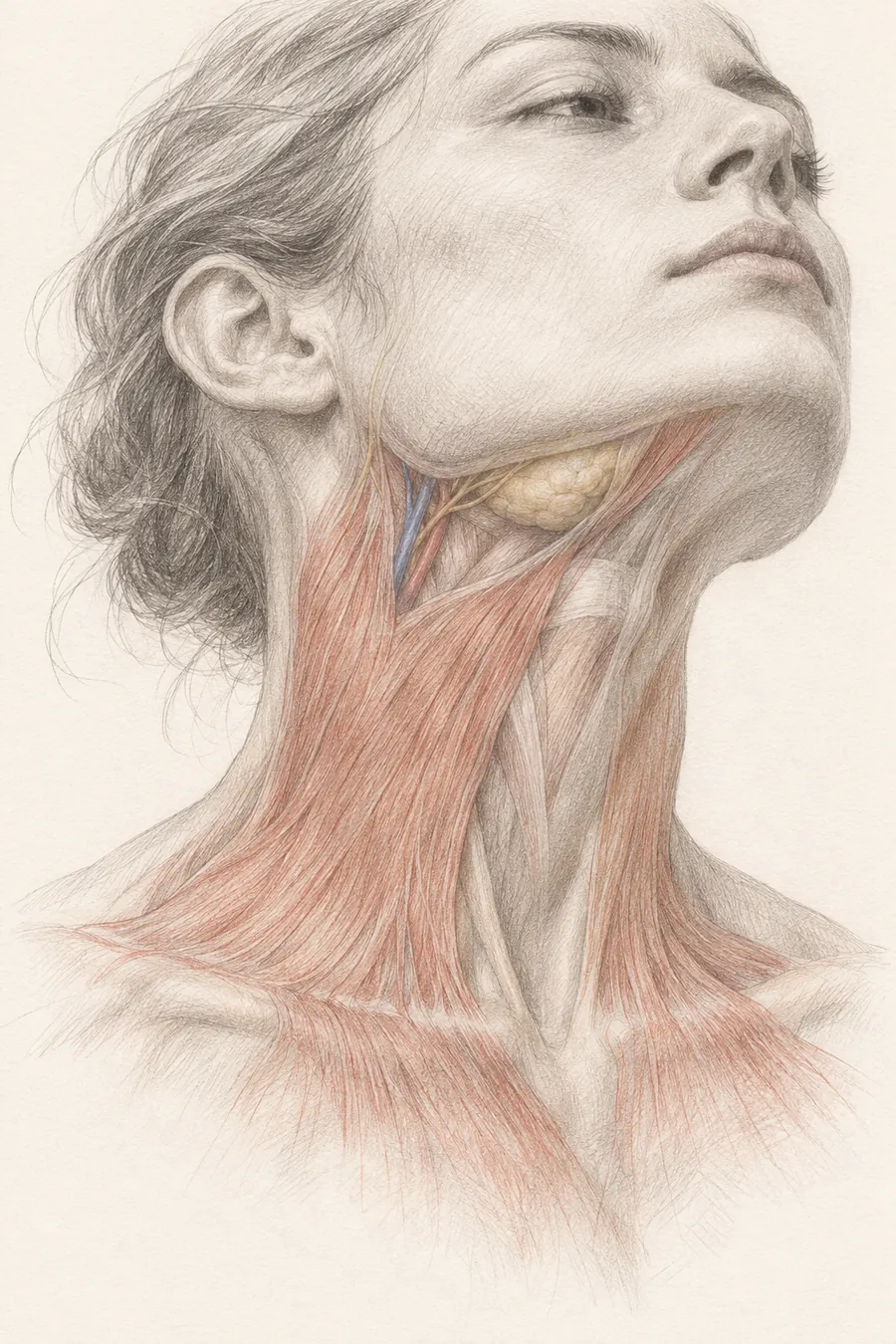
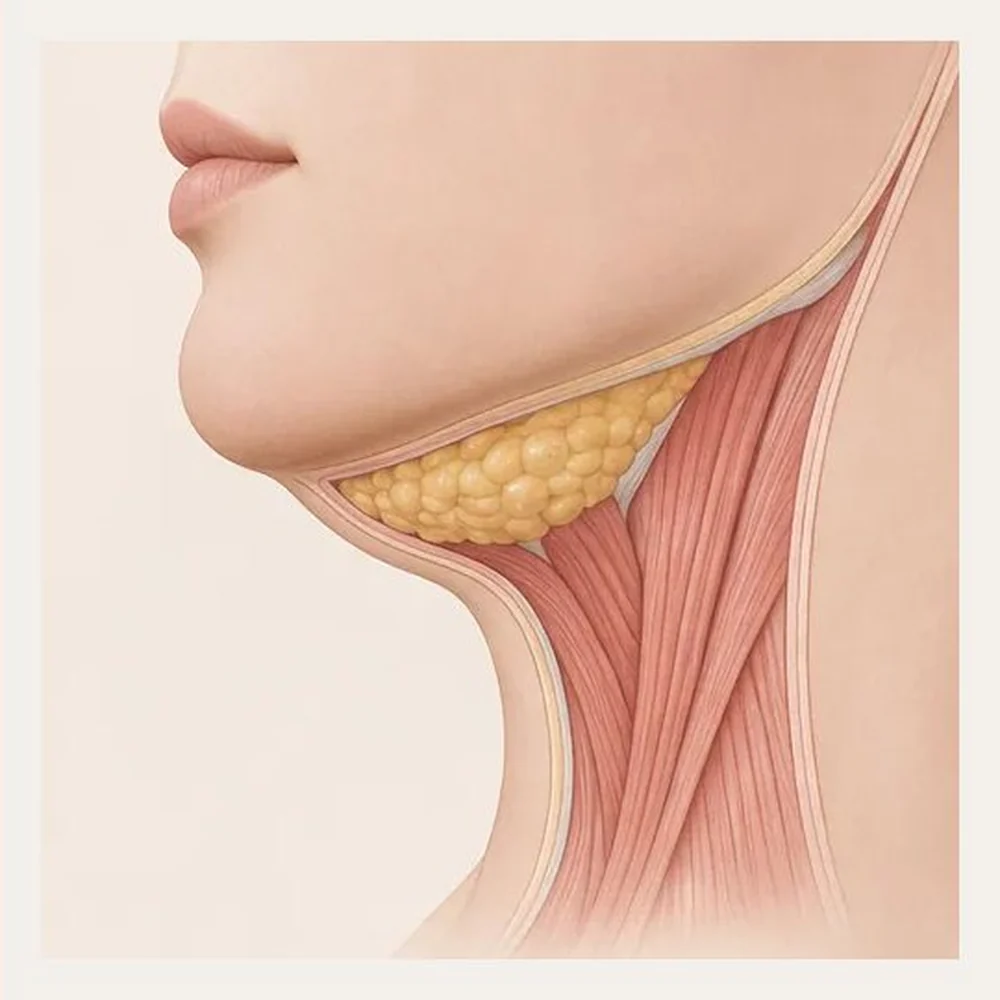
Facial sagging involves more than the skin. It also results from downward movement of fat compartments and the retaining ligaments that support them—tough, cord-like tissues that anchor the skin and fat toward the bone. We first assess the extent of descent involving the retaining ligaments near the cheekbones, cheek fat, the nasolabial folds, and the retaining ligaments along the jawline and mandible.
“Before lifting the facial contours, I first assess the underlying structures involved in sagging. Along with excess skin, I examine the position and support of the fat and fascia, overall facial volume and proportions, and the contours of the neck and the area beneath the chin.” (Dr. Hyungwoo Yim, Medical Director)
If sagging extends across the entire face and neck, we consider a facelift (deep plane facelift + neck lift). If sagging is mild and localized, we consider a mini facelift that addresses either the midface or lower face separately.
“A mini facelift is an approach I like very much. However, the front incision simply does not extend into the scalp; the incision behind the ear is nearly the same length, and surgery takes a similar amount of time.” (Dr. Hyungwoo Yim, Medical Director · Surgeon's answer, October 2026)
It is also helpful to understand why deeper layers are addressed. Skin-only lifting is described as having limited longevity because skin tends to stretch again over time. Facelift techniques have therefore evolved toward repositioning the underlying fascial layer (SMAS) or deeper tissues as well.1
The procedure called a “mini facelift” varies across clinics and studies. Published studies include techniques that fold and tighten the fascial layer (SMAS) with sutures, as well as the minimal access cranial suspension (MACS) lift, which uses loop sutures through short incisions. These approaches leave the deeper tissues and retaining ligaments intact, which is described as potentially limiting the duration of results and providing little neck improvement.1 During a consultation, it is therefore helpful to ask about incision placement, the extent of dissection, and whether the neck is included, before focusing on the procedure's name.
Korean authors with 30 years of facelift experience have also noted that no single standard technique suits every patient and that each approach has advantages and disadvantages. They added that differences in facial bone structure and soft tissue between Asian and Western patients should be considered when choosing a surgical approach.1
Key point During a consultation, it is helpful to ask about incision placement, the extent of dissection, and whether the neck is included, before focusing on the name “mini facelift.”
So how do incision length and surgery time compare in numbers?
02Comparing incision length and surgery time in numbers
Answer The main difference is that the front incision does not extend into the hair-bearing scalp. The incision behind the ear and the surgery time are similar to those of a facelift.


This comparison is based on the surgeon's answers. Individual experiences vary, and details may differ depending on the extent of surgery and recovery progress.
- Areas addressed: A facelift treats the midface, lower face, jawline, and neck together. A mini facelift addresses individual areas with sagging.
- Front incision: A facelift incision extends into the hair-bearing scalp; a mini facelift incision does not.
- Incision behind the ear: Nearly the same for both procedures.
- Surgery time: A facelift takes about 4–5 hours, and a mini facelift takes a similar amount of time.
- Anesthesia and hospital stay: A facelift is performed under sedation or general anesthesia and does not require an overnight stay. Details for a mini facelift are provided after an examination.
- Stitches and return to daily activities: After a facelift, facial stitches are removed after 5–7 days and scalp stitches after 10–14 days. Return to daily activities is generally expected after about 10 days (individual experiences may vary). Details for a mini facelift are provided after an examination.
Key point A mini facelift does not necessarily mean substantially shorter incisions or surgery time, so compare the areas addressed as well as the numbers.
If the numbers are similar, when do we consider a mini facelift?
03When we consider a mini facelift
Answer It is considered when sagging is limited to the midface or lower face and neck sagging is not significant. Suitability for a mini facelift depends on the location of sagging, the condition of the neck, and the amount of excess skin and fat.


Suitability for a mini facelift depends on the location of sagging, the condition of the neck, and the amount of excess skin and fat. The following four factors are starting points for assessment. Meeting one of them does not mean surgery will automatically be recommended.
Korean authors have also written that choosing a surgical approach involves considering the degree of aging, the main areas of sagging, skin characteristics, and bone structure, along with the patient's expectations and the recovery time needed before returning to social activities. An approach suited to relatively young patients with mild sagging may be insufficient on its own for severe nasolabial folds and jowling in patients age 60 and older. Results with the same approach can therefore vary with age and the degree of sagging.1
“If neck wrinkles and sagging of the platysma muscle are both present, I discuss a neck lift as part of the same plan.” (Dr. Hyungwoo Yim, Medical Director)
| What we check | How we assess it | What can happen if overlooked |
|---|---|---|
| Sagging limited to the midface or lower face | When the main concern is sagging in a specific area rather than throughout the face. | An approach suited to mild sagging has been described as insufficient on its own for severe nasolabial folds and jowling.1 |
| No significant neck sagging | If the neck also needs treatment, we consider a facelift together with a neck lift. | Lifting only the face may leave the contour beneath the chin unchanged. |
| Assessing excess skin and elasticity | We examine the condition of the skin, fat, and retaining ligaments. | Pulling only the skin can place tension on the skin and incision line while leaving the sagging fat underneath in place. |
| Allowing time for recovery | Because the incisions and surgery time are similar to those of a facelift, we also plan for recovery. | If you cannot allow enough time for recovery, we may not recommend proceeding with surgery right away. |
Key point Meeting one of these criteria does not mean surgery will automatically be recommended. The appropriate approach is determined after examining the location and extent of sagging.
At your consultation, you can say, “I read your article about mini facelift incisions. Please start by assessing how extensive my sagging is.” We will walk through the points in the same order as this article.
What options are there besides a mini facelift?
04Comparing other options
Answer A mini facelift is one of several options. We explain the alternatives based on the extent and severity of sagging, the time you can allow for recovery, and the changes you hope to see.


A mini facelift is one of several options. We explain the options below based on the extent and severity of sagging, the time you can allow for recovery, and the changes you hope to see.
“I do not prejudge a treatment as simple or complex. I will explain your current condition honestly.” (Dr. Hyungwoo Yim, Medical Director)
- Facelift (deep plane + neck lift): Considered when sagging extends across the face, jawline, and neck. A facelift is presented as the standard surgical approach for addressing extensive loose skin, jowls, loose skin under the chin, and muscle bands in the neck.2
- Mini facelift (midface or lower face): An option when sagging is limited to one area and neck sagging is not significant. Before choosing this procedure, it is helpful to understand that the incisions and operating time are similar to those of a facelift.
- Energy-based skin tightening: Uses thermal energy to tighten the skin without incisions. Studies of these devices involved mild to moderate sagging, and effectiveness was reduced in people with excessive skin laxity or a high body mass index.3 The scope of what these treatments can address differs from surgery that repositions sagging tissues.
- Thread lift: A procedure that uses barbs on dissolvable threads to engage and lift tissue beneath the skin. Reported complications include skin dimpling, protruding threads, asymmetry, and bruising.4
- Choosing not to have surgery now: If sagging is still mild or you cannot make time for recovery, monitoring changes is also an option. Postponing surgery does not mean losing the opportunity, so you can document changes with photos and decide on the timing.
Key point Energy-based skin tightening and thread lifts differ in scope from surgery that repositions sagging tissues, and postponing surgery does not mean losing the opportunity.
If you choose a mini facelift, what limitations and risks should you understand?
05We Explain the Limitations and Risks Along With the Possible Changes
Answer A mini facelift also involves surgical incisions. We explain not only the expected changes, but also the impact on tissues, recovery, and potential lasting problems.


A mini facelift also involves surgical incisions. We explain not only the expected changes, but also the impact on tissues, recovery, and potential lasting problems.
Do not wait if you have these symptoms. Contact us immediately instead of waiting for your scheduled appointment if you experience sudden severe pain, bleeding that will not stop, rapidly worsening swelling on one side, or signs of possible infection such as a high fever or pus.
- Hematoma: A collection of blood within the surgical area. Contact us immediately if one side of your face rapidly becomes swollen, firm, and painful.
- Scarring: Scars remain along the incisions in front of and behind the ears. Even if the front incision does not extend into the scalp, the incision behind the ear is similar to that of a facelift.
- Asymmetry: The two sides of the face naturally differ slightly, and swelling can subside at different rates, so differences between the sides may be visible for a while.
- Changes in sensation: Sensation around the ears and cheeks may be reduced for a while.
- Swelling · Bruising: Swelling and bruising develop along the area where tissues were separated and decrease over time.
- Additional correction: If sagging remains or returns, additional correction can be discussed. Short-incision techniques that leave deeper tissues untouched have also been described as potentially having limited durability.1
Key point Even if the front incision does not extend into the scalp, the incision behind the ear is similar to that of a facelift, and scars remain along the incisions in front of and behind the ears.
What does recovery after surgery look like?
06How we monitor recovery together
Answer We assess changes together using photos taken under the same conditions at 1, 3, and 6 months and 1 year, rather than relying on the mirror immediately after surgery. Swelling, tightness, and sensation around the ears gradually settle over several weeks to months.


The timeline below is based on the doctor's responses, and individual recovery varies. Anesthesia, stitch removal, and return to daily activities for a mini facelift are discussed separately after an examination, based on the extent of surgery.
Even after stitches are removed, swelling, tightness, and sensation around the ears gradually settle over several weeks to months. That is why we assess changes together using photos taken under the same conditions at 1, 3, and 6 months and 1 year, rather than relying on the mirror immediately after surgery.
- Day of surgery (DAY 0): The procedure is performed under sedation or general anesthesia, and you return home without an overnight stay.
- Starting on day 5 (DAY 5~): Facial stitches are removed depending on how the wound is healing. Scalp stitches are removed after 10–14 days.
- About 10 days (DAY 10): A general timeline for returning to daily activities; individual recovery varies.
- Through 1 year (1 YEAR): We document and compare progress together with photos at 1, 3, and 6 months and 1 year.
Key point Recovery timelines vary. Anesthesia, stitch removal, and return to daily activities for a mini facelift are discussed separately after an examination, based on the extent of surgery.
What should you review during your consultation?
07What we assess during a consultation
Answer We assess where the sagging began, whether the neck also needs treatment, and whether previous procedures have affected the tissues. That is why it is helpful to check the incision locations and extent of tissue dissection rather than relying on the procedure's name.
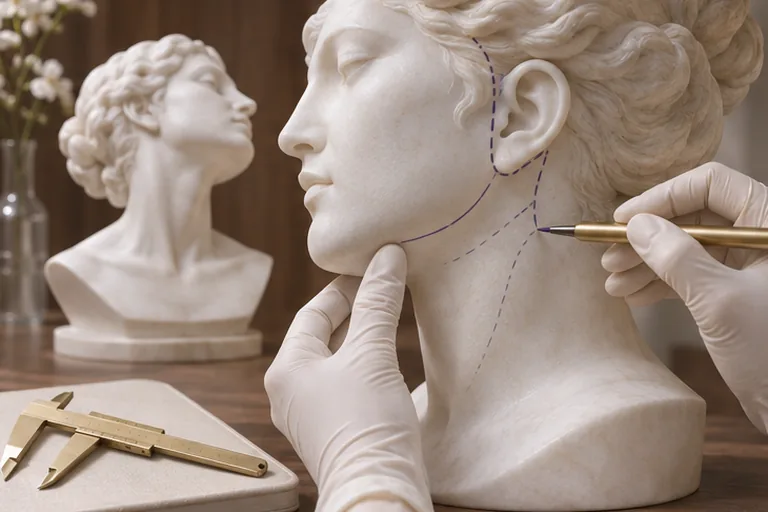
During your consultation, we assess where the sagging began, whether the neck also needs treatment, and whether previous procedures have affected the tissues. Having a consultation does not mean you need to decide that day.
What the doctor looks at first
- Assess the main areas and causes of sagging. Using your medical history and examination findings, we distinguish your current condition from the changes you want.
- Explain the tissue layers to be treated and the extent of correction. We explain the expected changes, the impact on tissues, recovery, and issues that may remain.
- Compare what nonsurgical procedures can address with what surgery can address. If you cannot set aside enough recovery time, we may not recommend surgery right away.
These are general care principles. The actual decision is made after an examination.
- Whether the sagging is in the midface, lower face, or neck, and how extensive it is
- Where the incisions would be and how far tissue dissection would extend in the “mini facelift” proposed for me
- Whether my neck also needs treatment and, if so, whether a combined facelift and neck lift should be considered
- Whether my history of fillers, threads, or energy-based skin tightening affects the plan
- Whether the anesthesia, stitch removal, and return to daily activities fit my schedule
Key point You do not need to decide the day of your consultation.
Here is the answer to the original question: “Does a mini facelift involve much shorter incisions and a faster recovery?” The incisions are not as much shorter as you might expect. The front incision simply does not extend toward the scalp; the incision length behind the ear and the operating time are similar to those of a facelift. A mini facelift is better understood as surgery that treats a different area than as surgery with a much faster recovery. Before lifting the facial contours, I first examine the underlying structure of the sagging. We decide together which approach is appropriate after examining the location and extent of sagging.
— Dr. Hyungwoo Yim
At your consultation, you can say, “I read the article on mini facelift incisions. Please explain what I should compare between a mini facelift and a facelift in my case.” We will walk through the points in the same order as this article.
READ NEXT
Read Next
FAQ
Frequently Asked Questions
Does a mini facelift have much shorter incisions and take less time?
The difference is that the front incision does not extend up into the scalp; the incision behind the ear and surgery time do not differ substantially. The choice depends on the extent of sagging.
How extensively are the retaining ligaments released?
It varies by case. The extent is determined by the location and degree of sagging. In most cases, the mandibular retaining ligaments along the jawline are released.
Do you also remove the salivary glands under the jaw (submandibular glands)?
We try to preserve them in most cases. We carefully consider whether removing a normal structure is appropriate and, when needed, consider nonsurgical options first.
How long does surgery take, what anesthesia is used, and is a hospital stay needed?
According to the surgeon, the procedure takes about 4–5 hours, is performed under sedation or general anesthesia, and does not require an overnight stay. Facial stitches are removed after 5–7 days and scalp stitches after 10–14 days. Return to daily activities is generally expected after about 10 days. Individual experiences may vary.
Can a thread lift or an energy-based skin-tightening treatment be used instead?
The scope of what these treatments can address differs. Studies of these devices involved mild to moderate skin laxity, and effectiveness decreased as skin laxity became more pronounced.3 We compare the options with you based on the location and severity of sagging.
What happens if sagging returns after a mini facelift?
Aging continues after surgery, so sagging can return over time. We review follow-up photos to reassess where sagging has occurred and discuss whether further correction or surgery addressing a different area is needed. Less invasive treatments have also been described as an adjunct when sagging returns during long-term follow-up.1
BEFORE CONSULTATION
What to Prepare Before Your Consultation
- Front · Side PhotosPlease prepare photos taken without makeup within the past 3 months.
- Previous Procedures · Surgical HistoryWrite down when and where you were treated and which methods were used. Include fillers, threads, and energy-based skin tightening.
- The one thing that concerns you mostMake it your first question at your consultation.
- Time available for recoveryPlease account for stitch removal and your return to daily activities.
- Medications and Health ConditionsPlease tell us about blood pressure medications, blood thinners, supplements, and whether you smoke.
REFERENCES
References
- Kim BJ et al. Development of Facial Rejuvenation Procedures: Thirty Years of Clinical Experience with Face Lifts. Archives of Plastic Surgery. 2015. doi:10.5999/aps.2015.42.5.521 (Read the full article)
- Krutyansky A et al. Upper and Lower Face Lifting Surgery. In: Cosmetic Surgery - Techniques for the Most Popular Aesthetic Surgery Procedures (IntechOpen). 2025. doi:10.5772/intechopen.1008262 (View abstract)
- Contini M et al. A Systematic Review of the Efficacy of Microfocused Ultrasound for Facial Skin Tightening. International Journal of Environmental Research and Public Health. 2023. doi:10.3390/ijerph20021522 (Read the full article)
- Wang CK. Complications of thread lift about skin dimpling and thread extrusion. Dermatologic Therapy. 2020. doi:10.1111/dth.13446 (View abstract)
Source of the doctor's responses · Doctor's responses via KakaoTalk, October 2026.
The findings in these papers reflect the participants and conditions of each study and do not mean that every individual will have the same results.
More articlesVITAL Plastic Surgery Medical Articles
Related Reading
Treatments
Deep Plane Facelift · Neck Lift
Treatments
Neck lift · PlatysmaplastyRead This Article in Another Language
日本語
中文
English
RESERVATION
You do not need to decide the day of your consultation.
Organize questions about this page without entering your name, contact information, or medical history. This does not submit an appointment request.
This article provides information for general understanding and does not replace an individual diagnosis or treatment. Surgical techniques, the extent of surgery, and recovery time vary by individual and are determined after an examination. Illustrations are not actual patient photos or surgical results.