PLASTIC SURGERY
Signature Surgery / Face · Neck Lift
Deep Plane Facelift
Facelift
Before lifting the facial contours, we assess the structures behind the sagging. A facelift considers the jawline together with the neck, as well as the face.
Surgery Time
About 4–5 hours
Anesthesia
IV sedation or general anesthesia
Hospital stay
No hospital stay
Suture Removal
5–14 days, depending on the area
Recovery
About 10 days · Varies by individual
※ Based on the doctor’s answers and the clinic’s surgical consent form · Individual results vary. Timing may differ depending on the extent of surgery, health status, and recovery.
This may vary depending on your condition and the extent of surgery.
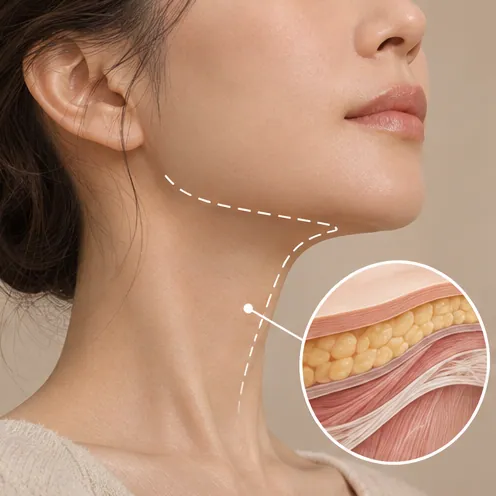
We lift more than the face. The neck completes the jawline.
Key Questions Answered
Deep plane facelift: What do we assess first?
Before lifting the facial contours, we assess the structures behind the sagging. Along with excess skin, we examine the position and support of the fat and fascia, the overall volume and proportions of the face, and the definition between the neck and the area beneath the chin.
— Excess skin and elasticity
— Position of fat and fascia
— Neck · Definition beneath the chin
YOUR CONCERN
Do any of these concerns
sound familiar?
“My cheeks have sagged, making my facial contours less defined.”
“My nasolabial folds and the sagging around my mouth look more pronounced.”
“The line between my jaw and neck looks less defined.”
VITAL SIGNATURE 04 · FACE + NECK
A facelift considers the jawline along with both the face and neck.

Lifting sagging skin alone may leave the definition between the jawline and neck unchanged. VITAL plans deep plane facelifts together with neck lifts, focusing on the jawline.
01
Repositioning deeper tissues
We reposition sagging tissue beneath the fascia, rather than simply pulling the skin.
02
The junction of the jaw and neck
We address the contour beneath the chin by treating the platysma and neck sagging together.
03
Incisions and recovery
Before surgery, we explain incision placement, scarring, recovery time, and limitations.
DOCTOR’S NOTE
Before lifting sagging skin, we first assess which structures have descended.
Sagging cheeks, deep nasolabial folds, and a less defined jawline reflect changes in the position of the underlying fat, fascia, and supporting structures, as well as the skin. We assess the changes of middle age that begin around the eyes and extend to the facial contours and neck. If neck wrinkles and platysma sagging are also present, we discuss a neck lift as part of the same plan.
— Dr. Hyungwoo Yim
MYTH → FACT
“Is a simple lift all it takes?”
Depending on your condition, a simple procedure may be enough. But if the internal supporting structures have weakened, precise restoration may be needed. We do not assume in advance that treatment will be simple or complex.
IN HIS WORDS
What We Say During Consultation
“We do not assume in advance that a treatment will be simple or complex. We will explain your current condition honestly and recommend a sound, established approach intended to avoid problems 5 or 10 years down the road.”
THE DETAIL
Are Tissues Beyond the Skin Being Repositioned?
Whether tension is placed on the skin or tissues are moved together beneath the fascia affects how natural facial expressions look and how long results last.
Deep Plane Facelift,
What does the surgery involve?
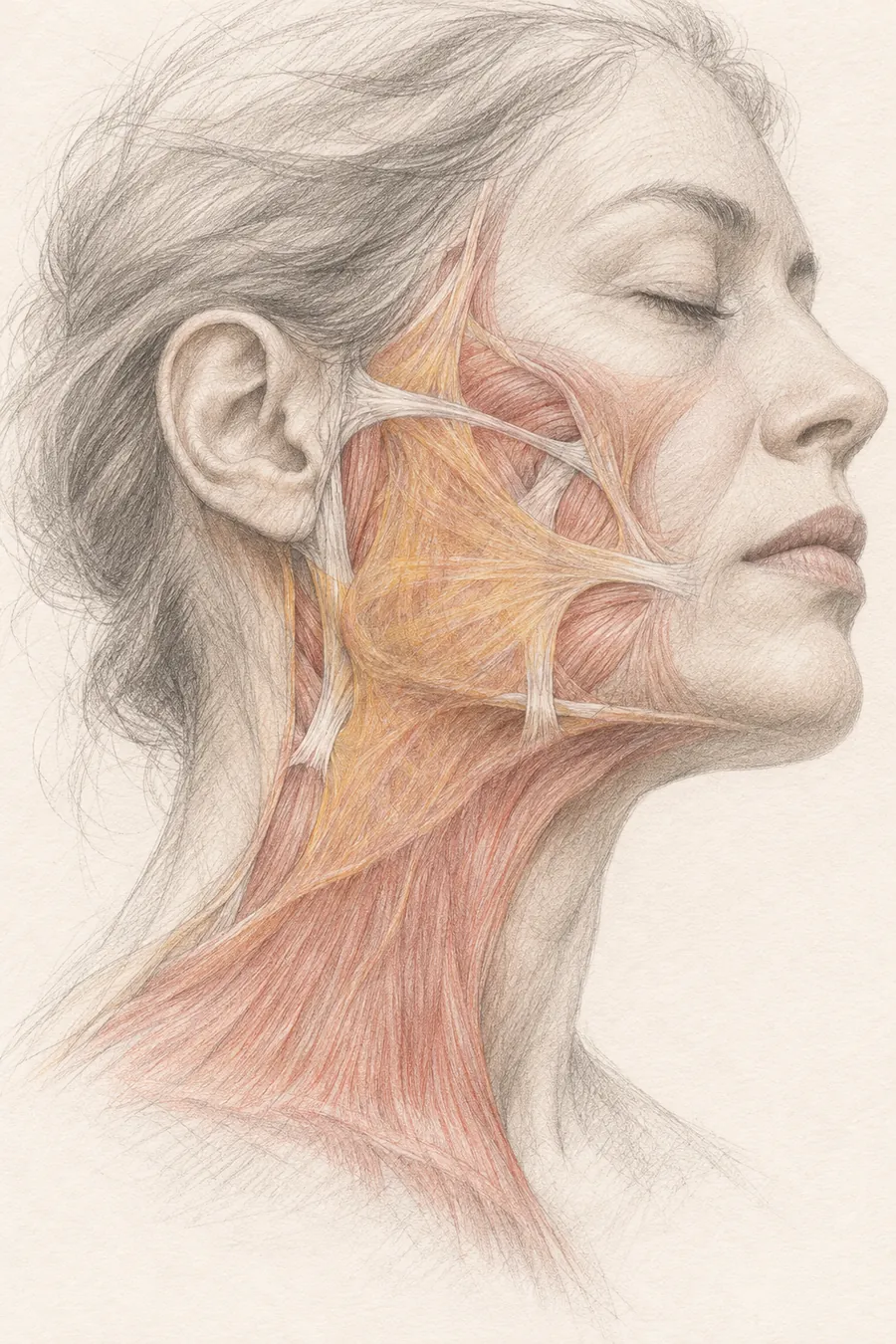
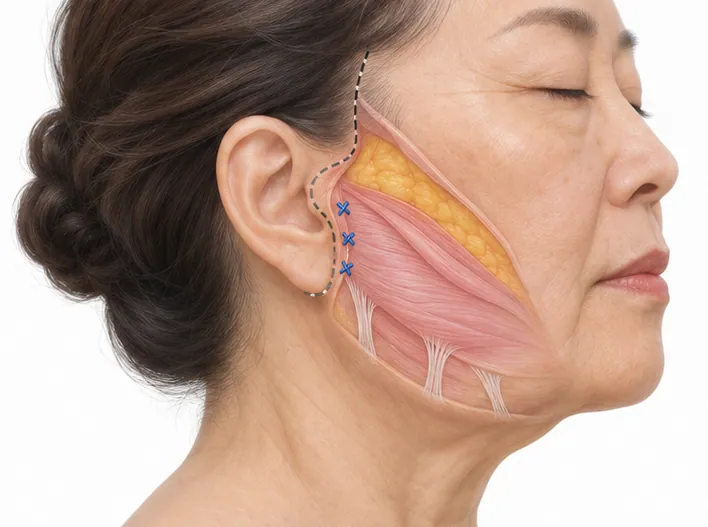
A deep plane facelift releases retaining ligaments in the deep plane beneath the fascia and moves sagging tissues together, rather than lifting only the skin. We determine the extent of surgery by assessing the structures and direction of sagging, skin and fat condition, supporting ligaments, and adhesions from previous surgery, rather than age alone. The extent of retaining ligament release varies by case, but those along the jawline are released in most cases. If neck sagging is significant, we plan a neck lift as well. The salivary glands beneath the jaw are usually preserved.
- SMAS
- This is the fascial layer beneath the skin that connects to the muscles of facial expression. It is a deep layer that supports the face.
- Retaining ligaments
- These structures anchor deeper tissues toward the bone. Releasing them allows sagging tissues to move.
- Submandibular glands
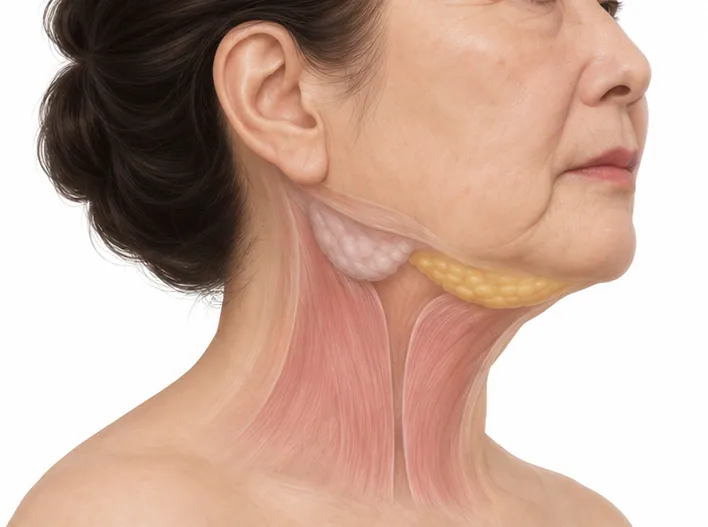
- These are salivary glands beneath the jaw. They can contribute to fullness beneath the chin, but are usually preserved.
- Mini Facelift
- A facelift in which the front incision does not extend into the scalp. The incision behind the ear and the surgery time are similar to those of a full facelift.
For a Deep Plane Facelift
in Lower Blepharoplasty
We assess the structures and direction of sagging before age
Even at the same age, the tissues that have descended and their direction of sagging differ. We assess skin and fat condition, supporting ligaments, and adhesions from previous surgery in turn. Bone changes, fat loss and displacement, and loosening of supporting tissues vary by area. We assess sagging structures in terms of position, volume loss in terms of amount, and skin quality separately. For major surgeries, we review the photos again the day before and prepare drawings.
We release the retaining ligaments along the jawline in most cases
When tissue is anchored toward the bone, it does not move easily even when pulled from above. The extent of retaining ligament release varies by case, but we release those around the mandible, or jawline, in most cases. Working in the deep plane requires a thorough understanding of where the facial nerves run. Before surgery, we explain risks such as nerve injury, changes in sensation, and hematoma.
We place lifting tension on the deeper tissues rather than the skin
Lifting only the skin places tension on the skin and incision lines, while sagging fat beneath it may remain in place. Moving the skin, fat, and fascia together from beneath the fascia allows us to plan for tension to be supported by the deeper tissues. The lifted tissues are moved opposite the direction of sagging and secured, and excess skin is trimmed with less tension.
We usually preserve the salivary glands beneath the jaw
Some approaches remove sagging submandibular glands to define the jawline. We usually preserve them, considering whether removing a healthy structure is appropriate. As patients age, we are cautious about surgery that disrupts normal structures. If prominent salivary glands are a concern, we first assess whether nonsurgical options such as Botox can be considered.
We do not describe the surgery as scar-free
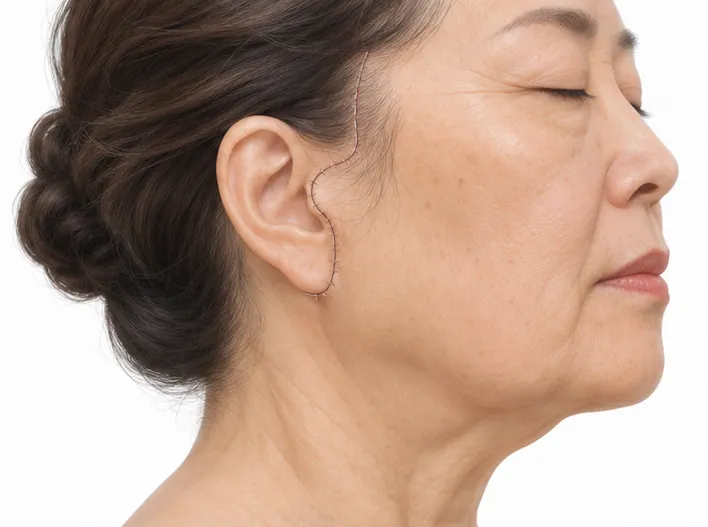
Depending on the surgical design, incisions are placed at the temples, around the ears, and along the rear hairline. Scars may initially be red and firm, mature over several months or longer, and continue to change for more than a year. Scars around the ears may be visible with short hair or hair worn up. Telling us how you usually wear your hair during consultation helps guide incision planning.
Results typically last 5.5 years
Although this varies by individual, we typically expect 5.5 years. Surgery repositions structures, but aging continues afterward, so ongoing care is also needed. We select lifting devices by assessing structural sagging and skin quality separately, generally considering InMode and ONDA monthly, and Ultherapy and Thermage once a year. We explain early contour changes separately from the settling process that takes place over several months.
A Word from the Doctor
Dr. Hyungwoo Yim’s own words from his blog and interviews.
01His Approach to Facelifts
“Lift what has descended, and restore what has been lost. That is the essence of a facelift.”
Restoring lost volume is just as important as lifting the deeper layers. He considers both lifting (Lift) and restoring volume (Fill).
02How much skin to remove
“Removing skin is an irreversible decision. That is why I spend a considerable amount of time planning the procedure.”
Remove a little more, and the skin feels tight; remove a little less, and the correction is insufficient. Somewhere in between is the right answer for each patient, and the entire surgery is a series of these decisions.
Dr. Hyungwoo Yim, Medical Director
The Surgical Process Varies
Depending on Your Condition
When Sagging Mainly Affects the Cheeks and Jawline
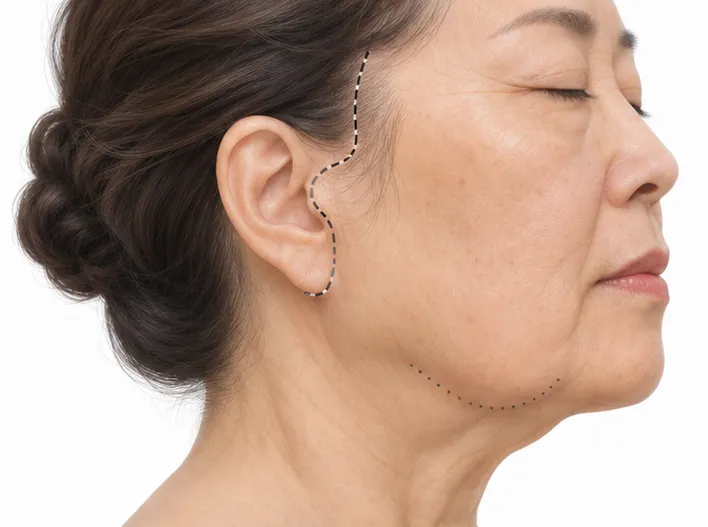 1
With you seated, we assess the direction of sagging and plan the incision lines
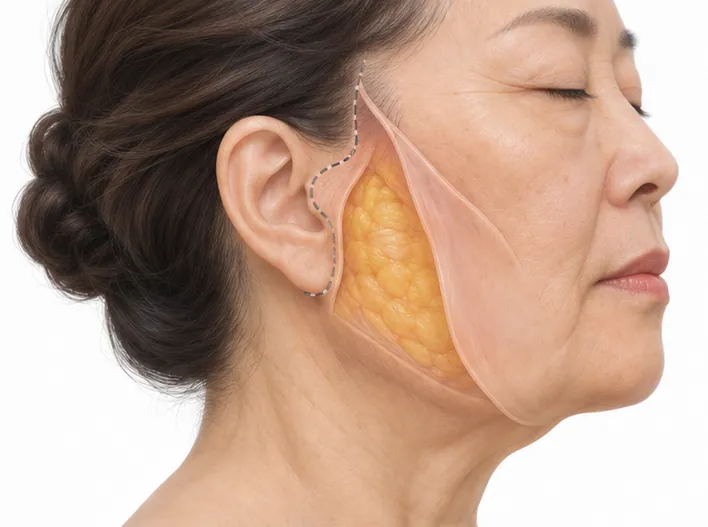 2
We make incisions at the temples and in front of and behind the ears, then dissect beneath the skin
 3
We enter the plane beneath the fascia, release the retaining ligaments, and lift and secure the sagging tissues
 4
We trim excess skin and close the incisions
When Neck Sagging Is Also Present
 1
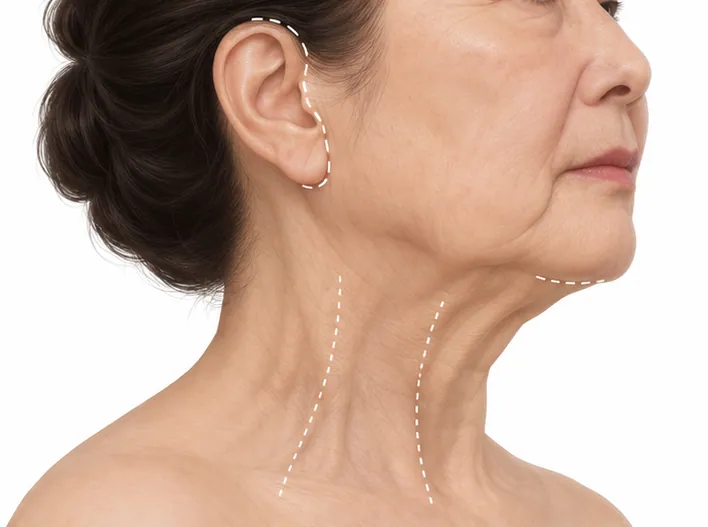
We assess turkey neck and platysmal bands, then plan the face and neck incisions together
 2
We make incisions around the ears and beneath the chin
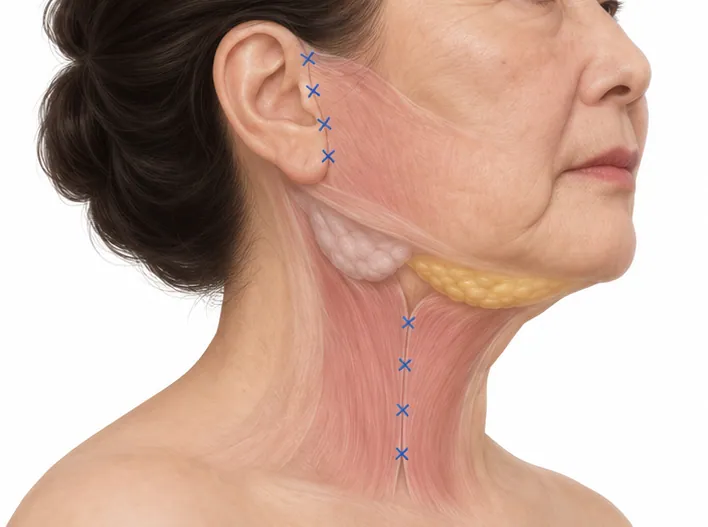 3
We lift the deeper facial tissues and bring the platysma together to address definition beneath the chin
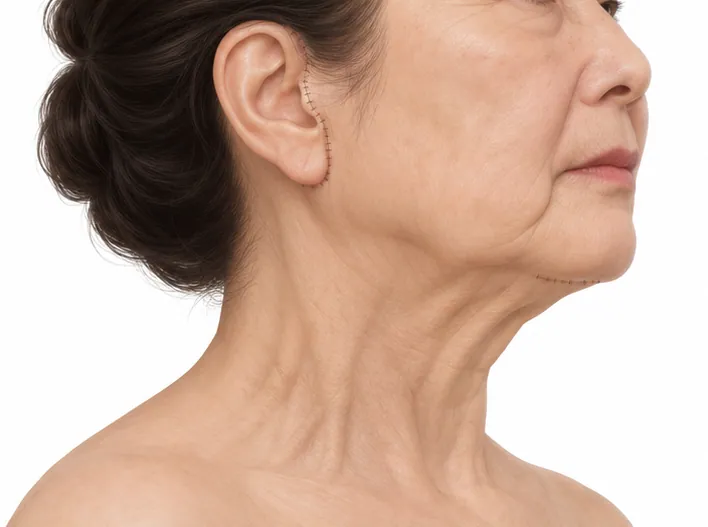 4
We preserve the salivary glands, trim excess skin, and close the incisions
When Sagging Is Relatively Mild
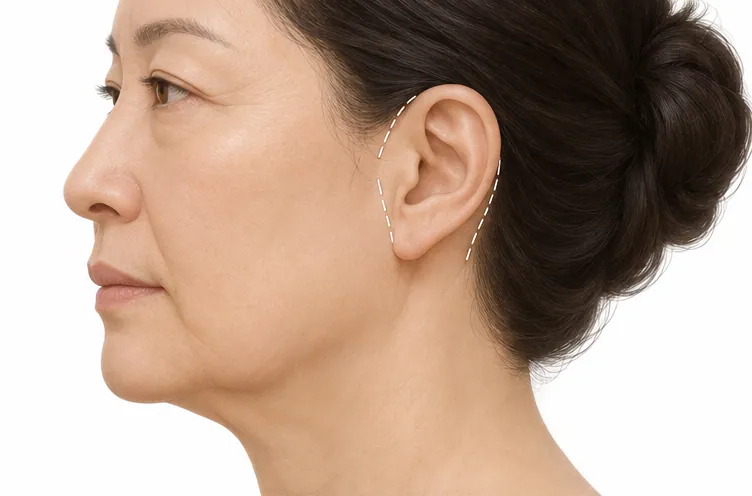 1
We assess whether a full facelift is needed and plan the mini facelift incision lines
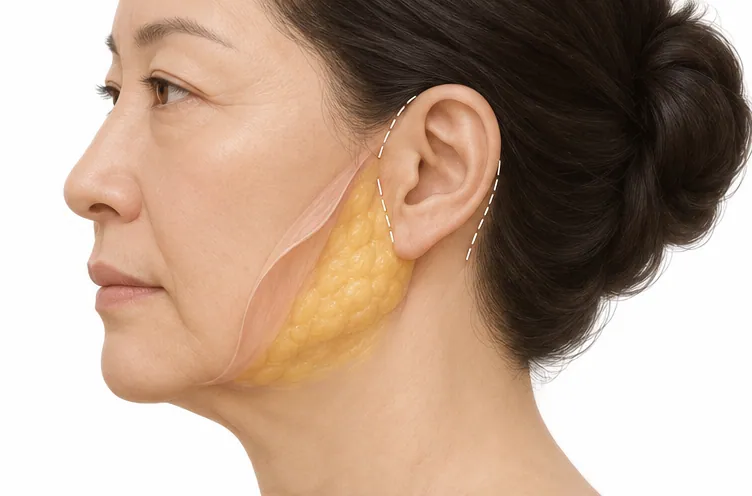 2
The front incision does not extend into the scalp; the incision behind the ear is similar to that of a full facelift
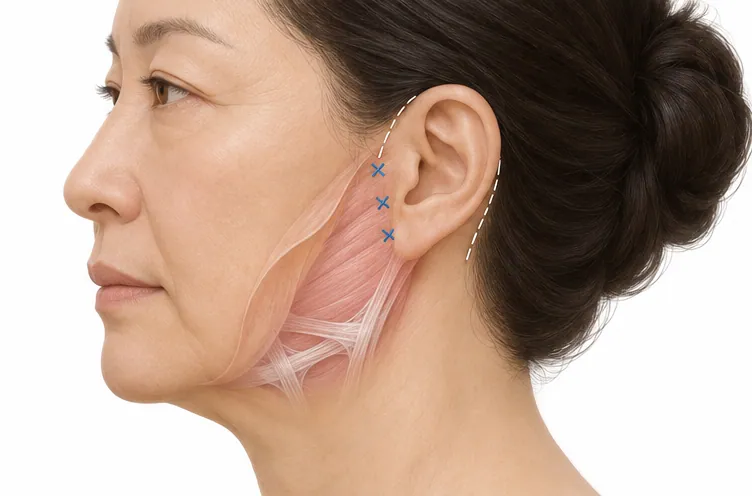 3
We work in the deep plane to lift and secure tissues along the jawline
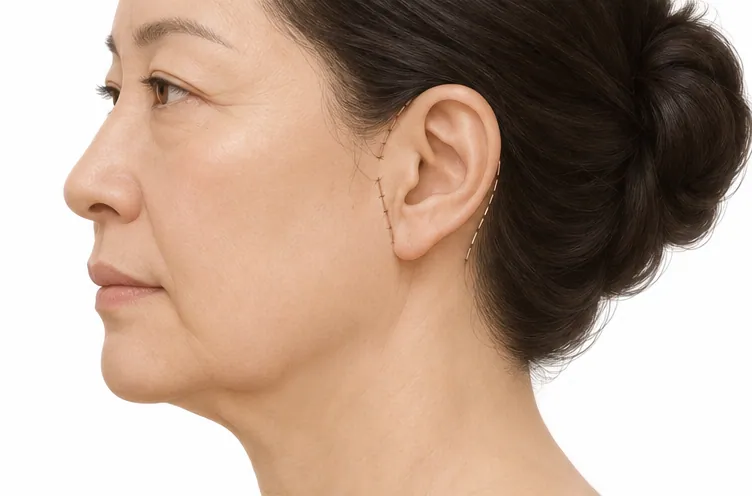 4
We trim excess skin and close the incisions
Illustration for explanation · Not an actual patient. This is a simplified description of typical steps. The actual technique and extent of surgery are determined after examination.
Even when procedures share the name “facelift,” which tissue layers are moved together, and to what extent,can influence
the outcome.
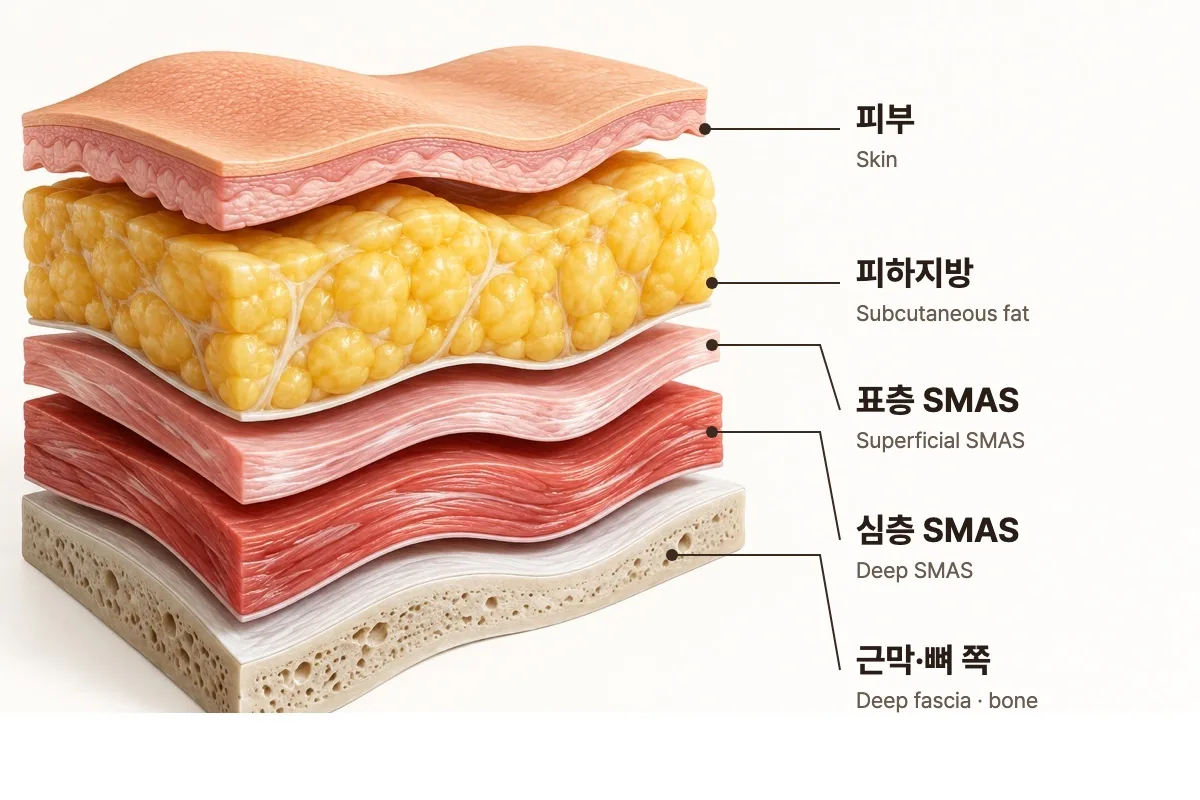
VITAL
moves the skin, fat, and SMAS together as one layer from the deep plane, rather than lifting only the skin.
We release the retaining ligaments holding sagging tissues in place to the extent needed, then reposition the tissues in the plane beneath the fascia—the deep plane. We plan to reduce tension on the skin and coordinate with a neck lift to address definition beneath the chin.
- Surgery Time
- About 4–5 hours
- Anesthesia
- IV sedation or general anesthesia
- Hospital stay
- No hospital stay
- Suture Removal
- Face: 5–7 days · Scalp: 10–14 days
- Recovery Time
- About 10 days · Varies by individual
※ Based on the doctor’s answers and the clinic’s surgical consent form · Individual results vary. Timing may differ depending on the extent of surgery, health status, and recovery.
1
Zygomatic retaining ligament
2
Cheek fat
3
Nasolabial fold
4
Jawline · Mandibular retaining ligament
“
How does this differ from lifting only the skin?
”
Facial sagging involves more than the skin. It results from downward changes in the position of fat compartments and the retaining ligaments that hold them.
Lifting only the skin may make facial expressions look pulled, while sagging fat may remain in place.
VITAL plans to move the fat and fascia as one layer, opposite the direction of sagging.
We first assess which layer to move, before deciding the direction of the lift
WHY DEEP PLANE
Lifting Only the Skin vs. Moving the Deeper Tissues Together
A · SKIN-FOCUSED
When the Lift Focuses on the Skin
Skin
Fat
Fascial Layer (SMAS)
Deep Layer
Skin-Only Lift
01 Lifting tension is concentrated on the skin
02 Sagging in the deeper tissues may remain
03 Facial expressions may look pulled
B · VITAL DEEP PLANE
When the Deeper Tissues Are Moved Together
Skin
Fat
Fascial Layer (SMAS)
Deep Layer
Moving Together Beneath the Fascia
01 Sagging tissues are moved together in the plane beneath the fascia
02 The plan aims to reduce tension on the skin
03 A neck lift is incorporated to address definition beneath the chin
This simplified diagram is intended to aid understanding and is not an exact anatomical illustration.
ASKED THE DOCTOR
The extent of surgery:
Answers directly from the surgeon.
We asked the surgeon three of the most common questions from people considering a facelift.
01 · Retaining Ligaments
Q. How far do you release the retaining ligaments?
“It varies by case. We determine the extent based on the location and degree of sagging, but we release the retaining ligaments around the mandible that connect to the jawline in most cases.”
Determined by case · Mandibular ligaments released in most cases
02 · Submandibular Glands
Q. Do you also remove sagging submandibular glands (salivary glands) beneath the jaw?
“We try to preserve them in most cases because we question whether removing a healthy structure is appropriate. When needed, we first consider nonsurgical options such as Botox.”
Principle: Prioritize preservation
03 · Mini Facelift
Q. Do you also perform mini facelifts? Are the incisions much shorter?
“A mini facelift is an approach I like very much. However, the only difference is that the front incision does not extend up into the scalp; the incision behind the ear is nearly the same length, and surgery takes about the same amount of time.”
Only the front incision differs · Similar surgery time
Dr. Hyungwoo Yim · Summarized from the lead surgeon’s answers. The actual scope is determined after an examination.
FULL LIFT · MINI LIFT
Depending on the extent of sagging,
areas can be treated separately.
If sagging is limited, we consider a mini facelift that treats only the midface or lower face. The differences may be smaller than you expect, so compare the areas treated rather than the numbers.
Facelift (deep plane + neck lift)
Mini facelift (midface or lower face)
Areas treated
Midface · Lower face · Jawline · Neck together
Selected areas with sagging
Front incision
Extends into the scalp
Does not extend up into the scalp
Incision behind the ear
Nearly the same as a mini facelift
Nearly the same as a facelift
Surgery Time
About 4–5 hours
Takes about the same time
May be considered for
Sagging across a broad area
Mild sagging limited to specific areas
※ A mini facelift does not necessarily mean substantially shorter incisions or surgery time. We decide together which approach fits after examining the location and extent of sagging.
1
Jawline
2
Platysmal bands
3
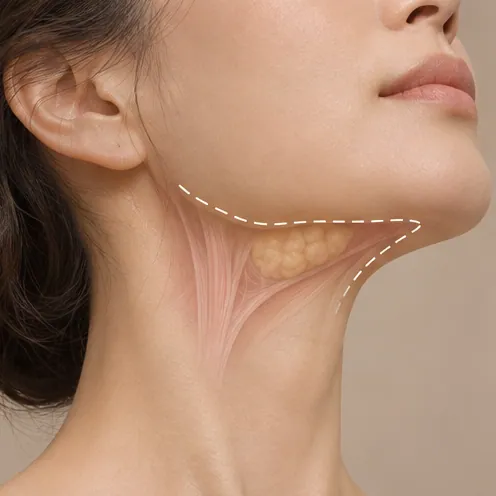
Fat · Salivary glands beneath the chin
4
Neck skin
Neck & Jawline
The neck completes the jawline.
The border beneath the jaw becomes less defined through a combination of loose neck skin, prominent vertical platysmal bands, and fat under the chin. Lifting the face alone may leave this border unchanged, so we discuss a neck lift (platysmaplasty) as part of the same plan.
Surgery Time
About 4–5 hours
Anesthesia
IV sedation or general anesthesia
Hospital stay
No hospital stay
Suture Removal
5–14 days, depending on the area
Recovery Time
About 10 days · Varies by individual
※ Based on the doctor’s answers and the clinic’s surgical consent form · Individual results vary. Timing may differ depending on the extent of surgery, health status, and recovery.
WHAT WE CHECK
Even when concerns look similar,
the factors to assess differ.
Excess Skin and Elasticity
We assess tissue position and support as well as skin laxity.
Position and support of fat · Fascia
We distinguish volume loss from sagging and consider how the different areas of the face relate to one another.
Overall facial volume and proportions
We review your previous surgery, scars, and health together.
DOCTOR'S DECISION
When choosing an approach, Dr. Hyungwoo Yim
looks at three things first.
Assessing the main areas and causes of sagging
Using your medical history and examination findings, we distinguish your current condition from the changes you want.
Explaining the tissue layers and extent of correction
We explain the expected changes, the impact on tissues, recovery, and issues that may remain.
Comparing what nonsurgical treatments can address with surgery
If you cannot set aside enough recovery time, we may not recommend surgery right away.
VITAL’s approach to care is to recommend the treatment you need when you need it.

When
to consider a consultation
- When nonsurgical treatments do not sufficiently improve changes in the jawline and neck
- When sagging cheeks and deep nasolabial folds make facial contours look less defined
- When underlying structures still appear saggy after previous treatments
- When the line between the jaw and neck is poorly defined
- When you want to address sagging in deeper layers and understand the incisions and recovery involved
When
Surgery is not our first recommendation
- When health conditions such as high blood pressure or diabetes need to be controlled first
- When it is difficult to allow enough time for recovery
- When you expect no scars at all
- When volume loss or skin quality is the main concern rather than sagging
Preparing for surgery and
recovery by stage
- 2–3 days after surgery
Keep the compression dressing and drain in place. Afterward, wear a compression band for 2 weeks and sleep with your head elevated at least 30 degrees for 1 week.
- 5–14 days
Stitches are removed after 5–7 days on the face and 10–14 days on the scalp. You can expect to return to daily activities in about 10 days, although recovery varies by individual.
- 2–6 weeks · Several months
Most swelling, bruising, and tightness improve over 2–6 weeks, and sensation in the ears, cheeks, and jaw returns over several months. Wait at least 6 weeks before coloring or perming your hair, and get facial massages only after your surgeon approves, usually after 2–3 months.
- Up to 1 Year
Scars in front of and behind the ears may remain red for 6 months to 1 year. Final results are assessed after 6 months. Follow-up visits are at 1 · 3 · 6 months · 1 year.

No smoking · No alcohol
We provide these essential instructions before surgery. Smoking and alcohol affect bleeding and wound healing.
Medications · Supplements
We recommend stopping herbal medicines and supplements such as omega-3 when possible because they may increase bleeding. Please tell us about every medication you take.
Medical history
We first check for high blood pressure, diabetes, and anticoagulant use. If these conditions are not controlled, surgery cannot proceed right away.
Filler · Thread History
Please tell us about previous fillers, threads, and lifting procedures. If needed, we use ultrasound to assess their location and distribution.
Recovery times are averages and vary by individual. Please contact us immediately if you experience sudden severe pain, bleeding that does not stop, rapidly worsening swelling on one side, warmth, pus, or a fever of 38°C or higher.
RECOVERY CALENDAR
We follow your return to daily life over time.
~ 1 WEEK
Early recovery
The doctor checks for bleeding, infection, swelling, wound condition, and signs of a hematoma, such as sudden swelling on one side, and determines when to remove the stitches.
1 MONTH
Tissue changes
We check swelling, bruising, and wound condition. If asymmetry is visible, we do not determine whether it is normal from photos alone.
3 MONTHS
Appearance and function
Firmness and tightness may occur during this period. Persistent pain is assessed without waiting.
6 MONTHS
Comparing progress
We compare photos and changes in function over time and determine through an examination whether additional care is needed.
1 YEAR
Long-term follow-up
We monitor tissue flexibility and changes in appearance and function over the long term. The time it takes for results to settle varies by person.
Do not wait if you have these symptoms
If you experience sudden severe pain, bleeding that does not stop, rapidly worsening swelling on one side, or signs of possible infection such as a high fever or pus, contact us immediately rather than waiting for your appointment.
This follow-up care plan was outlined by Dr. Hyungwoo Yim. Visit timing and the scope of treatment vary depending on the type of surgery and your recovery.
FOLLOW THE CHANGE
We also document
and monitor changes after treatment.
01
STEP 01
Documenting your condition before treatment
We review previous treatments, your current condition, and the changes you hope to see.
02
STEP 02
Checking early responses · Wound healing
We explain precautions and symptoms that require contacting us.
03
STEP 03
Comparing appearance and function
Along with photos, we assess discomfort and changes in function.
04
STEP 04
Assessing additional care
We do not recommend the same additional treatments for everyone.
AFTER SURGERY
After a facelift · Neck lift, care continues with VITAL LASTING CARE.
TREAT
Up to 3 months
Swelling · Bruising care, wound · Scar checks, and laser treatment for scars · Recovery when needed
ACTIVATE
After the recovery period
Consider regenerative care such as Re2O · PRP based on your individual condition
LAST
6 months–1 year
Scheduled follow-ups (1 week · 1 · 3 · 6 months · 1 year), skin · Firmness care
Care is determined after an examination based on the extent of surgery and your recovery. The same care is not recommended for everyone.
LIMITS & RISKS
Along with possible improvements,
we explain the limitations and risks.
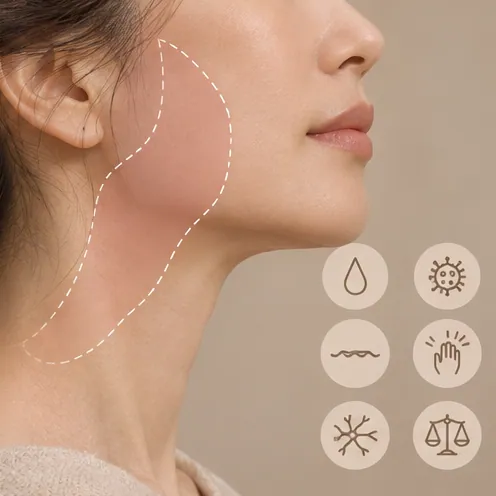
Hematoma
Infection
Scarring
Changes in Sensation
Nerve Injury
Asymmetry
Do not wait if you have these symptoms
If you experience sudden severe pain, bleeding that does not stop, rapidly worsening swelling on one side, or signs of possible infection such as a high fever or pus, contact us immediately rather than waiting for your appointment.
This is not a complete list of possible risks. Risks may vary depending on your health, previous treatments, and the technique and extent of surgery. Surgical results vary by individual.
IN HIS WORDS
Why facelift surgery
developed first in the West.
“
One reason East Asians are often described as looking youthful is their thicker dermis. Westerners have a thinner dermis, which gives their skin a clear appearance when young, but fine lines and sagging develop sooner with age. This is also one reason facelift surgery developed in the West.
Doctor Interview · 2026.10
“
Demand for facelifts has grown considerably across countries. In the past, people often avoided them because they considered them major surgery, but now many come in for the procedure. More people in China are also seeking the Korean-style in-out eyelid crease.
Doctor Interview · 2026.10
Dr. Hyungwoo Yim, Medical Director · Based on the doctor's own answers. The actual scope of care is determined after an examination.
RELATED SURGERY
Common questions
during consultations

Can you get a facelift in your 30s?
Age alone does not determine the decision. We consult with people from their 30s through their 70s and beyond, and consider surgery when nonsurgical treatments do not sufficiently improve changes in the jawline and neck. We do not recommend getting surgery early simply to do it before you get older.
Can it be done on the same day as eyelid surgery?
We may consider performing both on the same day after assessing your health, total surgery time, and recovery demands. Recovery times do not simply add together, but swelling, discomfort, and care needs may increase.
When can I tie my hair back?
You can resume after a follow-up assessment confirms that doing so does not pull on the incisions. Scars around the ears may be visible when your hair is tied back, so please tell us your usual hairstyle when we plan the incisions.
How long should I stay if I am traveling from abroad?
We use about 14–21 days as a starting point for discussion, including stitch removal and the first follow-up visit. This may be extended depending on complication risks. It is not a confirmed stay requirement from the clinic, so agree on the timing during your consultation before booking flights.
When can I fly after surgery?
The American Society of Plastic Surgeons (ASPS) recommends waiting 5–7 days after body surgery, such as liposuction or breast augmentation, and 7–10 days after facial surgery, such as a facelift, eyelid surgery, or nose surgery, before flying. It explains that long-haul flights and surgery can each increase the risk of blood clots. Guidelines from the British Association of Aesthetic Plastic Surgeons (BAAPS) recommend that patients stay in the country for 1–2 weeks after surgery lasting up to 3 hours under general anesthesia, or 2–4 weeks after longer surgery, if their journey is approximately 4 hours or longer. These recommendations are based on expert opinion. During travel, an aisle seat, frequent water intake, moving around on the plane, and compression stockings are recommended. At VITAL Plastic Surgery, the surgeon determines when you can fly after your stitches have been removed and your first follow-up check has been completed.
Source: ASPS 「Cosmetic Surgery Tourism」 · BAAPS Cosmetic Tourism Guidelines(2023)
Returning to your original concern
“My cheeks have sagged, making my facial contours less defined.”
The extent and cause of sagging determine which concerns nonsurgical treatments can address and which require surgery. If you cannot set aside enough recovery time, we may not recommend surgery right away.
Three things we check first during your consultation
- Where the main sagging is and why it developed
- The tissue layers to be treated and the extent of correction
- What nonsurgical treatments can address and how surgery differs
When booking ‘Please first assess whether nonsurgical treatment will work or whether I need surgery.’Leave this brief note, and we can start your consultation with that concern.
These are our principles of care. The actual approach is determined after an examination. You do not need to decide the day of your consultation.
Related Treatments
Q & A
Before you decide,
frequently asked questions
Q
How long does surgery take, what anesthesia is used, and is a hospital stay needed?
−
A
According to the doctor, surgery takes about 4–5 hours and does not require a hospital stay. According to the clinic’s surgical consent form, IV sedation or general anesthesia is used, with general anesthesia used in cases such as when a neck lift is performed at the same time. Stitches are removed after 5–7 days on the face and 10–14 days on the scalp. Return to daily activities is estimated at about 10 days, but varies by individual.
Q
Do you also remove the salivary glands under the jaw (submandibular glands)?
−
A
We try to preserve them in most cases. We carefully consider whether removing a normal structure is appropriate and, when needed, consider nonsurgical options first.
Q
Does a mini facelift have much shorter incisions and take less time?
−
A
The difference is that the front incision does not extend up into the scalp; the incision behind the ear and surgery time do not differ substantially. The choice depends on the extent of sagging.
Q
Do energy-based lifting treatments and a facelift have the same effects?
−
A
They differ in what they treat and the areas they address. Energy-based devices do not provide an equivalent replacement for surgery, and surgery does not resolve every skin concern.
Q
Can I have a neck lift alone?
−
A
After assessing excess neck skin, the platysma muscle, fat under the chin, and bone structure, we explain how treating the neck alone compares with extending treatment to the facial contours.
Q
Are the cost, number of treatments, and recovery period fixed?
−
A
Cost and the number of treatments depend on the examination and scope of treatment. According to the surgeon’s answers, returning to daily activities takes about 10 days, with individual variation.
Q
Can a treatment plan be finalized through a photo consultation alone?
−
A
Photos serve as a reference. A treatment plan should be determined after an in-person assessment of function, tissue condition, and overall health, along with a thorough explanation.
DOCTOR'S COLUMN DOCTOR'S COLUMN DOCTOR'S COLUMN
Must Read
Care Notes Written by the Doctor · Please Read Before Your First Visit
No.1
No.3
VIEW MORE →
RESERVATION
You do not need to decide the day of your consultation.
Organize questions about this page without entering your name, contact information, or medical history. This does not submit an appointment request.