PLASTIC SURGERY
MEDICAL COLUMN
Questions Answered Directly by the Doctor Before You Decide on Surgery
Facelift
Articles
Sagging Buccal Fat: Should It Be Removed or Lifted?
The Korean term often translated as “deep cheek fat” is commonly used in consultations rather than as a formal medical term. It often refers to fat in the deeper layers of the cheeks, rather than just beneath the skin, and to sagging in that area. The answer depends on whether the cheeks look saggy because there is excess fat or because the supporting structures have loosened and allowed the tissue to descend.
Medically reviewed by Dr. Hyungwoo Yim, Medical Director and board-certified plastic surgeon · Published November 5, 2026 · Last reviewed November 11, 2026
SHORT ANSWER
First, the Short Answer
- The Korean term often translated as “deep cheek fat” is commonly used in consultations rather than as a formal medical term. It often refers to fat in the deeper layers of the cheeks, rather than just beneath the skin, and to sagging in that area. The answer depends on whether the cheeks look saggy because there is excess fat or because the supporting structures have loosened and allowed the tissue to descend.
- If tissue has descended, returning it to its original position takes priority over removal. In a deep plane facelift at VITAL Plastic Surgery, the retaining ligaments are released beneath the fascial layer, and the skin, fat, and fascia are repositioned together as one layer. Repeated fat-reduction treatments require careful consideration in thin, hollow faces.
- VITAL Plastic Surgery first identifies where and why the main sagging has developed, the tissue layers and areas to address, and what nonsurgical treatments can achieve compared with surgery.
“I was told I should have my deep cheek fat removed because the tissue inside my cheeks is sagging. Will removing it solve the problem?”
This is a paraphrase of a question we often hear during consultations.
To answer this question, we first need to distinguish where your current concern comes from. We will explain each point below, then return to the original question at the end.
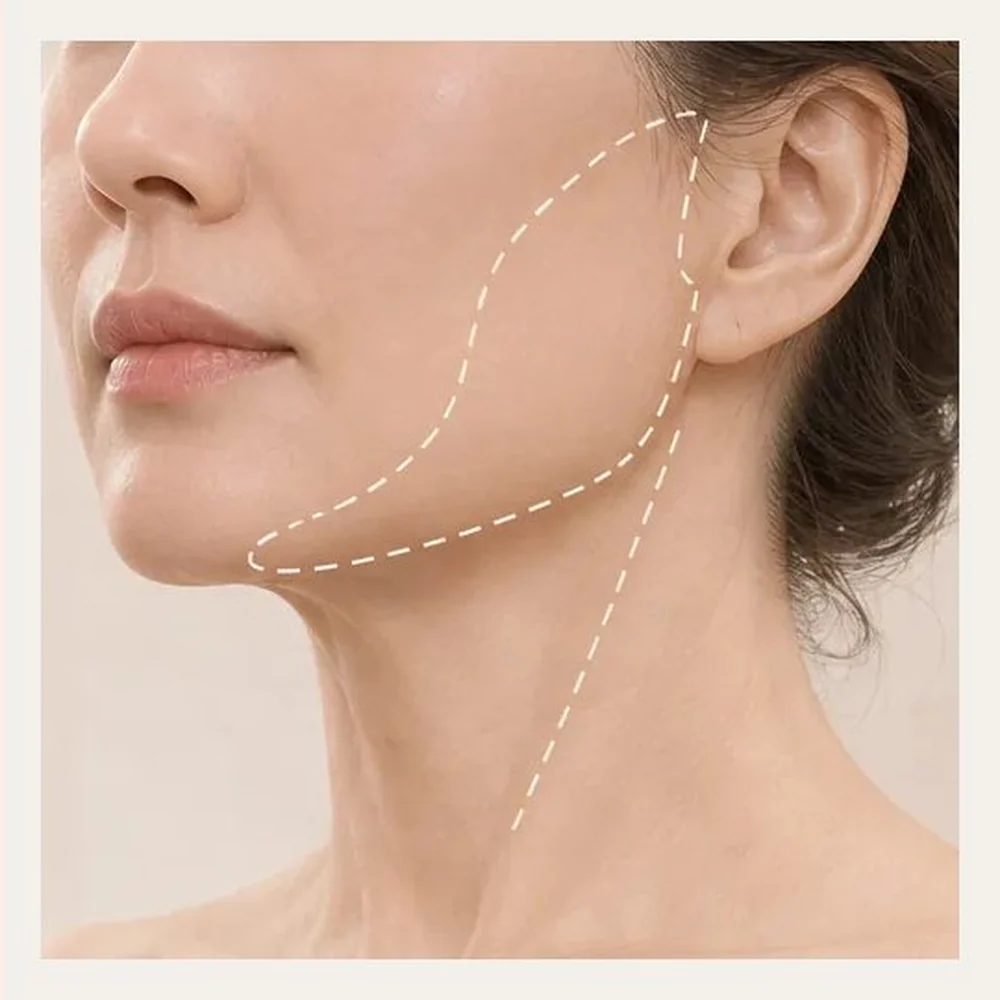
01Where exactly is deep cheek fat?
Answer The term commonly refers to fat deep within the cheeks, but the exact area people mean varies.

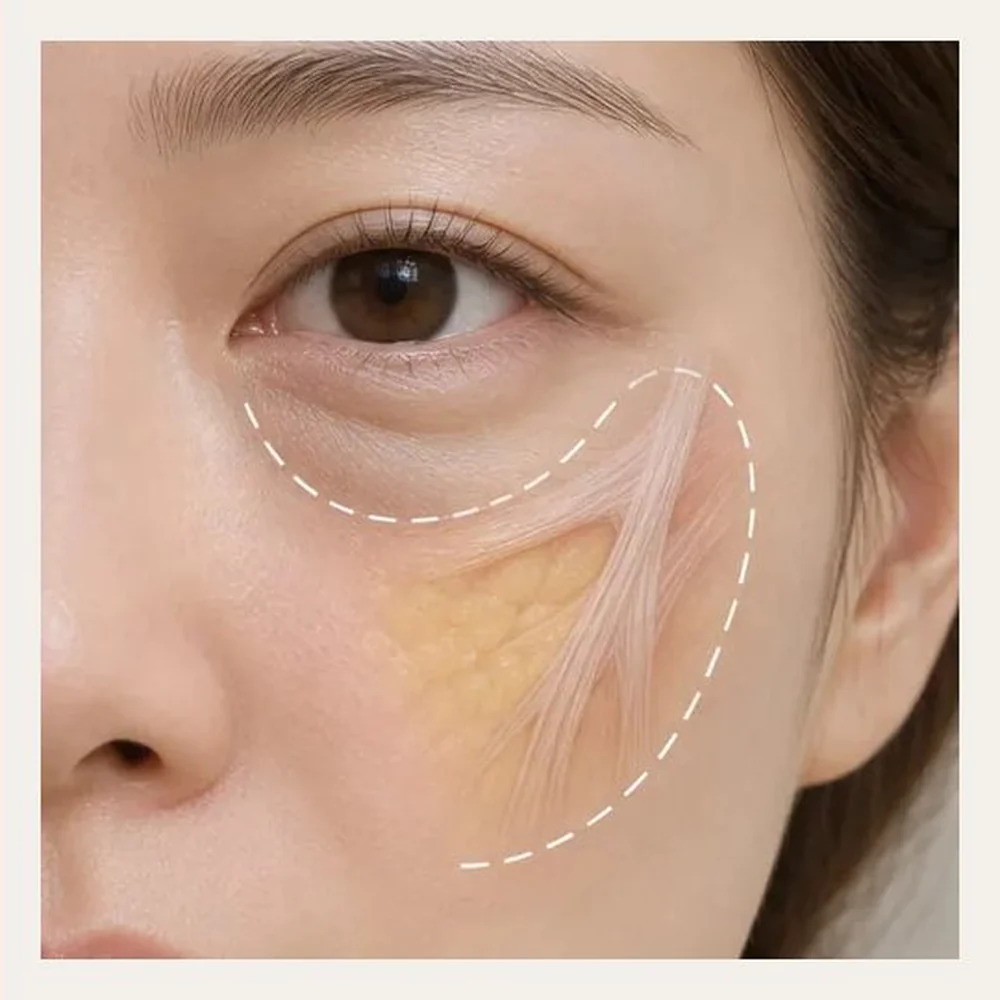
The face consists of layers: skin, subcutaneous fat, a fascial layer connected to the facial expression muscles (SMAS), and deeper fat and bone beneath it. During consultations, patients may use “deep cheek fat” to describe heavy tissue sagging beside the mouth, or deeper areas at the front of the cheeks that have become hollow or descended. Even when patients use the same term, the starting point is to identify the exact area together in a mirror.
VITAL Plastic Surgery's deep plane facelift guide considers four areas together when assessing sagging: the retaining ligaments near the cheekbones, cheek fat, the nasolabial fold boundary, and the mandibular retaining ligaments along the jawline. Retaining ligaments anchor deep tissue toward the bone. As these structures loosen, the fat above them descends and the boundaries become more visible.
Deep cheek fat does not change uniformly in one direction with age. A CT study of 60 Asian women divided into age groups found that the inner portion of the deep medial cheek fat tended to become thinner, while the outer portion became thicker1. This means that even within deep cheek fat, some areas lose volume while others gain it.
In Simple Terms It is similar to fruit in a mesh shopping bag. If the hook holding the bag loosens, the fruit settles toward the bottom, making it bulge—much like a sagging cheek. Removing a few pieces of fruit may make the bottom look lighter temporarily, but the stretched mesh and loose hook remain, and the top becomes more hollow. If the hook is secured higher and the entire mesh bag is lifted, the fruit returns to its original position. Any remaining empty spaces can then be filled. Before removing deep cheek fat, we first need to determine whether the hook has loosened or there really is too much fruit.
So why do the deep cheeks look saggy?
02Why do the deep cheeks look saggy?
Answer Because supporting structures loosen, fat descends, and different areas lose or gain volume.

VITAL Plastic Surgery considers changes in bone, fat loss and displacement, and loosening of supporting tissues to vary by area. We therefore assess the position of sagging structures, the amount of missing volume, and skin quality separately. Even at the same age, the tissues that have descended and the direction of descent differ. The scope of treatment becomes clear only after sequentially assessing the skin and fat, supporting ligaments, and adhesions from previous surgery.
In the CT study described above, thinner deep medial cheek fat was associated with deeper nasolabial folds and tear troughs1. When the deep tissue at the front of the cheeks becomes hollow, the tissue above loses support. When fat accumulates lower in the cheeks, the area beside the mouth looks heavy. This is why upper cheek hollowing and lower cheek sagging can occur together.
It is also important to recognize that sagging is not just a skin issue. Sagging cheeks, deep nasolabial folds, and a less defined jawline reflect changes in the position of the underlying fat, fascia, and supporting structures. Pulling only the skin can leave the sagging fat in place.
For this reason, we assess the direction of sagging while the patient is seated. Sagging looks different when lying down versus sitting up. The tissue layers and areas to address depend on whether the tissue has descended downward or inward and where hollowing is present. For major procedures, we review photographs the day before surgery, refine the plan, and prepare drawings. Because the under-eye area and cheeks affect each other differently when smiling versus at rest, we also assess changes with facial expression.
- Whether the front of the cheeks has descended as the retaining ligaments near the cheekbones have loosened
- Whether cheek fat has shifted toward the sides of the mouth, creating a heavy appearance
- Whether the nasolabial fold boundary has also deepened
- Whether the area around the mandibular retaining ligaments along the jawline has lost definition
So will removing deep cheek fat solve the problem?
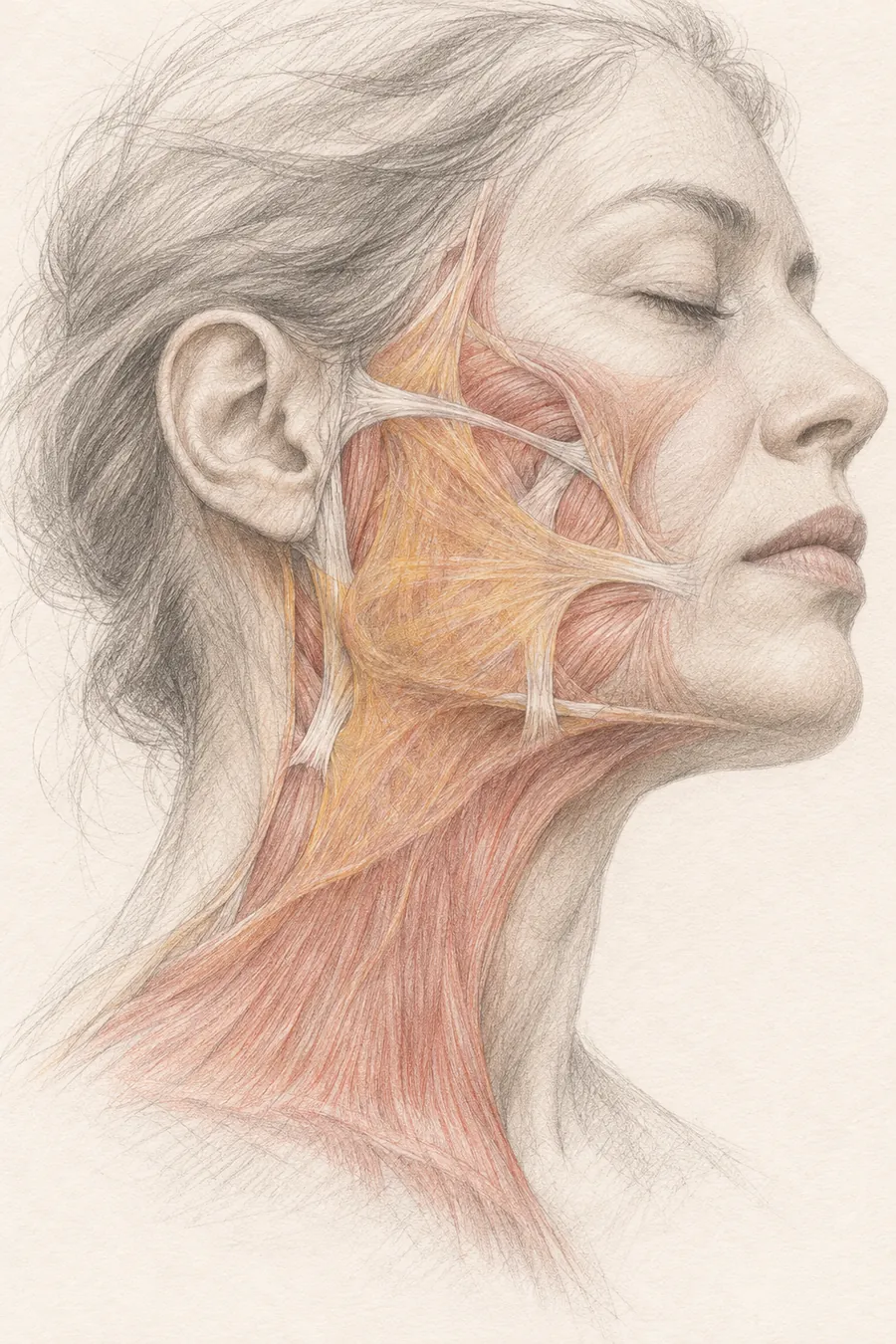
03Will removing deep cheek fat solve the problem?
Answer We first distinguish descended tissue from excess volume. If the issue is position, repositioning takes priority.

Reducing sagging cheek volume may initially make the cheeks look lighter, but it does not resolve loosened supporting structures. In thin, hollow faces, repeated treatments intended to reduce fat can make hollowing more noticeable, so VITAL Plastic Surgery considers these treatments carefully.
We are also cautious about using added volume to conceal descended tissue. Filling an area of descended tissue with fat can make the face look heavy, so we view fat grafting as a way to replace tissue where it is actually lacking. When sagging and hollowing occur together, we first lift the sagging tissue, then reassess any remaining hollowing.
Ultimately, removing, lifting, and adding volume are tools chosen according to the cause, rather than competing options. Often, some areas have descended while others are hollow, so we do not try to address the entire face with a single method.
| Category | How it looks | What we look at first |
|---|---|---|
| Descended tissue | Heaviness beside the mouth and a less defined jawline | Retaining ligaments, direction of sagging, and extent of the lift |
| Volume loss | Flattening and shadows at the front of the cheeks | Whether tissue is actually lacking and whether fat grafting is appropriate |
| Apparent excess fat | Fullness in the lower cheeks | An examination to distinguish excess volume from descended tissue |
| Skin quality concerns | Primarily fine lines and reduced elasticity | Treatments that address the skin, such as energy-based devices or Re2O |
So how does a deep plane facelift address deep cheek sagging?
04How does a deep plane facelift address deep cheek sagging?
Answer The retaining ligaments are released beneath the fascial layer, and the skin, fat, and fascia are repositioned together as one layer.

When tissue is anchored toward the bone, pulling from above does not move it easily. In a deep plane facelift at VITAL Plastic Surgery, we identify the SMAS fascia, descended cheek fat, and retaining ligaments anchoring the tissue, then reposition the skin, fat, and fascia together as one layer through a deep plane beneath the fascia. The extent of ligament release varies by case, but the ligaments along the jawline are released in most cases.
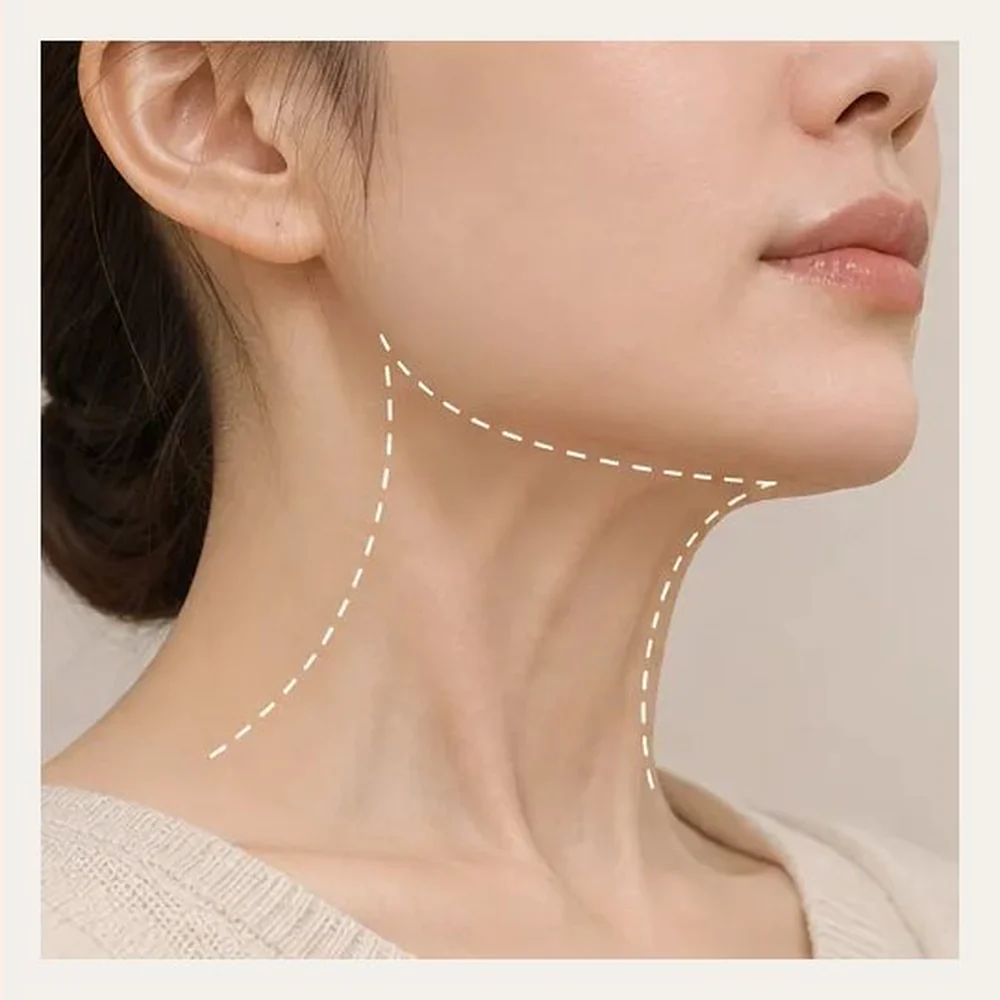
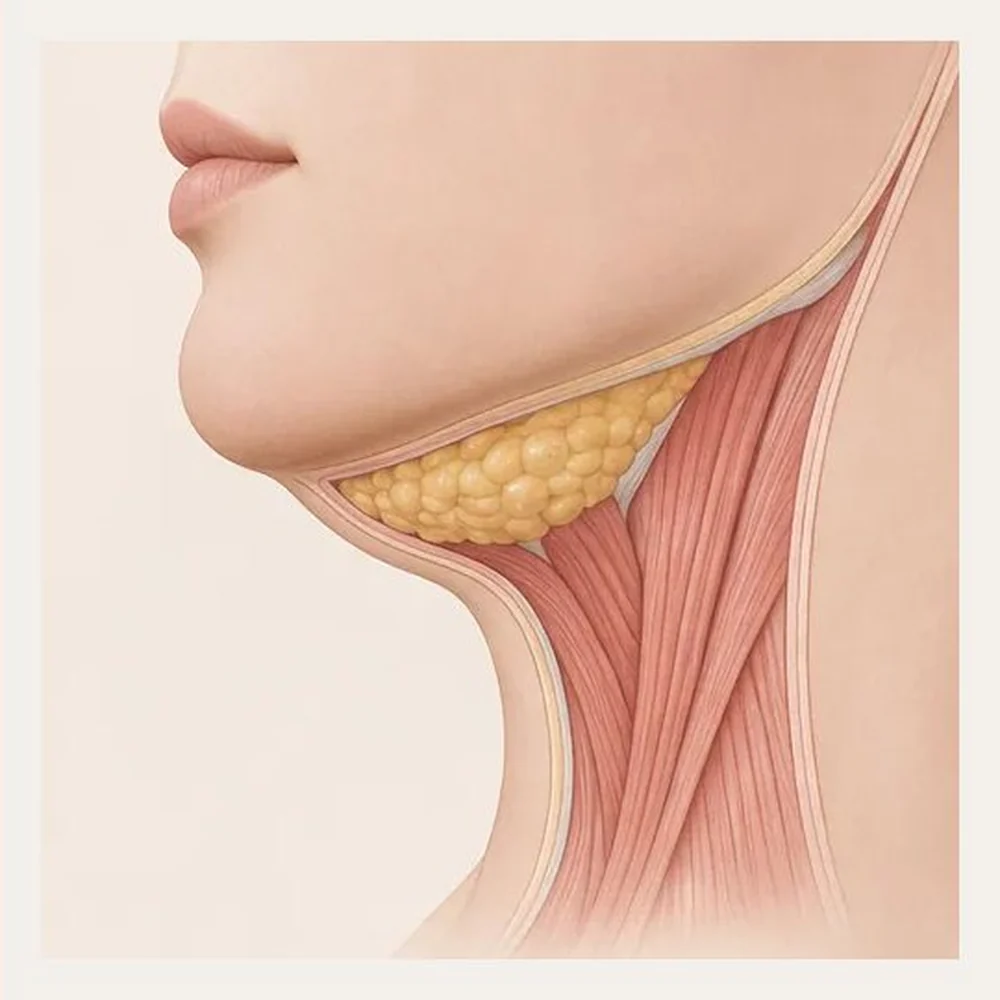
The lifted tissue is moved in the opposite direction of sagging and secured, and the skin is trimmed under reduced tension. The principle is to consider the tissue layer being repositioned before the direction of pull. Working in deep tissue layers requires a thorough understanding of where the facial nerves run, so risks such as nerve injury, changes in sensation, and hematoma are explained before surgery. The salivary glands beneath the jaw are preserved in most cases. If neck sagging is substantial, a neck lift is discussed as part of the same plan.
One study examined this approach in Asian patients. In a study of 61 Asian patients with an average age of 52 who underwent a deep plane facelift and were followed for an average of 19 months, the authors concluded that this approach was effective in repositioning the soft tissues at the front of the face, making it advantageous for Asian faces. Of the patients, 98% reported being satisfied or very satisfied with their results2. This reflects one research team's experience and does not guarantee any individual's results.
- Mark the direction of sagging and planned incision lines with the patient seated
- Make incisions at the temples and in front of and behind the ears, then dissect beneath the skin
- Enter beneath the fascial layer, release the retaining ligaments, and lift and secure the sagging tissues
- Trim excess skin and close the incisions
If only the front of the cheeks is sagging, is a midface lift enough?
05If only the front of my cheeks is sagging, is a midface lift enough?
Answer A midface lift is considered when sagging is limited to the under-eye area and front of the cheeks; a facelift is considered when it extends to the jawline and neck.

If deep cheek sagging extends from beneath the eyes to the front of the cheeks, it may fall within the area treated by a midface lift. A midface lift uses an incision through the conjunctiva inside the eyelid to lift and secure the cheek fat layer and retaining ligaments that have descended from beneath the eyes toward the front of the cheeks. It leaves no skin incision. During the examination, the surgeon assesses the firmness of the ligaments by touch.
The approach changes when sagging extends to the corners of the mouth, jawline, and neck. A midface lift treats the under-eye area and front of the cheeks, while a facelift treats the cheeks and jawline, and the neck if needed. For mild sagging, a mini facelift limited to either the midface or lower face may also be considered. However, a mini facelift does not necessarily mean a much shorter incision behind the ear or a much shorter surgery.
Treating a larger area may also increase swelling and aftercare demands. The treatment area is therefore based on where the main sagging occurs, without extending beyond what is needed.
- Sagging limited to the under-eye area and front of the cheeks: midface lift (conjunctival approach, no skin incision)
- Sagging extending to the corners of the mouth · jawline · neck: deep plane facelift, with a neck lift if needed
- Mild sagging limited to one area: mini facelift treating either the midface or lower face
- Concerns clearly limited to the under-eye area: do not extend treatment to the cheeks
Can I try nonsurgical treatments before surgery?
06Can I try nonsurgical treatments before surgery?
Answer Depending on the condition, nonsurgical treatment may be enough, but restoration may be needed if the supporting structures have broken down.

VITAL Plastic Surgery does not classify treatments in advance as simple or complex. Depending on the condition, a simple nonsurgical treatment may be enough, but precise restoration may be needed if the internal supporting structures have broken down. Energy-based devices and facelifts address different concerns and treatment areas, so they are not interchangeable.
Lifting devices are selected based on whether the concern is structural sagging or skin quality. The general treatment schedule is monthly for InMode and ONDA, and once a year for Ultherapy and Thermage. Surgery may not be recommended right away if you cannot allow enough recovery time. If volume loss or skin quality is the main concern rather than sagging, that concern is treated first.
Records of previous thread lifts, fillers, or device-based treatments also matter. If you share your history of fillers, threads, and lifting procedures, ultrasound may be used when needed to check their location and distribution.
- Whether the extent and cause of sagging can be addressed with nonsurgical treatment
- Whether skin quality and elasticity are the main concerns
- Whether you can allow enough time for recovery
- Whether previous filler · thread · device-based treatments have changed the tissues
What are recovery and the longevity of results like after surgery?
07What are recovery and maintenance like after surgery?
Answer Plan for about 10 days before returning to daily activities. Results vary, but 5.5 years is the usual reference point for how long they last.

A deep-plane facelift takes approximately 4–5 hours and is performed under sedation or general anesthesia, without an overnight hospital stay. Facial sutures are removed after 5–7 days and scalp sutures after 10–14 days. Patients typically return to daily activities after about 10 days, although recovery varies by individual. The initial changes in facial contours and the time it takes for the tissues to settle are considered separately. Follow-up visits are scheduled at 1, 3, and 6 months and at 1 year.
The usual reference point for lasting results is 5.5 years. In a study that reassessed 50 patients 5.5 years after their first facelift, the jowls (sagging tissue along the jawline) had been lifted by about 6 mm during surgery, with only 21% of that correction lost. Nasolabial folds and lines around the mouth were also assessed as remaining well corrected3. However, some neck laxity returned sooner. Aging continues after surgery, so ongoing care is also needed.
Some signs during recovery require immediate contact. If you experience sudden severe pain, bleeding that will not stop, rapidly worsening swelling on one side, or signs of possible infection such as a high fever or pus, please contact us without waiting for your scheduled appointment. Facelift risks include hematoma, infection, scarring, changes in sensation, nerve injury, and asymmetry. This is not a complete list.
| Timing | What Happens | What to Keep in Mind |
|---|---|---|
| 3–4 days after surgery | Peak Swelling | Sleep with your head slightly elevated, and use compression only when instructed for your procedure |
| 7–10 Days | Sutures are removed after 5–7 days on the face and 10–14 days on the scalp. | Return to daily activities is generally around 10 days, with individual variation |
| Several Months | Contour changes and tissue stabilization occur on different timelines | Tie your hair back only after checking that it does not pull on the incision |
| Up to 1 Year | Scars are initially red and firm, then gradually change | Follow-ups at 1, 3, and 6 months and 1 year |
08Three things we check first during your consultation
What we assess first during consultation
- Where the main sagging occurs and why: distinguish tissue position, volume, and skin quality
- The tissue layer and treatment area (midface only, or extending to the jawline · neck)
- What nonsurgical treatments can address and how surgery differs
These are general care principles. The actual decision is made after an examination.
When other care is needed first A facelift is not recommended right away if volume loss or skin quality is the main concern rather than sagging, if a health condition such as high blood pressure or diabetes needs to be controlled first, or if you cannot allow enough recovery time. Repeated fat-reduction treatments on a thin, hollow face also require careful consideration.
The answer to the original question, “Will removing buccal fat solve the problem?” is this: cheeks often look saggy because their supporting structures have loosened and descended, rather than because there is too much fat. In that situation, repositioning comes before removal. First distinguishing where tissue has descended from where volume has been lost helps determine whether lifting, restoring volume, or skin care should come first.
— VITAL Plastic Surgery
When booking, simply leave a note saying, “Please first assess whether I need fat removal or lifting,” and we will start there during your consultation. You do not need to make a decision on the day of your consultation.
Related ReadingDeep Plane Facelift · Neck Lift Care Guide
READ NEXT
Read Next
FAQ
Frequently Asked Questions
Does having a lot of deep cheek fat always mean it should be removed?
An examination first distinguishes excess volume from tissue that has descended because its supporting structures have loosened. If the issue is position, repositioning takes priority over removal.
I'm in my 30s, but my cheeks look saggy. Do I need a facelift?
Age alone does not determine the decision. We consult with patients from their 30s through their 70s and beyond, and consider surgery when nonsurgical treatments do not sufficiently improve changes in the jawline and neck.
Can energy-based lifting treatments lift sagging deep cheek tissue?
Devices and facelifts differ in what they treat and how much they can address. Device selection considers structural sagging and skin quality separately, and devices cannot fully replace surgery.
Are a midface lift and a facelift the same surgery?
The treatment areas, incisions, and surgical times differ. We explain these after assessing the tissue and determining whether the main concern is the under-eye area, cheeks, or facial contours.
Can a treatment be chosen from photos alone?
Photos serve as a reference. We determine the plan after directly assessing function, tissue condition, and overall health, followed by a thorough explanation.
BEFORE CONSULTATION
What to Prepare Before Your Consultation
- Mark the Areas That Concern YouIt can help to bring a photo marked with the areas that look saggy or hollow when you look in the mirror.
- Past photosFront and side photos from a few years ago can help us compare the direction in which tissues have descended.
- Previous treatment recordsPlease tell us when you had fat-reduction injections, fillers, threads, or treatments with lifting devices.
- Weight changesPlease tell us if your weight has changed significantly over the past few years.
- Health conditions and medicationsPlease tell us whether you have high blood pressure or diabetes, take anticoagulants, or use herbal medicines or supplements such as omega-3.
REFERENCES
References
- Wen LH, Zhong PH, Wang XL, et al. Analysis of age-related changes in midfacial fat compartments in Asian women using computed tomography. Journal of Plastic, Reconstructive & Aesthetic Surgery. 2019. doi:10.1016/j.bjps.2019.05.035 (View abstract)
- Wong CH, Hsieh MKH, Mendelson B. Deep Plane Face Lift in Asian Patients. Plastic and Reconstructive Surgery. 2025. doi:10.1097/PRS.0000000000012102 (View abstract)
- Jones BM, Lo SJ. How long does a face lift last? Objective and subjective measurements over a 5-year period. Plastic and Reconstructive Surgery. 2012. doi:10.1097/PRS.0b013e31826d9f7f (View abstract)
The findings in these papers reflect the participants and conditions of each study and do not mean that every individual will have the same results.
This article provides general medical information and does not replace diagnosis or treatment. Surgical results and recovery vary by individual, and complications such as bleeding, infection, scarring, and asymmetry may occur.
More articlesVITAL Plastic Surgery Medical Articles
RESERVATION
You do not need to decide the day of your consultation.
Organize questions about this page without entering your name, contact information, or medical history. This does not submit an appointment request.