PLASTIC SURGERY
All Treatments / Surgery
Double Chin Liposuction
We assess fat, muscle, and skin separately to determine why the area under the chin looks full and how much treatment is needed.
This may vary depending on your condition and the extent of surgery.
Double Chin,
What does the surgery involve?
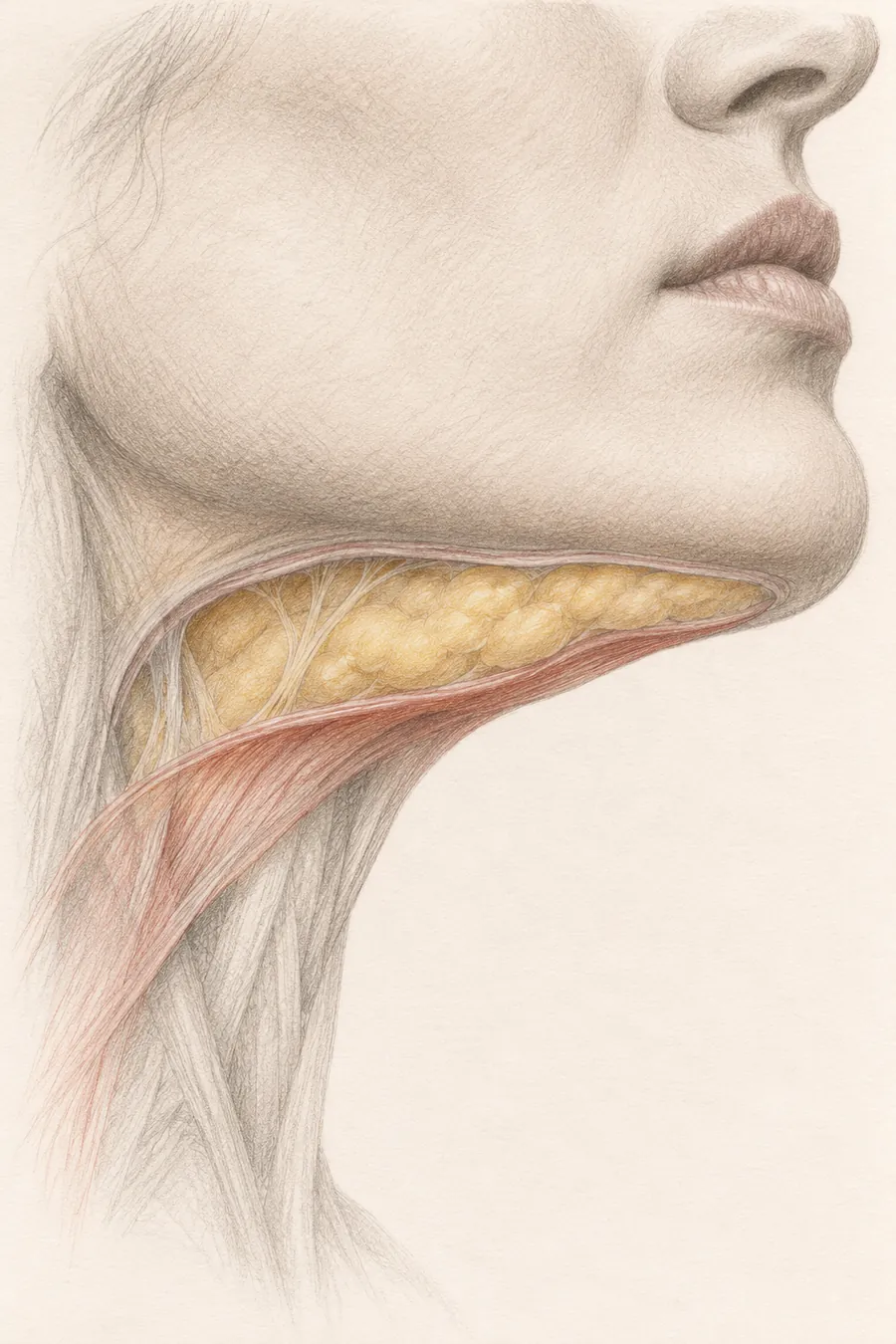
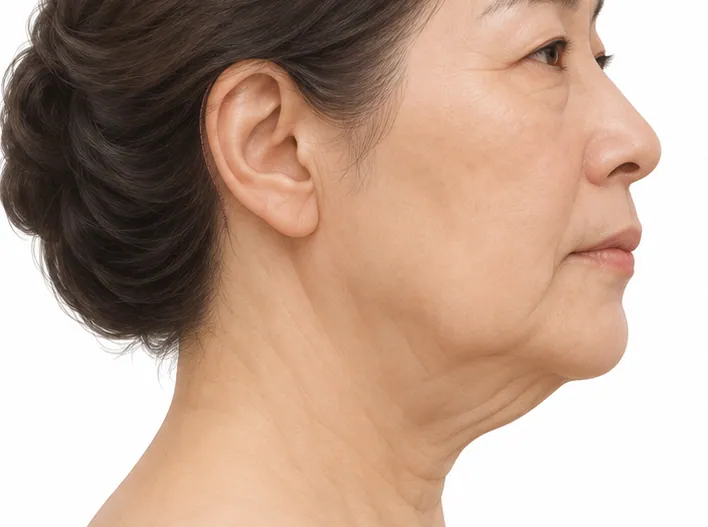
A double chin occurs when fat builds up under the chin, the muscles at the front of the neck separate, or the skin sags, creating the appearance of a second layer below the jawline. If fat is the cause, we consider double chin liposuction; if the platysma muscles have separated, corset platysmaplasty; and if there is substantial excess skin, a lift. There is often more than one cause, so we assess excess neck skin, platysmal bands, fat, and the anatomy under the chin together. We generally plan to preserve the salivary glands under the chin.
- Under-Chin Fat
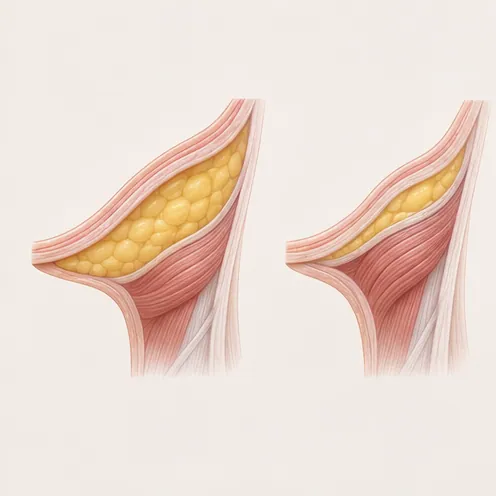
- This is fat directly beneath the skin under the chin and beneath the platysma. The treatment approach depends on which layer contains the fat.
- Platysma
- This thin muscle covers the front of the neck. When it separates, vertical bands appear and support under the chin weakens.
- Corset platysmaplasty
- A technique that brings the separated platysma together at the center to support the area beneath the chin.
- Submandibular glands
- These are salivary glands under the jaw. They can contribute to fullness under the chin, but they are usually preserved.
For a Double Chin,
in Lower Blepharoplasty
We First Identify What Causes the Fullness
Double chins may look similar but have different causes. Pinchable fat, platysmal bands that become prominent when the muscles contract, loose skin, salivary glands under the jaw, and the size and position of the jawbone each play a role. Without assessing these factors separately, muscle bands may remain after fat removal, or the skin may look looser. That is why we identify the cause before choosing a procedure.
If Fat Is the Main Cause, We Consider Liposuction First
We consider double chin liposuction when there is enough pinchable fat under the chin and the skin retains elasticity. Typically, small access openings are made in a crease under the chin or behind the ears, and a thin cannula is used to reduce the fat layer evenly. Removing too much fat can leave an uneven surface or make the skin appear stuck to the muscle, so a consistent layer of fat is left beneath the skin.
If the Muscles Have Separated, Liposuction Alone Is Not Enough
When vertical bands are visible and the angle between the chin and neck is poorly defined, reducing fat alone may not sufficiently define the contour. We also consider corset platysmaplasty, which uses a small incision under the chin to bring the separated platysma muscles together at the midline and secure them. Corset platysmaplasty may be performed alone or with a facelift, with the extent determined by facial sagging.
If the Skin Is Loose, We Also Consider a Lift
When there is substantial excess skin, as in a turkey neck, loose skin may remain after fat removal. In these cases, we consider a neck lift that repositions the neck skin upward and backward, or treatment combined with a facelift. When neck concerns are significant, treating only the face or only the area under the chin may not sufficiently improve the transition between the jawline and neck. A more extensive procedure changes the recovery demands, which we also explain.
We Generally Favor Preserving the Salivary Glands Under the Jaw
Even when a salivary gland causes fullness under the chin, we first consider whether removing a healthy structure is appropriate. We aim to preserve these glands in most cases and, when needed, assess whether nonsurgical options such as Botox can be considered first. The more a choice may damage normal anatomy, the more carefully we weigh its benefits and risks.
Fat-Reduction Treatments Require Caution in Thin, Hollow Faces
Repeated treatments intended to reduce fat require caution in people with thin, hollow faces. Reducing fat while focusing only on the area under the chin can make the contours look more gaunt. A nerve that moves the corner of the mouth runs along the edge of the jaw, so care is needed when treating that area. If weight is changing significantly, we reassess once it has stabilized.
The Surgical Process Varies
Depending on Your Condition
When Under-Chin Fat Is the Main Cause
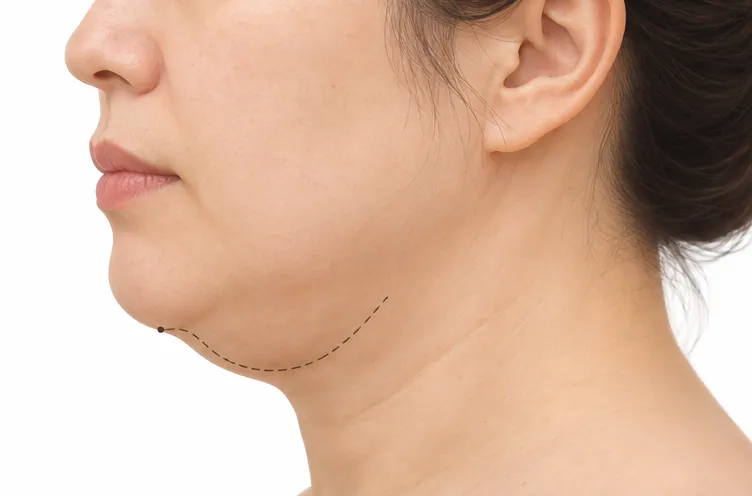 1
We mark the area of pinchable fat while you are seated
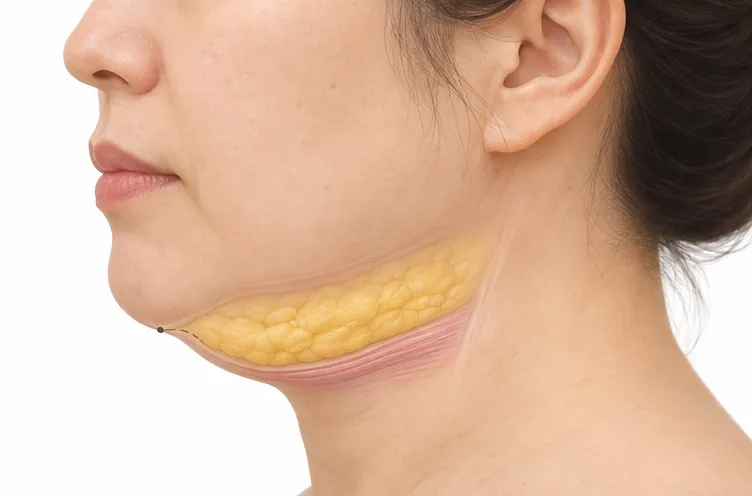 2
We make a small access opening near the crease under the chin
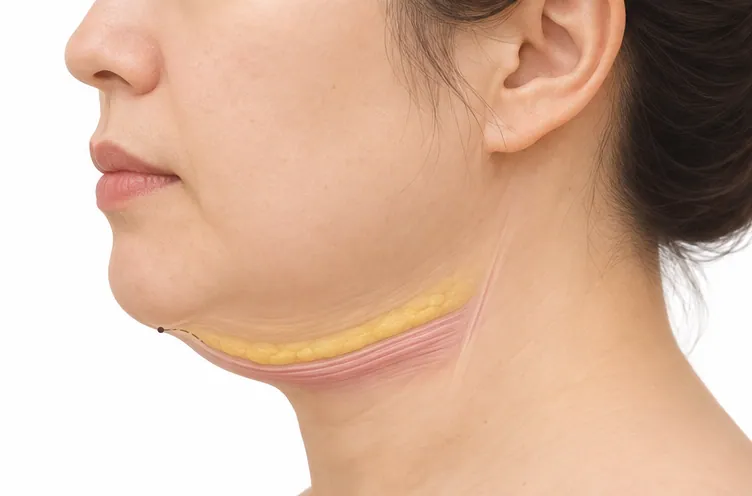 3
We evenly reduce the fat layer beneath the skin
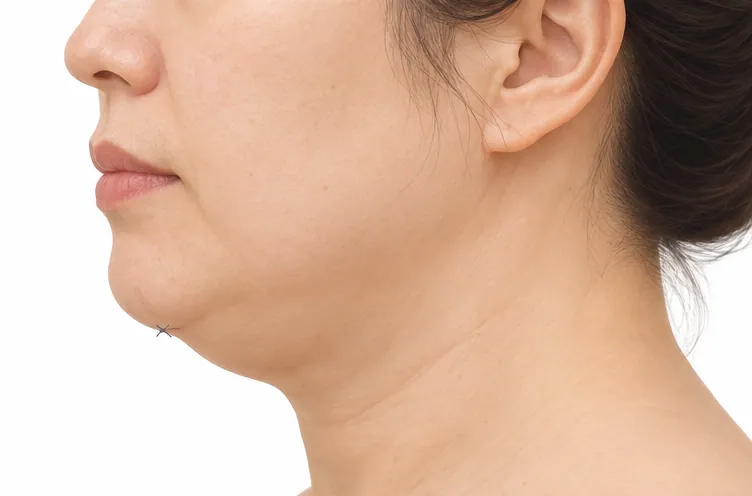 4
We close the small access opening with sutures
When Platysmal Bands Are Also Visible
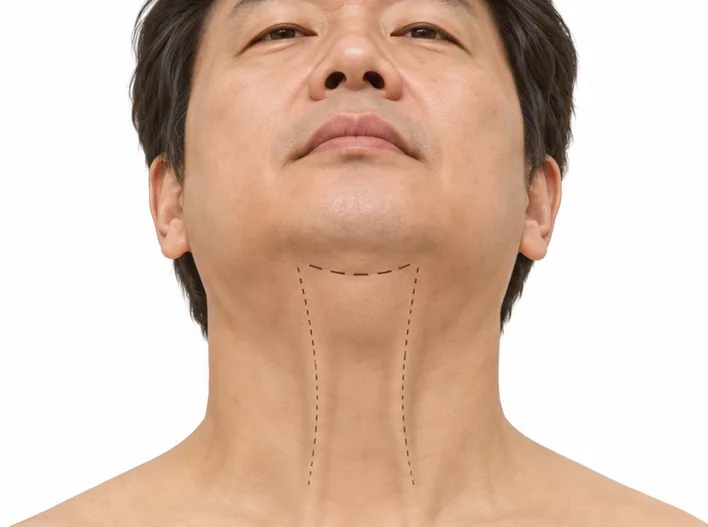 1
With your chin raised, we mark the bands and under-chin fat
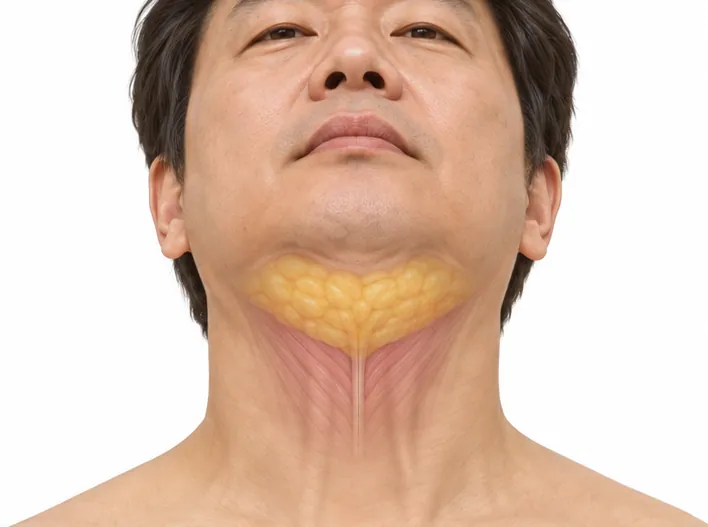 2
We make a small incision near the crease under the chin and separate the tissues
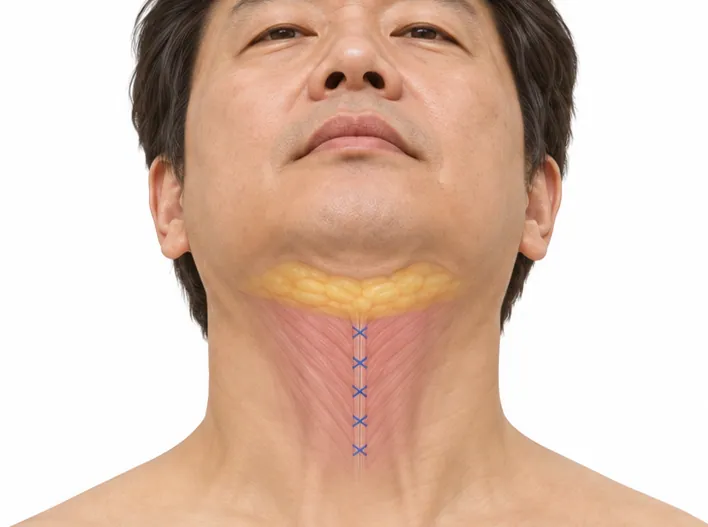 3
We contour the fat, bring the separated platysma muscles together at the midline, and secure them
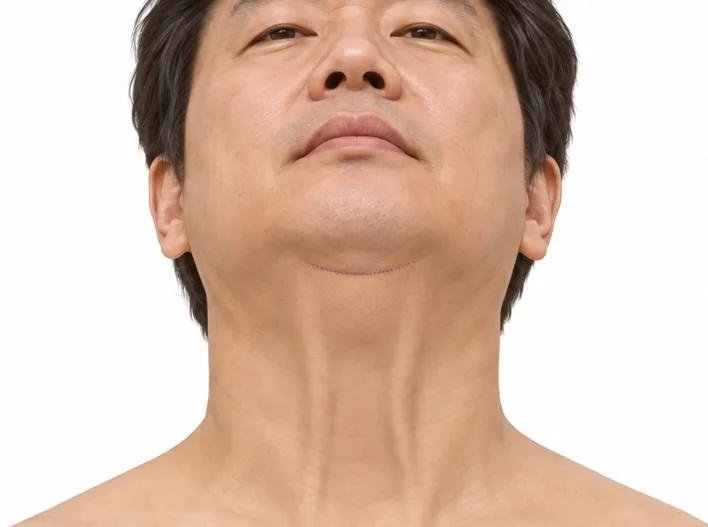 4
We close the incision with fine sutures
When There Is Also Substantial Excess Skin
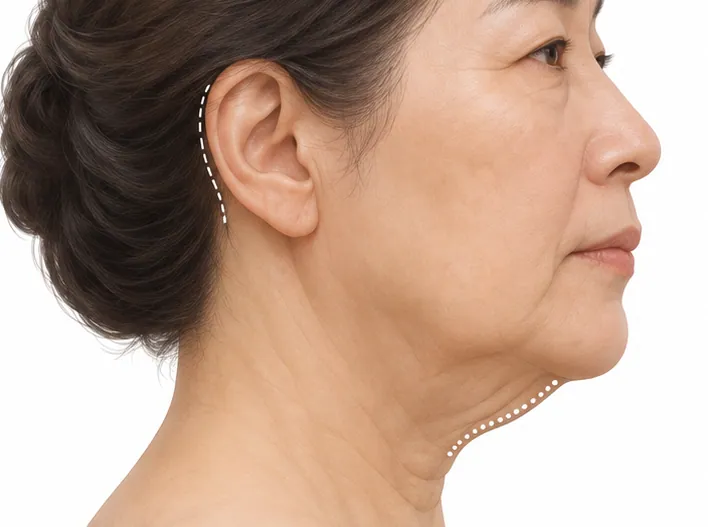 1
We assess the loose skin by lifting it and mark the incision behind the ear
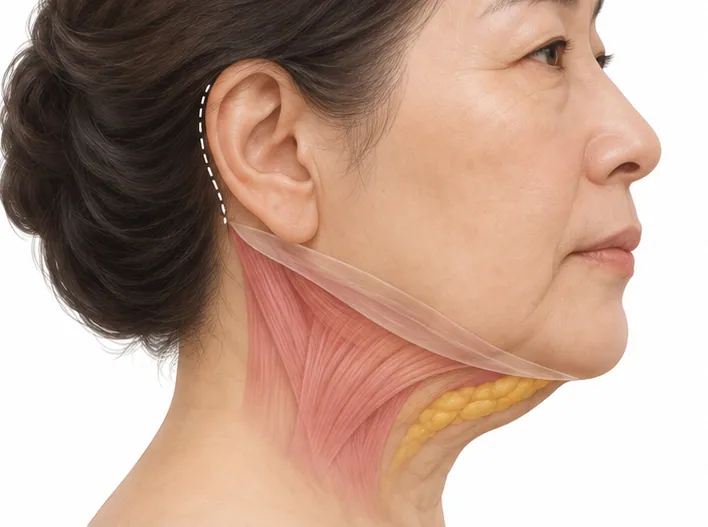 2
We make an incision along the hairline behind the ear and dissect beneath the neck skin
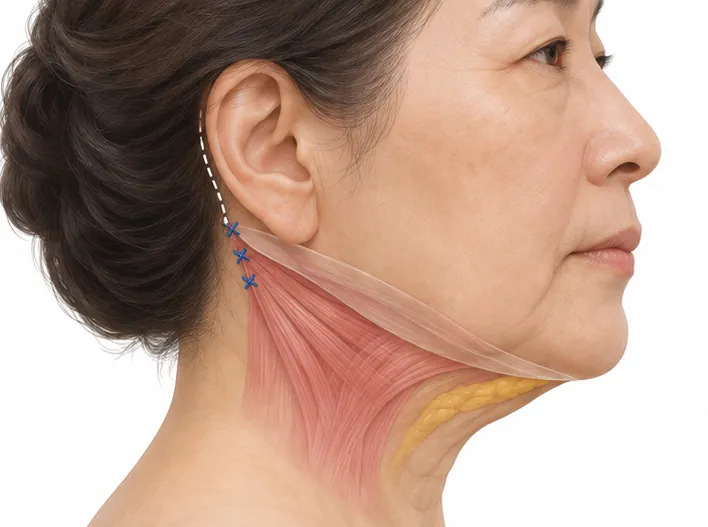 3
We also contour the area under the chin, then pull the fascia upward and backward and secure it
 4
We trim excess skin and close the incisions
Illustration for explanation · Not an actual patient. This is a simplified description of typical steps. The actual technique and extent of surgery are determined after examination.

When
to consider a consultation
- When fat under the chin can be pinched and the jawline is poorly defined
- When fullness under the chin remains despite weight loss
- When vertical muscle bands appear as you raise your chin
- When the angle between the chin and neck looks poorly defined in profile
- When you have concerns about both facial sagging and the area under the chin
When
Surgery is not our first recommendation
- When you want fat removal alone despite substantial excess skin
- When your face is thin and hollow, making further fat reduction difficult
- When your weight is changing substantially
- When salivary glands appear to be the main cause and nonsurgical options are considered first
Preparing for surgery and
recovery by stage
- 1–3 days after surgery
Reddish fluid (the solution used during surgery) may drain from the incision sites. Wear the chin compression band 24 hours a day for 1 week, and start taking light walks the next day.
- 7–10 Days
Stitches are removed after 7–10 days. Keep the surgical area dry until then, and shower only after your surgeon gives you permission.
- 2–4 weeks
Bruising and swelling under the chin may last 2–4 weeks and may move downward. After the first week, wear the chin compression band at night for 3 weeks.
- 3–6 months
Firmness and reduced sensation gradually resolve over 3–6 months. The final result is assessed after 6 months. Follow-up appointments are at 1 · 3 · 6 months · 1 year.

No smoking · No alcohol
We provide these essential instructions before surgery. Smoking and alcohol affect bleeding and wound healing.
Medications · Supplements
We recommend stopping herbal medicines and supplements such as omega-3 when possible because they may increase bleeding. Please tell us about every medication you take.
Medical history
We first check for high blood pressure, diabetes, and anticoagulant use. If these conditions are not controlled, surgery cannot proceed right away.
Filler · Thread History
Please tell us about previous fillers, threads, and lifting procedures. If needed, we use ultrasound to assess their location and distribution.
Recovery times are averages and vary by individual. Please contact us immediately if you experience sudden severe pain, bleeding that does not stop, rapidly worsening swelling on one side, warmth, pus, or a fever of 38°C or higher.
Common questions
during consultations
Will my skin sag more after liposuction?
If the skin retains elasticity, we expect it to contract to fit the reduced volume, but the degree varies with age and skin condition. Substantial excess skin may appear loose, so we also consider corset platysmaplasty or a lift. We assess the skin by pinching it before surgery and discuss our findings with you.
Can devices or injections address it?
We assess structural sagging, skin quality, and fat separately to choose an appropriate device. ONDA uses microwave technology, and InMode has different purposes depending on the handpiece. However, devices have difficulty correcting structural issues involving separated muscles or substantial excess skin. Repeated treatments on thin, hollow faces require careful consideration.
If salivary glands cause fullness under the chin, do you remove them?
We aim to preserve them in most cases because we first consider whether removing a healthy structure is appropriate. When needed, we assess whether nonsurgical options such as Botox can be considered first.
RESERVATION
You do not need to decide the day of your consultation.
Organize questions about this page without entering your name, contact information, or medical history. This does not submit an appointment request.