PLASTIC SURGERY
Neck lift and platysma surgery
Neck Lift
We assess the neck skin, muscles, and contours beneath the chin separately.
This may vary depending on your condition and the extent of surgery.
SHORT ANSWER
Neck lift and platysmaplasty: what do we assess first?
We assess the neck skin, muscles, and contours beneath the chin separately. During consultation, we examine excess neck skin · the condition of the platysma · fat beneath the chin and the underlying bone structure.
ASKED THE DOCTOR
Salivary glands beneath the jaw
are preserved whenever possible.
Surgery Time
About 4–5 hours
Anesthesia
IV sedation or general anesthesia
Hospital stay
No hospital stay
Suture Removal
5–14 days, depending on the area
Return to Daily Activities
About 10 days
※ Based on the surgeon’s answers and the clinic’s consent form for a facelift (deep plane + neck lift). Individual experiences vary. Recovery may differ depending on the extent of surgery and how healing progresses.
Q. Do you also remove sagging submandibular glands (salivary glands) when defining the jawline?
“I try to preserve them in most cases because I question whether removing a healthy structure is appropriate. When needed, I consider nonsurgical options such as Botox first. I release most of the mandibular retaining ligaments along the jawline.”
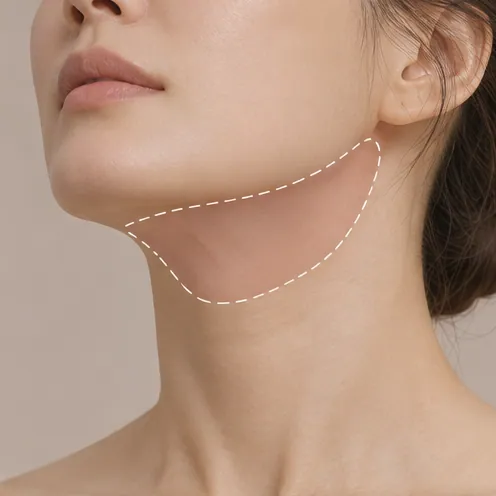
Prioritize preserving the submandibular glands · Release most mandibular retaining ligaments
1
Jawline
2
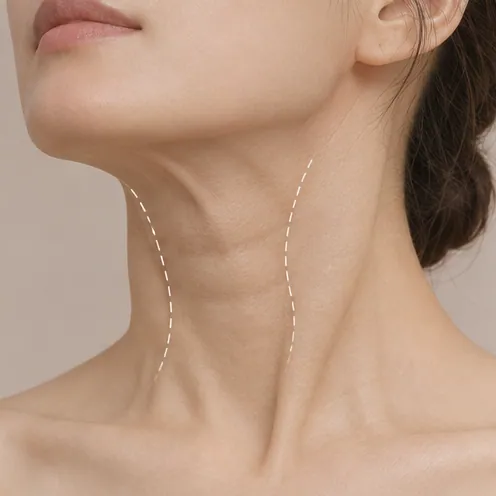
Platysmal bands
3
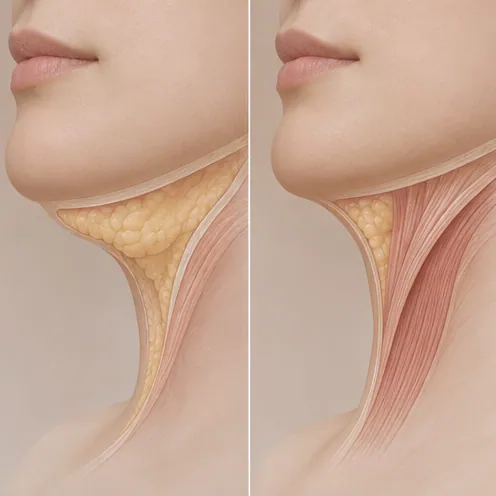
Fat · Salivary glands beneath the chin
4
Neck skin
Neck & Platysma
We preserve healthy structures whenever possible.
Neck sagging involves more than the skin. The platysma, fat beneath the chin, and the position of the salivary glands also play a role. We preserve healthy structures whenever possible and consider nonsurgical options first when needed.
A facelift considers the jawline together with the neck, as well as the face.
- 01Repositioning deeper tissuesWe reposition sagging tissue beneath the fascia, rather than simply pulling the skin.
- 02The junction of the jaw and neckWe address the contour beneath the chin by treating the platysma and neck sagging together.
- 03Incisions and recoveryBefore surgery, we explain incision placement, scarring, recovery time, and limitations.
Tightening sagging skin alone may leave the junction of the jawline and neck unchanged. VITAL plans deep plane facelifts and neck lifts together, with a focus on improving the jawline.
After surgery, VITAL LASTING CARE continues to support recovery, regeneration, and maintenance.
Concerns we assess together
01 · START WITH YOUR CONCERN
Do any of these concerns
sound familiar?
What brings you in?
“My neck skin looks loose.”
“Vertical muscle bands stand out.”
“The line between my jaw and neck looks less defined.”
We assess the neck skin, muscles, and contours beneath the chin separately.
We assess tissue position and support as well as skin laxity. We distinguish volume loss from sagging and consider how the different areas of the face relate to one another.
Neck Lift,
What does the surgery involve?
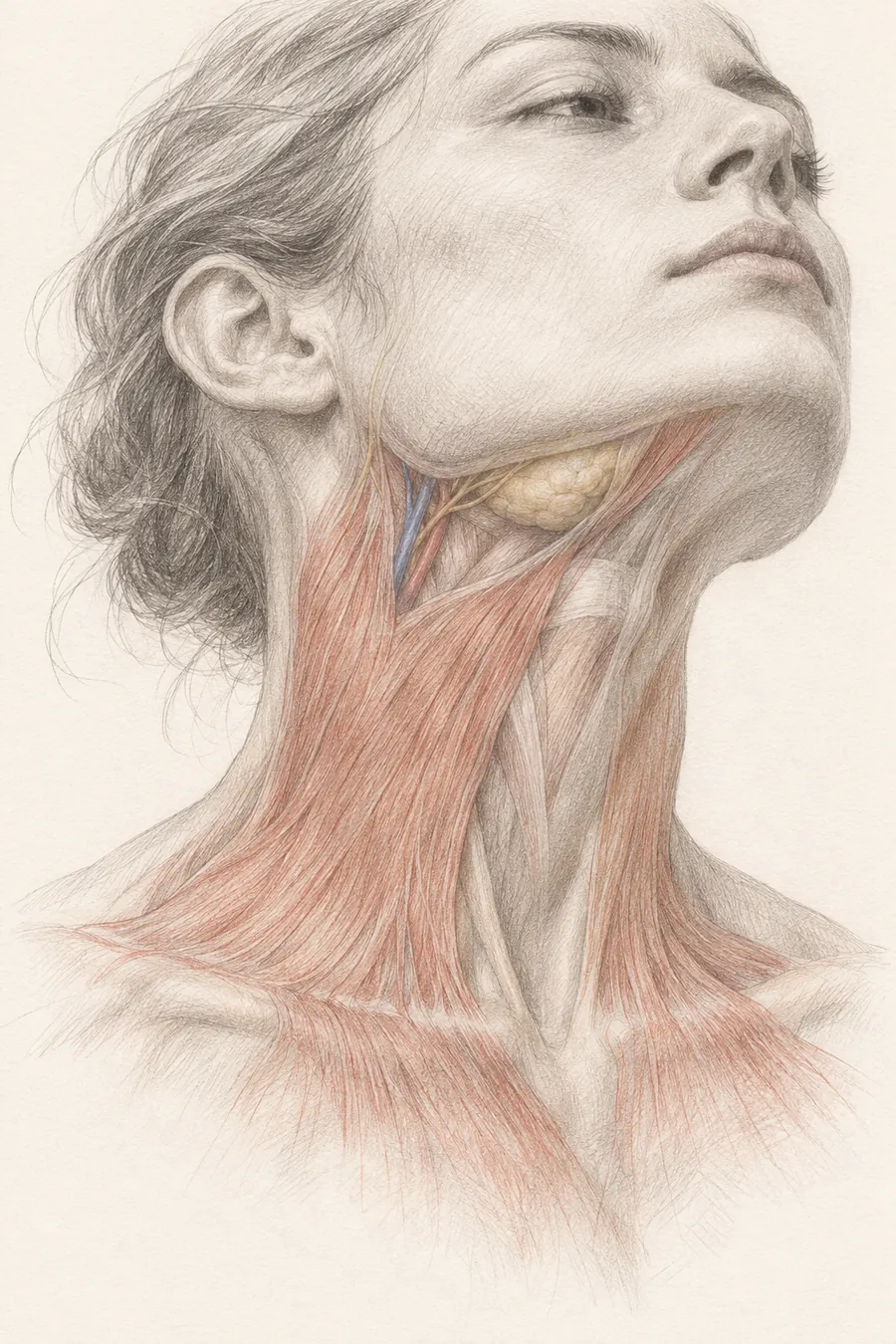
A neck lift addresses loose neck skin, the platysma, and fat beneath the chin to restore definition between the jawline and neck. Sagging commonly called a turkey neck helps determine whether to combine the procedure with a facelift. We assess excess neck skin, platysmal bands, fat, and structures beneath the chin together. Depending on the condition, we use corset platysmaplasty, which brings the separated platysma together through a small incision beneath the chin, and skin tightening through incisions behind the ears, separately or in combination.
- Platysma
- A thin muscle covering the front of the neck. When it separates, its edges can appear as prominent vertical bands.
- Turkey neck
- The appearance of skin and muscle beneath the chin that have loosened and sagged downward.
- Corset platysmaplasty
- A technique that brings the separated platysma together at the center to support the area beneath the chin.
- Submandibular glands
- Salivary glands beneath the jaw. They are usually preserved even when they appear to sag.
In a neck lift
in Lower Blepharoplasty
When a turkey neck is present, we assess the face as well
When neck concerns are significant, treating the face alone may not sufficiently improve the transition between the jawline and neck. Sagging along the line from the chin to the neck helps determine whether to combine the procedures. If facial sagging is minimal and the neck is the main concern, we may plan a neck lift alone. Adding a facelift increases surgery time and recovery demands, and we explain those differences as well.
We assess skin, muscle, and fat separately
A sagging neck can have several causes. We separately assess excess skin, separation of the platysma with visible bands, excess fat beneath the chin, and the effects of the salivary glands and bone structure. The tissue layer treated depends on the cause. Tightening only the skin when fat is the main cause, or reducing only fat when the skin is loose, may not sufficiently improve the neck contour.
We bring the separated platysma together and secure it at the center
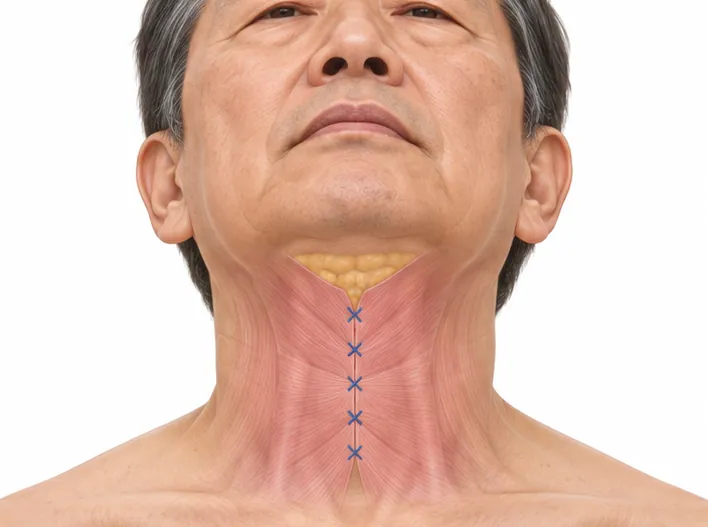
With age, the platysma at the front of the neck separates at the center, and its edges appear as vertical bands. Through a small incision beneath the chin, we bring the separated muscle together, tighten it, and secure it to create a corset-like structure supporting the area beneath the chin. Corset platysmaplasty may be performed alone or with a facelift, depending on the condition.
We usually preserve the salivary glands beneath the jaw
We do not remove salivary glands based solely on the contour beneath the chin. We question whether removing healthy structures is appropriate and try to preserve them in most cases. If prominent salivary glands are a concern, we assess whether nonsurgical options such as Botox can be considered first. With increasing age, our approach favors avoiding surgery that damages normal structures, so we determine which tissues to preserve before defining the extent of surgery.
Horizontal neck lines require a separate plan
Horizontal lines etched into the skin have different causes from platysmal bands or sagging and may not disappear with a lift alone. We consider Re2O for lines associated with thinning of the dermis and fat grafting for deeply indented neck lines. The neck is well suited to Re2O, but it has many blood vessels, making injection technique important to avoid bruising and hematomas.
We explain incision placement and surgery time in advance
Depending on your condition, incisions may be placed under the chin or along the hairline behind the ears. Surgery takes about 4 hours and is performed under IV sedation. General anesthesia is an option when combined with a facelift. Scars may initially be red and firm and take several months or longer to mature. The scar under the chin lies in the shadow beneath it, but it is still present. Discuss incision placement with your surgeon in light of how you normally wear your hair.
The Surgical Process Varies
Depending on Your Condition
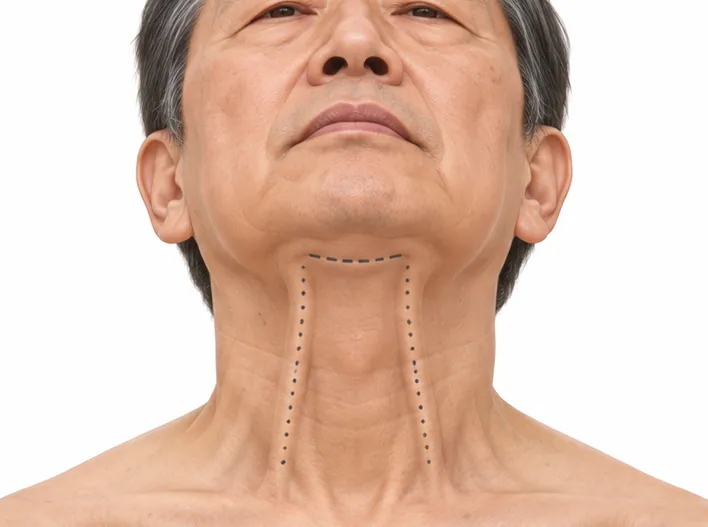
When platysmal bands are prominent
 1
With the chin raised, we mark the location of the bands and the extent of muscle separation
 2
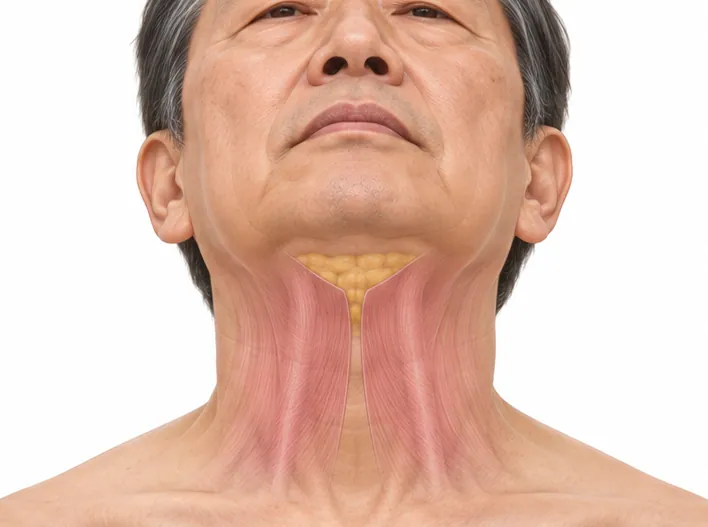
We make a small incision near the crease beneath the chin and dissect beneath the skin
 3
We bring the separated platysma together at the center and secure it
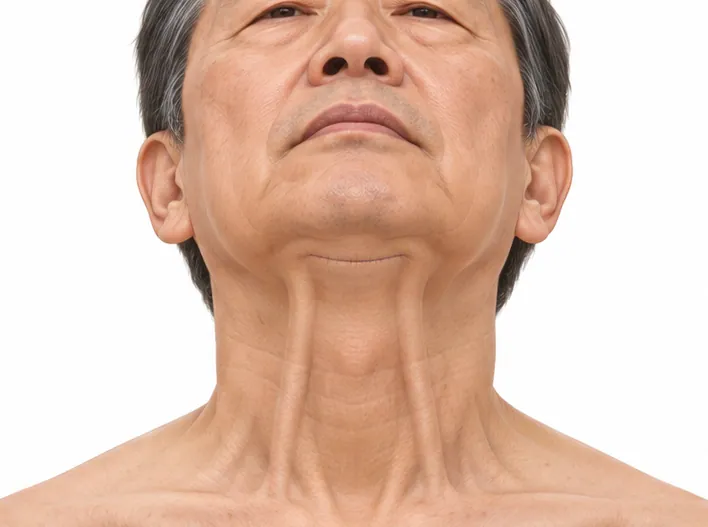 4
We contour the fat beneath the chin and close the incision with fine sutures
When skin sagging is significant
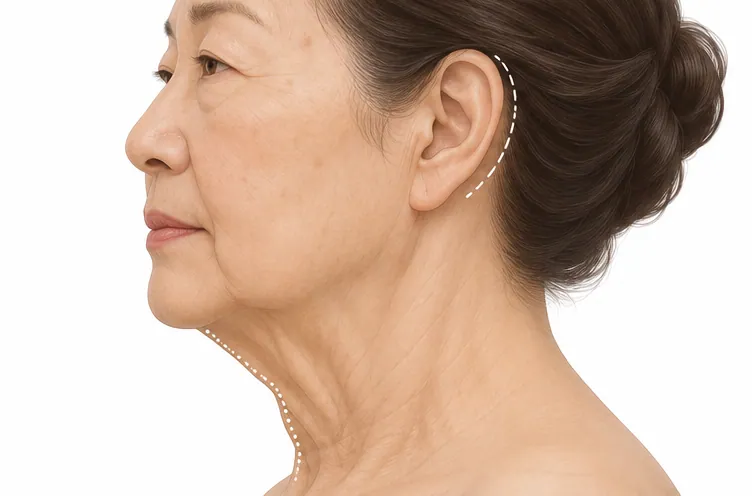 1
We assess the loose skin by lifting it and mark the incision behind the ear
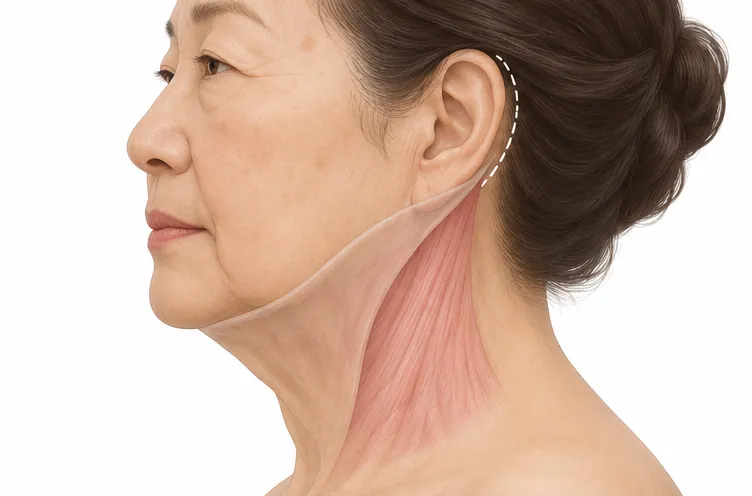 2
We make an incision along the hairline behind the ear and dissect beneath the neck skin
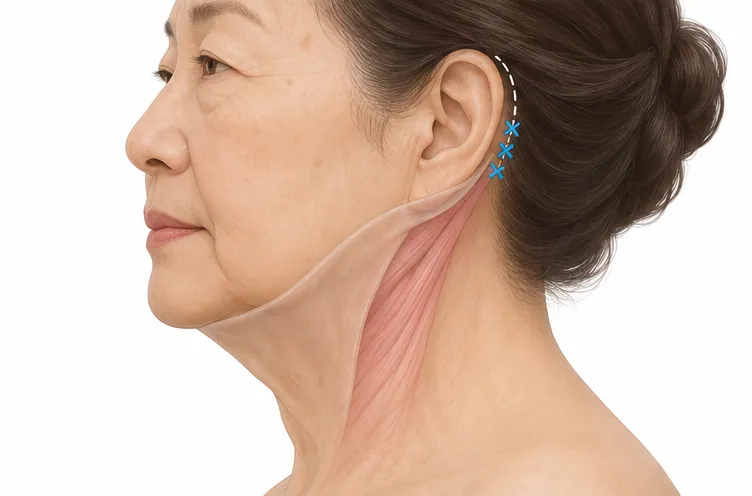 3
We pull the fascia upward and backward and secure it
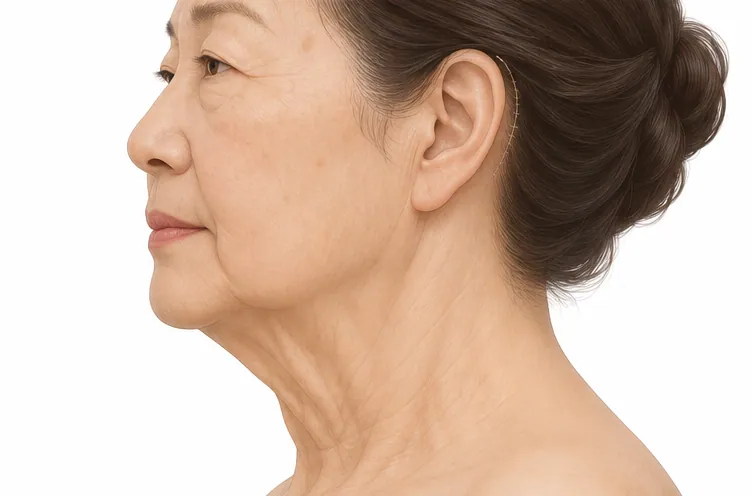 4
We trim excess skin and close the incisions
When facial sagging is also present
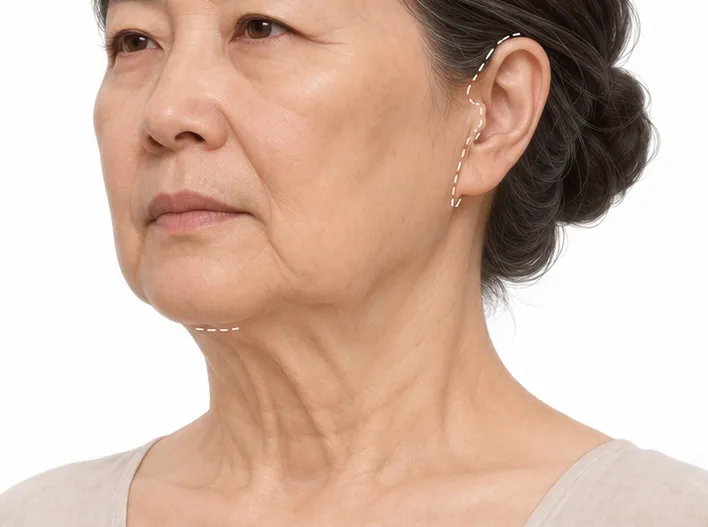 1
We assess the turkey neck and jawline together and plan the face and neck incisions
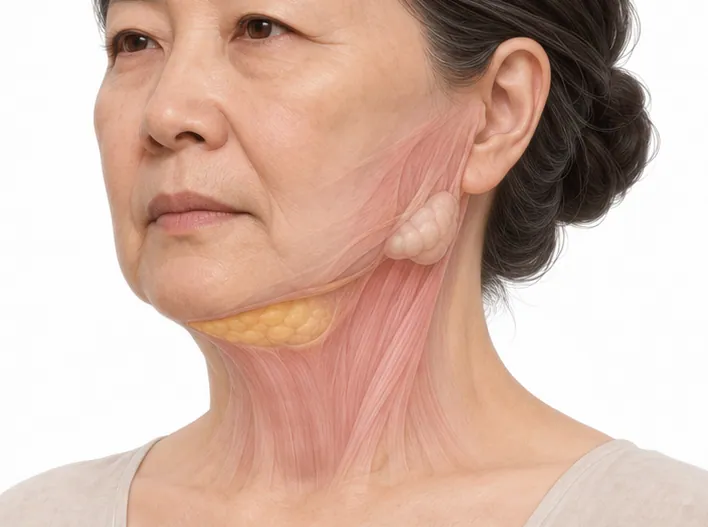 2
We make incisions around the ears and beneath the chin
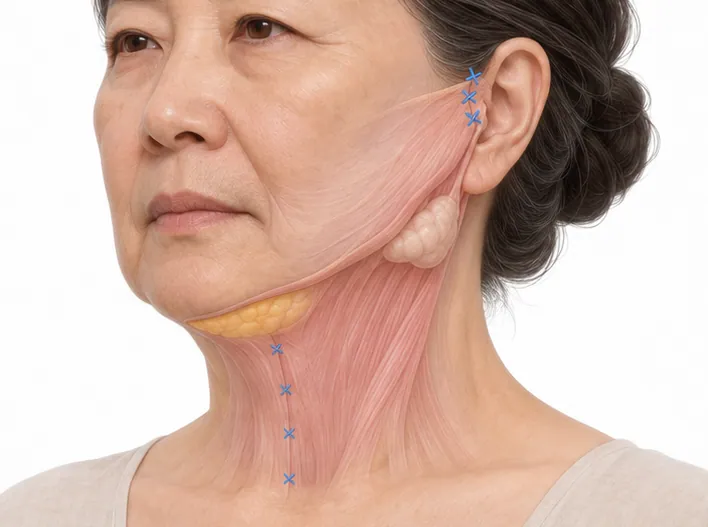 3
We lift the deeper facial tissues and bring the platysma together to create a continuous contour beneath the chin
 4
We preserve the salivary glands, trim excess skin, and close the incisions
Illustration for explanation · Not an actual patient. This is a simplified description of typical steps. The actual technique and extent of surgery are determined after examination.
02 · WHAT WE LOOK AT
Even when concerns look similar,
the factors to assess differ.
Excess neck skin
We assess tissue position and support as well as skin laxity.
Condition of the platysma
We distinguish volume loss from sagging and consider how the different areas of the face relate to one another.
Fat beneath the chin and bone structure
We review your previous surgery, scars, and health together.
03 · DOCTOR'S DECISION
When choosing an approach, Dr. Hyungwoo Yim
looks at three things first.
Distinguishing causes involving wrinkles · Muscle · Fat
Using your medical history and examination findings, we distinguish your current condition from your desired changes. At this stage, we identify the necessary conditions before choosing a treatment.
Considering a neck lift alone or in combination with jawline treatment
When comparing available methods, we explain the expected changes, the burden on the tissues, recovery, and potential remaining problems.
Explaining skin lines that may remain
We give you time to understand the explanation and ask questions. We may not recommend immediate treatment if its burden is greater or if you cannot allow enough time for recovery.
VITAL Plastic Surgery's principle is to recommend necessary treatment at the appropriate time. Having a consultation does not mean you need to decide on a procedure or surgery that day.

When
to consider a consultation
- When sagging beneath the chin creates a turkey neck
- When vertical neck bands are prominent
- When the junction between the jawline and neck is poorly defined
- When the neck remains a concern after a facelift
- When deep neck lines and sagging neck skin occur together
When
Surgery is not our first recommendation
- When there are only horizontal lines with little sagging
- When fat beneath the chin appears to be the main concern
- When health conditions such as high blood pressure or diabetes need to be controlled first
- When it is difficult to allow enough time for recovery
04 · LIMITS & RISKS
Along with possible improvements,
we explain the limitations and risks.
Your desired changes — First, tell us what bothers you most and which aspects of your appearance you want to keep. We do not promise changes identical to photos or someone else's results.
Hematoma
Scarring
Asymmetry
Changes in Sensation
Previous Treatments
Do not wait if you have these symptoms
If you experience sudden severe pain, bleeding that does not stop, rapidly worsening swelling on one side, or signs of possible infection such as a high fever or pus, contact us immediately rather than waiting for your appointment.
Conditions to address first — We first assess your health, inflammation and stage of recovery, and the range of feasible treatments. If needed, testing, observation, or other medical care may take priority.
Risks and limitations to discuss during consultation — hematoma, scarring, asymmetry, changes in sensation, and possible nerve injury. This is not a complete list of possible risks. Risks may vary depending on your health, previous treatments, and the technique and extent of treatment. These are explained in detail during the examination and informed consent process.
Preparing for surgery and
recovery by stage
- 1 week after surgery
Keep the compression dressing and drains in place for the period specified by your care team. Sleep with your head elevated, and avoid tilting your neck backward or turning your head sharply.
- 2–4 weeks
Wear a compression band under the chin for 2–4 weeks. For 2 weeks, avoid straining, heavy objects, and strenuous exercise. Keep the surgical area dry until the stitches are removed.
- Several Months
You may feel tightness in your neck when swallowing for a while, and sensation under the chin and in the neck returns over several months.
- Up to 1 Year
The final result is assessed after 6 months, and scars may continue to change for a year or more. Follow-up visits are at 1, 3, and 6 months and 1 year.

No smoking · No alcohol
We provide these essential instructions before surgery. Smoking and alcohol affect bleeding and wound healing.
Medications · Supplements
We recommend stopping herbal medicines and supplements such as omega-3 when possible because they may increase bleeding. Please tell us about every medication you take.
Medical history
We first check for high blood pressure, diabetes, and anticoagulant use. If these conditions are not controlled, surgery cannot proceed right away.
Filler · Thread History
Please tell us about previous fillers, threads, and lifting procedures. If needed, we use ultrasound to assess their location and distribution.
Recovery times are averages and vary by individual. Please contact us immediately if you experience sudden severe pain, bleeding that does not stop, rapidly worsening swelling on one side, warmth, pus, or a fever of 38°C or higher.
05 · FOLLOW THE CHANGE
We also document
and monitor changes after treatment.
01
STEP 01
Documenting your condition before treatment
We review previous treatments, your current condition, and the changes you hope to see.
02
STEP 02
Check Early Reactions · Wound Healing
We explain treatment-specific precautions and symptoms that require contacting us.
03
STEP 03
Comparing appearance and function
Along with photos, we assess discomfort and changes in function.
04
STEP 04
Assessing additional care
We explain additional treatment based on your condition rather than recommending the same treatment to everyone.
This is a general overview, not an actual patient case. Specific follow-up schedules vary by treatment method and recovery. If you experience sudden severe pain, persistent bleeding, or signs of possible infection, contact a medical facility immediately rather than waiting for your appointment.
Common questions
during consultations
How is this different from double chin liposuction?
Liposuction reduces the amount of fat beneath the chin, while a neck lift also addresses loose skin and the platysma. If fat is the main cause, we consider liposuction alone. If muscle bands or excess skin are significant, we also consider corset platysmaplasty or a lift.
How long does neck tightness last after surgery?
As tissues heal, firmness and tightness may become more pronounced between 3 weeks and 3 months. The tissues then gradually soften over 3 months to 1 year. If you have difficulty breathing or sudden, severe swelling on one side, contact us immediately without waiting.
When is Re2O given in the neck?
Laser treatment is performed before surgery, and Re2O to support recovery is given at 3 weeks after surgery. Scar care continues with injections and laser treatment starting one month after surgery. Because the neck has many blood vessels, careful injection technique is needed to reduce bruising.
Related Treatments
BEFORE YOU DECIDE
Before you decide,
frequently asked questions
Questions to review together before deciding.
Based on questionnaire responses from Dr. Hyungwoo Yim · Last updated October 2026 Specific methods and their scope are discussed individually after an examination.
Q
Will a lift eliminate all neck lines?
−
A
Lines etched into the skin, muscle bands, and sagging skin are different concerns. We explain both what can be improved and which wrinkles may remain.
Q
Are the cost, number of treatments, and recovery period fixed?
+
Q
Can a treatment plan be finalized through a photo consultation alone?
+
DOCTOR'S COLUMN DOCTOR'S COLUMN DOCTOR'S COLUMN
Must Read
Care Notes Written by the Doctor · Please Read Before Your First Visit
No.1
No.3
VIEW MORE →
RESERVATION
You do not need to decide the day of your consultation.
Organize questions about this page without entering your name, contact information, or medical history. This does not submit an appointment request.