PLASTIC SURGERY
Facial micro-fat grafting
Facial Fat Grafting
We distinguish volume that needs replenishing from functional issues that need correction first.
This may vary depending on your condition and the extent of surgery.
SHORT ANSWER
Microfat grafting and facial volume: what do we check first?
We distinguish volume that needs replenishing from functional issues that need correction first. During consultation, we assess the cause of hollowing, skin and tissue laxity, previous fat grafting, and tissue condition.
01 · START WITH YOUR CONCERN
Do any of these concerns
sound familiar?
What brings you in?
1
Skin
2
Fascial Layer (SMAS)
3
Retaining ligaments · Muscles
4
Move the deeper layers together
“My upper eyelids or face look hollow.”
“I wonder if adding fat would help.”
“The fat I had grafted before looks uneven.”
We distinguish volume that needs replenishing from functional issues that need correction first.
We first check whether the hollow appearance is caused by a loss of volume, difficulty opening the eyes, or sagging. During your consultation, we distinguish changes in appearance from functional concerns.
Microfat grafting,
What does the surgery involve?
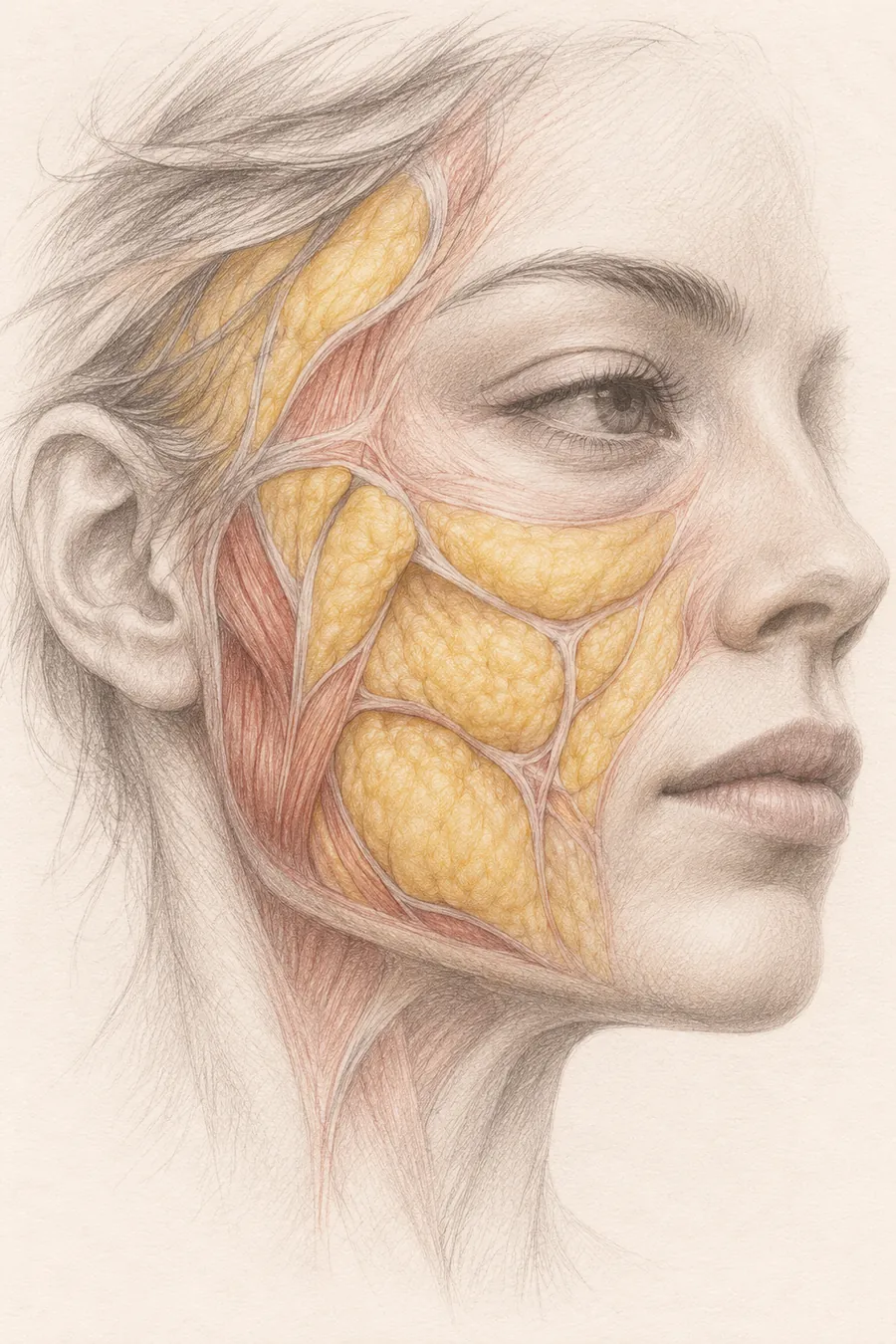
Microfat grafting is a surgical procedure in which your own fat is harvested, purified, and injected in small amounts into hollow areas to restore volume. It is considered when there is an actual deficit in soft tissue volume, with an explanation of graft survival and the possibility of uneven contours. If hollowing is caused by weak eyelid opening or sagging, we assess that issue before adding volume. Nanofat, PRP, and Re2O serve different purposes, so we select among them after assessing the area and skin condition.
- Graft survival
- This is the process by which grafted fat develops a blood supply and becomes established. Survival varies by person and treatment area, and some fat is absorbed.
- Nanofat
- This is fat processed into smaller particles. It is used to improve texture in areas with thin tissue rather than to add volume.
- PRP
- This is platelet-rich plasma obtained from your own blood. Its effects vary depending on how it is prepared and the purpose of treatment.
With microfat grafting,
in Lower Blepharoplasty
we first distinguish problems of position from problems of volume
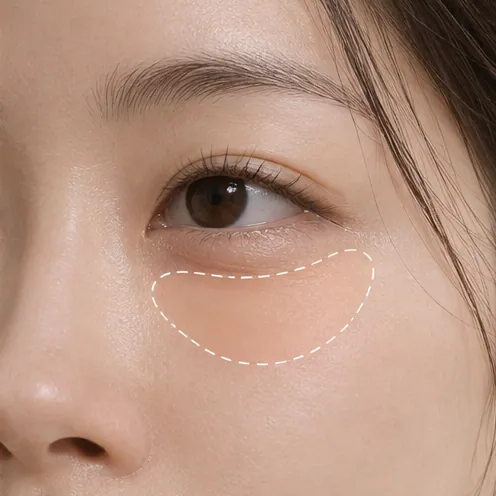
Changes in facial bone, fat, supporting tissue, and skin occur together, and the main concern differs by area. We separately assess the position of sagging structures, the amount of volume needed, and skin quality. Adding fat where tissue has descended can create a heavy appearance. We therefore view fat grafting as a way to replenish areas where tissue is actually lacking.
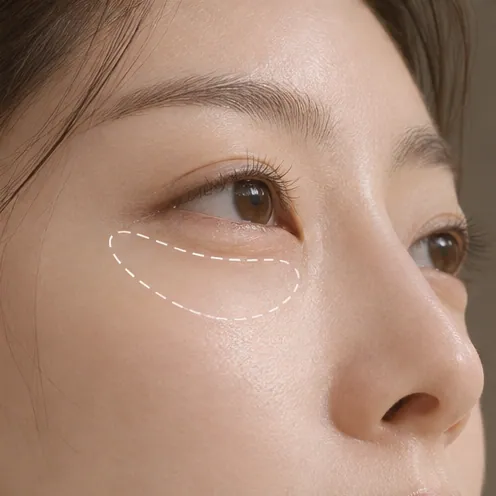
For hollow upper eyelids, we check eyelid-opening strength first
Many cases of upper eyelid hollowing result from weak eyelid opening rather than a volume deficit, as structures inside the eyelid roll upward. Adding fat alone in these cases can make the eyelids heavier, make opening the eyes more difficult, and leave a sleepy appearance. We reassess volume after restoring the eyelids to their proper position. Fat is then added only as needed.
We distribute fat across layers instead of placing a large amount in one spot
Any tissue needs blood vessels to grow into it to become stably established. If fat is deposited in a ball-like clump, blood vessels may have difficulty reaching the center, potentially increasing the risk of inflammation and infection. We therefore use a thin cannula to place small amounts across multiple layers and directions. This is why we assess graft survival before considering additional treatment instead of placing the entire desired volume at once.
We explain the possibility of uneven contours beforehand
In areas with thinner skin, lumps may be felt or seen, and the amount of fat that survives varies by person. This is especially true around the eyes. Before surgery, we explain absorption, nodules, asymmetry, infection, and the rare but serious risk of fat embolism. If previously grafted fat is uneven, we first assess whether the cause is residual fat or scar adhesions.
Fat grafting and Re2O are not interchangeable
Fat grafting restores volume, while Re2O supplements the dermis with human-derived extracellular matrix powder. We therefore do not use Re2O as the same type of volume replacement as fat grafting. If volume is adequate but the skin is thin with many fine lines, we consider Re2O first. If tissue is actually hollow, we consider fat first. When both concerns are present, we plan the treatments at separate times.
We also assess weight changes and donor sites beforehand
Grafted fat is your own body fat and is affected by weight changes. Repeated rapid weight loss can make changes in facial volume more noticeable, so we recommend waiting until your weight stabilizes if it is changing substantially. For lean patients, we also check how much fat is available for harvesting. Smoking affects blood flow and wound healing, so quitting is essential.
A Word from the Doctor
Dr. Hyungwoo Yim’s own words from his blog and interviews.
01Different layers for each person
“The important point is that facial fat exists in two layers, and the areas that need augmentation differ from person to person, so it is not appropriate to perform the same surgery on everyone.”
This issue was often overlooked when I first encountered this procedure more than ten years ago.
Dr. Hyungwoo Yim, Medical Director
The Surgical Process Varies
Depending on Your Condition
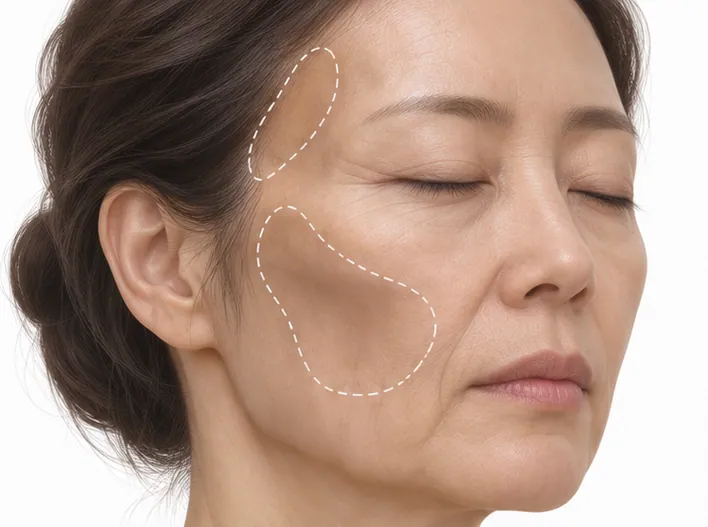
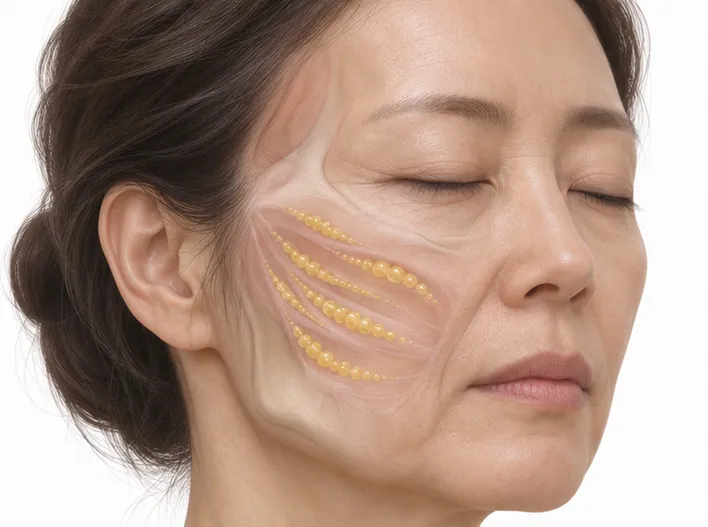
For hollow cheeks and temples
 1
With you seated, we mark the hollow areas and the amount of fat to be added
 2
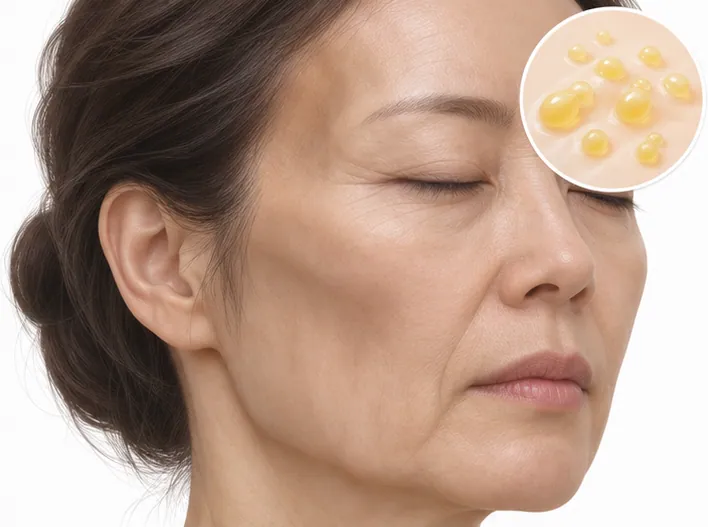
We harvest fat from areas such as the abdomen or thighs and purify it
 3
We place small amounts across multiple layers through small entry points
 4
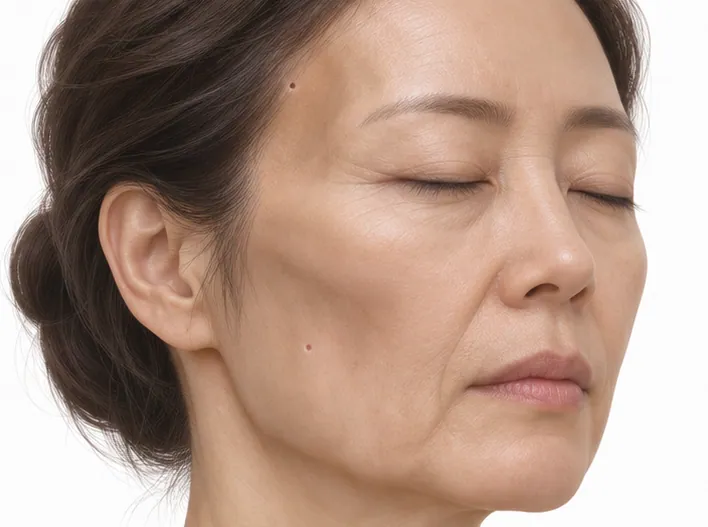
We finish with small entry sites
For hollow upper eyelids
 1
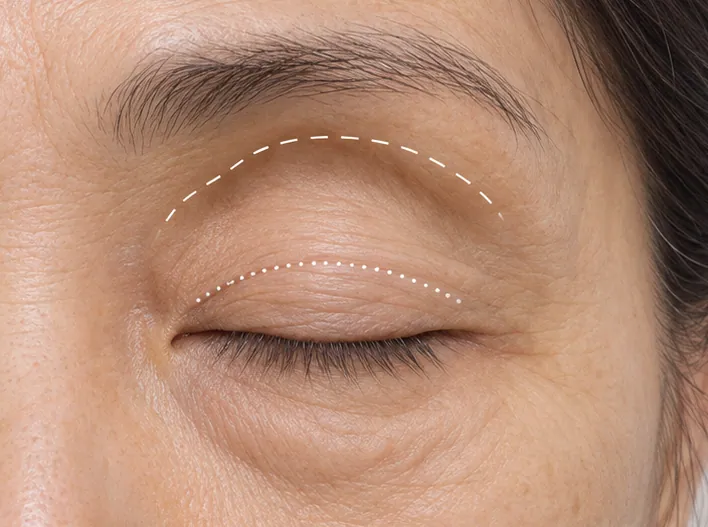
We first measure eyelid-opening strength and mark the extent of hollowing
 2
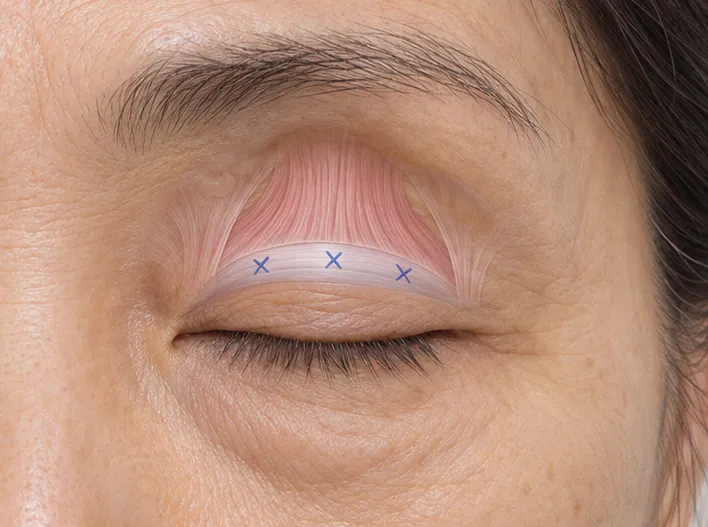
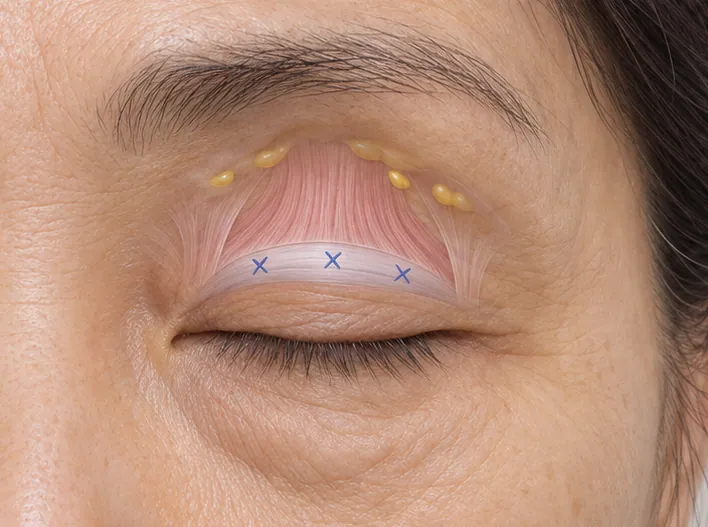
If needed, we correct eyelid position first
 3
After assessing eyelid fat position, we add small amounts where volume is lacking
 4
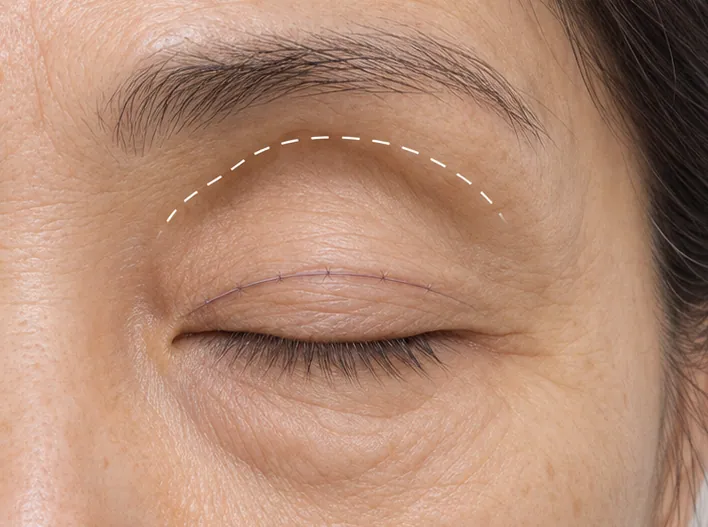
We suture the incisions and entry points
When sagging and hollowing occur together
 1
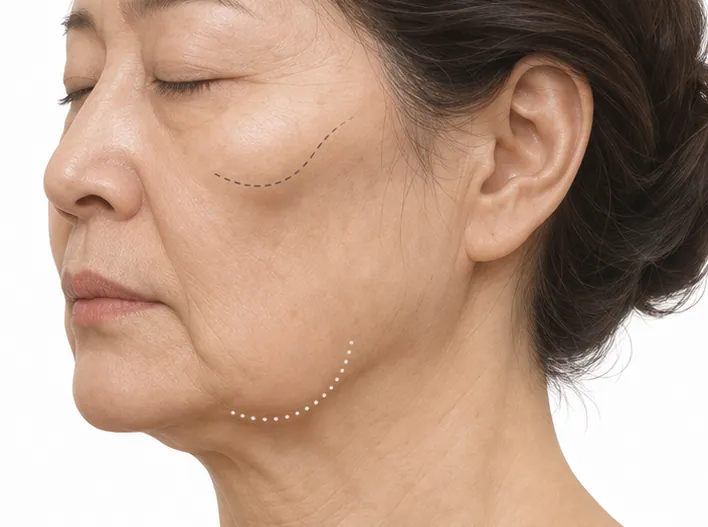
We mark sagging and hollowing separately and determine whether to consider a lift first
 2
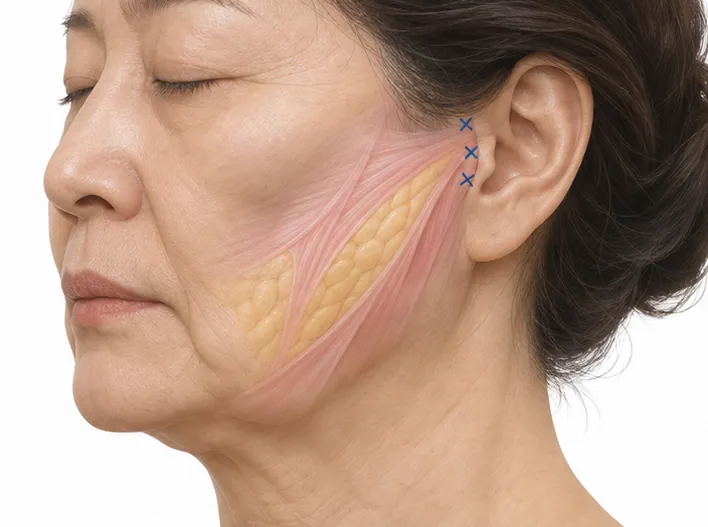
We first lift and secure the sagging tissue
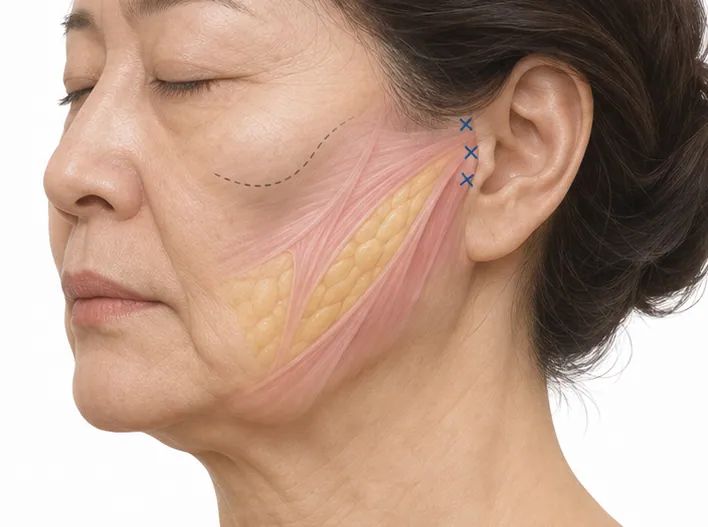 3
We reassess any remaining hollowing
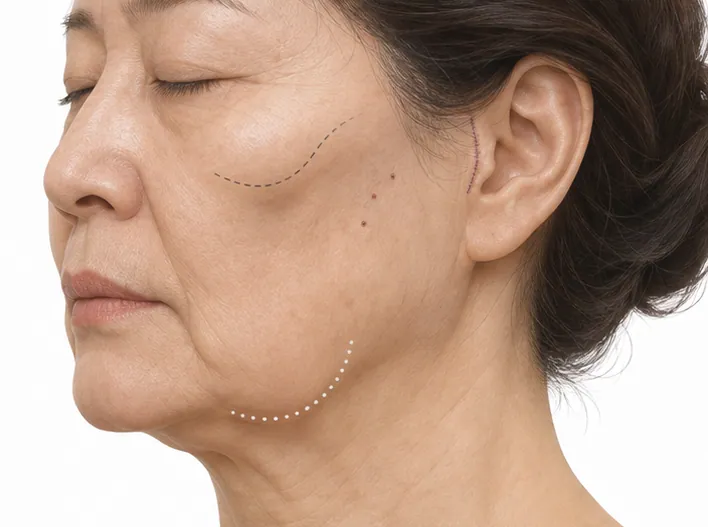 4
We finish by placing small amounts of fat only where needed
Illustration for explanation · Not an actual patient. This is a simplified description of typical steps. The actual technique and extent of surgery are determined after examination.
02 · WHAT WE LOOK AT
Even when concerns look similar,
the factors to assess differ.
Cause of hollowing
For each hollow area, such as the upper eyelids, forehead, or cheeks, we first distinguish a volume deficit from a change in tissue position.
Skin and tissue laxity
During consultation, we distinguish changes in appearance from functional discomfort.
Previous fat grafting and tissue condition
The approach and timing vary depending on your previous surgical records and recovery status.
03 · DOCTOR'S DECISION
When choosing an approach, Dr. Hyungwoo Yim
looks at three things first.
Distinguish functional and positional issues from an actual volume deficit
Using your medical history and examination findings, we distinguish your current condition from your desired changes. At this stage, we identify the necessary conditions before choosing a treatment.
Compare tissue preservation, repositioning, and grafting options
When comparing available methods, we explain the expected changes, the burden on the tissues, recovery, and potential remaining problems.
Explain variation in graft survival and the possibility of repeat treatment
We give you time to understand the explanation and ask questions. We may not recommend immediate treatment if its burden is greater or if you cannot allow enough time for recovery.
VITAL Plastic Surgery's principle is to recommend necessary treatment at the appropriate time. Having a consultation does not mean you need to decide on a procedure or surgery that day.

When
to consider a consultation
- When areas such as the cheeks, temples, or forehead appear hollow due to an actual volume deficit
- When upper eyelid hollowing remains after correcting eyelid-opening strength
- When you want to address hollowing that remains after a lift
- When you prefer to restore volume with your own tissue rather than a foreign material
- When you are concerned about areas where tissue has thinned, such as neck lines or the backs of the hands
When
Surgery is not our first recommendation
- When sagging is the main cause
- When weak eyelid opening causes a hollow appearance
- When remaining filler needs to be assessed first
- When your weight is changing substantially
04 · LIMITS & RISKS
Along with possible improvements,
we explain the limitations and risks.
Your desired changes — First, tell us what bothers you most and which aspects of your appearance you want to keep. We do not promise changes identical to photos or someone else's results.
Resorption
Nodule
Asymmetry
Infection
Previous Treatments
Do not wait if you have these symptoms
If you experience sudden severe pain, decreased vision · An obstructed field of vision, bleeding that does not stop, or rapidly worsening swelling on one side, contact us immediately instead of waiting for your appointment.
Conditions to address first — We first assess your health, inflammation and stage of recovery, and the range of feasible treatments. If needed, testing, observation, or other medical care may take priority.
Risks and limitations to discuss during consultation — absorption, nodules, asymmetry, infection, and rare but serious risks such as fat embolism. This is not a complete list of possible risks. Risks may vary depending on your health, previous treatments, and the method and extent of treatment. These will be explained in detail during examination and the consent process.
Preparing for surgery and
recovery by stage
- 2 weeks after surgery
Do not press or massage the grafted areas for 2 weeks. Avoid sleeping on your stomach or side, and keep glasses, hats, and mask straps from pressing on the grafted areas.
- 5–7 days
Stitches at the fat donor site are removed after 5–7 days. Keep the area dry until then. Wear a compression garment over the donor site for 2–4 weeks.
- 2–4 weeks
Facial swelling may last 2–4 weeks (longer for the forehead and under-eye area). Bruising, swelling, and pain at the donor site may also last 2–4 weeks. Avoid warm compresses, saunas, Korean bathhouses, and half-body baths for 4 weeks.
- 3–6 months
Some of the grafted fat will be absorbed. The final amount of fat that remains is assessed after 3–6 months, and a second graft can be discussed at that time. Follow-up visits are scheduled at 1 · 3 · 6 months · 1 year.

No smoking · No alcohol
We provide these essential instructions before surgery. Smoking and alcohol affect bleeding and wound healing.
Medications · Supplements
We recommend stopping herbal medicines and supplements such as omega-3 when possible because they may increase bleeding. Please tell us about every medication you take.
Medical history
We first check for high blood pressure, diabetes, and anticoagulant use. If these conditions are not controlled, surgery cannot proceed right away.
Filler · Thread History
Please tell us about previous fillers, threads, and lifting procedures. If needed, we use ultrasound to assess their location and distribution.
Recovery timelines are general estimates and vary by individual. Contact us immediately for sudden severe pain, decreased vision, bleeding that does not stop, or rapidly worsening swelling on one side.
05 · FOLLOW THE CHANGE
We also document
and monitor changes after treatment.
01
STEP 01
Documenting your condition before treatment
We review previous treatments, your current condition, and the changes you hope to see.
02
STEP 02
Check Early Reactions · Wound Healing
We explain treatment-specific precautions and symptoms that require contacting us.
03
STEP 03
Comparing appearance and function
Along with photos, we assess discomfort and changes in function.
04
STEP 04
Assessing additional care
We explain additional treatment based on your condition rather than recommending the same treatment to everyone.
This is a general explanation of the process, not an actual patient case. Specific care schedules vary depending on the treatment method and recovery progress. If you experience symptoms such as sudden severe pain, vision changes, or persistent bleeding, contact a medical facility immediately rather than waiting for your scheduled appointment.
Common questions
during consultations
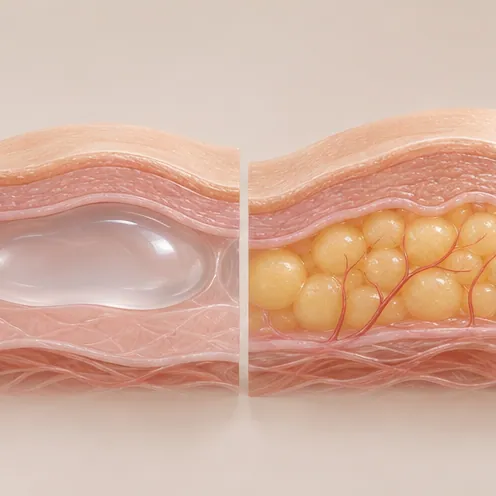
How do fillers and fat grafting differ?
Hyaluronic acid fillers are injectable materials that add shape and volume, while fat grafting is surgery that transfers your own tissue, which develops a blood supply and becomes established. Fillers can rarely cause vascular complications and vision damage, making the treatment area and a safe technique important. We choose based on the amount of volume needed, the area, and your recovery schedule.
If all the grafted fat is absorbed, will I need another procedure?
Some fat may be absorbed, and the extent varies by person. It takes several months for tissue to become established after surgery, so we assess the remaining volume afterward and discuss whether more treatment is needed. We do not try to address this by adding a large amount from the start.
Does PRP have to be included?
PRP is not a required addition. It is plasma obtained from your own blood, and its effects vary depending on preparation and treatment purpose. We decide whether to add it based on your skin condition and recovery plan.
How much of the injected fat remains, according to research?
A systematic review and meta-analysis of 27 studies (1,011 patients) that objectively measured volume retention after facial fat grafting found that retention rates varied from 26% to 83% across studies, with a pooled average of 47%. These findings do not represent the results of any specific clinic. At VITAL Plastic Surgery, the amount remaining and whether a second procedure is needed are assessed after 3 to 6 months.
Related Treatments
BEFORE YOU DECIDE
Before you decide,
frequently asked questions
Questions to review together before deciding.
Based on questionnaire responses from Dr. Hyungwoo Yim · Last updated October 2026 Specific methods and their scope are discussed individually after an examination.
Q
Is fat grafting the first choice for hollow upper eyelids?
−
A
We first assess whether eyelid-opening function and tissue position are involved. If volume restoration is actually needed, we consider the appropriate method and extent of treatment.
Q
Are the cost, number of treatments, and recovery period fixed?
+
Q
Can a treatment plan be finalized through a photo consultation alone?
+
DOCTOR'S COLUMN DOCTOR'S COLUMN DOCTOR'S COLUMN
Must Read
Care Notes Written by the Doctor · Please Read Before Your First Visit
No.1
No.3
VIEW MORE →
RESERVATION
You do not need to decide the day of your consultation.
Organize questions about this page without entering your name, contact information, or medical history. This does not submit an appointment request.