PLASTIC SURGERY
Revision facelift
Revision Facelift
We first assess your previous surgery and the current condition of your tissues.
This may vary depending on your condition and the extent of surgery.
SHORT ANSWER
What do we assess first for a revision facelift?
We first assess your previous surgery and the current condition of your tissues. During consultation, we evaluate the plane and extent of the previous surgery · scars and adhesions · available tissue and stage of healing.
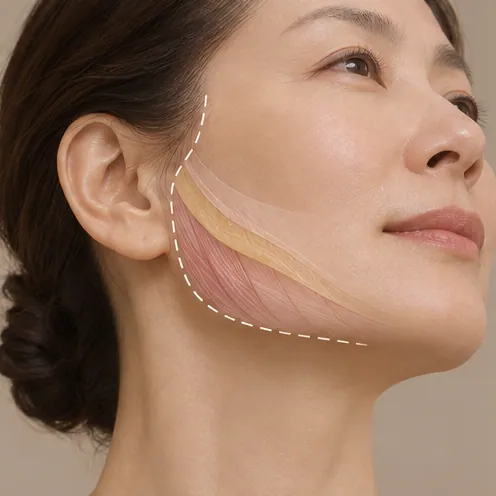
REVISION FACELIFT · TISSUE LAYERS
For revision surgery,
we assess both the previous surgical plane and adhesions.
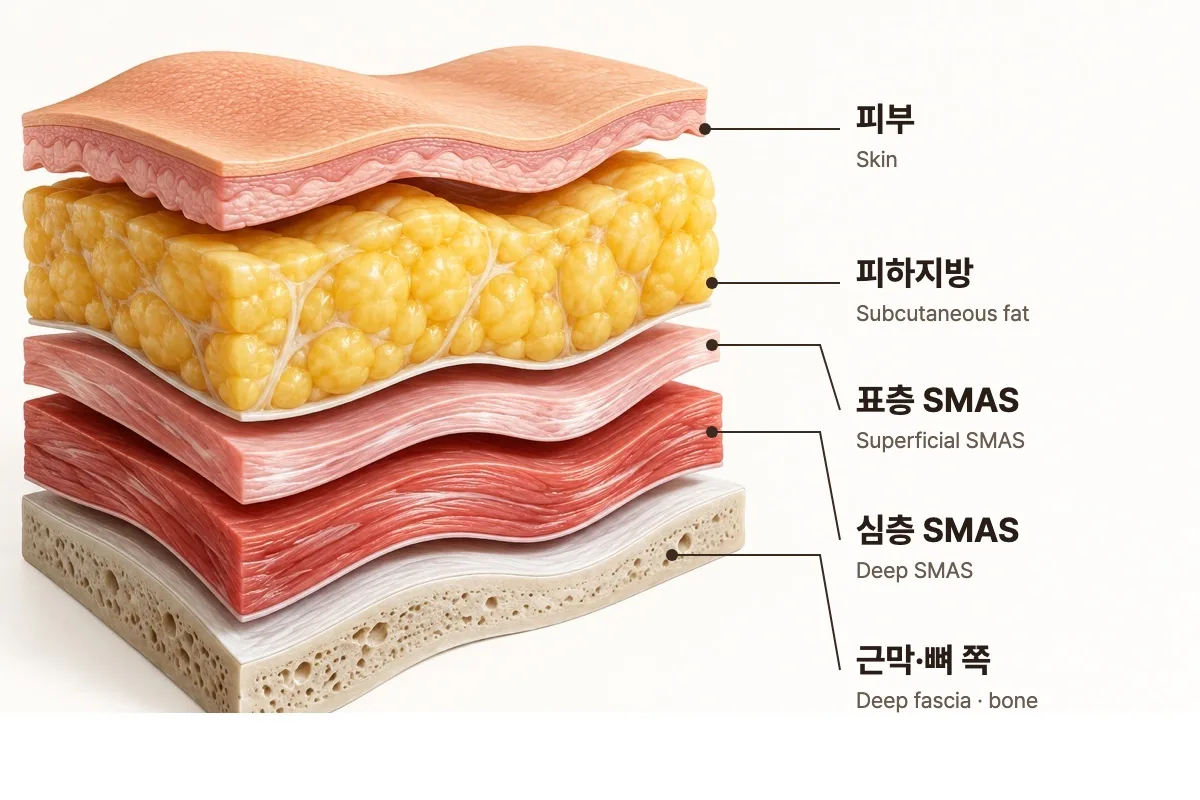
This tissue-layer diagram was newly created by VITAL for explanation.
VITAL's Approach to Revision Surgery
Adhesions and new blood vessels formed after the previous surgery make dissection more difficult in revision surgery.
At VITAL Plastic Surgery, we first review your previous surgical records and current tissue condition, then determine whether to dissect in the superficial SMAS or deep SMAS plane. We plan the extent of dissection based on the previous surgical plane and extent of adhesions, and consider a deep plane approach when needed.
The plane and extent of dissection and anticipated risks are determined individually based on previous surgical records and a clinical examination.
1
Skin
2
Fascial Layer (SMAS)
3
Retaining ligaments · Muscles
4
Move the deeper layers together
Tissue Layers
Revision surgery means making time work in our favor.
Surgery can be performed anywhere on the face, but areas where nerves run carry risks. Although surgery is possible, we need to discuss thoroughly with you how to manage scarring and protect the nerves.
01 · START WITH YOUR CONCERN
Do any of these concerns
sound familiar?
What brings you in?
“My face has sagged again after my previous facelift.”
“The change was less than I expected.”
“I'm also concerned about scarring or tightness.”
We first assess your previous surgery and the current condition of your tissues.
We assess tissue position and support as well as skin laxity. We distinguish volume loss from sagging and consider how the different areas of the face relate to one another.
Revision Facelift,
What does the surgery involve?
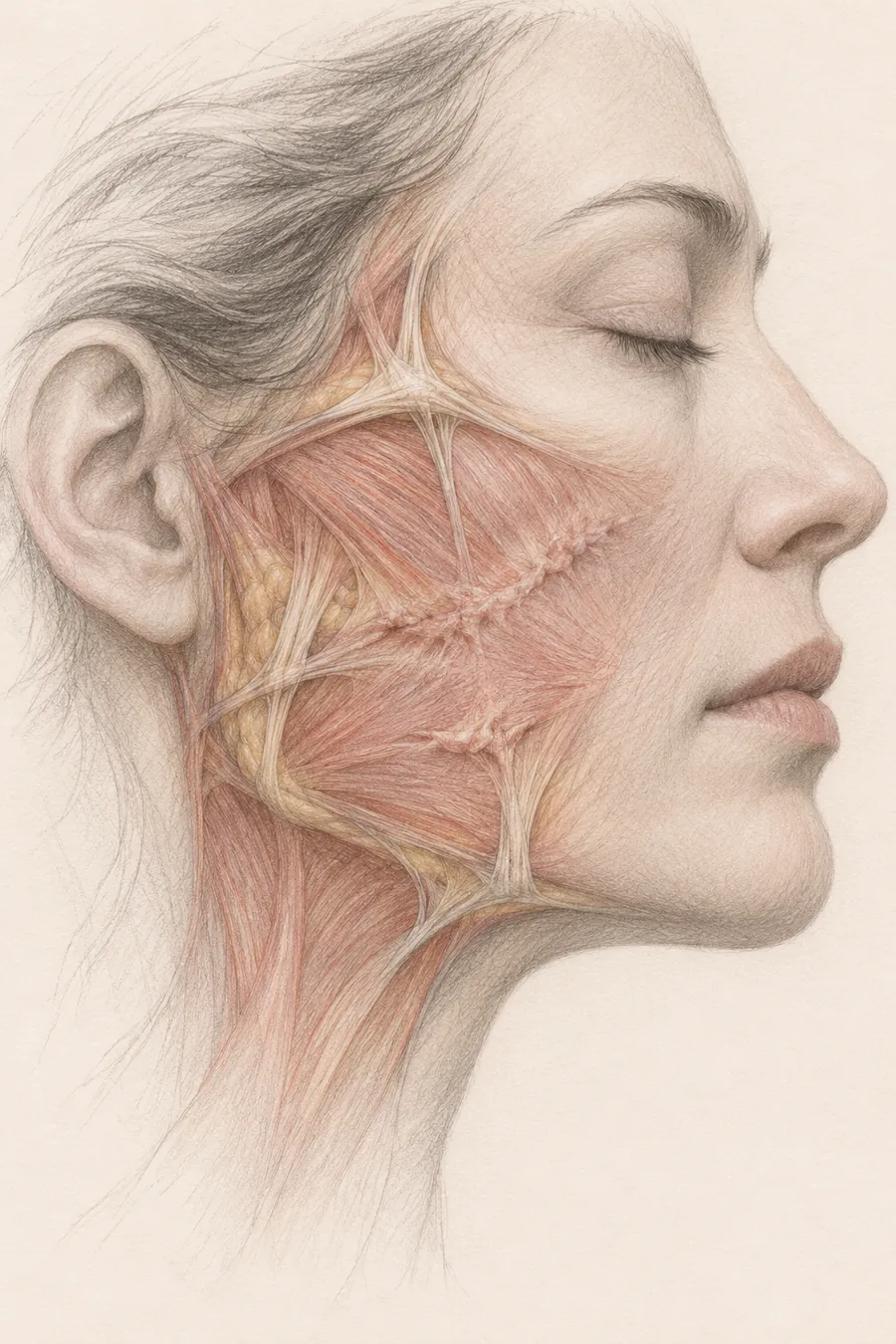
A revision facelift is performed when a previous surgery produced little change, sagging has returned, or scars and tightness cause discomfort. After assessing the plane and extent of the previous surgery and any adhesions, we determine the dissection plane and consider a deep plane approach if needed. Dissection is often more difficult in revision surgery because of adhesions and new blood vessels formed after the previous surgery. We first explain what can be improved and the limitations, then determine the timing.
- Previous Dissection Plane
- The tissue plane separated during the previous surgery. The tissues are often adherent, which affects the extent of revision surgery.
- Adhesions
- Areas where tissues have stuck together. They must be managed with attention to the location of nerves and blood vessels.
- Facial Danger Zones
- These areas require particular care because nerves run through them. They are taught as seven zones, or broadly grouped into five.
In revision facelift surgery,
in Lower Blepharoplasty
we first assess the previous surgical plane and adhesions
The starting point for revision surgery is understanding which plane was treated and to what extent. Previous records are helpful; without them, we use current photographs and an examination to assess scar locations, tissue mobility, and adhesions. We use these findings to determine the dissection plane and consider a deep plane approach when needed. We do not simply repeat the same method used in the first surgery.
We first identify the areas where nerves run
No area is beyond surgical reach in plastic surgery, but areas where nerves run require particular care. Greater caution is needed when the previous surgery has altered the anatomy. Even when surgery is possible, we discuss how to manage scars and the nerves before proceeding. Before surgery, we explain the possibility of nerve injury, bleeding, residual sagging, asymmetry, and delayed healing.
We distinguish the causes of recurrent sagging
The plan differs depending on whether aging has progressed over time, the previous surgery mainly tightened the skin without addressing the deeper layers, or volume loss makes the face appear to sag. We separately assess the position of sagging structures, the amount of volume needed, and skin quality. Facelift results are generally considered to last 5.5 years, but this varies by individual, so we also check when the previous surgery took place.
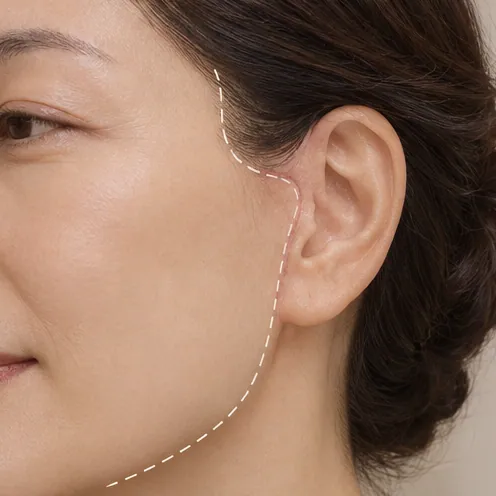
We redesign the incisions and ear contours
We consider the previous incisions, ear contours, and hairline together when choosing incision locations. For scars and unnatural contours, we assess the healing stage and any tissue shortage to determine whether scar care or surgical correction is appropriate. We do not treat every red scar with the same laser at the same time. Scars change over several months and may continue changing for more than a year, so timing is also considered.
We base the timing on tissue healing
Tissues may still be healing even when the visible change seems small. Tissues become firm and tight between 3 weeks and 3 months, then soften over 3 months to a year. For cosmetic revision, we generally consider waiting at least 6 months to a year or longer. Acute hematomas and infections, however, are evaluated immediately without waiting.
We first explain when we would not recommend surgery right away
We do not recommend immediate surgery if healing is still underway, the burden of another surgery outweighs the expected improvement, or the desired change appears difficult to achieve safely. If needed, we first consider treatments that address skin quality, such as device-based treatments or Re2O. Whether to stage surgery is determined based on normal healing, and we take time to listen to your concerns, including fears, and explain the options.
The Surgical Process Varies
Depending on Your Condition
When Sagging Has Returned
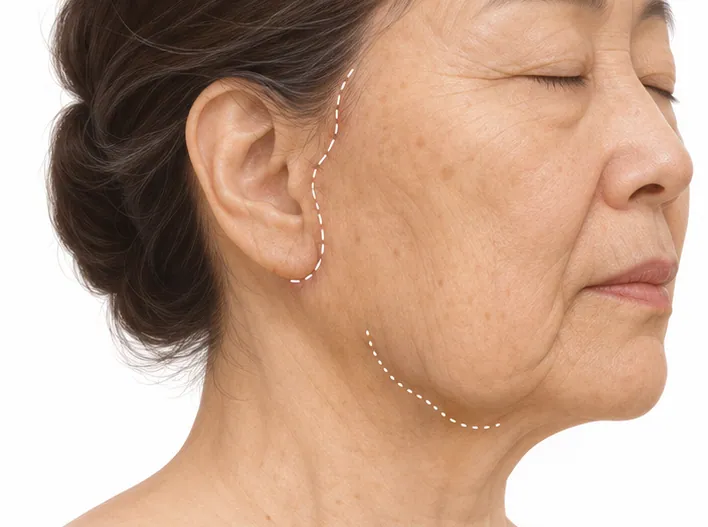 1
We assess the previous surgical plane and adhesions through photographs and an examination, then redesign the incisions
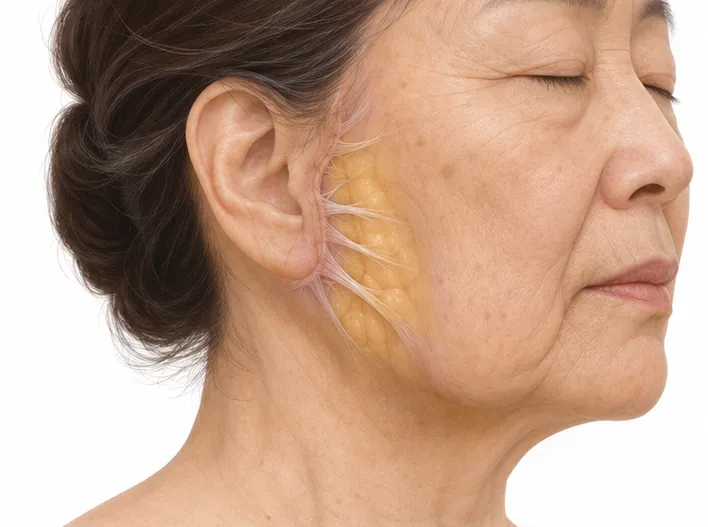 2
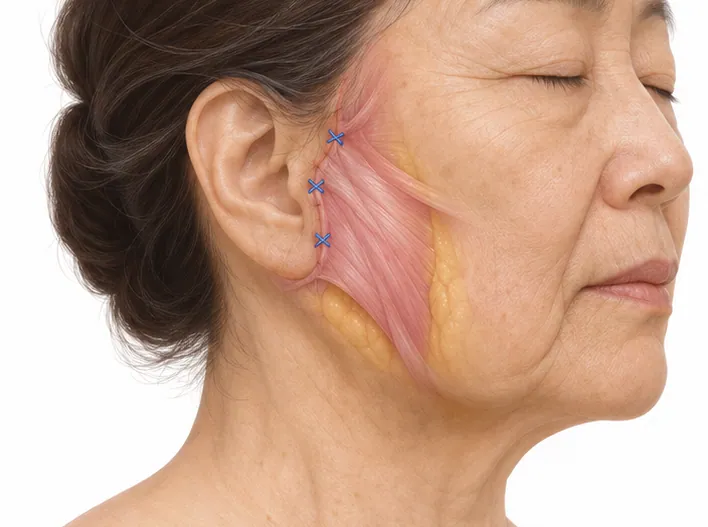
We enter along the previous incisions and release the adherent tissue layers
 3
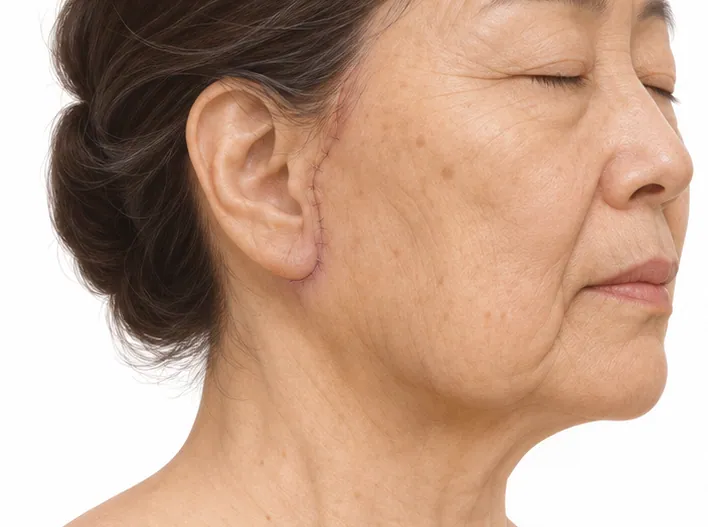
We determine the dissection plane, release the retaining ligaments, and lift and secure the sagging tissues
 4
We trim excess skin and close the incisions
When Scars or Ear Shape Cause Discomfort
 1
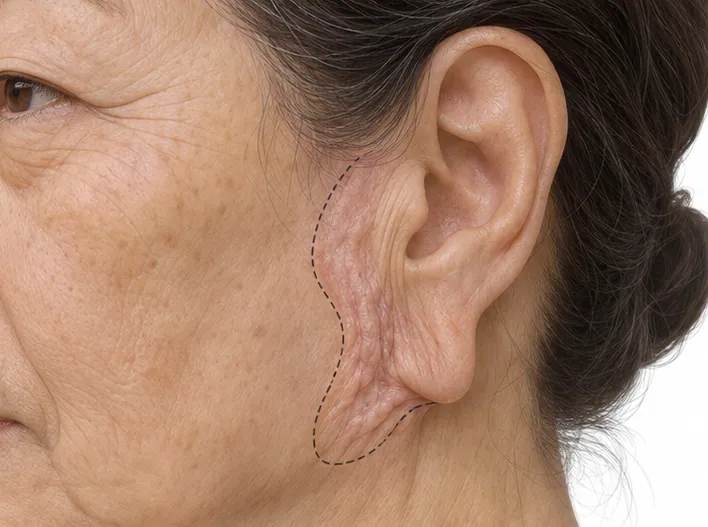
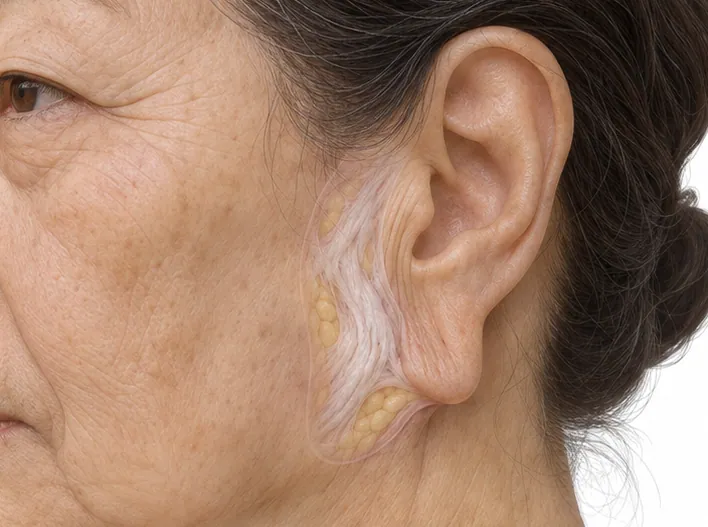
We assess the scar's healing stage and any tissue shortage in front of the ear
 2
We redesign the incisions to include the troublesome scars
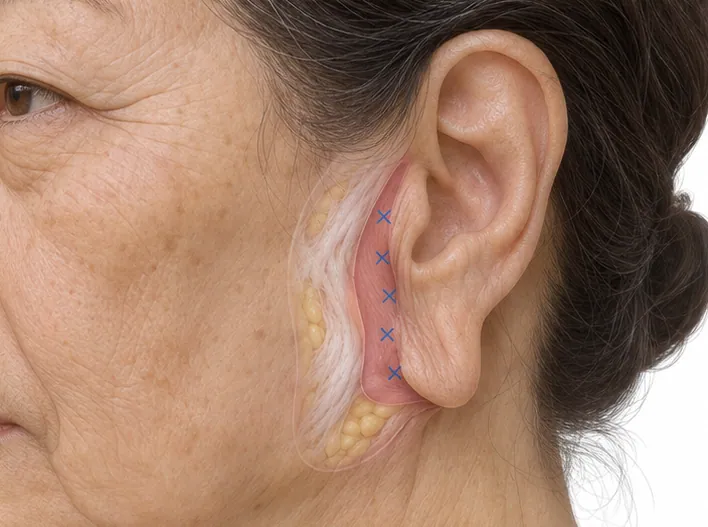 3
We release surrounding tissue and shift tension from the incisions to the deeper layers
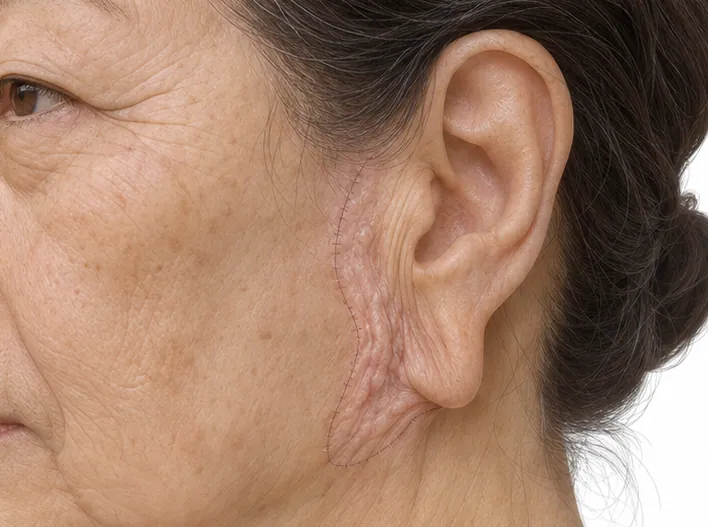 4
We adjust the ear contours and close the incisions with fine sutures
Illustration for explanation · Not an actual patient. This is a simplified description of typical steps. The actual technique and extent of surgery are determined after examination.
02 · WHAT WE LOOK AT
Even when concerns look similar,
the factors to assess differ.
Previous Surgical Plane and Extent
We assess tissue position and support as well as skin laxity.
Scars and adhesions
We distinguish volume loss from sagging and consider how the different areas of the face relate to one another.
Available Tissue and Stage of Healing
We review your previous surgery, scars, and health together.
03 · DOCTOR'S DECISION
When choosing an approach, Dr. Hyungwoo Yim
looks at three things first.
Compare surgical records and progress photos
Using your medical history and examination findings, we distinguish your current condition from your desired changes. At this stage, we identify the necessary conditions before choosing a treatment.
Distinguish potential improvements from limitations
When comparing available methods, we explain the expected changes, the burden on the tissues, recovery, and potential remaining problems.
Assess the benefits and burden of additional surgery
We give you time to understand the explanation and ask questions. We may not recommend immediate treatment if its burden is greater or if you cannot allow enough time for recovery.
VITAL Plastic Surgery's principle is to recommend necessary treatment at the appropriate time. Having a consultation does not mean you need to decide on a procedure or surgery that day.

When
to consider a consultation
- When sagging returns after a previous facelift
- When the change was less than expected and you want another evaluation
- When scars or ear shape cause discomfort
- When definition between the jawline and neck has diminished again
- When you are unsure what your previous surgery involved and want to understand what may be possible
When
Surgery is not our first recommendation
- When you are still healing from your previous surgery
- When the burden of additional surgery outweighs the expected improvement
- When the desired changes would be difficult to achieve safely in your current condition
- When there are more pressing health concerns, such as high blood pressure or diabetes
04 · LIMITS & RISKS
Along with possible improvements,
we explain the limitations and risks.
Your desired changes — First, tell us what bothers you most and which aspects of your appearance you want to keep. We do not promise changes identical to photos or someone else's results.
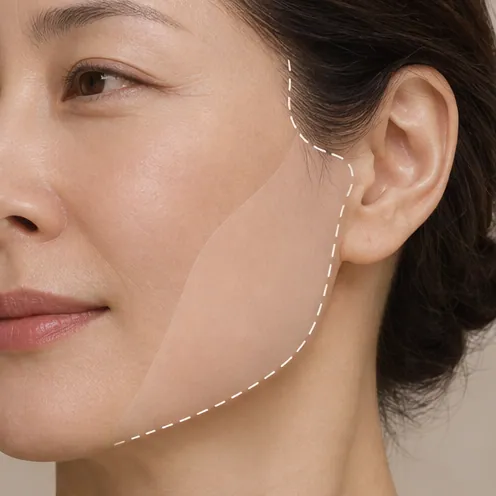
Bleeding
Scarring
Nerve Injury
Residual Sagging
Asymmetry
Previous Treatments
Do not wait if you have these symptoms
If you experience sudden severe pain, bleeding that does not stop, rapidly worsening swelling on one side, or signs of possible infection such as a high fever or pus, contact us immediately rather than waiting for your appointment.
Conditions to address first — We first assess your health, inflammation and stage of recovery, and the range of feasible treatments. If needed, testing, observation, or other medical care may take priority.
Risks and limitations to discuss during consultation — bleeding, scarring, nerve injury, residual sagging, asymmetry, and delayed healing. This is not a complete list of possible risks. Risks may vary depending on your health, previous treatments, and the technique and extent of surgery. These will be explained in detail during your examination and the informed consent process.
Preparing for surgery and
recovery by stage
- 2–3 days after surgery
Keep the compression dressing and drain in place. Afterward, wear a compression band for 2 weeks and sleep with your head elevated at least 30 degrees for 1 week.
- 5–14 days
Stitches are removed after 5–7 days on the face and 10–14 days on the scalp. You can expect to return to daily activities in about 10 days, although recovery varies by individual.
- 2–6 weeks · Several months
Most swelling, bruising, and tightness improve over 2–6 weeks, and sensation in the ears, cheeks, and jaw returns over several months. Wait at least 6 weeks before coloring or perming your hair, and get facial massages only after your surgeon approves, usually after 2–3 months.
- Up to 1 Year
Scars in front of and behind the ears may remain red for 6 months to 1 year. Final results are assessed after 6 months. Follow-up visits are at 1 · 3 · 6 months · 1 year.

No smoking · No alcohol
We provide these essential instructions before surgery. Smoking and alcohol affect bleeding and wound healing.
Medications · Supplements
We recommend stopping herbal medicines and supplements such as omega-3 when possible because they may increase bleeding. Please tell us about every medication you take.
Medical history
We first check for high blood pressure, diabetes, and anticoagulant use. If these conditions are not controlled, surgery cannot proceed right away.
Filler · Thread History
Please tell us about previous fillers, threads, and lifting procedures. If needed, we use ultrasound to assess their location and distribution.
Recovery times are averages and vary by individual. Please contact us immediately if you experience sudden severe pain, bleeding that does not stop, rapidly worsening swelling on one side, warmth, pus, or a fever of 38°C or higher.
05 · FOLLOW THE CHANGE
We also document
and monitor changes after treatment.
01
STEP 01
Documenting your condition before treatment
We review previous treatments, your current condition, and the changes you hope to see.
02
STEP 02
Check Early Reactions · Wound Healing
We explain treatment-specific precautions and symptoms that require contacting us.
03
STEP 03
Comparing appearance and function
Along with photos, we assess discomfort and changes in function.
04
STEP 04
Assessing additional care
We explain additional treatment based on your condition rather than recommending the same treatment to everyone.
This is a general overview, not an actual patient case. Specific follow-up schedules vary by treatment method and recovery. If you experience sudden severe pain, persistent bleeding, or signs of possible infection, contact a medical facility immediately rather than waiting for your appointment.
Common questions
during consultations
Can I have a consultation without records from my previous clinic?
Yes. Photographs showing your current condition are most important, and records are helpful if available. Examining scars and tissue mobility allows us to estimate the extent of the previous surgery to some degree. However, there are limits to identifying the exact plane, so we also explain what may need to be confirmed during surgery.
Can I have surgery if I have had a lot of threads or fillers?
Whether surgery is possible depends on the materials and their locations. If needed, we use ultrasound to assess the tissue planes and distribution of injected materials, but we cannot determine the type and amount of every foreign material in a single assessment. Dissolving hyaluronic acid fillers may be considered; other materials cannot be dissolved in the same way.
Does recovery from revision surgery take longer than from the first surgery?
Recovery from revision surgery and reconstruction may take longer, and we plan lifting procedures and reconstruction with at least 2 weeks available in your schedule. Recovery varies depending on the extent of previous adhesions and the tissue planes treated, so we provide details after developing the surgical plan.
BEFORE YOU DECIDE
Before you decide,
frequently asked questions
Questions to review together before deciding.
Based on questionnaire responses from Dr. Hyungwoo Yim · Last updated October 2026 Specific methods and their scope are discussed individually after an examination.
Q
Should I have revision surgery right away if the results are limited?
−
A
We consider whether the tissues are still healing, your original goals, and your current condition together. Waiting or conservative care may be more appropriate, and timing is determined individually.
Q
Are the cost, number of treatments, and recovery period fixed?
+
Q
Can a treatment plan be finalized through a photo consultation alone?
+
DOCTOR'S COLUMN DOCTOR'S COLUMN DOCTOR'S COLUMN
Must Read
Care Notes Written by the Doctor · Please Read Before Your First Visit
No.1
No.3
VIEW MORE →
Once you feel fully informed, schedule a consultation.
Revision Facelift Book a Consultation
You do not need to decide the day of your consultation.