PLASTIC SURGERY
VITAL MIDFACE LIFT
If the area from under your eyes to your cheeks looks saggy.
We assess the position and support structures from the under-eye area to the cheeks to determine the extent of correction needed.
This may vary depending on your condition and the extent of surgery.
SHORT ANSWER
What do we assess first for a midface lift?
We assess the position and support structures from the under-eye area to the cheeks to determine the extent of correction needed. Along with appearance, we evaluate tissue condition, function, and factors affecting recovery.
ASKED THE DOCTOR
If sagging is mild,
a mini lift can target individual areas.
Q. Do you offer mini lifts for just the midface or lower face?
“A mini lift is an approach I like very much. However, only the front incision stops short of extending toward the scalp. The incision behind the ear is nearly the same length, and surgery takes a similar amount of time.”
Only the front incision differs · Similar incision behind the ear and surgery time
1
Zygomatic retaining ligament
2
Cheek fat
3
Nasolabial fold
4
Jawline · Mandibular retaining ligament
Ligaments & Fat
Under-eye aging is also related to the angle of the underlying bone.
Removing or spreading out fat without considering cheek sagging or skin elasticity may leave the under-eye skin loose with fine wrinkles, or make the transition to the midface look less natural.
We assess lower eyelid surgery in relation to the midface, as well as the under-eye area.
- 01The Under-Eye–Cheek ConnectionWe examine changes in the tear trough, the transition to the cheek, and the structures that support them.
- 02Fat Preservation Comes FirstBefore removing or repositioning protruding fat, we first consider leaving it in place and reinforcing the orbital septum to soften the transition.
- 03Minimal Skin RemovalRemoving too much skin can increase the risk of lower eyelid drooping or outward turning, so we limit skin removal to the amount needed.
Under-eye bulging and hollowing often arise from structures connected to the cheeks. VITAL plans lower eyelid surgery together with the midface and removes only as much skin as necessary.
After surgery, VITAL LASTING CARE continues to support recovery, regeneration, and maintenance.
Concerns we assess together
01 · UNDERSTAND YOUR CONCERN
Do any of these concerns
sound familiar?
Do any of these concerns sound familiar?
“The area from under my eyes to my cheeks looks long and hollow.”
“As my cheeks have sagged, the crease has deepened.”
“I wonder whether under-eye surgery alone would be enough.”
The under-eye area and cheeks are connected structures, rather than two separate areas.
A midface lift is a surgical approach based on an assessment of the position and support of midface tissues, including the cheeks. We examine under-eye hollowing, protruding fat, and skin condition together to determine whether correction combined with lower eyelid surgery is needed.
Midface lift,
What does the surgery involve?
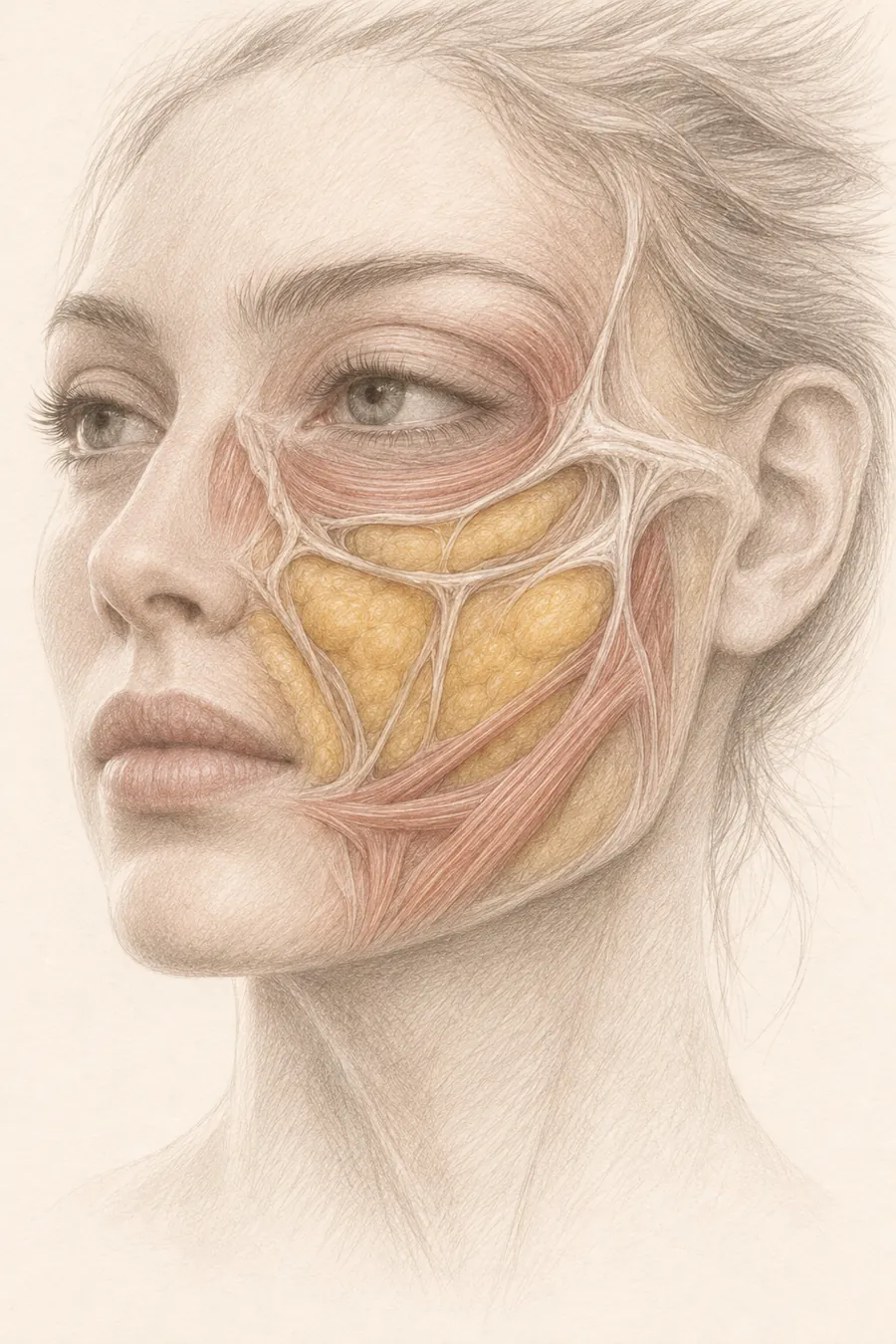
A midface lift raises and secures the cheek fat layer that has descended from beneath the eyes toward the front of the cheeks, along with its retaining ligaments. It is often considered when under-eye grooves and sagging over the front of the cheekbones appear together. The procedure uses an incision through the conjunctiva inside the eyelid and is performed in conjunction with transconjunctival lower eyelid surgery. Because the under-eye area and cheeks are connected structures, we first assess why the boundary between them has become visible. This combination is not recommended for everyone; the decision depends on the extent of sagging.
- Midface
- The front of the cheeks, extending from below the eyes to above the corners of the mouth. When this area descends, the under-eye area looks longer.
- Retaining ligaments
- Cordlike structures that anchor the skin and deeper tissues to the bone. They contribute to the formation of tear troughs and cheek grooves.
- Cheek fat layer
- Fat extending from beneath the muscle around the eye to the upper cheek. When it descends, the boundary between the under-eye area and cheek becomes more visible.
- Periosteum
- The tough membrane covering the bone. Some techniques use it as an anchor for lifted tissues.
In a midface lift,
in Lower Blepharoplasty
the under-eye area and cheeks form one connected structure
Under-eye fat and cheek fat may appear separate, but they are connected through shared fibrous structures and fat layers. This is also why they affect each other when you smile and when your face is at rest. Treating only the under-eye area while leaving sagging cheeks in place can make the boundary more noticeable or hollow after surgery, so we assess cheek position when examining the under-eye area.
We lift and secure the cheek fat layer and retaining ligaments
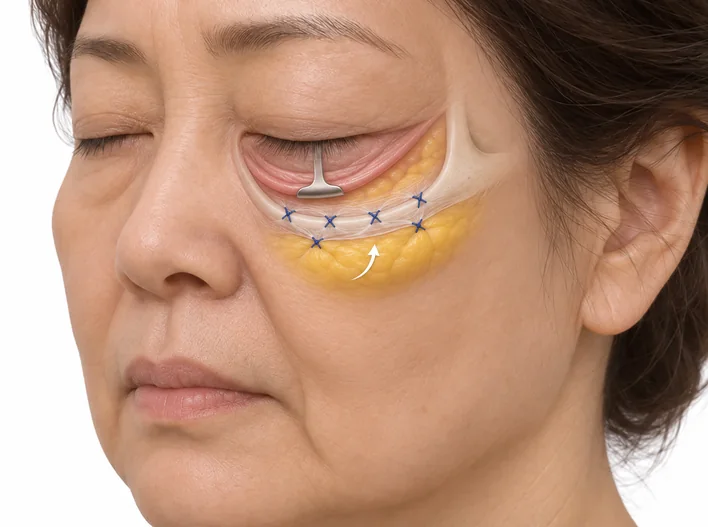
While lower eyelid surgery addresses the skin and orbicularis oculi muscle, a midface lift goes deeper to address the sagging cheek fat layer and retaining ligaments together. During the examination, we assess ligament firmness by touch. Releasing the ligaments as needed creates room for the tissues to move upward, and the lifted tissues are secured to firm tissues around the eyes. This involves a deeper tissue layer than treating under-eye fat alone.
We first consider an approach without a skin incision
An approach through the conjunctiva avoids a skin incision and can reduce disruption of the front layers of the lower eyelid. However, this approach does not address excess skin itself. We manually assess skin and orbicularis oculi muscle elasticity to determine whether Re2O or laser treatment may be sufficient. If these appear insufficient, we treat that area separately later.
What we do in about 15 minutes per side
For each side, planning takes about 1 minute, access and tissue dissection about 5 minutes, fixation about 5 minutes, and closure about 5 minutes, for approximately 30 minutes total for both sides. This timing depends on certain conditions: no diabetes or high blood pressure, minimal bleeding, and an approach guided by an understanding of the anatomy. Surgery may take longer depending on your health and any combined procedures. Surgery time does not indicate recovery time.
We generally explain that results last 3–5 years
Although this varies by individual, the lifted midface generally begins to sag again after 3–5 years because aging continues after surgery. We therefore strongly recommend monthly maintenance with laser lifting treatments. We generally consider InMode and ONDA monthly, and Ultherapy and Thermage once a year, while carefully evaluating repeated fat-reduction treatments for thin, hollow faces.
The angle of the bone and extent of sagging guide the scope of surgery
When the bone beneath the eyes slopes farther backward, tissues may descend more easily, which can affect what the same surgery can achieve. If sagging is limited to the under-eye area and front of the cheeks, we consider this procedure. If changes in the jawline and neck are more significant, we also consider a facelift. If the concern is clearly limited to the under-eye area, we do not extend treatment to the cheeks, because a wider surgical area can increase swelling and aftercare demands.
A Word from the Doctor
Dr. Hyungwoo Yim’s own words from his blog and interviews.
01When the Area Under Your Eyes Looks Long
“It may not be that the area under your eyes has gotten longer, but that your cheeks have descended.”
A youthful face is characterized more by a shorter-looking midface than by large eyes. Pulling the cheeks straight up can make them look fuller, so they are lifted upward and inward.
02Structure and skin are separate
“Straightening the pillars The wallpaper does not become new.”
A midface lift addresses the underlying structure, while Re2O treats the skin. They are not competing treatments; they address different layers.”
Dr. Hyungwoo Yim, Medical Director
The Surgical Process Varies
Depending on Your Condition
When under-eye grooves and sagging at the front of the cheeks occur together
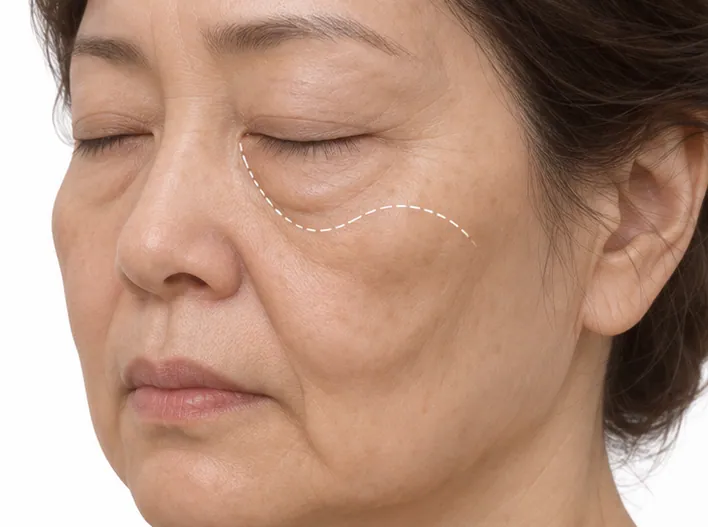 1
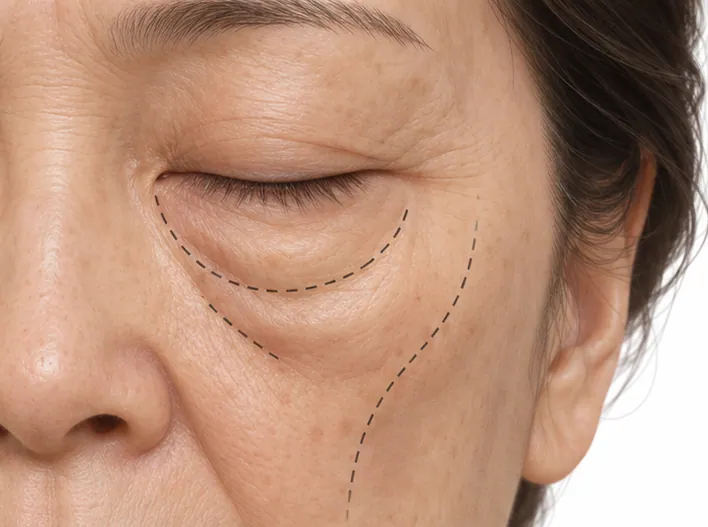
With you seated, we mark the grooves and the boundary of the sagging front cheeks
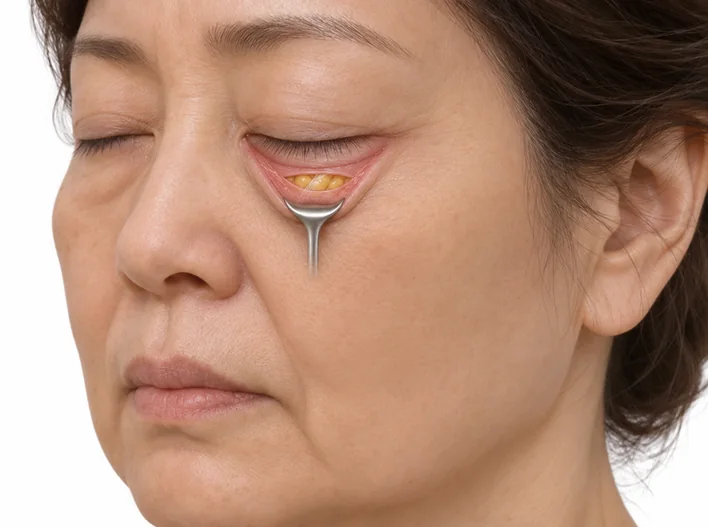 2
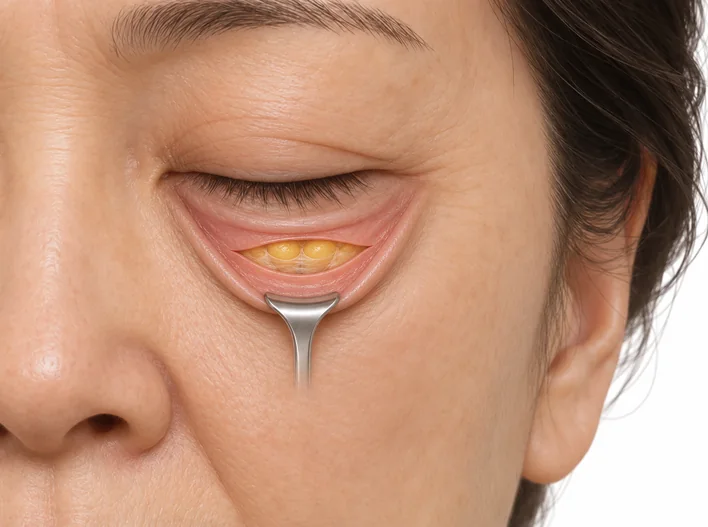
We enter through the conjunctiva inside the lower eyelid and dissect toward the upper cheek
 3
We release the retaining ligaments, then lift and secure the sagging cheek fat layer
 4
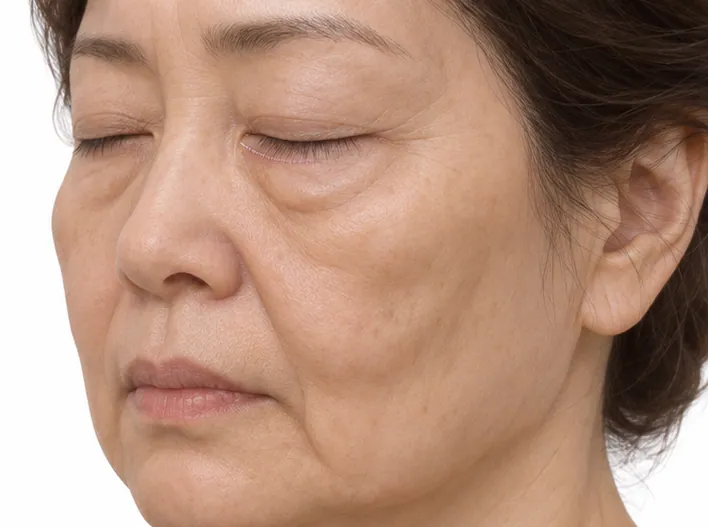
We finish on the conjunctival side. There is no skin incision
When under-eye bulging is also present
 1
We plan treatment around the bulging, grooves, and cheek position together
 2
We enter through the conjunctiva and dissect the under-eye and upper cheek areas
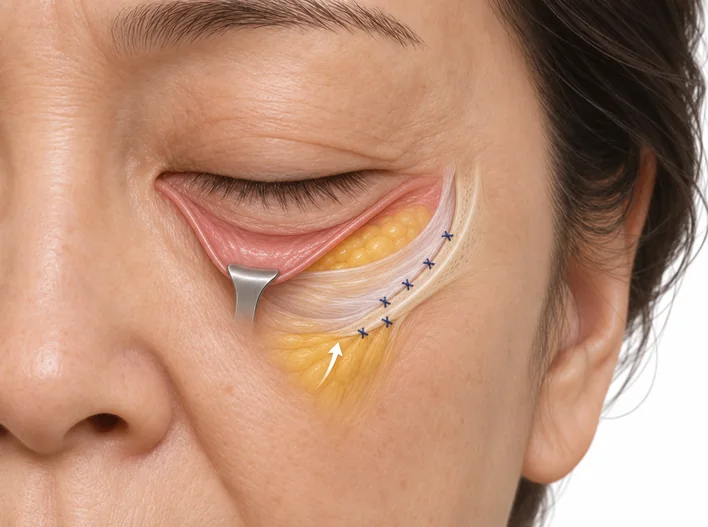 3
We leave the fat in place, reinforce the orbital septum, then lift and secure the cheek fat layer
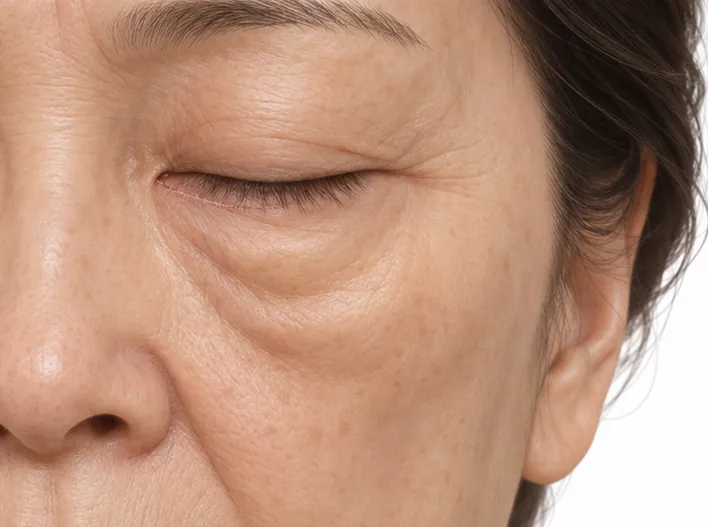 4
We close the conjunctival incision and monitor swelling
When reduced skin elasticity is also present
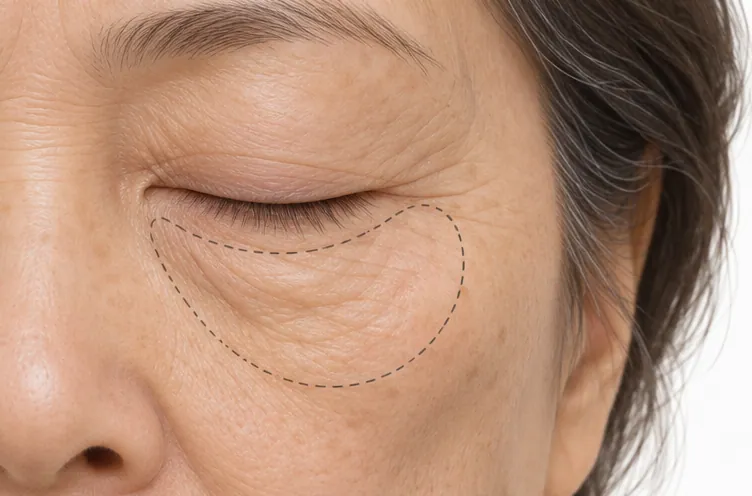 1
We manually assess skin and orbicularis oculi muscle elasticity to determine how much skin treatment is needed
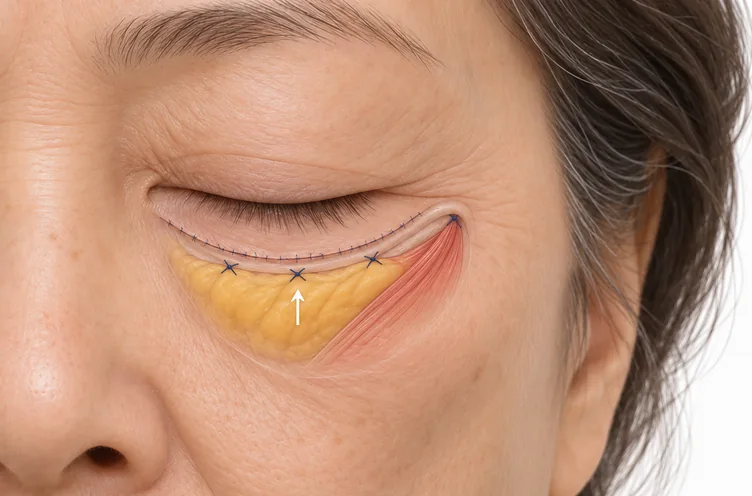 2
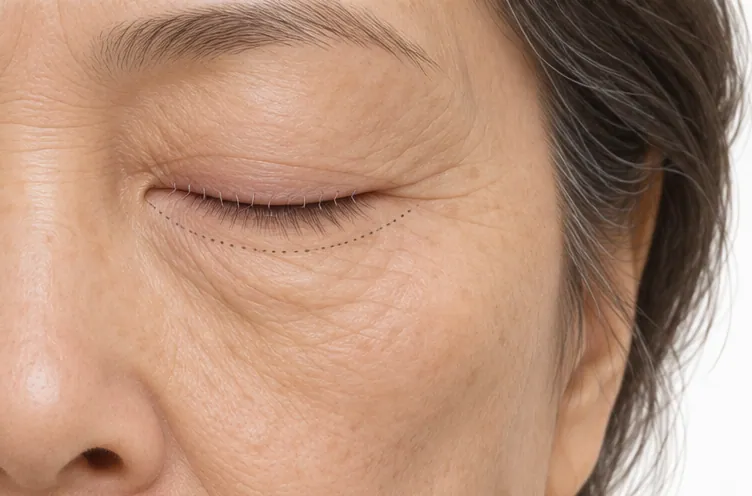
Through a skin incision below the eyelashes, we lift and secure the cheek fat layer (SOOF) and suspend the orbicularis oculi muscle
 3
We remove excess skin and continue skin texture care with Re2O and laser treatments
Illustration for explanation · Not an actual patient. This is a simplified description of typical steps. The actual technique and extent of surgery are determined after examination.
02 · LOOK FOR THE CAUSE
We examine why
these changes have occurred.
Changes in tissue position
Facial contours are affected by tissue position and support, as well as the amount of fat.
The transition between the under-eye area and cheeks
Under-eye protrusion, hollowing along the grooves, and cheek position need to be assessed together to determine the extent of correction.
Skin and overall facial balance
We also evaluate excess skin, elasticity, overall facial proportions, and expressions. Sagging alone does not determine the same treatment approach for everyone.
Several factors may contribute to a single symptom.
This explanation is for general understanding. The causes in each individual case must be determined through an examination.
03 · DOCTOR'S DECISION
The same surgery
is not recommended for the same reason in every case.
If the concern is clearly limited to the under-eye area
We first assess whether midface correction is actually needed and avoid unnecessarily extending the treatment area.
If midface sagging is also present
We weigh the need for a combined approach with lower eyelid surgery, the possible changes, and the burden of surgery.
If you have had a previous lift or under-eye surgery
We assess altered tissues, scars, and adhesions, then plan according to your current stage of recovery.
We explain what to assess first and how much treatment is appropriate.
Transconjunctival lower eyelid surgery · Midface lift
Limitations and risks matter as much as the possible improvements.

When
to consider a consultation
- When under-eye bulging, grooves, and sagging over the front of the cheekbones appear together
- When a long hollow extends from the under-eye area to the cheeks
- When the boundary with the cheeks looks more noticeable after under-eye surgery
- When you want to address deeper tissue sagging first without a skin incision
- When tired-looking shadows concern you more than changing your overall appearance
When
Surgery is not our first recommendation
- When sagging is mild and the concern is clearly limited to the under-eye area
- When changes in the jawline and neck are the greater concern
- When loss of skin and orbicularis oculi muscle elasticity is too significant for a conjunctival approach alone
- When health conditions such as high blood pressure or diabetes need to be controlled first
04 · CLINICAL REASONING
In this situation,
how do we work through the assessment?
Initial concern
Concern about both under-eye grooves and sagging cheeks
What to assess
Comprehensive assessment of under-eye support, excess skin, midface position, and changes in facial expression
How we approach the decision
Explain the differences and limitations of lower eyelid surgery alone and an approach combined with midface surgery
Follow-up observation
Monitor the connection between the under-eye area and cheeks, eye function, tightness, and asymmetry over the long term
Illustrative clinical assessment · Not an actual patient case
The example above is provided for understanding and does not describe an actual patient’s treatment or results.
Preparing for surgery and
recovery by stage
- 3–4 days after surgery
Swelling and bruising are at their worst. Sleep with your head slightly elevated, and apply cold compresses gently without letting ice touch your skin or eyes directly.
- Days 5–7
If an incision was made, the stitches are removed. Avoid eye makeup, eyelash extensions, and contact lenses for 2 weeks. You can return to light daily activities after 2–3 days, but swelling and bruising may remain.
- 3 weeks–3 months
Tissues may feel firm and tight during this stage. These are healing responses, so we do not decide on revision surgery based only on how the area looks at this point. Resume strenuous exercise and sauna use after 3–4 weeks.
- 3 months–1 year
The tissues soften, redness fades, and the two sides gradually become more balanced. We check your progress at 1 · 3 · 6 months · 1 year.

No smoking · No alcohol
We provide these essential instructions before surgery. Smoking and alcohol affect bleeding and wound healing.
Medications · Supplements
We recommend stopping herbal medicines and supplements such as omega-3 when possible because they may increase bleeding. Please tell us about every medication you take.
Medical history
Thyroid eye disease, glaucoma, severe dry eye, autoimmune disease, or anticoagulant use may be reasons to postpone or avoid surgery.
Eye care habits
Limit contact lens use as much as possible, use artificial tears frequently, and avoid rubbing your eyes. Tell us if you have used double eyelid tape or glue.
Recovery timelines are general estimates and vary by individual. Contact us immediately for sudden severe pain, decreased vision, bleeding that does not stop, or rapidly worsening swelling on one side.
RECOVERY & FOLLOW-UP
The pace of recovery
varies from person to person.
01
STEP 01
Early recovery
We check swelling, bruising, wounds, and eye function. Guidance on returning to work, wearing makeup, and other daily activities depends on the extent of surgery and your recovery.
02
STEP 02
Tissue changes
We monitor changes in tightness, scars, dryness, and asymmetry. We assess symptoms through an examination rather than assuming they are all part of normal healing.
03
STEP 03
Long-term follow-up
We compare both photos and function. Patients visiting from overseas need to consider follow-up visits when planning their departure.
Common questions
during consultations
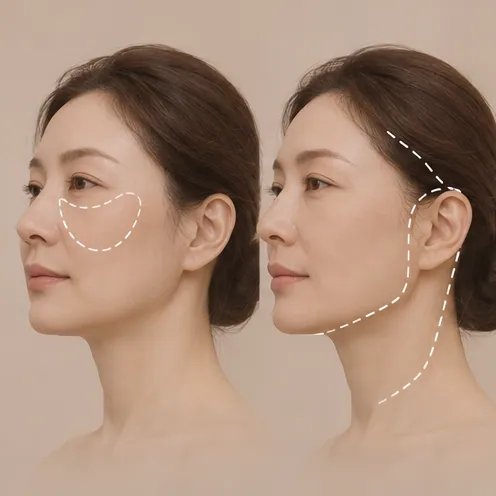
How does a midface lift differ from a facelift?
A midface lift uses an incision through the conjunctiva to address sagging under the eyes and in the front of the cheeks. A facelift uses incisions around the temples and ears and along the hairline behind the ears to address the cheeks, jawline, and, if needed, the neck. The areas treated, incisions, and operating time differ, so the choice depends on where the main sagging occurs.
When are Re2O and laser treatments added?
Laser treatment is performed before surgery, and Re2O is administered in the third week after surgery to support recovery. Surgery and laser treatment can also be performed on the same day, but the treatment areas and depth are determined based on wound healing, inflammation, and sensation.
Does a shorter surgery mean less swelling?
Operating time and swelling are separate considerations. Swelling peaks on days 3–4, and even when the initial contours become visible, it takes several months for swelling to subside and tissues to settle. Combining a midface lift with lower blepharoplasty or other procedures may increase swelling and aftercare needs.
Returning to your original concern
“I wonder if under-eye surgery alone would be enough.”
If the concerns are clearly limited to the under-eye area, we first assess whether midface correction is truly needed to avoid unnecessarily extending the surgery.
Three things we check first during your consultation
- Whether the concerns are clearly limited to the under-eye area
- Whether midface sagging is also present
- Whether there is scarring or adhesion from a previous lift or under-eye surgery
When booking ‘Please assess whether under-eye surgery alone would be enough or whether I also need a midface lift.’Leave this brief note, and we can start your consultation with that concern.
These are our principles of care. The actual approach is determined after an examination. You do not need to decide the day of your consultation.
Related Reading
QUESTIONS & ANSWERS
Before you decide,
frequently asked questions
Common questions before making a decision.
Based on questionnaire responses from Dr. Hyungwoo Yim · Last updated October 2026 Treatment suitability and the specific approach are determined after an in-person examination.
Q
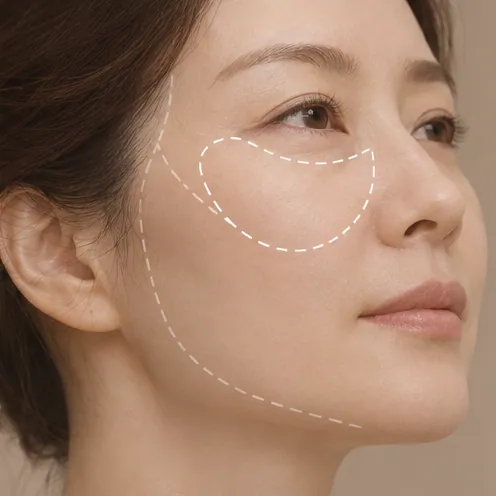
Are a midface lift and a facelift the same surgery?
−
A
The areas of concern and the extent of correction may differ. We explain the options after assessing whether your main concern is the under-eye area, cheeks, or facial contours, along with the condition of your tissues.
Q
Does “incision-free” mean there are no wounds or recovery time?
+
Q
Can surgery be finalized through a photo consultation alone?
+
Q
Are surgical results and recovery times the same for everyone?
+
DOCTOR'S COLUMN DOCTOR'S COLUMN DOCTOR'S COLUMN
Must Read
Care Notes Written by the Doctor · Please Read Before Your First Visit
No.1
No.3
VIEW MORE →
Once you feel fully informed, schedule a consultation.
From Under the Eyes to the Cheeks, Book a Consultation
You do not need to decide the day of your consultation.