PLASTIC SURGERY
MEDICAL COLUMN
Questions Answered Directly by the Doctor Before You Decide on Surgery
Facelift
Articles
Vertical Neck Bands: Can Injections Help, or Is Surgery Needed?
Prominent vertical lines on the neck are often the edges of the thin muscle covering the front of the neck (the platysma) showing as bands, rather than wrinkles etched into the skin. Their cause differs from horizontal neck lines in the skin, so treatment also differs.
Medically reviewed by Dr. Hyungwoo Yim, Medical Director (Plastic Surgery Specialist) · Published November 9, 2026 · Last reviewed November 11, 2026
SHORT ANSWER
First, the Short Answer
- Prominent vertical lines on the neck are often the edges of the thin muscle covering the front of the neck (the platysma) showing as bands, rather than wrinkles etched into the skin. Their cause differs from horizontal neck lines in the skin, so treatment also differs.
- Injections into the muscle temporarily reduce band movement, but cannot reposition stretched skin or separated muscle. If the area under the chin sags along with the bands, a neck lift (corset platysmaplasty) may be considered to bring the separated muscle together at the midline and secure it through a small incision under the chin.
- VITAL Plastic Surgery first distinguishes the contributions of wrinkles, muscle, and fat, then explains whether to address the neck alone or include the facial contours, and which wrinkles may remain after surgery. If there are only horizontal lines with little sagging, we do not recommend surgery right away.
“Can injections smooth the vertical bands on my neck, or do I need surgery?”
This is a paraphrase of a question we often hear during consultations.
To answer this question, we first need to distinguish where your current concern comes from. We will explain each point below, then return to the original question at the end.
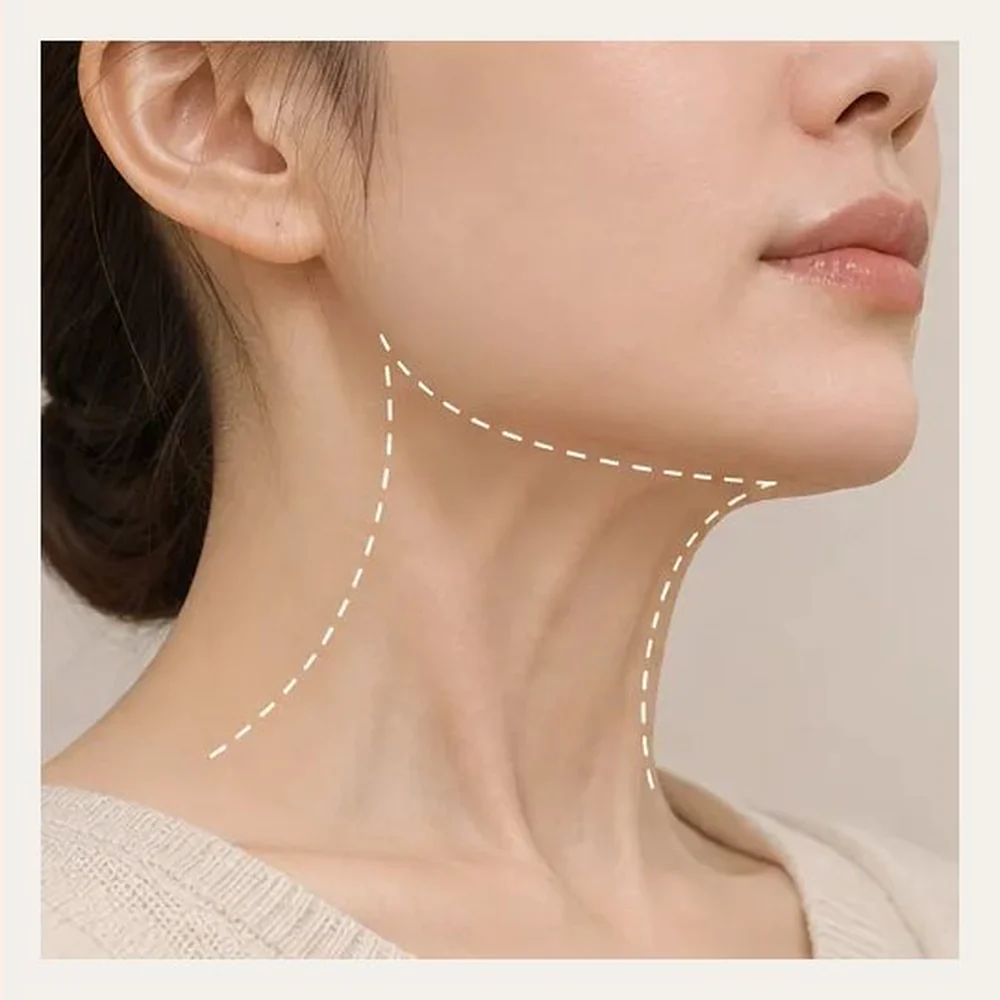
01Why do vertical neck bands develop?
Answer As the muscle at the front of the neck separates at the midline, its edges become visible as vertical bands.

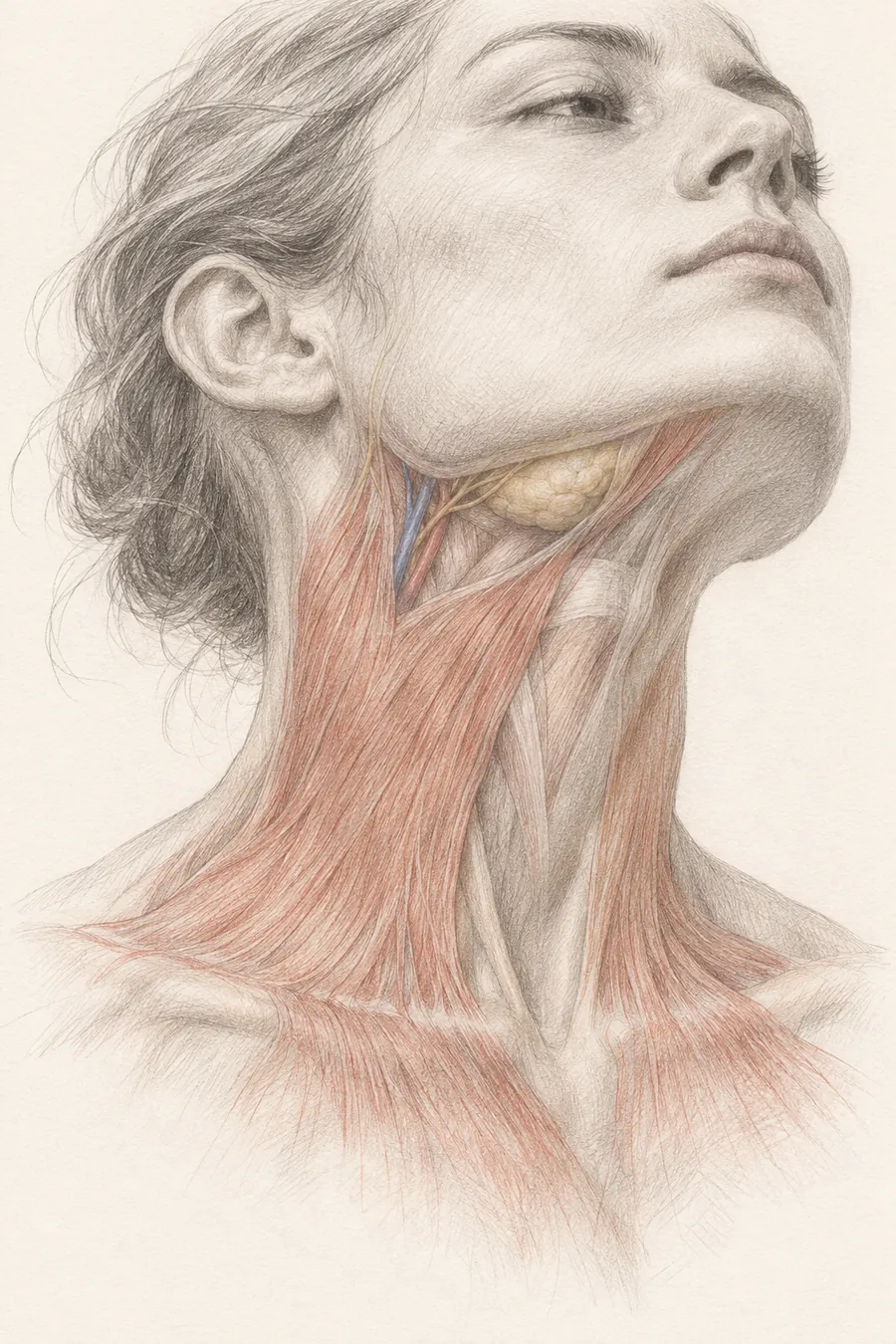
A thin, broad muscle called the platysma covers the front of the neck. VITAL Plastic Surgery’s neck lift guide explains that, with age, this muscle separates at the midline and its edges appear as vertical bands. The bands become more noticeable when you lift your chin or tense the corners of your mouth because they are muscle bands. This also explains why their location and the extent of separation are marked with your chin raised during a neck lift consultation.
One study examined these muscle attachments in detail. Layer-by-layer dissection and histological examination of 55 cadavers with an average age of 75 found that the platysma was attached not only at its ends, but also to the skin across its entire outer surface and to the deep fascia across its entire inner surface1. The authors concluded that this structure helps explain why bands can be visible at rest in an aging neck and why they can recur even after the muscle has been divided.
Vertical bands are therefore difficult to view as a skin-only concern. The skin, muscle, and fascia are attached and move together, so deciding how to address the visible lines requires assessing the muscle beneath them.
In Simple Terms The muscle at the front of the neck is like the thin fabric of a tent. As a zipper down the middle gradually opens, the edges of the fabric fold vertically and stand out as lines—these are the vertical bands. Ironing the fabric may temporarily make it look smoother, but the zipper remains open. Bringing the zipper back together and closing it is comparable to corset platysmaplasty. If the fabric has stretched considerably and sags downward, an additional step pulls and adjusts it from behind the ears. Fine wrinkles on the fabric’s surface (horizontal lines) are a separate issue with the fabric itself, unrelated to the zipper, and need separate treatment.
How, then, do vertical bands differ from horizontal lines?
02How do vertical bands differ from horizontal lines?
Answer Vertical bands involve muscle, while horizontal lines are etched into the skin, so they require different approaches.

There is more than one reason a neck may look loose. VITAL Plastic Surgery separately assesses excess skin, visible bands from platysma separation, fat under the chin, and the effects of the salivary glands and skeletal structure. Different causes require treatment at different tissue layers.
Horizontal lines etched into the skin have a different cause from platysma bands or sagging and may not disappear with a lift alone. Re2O may be considered separately for horizontal lines with thinning of the dermis, and fat grafting for neck wrinkles may be considered for deeply etched lines. The neck also has many blood vessels, making careful injection technique important to avoid bruising and hematomas.
In practice, several causes often overlap. When vertical bands and horizontal lines occur together with fat under the chin and sagging skin, a single method is unlikely to address everything. During consultation, we first listen to what bothers you most, then clarify which concerns surgery can address, which need skin treatments, and which treatments should be done at separate times.
| Category | How it looks | What we look at first |
|---|---|---|
| Vertical bands | 1–2 vertical bands at the front of the neck, more noticeable with muscle contraction | Extent of platysma separation at the midline |
| Horizontal lines | Lines across the neck that deepen when you lower your chin | Whether the dermis has thinned or the lines are deeply etched |
| Turkey neck | Loose skin and muscle sagging below the chin | A factor in deciding whether to include the face |
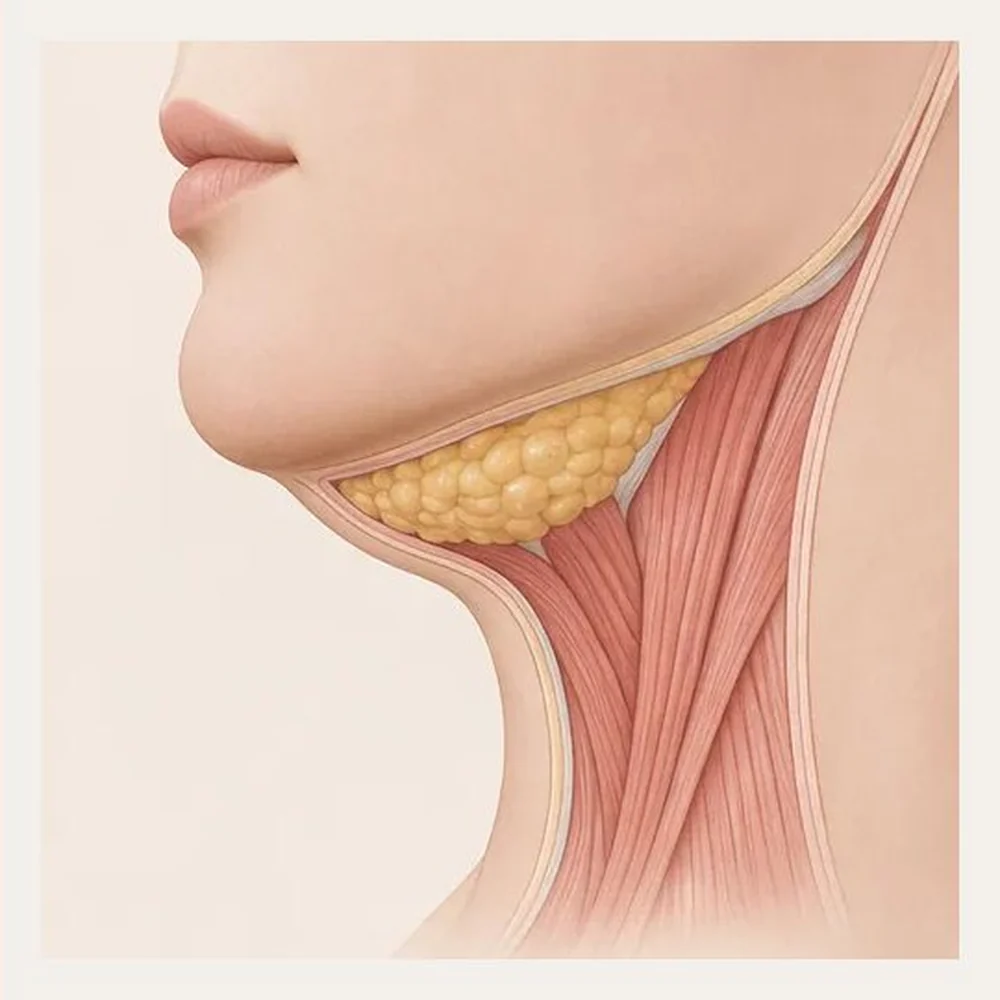
| Under-Chin Fat | Rounded fullness under the chin | Whether fat is the main cause or skin and muscle concerns are also present |
Can injections smooth vertical bands, then?
03Can injections smooth vertical bands?
Answer They can temporarily reduce muscle movement, but cannot reposition loose skin or separated muscle.
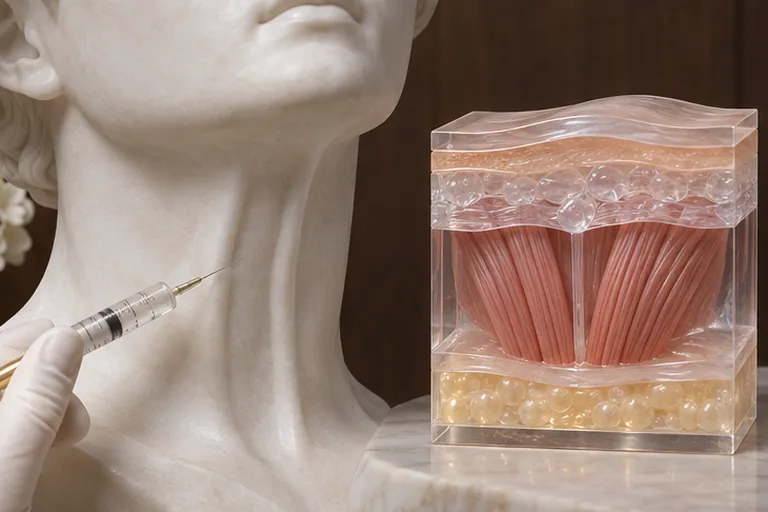
Injections into the muscle to reduce platysma movement have been used in several studies. When bands become prominent only with muscle contraction, reducing movement may soften their appearance, but the effect lasts only while the medication is active. Injections do not restore stretched skin, muscle separated at the midline, or a sagging contour under the chin to their original positions.
It can therefore help to reframe the question. Before asking “injections or surgery,” we first check whether the bands appear only with movement or are visible at rest, and whether sagging skin under the chin is also present. VITAL Plastic Surgery’s neck lift guide recommends a consultation when prominent vertical neck bands are accompanied by a less defined contour under the chin or turkey neck–like sagging.
Conversely, if there is little sagging and only horizontal lines, we do not recommend a neck lift right away. In that case, the first step is to consider treatments for the skin where the lines are etched. In either case, we do not say that one treatment will eliminate every line; we explain which features may improve and which may remain.
- Whether the bands appear only with muscle contraction or are also visible at rest
- Whether loose skin under the chin sags like a turkey neck
- Whether the boundary between the jawline and neck has become less defined
- Whether horizontal lines are also present and how deep they are
How, then, does a neck lift address vertical bands?
04How does a neck lift address vertical bands?
Answer A small incision under the chin allows the separated muscle to be brought together at the midline and secured. If skin sagging is significant, an incision behind the ears is added.
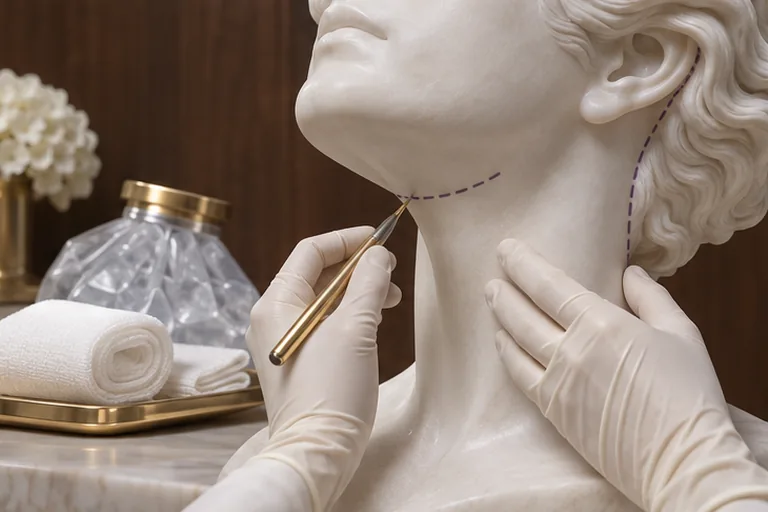
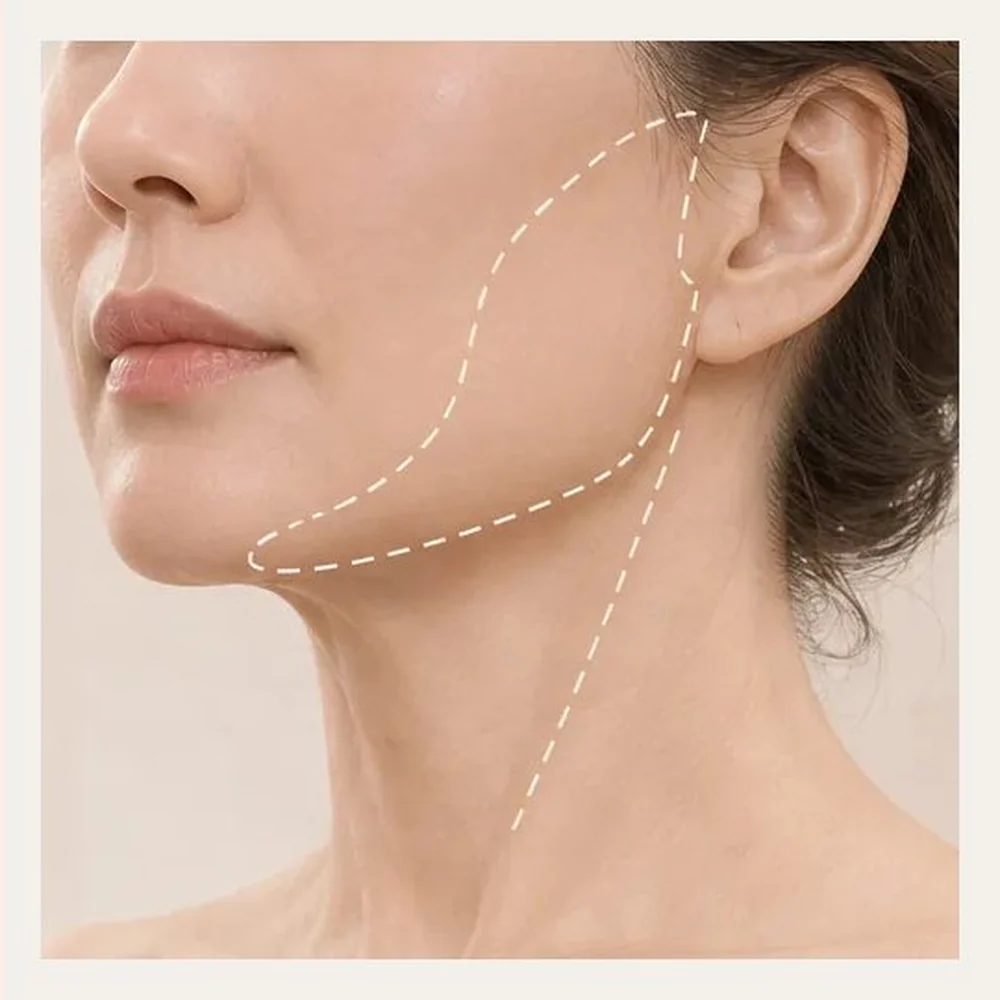
VITAL Plastic Surgery tailors the steps of a neck lift to the condition. When platysma bands are prominent, their location and the extent of separation are marked with the chin raised. A small incision is then made near the crease under the chin to bring the separated muscle together at the midline and secure it. This creates a corset-like structure supporting the area under the chin, which is why it is called a “neck corset.”
If skin sagging is significant, an incision is made behind the ears along the hairline, the tissue beneath the neck skin is dissected, and the fascia is pulled upward and backward and secured before excess skin is trimmed. If facial sagging is also present, incisions around the ears and under the chin allow the deeper facial tissues to be lifted and the platysma to be brought together to create a continuous contour under the chin.
The salivary glands under the chin are usually preserved even if they appear to sag. We consider whether removing a healthy structure is appropriate, first identify the tissues to preserve, and then determine the extent of surgery. If prominent salivary glands are a concern, we assess whether nonsurgical options such as Botox can be considered first. Surgery takes approximately 4 hours, is performed under sedation, and allows you to return home the same day.
- For prominent platysma bands: A small incision is made under the chin to bring the separated muscle together at the midline and secure it, contour the fat under the chin, and close the incision with fine sutures
- For significant skin laxity: An incision is made along the hairline behind the ear to pull the fascia upward and backward, secure it, and remove excess skin
- When facial sagging is also present: Incisions are made around the ears and under the chin to lift the deeper facial layers and bring the platysma muscles together to connect the contour beneath the chin
- In all three cases, the salivary glands are preserved whenever possible, and the specific approach and extent are determined after an examination
Can I treat just my neck, or should I have my face treated too?
05Can I treat just my neck, or should I include my face?
Answer Whether you have a turkey neck helps determine whether to treat the face as well.

When neck concerns are significant, treating the face alone may not sufficiently improve the transition between the jawline and neck. Sagging along the line from the chin to the neck helps determine whether to combine the procedures. If facial sagging is minimal and the neck is the main concern, we may plan a neck lift alone. Adding a facelift increases surgery time and recovery demands, and we explain those differences as well.
Research has also compared approaches to neck surgery. A meta-analysis of nine studies involving 847 patients compared approaches with and without an incision under the chin. When combined with liposuction, the approach with an incision under the chin had a higher FACE-Q neck satisfaction score: 81.5 versus 77.52. The approach without an incision under the chin or liposuction had the highest score, but the authors noted that this could reflect the selection of patients with milder concerns and emphasized the importance of an individualized plan.
Ultimately, the condition of your neck matters more than the name of the procedure. Whether the main cause is skin laxity, muscle bands, or fat under the chin determines whether a corset platysmaplasty alone is appropriate, an incision behind the ears should be added, or the face should be treated as well.
- When neck surgery alone is considered: Facial sagging is minimal, and vertical bands or sagging beneath the chin are the main concerns
- When the face is considered as well: A turkey neck is present, and definition has been lost along both the jawline and the neck
- When the neck remains a concern after a facelift: The neck is reassessed separately to determine the extent of treatment
- The longer surgery time and greater recovery demands of combining procedures are also explained for comparison
When will my neck feel more comfortable after surgery, and how long will the results last?
06When will my neck feel comfortable after surgery, and how long will the results last?
Answer The neck may feel firm and tight between three weeks and three months, then soften over three months to one year.

After a neck lift, tissues heal and may feel increasingly firm and tight between 3 weeks and 3 months. They then soften over the following 3 months to 1 year. Re2O is used to support recovery after 4 weeks, and scar care begins one month after surgery and continues with injections and laser treatments. The scar under the chin lies in its shadow, but it is still present. It is initially red and firm and matures over several months or longer.
There is something to discuss candidly about how long results last. A study that reassessed 50 facelift patients after 5.5 years found that correction along the jawline and nasolabial folds was largely maintained, but 69% of the improvement in the angle between the chin and neck had been lost, making the neck the first area to loosen3. Because the neck moves frequently, it is helpful to understand before surgery that changes can continue afterward.
We document and monitor your progress. We first record your condition before surgery, previous treatments, and the changes you hope to achieve. Early on, we provide wound care instructions and explain which symptoms require you to contact us. Later, we compare changes in discomfort and function as well as photographs. The need for additional care is explained based on your condition rather than applying the same plan to everyone.
| Timing | What Happens | What to Keep in Mind |
|---|---|---|
| 3–4 days after surgery | Peak Swelling | Sleep with your head slightly elevated, and use compression only when instructed for your procedure |
| 7–10 Days | Sutures are removed after 5–7 days on the face and 10–14 days on the scalp. | Return to daily activities is generally around 10 days, with individual variation |
| 3 weeks–3 months | Firmness and tightness may increase | Re2O at three weeks; scar care begins at one month |
| 3 months–1 year | Tissues soften and scars mature | Follow-ups at 1, 3, and 6 months and 1 year |
When is a neck lift not recommended?
07When is a neck lift not recommended?
Answer We do not recommend a neck lift right away when there are only horizontal lines with little sagging, or when fat under the chin is the main concern.

If fat under the chin, such as a double chin, is the main cause, we consider liposuction to reduce the amount of fat. If muscle bands or excess skin are substantial, we also consider a corset platysmaplasty or neck lift. Tightening only the skin when fat is the main cause, or removing only fat when the skin is loose, may not adequately improve the neck contour. We also do not recommend surgery right away when health conditions such as high blood pressure or diabetes need to be controlled first, or when it is difficult to allow enough time for recovery.
Risks of a neck lift include hematoma, scarring, asymmetry, changes in sensation, and possible nerve injury. This is not a complete list. If you have difficulty breathing or sudden, severe swelling on one side after surgery, contact us immediately rather than waiting. We do not promise changes identical to photographs or another person's results. We explain both the extent of improvement that may be possible and the wrinkles that may remain.
- When there are only horizontal lines with little sagging
- When fat beneath the chin appears to be the main concern
- When health conditions such as high blood pressure or diabetes need to be controlled first
- When it is difficult to allow enough time for recovery
08Three things we check first during your consultation
What we assess first during consultation
- Identify the cause: vertical muscle bands, horizontal skin lines, or fat under the chin
- Assess whether to treat the neck alone or include the facial contour, based on whether a turkey neck is present
- Explain which skin wrinkles may remain after surgery
These are general care principles. The actual decision is made after an examination.
When other care is needed first We do not recommend a neck lift right away when there are only horizontal lines with little sagging, fat under the chin appears to be the main concern, health conditions such as high blood pressure or diabetes need to be controlled first, or it is difficult to allow time for recovery. For horizontal lines, we first consider skin treatments such as Re2O or fat grafting for neck wrinkles. For fat under the chin, we first consider liposuction.
The answer to the opening question, “Can injections smooth out these vertical bands, or do I need surgery?” is this: Vertical bands are usually bands of the muscle at the front of the neck. Injections only temporarily reduce movement; they do not reverse muscle separation or stretched skin. If the bands are accompanied by sagging under the chin, a corset platysmaplasty or neck lift is considered first. If there are only horizontal lines with little sagging, skin treatments are considered first.
— VITAL Plastic Surgery
When booking, simply leave a note saying, “Please first check whether these are vertical bands or sagging skin,” and we will start there during your consultation. You do not need to make a decision on the day of your consultation.
Related ReadingNeck Lift · Platysmaplasty Consultation Information
READ NEXT
Read Next
FAQ
Frequently Asked Questions
Will a neck lift eliminate all vertical neck lines?
Etched-in skin wrinkles, muscle bands, and sagging skin are different concerns. We explain what can improve and which lines may remain after surgery.
How is this different from double chin liposuction?
Liposuction reduces the amount of fat under the chin, while a neck lift also addresses loose skin and the platysma muscle. If muscle bands or excess skin are significant, a corset platysmaplasty or neck lift may also be considered.
How long does neck tightness last after surgery?
Firmness and tightness may increase between 3 weeks and 3 months, then gradually soften over 3 months to 1 year. Contact us immediately if you have difficulty breathing or sudden swelling on one side.
Are the salivary glands under the chin also removed?
They are usually preserved. If prominent salivary glands are a concern, we first assess whether nonsurgical options such as Botox can be considered.
When is Re2O given in the neck?
Re2O is used to support recovery after surgical swelling has subsided, usually after 4 weeks. Scar care begins one month after surgery and continues with injections and laser treatments. Because the neck has many blood vessels, care is taken with injection techniques to reduce bruising.
BEFORE CONSULTATION
What to Prepare Before Your Consultation
- Two photos of your neckPlease prepare one photo with your head held comfortably upright and another with the corners of your mouth tensed to reveal the bands.
- Your main concernWrite down which concerns you most: vertical bands, horizontal lines, or sagging under the chin.
- Previous treatment recordsPlease tell us about any neck injections, fillers, thread treatments, or liposuction you have had, and when.
- Health conditions and medicationsPlease tell us whether you have high blood pressure or diabetes, take anticoagulants, or use herbal medicines or supplements such as omega-3.
- Recovery TimelineStitches are removed after 5–7 days on the face and 10–14 days on the scalp. Return to daily activities typically takes about 10 days, though this varies by person.
REFERENCES
References
- Minelli L, Wilson JL, Bravo FG, et al. The Functional Anatomy and Innervation of the Platysma is Segmental: Implications for Lower Lip Dysfunction, Recurrent Platysmal Bands, and Surgical Rejuvenation. Aesthetic Surgery Journal. 2023. doi:10.1093/asj/sjad148 (View abstract)
- Fiore G, Naderi N, Reed B, Laird LA, Das-Gupta R. A Systematic Review and Meta-Analysis of the Role of Open Platysmaplasty in Facelift and Necklift Surgery: Comparative Outcomes of Closed- vs Open-Neck Rejuvenation With Liposuction Using FACE-Q Scales. Aesthetic Surgery Journal Open Forum. 2026. doi:10.1093/asjof/ojag140 (View abstract)
- Jones BM, Lo SJ. How long does a face lift last? Objective and subjective measurements over a 5-year period. Plastic and Reconstructive Surgery. 2012. doi:10.1097/PRS.0b013e31826d9f7f (View abstract)
The findings in these papers reflect the participants and conditions of each study and do not mean that every individual will have the same results.
This article provides general medical information and does not replace diagnosis or treatment. Surgical results and recovery vary by individual, and complications such as bleeding, infection, scarring, and asymmetry may occur.
More articlesVITAL Plastic Surgery Medical Articles
RESERVATION
You do not need to decide the day of your consultation.
Organize questions about this page without entering your name, contact information, or medical history. This does not submit an appointment request.