PLASTIC SURGERY
MEDICAL COLUMN
Questions Answered Directly by the Doctor Before You Decide on Surgery
Eyes
Articles
Eyelid Surgery in Middle Age: Can Hooded Eyes Be Opened Up Without Looking Like You've Had Surgery?
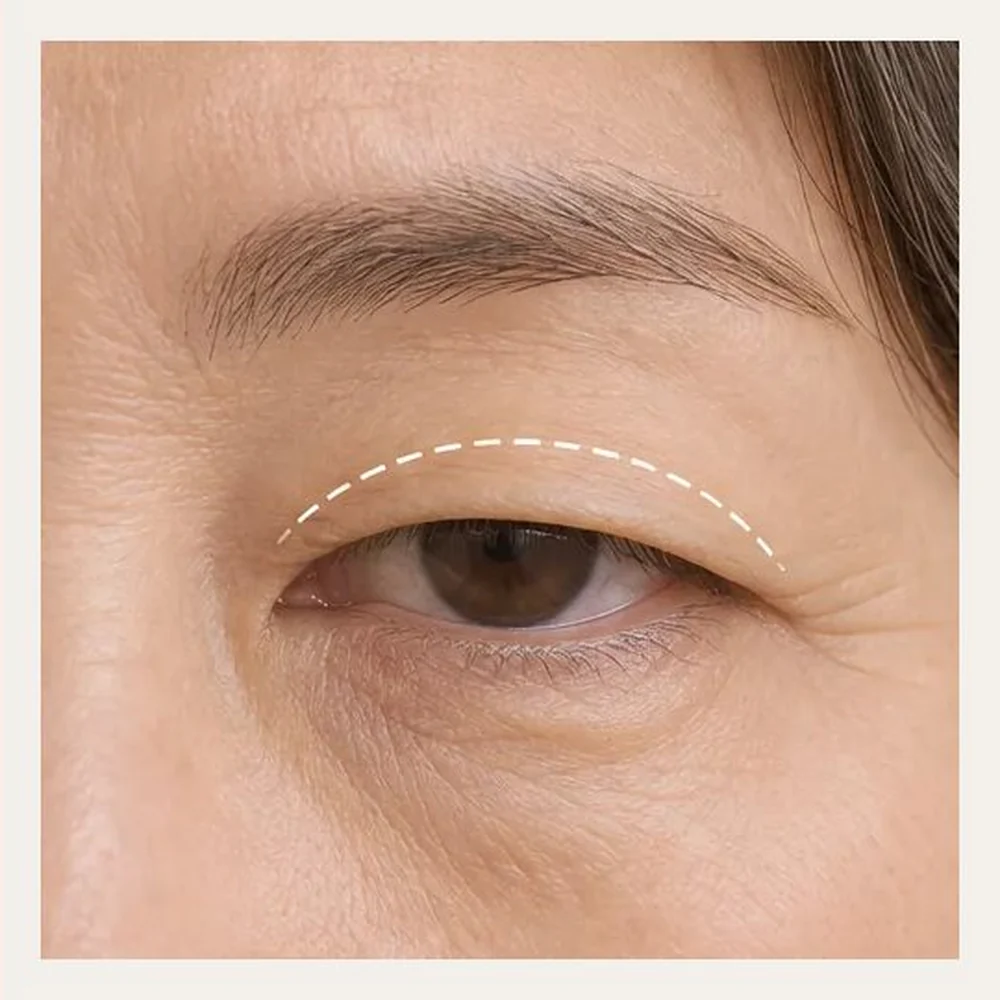
The goal of eyelid surgery in middle age is to address hooded eyelids for a more relaxed appearance, rather than simply creating an eyelid crease. Correction is also possible with no visible crease or a very low, hidden crease.
Medically reviewed by Dr. Hyungwoo Yim, Medical Director (board-certified plastic surgeon) · Published November 2, 2026 · Last reviewed November 11, 2026
SHORT ANSWER
First, the Short Answer
- The goal of eyelid surgery in middle age is to address hooded eyelids for a more relaxed appearance, rather than simply creating an eyelid crease. Correction is also possible with no visible crease or a very low, hidden crease.
- However, your appearance may change somewhat as more of the previously covered iris becomes visible and raised eyebrows settle lower. The goal is to reduce the hooded, sleepy appearance while preserving your overall look, rather than making you look like a different person.
- At VITAL Plastic Surgery, we first discuss your preferred appearance—no visible crease, a low, hidden crease, or a visible crease. We then assess skin hooding, eyelash direction, eyelid lifting strength, forehead muscle use, and skin thickness to determine which steps are needed: removing excess skin, creating a crease, or correcting ptosis.
“Wouldn't a new eyelid crease look awkward at my age? I don't want it to look like I've had surgery.”
This is a paraphrase of a question we often hear during consultations.
To answer this question, we first need to distinguish where your current concern comes from. We will explain each point below, then return to the original question at the end.
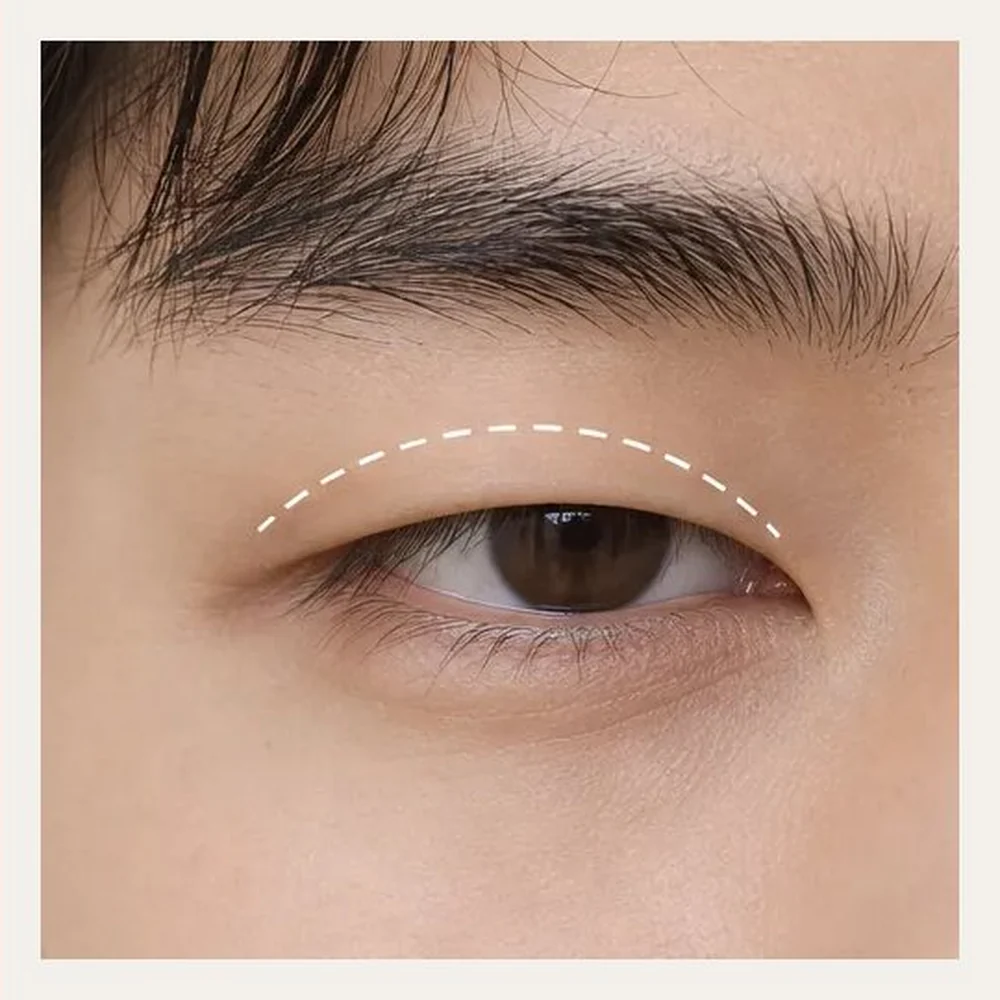
01What comes before appearance when assessing eyelid surgery in middle age?
Answer We first assess how much the eyelid covers the iris and whether this causes functional problems.
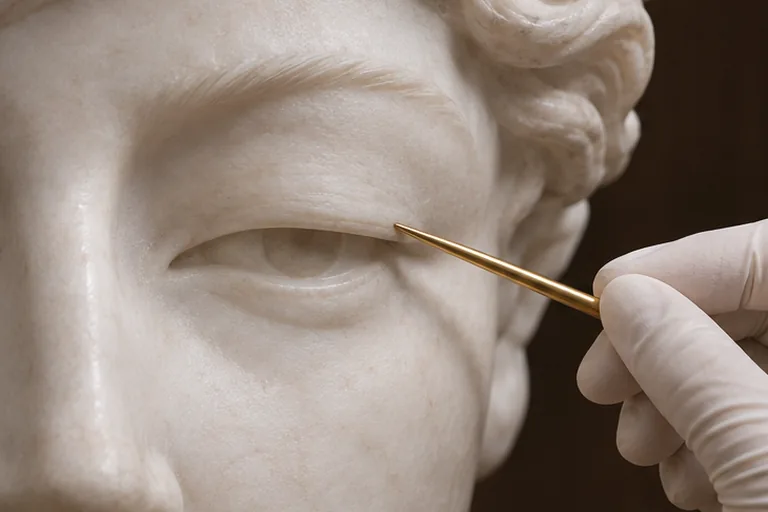
As you age, or when skin on an eyelid without a crease hangs over the eye, the eyelashes can poke the eye and the skin can obstruct the field of vision. You may then use your forehead muscles without realizing it, which can lead to eye and neck pain or fatigue. This is why the consultation begins by measuring how much of the iris is visible, rather than discussing the shape of a crease.
Drooping eyelids are common from middle age onward. A study evaluating photographs of 5,578 older adults living in Rotterdam, the Netherlands (average age 67.1), found moderate or greater drooping, with eyelid skin extending over the eyelashes, in 17.8%. In addition to age, male sex, lighter skin color, and a higher body mass index were identified as independent risk factors1. An analysis of 1,052 pairs of British twins estimated that genetic factors accounted for 61% of eyelid drooping1.
Even when drooping looks similar, the approach differs depending on whether excess skin is covering the eye or the eyelid has reduced lifting strength. If MRD1 (the distance from the center of the pupil to the upper eyelid margin) is within the normal range of about 4 mm, muscle strength is considered adequate, and the condition is viewed as pseudoptosis caused by overlying skin. Removing excess skin is considered first. Some people also feel that their vision has worsened, so an ophthalmology evaluation may be recommended when needed.
An eyelid crease is more than a cosmetic feature. It also helps lift the eyelashes away from the eye as the eyelid moves up and down. This function also guides decisions about crease height in eyelid surgery in middle age.
In Simple Terms Drooping eyelids in middle age are like a window blind lowered halfway. The goal is to raise the blind, rather than draw a new pattern—an eyelid crease—on it. There needs to be a place for the blind to fold up, but that point can be set low enough to be barely visible from the outside. If the blind's fabric is thick, lifting it from the upper rail—a sub-brow lift—may sometimes be preferable to folding it from below.
How, then, can an obvious surgical look be minimized?
02How can an obvious surgical look be minimized?
Answer Hooding alone can be addressed with no visible crease or a very low, hidden crease.

A visible eyelid crease is not essential for eyelid surgery in middle-aged men. Hooding can also be addressed with no visible crease or a very low, hidden crease, which can reduce concerns about a change in appearance. If you prefer a visible crease, the procedure is planned accordingly.
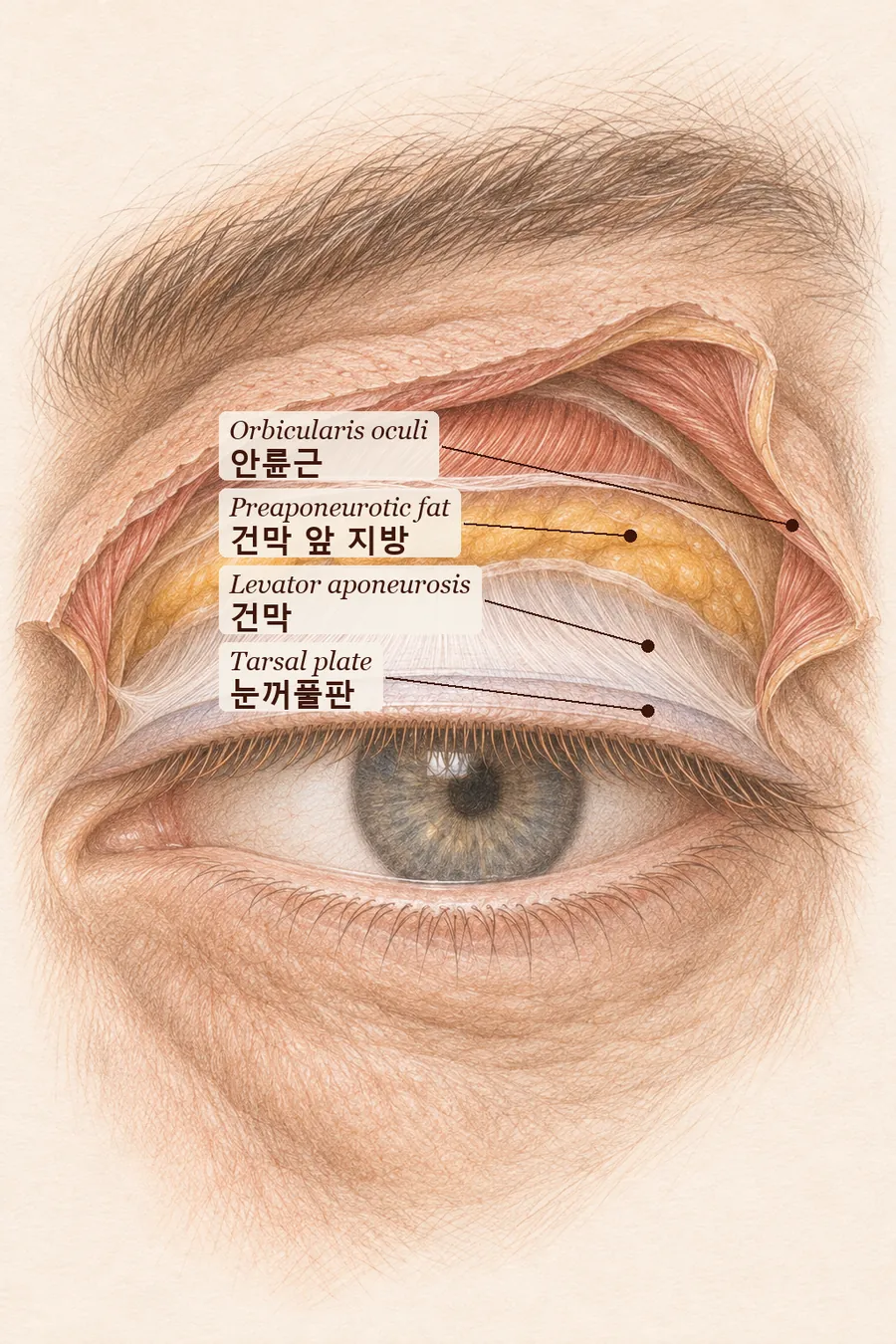
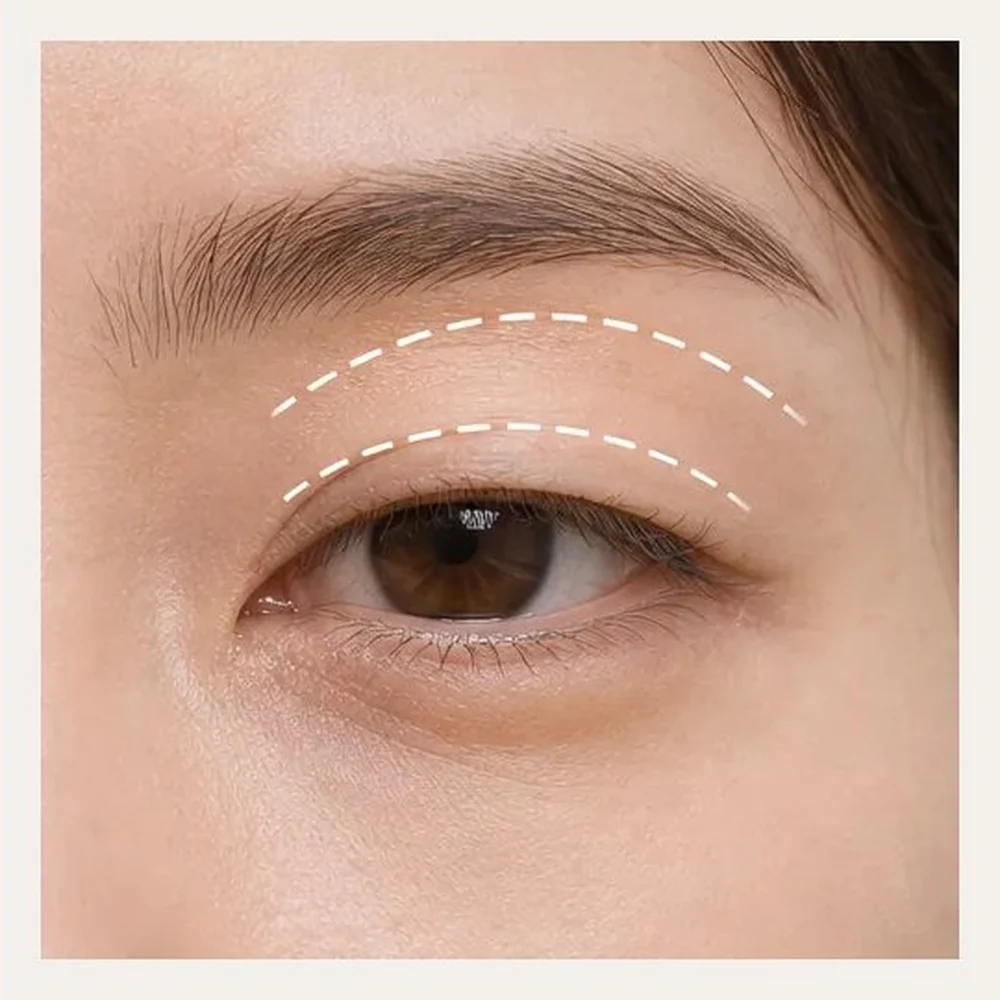
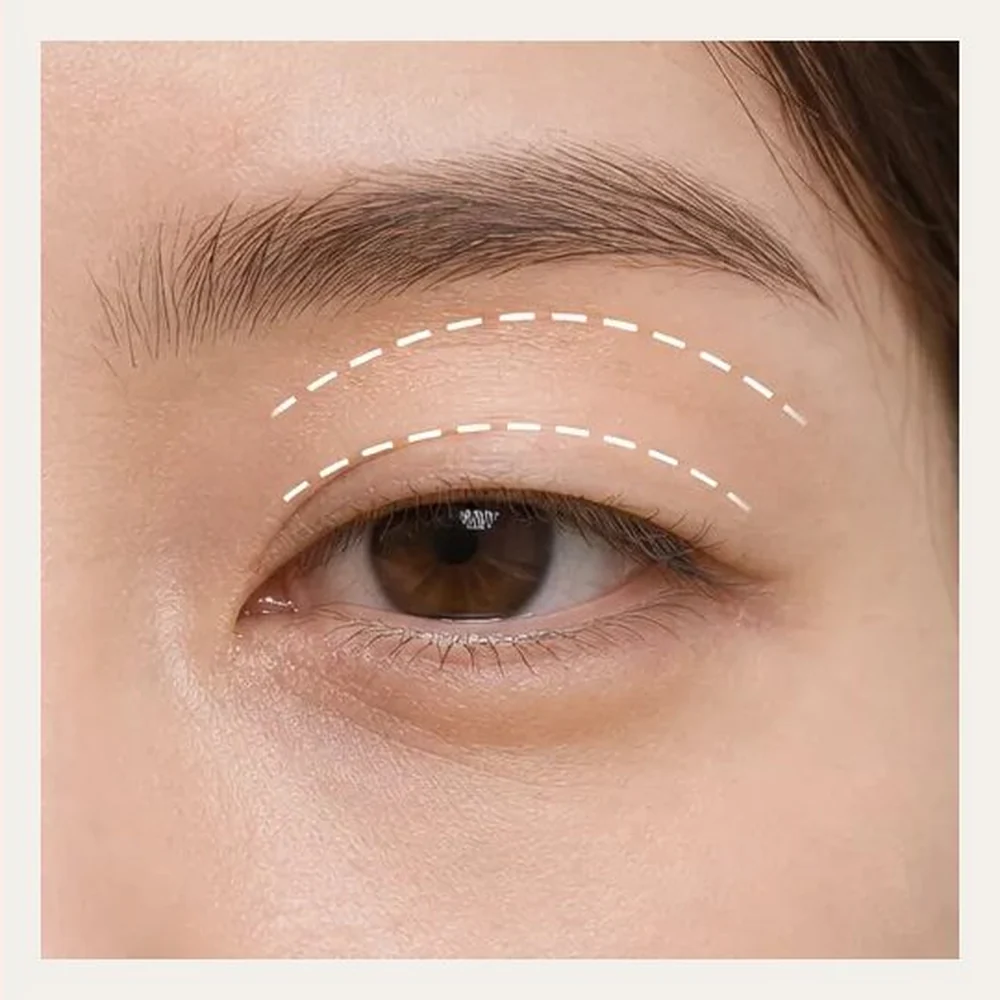
When skin covers the eye, we measure the excess skin and eyebrow position, then mark the width of skin to remove. An incision is made along a low crease to remove excess skin and orbicularis oculi muscle (the muscle surrounding the eye). The tissue is then secured so the crease remains hidden or low, and the incision is closed with sutures.
A less obvious surgical result depends on more than crease height. A natural-looking crease should be dynamic: it folds with the muscle when the eyes open and unfolds when they close. A static crease that remains indented even with the eyes closed can look surgical, so fixation is planned to avoid tightly anchoring the skin to deeper layers.
The amount of skin removed also matters. Only the amount needed is removed, while allowing the eyes to close properly. Removing more skin does not necessarily make the eyes look more open. Excessive removal can cause incomplete eyelid closure, known as lagophthalmos, or dryness.
Does the approach change, then, for thick eyelids?
03Does the approach change for thick eyelids?
Answer It can. If heaviness would remain after removing skin at the eyelid crease, a sub-brow lift is considered as an alternative.
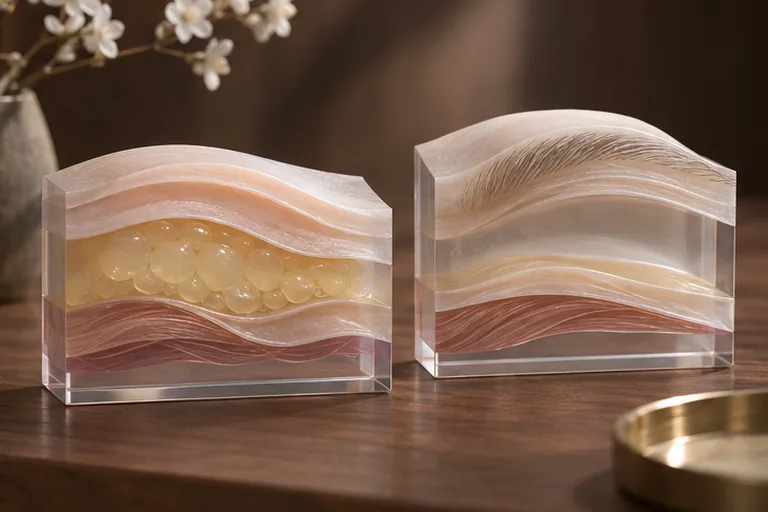
Men often have thicker skin and tissue beneath the eyebrows, so heaviness may remain even after skin is removed at the eyelid crease. In these cases, we consider a sub-brow lift, which involves an incision below the eyebrow to lift sagging skin and muscle layers and secure them toward the forehead muscle.
A sub-brow lift has the advantage of not requiring an eyelid crease, but it leaves an incision along the eyebrow border. Both factors are weighed when choosing an approach, and we discuss which scar location you would find more acceptable.
A sub-brow lift begins by marking an incision along the lower eyebrow border. The incision is made and excess sagging skin is removed. The orbicularis oculi and muscle layers are then pulled upward and secured toward the forehead muscle, followed by fine suturing along the eyebrow border. Support is placed on the muscle layer, rather than pulling on the skin alone, to reduce tension on the incision.
When eyelid lifting strength is weak, removing excess skin alone leaves a hooded appearance. In this case, MRD1 is measured to check for ptosis. Through a low incision, the eyelid lifting muscle and its aponeurosis (the thin sheet connecting the end of the muscle to the tarsal plate inside the eyelid) are secured to the tarsal plate to adjust eyelid height. A low, hidden crease is then formed.
As shown in the table below, the approach depends on the cause of hooding and the desired appearance. One method is not used for every middle-aged patient's eyelids.
| Eyelid Condition | How it looks | Approach Considered First |
|---|---|---|
| Skin covers the eye | Skin hangs over the eyelashes, restricting the field of vision | Remove excess skin and orbicularis oculi muscle through a low crease incision |
| Thick eyelids with no desire for a visible crease | Heaviness is likely to remain after skin removal | Consider a sub-brow lift |
| Weak eyelid lifting strength | Forehead effort is needed to open the eyes, creating a sleepy appearance | Ptosis correction + a low, hidden crease |
How much, then, will my appearance change after surgery?
04How much will my appearance change after surgery?
Answer Your appearance may change somewhat as more of the iris becomes visible and raised eyebrows settle lower. We account for these changes together before surgery.
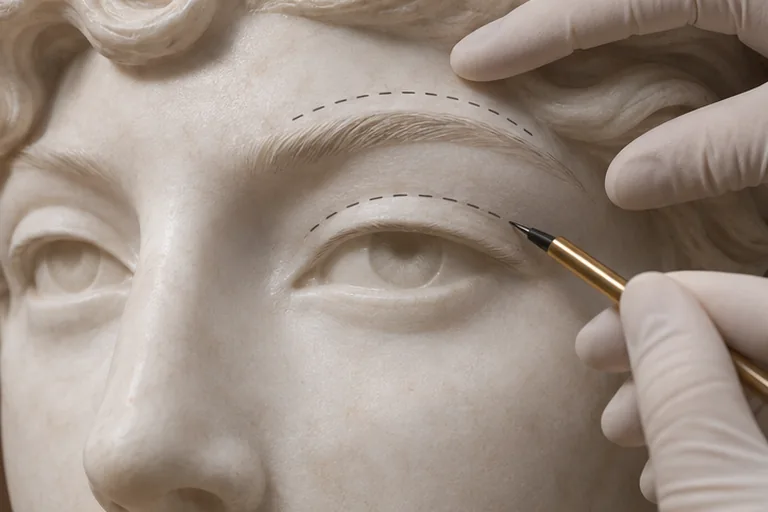
If you have long relied on raising your brows to open your eyes, your brows may lower after eyelid surgery as you use your forehead muscles less. This can bring the eyes and brows closer together and change your appearance. Accounting for this change before surgery helps determine the appropriate amount of skin to remove and the crease height.
Studies have also reported that eyebrows settle lower after eyelid surgery. A meta-analysis of 17 studies found an average decrease in eyebrow height of approximately 0.67 mm after upper blepharoplasty alone, 2.52 mm after double eyelid surgery, and 2.10 mm after ptosis correction3. The amount also differed depending on whether skin was removed at the same time3.
For those concerned about changes in appearance, we review photographs together. Reviewing how the iris and eyelid may look with the eyes open, and how far the eyebrows may settle, before deciding on crease height can help reduce the difference between expectations and results.
The goal is to reduce the hooded, sleepy appearance while preserving your overall look. Tell us what bothers you most and which aspects of your appearance you want to keep, and we will use those priorities to determine the scope of surgery. We do not promise to recreate someone else's eyes or exactly match your eyes when you were younger.
What if my family encouraged me to come—do I need surgery?
05My family encouraged me to come. Do I need surgery?
Answer If there are no functional problems and little discomfort, observation is an option. We first explain your condition using photographs.

Middle-aged men often come in for a consultation at their family's suggestion, and many initially say they are fine. Most come because someone has told them there is a problem with their eyes, so we look at photos together and start by explaining how much the eyelids cover the pupils.
This helps distinguish what needs treatment from what does not. If the drooping lids obstruct vision and cause you to use your forehead muscles, the goal is to address the functional problem. Otherwise, we explain that monitoring is an option.
Even after explaining the options, we do not recommend surgery if the patient does not want it. The same applies when the desired appearance differs greatly from what is medically achievable. You do not need to decide on the day of your consultation.
On the other hand, we do not recommend putting off evaluation when there is a clear functional problem. If your eyelids cover your pupils enough to affect your vision, or forehead and neck fatigue interferes with daily life, it is a good idea to have an examination regardless of whether you choose surgery. Even then, we do not recommend surgery simply because you should hurry before getting older.
We recommend a consultation if people often say you look sleepy, you have deep forehead wrinkles and need to strain to open your eyes, your eyelashes poke your eyes, or your field of vision feels obstructed.
When can I return to work, and what is recovery like?
06When can I return to work, and what is recovery like?
Answer You may be able to return to light work after 2–3 days, but three days off does not guarantee that you will be ready to return to in-person work.

Stitches are usually removed on days 5–7, and swelling and bruising are at their worst on days 3–4. A week off may allow you to consider some eyelid procedures, but swelling and bruising may remain. Two weeks or more gives you more flexibility. If you have an important event, please schedule your consultation further in advance.
Recovery involves changes of varying severity. A study at an Austrian institution used a standardized grading system to assess 344 patients who underwent surgery on both upper eyelids under local anesthesia. When minor changes that deviated from normal recovery but required no medication or treatment were included, 58.4% experienced at least one such event. Eighteen patients (5.2%) underwent another procedure under local anesthesia, and one (0.3%) underwent repeat surgery under general anesthesia2. This study also shows that the numbers can vary considerably depending on how complications are counted.2.
Follow-up care continues in stages. Within the first week, we check the wound, bleeding, infection, and early function, and remove the stitches. Around one month, scars begin to tighten and become firm, so we assess them and begin treatments to support healing if needed. Around three months, we consider the scars to be in a transitional phase and evaluate whether to continue injections or laser treatment. At six months, we compare the results with the initial photos to determine whether further treatment is needed. At one year, we assess the long-term results after the tissues have settled.
For this reason, VITAL Plastic Surgery documents your condition before surgery, checks early wound healing and tissue responses, and monitors recovery by comparing changes in discomfort and function as well as photos. We do not recommend the same additional treatments for everyone.
| Timing | What Happens | What to Keep in Mind |
|---|---|---|
| 2–3 days after surgery | Light daily activities and work may be possible | Swelling and bruising may remain |
| 3–4 days after surgery | Swelling and bruising are at their worst | Sleep with your head slightly elevated and gently apply cold compresses |
| Days 5–7 | Suture removal if an incision was made | Allow extra time before important in-person commitments |
| 3 weeks–3 months | A period of tissue firmness and tightness | Sauna after 1–2 weeks; strenuous exercise after 1 month |
| 3 months–1 year | Tissues soften and the two sides become more even | Follow-ups at 1, 3, and 6 months and 1 year |
Then when would you avoid proceeding directly with surgery?
07When should surgery be postponed?
Answer We do not recommend proceeding right away if there is no functional problem, you do not want surgery, or you have a health condition that needs to be managed first.
We also explain the risks and limitations of surgery. Asymmetry, changes in the eyelid crease, swelling, bruising, scarring, and undercorrection can occur, and this is not a complete list of possible risks. If you experience sudden severe pain, decreased vision, bleeding that will not stop, or rapidly worsening swelling on only one side, contact us immediately instead of waiting for your scheduled appointment.
In the following situations, we determine what needs to be addressed before surgery.
- When there is no functional problem and little discomfort
- When you still do not want surgery after the explanation
- When it is difficult to allow enough time for recovery
- When health conditions such as high blood pressure or diabetes need to be controlled first
- When symptoms require an ophthalmologic evaluation first
08Three things we check first during your consultation
What we assess first during consultation
- Overhanging skin and eyelash direction
- Eyelid opening strength and forehead muscle use
- Desired appearance and skin thickness
These are general care principles. The actual decision is made after an examination.
When other care is needed first If there is no functional problem and discomfort is minimal, monitoring comes before surgery. Symptoms such as decreased vision that require an ophthalmic evaluation should be assessed by an ophthalmologist first. If high blood pressure or diabetes needs to be controlled, that takes priority. If your desired appearance differs greatly from what is medically achievable, we explain that difference first.
The answer to the opening question, “Wouldn't it look unnatural to develop an eyelid crease at my age?” is this: eyelid surgery for middle-aged adults is intended to open eyes obscured by drooping lids, rather than create a crease, so it can be planned with no visible crease or a very low, hidden crease. However, the approach and the change in appearance depend on eyelid opening strength, eyelid thickness, and the possibility of the eyebrows lowering, so an in-person examination is needed to decide. If functional problems are minor, monitoring is also an option.
— VITAL Plastic Surgery
When booking, simply leave a note saying, “I'd like a subtle result. Please assess my drooping eyelids first,” and we will start there during your consultation. You do not need to decide on the day of your consultation.
Related ReadingMen's Eyelid Surgery Consultation Guide
READ NEXT
Read Next
FAQ
Frequently Asked Questions
Can I return to work after three days off without visible signs of surgery?
It is difficult to say for certain. A week off may allow you to consider some eyelid procedures, but swelling and bruising may remain. Two weeks or more allows more time for recovery.
Can you improve eyelid muscle function without creating a double eyelid crease?
In many cases, yes. Ptosis correction can be planned with a low, hidden eyelid crease or one that is not visible. There still needs to be a point where the eyelid folds, so its height is determined during the examination.
Will my appearance change?
Your appearance may change somewhat as more of the iris becomes visible and the eyebrows settle lower. The goal is to reduce the hooded appearance while preserving your overall look, rather than making you look like a different person.
Where will the scars be?
Incisions are placed along less noticeable boundaries, such as natural creases. With a sub-brow lift, the scar lies along the lower border of the eyebrow. Early redness gradually fades as the tissue settles.
Is the consultation approach the same for women?
The principle of assessing hooding and function first is the same. Crease height and shape are determined individually based on the desired appearance.
BEFORE CONSULTATION
What to Prepare Before Your Consultation
- Your preferred appearanceWrite down whether you prefer no visible crease, a hidden crease, or a visible crease, and any appearance you absolutely do not want.
- Symptoms and DiscomfortNote whether your eyelashes poke your eyes, your vision feels obstructed, you have forehead or neck fatigue, or people say you look sleepy.
- Work ScheduleLet us know in advance how much time you can take off and when you have important in-person commitments.
- Past photosA front-facing photo from a few years ago can help us compare changes in drooping.
- Medications and HealthTell us about your blood pressure and blood sugar, any anticoagulants or supplements you take, and your eye care records.
REFERENCES
References
- Jacobs LC, Liu F, Bleyen I, et al. Intrinsic and extrinsic risk factors for sagging eyelids. JAMA Dermatology. 2014. doi:10.1001/jamadermatol.2014.27 (View abstract)
- Eylert G, Wolfsberger C, Reischies-Meikl F, et al. The Postsurgical Clavien-Dindo Classification in Minor Surgery Can Improve Perception and Communication (Investigation on Blepharoplasty). Journal of Personalized Medicine. 2022. doi:10.3390/jpm12111900 (View abstract)
- Liu R, Sun Y, Huang J, et al. Brow Position Change and its Potential Risk Factors Following Upper Blepharoplasty: A Systematic Review and Meta-Analysis. Aesthetic Plastic Surgery. 2023. doi:10.1007/s00266-023-03288-0 (View abstract)
The findings in these papers reflect the participants and conditions of each study and do not mean that every individual will have the same results.
This article provides general medical information and does not replace diagnosis or treatment. Surgical results and recovery vary by individual, and complications such as bleeding, infection, scarring, and asymmetry may occur.
More articlesVITAL Plastic Surgery Medical Articles
RESERVATION
You do not need to decide the day of your consultation.
Organize questions about this page without entering your name, contact information, or medical history. This does not submit an appointment request.