PLASTIC SURGERY
MEDICAL COLUMN
Questions Answered Directly by the Doctor Before You Decide on Surgery
Eyes
Doctor’s Notes
Hollow Upper Eyelids: What to Assess Before Adding Volume
We assess not only upper eyelid volume, but also eyelid-opening strength, excess skin, and eyebrow position.
Medically reviewed · Dr. Hyungwoo Yim, Medical Director (Board-Certified Plastic Surgeon)
SHORT ANSWER
First, the Short Answer
- Before adding volume to hollow upper eyelids, we assess the cause. We do not add volume based on the depth of the hollow alone.
- We assess not only upper eyelid volume, but also eyelid-opening strength, excess skin, and eyebrow position.
- The evaluation begins by determining which tissues to preserve, which to reposition, and whether additional volume is needed.
- Rubbing your eyes offers no benefit.
“Doctor, my upper eyelids look deeply hollow and make me look tired. Can fat grafting fill them in?”
This is a paraphrase of a question we often hear during consultations.
This article walks through how we distinguish the causes of hollowing, what we assess before adding volume, and how the surgical steps vary by condition. Section 04 explains why we sometimes correct eyelid position before adding volume.
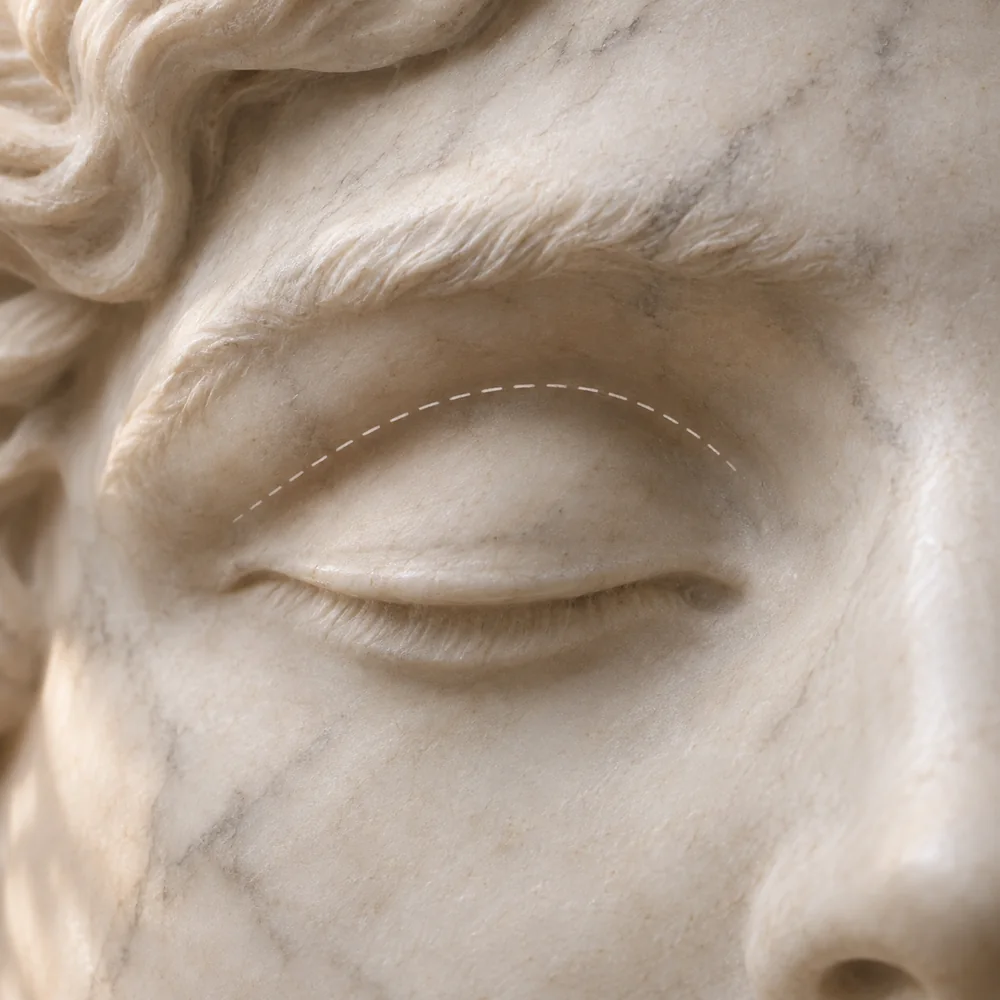
01Assess the Cause Before Adding Volume
Answer Before adding volume, we determine why the upper eyelids look hollow. Sometimes the cause is insufficient volume, but weak eyelid-opening strength often makes the hollowing appear more pronounced than it actually is.
We assess not only upper eyelid volume, but also eyelid-opening strength, excess skin, and eyebrow position.
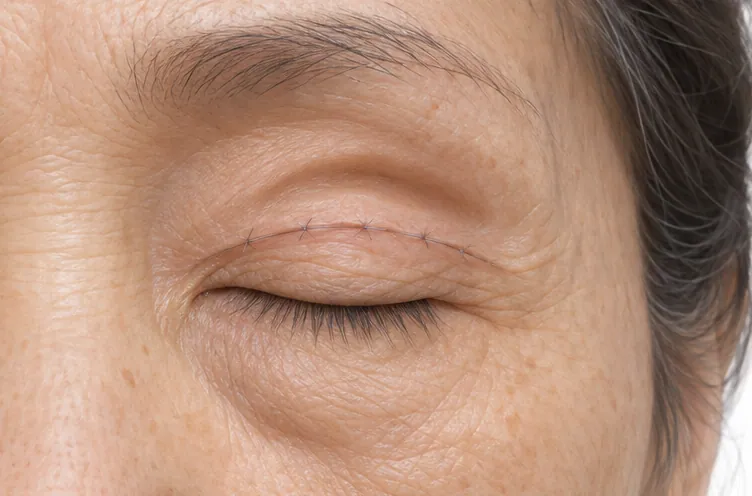
Hollow upper eyelids have a sunken appearance that can make you look tired and older. Insufficient volume can be the cause, but weak eyelid-opening strength often causes tissue inside the eyelid to fold upward, making the hollowing appear more pronounced than it actually is. Previous surgery may also have removed substantial amounts of fat or tissue, so we identify the cause before adding volume.
That is why I do not automatically add fat to hollow upper eyelids. I first assess function, restore the eyelid to its proper position, and then reassess volume.
Rubbing your eyes offers no benefit. It can make the eyelid crease less defined, cause styes, and make the eyes look sleepy and hollow, creating a cycle that also affects the eyelid-opening muscles. During surgery, I can see signs of frequent rubbing in the tissue.
We also provide guidance to help prevent the same habit from continuing after surgery.
Key point Before adding volume, we determine why the upper eyelids look hollow.
Why shouldn’t we fill a hollow based on its depth alone?
02We Do Not Add Volume Based on Hollow Depth Alone
Answer We do not add volume based on the depth of the hollow alone. We need to assess the amount and position of fat, the condition of the skin and muscles, eyelid-opening function, and the effects of previous surgery together.
Evaluating hollow upper eyelids requires assessing the amount and position of fat, the condition of the skin and muscles, eyelid-opening function, and the effects of previous surgery together. The evaluation begins by determining which tissues to preserve, which to reposition, and whether additional volume is needed.
- We assess whether the issue is simply insufficient fat or whether a change in tissue position is also involved.
- We examine eyelid-opening movement and eyelid position to check for functional factors such as ptosis.
- Even with similar hollowing, differences in excess skin, eyebrow position, scarring, and tissue damage may require different approaches.
We assess whether functional correction is needed and review volume in relation to the planned correction. After examining which tissues can be preserved or repositioned, we determine whether options such as microfat grafting are appropriate. We explain the effects of previous injections or surgery, the state of tissue recovery, and the limitations of additional treatment.
Dr. Hyungwoo Yim explains, “To identify the cause, we need to see whether the structures inside the eyelid are pulled upward and the hollowing becomes more pronounced when the eyes open, rather than assessing them only at rest.”
This general explanation is based on questionnaire responses from Medical Director Dr. Hyungwoo Yim. It does not replace an individual diagnosis.
Key point We separately assess which tissues to preserve, which to reposition, and how much volume to add.
How do we distinguish the causes of similar-looking hollowing?
03Similar hollowness can have different causes
Answer We assess the skin, fat, and eyelid-opening strength by layer. Problems in all three layers can coexist, so we do not assign each patient to just one type.
We assess the skin, fat, and eyelid-opening strength by layer. In the front layer, we preserve the remaining skin and orbicularis oculi muscle without excessive removal. In the middle layer, we assess fat position and volume loss to consider repositioning or supplementation. In the back layer, we assess eyelid-opening function and correct the muscle and aponeurosis if needed. Problems in all three layers can coexist, so we do not assign each patient to just one type.
- Volume and tissue position: We distinguish between insufficient fat and changes in its position.
- Eyelid-opening function: We assess eyelid position and movement for ptosis.
- Excess skin and eyebrow position: We assess both overhanging skin and lowered eyebrows.
- Vision · Eye closure · Dryness: We check for functional discomfort and assess the ocular surface.
- Previous surgery · Injected materials: We assess the effects of existing fillers, fat grafting, and surgery.
- Tissue damage: We check adhesions, scarring, and the stage of healing.
At your consultation, you can say, “I read the article on hollow upper eyelids. Please explain what you would assess first in my case.” We will walk you through the evaluation in the order described here.
Key point Problems in all three layers can coexist, so we do not assign each patient to just one type.
Once the causes are identified, in what order do we address them?
04How we assess upper eyelid hollowness
Answer We correct eyelid position before adding volume. If eyelid-opening strength is weak, adding only fat or filler can make the eyelid heavier, make it harder to open the eyes, and leave a sleepy appearance.
We correct eyelid position before adding volume. When eyelid-opening strength is weak, tissue inside the eyelid is pulled upward, making the upper eyelid look hollow. Adding only fat or filler in this state can make the eyelid heavier, make it harder to open the eyes, leave a sleepy appearance, and cause the skin to bunch up or become uneven.
- Detailed, individualized assessment of hollow upper eyelids: We assess volume, tissue position, eyelid-opening strength, skin, eyebrows, and previous surgery together.
- Functional correction first: If ptosis is involved, we first correct eyelid position with ptosis surgery.
- Repositioning · Supplementation: For remaining hollowing, we consider fat repositioning, microfat grafting, and, when needed, Re2O (mADM).
- Follow-up records: We document progress at 1, 3, and 6 months and 1 year to assess changes in volume and function.
The sequence and extent of treatment vary depending on each patient's condition.
The plan changes depending on the effects of previous surgery. When hollowing results from substantial skin or fat removal, adding volume alone is not enough. We assess the effects of excessive tissue removal and previous eyelid-opening function correction, then consider releasing adhesions and supplementing tissue. We first explain what can be improved and the limitations.
Here is how we explain recovery at each stage after surgery.
| Timing | What is happening in your body | What to do during recovery |
|---|---|---|
| 3–4 days after surgery | Swelling and bruising are at their worst. | Sleep with your head slightly elevated, and apply cold compresses gently without letting ice touch your skin or eyes directly. |
| Days 5–7 | If an incision was made, the sutures are removed. Swelling and bruising may remain. | Light daily activities are possible after 2–3 days. We recommend waiting until the day after suture removal to apply makeup. |
| 3 weeks–3 months | The tissue may feel firm and tight during this stage. This is part of the healing process. | We do not decide on revision surgery based on appearance during this period alone. Resume strenuous exercise and sauna use after 3–4 weeks. |
| 3 months–1 year | Tissues soften, redness fades, and the two sides gradually become more balanced. | We check your progress at 1, 3, and 6 months and 1 year. |
Recovery timelines are general estimates and vary by individual. Contact us immediately for sudden severe pain, decreased vision, bleeding that does not stop, or rapidly worsening swelling on one side.
Key point We assess function first, then decide on volume.
How do the actual surgical steps vary by condition?
05The Surgical Process Varies Depending on Your Condition
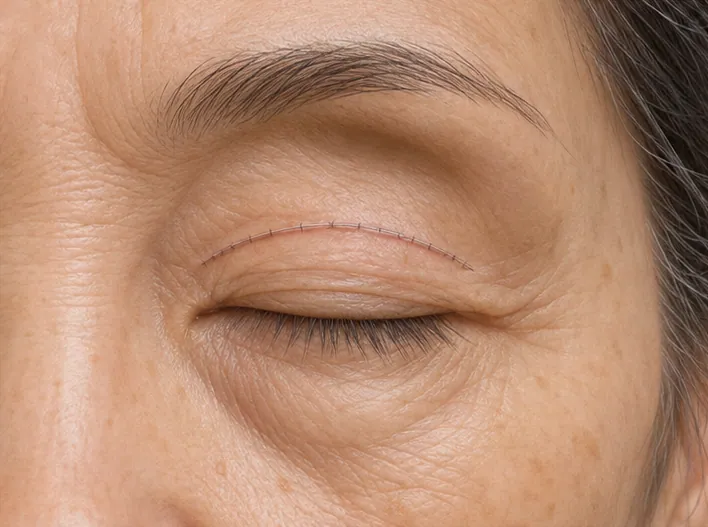
Answer The surgical steps differ depending on whether the hollow appearance is caused by weak eyelid-opening strength, displaced fat, insufficient volume, or previous surgery. Similar-looking hollowing can have different causes. The actual technique and extent of surgery are determined after an examination.
When weak eyelid-opening strength causes a hollow appearance
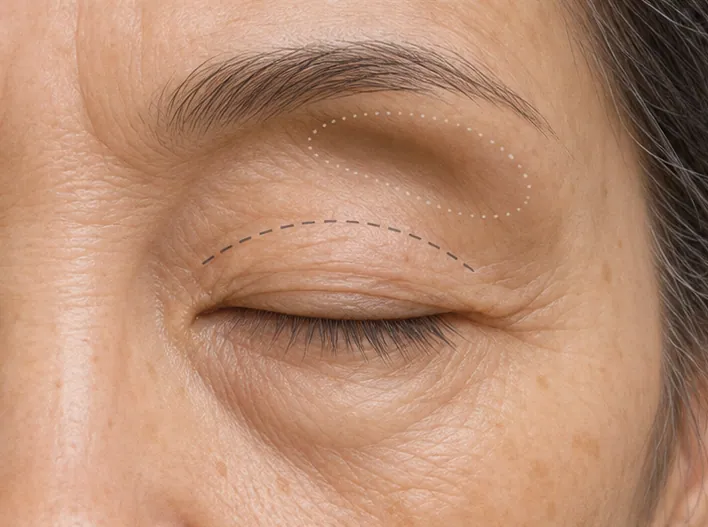
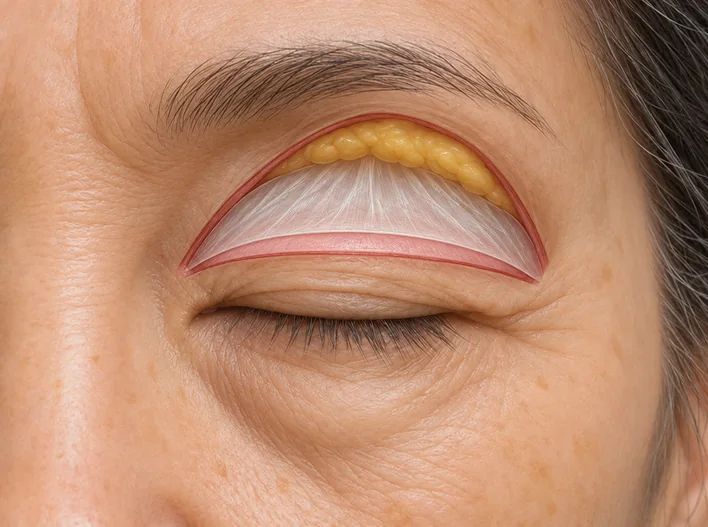
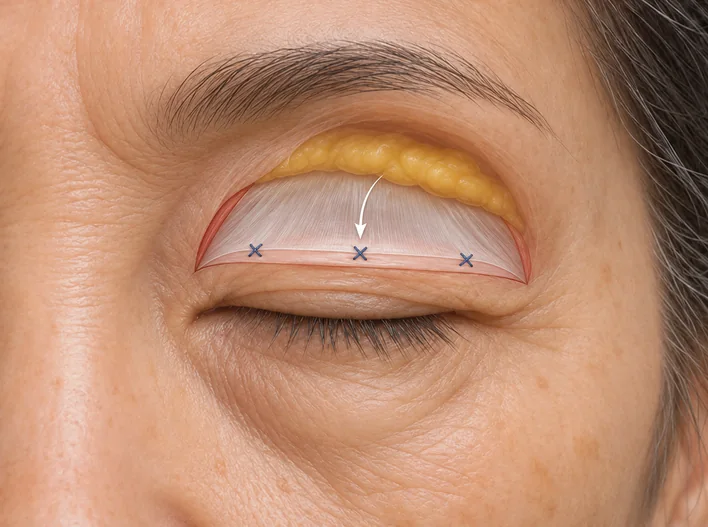
When fat is out of position
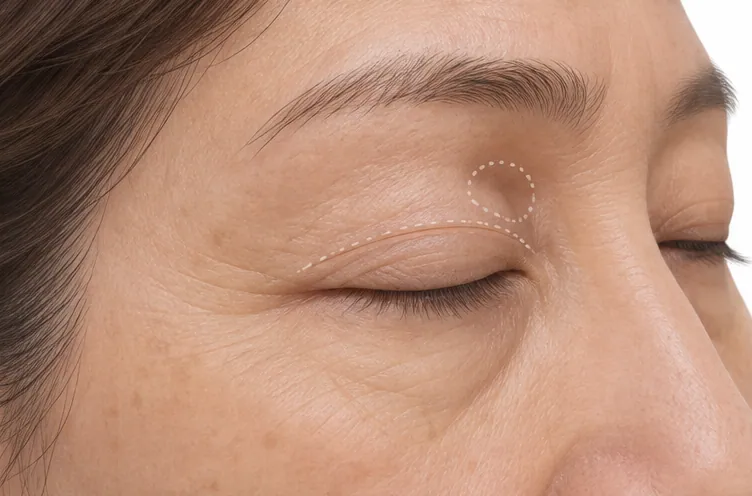
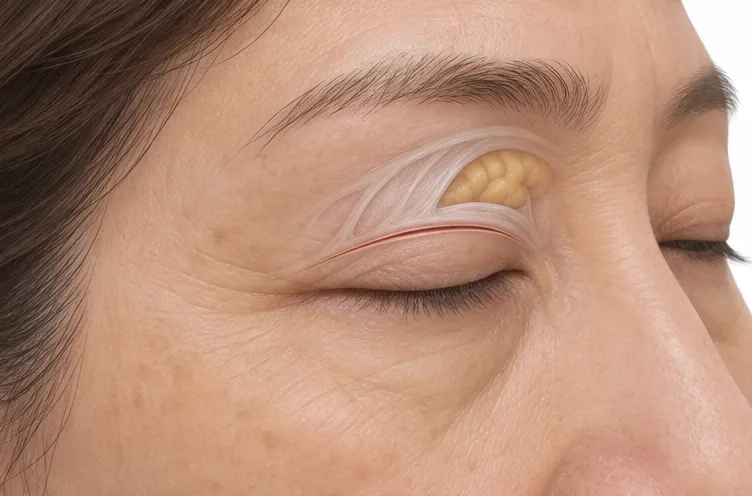
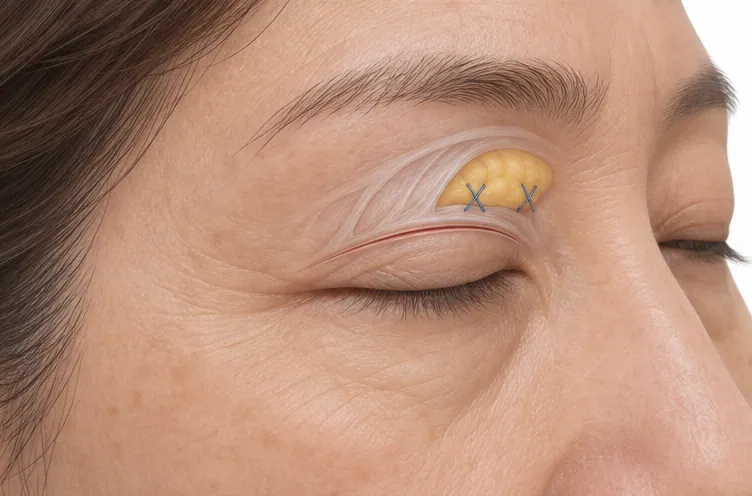
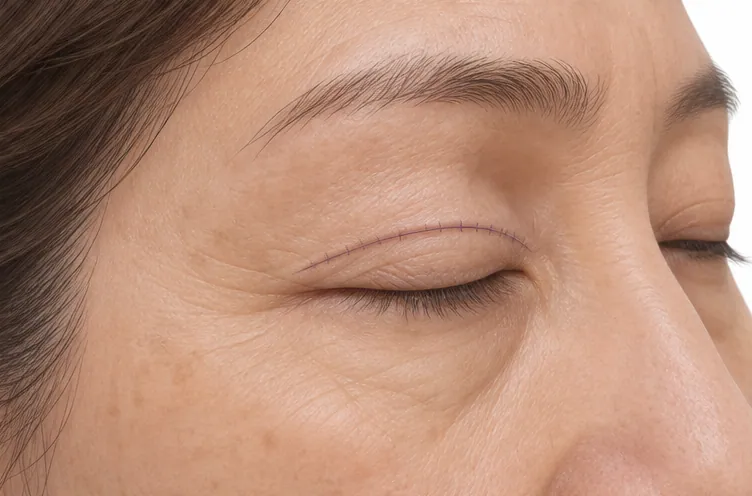
When volume is insufficient or hollowness follows previous surgery
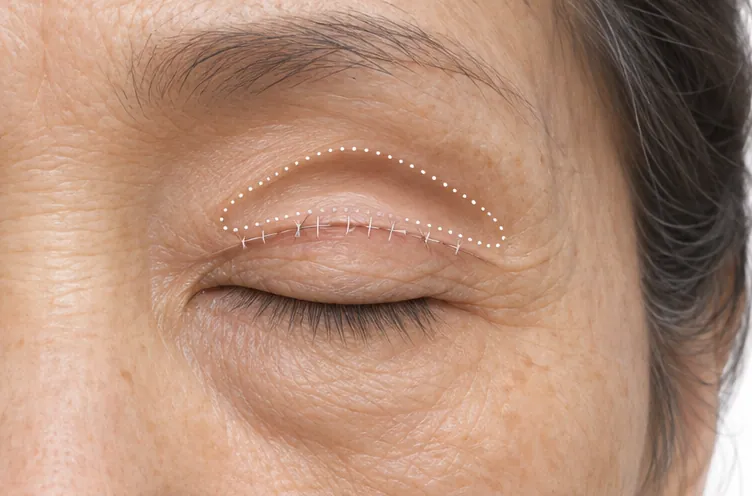
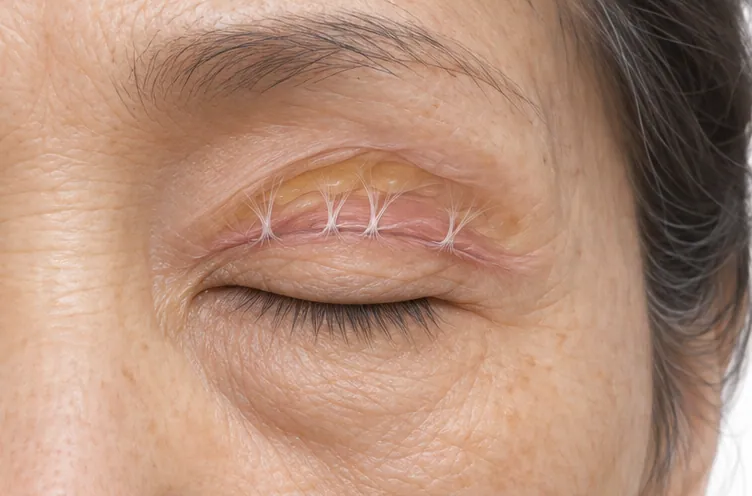
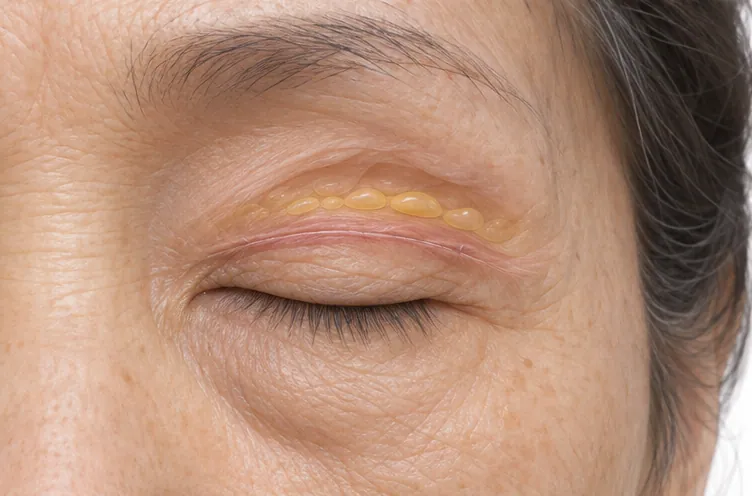
This is a simplified explanation of the typical steps. The actual technique and extent of treatment are determined after an examination.
Key point Similar-looking hollowing requires different surgical steps depending on the cause. The actual technique and extent of surgery are determined after an examination.
What the doctor looks at first
- Whether the structures inside the eyelid are pulled upward as the eyes open, making the hollowing more pronounced
- Whether fat is insufficient or has changed position
- The effects of previous surgery and injected materials, adhesions and scarring, and the stage of healing
These are general care principles. The actual decision is made after an examination.
When might we avoid recommending surgery right away?
06When We Do Not Recommend Surgery Right Away
Answer I do not recommend proceeding right away if you only want to add volume without assessing your ability to open your eyes, or if you are still recovering from a previous surgery. If recovery is still ongoing, it may be better to wait for the tissues to stabilize.
- When you want only volume added without assessing eyelid-opening strength
- When you are still healing from your previous surgery
- When the desired change exceeds what can be safely achieved
- When remaining upper eyelid filler requires assessment and consideration of dissolving it first
Key point I do not recommend surgery right away when correcting function or allowing tissues to recover should come before adding volume.
Here is my answer to the initial question, “My upper eyelids look hollow and make me look tired. Can fat grafting fill them in?” Before filling hollow upper eyelids, we first assess the cause. Weak eyelid-opening strength can make the hollowing look more severe than it actually is. In this situation, fat grafting alone may make the eyelids feel heavier and leave a sleepy appearance. I assess more than just the depth of the hollowing or the lack of volume. I evaluate the condition of the skin, muscles, and fat, eyelid-opening function, the effects of previous surgery, and the extent of tissue damage together. Instead of simply filling the area with filler or fat, I treat the cause.
— Dr. Hyungwoo Yim
During your consultation, you can say, “I read your article on hollow upper eyelids. Please let me know whether my eyelid-opening strength needs to be assessed first.” I will walk you through the assessment in the order outlined in this article.
FAQ
Frequently Asked Questions
Can fat grafting alone correct hollow eyes?
If the muscles that open your eyes are weak, fat grafting alone may make your eyelids feel heavier and leave a sleepy appearance. We first assess eyelid function and correct eyelid position with ptosis repair, then reassess volume. Fat grafting or Re2O is considered as a supplemental treatment.
Will all the grafted fat remain?
Not all of it will remain. Only some of the transferred fat survives as it settles into the treated area, and the surface may feel uneven. We favor placing small, divided amounts where needed rather than adding excessive volume.
Will Re2O fill hollow upper eyelids?
Re2O supplements the dermis rather than filling volume. We therefore do not use it to fill the depth of the hollowness, but consider it as a supplementary treatment to support tissue condition when the skin is thin or damaged.
Can I Have Revision Surgery If I Have Had Surgery Before?
Yes, but adhesions and structural changes from the previous surgery must be assessed accurately. We consider your surgical records, current symptoms, and stage of tissue healing—at least 6 months to 1 year or longer after surgery—to honestly explain the limitations and expected benefits of additional surgery.
BEFORE CONSULTATION
What to Prepare Before Your Consultation
- Front-view photo · Eyes openPlease bring recent photos and, if available, photos taken before the hollowing developed. Comparing them helps us understand when the changes began.
- Records of previous eye surgery · TreatmentsWrite down when, where, and how you were treated, including whether you received filler or fat injections.
- Contact lenses · Eye drops · Daily habitsTell us how long you have worn contact lenses and what type, which eye drops you use, and whether you rub your eyes frequently.
- Discomfort when opening your eyesWrite down what you usually notice, such as whether you tense your forehead, your eyelids feel heavy, or your vision is obstructed.
- The one thing that concerns you mostMake it your first question at your consultation.
More articlesVITAL Plastic Surgery Medical Articles
Once you feel fully informed, schedule a consultation.
Hollow Upper Eyelids: What to Assess Before Adding Volume Book a Consultation
You do not need to decide the day of your consultation.