PLASTIC SURGERY
All Procedures / Eye · Under-Eye Revision Surgery
Revision Under-eye
Revision Under-Eye Fat Repositioning
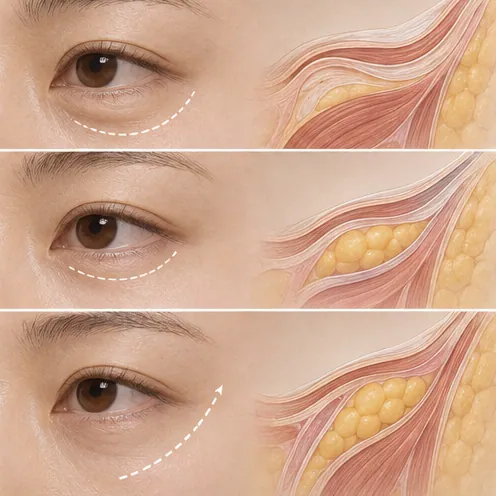
When the under-eye area becomes uneven or bulges again after surgery, we look beyond the amount of fat.
Suture Removal
5–7 days
This may vary depending on your condition and the extent of surgery.
We look beyond moving the fat again to the wall that holds it back.
Key Questions Answered
Why does the under-eye area become uneven after surgery?
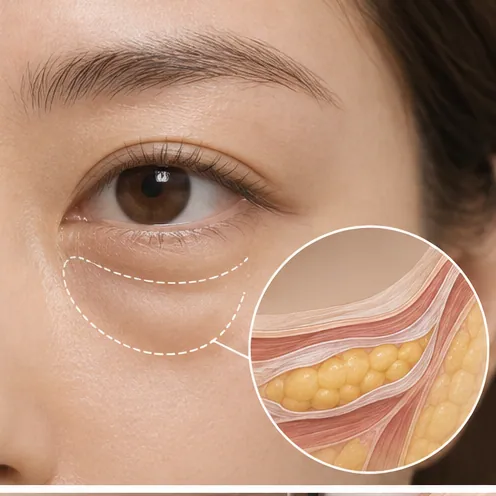
Under-eye bulging results from a combination of factors: the amount of fat, weakening of the orbital septum that holds the fat back, hollowing of the tear trough, and descent of cheek fat. We first assess adhesions from the previous surgery and the remaining fat, then consider orbital septum revision rather than fat repositioning when needed.
— Adhesions
— Remaining Fat
— Orbital Septum
— Cheek Position
YOUR CONCERN
Do any of these concerns
sound familiar?
“My under-eye area is uneven after fat surgery.”
“The bulging came back.”
“My under-eye area looks hollow, with more shadows.”
We do not judge unevenness by the amount of fat alone.
We check how your eyes open and close, compensatory eyebrow movement, and skin condition. During consultation, we distinguish changes in appearance from functional discomfort.
Revision under-eye fat repositioning,
What does the surgery involve?
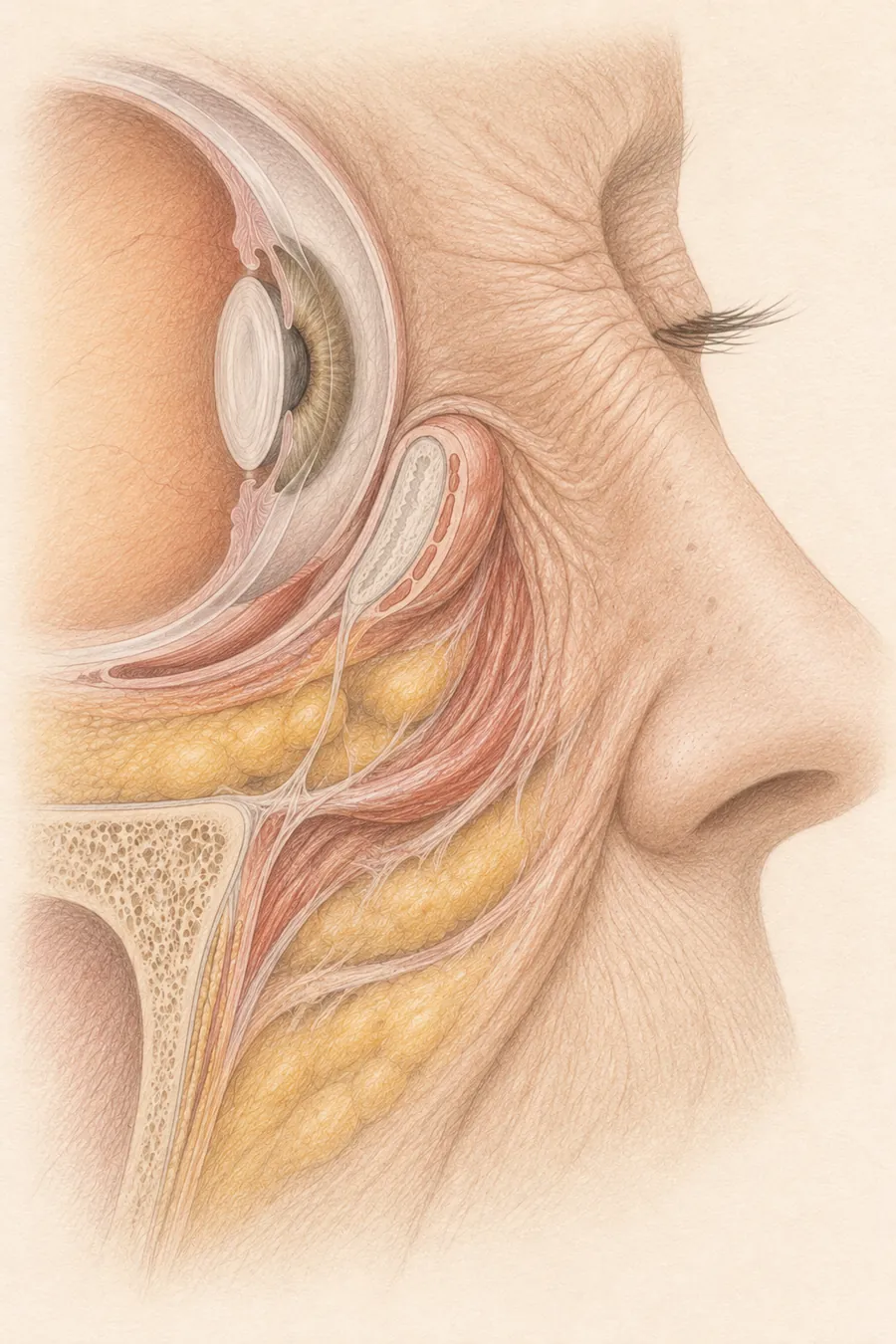
This revision surgery identifies and addresses the reasons for unevenness, recurrent bulging, hollows, or visible contour lines after under-eye fat repositioning. Areas where fat was brought out of its membrane and repositioned often adhere to the tissues in front, so we first assess adhesions and remaining fat. Before considering moving the fat again, we evaluate reinforcing the orbital septum that holds it back. We also assess cheek fat descent and skin condition to determine the extent of surgery.
- Orbital Septum Revision
- Revision surgery that reinforces the weakened orbital septum to keep fat from pushing forward again.
- Adhesions
- A condition in which repositioned fat or tissue sticks to surrounding tissues. These adhesions need to be released so the surface can lie evenly.
- A Tent and Its Ropes
- If the under-eye area is a tent, the fat is the gear inside, the skin is the fabric, and the orbital septum and muscles are the ropes. Moving the gear alone does not smooth the fabric.
In revision under-eye fat repositioning,
in Lower Blepharoplasty
Repositioned fat adheres to the tissues in front
Fat is normally enclosed in a thin membrane. Removing it from that membrane and moving it changes its normal anatomical arrangement. During revision surgery, we often find that this fat has adhered to the tissues in front. This may explain why the area feels lumpy or contour lines become visible with facial expressions, so we first check the extent of adhesions.
We assess the orbital septum before moving fat again
Repeated fat repositioning may lead to more adhesions that need to be addressed. For revision surgery, reinforcing the septum—the wall that holds the fat in place—is therefore considered first. During surgery, the adhesions are released to allow the tissue to move, and the weakened septum is reinforced. The extent of treatment depends on the location and amount of remaining fat.
We also check the muscle that runs between the fat compartments
A muscle that moves the eye runs between the under-eye fat compartments. If adhesions form near this muscle during fat repositioning, eye movement may become uncomfortable. During the examination, we therefore also ask about pulling sensations or double vision when looking up and down. If the problem appears related to eye movement, we also consider an ophthalmology evaluation.
We assess bulging and hollowing separately
To correct unevenness, we need to distinguish whether it comes from remaining fat, insufficient volume, previously injected material, or adhesions. Bulging and hollow areas can coexist under the same eye. We assess protrusion, contour lines, and volume loss separately, and consider adding tissue, such as through fat grafting, where needed.
We also assess the position of cheek fat
Under-eye bulging results from a combination of septal weakening, tear trough hollowing, and cheek fat descent. Revising only the under-eye area may leave the transition to the cheek unchanged. If the cheeks have descended, we assess whether to lift the cheek tissues along with reinforcing the septum. In these cases, we plan revision lower blepharoplasty together with a midface lift.
For thinned skin, we consider Re2O to address the underlying skin condition
Even if you tighten a tent's ropes, thin fabric will not stretch out smoothly. If the under-eye skin is thin and has many fine lines, this is considered a sign of dermal damage, and Re2O is considered. The standard course is three sessions, using one vial per session at intervals of 3–4 weeks. When combined with surgery, the first session is scheduled after swelling has subsided, usually at least 4 weeks later. Initial swelling from the injection is not described as an effect; changes are assessed starting 1 week later, as the swelling goes down.
The Surgical Process Varies
Depending on Your Condition
When unevenness can be felt or seen
 1
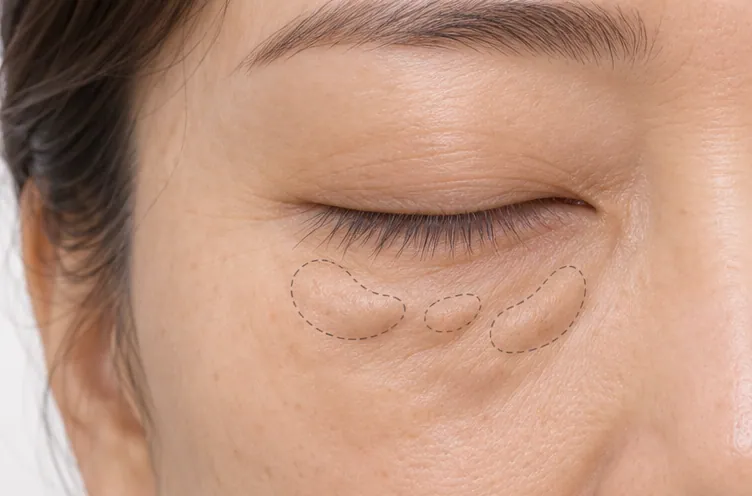
We use photographs and palpation to mark areas of lumpiness and the extent of adhesions
 2
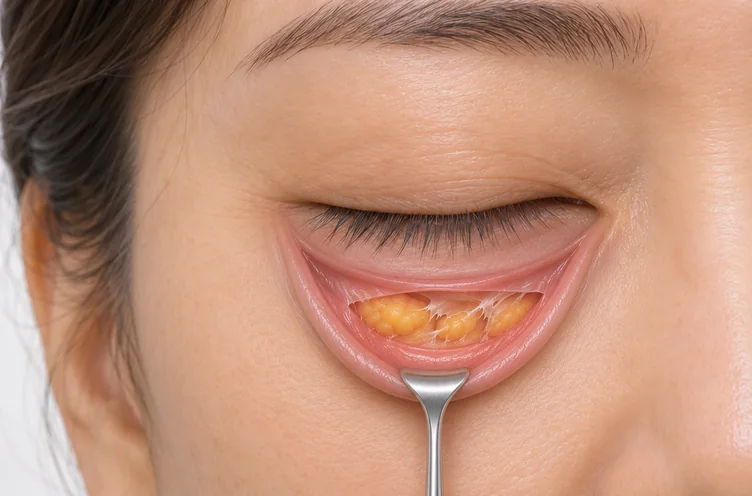
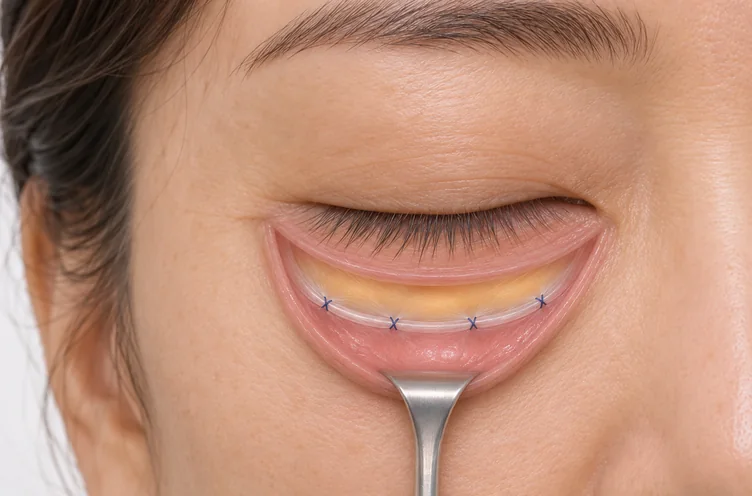
We access the area through the conjunctiva inside the lower eyelid
 3
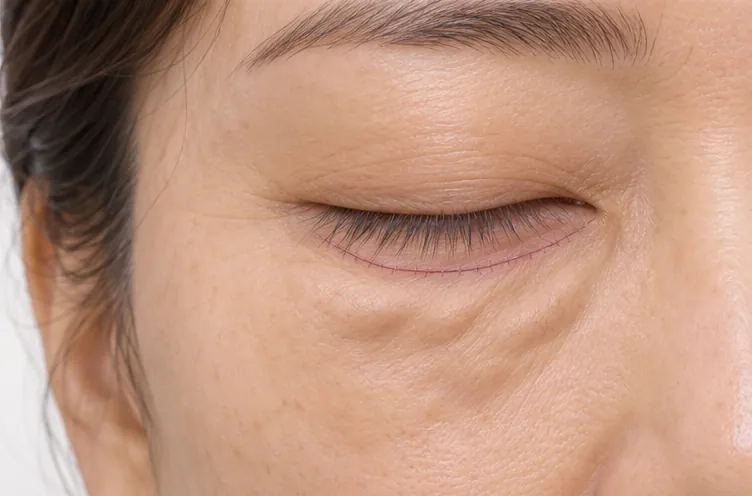
We release adherent fat and tissue and reinforce the orbital septum
 4
We complete the procedure on the conjunctival side
When bulging has returned
 1
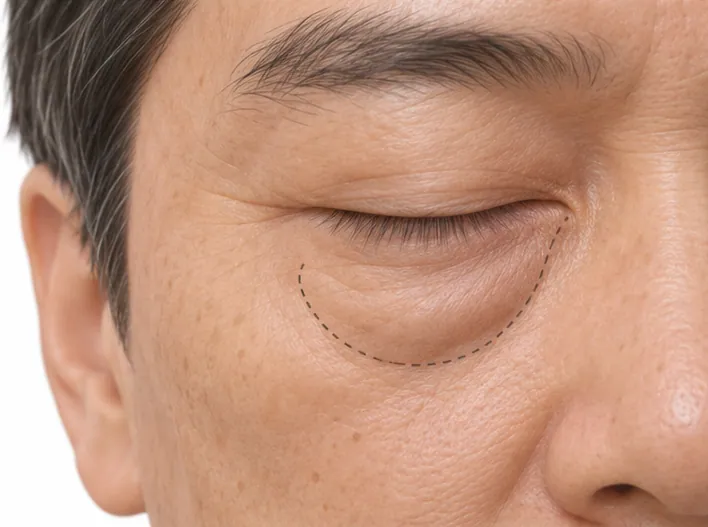
We mark the location and amount of remaining fat with you seated
 2
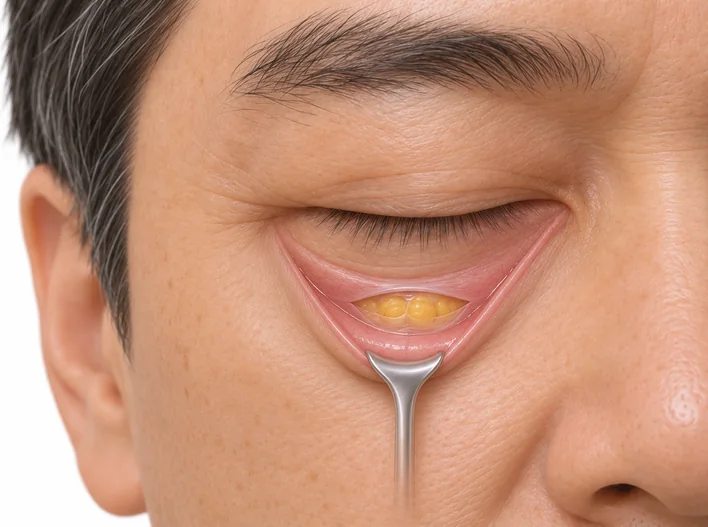
We access the area through the conjunctiva and examine the previous surgical site
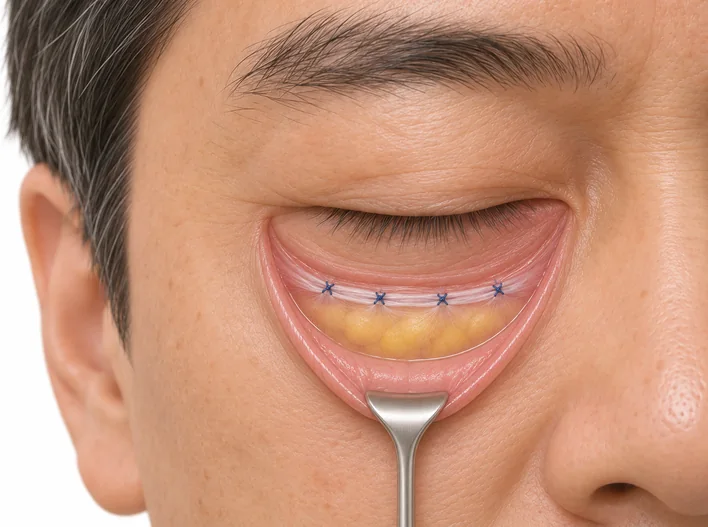 3
We reinforce the weakened orbital septum without repositioning the fat again
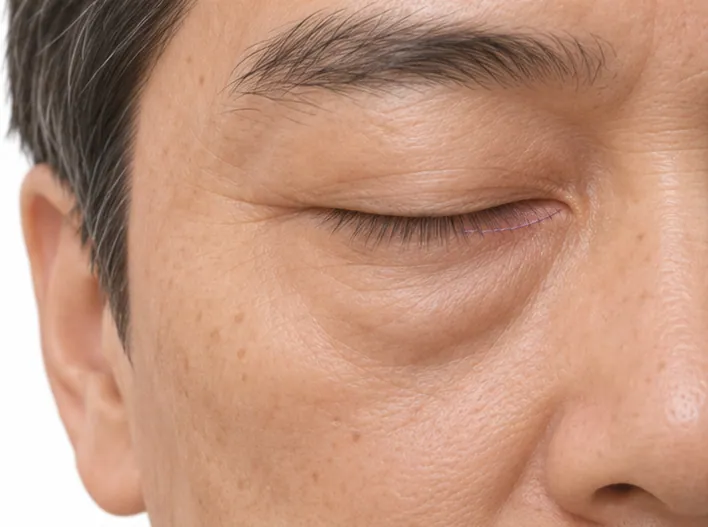 4
We complete the procedure on the conjunctival side and determine the timing of Re2O treatment for the skin
When hollowing and cheek sagging remain
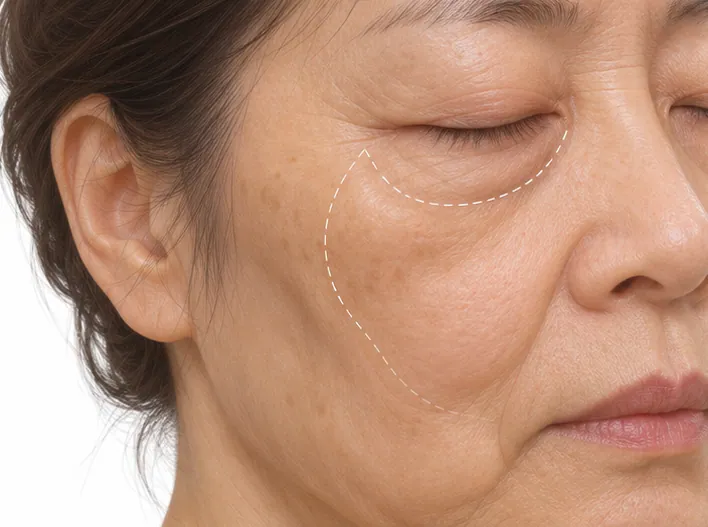 1
We mark the under-eye–cheek transition and the hollow areas together
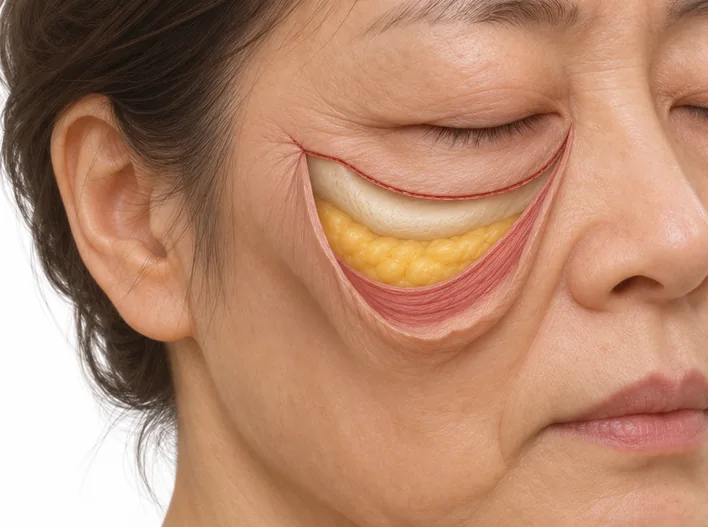 2
We make an incision just below the eyelashes, release adhesions, and dissect down to the upper cheek
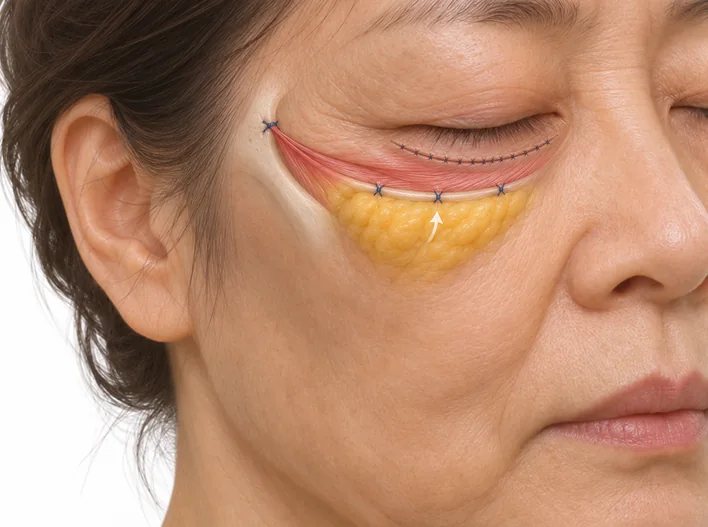 3
We reinforce the orbital septum, lift and secure the cheek fat layer (SOOF), then suspend the orbicularis oculi muscle
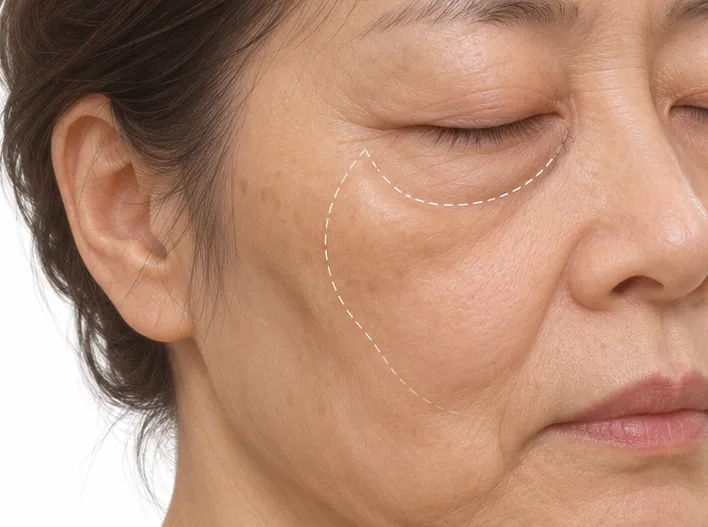 4
We trim excess skin and close the incision, then assess any remaining volume loss during follow-up
Illustration for explanation · Not an actual patient. This is a simplified description of typical steps. The actual technique and extent of surgery are determined after examination.
DOCTOR’S NOTE
Removing fat alone does not resolve under-eye bulging.
If fat is removed or spread broadly without considering skin elasticity or cheek sagging, the skin may sag with fine lines after surgery, or the transition to the midface may look more hollow. In revision surgery, we start by assessing what the previous surgery has left behind.
— Dr. Hyungwoo Yim
MYTH → FACT
“Can removing or repositioning under-eye fat completely solve the problem?”
Septal weakening, tear trough hollowing, and cheek fat descent work together. If these causes are not assessed together, the transition may look more unnatural.
IN HIS WORDS
The Tent and Rope Analogy
“Removing only the gear inside a tent makes the outer fabric more wrinkled. Just as tightening the ropes makes the fabric taut, reinforcing the internal septum and strengthening the thinned fabric helps create a smoother surface.”
THE DETAIL
Septal Reinforcement + Skin Support
We consider reinforcing the orbital septum to keep fat from pushing forward again, along with supporting thinned skin using treatments such as Re2O.
RELATED RESEARCH
Semin Plast Surg 2015 · Volume Augmentation in the Lower Eyelid and Cheek Areas
1
Under-Eye Fat Bulging
2
Tear Trough
3
Cheek (Midface) Position
4
Lifting the Midface as Well
Septum & Support
We look beyond the amount of fat to the wall that holds it back.
In under-eye revision surgery, we assess the location and amount of remaining fat, adhesions, weakening of the septum that held the fat back, and the positions of the tear trough and cheeks together. We consider septal reinforcement before repeating fat repositioning.
Suture Removal
5–7 days
Rest period
At least 2 weeks
VITAL PROTOCOL
Our Assessment Sequence for Under-Eye Revision Surgery
STEP 01
Assess Adhesions · Remaining Fat
We check adhesions from the previous surgery and the location · amount of remaining fat.
STEP 02
Identify the Causes
We separately assess septal weakening · tear trough hollowing · cheek descent · skin condition.
STEP 03
Consider Orbital Septum Revision
We consider revision surgery focused on septal reinforcement rather than repeat fat repositioning.
STEP 04
Support the Skin
When needed, we also plan regenerative treatments such as Re2O.
WHAT WE CHECK
We Start With What the Previous Surgery Left Behind
Adhesions and Scarring
We assess adhesions on the conjunctival · skin sides.
Distribution of Remaining Fat
We check where fat remains and how much is present.
Orbital Septum Condition
We check whether the wall holding the fat back has weakened.
Tear Trough and Cheek Position
We also assess the transition to the midface.
Skin Elasticity and Thickness
We check for fine lines · sagging.
Lower Eyelid Support
We check for a risk of ectropion.

When
to consider a consultation
- When the surface is uneven after under-eye fat repositioning
- When the transition to the cheek becomes more visible after surgery
- When under-eye bulging returns
- When the skin becomes wrinkled or shadows become more pronounced
- When it is difficult to determine whether the fat needs to be moved again
When
Surgery is not our first recommendation
- When tissues are still recovering from the previous surgery (a minimum of 6 months to 1 year)
- When filler remains and requires assessment and consideration of dissolving it first
- When the burden of additional surgery outweighs the expected improvement
- When problems involving the eye or ocular surface require an ophthalmology evaluation first
WHEN WE WAIT
In These Cases
We do not recommend immediate surgery.
When tissue recovery from the previous surgery is still ongoing (a minimum of 6 months to 1 year)
When the burden of additional surgery outweighs the expected improvement
When the desired changes would be difficult to achieve safely in your current condition
When assessment is difficult because records and materials from the previous surgery are unavailable
Preparing for surgery and
recovery by stage
- 3–4 days after surgery
Swelling and bruising are at their worst during this period. After revision surgery, swelling, bruising, and scars take longer to stabilize than after the first surgery. Rest adequately for at least 2 weeks, use cold and warm compresses, and sleep with your head elevated. While your eyes do not close completely, use artificial tears frequently and apply eye ointment before bed.
- Days 5–7
If an incision was made, your stitches will be removed. Until then, keep the surgical area dry. If instructed to use tape, keep it in place for 2 weeks and avoid rubbing your eyes or squeezing them shut. Start wearing eye makeup and contact lenses after your surgeon gives permission, usually after 2–4 weeks.
- 3 weeks–3 months
This is a period when the tissues may feel firm and tight. This is a response to healing, so do not decide on another revision based on how the area looks at this stage alone. After revision lower blepharoplasty, swelling and bruising may last 4–8 weeks or longer. If you also had a midface lift, swelling may last 2–3 months. Avoid strenuous exercise, saunas, alcohol, and smoking for 2 months.
- 3 months–1 year
The tissues gradually soften, redness decreases, and the two sides become more even. The final result is assessed after 6 months to 1 year, with follow-up visits at 1, 3, and 6 months and at 1 year.

No smoking · No alcohol
You will receive these instructions before surgery. After revision surgery, avoid alcohol and smoking for 2 months, as they affect bleeding and wound healing.
Medications · Supplements
We recommend stopping herbal medicines and supplements such as omega-3 when possible because they may increase bleeding. Please tell us about every medication you take.
Medical history
Thyroid eye disease, glaucoma, severe dry eye, autoimmune disease, or anticoagulant use may be reasons to postpone or avoid surgery.
Eye care habits
Limit contact lens use as much as possible, use artificial tears frequently, and avoid rubbing your eyes. Tell us if you have used double eyelid tape or glue.
Recovery timelines are general estimates and vary by individual. Contact us immediately for sudden severe pain, decreased vision, bleeding that does not stop, or rapidly worsening swelling on one side.
LIMITS & RISKS
Along with possible improvements,
we explain the limitations and risks.
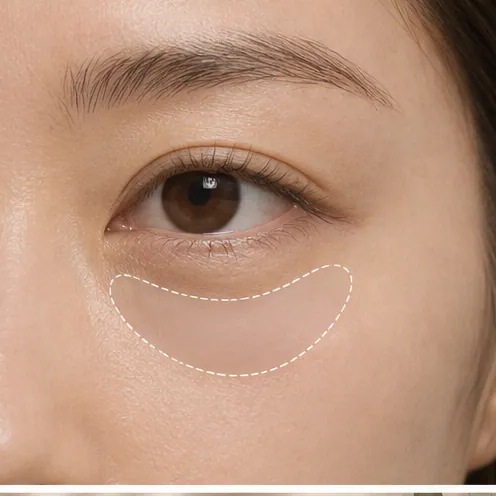
Asymmetry
Persistent Unevenness
Hollowing
Ectropion
Swelling
Bruising
Possible Need for Additional Correction
Do not wait if you have these symptoms
If you experience sudden severe pain, decreased vision · An obstructed field of vision, bleeding that does not stop, or rapidly worsening swelling on one side, contact us immediately instead of waiting for your appointment.
This is not a complete list of possible risks. Risks may vary depending on your health, previous treatments, and the technique and extent of surgery. Surgical results vary by individual.
Common questions
during consultations
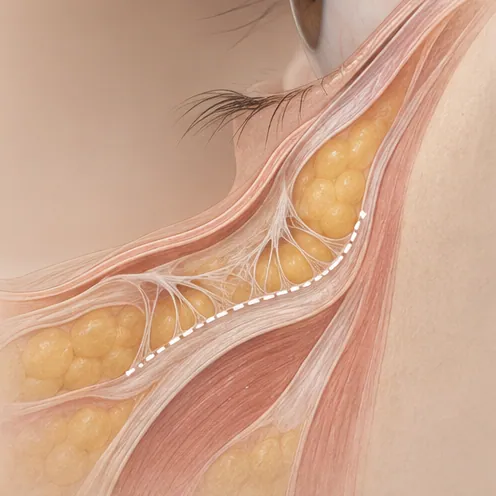
Can’t I just have fat repositioning again?
Repeating the same surgery can lead to more tissue adhesions. We do not choose the same revision procedure based on appearance alone. We first assess remaining fat and adhesions, then plan around septal reinforcement. We will explain the extent of surgery needed after examining you.
Could discomfort when looking up be related?
It could be related because a muscle that moves the eye runs between the under-eye fat compartments. Other causes are also possible, so we assess eye movement and your field of vision together. If double vision persists or your vision changes, seek an examination immediately rather than waiting for your scheduled appointment.
Why not remove all the fat?
Removing only the fat can make the overlying skin more wrinkled, much like removing only the gear inside a tent. If under-eye hollowing is also present, the transition may look more hollow. Rather than focusing on eliminating fat, we assess protrusion, contour lines, and volume loss together.
Related Reading
Q & A
Before you decide,
frequently asked questions
Q
How do lower blepharoplasty, under-eye fat repositioning, and a midface lift differ?
−
A
Lower eyelid surgery includes repositioning sagging skin and the orbicularis oculi muscle. Under-eye fat repositioning moves and secures protruding fat into a hollow tear trough without removing it; it can be performed through the conjunctiva or skin. A midface lift raises and secures the sagging cheek fat layer and its supporting structures. The extent of surgery depends on the associated concerns.
Q
Can I Have Revision Surgery If I Have Had Surgery Before?
−
A
Yes, but adhesions and structural changes from the previous surgery must be assessed accurately. We consider your surgical records, current symptoms, and stage of tissue healing—at least 6 months to 1 year or longer after surgery—to honestly explain the limitations and expected benefits of additional surgery.
Q
Where Are Eyelid Surgery Incisions Made, and How Do the Scars Change?
−
A
Incisions are placed along less noticeable boundaries, such as a natural crease, just below the eyelashes, or the conjunctiva inside the eyelid. They may be red initially but gradually fade as the tissue settles.
Q
What Symptoms Should Prompt Me to Contact the Clinic Immediately After Surgery?
−
A
If you experience sudden, severe pain in one eye, decreased vision, an obstructed field of vision, bleeding that will not stop, or rapidly increasing swelling, contact us immediately rather than waiting for your scheduled appointment.
AFTER SURGERY
After under-eye revision surgery, care continues with VITAL LASTING CARE.
~ 1 WEEK
Check the wound · bleeding · infection · early function, remove sutures
1 MONTH
Early scar contracture: assess tightness · firmness and begin regenerative care if needed
3 MONTHS
Peak contracture · transition phase: assess remodeling and consider continued injections · laser treatment
6 MONTHS
Compare with initial photos and decide whether additional treatment is needed
1 YEAR
Check tissue maturation · long-term progress
IN HIS WORDS
Before repositioning fat,
we first assess which structures to preserve.
“
Under-eye fat is a structure held in place within a membrane. I always consider whether taking it out and repositioning it is truly consistent with normal anatomy. During revision surgery, I sometimes find that the repositioned fat has adhered to the tissues in front of it, so I first consider preserving the existing structures.
Doctor Interview · 2026.10
Dr. Hyungwoo Yim, Medical Director · Based on the doctor's own answers. The actual scope of care is determined after an examination.
RELATED SURGERY
DOCTOR'S COLUMN DOCTOR'S COLUMN DOCTOR'S COLUMN
Must Read
Care Notes Written by the Doctor · Please Read Before Your First Visit
No.1
No.3
VIEW MORE →
RESERVATION
You do not need to decide the day of your consultation.
Organize questions about this page without entering your name, contact information, or medical history. This does not submit an appointment request.