PLASTIC SURGERY
MEDICAL COLUMN
Questions Answered Directly by the Doctor Before You Decide on Surgery
Midface
Doctor’s Notes
Why We Assess the Under-Eye Area and Cheeks Together
We assess the position and support structures from the under-eye area to the cheeks to determine the extent of correction needed.
Medically reviewed · Dr. Hyungwoo Yim, Medical Director (Board-Certified Plastic Surgeon)
SHORT ANSWER
First, the Short Answer
- The under-eye area and cheeks are connected structures, rather than two separate areas.
- Removing or spreading out fat without considering cheek sagging or skin elasticity may leave the under-eye skin loose with fine wrinkles, or make the transition to the midface look less natural.
- Under-eye protrusion, hollowing along the grooves, and cheek position need to be assessed together to determine the extent of correction.
- We first assess whether midface correction is actually needed and avoid unnecessarily extending the treatment area.
“Doctor, the hollow under my eyes seems to extend down into my cheeks. Would under-eye surgery alone be enough?”
This is a paraphrase of a question we often hear during consultations.
This article explains how the under-eye area and cheeks are connected, which tissue layers a midface lift addresses, and how the procedure and recovery vary with each person's condition. Section 04 explains the criteria for assessing the under-eye area alone versus including the cheeks.

01Under-Eye Aging Is Also Related to the Angle of the Underlying Bone
Answer We examine the position and supporting structures from the under-eye area to the cheeks to determine the extent of correction needed. When the bone beneath the eyes slopes farther back, tissue is more likely to descend, so expectations can differ even with the same surgery.
We assess the position and support structures from the under-eye area to the cheeks to determine the extent of correction needed.
Removing or spreading out fat without considering cheek sagging or skin elasticity may leave the under-eye skin loose with fine wrinkles, or make the transition to the midface look less natural.
When the bone beneath the eyes slopes farther back, tissue is more likely to descend, so expectations can differ even with the same surgery. If sagging is limited to the under-eye area and front of the cheeks, we consider a midface lift. If changes in the jawline and neck are more pronounced, we also consider a facelift. If the concerns are clearly limited to the under-eye area, we do not extend surgery to the cheeks.
- Zygomatic retaining ligament
- Cheek fat
- Nasolabial fold
- Jawline · Mandibular retaining ligament
Key point If sagging is limited to the under-eye area and front of the cheeks, we consider a midface lift. If changes in the jawline and neck are more pronounced, we also consider a facelift.
Why do we assess the under-eye area and cheeks together?
02The Under-Eye Area and Cheeks Are Connected Structures, Rather Than Two Separate Areas
Answer Under-eye fat and cheek fat are connected through shared fibrous structures and fat layers. If only the under-eye area is treated while sagging cheeks are left untreated, the boundary between them may become more noticeable or look hollow after surgery.
A midface lift is a surgical approach based on an assessment of the position and support of midface tissues, including the cheeks. We examine under-eye hollowing, protruding fat, and skin condition together to determine whether correction combined with lower eyelid surgery is needed.
Under-eye fat and cheek fat may appear separate, but they are connected through shared fibrous structures and fat layers. This is also why they affect each other when you smile and when your face is at rest. Treating only the under-eye area while leaving sagging cheeks in place can make the boundary more noticeable or hollow after surgery, so we assess cheek position when examining the under-eye area.
- Changes in tissue position Facial contours are affected by tissue position and support, as well as the amount of fat.
- The transition between the under-eye area and cheeks Under-eye protrusion, hollowing along the grooves, and cheek position need to be assessed together to determine the extent of correction.
- Skin and overall facial balance We also evaluate excess skin, elasticity, overall facial proportions, and expressions. Sagging alone does not determine the same treatment approach for everyone.
Key point Under-eye protrusion, hollowing along the grooves, and cheek position need to be assessed together to determine the extent of correction.
Which tissue layers does a midface lift address, and how?
03What Is a Midface Lift?
Answer A midface lift raises and secures the cheek fat layer that has descended from beneath the eyes toward the front of the cheeks, along with the retaining ligaments that support it. While lower blepharoplasty addresses the skin and orbicularis oculi muscle, a midface lift reaches the layers beneath them, working deeper than surgery that addresses only under-eye fat.
A midface lift raises and secures the cheek fat layer that has descended from beneath the eyes toward the front of the cheeks, along with its retaining ligaments. It is often considered when under-eye grooves and sagging over the front of the cheekbones appear together. The procedure uses an incision through the conjunctiva inside the eyelid and is performed in conjunction with transconjunctival lower eyelid surgery. Because the under-eye area and cheeks are connected structures, we first assess why the boundary between them has become visible. This combination is not recommended for everyone; the decision depends on the extent of sagging.
We lift and secure the cheek fat layer and retaining ligaments
While lower eyelid surgery addresses the skin and orbicularis oculi muscle, a midface lift goes deeper to address the sagging cheek fat layer and retaining ligaments together. During the examination, we assess ligament firmness by touch. Releasing the ligaments as needed creates room for the tissues to move upward, and the lifted tissues are secured to firm tissues around the eyes. This involves a deeper tissue layer than treating under-eye fat alone.
Key point We do not recommend combining these procedures for everyone. The decision depends on the extent of sagging.
When do we recommend it, and when do we hold off?
04We do not recommend the same surgery for the same reason in every case
Answer If the concerns are clearly limited to the under-eye area, we do not extend surgery to the cheeks. A larger treatment area may also mean more swelling and more demanding aftercare.
We explain what to assess first and how much treatment is appropriate.
- If the concern is clearly limited to the under-eye area We first assess whether midface correction is actually needed and avoid unnecessarily extending the treatment area.
- If midface sagging is also present We weigh the need for a combined approach with lower eyelid surgery, the possible changes, and the burden of surgery.
- If you have had a previous lift or under-eye surgery We assess altered tissues, scars, and adhesions, then plan according to your current stage of recovery.
If sagging is mild, we also consider a mini lift performed in stages.
I consider the mini lift one of my preferred approaches. However, although the front incision does not extend upward toward the scalp, the incision behind the ear is nearly the same length, and the surgery takes a similar amount of time.
When We Do Not Recommend Surgery Right Away
- When sagging is mild and the concern is clearly limited to the under-eye area
- When changes in the jawline and neck are the greater concern
- When loss of skin and orbicularis oculi muscle elasticity is too significant for a conjunctival approach alone
- When health conditions such as high blood pressure or diabetes need to be controlled first
| What we check | How we assess it | What can happen if overlooked |
|---|---|---|
| The transition between the under-eye area and cheeks | We assess under-eye bulging, hollowing along the tear trough, and cheek position as a connected whole. | If only the under-eye area is treated while sagging cheeks are left untreated, the boundary between them may become more noticeable or look hollow after surgery. |
| Extent of Sagging | We assess whether sagging is limited to the under-eye area and front of the cheeks, or whether changes in the jawline and neck are more pronounced. If the concerns are clearly limited to the under-eye area, we do not extend surgery to the cheeks. | A larger treatment area may also mean more swelling and more demanding aftercare. |
| Skin and Orbicularis Oculi Muscle Elasticity | We assess the tissues by touch to determine whether Re2O or laser treatment could address the concern. | A transconjunctival approach does not address excess skin itself. |
| Amount of Skin Removed | We limit removal to what is necessary. | Removing too much skin may increase the risk of the lower eyelid drooping or turning outward. |
What the doctor looks at first
- When assessing the under-eye area, we also check cheek position because under-eye fat and cheek fat are connected through shared fibrous structures and fat layers.
- We assess the firmness of the retaining ligaments by touch. The ligaments must be released as needed to create room for the tissue to move upward.
- We assess the angle of the bone beneath the eyes and the extent of sagging. When the bone slopes farther back, expectations can differ even with the same surgery.
These are general care principles. The actual decision is made after an examination.
At your consultation, you can say, “I read the article on midface lifts. Please explain whether my under-eye area alone needs assessment or whether my cheeks should be included.” We will walk you through the points in the same order as this article.
Key point We first assess whether midface correction is actually needed and avoid unnecessarily extending the treatment area.
How does the procedure vary depending on your condition?
05The Surgical Process Varies Depending on Your Condition
Answer The procedure varies depending on whether tear trough hollowing and sagging at the front of the cheeks are accompanied by under-eye bulging or reduced skin elasticity. A transconjunctival approach leaves no incision in the skin, but it does not address excess skin itself.
When under-eye grooves and sagging at the front of the cheeks occur together
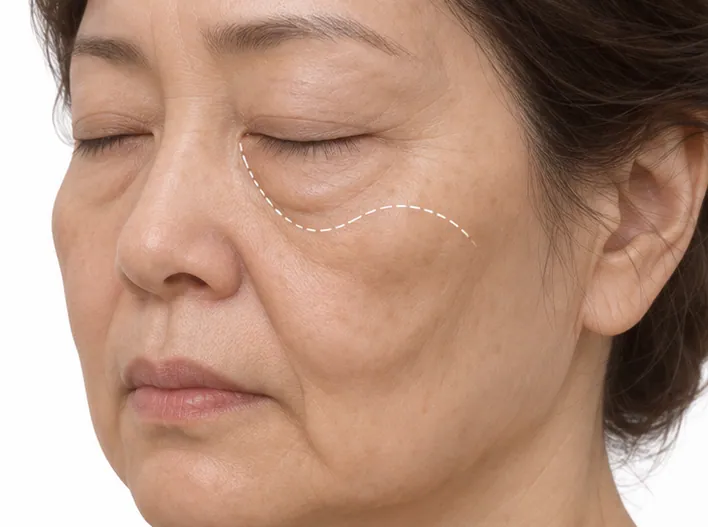
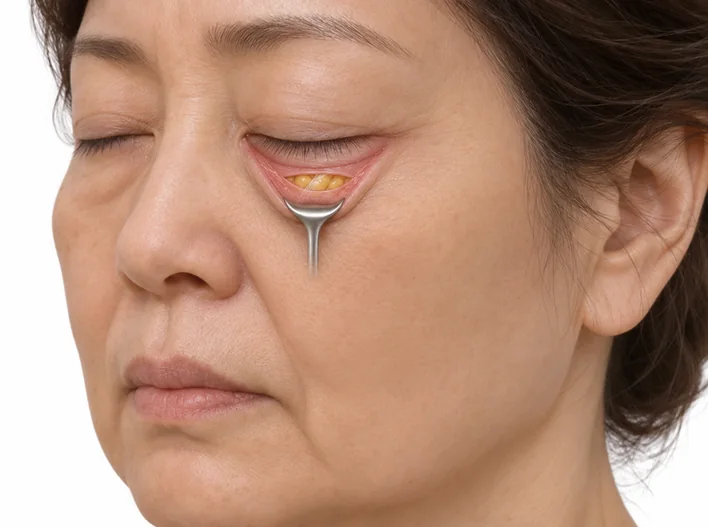
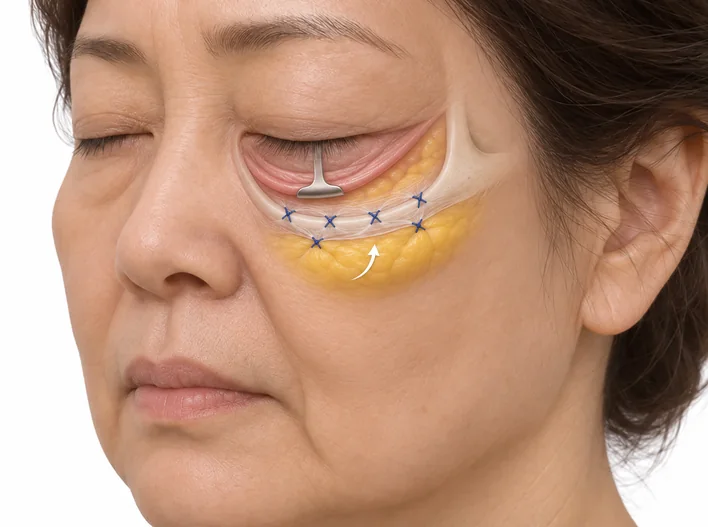
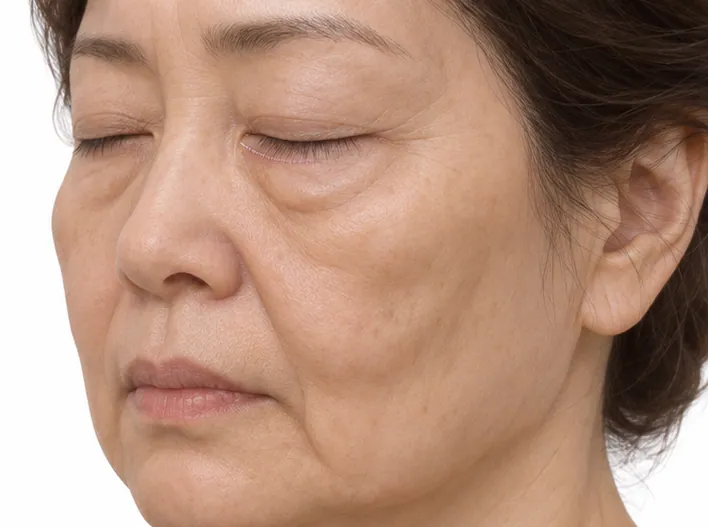
When under-eye bulging is also present
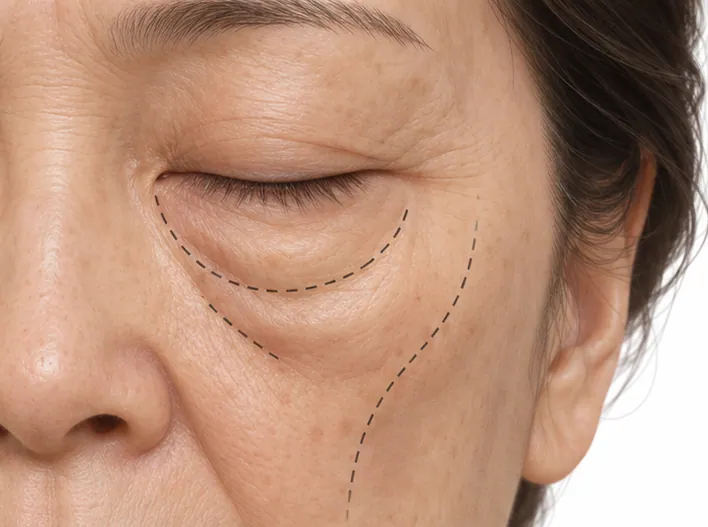
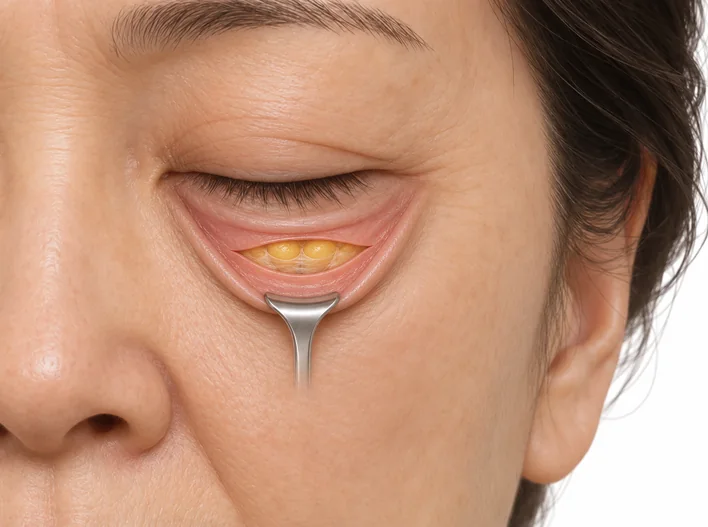
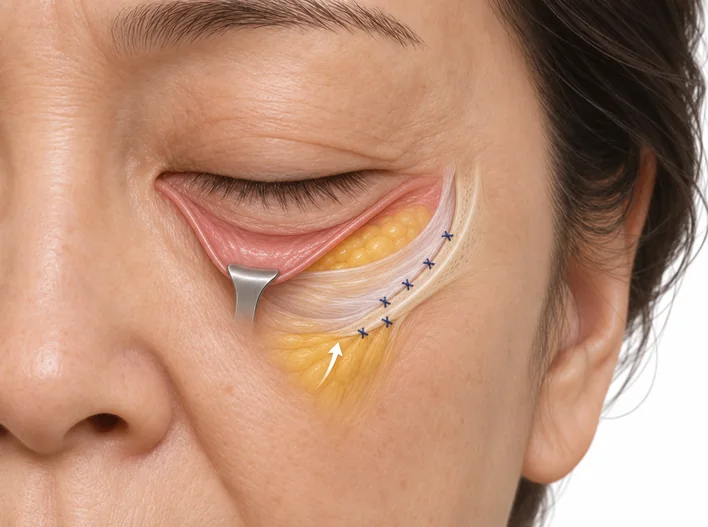
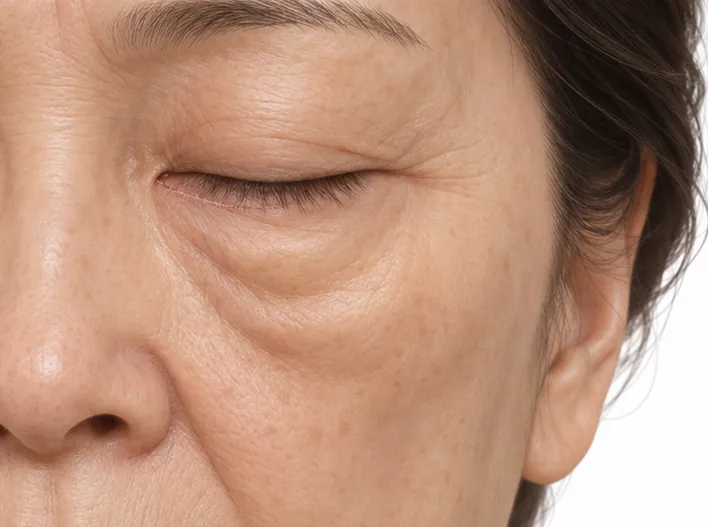
When reduced skin elasticity is also present
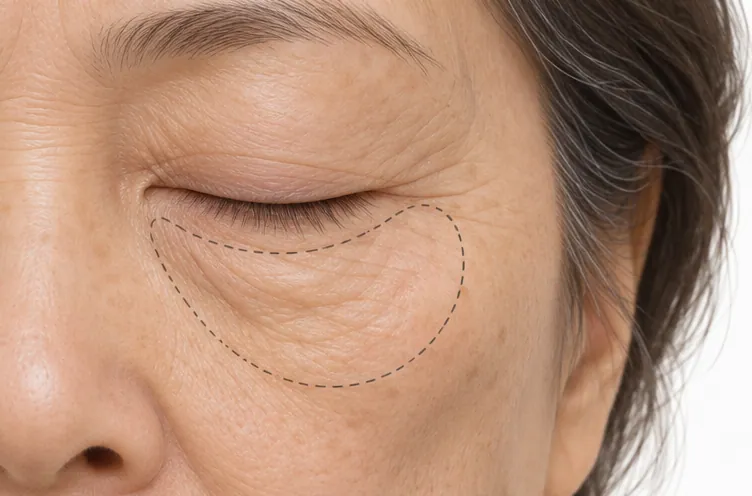
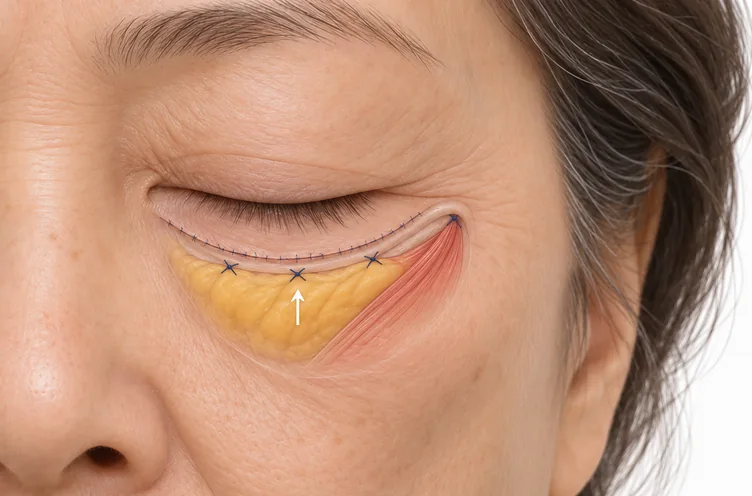
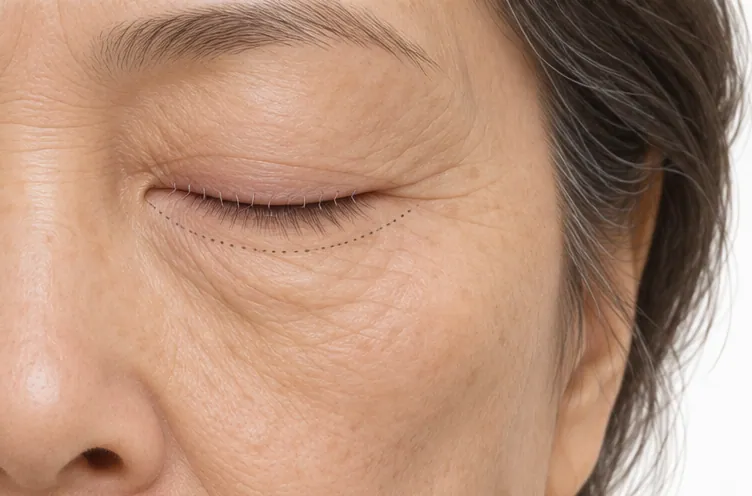
This is a simplified explanation of the typical steps. The actual technique and extent of treatment are determined after an examination.
Key point These are typical procedural approaches, but the actual approach and extent of surgery are determined after an examination.
What happens at each stage after surgery, and how should you manage recovery?
06recovery by stage
Answer Swelling and bruising are most pronounced 3–4 days after surgery. From 3 weeks to 3 months, the tissues may feel firm or lumpy and tight. These are healing responses, so we do not decide on revision surgery based only on how the area looks during this period.
- 3–4 days after surgery Swelling and bruising are at their worst. Sleep with your head slightly elevated, and apply cold compresses gently without letting ice touch your skin or eyes directly.
- Days 5–7 If an incision was made, the stitches are removed. We recommend waiting until the day after stitch removal to apply makeup. Light daily activities are possible after 2–3 days, but swelling and bruising may remain.
- 3 weeks–3 months Tissues may feel firm and tight during this stage. These are healing responses, so we do not decide on revision surgery based only on how the area looks at this point. Resume strenuous exercise and sauna use after 3–4 weeks.
- 3 months–1 year The tissues soften, redness fades, and the two sides gradually become more balanced. We check your progress at 1 · 3 · 6 months · 1 year.
Recovery timelines are general estimates and vary by individual. Contact us immediately for sudden severe pain, decreased vision, bleeding that does not stop, or rapidly worsening swelling on one side.
This general explanation is based on questionnaire responses from Dr. Hyungwoo Yim, Medical Director. It does not replace an individual diagnosis. You do not need to make a decision on the day of your consultation.
Key point We do not decide on revision surgery based only on how the area looks between 3 weeks and 3 months. We assess progress at 1 · 3 · 6 months · 1 year.
Here is the answer to the opening question: “The hollow under my eyes seems to extend down into my cheeks. Would under-eye surgery alone be enough?” The under-eye area and cheeks are connected structures, rather than two separate areas, so we first assess under-eye bulging, tear trough hollowing, and cheek position as a whole. If the concerns are clearly limited to the under-eye area, we first consider whether midface correction is actually needed and avoid unnecessarily extending the surgery. If midface sagging is also present, we explain the need for an approach combined with lower blepharoplasty and weigh it against the burden of surgery. Our principle is that we do not recommend the same surgery for the same reason in every case.
— Dr. Hyungwoo Yim
At your consultation, you can say, “I read the article on midface lifts. Please explain what should be assessed first in my case.” We will walk you through the points in the same order as this article.
FAQ
Frequently Asked Questions
How does a midface lift differ from a facelift?
A midface lift uses an incision through the conjunctiva to address sagging under the eyes and in the front of the cheeks. A facelift uses incisions around the temples and ears and along the hairline behind the ears to address the cheeks, jawline, and, if needed, the neck. The areas treated, incisions, and operating time differ, so the choice depends on where the main sagging occurs.
When are Re2O and laser treatments added?
Laser treatment is performed before surgery, and Re2O is administered in the third week after surgery to support recovery. Surgery and laser treatment can also be performed on the same day, but the treatment areas and depth are determined based on wound healing, inflammation, and sensation.
Does a shorter surgery mean less swelling?
Operating time and swelling are separate considerations. Swelling peaks on days 3–4, and even when the initial contours become visible, it takes several months for swelling to subside and tissues to settle. Combining a midface lift with lower blepharoplasty or other procedures may increase swelling and aftercare needs.
BEFORE CONSULTATION
What to Prepare Before Your Consultation
- Front-view photo · Eyes openPlease bring recent photos and, if available, photos taken before the changes appeared. They help us compare when the changes began.
- Records of previous eye surgery · TreatmentsWrite down when, where, and how you were treated, including whether you received filler or fat injections.
- Contact lenses · Eye drops · Daily habitsTell us how long you have worn contact lenses and what type, which eye drops you use, and whether you rub your eyes frequently.
- Discomfort when opening your eyesWrite down what you usually notice, such as whether you tense your forehead, your eyelids feel heavy, or your vision is obstructed.
- The one thing that concerns you mostMake it your first question at your consultation.
More articlesVITAL Plastic Surgery Medical Articles
Once you feel fully informed, schedule a consultation.
Why We Assess the Under-Eye Area and Cheeks Together Book a Consultation
You do not need to decide the day of your consultation.