PLASTIC SURGERY
Signature Surgery / Nose · Your Own Tissue
Structural Rhinoplasty
Rhinoplasty
Before adding height, we first assess the structure supporting the nasal tip. We prioritize your own tissue when possible and consider implants when needed.
This may vary depending on your condition and the extent of surgery.
Before increasing nasal height, we first assess the tip's structure.
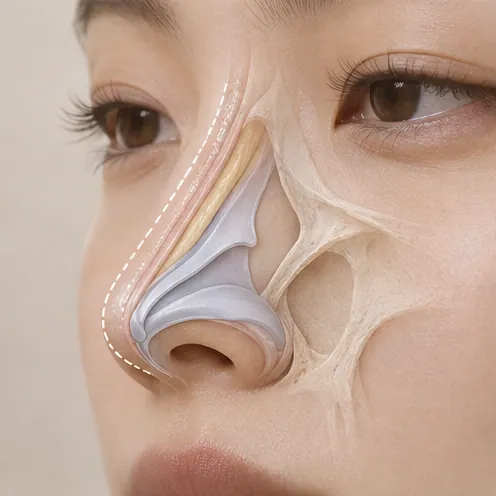
Key Questions Answered
Implant-free rhinoplasty: what do we assess first?
We explain both the changes possible with your own tissue and its limitations. We assess skin thickness and tension, support from the septal and alar cartilage, the area between the eyebrows and facial bone structure, and any breathing discomfort.
— Skin Thickness
— Cartilage Support
— Facial Bone Structure
— Breathing
YOUR CONCERN
Do any of these concerns
sound familiar?
“I'm concerned about synthetic implants.”
“I want a height that suits my face.”
“I'd like to discuss both my nasal tip and bridge.”
VITAL SIGNATURE 03 · NOSE
Whenever possible, we shape the nose through its structure.
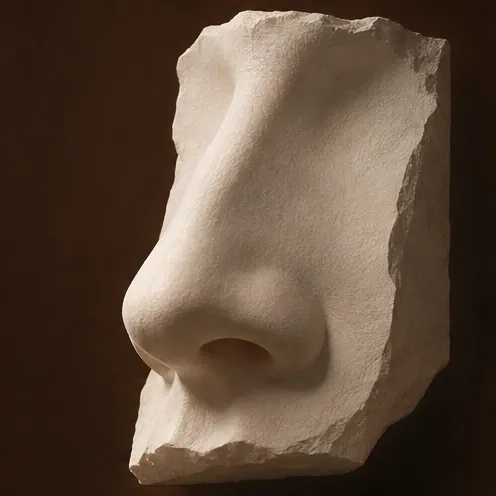
We first assess the structure and balance of the cartilage supporting the nasal tip. When an implant is more suitable, we explain why.
01
Nasal Tip Support
We first plan the alignment and support of the columella and nasal tip cartilage.
02
Using Your Own Tissue
We primarily use septal cartilage and consider other options, such as your own dermal tissue, depending on your condition.
03
When an Implant Is Needed
If the desired height or shape is difficult to achieve with your own tissue alone, we also explain how implants compare.
DOCTOR’S NOTE
Nasal height depends on what your facial structure allows, not simply how much height you want.
Nasal bridge height is determined by the height between the eyebrows, facial bone structure, the angle from the forehead to the nose, and skin thickness and tension. Adding height without considering these factors can look unnatural and may cause skin thinning, visibility of the underlying material, or inflammation. We do not consider all implants inherently bad; we first explain what is possible with your own tissue.
— Dr. Hyungwoo Yim
MYTH → FACT
“Can my nasal bridge be raised as much as I want?”
The design must stay within what your bone structure and skin can accommodate. Height beyond these limits may place strain on the tissues over time.
IN HIS WORDS
Ulsanbawi Rock on a Thatched Cottage
“Placing heavy cartilage on a weak nasal tip support is like placing Ulsanbawi Rock on the roof of a thatched cottage. First, the support must be built like reinforced concrete, with only the minimum necessary cartilage placed on top.”
THE DETAIL
Is Columellar Support Established First?
Whether the foundation is established with a septal extension graft and columellar strut before shaping affects whether the nasal tip droops or becomes crooked over time. We also assess breathing comfort.
RELATED RESEARCH
Plastic Surgery The Meeting 2018 (ASPS) · Wedge Graft: Derotational Septo-columellar Graft
PRS KOREA 2019 · Ease of Breathing Following Implant-Free Rhinoplasty Using Autologous Tissues
Rhinoplasty with Your Own Tissue,
What does the surgery involve?
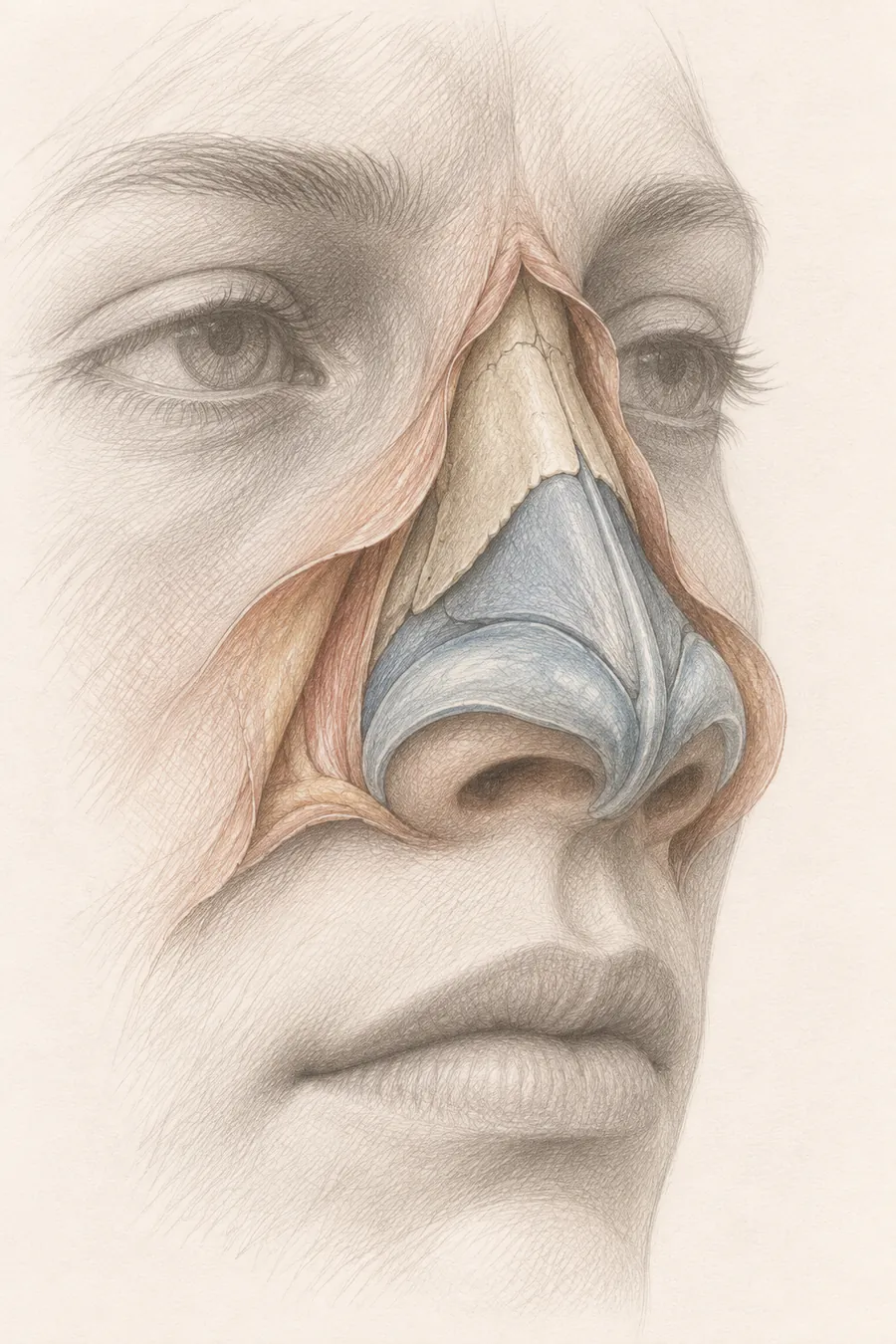
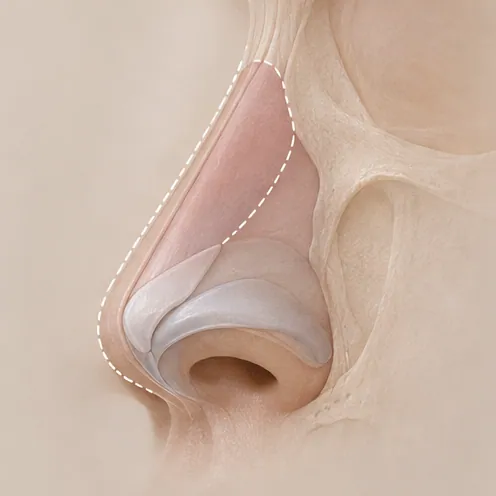
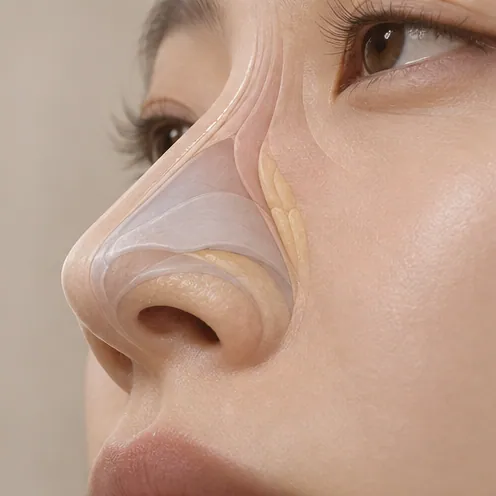
Rhinoplasty with your own tissue uses your cartilage and dermis to support the nasal tip and shape the bridge without an implant. We primarily use septal cartilage, which forms the wall inside the nose. Through an open approach with a small incision in the columella, we directly examine the tip cartilage and supporting structures during surgery. This does not mean implants are always bad. We select materials after assessing skin thickness, cartilage condition, the height between the eyebrows, and breathing function.
- Septal Cartilage
- This cartilage forms the wall between the nostrils. Because it is relatively straight and firm, it is commonly used to support the nasal tip.
- Columella
- This is the column between the two nostrils. If support in this area is weak, the nasal tip may droop over time.
- Your Own Dermal Tissue
- This tissue is taken from the dermal layer of your own skin. It may be considered to provide soft coverage over the nasal bridge or supplement thin areas.
In Rhinoplasty with Your Own Tissue
in Lower Blepharoplasty
We Establish Support Before Shaping
If cartilage is simply placed on a weak internal nasal tip support, that support can collapse over time. The tip may then become bulbous, crooked, or upturned, or the cartilage may become visible through the skin. We therefore first build a columellar strut with septal cartilage, then add only what is needed to shape the nose. This is why we prioritize the sequence of support over the amount of material.
We Do Not Build the Nose with Ear Cartilage Alone
Ear cartilage is curved and soft, making it difficult for it alone to support the weight of the nasal tip over time. Dr. Hyungwoo Yim considers deformation common when ear cartilage alone is used, so he uses tissue at least as structurally supportive as septal cartilage. The first consideration is whether the material can hold up over time, before deciding how much to raise the tip.
We Generally Do Not Recommend Rib Cartilage First
Rib cartilage is the cartilage at the front of the ribs, and the rib cage protects the lungs. Dr. Yim believes removing a normal structure for nasal surgery requires greater caution as patients age. He therefore plans primarily around septal cartilage and weighs the burden of harvesting against the benefits, rather than recommending rib cartilage first.
Considering Your Own Tissue for Shapes Achievable with Implants
When asked whether there are changes achievable with implants that cannot be achieved with a patient's own tissue, Dr. Yim answers no. However, your own tissue can also be absorbed or change shape, and the amount of available cartilage varies by person. Rather than insisting on an implant-free approach, we first assess how much of the desired shape can be achieved with the tissue available in your nose.
Facial Structure Determines Nasal Bridge Height
The nasal bridge cannot simply be raised as much as desired. The guiding factors are the height between the eyebrows, facial bone structure, the angle from the forehead to the nose, and dermal thickness and skin tension. Raising the bridge beyond these limits can look unnatural and may cause skin thinning, visibility of the underlying material, or inflammation. We therefore design within limits that maintain balance with your bone structure.
We Also Assess the Airway During the Same Surgery
If your nose is crooked, you snore, or you breathe through your mouth, the issue may involve more than appearance. Surgery using septal cartilage involves structures that also form the nasal airway, so we assess both appearance and function. Breathing after rhinoplasty with a patient's own tissue was also a topic Dr. Yim presented at PRS KOREA in 2019.
A Word from the Doctor
Dr. Hyungwoo Yim’s own words from his blog and interviews.
01Before Rhinoplasty
“The nose is not just the highest structure on the face. It is the structure that must hold up the longest.”
A nose that makes breathing difficult is unlikely to remain beautiful for long. Before surgery, the first thing I consider is how to ensure this nose will hold up over the next 10 years.”
02Why I Don't Use Implants
“Unless the nose is quite low, I prefer to perform surgery without a silicone implant. I cannot recommend something to my patients that I would not want implanted in my own body.”
Of course, silicone implants themselves are not inherently problematic. However, the body has an immune response, and when your physical condition declines, the likelihood of abnormal sensations, inflammation, and other problems around the implant can increase significantly.
Dr. Hyungwoo Yim, Medical Director
The Surgical Process Varies
Depending on Your Condition
When the Nasal Tip Is Low and Weak
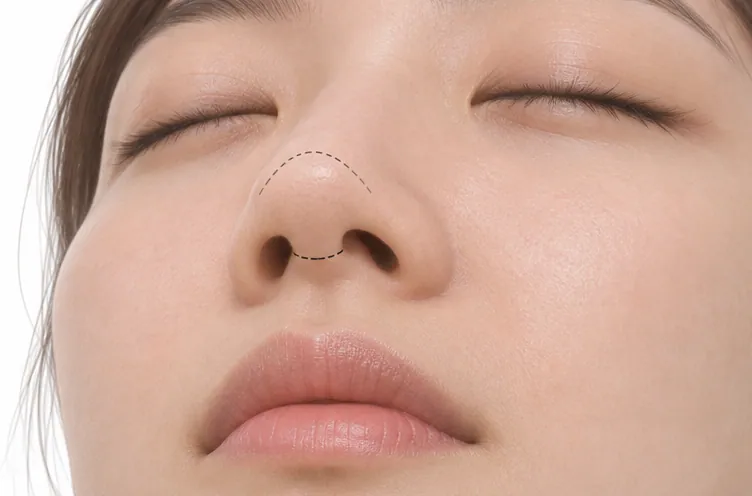 1
We plan the design based on nasal tip height, columellar angle, and skin thickness
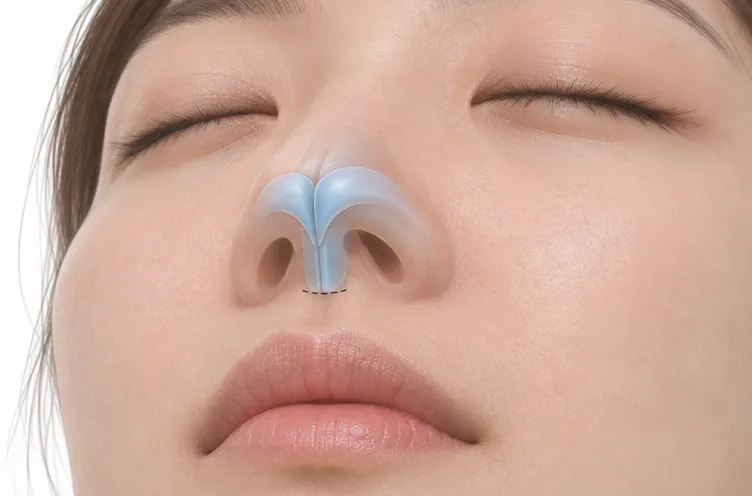 2
We make a small incision in the columella to expose the tip cartilage and harvest septal cartilage
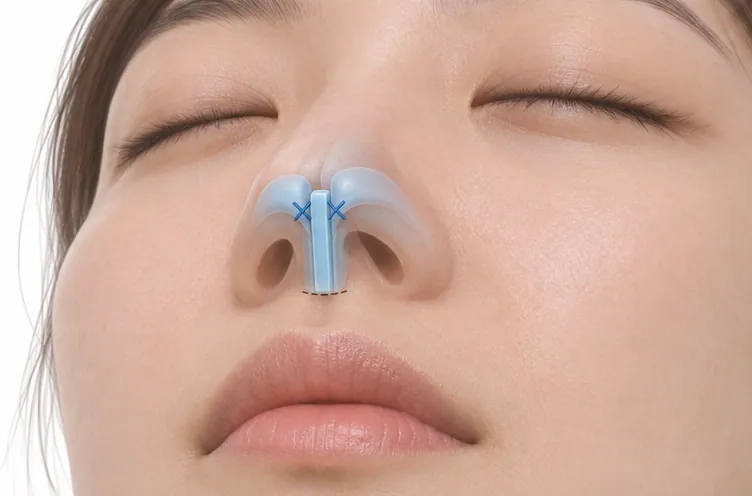 3
We build a columellar strut with septal cartilage, then bring the tip cartilages together and secure them
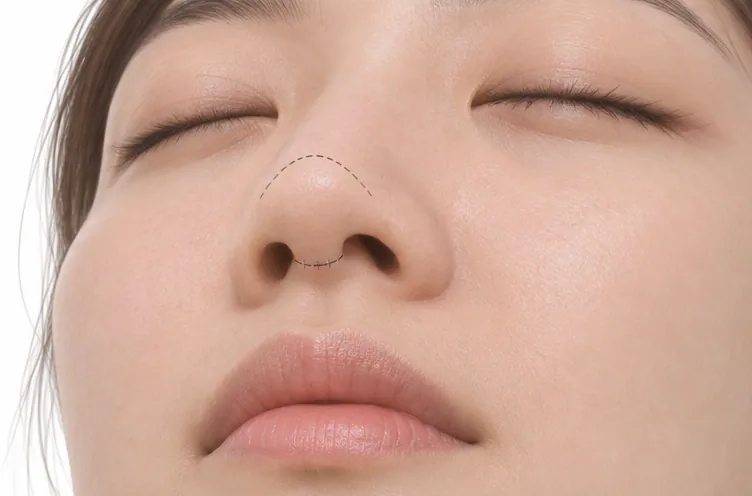 4
After checking the tip shape, we close the incisions in the columella and inside the nose
When the Nasal Bridge Is Also Low
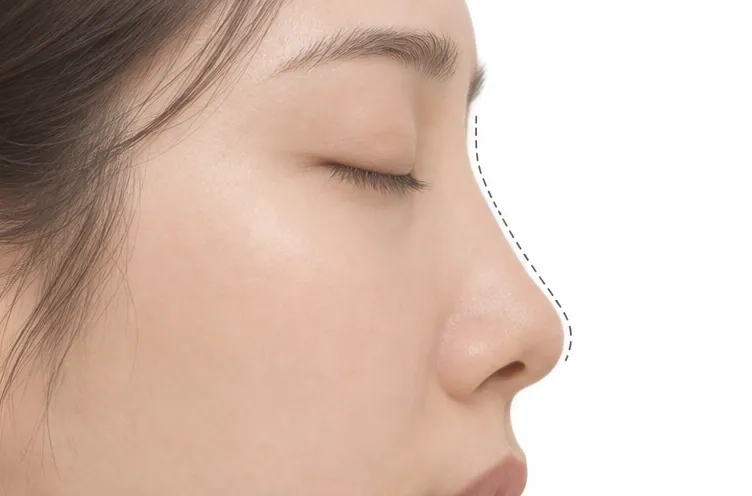 1
We determine bridge height by measuring the height between the eyebrows and the angle from the forehead
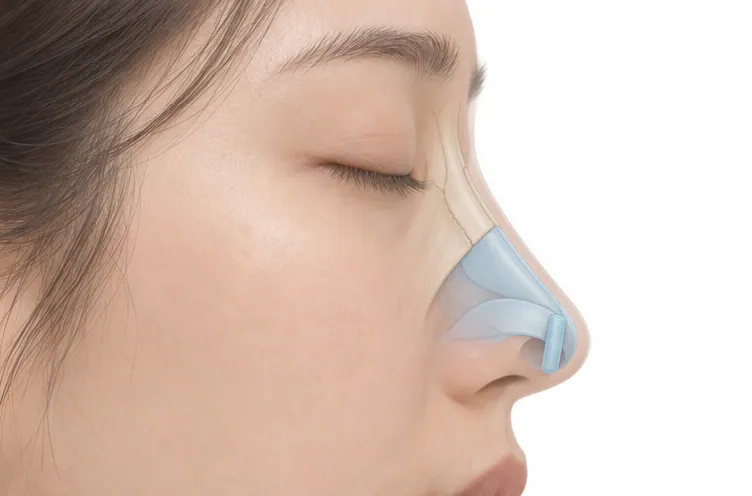 2
Through an open approach, we harvest septal cartilage and establish tip support first
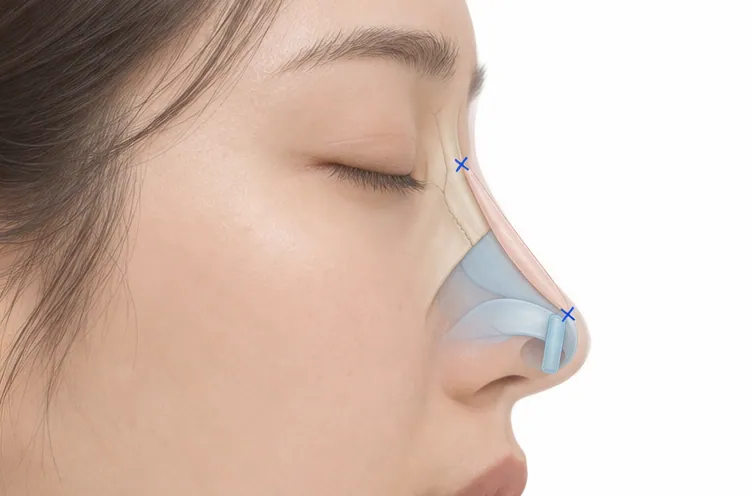 3
We fill the nasal bridge with finely diced cartilage or your own dermal tissue, connecting it to the tip
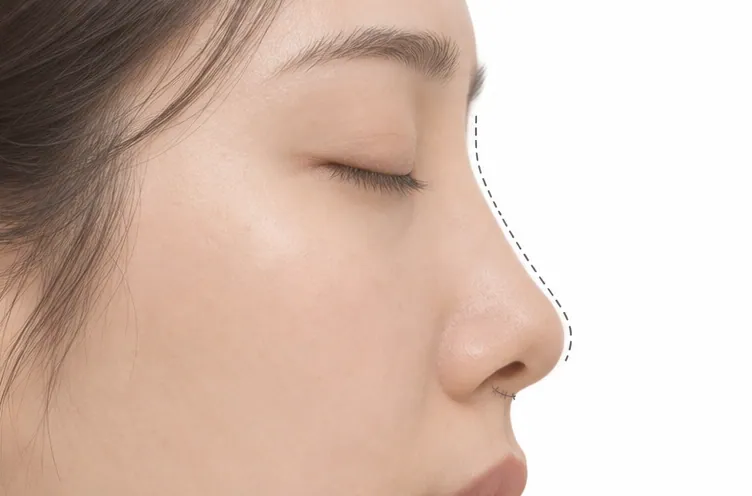 4
We check skin tension before closing the incisions
When Breathing Discomfort Is Also Present
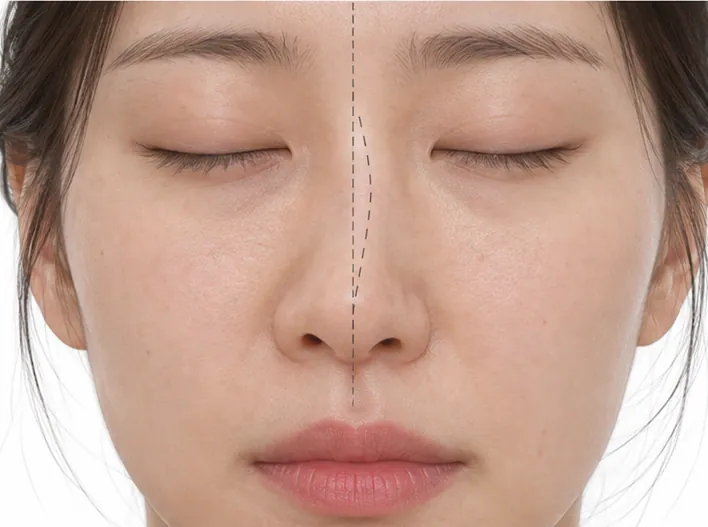 1
We assess both the obstructed side and any deviation in the nose's shape
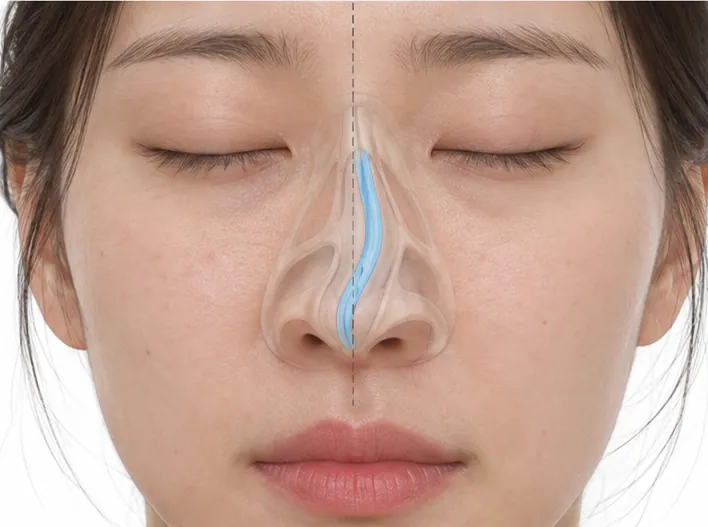 2
We access the nose through the columella and inside the nostrils to locate the deviated portion of the septum
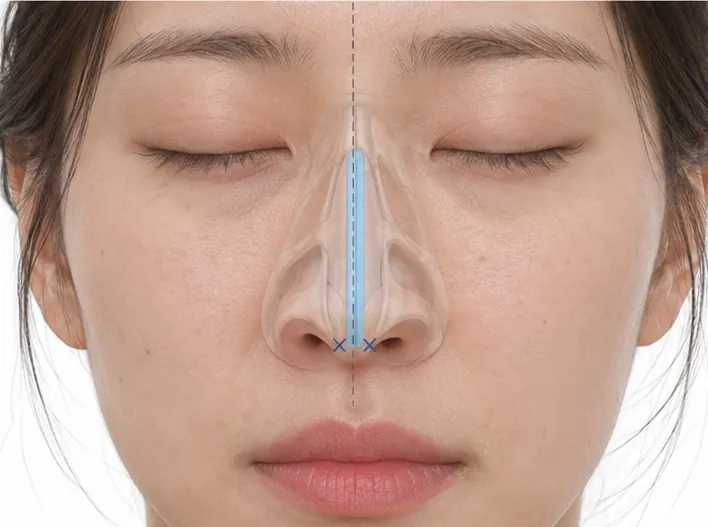 3
We trim the deviated portion for use as graft material and align the support with the midline
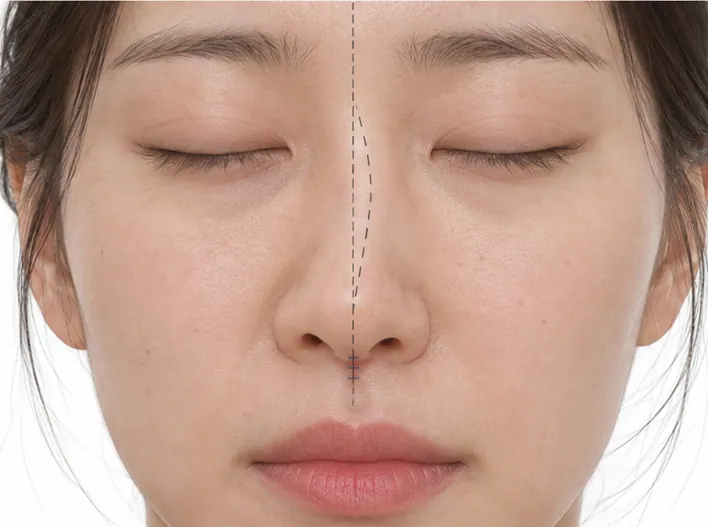 4
We close the nasal lining and columellar incisions
Illustration for explanation · Not an actual patient. This is a simplified description of typical steps. The actual technique and extent of surgery are determined after examination.
Implant-free rhinoplasty still requires structural support.
01
Precise Assessment
Skin · Cartilage · Bone structure in relation to overall facial proportions
02
Tip-Focused Planning
Starting with the alignment and support of the columella and tip cartilage
03
Implant-Free Approach
Prioritizing your own tissue, such as septal cartilage, when possible
04
Revision · Combined Correction
Assessing existing implants · Scars · Support together
05
Recovery and Maintenance
Monitoring breathing · Changes in shape over the long term
We do not describe all synthetic implants as bad or your own tissue as unconditionally safe. We also consider implants when needed.
HEIGHT VS SUPPORT
Adding Height First vs. Planning Support First
A · HEIGHT-FIRST
When Height Is Added First
1
Adding Height First
01 The shape may change if nasal tip support is weak
02 The height may not suit your facial proportions
03 Thin skin may lead to issues such as visibility of the underlying material
B · VITAL SUPPORT-FIRST
When Support Is Planned First
1
2
Starting with Nasal Tip Support
01 We first establish the alignment and support of the columella · Tip cartilage
02 We explain both the feasibility of using your own tissue and the burden of harvesting it
03 We select materials for the height needed
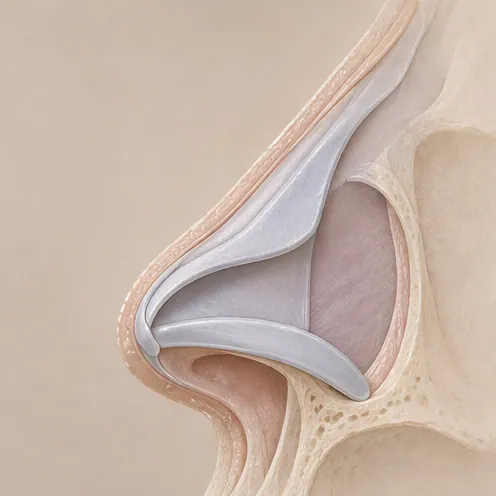
This simplified diagram is intended to aid understanding and is not an exact anatomical illustration.
1
Nasal Bone
2
Septal Cartilage
3
Alar Cartilage
4
Columellar Support · Your Own Cartilage
Support First
Before adding height, we first build the support beneath the nasal tip.
The nasal bones, septal cartilage, and alar cartilage forming the tip work together as one structure to support the nasal tip. Simply adding cartilage to weak support can lead to collapse or deviation over time. When possible, we first build a columellar strut with your own cartilage, then add only what is needed for the shape.
WHAT WE CHECK
Even when concerns look similar,
the factors to assess differ.
Skin Thickness and Tension
We assess the skin, cartilage, and bone in relation to your overall facial proportions.
Septal · Alar Cartilage Support
We evaluate height and shape, as well as support and any breathing discomfort.
Area Between the Eyebrows and Facial Bone Structure
Information about existing implants or previous surgery helps determine the treatment sequence.
DOCTOR'S DECISION
When choosing an approach, Dr. Hyungwoo Yim
looks at three things first.
Comparing Current Structure and Desired Changes
We use your medical history and examination findings to distinguish your current condition from the changes you want.
Assessing Material Suitability
We explain whether materials such as your own cartilage or dermal tissue are suitable and what harvesting may involve at the donor site.
Explaining Height Limits
We compare the height achievable with your own tissue, its limitations, and how it differs from implants.
You do not need to decide on surgery the day of your consultation.

When
to consider a consultation
- When you want to improve your nasal tip but are concerned about implants
- When you are concerned about implant-related inflammation, contracture, or deformity
- When you want to refine both the tip and bridge in proportion to your face
- When you have been told your nose is crooked or habitually breathe through your mouth
- When you want to remove an implant from a previous rhinoplasty and rebuild support
When
Surgery is not our first recommendation
- When your desired height exceeds what the area between your eyebrows and your skin can accommodate
- When previous surgery has left insufficient septal cartilage and graft materials need to be discussed first
- When severe rhinitis or inflammation inside the nose requires treatment first
- When systemic conditions such as diabetes or high blood pressure need to be assessed first
Preparing for surgery and
recovery by stage
- 3–4 days after surgery
Swelling is at its peak during this period. Sleep with your head slightly elevated.
- About 1 Week
The overall shape usually starts to become visible at this point. The nasal splint stays on for 1 week, nasal packing stays in place for 1–3 days, and stitches are removed after 5–7 days. The initial shape is not the final result.
- 4 weeks
Do not wear glasses or sunglasses for 4 weeks, and avoid alcohol, smoking, saunas, and strenuous exercise. Avoid activities that could involve an impact to the nose for 3 months. It is advisable to allow at least 2 weeks before social engagements.
- 6 months–1 year
Swelling and firmness in the nasal tip gradually subside over 6 months to 1 year, and the final shape is assessed after 1 year. Follow-up visits are scheduled at 1 · 3 · 6 months · 1 year.

No smoking · No alcohol
We provide these essential instructions before surgery. Smoking and alcohol affect bleeding and wound healing.
Medications · Supplements
We recommend stopping herbal medicines and supplements such as omega-3 when possible because they may increase bleeding. Please tell us about every medication you take.
Medical history
Please tell us about your medications, chronic conditions, and allergies.
Previous Surgery · Injected or Implanted Materials
Please tell us about any implants, fillers, threads, or other materials placed in your nose, and provide surgical records. If records are unavailable, photos of your current condition are the starting point.
Recovery times are averages and vary by individual. Please contact us immediately if you experience sudden severe pain, bleeding that does not stop, rapidly worsening swelling on one side, warmth, pus, or a fever of 38°C or higher.
FOLLOW THE CHANGE
We also document
and monitor changes after treatment.
01
STEP 01
Documenting your condition before treatment
We review previous treatments, your current condition, and the changes you hope to see.
02
STEP 02
Checking early responses · Wound healing
We explain precautions and symptoms that require contacting us.
03
STEP 03
Comparing appearance and function
Along with photos, we assess discomfort and changes in function.
04
STEP 04
Assessing additional care
We do not recommend the same additional treatments for everyone.
TREAT
Up to 3 months
Swelling · Bruising care, wound · Scar checks, and laser treatment for scars · Recovery when needed
ACTIVATE
After the recovery period
Consider regenerative care such as Re2O · PRP based on your individual condition
LAST
6 months–1 year
Scheduled follow-ups (1 week · 1 · 3 · 6 months · 1 year), skin · Firmness care
Care is determined after an examination based on the extent of surgery and your recovery. The same care is not recommended for everyone.
LIMITS & RISKS
Along with possible improvements,
we explain the limitations and risks.
Inflammation
Asymmetry
Resorption
Deformation
Scarring
Donor Site Discomfort
Changes in Breathing
Do not wait if you have these symptoms
If you experience sudden severe pain, bleeding that does not stop, rapidly worsening swelling on one side, or signs of possible infection such as a high fever or pus, contact us immediately rather than waiting for your appointment.
This is not a complete list of possible risks. Risks may vary depending on your health, previous treatments, and the technique and extent of surgery. Surgical results vary by individual.
RELATED SURGERY
Common questions
during consultations
Will removing septal cartilage weaken my nose?
The usual approach is to harvest the inner cartilage while preserving the front and upper margins that support the nose. The amount that can be used is determined through examination and assessment during surgery. If septal cartilage has been used in a previous surgery, there may not be enough available, so please let us know in advance.
When will I be able to see the shape?
After 1 week, about 90% of the nose’s shape is usually visible. However, swelling and firmness at the nasal tip gradually subside over 6 months to 1 year, and the final shape is assessed after 1 year, so the result should not be judged by its initial appearance alone.
Can I have eyelid surgery on the same day?
Same-day surgery may be considered after evaluating your health, total surgical time, and recovery demands. Combining procedures does not simply add their recovery periods together, but it may increase swelling, discomfort, and aftercare needs.
How long should I stay if I am traveling from abroad?
For rhinoplasty, about 7–14 days, including suture removal and the first follow-up visit, is a starting point for discussion. This is not a fixed clinic requirement, and a longer stay may be needed if reconstruction is required or risk factors are present.
Returning to your original concern
“I'm concerned about synthetic implants.”
There are things your own tissue can and cannot achieve. We first need to assess whether the tissue is suitable, the impact on the donor site, and whether your desired height is achievable.
Three things we check first during your consultation
- The difference between your current nasal structure and your desired changes
- Whether your own cartilage, dermis, or other tissue is suitable, and the impact on the donor site
- The height achievable with your own tissue and its limitations
When booking “Please first assess the height achievable with my own tissue.”Leave this brief note, and we can start your consultation with that concern.
These are our principles of care. The actual approach is determined after an examination. You do not need to decide the day of your consultation.
Related Treatments
Q & A
Before you decide,
frequently asked questions
Q
Does using my own tissue mean there are no complications?
−
A
Using your own tissue still carries surgical risks and the possibility of resorption or distortion. We do not describe artificial implants as uniformly bad or a patient’s own tissue as unconditionally safe.
Q
Can you add height without an implant?
−
A
The height achievable with your own tissue has individual limits. After assessing your skin thickness, cartilage condition, and desired height, we explain how this approach compares with implants.
Q
Are the cost, number of treatments, and recovery period fixed?
−
A
They depend on the examination findings and the scope of treatment. Exact costs and scheduling are discussed during the consultation after your examination.
Q
Can a treatment plan be finalized through a photo consultation alone?
−
A
Photos serve as a reference. A treatment plan should be determined after an in-person assessment of function, tissue condition, and overall health, along with a thorough explanation.
VITAL SIGNATURE 03 · NOSE · IMPLANT-FREE
Whenever possible, we shape the nose through structural support without implants.
✓
01 Nasal Tip Support Structure: We first plan the orientation and support of the columella and nasal tip cartilage.
✓
02 Using Your Own Tissue: We mainly use septal cartilage and, depending on your condition, also consider your own dermis and other tissue.
✓
03 When an Implant Is Needed: If the desired height or shape is difficult to achieve with your own tissue alone, we also explain how using an implant compares.
Before adding height, we first assess the structure and balance of the cartilage supporting the nasal tip. When possible, we plan the support structure using your own tissue instead of an implant. If an implant is more suitable, we explain why.
After surgery, VITAL LASTING CARE continues to support recovery, regeneration, and maintenance.
Concerns we assess together
DOCTOR'S COLUMN DOCTOR'S COLUMN DOCTOR'S COLUMN
Must Read
Care Notes Written by the Doctor · Please Read Before Your First Visit
No.1
No.3
VIEW MORE →
RESERVATION
You do not need to decide the day of your consultation.
Organize questions about this page without entering your name, contact information, or medical history. This does not submit an appointment request.