PLASTIC SURGERY
All Treatments / Surgery
Nasal tip support
Nasal Tip Surgery
Before adding height, we consider the support structure.
This may vary depending on your condition and the extent of surgery.
SHORT ANSWER
What do we check first when correcting nasal tip and columellar support?
Before adding height, we consider the support structure. During consultation, we assess the septum and alar cartilage · skin thickness and load · nasal tip direction and facial proportions.
DOCTOR'S NOTE
We do not place
Ulsanbawi Rock on a thatched cottage.
“
Stacking cartilage to add height when the nasal tip has weak support is like placing Ulsanbawi Rock on the roof of a thatched cottage. First, the pillar—the columellar support—must be firmly established. Then, the tip should be shaped with a minimal amount of cartilage.
Dr. Hyungwoo Yim · Approach to Care
Dr. Hyungwoo Yim, Medical Director · Based on the doctor's own answers. The actual scope of care is determined after an examination.
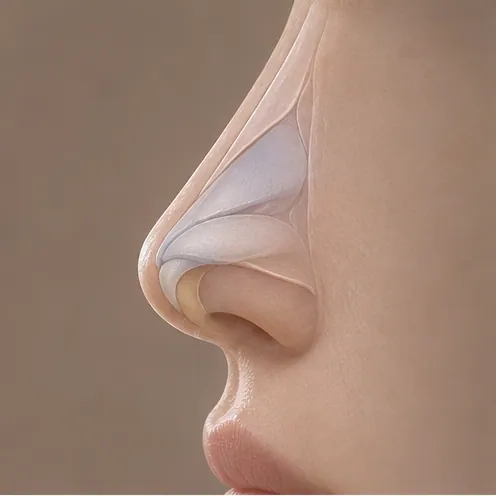
1
Nasal Bone
2
Septal Cartilage
3
Alar Cartilage
4
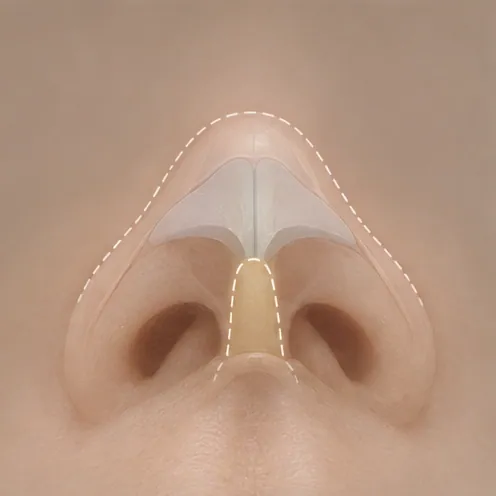
Columellar Support · Your Own Cartilage
Nasal Support
We do not place Ulsanbawi Rock on a thatched cottage.
Every tissue and structure in our bodies has a purpose. I believe surgery that damages normal structures requires greater caution as we age.
01 · START WITH YOUR CONCERN
Do any of these concerns
sound familiar?
What brings you in?
“My nasal tip looks low or droopy.”
“The shape changed after I had my nasal tip raised.”
“I don’t want an overly pointed tip.”
Before adding height, we consider the support structure.
We assess the skin, cartilage, and bone in relation to your overall facial proportions. We evaluate height and shape, as well as support and any breathing discomfort.
Nasal Tip and Columellar Support Correction,
What does the surgery involve?
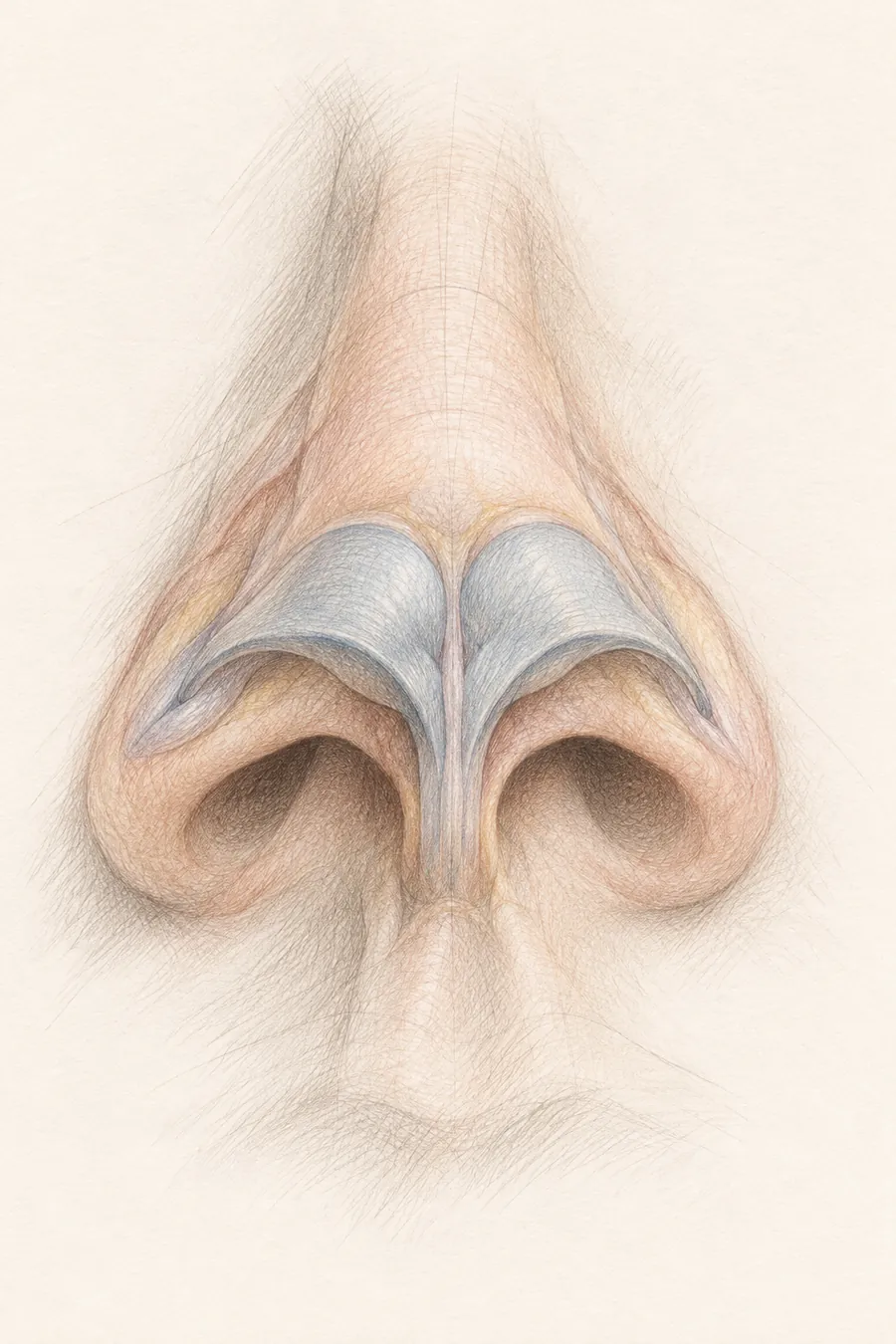
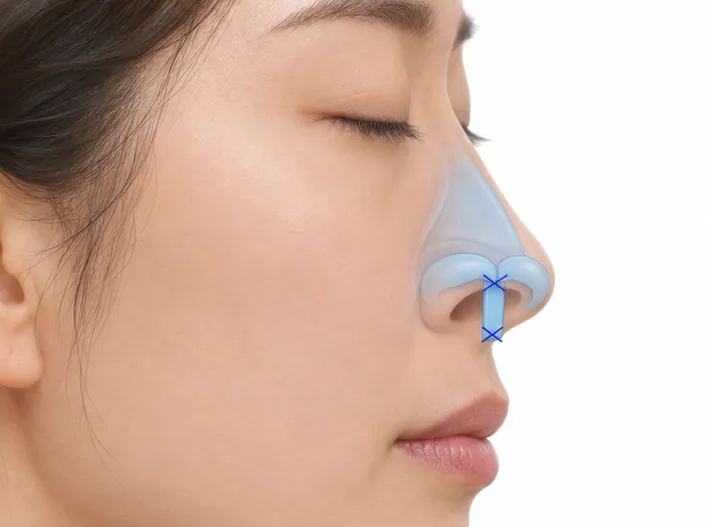
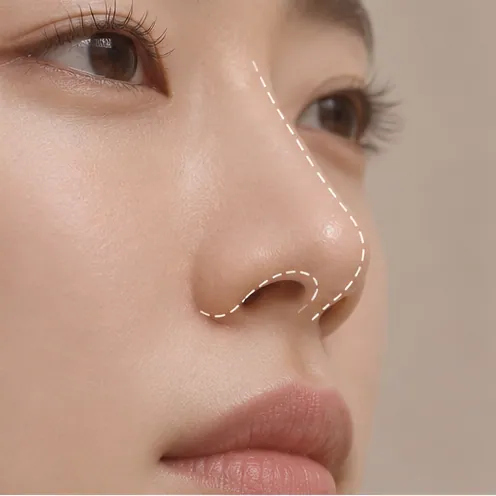
Nasal tip correction establishes the supporting pillar before increasing tip height. The tip is supported by the septal cartilage, alar cartilage, and columella together. If these structures are weak, anything placed on top may settle over time. A low tip, drooping tip, bulbous tip, and short, upturned nose may look different, but each requires assessing support and cartilage orientation first.
- Alar Cartilage
- A pair of cartilages, one on each side, that shape the nasal tip. If they are weak or spread apart, the tip may droop or look bulbous.
- Columellar Strut
- A cartilage support placed in the column between the nostrils. It forms the foundation for the nasal tip.
- Bulbous Tip
- A nasal tip that looks wide and rounded. Both cartilage shape and skin thickness contribute.
- Nostril Coverage Correction
- A correction that extends coverage along the nostril rims when too much of the nostrils is visible from the front.
In nasal tip and columellar support correction,
in Lower Blepharoplasty
we do not place a rock on a thatched roof
Dr. Hyungwoo Yim compares stacking heavy cartilage on a weakly supported nasal tip to placing Ulsanbawi Rock on a thatched roof. The tip may look higher at first, but if the support collapses over time, it may become more bulbous, crooked, or upturned. We first establish the supporting pillar like reinforced concrete, then shape the tip with a minimal amount of cartilage.
We assess the load before adding material
Thick skin presses down on the nasal tip with its weight, while thin skin may allow cartilage contours to show through. Maintaining the shape requires a balance between the strength of the internal support and the weight of the skin. We therefore first examine skin thickness and tension by touch, then determine the strength of the support and the amount of cartilage to add.
We assess cartilage and skin separately in a bulbous tip
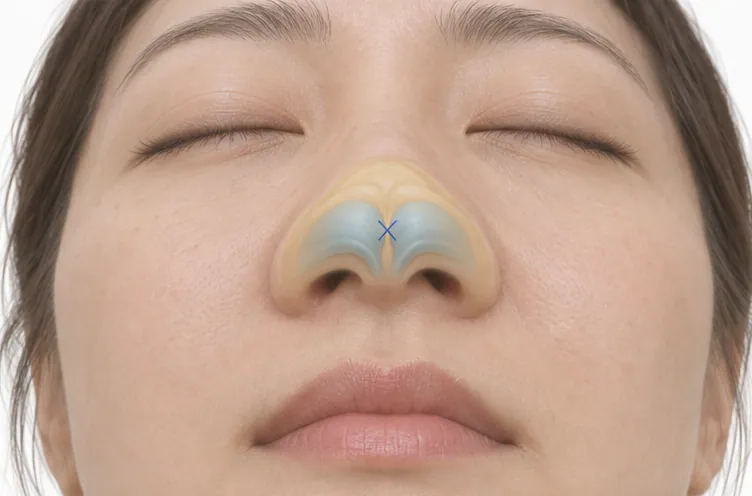
A bulbous tip may result from widely spread cartilage or from thick skin and the soft tissue beneath it. When cartilage is the cause, an option is to trim part of its upper portion and bring the two sides together with sutures. With thick skin, bringing the cartilage together may have limited effects on visible definition, so we first explain the extent of change that may be possible.
For an upturned nose, we address direction first
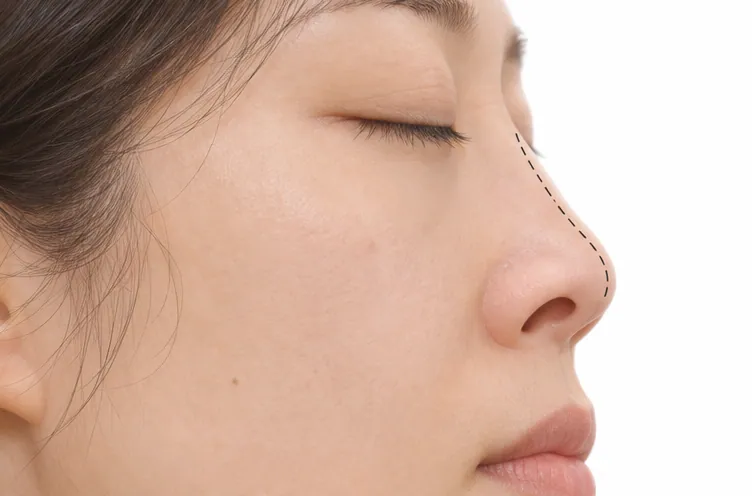
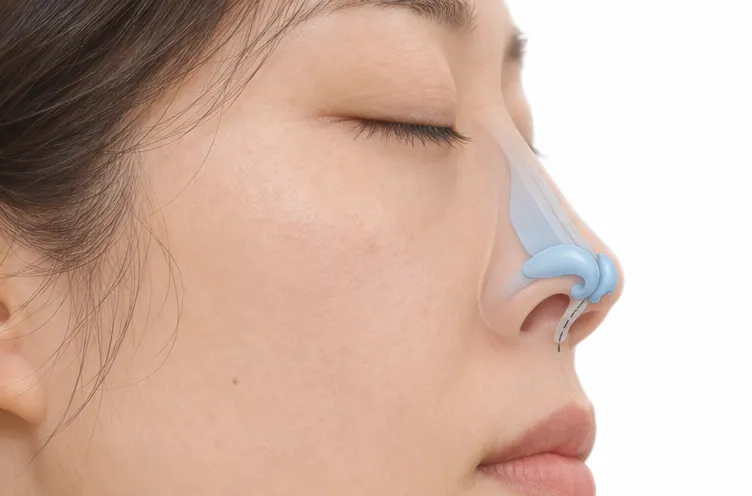
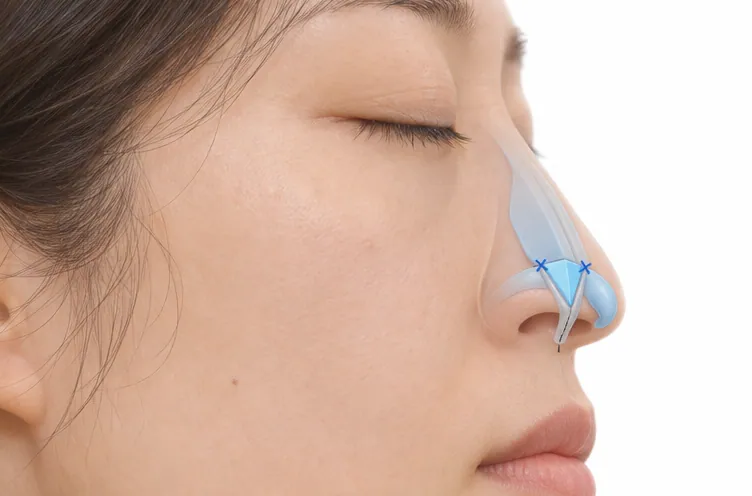
When a short or upturned nose exposes too much of the nostrils, we assess tip direction before adding cartilage for height. We consider extending the nose with septal cartilage or rotating the tip with a wedge-shaped cartilage graft. Dr. Hyungwoo Yim presented on this wedge graft technique at an aesthetic plastic surgery conference in Seoul in 2017 and at the American Society of Plastic Surgeons meeting in Chicago in 2018.
We assess the nasal alae separately from the tip
The approach depends on whether the nasal alae look wide because the tip is low or because the alae themselves are large. Raising the tip can change how the alae look, so we plan the tip first and then determine whether incisional alar reduction is truly needed. Incisions in the alae can leave scars, so we add them only when necessary.
We explain possible tip firmness in advance
After a support graft is placed, the nasal tip may initially feel firm and move less. Swelling and firmness in the nasal tip gradually subside over 6 months to 1 year, so it may look rounded or high at first. By 1 week, the nose usually shows about 90% of its shape, but it is helpful to know before surgery that the finer contours of the tip will continue to change gradually afterward.
A Word from the Doctor
Dr. Hyungwoo Yim’s own words from his blog and interviews.
01Shadows over height
“Ultimately, I believe nose surgery is not a question of how high the nose is made, but a question of light and shadow.”
The relationship between light and shadow is also very important in nose surgery.
Dr. Hyungwoo Yim, Medical Director
The Surgical Process Varies
Depending on Your Condition
For a low, drooping tip
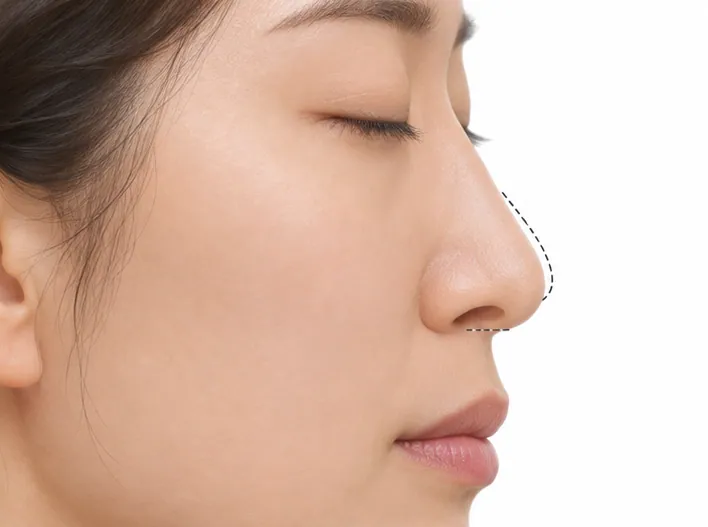 1
We plan the correction based on tip height and the direction of drooping
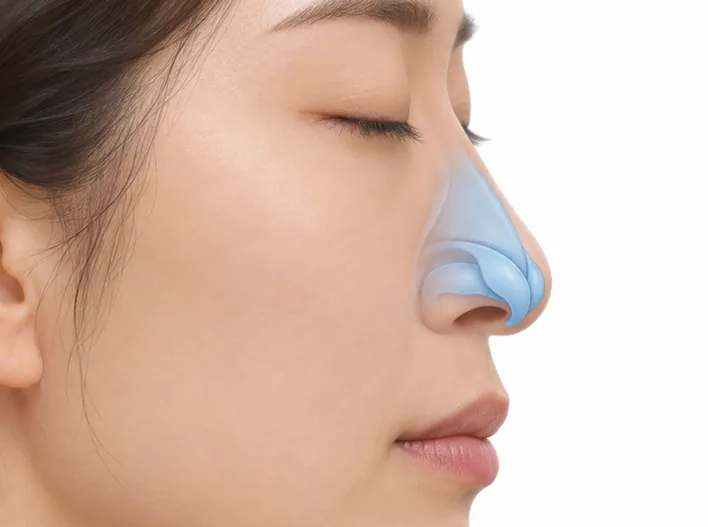 2
We make an incision across the columella to expose the alar cartilage and harvest septal cartilage
 3
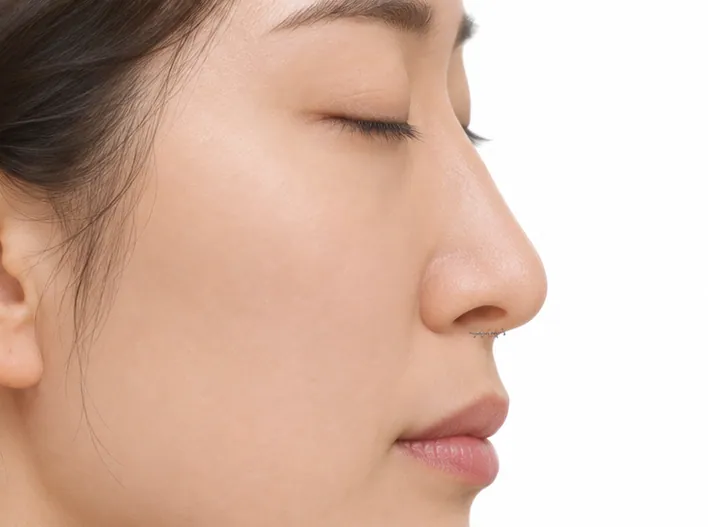
We place a columellar strut and position and secure the alar cartilage on it
 4
We add only as much cartilage as needed, then close the incisions
For a rounded, bulbous tip
 1
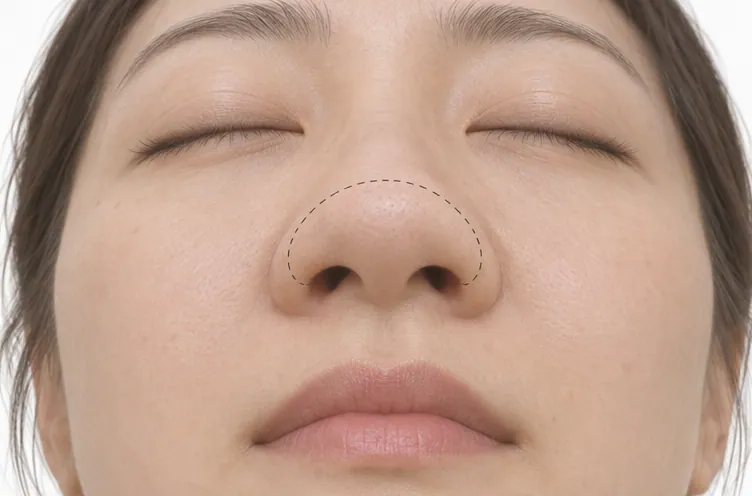
We assess cartilage width and skin thickness by touch and plan the correction
 2
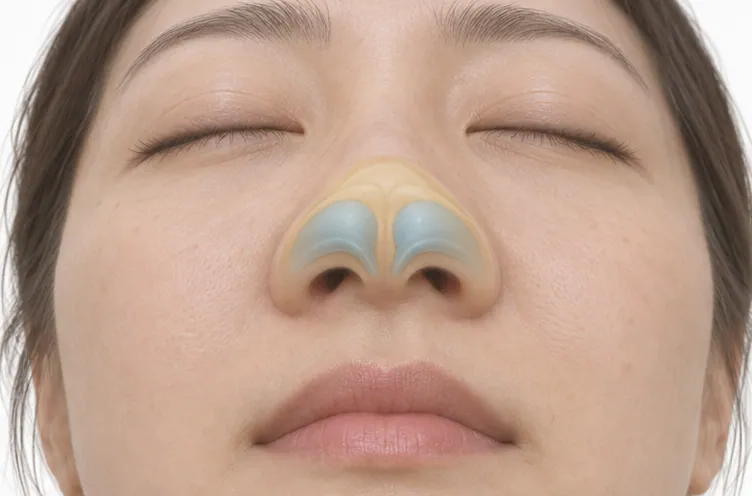
We make an incision across the columella to expose the widely spread tip cartilage
 3
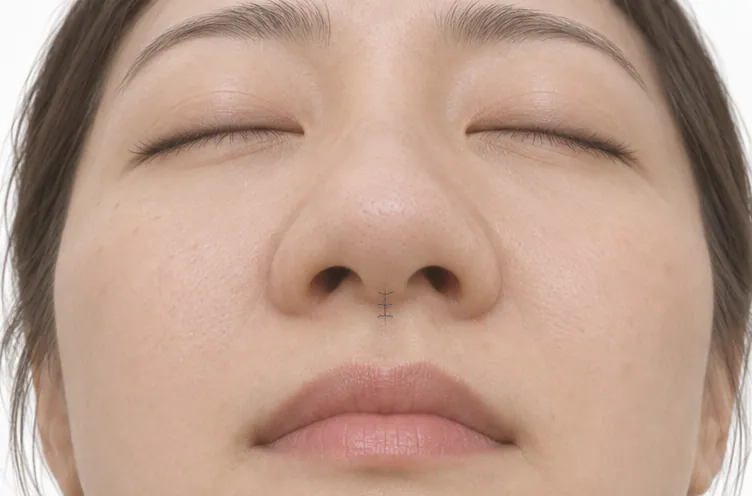
We trim the upper portion of the cartilage and bring the two sides together with sutures to secure them
 4
We close the incisions across the columella and inside the nose
For a short, upturned nose
 1
We measure nasal length, nostril exposure, and available skin
 2
We use an open approach and harvest septal cartilage
 3
We rotate the tip downward with a septal extension or wedge-shaped cartilage graft and secure it
 4
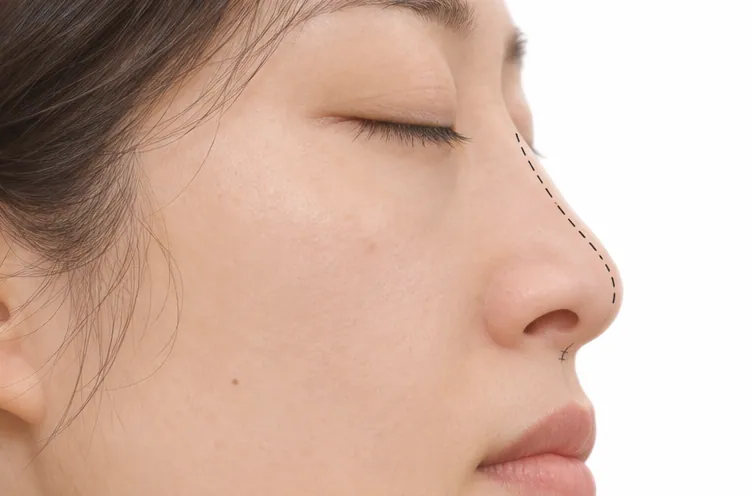
We check nostril exposure as we close the incisions
Illustration for explanation · Not an actual patient. This is a simplified description of typical steps. The actual technique and extent of surgery are determined after examination.
02 · WHAT WE LOOK AT
Even when concerns look similar,
the factors to assess differ.
Septum and Alar Cartilage
We assess the skin, cartilage, and bone in relation to your overall facial proportions.
Skin Thickness and Load
We evaluate height and shape, as well as support and any breathing discomfort.
Tip Direction and Facial Proportions
Information about existing implants or previous surgery helps determine the treatment sequence.
03 · DOCTOR'S DECISION
When choosing an approach, Dr. Hyungwoo Yim
looks at three things first.
Assess current support and the changes needed
Using your medical history and examination findings, we distinguish your current condition from your desired changes. At this stage, we identify the necessary conditions before choosing a treatment.
Prioritize support and balance over the amount of material
When comparing available methods, we explain the expected changes, the burden on the tissues, recovery, and potential remaining problems.
Explain the expected height and risk of deformity
We give you time to understand the explanation and ask questions. We may not recommend immediate treatment if its burden is greater or if you cannot allow enough time for recovery.
VITAL Plastic Surgery's principle is to recommend necessary treatment at the appropriate time. Having a consultation does not mean you need to decide on a procedure or surgery that day.
When
to consider a consultation
- When the tip looks low or droopy
- When the tip looks bulbous and wide
- When the nose is short and the nostrils are overly visible
- When the tip has collapsed or become crooked after previous tip surgery
- When you want to refine the tip without making it overly pointed
When
Surgery is not our first recommendation
- When residual tip swelling is still present
- When the cartilage remaining after previous surgery and the skin condition need to be assessed first
- When thin skin and a substantial desired increase in height create a high risk of cartilage showing through
- When the main concern is the nasal alae or bridge and tip support is adequate
04 · LIMITS & RISKS
Along with possible improvements,
we explain the limitations and risks.
Your desired changes — First, tell us what bothers you most and which aspects of your appearance you want to keep. We do not promise changes identical to photos or someone else's results.
Visible Cartilage
Deformation
Asymmetry
Inflammation
Scarring
Previous Treatments
Do not wait if you have these symptoms
If you experience sudden severe pain, bleeding that does not stop, rapidly worsening swelling on one side, or signs of possible infection such as a high fever or pus, contact us immediately rather than waiting for your appointment.
Conditions to address first — We first assess your health, inflammation and stage of recovery, and the range of feasible treatments. If needed, testing, observation, or other medical care may take priority.
Risks and limitations to discuss during consultation — visible cartilage, deformity, asymmetry, inflammation, scarring, and changes in nasal tip sensation. This is not a complete list of possible risks. Risks may vary depending on your health, previous treatments, and the technique and extent of surgery. These will be explained in detail during the examination and informed consent process.
Preparing for surgery and
recovery by stage
- 3–4 days after surgery
Swelling is at its peak during this period. Sleep with your head slightly elevated.
- About 1 Week
The overall shape usually starts to become visible at this point. The nasal splint stays on for 1 week, nasal packing stays in place for 1–3 days, and stitches are removed after 5–7 days. The initial shape is not the final result.
- 4 weeks
Do not wear glasses or sunglasses for 4 weeks, and avoid alcohol, smoking, saunas, and strenuous exercise. Avoid activities that could involve an impact to the nose for 3 months. It is advisable to allow at least 2 weeks before social engagements.
- 6 months–1 year
Swelling and firmness in the nasal tip gradually subside over 6 months to 1 year, and the final shape is assessed after 1 year. Follow-up visits are scheduled at 1 · 3 · 6 months · 1 year.

No smoking · No alcohol
We provide these essential instructions before surgery. Smoking and alcohol affect bleeding and wound healing.
Medications · Supplements
We recommend stopping herbal medicines and supplements such as omega-3 when possible because they may increase bleeding. Please tell us about every medication you take.
Medical history
Please tell us about your medications, chronic conditions, and allergies.
Previous Surgery · Injected or Implanted Materials
Please tell us about any implants, fillers, threads, or other materials placed in your nose, and provide surgical records. If records are unavailable, photos of your current condition are the starting point.
Recovery times are averages and vary by individual. Please contact us immediately if you experience sudden severe pain, bleeding that does not stop, rapidly worsening swelling on one side, warmth, pus, or a fever of 38°C or higher.
05 · FOLLOW THE CHANGE
We also document
and monitor changes after treatment.
01
STEP 01
Documenting your condition before treatment
We review previous treatments, your current condition, and the changes you hope to see.
02
STEP 02
Check Early Reactions · Wound Healing
We explain treatment-specific precautions and symptoms that require contacting us.
03
STEP 03
Comparing appearance and function
Along with photos, we assess discomfort and changes in function.
04
STEP 04
Assessing additional care
We explain additional treatment based on your condition rather than recommending the same treatment to everyone.
This is a general overview, not an actual patient case. Specific follow-up schedules vary by treatment method and recovery. If you experience sudden severe pain, persistent bleeding, or signs of possible infection, contact a medical facility immediately rather than waiting for your appointment.
Common questions
during consultations
Can changing just the tip make the whole nose look different?
Changing tip height and direction can also change the apparent proportions of the bridge and nasal alae. Even when you consult us only about the tip, we assess the bridge and alae together to determine the extent of surgery.
Why does residual tip swelling last so long?
The nasal tip has thick skin and dense tissue, so swelling tends to subside more slowly than in other areas. The overall shape of the nose is usually visible after 1 week, but swelling and firmness in the tip gradually subside over 6 months to 1 year. The final shape is assessed after 1 year.
Do you never use ear cartilage?
We believe that shaping the tip with ear cartilage alone often leads to deformity, so we use tissue at least as strong as septal cartilage. If septal cartilage is insufficient, the material plan is determined after an examination.
Related Reading
BEFORE YOU DECIDE
Before you decide,
frequently asked questions
Questions to review together before deciding.
Based on questionnaire responses from Dr. Hyungwoo Yim · Last updated October 2026 Specific methods and their scope are discussed individually after an examination.
Q
Will adding more ear cartilage keep the tip higher?
−
A
The amount of material alone does not determine the result. We assess what the skin and internal support structures can accommodate, along with the properties of the material.
Q
Are the cost, number of treatments, and recovery period fixed?
+
Q
Can a treatment plan be finalized through a photo consultation alone?
+
DOCTOR'S COLUMN DOCTOR'S COLUMN DOCTOR'S COLUMN
Must Read
Care Notes Written by the Doctor · Please Read Before Your First Visit
No.1
No.3
VIEW MORE →
Once you feel fully informed, schedule a consultation.
Nasal Tip and Columellar Support Correction Book a Consultation
You do not need to decide the day of your consultation.