PLASTIC SURGERY
MEDICAL COLUMN
Questions Answered Directly by the Doctor Before You Decide on Surgery
Nose
Articles
Male Rhinoplasty: Will Adding Height Alone Look Unnatural?
Male rhinoplasty is not a separate type of surgery. At VITAL Plastic Surgery, facial structure, rather than sex, guides the approach. Nasal bridge height is determined by the height between the eyebrows, facial bone structure, the angle where the forehead meets the nose, and skin thickness and tension.
Medically reviewed by Dr. Hyungwoo Yim, Medical Director (board-certified plastic surgeon) · Published November 2, 2026 · Last reviewed November 11, 2026
SHORT ANSWER
First, the Short Answer
- Male rhinoplasty is not a separate type of surgery. At VITAL Plastic Surgery, facial structure, rather than sex, guides the approach. Nasal bridge height is determined by the height between the eyebrows, facial bone structure, the angle where the forehead meets the nose, and skin thickness and tension.
- Adding height beyond these limits can look unnatural and may also cause skin thinning, visible graft or implant material, and inflammation. That is why we first build the support beneath the nasal tip before adding height, using your own septal cartilage whenever possible.
- VITAL Plastic Surgery first assesses the difference between your current nasal structure and your desired changes, whether your own tissue is suitable and what harvesting it would involve, and the height that your own tissue can achieve and its limits. Breathing difficulties are evaluated during the same consultation.
“Will a man's nose look unnatural if you only add height?”
This is a paraphrase of a question we often hear during consultations.
To answer this question, we first need to distinguish where your current concern comes from. We will explain each point below, then return to the original question at the end.
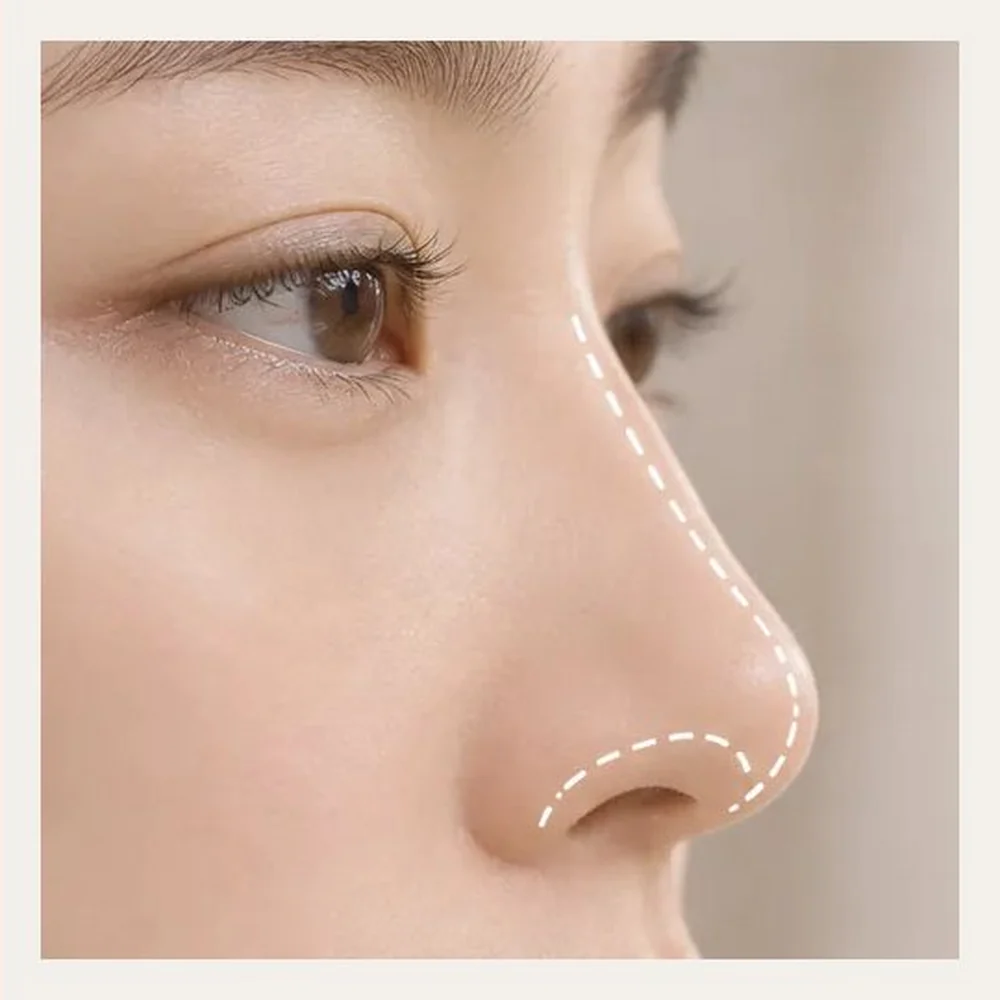
01What is different about male rhinoplasty?
Answer The surgical principles are the same. Your desired appearance and facial proportions guide the approach.

VITAL Plastic Surgery's guidance on rhinoplasty using your own tissue does not set separate standards for men and women. Instead, height and shape are determined by the height between the eyebrows, facial bone structure, the angle where the forehead meets the nose, the angle between the nose and upper lip, and skin thickness and tension. Applying the same criteria to each person's face produces different results. On a man's face, those results follow the proportions of that face.
During the consultation, we therefore ask about the specific appearance you want rather than simply asking whether you want a “masculine” nose. Whether to make the nasal profile straight or leave a slight curve is one choice you can make. The same principle applies to choosing the direction of the tip within your facial proportions without making it excessively pointed.
A study of satisfaction after rhinoplasty reported differences by sex. In a study that followed 62 rhinoplasty patients before surgery, at six months, and at one year, nasal obstruction decreased and satisfaction with appearance increased, with men showing a greater improvement in satisfaction than women1. Because this was a single-center study, its findings are difficult to generalize, but they do not support the idea that men get less benefit from rhinoplasty.
- Whether to make the nasal profile straight or leave a slight curve
- How much to project the tip, and whether you want to avoid an excessively pointed shape
- The starting height of the nasal bridge between the eyebrows
- Whether you have difficulty breathing or have been told that your nose is crooked
In Simple Terms It is similar to having a suit tailored. A suit looks natural when it fits your shoulder line and body shape, rather than following fashionable measurements. Pads larger than your shoulders make the suit stand away from your body. The inner interfacing, rather than the outer fabric, helps the suit hold its shape over time, and the thickness of the fabric affects how sharply it can be shaped. Similarly, nasal height is tailored to the facial bone structure and the area between the eyebrows—the equivalent of the shoulder line. The internal support beneath the tip is built first, like interfacing, and the shape is refined to suit the thickness of the skin, like fabric. A man's nose does not call for a different outfit; it calls for the same tailoring process fitted to the individual.
So how much can the nasal bridge be raised?
02How much can the nasal bridge be raised?
Answer As much as your facial structure allows, rather than as much as you want.
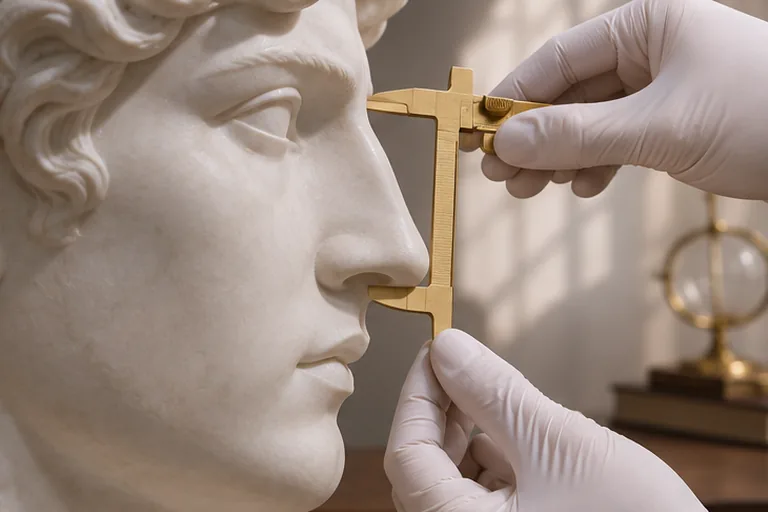
Nasal bridge height is determined by the height between the eyebrows, facial bone structure, the angle where the forehead meets the nose, and the thickness and tension of the skin's dermal layer. Raising it beyond these limits can make the bridge look unnatural and may cause skin thinning, visible graft or implant material, and inflammation. Height beyond these limits can place strain on the nose over time.
VITAL Plastic Surgery does not consider implants universally bad or describe your own tissue as unconditionally safe. The height achievable with your own tissue has individual limits, so we assess skin thickness, cartilage condition, and your desired height before explaining how it compares with an implant. If the desired height or shape is difficult to achieve with your own tissue alone, we also explain why an implant may be more suitable.
Thick skin weighs down the nasal tip, while thin skin may allow cartilage contours to show through. The strength of the internal tip support must be balanced with the weight of the skin to maintain the shape. VITAL Plastic Surgery therefore first assesses skin thickness and tension by touch, then determines the strength of the support and the amount of cartilage to add. This is why setting height limits and building support are part of the same process.
| Approach | What may happen | What we look at first |
|---|---|---|
| When Height Is Added First | The shape may change if tip support is weak | Support from the columella and tip cartilage |
| When height exceeds facial proportions | The bridge may look out of proportion with the face | Height between the eyebrows, forehead-to-nose angle |
| When height is added beneath thin skin | The skin may be strained, and graft or implant material may show through | Skin Thickness and Tension |
| When Support Is Planned First | Choose material based on the height needed | Availability of your own tissue and the burden of harvesting it |
So why is tip support built first?
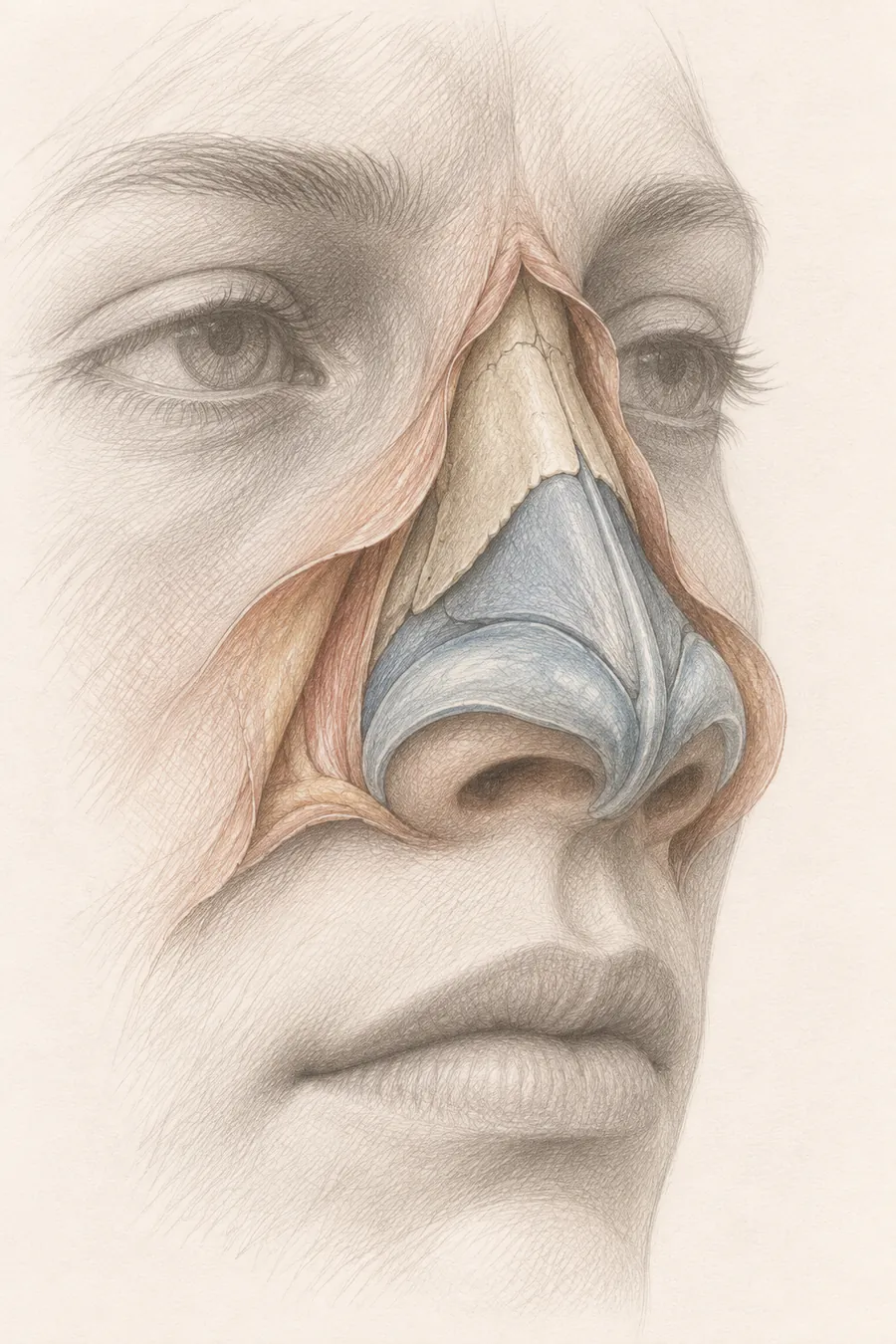
03Why is tip support built first?
Answer Because simply adding material to a poorly supported tip can cause it to collapse or bend over time.
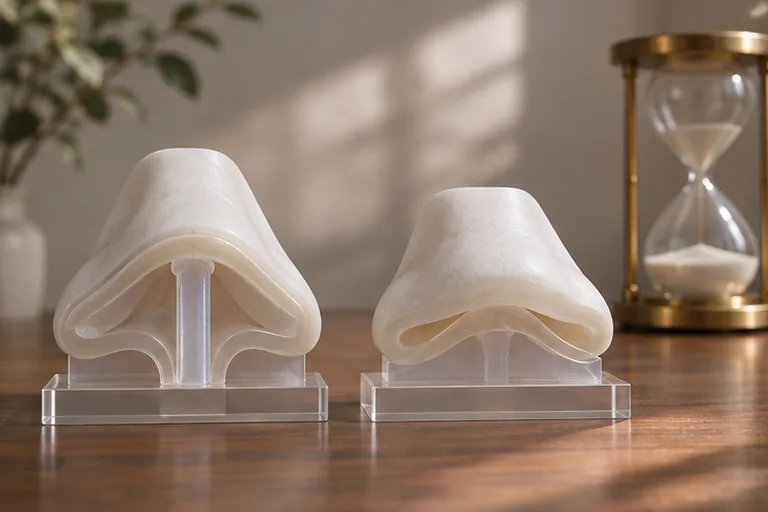
If cartilage is simply placed over weak internal tip support, the support can collapse over time, and the tip may become bulbous, crooked, or upturned, or the cartilage may show through. VITAL Plastic Surgery therefore first uses septal cartilage, which forms the wall between the nasal passages, to build a columellar strut—a support for the column between the nostrils. We then add only as much material as needed to shape the tip. The sequence of building support takes priority over the amount of material.
We do not build the nose with ear cartilage alone. Ear cartilage is curved and soft, making it difficult for it alone to support the weight of the tip over time. We therefore use at least septal cartilage or tissue with greater structural strength. Rib cartilage is not our first recommendation because harvesting it removes part of the normal rib cage structure.
The amount of usable septal cartilage varies from person to person. A study using 3D facial bone CT scans of 123 Koreans found that the total septal area changed little after the teenage years, but the cartilage portion gradually turned to bone with age after puberty, reducing the area of cartilage available for harvesting2. This is why the graft material needs to be planned in advance if you are older or have previously had septal cartilage harvested.
Septal cartilage is generally harvested from the inner portion while preserving the front and upper borders that support the nose. How much can be used is determined during the examination and surgery. Please let us know in advance if your septal cartilage has been used before, as there may not be enough remaining. Depending on the condition, we may also consider an autologous dermal graft, taken from the dermal layer of your own skin, to provide a smooth covering over the nasal bridge or add coverage in thin areas.
- Plan the shape based on tip height, columellar angle, and skin thickness
- Make a small incision in the columella to expose the tip cartilage and harvest septal cartilage
- Build a columellar strut with septal cartilage, then bring the tip cartilages together and secure them
- If the bridge is also low, fill it with finely diced cartilage or your own dermal tissue to connect it with the tip
So are breathing difficulties evaluated too?
04Are breathing difficulties evaluated too?
Answer Yes. Surgery using septal cartilage involves structures that also form the nasal airway, so we evaluate them together.

If your nose is crooked, or if you snore and breathe through your mouth, the issue may involve more than appearance. Because surgery using septal cartilage involves structures that also form the nasal airway, VITAL Plastic Surgery evaluates both appearance and function. If breathing is difficult, we assess the obstructed side along with the external deviation of the nose, reshape the deviated portion of the septum for use as graft material, and position the support along the midline.
In the previously mentioned follow-up study of 62 patients, most reported less nasal obstruction and an improved sense of smell after surgery, but smokers had worse nasal obstruction at one year1. VITAL Plastic Surgery also instructs patients to stop smoking and drinking alcohol before surgery because both affect bleeding and wound healing.
If you have severe rhinitis or inflammation inside your nose, treatment for that comes before surgery. Please tell us about any breathing difficulties before surgery so we can include the scope of treatment in your plan along with changes to your nose's appearance.
- Which side feels blocked and when
- Snoring or habitual mouth breathing
- Whether you have ever been told your nose is crooked
- Previous treatment for rhinitis or inflammation inside your nose
What if I also have a dorsal hump or a wide nasal bridge?
05What if I also have a nasal hump or a wide bridge?
Answer Before reducing a hump, we first assess whether it is bone or cartilage and how it connects to the nasal tip.
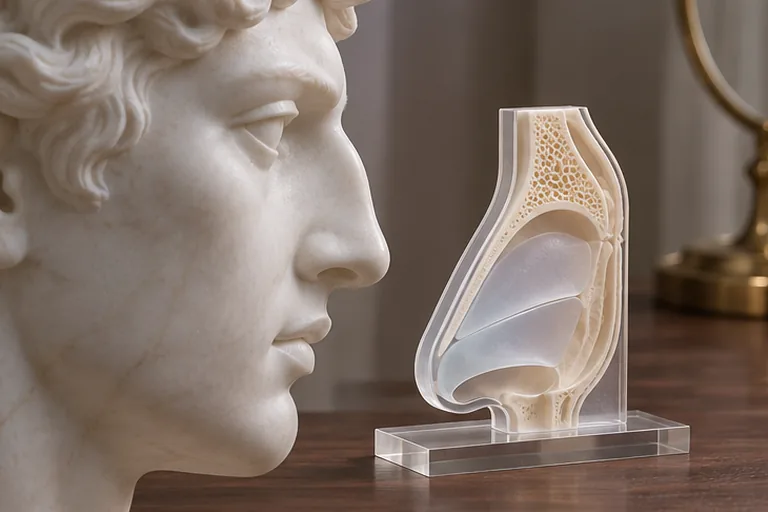
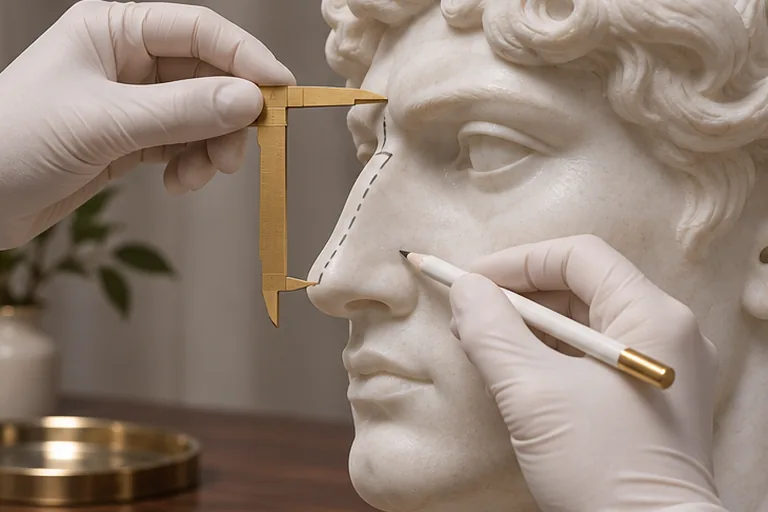
If a hump on the nasal bridge makes your profile look pronounced, we plan hump reduction as part of surgery. Simply removing the hump can leave the bridge looking wider or the tip looking droopy. We first determine whether the prominence is in the bone or cartilage, then decide together whether nasal osteotomies are needed and whether to build tip support.
The bridge can be made straight or retain a slight curve. Tell us what kind of profile you want so we can decide together how much to reduce. However, subtle differences in the contour may remain depending on your skin and bone condition. A drooping tip can make a dorsal hump look more prominent than it is, so we also assess whether supporting and lifting the tip could reduce the amount of hump removal needed.
Removing a hump can separate the upper sides of the nasal bridge, which previously met like a roof, making the bridge look flat and wide. Nasal osteotomies may be needed to bring the bones together and close this opening. A small hump may only need contouring, so we estimate the amount of reduction in advance to determine whether osteotomies are needed. Lowering the cartilage of the bridge can make the internal nasal airway feel narrower, so we also check for breathing difficulties beforehand.
What is recovery like, and how much time should I set aside?
06What is recovery like, and how much time should I set aside?
Answer The overall shape is usually visible after 1 week, but residual tip swelling takes more than a month to subside.

At VITAL Plastic Surgery, rhinoplasty using your own tissue takes approximately 1 hour and 30 minutes and is performed under sedation and local anesthesia (general anesthesia may be used if rib cartilage is used). You can go home the same day. About 90% of the nose’s shape is usually visible after one week, but residual swelling at the tip takes at least a month to subside, so the result should not be judged by its early appearance alone. It is a good idea to allow at least two weeks before social engagements.
If surgery includes nasal osteotomies, bruising and swelling may extend to the area around the eyes, which should be considered when planning your schedule. Follow-up visits are at 1, 3, and 6 months and 1 year. We assess discomfort and changes in breathing as well as photographs. If the nasal bones were treated, take care to avoid any impact to the bridge early in recovery.
For patients traveling from abroad, a stay of about 7–14 days for rhinoplasty, including suture removal and the first follow-up visit, is a starting point for discussion. This is not a fixed clinic requirement. A longer stay may be needed if reconstruction is required or risk factors are present, so confirm the timing during your consultation before booking flights.
| Timing | What Happens | What to Keep in Mind |
|---|---|---|
| 3–4 days after surgery | Peak Swelling | Sleep with your head slightly elevated |
| About 1 Week | The overall shape usually starts to become visible around this time | The early appearance is not the final result |
| 1 Month or Longer | Residual tip swelling remains | Allow at least 2 weeks before social engagements |
| 3 months–1 year | The tissues soften and the tip settles | Follow-ups at 1, 3, and 6 months and 1 year |
When would you advise against proceeding right away?
07When is surgery not recommended right away?
Answer When the desired height exceeds what the area between the eyebrows and the skin can accommodate, or when another condition needs treatment first.
If previous surgery has left insufficient septal cartilage, we need to discuss tissue options first. If you have severe rhinitis or inflammation inside your nose, that needs treatment first. We also assess systemic conditions such as diabetes and high blood pressure. Having a consultation does not mean you need to decide on surgery that day.
Using your own tissue still carries surgical risks and the possibility of resorption or changes in shape. Risks explained by VITAL Plastic Surgery include inflammation, asymmetry, resorption, changes in shape, scarring, discomfort at the tissue harvest site, and changes in breathing. This is not a complete list. If you experience sudden severe pain, bleeding that will not stop, rapidly worsening swelling on one side, or signs of possible infection such as a high fever or pus, contact us immediately without waiting for your scheduled appointment.
We document and monitor your recovery. We first record your condition before surgery and the changes you hope to achieve. Early on, we explain wound care and symptoms that require contacting us. Later, we compare changes in appearance and breathing. The need for additional care is assessed individually.
- When your desired height exceeds what the area between your eyebrows and your skin can accommodate
- When previous surgery has left insufficient septal cartilage and graft materials need to be discussed first
- When severe rhinitis or inflammation inside the nose requires treatment first
- When systemic conditions such as diabetes or high blood pressure need to be assessed first
08Three things we check first during your consultation
What we assess first during consultation
- The difference between your current nasal structure and your desired changes
- Whether your own cartilage, dermis, or other tissue is suitable, and the impact on the donor site
- The height achievable with your own tissue and its limitations
These are general care principles. The actual decision is made after an examination.
When other care is needed first We do not recommend proceeding with surgery right away if the desired height exceeds what the area between the eyebrows and the skin can accommodate, previous surgery has left insufficient septal cartilage, rhinitis or inflammation inside the nose is severe, or systemic conditions such as diabetes or high blood pressure need assessment first. In these cases, treating inflammation or planning tissue options comes first.
Here is the answer to the opening question, “Won't a man's nose look unnatural if you only make it higher?” An unnatural appearance usually occurs when the height exceeds what the facial structure can accommodate, rather than from height alone. By first determining the height limit based on the area between the eyebrows, the underlying bone structure, and skin thickness, then building tip support and adding only as much height as needed, we can shape the nose within the proportions of a male face.
— VITAL Plastic Surgery
When booking, simply leave a note saying, “Please start by assessing how much height my facial structure can accommodate,” and we will begin there during your consultation. Having a consultation does not mean you need to decide that day.
Related ReadingRhinoplasty Prioritizing Your Own Tissue: Care Guide
READ NEXT
Read Next
FAQ
Frequently Asked Questions
Do men get less noticeable results from rhinoplasty because their skin is thicker?
Skin thickness varies from person to person, so we do not make assumptions based on sex. We first assess skin thickness and tension by touch, then determine the strength of the support and how much height to add.
Will removing septal cartilage weaken my nose?
The usual approach is to harvest the inner septal cartilage while preserving the front and upper borders that support the nose. How much can be used is determined during the examination and surgery.
Can you add height without an implant?
The height achievable with your own tissue has individual limits. After assessing your skin thickness, cartilage condition, and desired height, we explain how this approach compares with implants.
When will I be able to see the shape?
By one week, about 90% of the shape is usually visible, but residual swelling at the tip takes more than a month to subside.
Can I have eyelid surgery on the same day?
Combined surgery may be considered after assessing your health, total operating time, and recovery demands. Having procedures together may increase swelling and aftercare needs.
BEFORE CONSULTATION
What to Prepare Before Your Consultation
- Your desired profileBring photos or a description of your desired appearance, including whether you want a straight bridge or a slight curve.
- Breathing difficultiesTell us which side feels blocked and whether you snore or habitually breathe through your mouth.
- Previous surgery and materials placed in your noseTell us about any implants, fillers, threads, or other materials placed in your nose, and share your surgical records. If you do not have records, start with current photos.
- Smoking and medicationsYou must stop smoking and drinking alcohol before surgery. Tell us about your medications, chronic conditions, and allergies.
- SchedulingAllow at least 2 weeks before social engagements, and account for bruising if surgery includes osteotomies.
REFERENCES
References
- Obeid M, Obeid I, Adi M, et al. Impact of Rhinoplasty on Nasal Breathing and Olfactory Function: A Longitudinal Prospective Cohort Study. Aesthetic Plastic Surgery. 2025. doi:10.1007/s00266-025-04716-z (View abstract)
- Kim JH, Jung DJ, Kim HS, Kim CH, Kim TY. Analysis of the development of the nasal septum and measurement of the harvestable septal cartilage in Koreans using three-dimensional facial bone computed tomography scanning. Archives of Plastic Surgery. 2014. doi:10.5999/aps.2014.41.2.163 (View abstract)
The findings in these papers reflect the participants and conditions of each study and do not mean that every individual will have the same results.
This article provides general medical information and does not replace diagnosis or treatment. Surgical results and recovery vary by individual, and complications such as bleeding, infection, scarring, and asymmetry may occur.
More articlesVITAL Plastic Surgery Medical Articles
RESERVATION
You do not need to decide the day of your consultation.
Organize questions about this page without entering your name, contact information, or medical history. This does not submit an appointment request.