PLASTIC SURGERY
All Treatments / Rhinoplasty · Revision · Dorsal Hump
Revision Rhinoplasty
Nasal Implant Removal · Revision Rhinoplasty · Dorsal Hump
If you are concerned about implant distortion, capsular contracture, or a prominent nasal bridge, we first assess the support structures and remaining tissue.
This may vary depending on your condition and the extent of surgery.
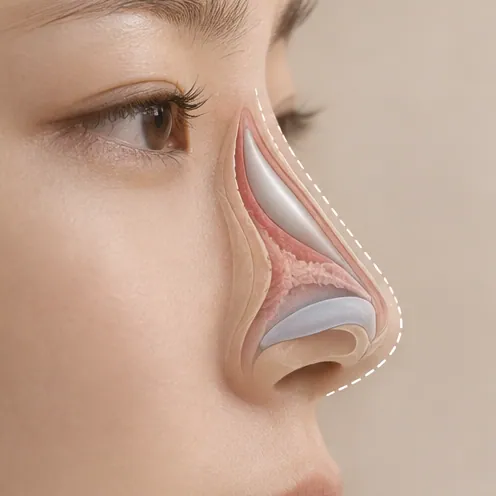
Before removing an implant, we assess the structure that will remain.
Key Questions Answered
Revision rhinoplasty: what do we assess first?
We assess the existing implant and capsule, inflammation, scarring, skin condition, remaining cartilage, and support. We first check for inflammation requiring urgent treatment, then explain the sequence of removal and reconstruction, along with the possibilities and limitations of using your own tissue.
— Implant · Capsule
— Skin Condition
— Remaining Cartilage
— Breathing
YOUR CONCERN
Do any of these concerns
sound familiar?
“My implant is showing through or has become distorted.”
“Contracture has made my nose shorter and turned the tip upward.”
“My nasal bridge protrudes, and my profile bothers me.”
Planning revision rhinoplasty,
What does the surgery involve?
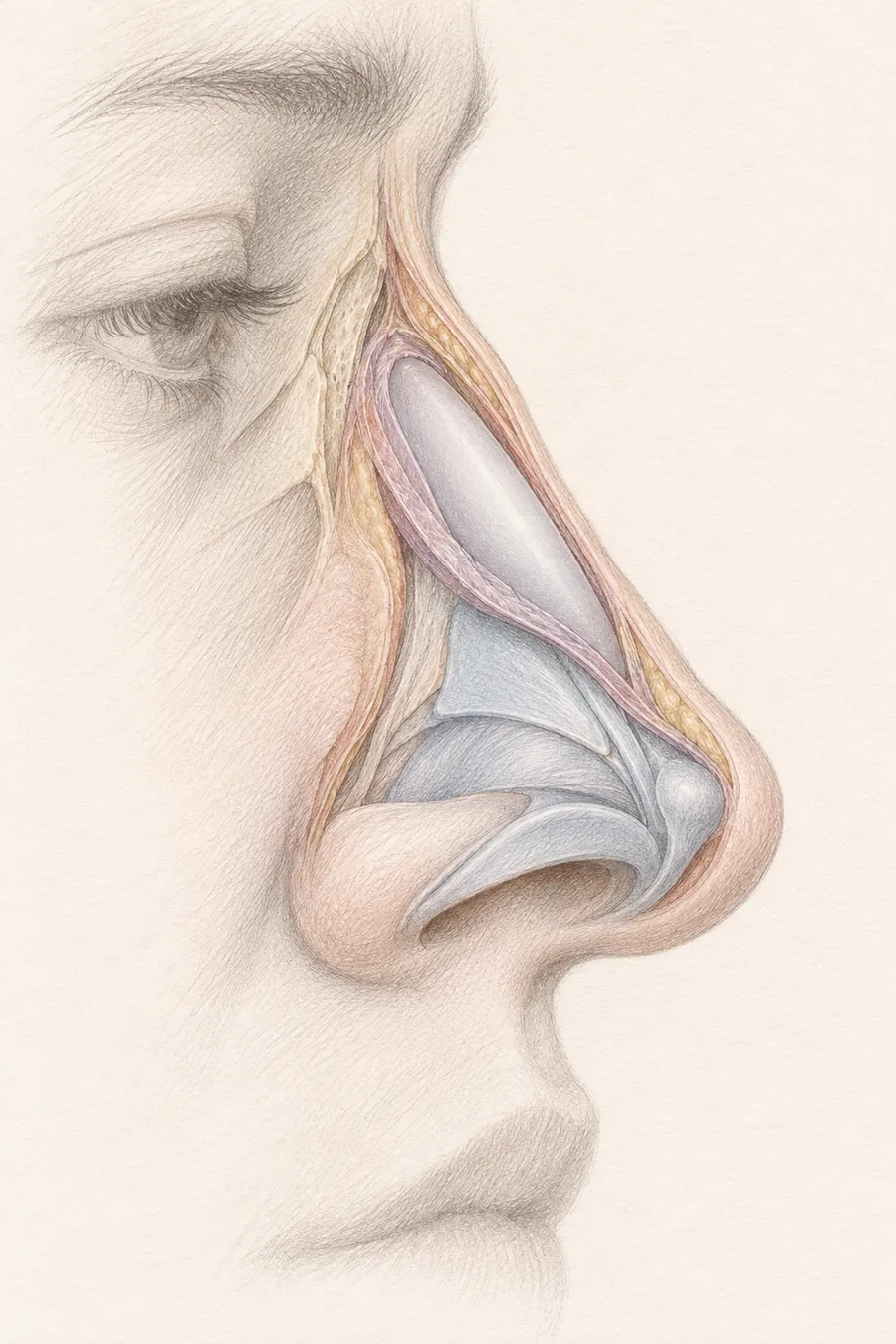
Planning revision rhinoplasty means deciding what to address first and what to stage when procedures such as implant removal, nasal tip reconstruction, and dorsal hump correction overlap. Before removal, we need to determine how the nose will be supported afterward. The sequence also depends on whether inflammation is present. Using current photos and previous records, we assess the remaining cartilage, skin thickness, and breathing to define the scope of each procedure.
- Support Structures
- The cartilage framework that supports the nasal tip and bridge. It is the starting point for revision planning.
- Foreign Material in the Nose
- Material remaining in the nose, such as injected substances or materials from previous surgery. We first identify its location.
- Mesh
- A material we may consider adding to reinforce areas with insufficient support. We discuss both the need and the risks.
When planning revision rhinoplasty,
in Lower Blepharoplasty
the sequence helps define the scope
If inflammation is present, treatment and removal come first. If distortion is the main concern, we assess whether reconstruction can be planned in the same operation. If a dorsal hump or crooked nose is also present, the bridge needs to be addressed first to determine the tip position. This is why we begin with the sequence of treatment rather than simply listing the areas you want corrected.
We decide together whether to combine or stage procedures
From a surgeon’s perspective, performing any combination of procedures in one operation may be preferable. However, for the patient’s recovery, staging them may sometimes be better. Combinations that affect blood flow and swelling in the same area require more careful consideration, so we also consider staged surgery when the skin is thin or there is extensive scarring.
We first assess the available materials
The possible scope depends on how much septal cartilage remains, whether ear cartilage has already been used, and whether your own dermal tissue is needed. We primarily use septal cartilage, do not construct the framework with ear cartilage alone, and generally do not recommend rib cartilage. We discuss materials to reinforce deficient areas by weighing their need against their risks.
If filler remains, we first check its location
Existing hyaluronic acid filler may be assessed with ultrasound and considered for dissolving as needed. Other materials cannot be dissolved in the same way, and the waiting period before surgery varies with the material and tissue condition. Ultrasound helps assess location and distribution, but it cannot definitively identify the type and amount of every foreign material in a single examination.
If a dorsal hump is present, we plan the profile as a continuous line
Removing an implant may reveal underlying bone and cartilage protrusions. Shaving down only the protrusion may make the bridge look wider or the tip appear droopy. We therefore map a continuous line from the forehead to the nasal tip and assess hump removal, nasal bone osteotomies, and tip support together. Correcting one area alone may change how another area looks.
We include breathing function in the plan
If nasal obstruction developed after previous surgery or you already had a deviated septum, reshaping alone may not be enough. Scarring from revision surgery can also narrow the nasal passages, so we first ask which side feels blocked and when it began. Dr. Hyungwoo Yim has presented on breathing after rhinoplasty using a patient’s own tissue at an academic conference, and assesses breathing alongside appearance in revision rhinoplasty.
The Surgical Process Varies
Depending on Your Condition
When the implant is the main concern
 1
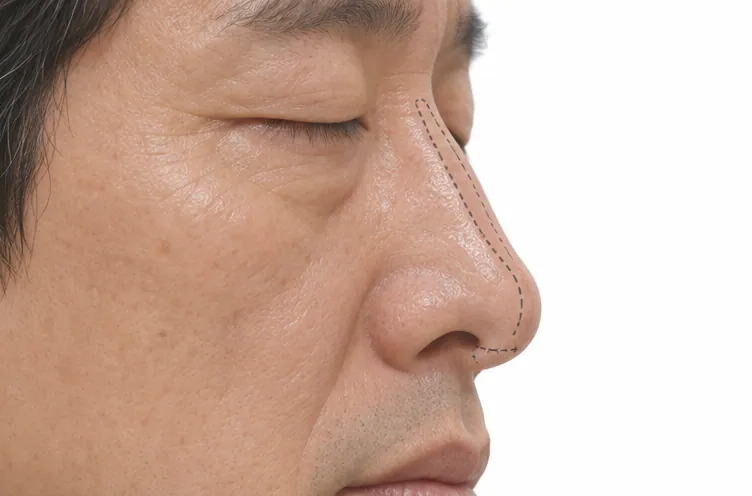
We assess the implant and remaining cartilage to plan the extent of reconstruction
 2
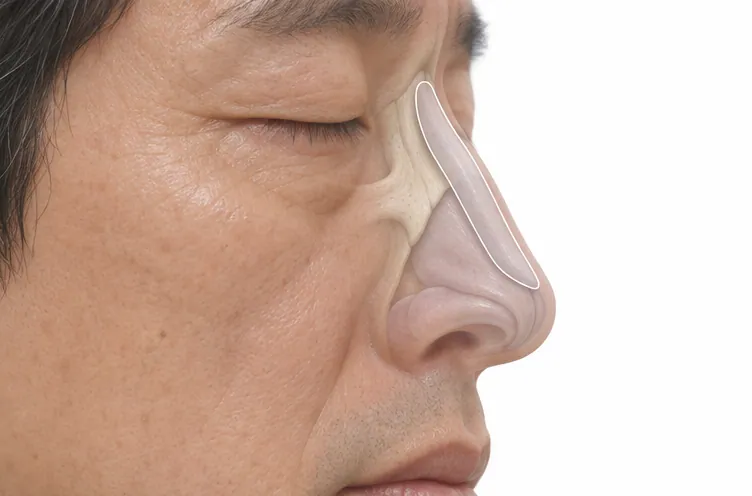
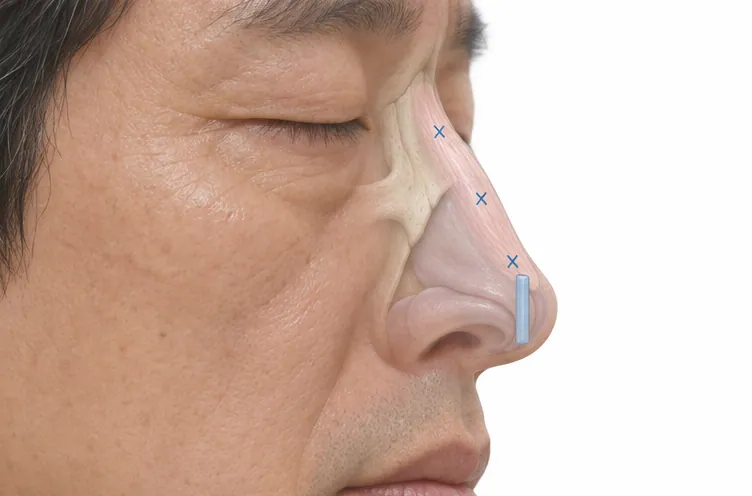
After making an incision, we remove the implant and capsule
 3
We build a support strut with septal cartilage and augment the bridge with your own tissue
 4
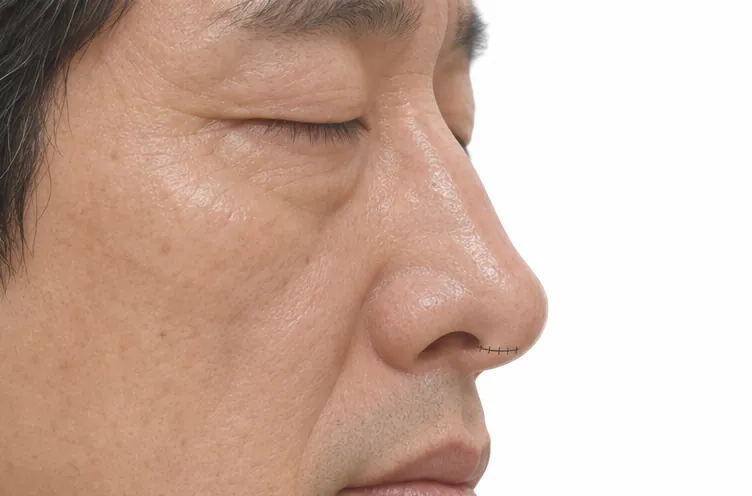
We check skin tension and close the incision.
When correcting both the dorsal hump and nasal tip
 1
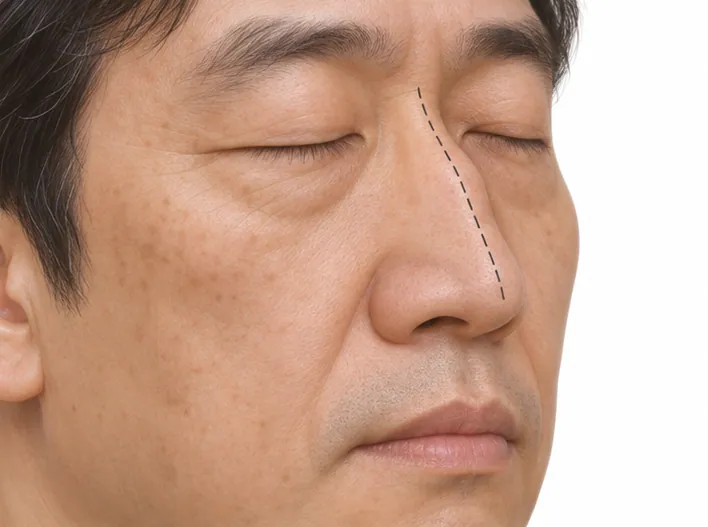
We map a new profile from the forehead to the nasal tip to determine how much to remove
 2
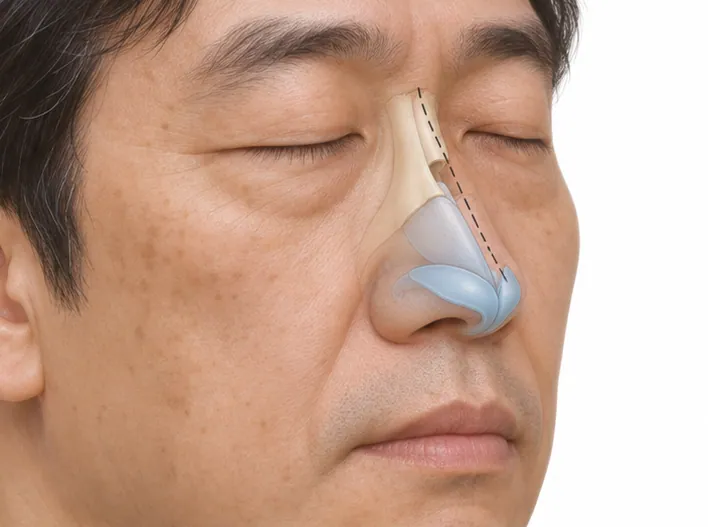
Using an open approach, we remove the protruding bone and cartilage
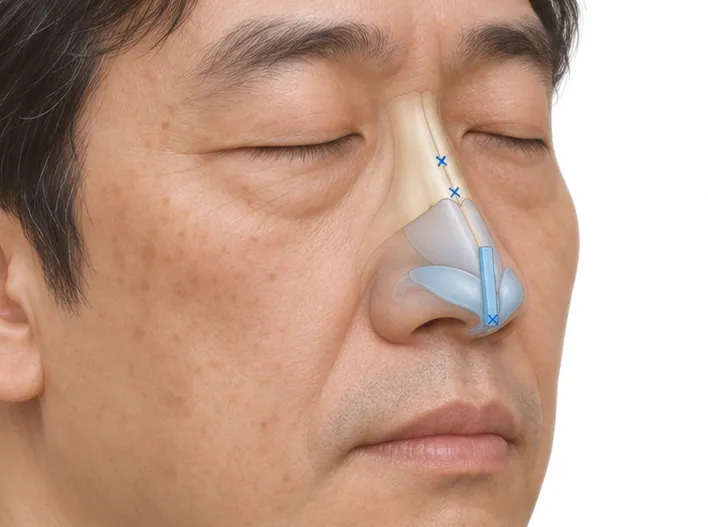 3
If needed, we narrow the bridge with nasal bone osteotomies and build a tip support strut
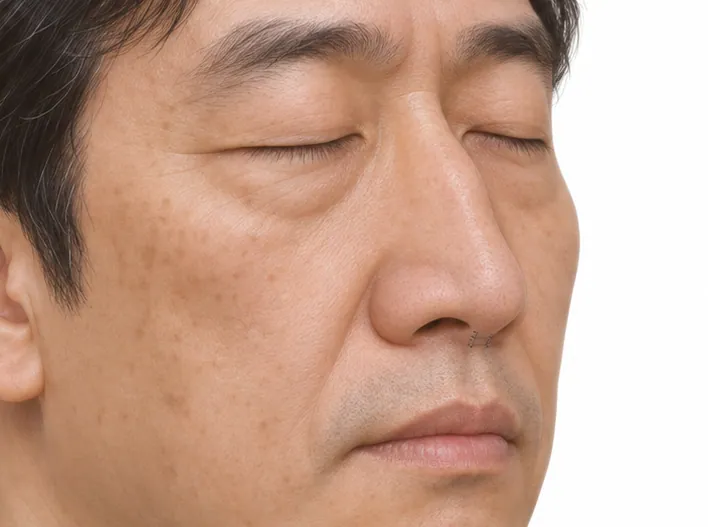 4
We check how the contours connect, then close the incision
When injected substances or foreign material remain
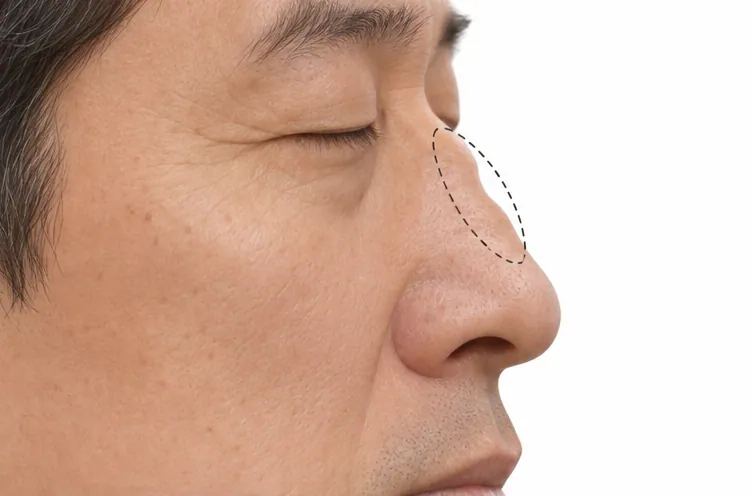 1
We assess their location and distribution using photos and, if needed, ultrasound
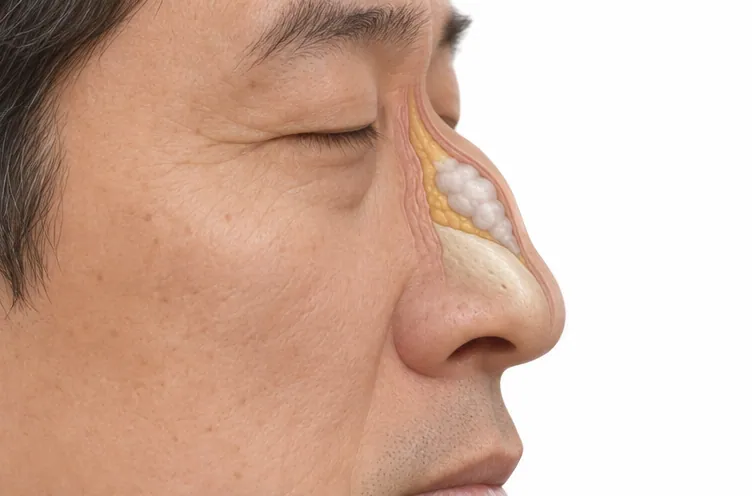 2
Depending on the material, we consider dissolving it or determine a waiting period
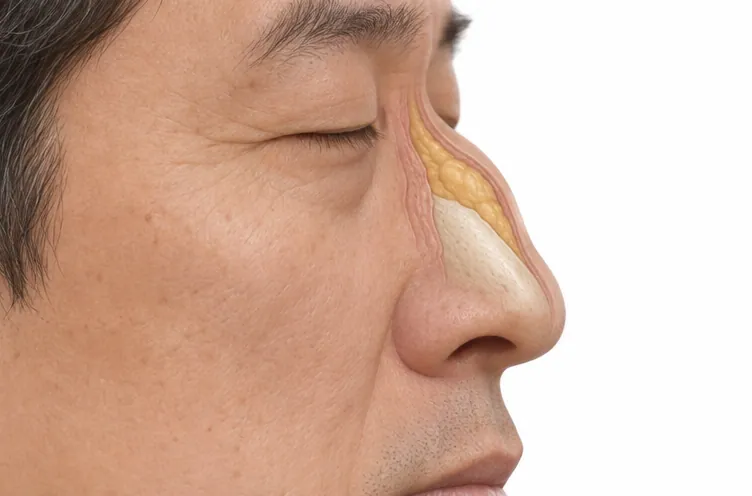 3
After making an incision, we remove foreign material to the extent possible
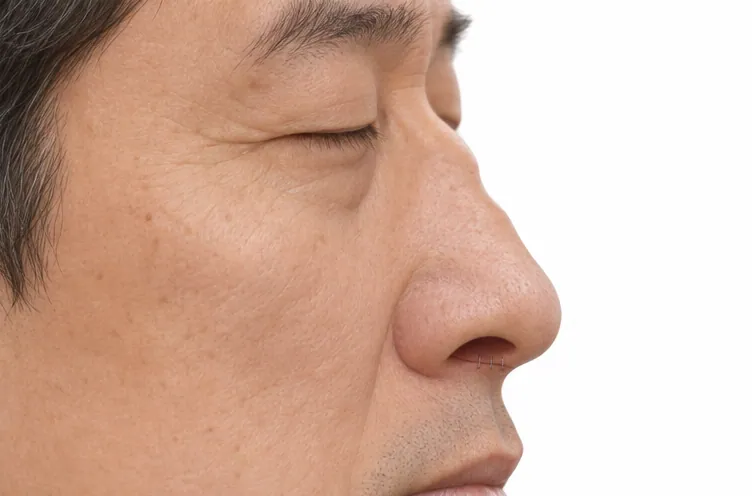 4
We check the support structures and close the incision
Illustration for explanation · Not an actual patient. This is a simplified description of typical steps. The actual technique and extent of surgery are determined after examination.
DOCTOR’S NOTE
Before adding material, we build the foundation.
We use your own tissue, such as cartilage or dermis, for patients concerned about implant-related inflammation, capsular contracture, or distortion, or those seeking a natural contour. Rather than treating implants as inherently bad, we assess the soft tissue and cartilage framework to identify a safe, natural-looking range of correction.
— Dr. Hyungwoo Yim
MYTH → FACT
“Is shaving down the prominent bridge all it takes?”
The relationship between the bone, cartilage, and nasal tip needs to be assessed together. Support after removal, continuity of the profile, and the need for additional correction vary by patient.
IN HIS WORDS
Ulsanbawi Rock on a Thatched Cottage
“Placing heavy cartilage on a weak nasal tip support is like putting Ulsanbawi Rock on the roof of a thatched cottage. The supporting column must be built first.”
THE DETAIL
The Sequence of Removal and Reconstruction
Whether implant removal and reconstruction with your own tissue are performed together or after allowing the tissue to recover affects the outcome.
RELATED RESEARCH
Plastic Surgery The Meeting 2018 (ASPS) · Wedge Graft: Derotational Septo-columellar Graft
PRS KOREA 2019 · Ease of Breathing Following Implant-Free Rhinoplasty Using Autologous Tissues
1
Nasal Bone
2
Septal Cartilage
3
Alar Cartilage
4
Columellar Support · Your Own Cartilage
Rebuild the Frame
After removing the implant, we rebuild support with your own tissue.
After assessing the existing implant and capsule, scar tissue, and support from the remaining cartilage, we determine the sequence of removal and reconstruction. We first build a columellar support strut, then use your own tissue to provide the height needed.
VITAL PROTOCOL
Revision Rhinoplasty · Dorsal Hump: Our Assessment Sequence
STEP 01
Implant · Scar Tissue Assessment
We assess the existing implant, capsule, and scar tissue.
STEP 02
Bone · Cartilage Framework Assessment
We assess the bone and cartilage protrusions forming the hump and their connection to the nasal tip.
STEP 03
Removal · Resection
We determine the extent of implant removal or dorsal hump resection.
STEP 04
Reconstruction with Your Own Tissue
We rebuild the bridge contour and nasal tip support with your own tissue.
WHAT WE CHECK
We assess what the remaining tissue can support
Existing Implant and Capsule
We check the type, location, and degree of capsular contracture.
Inflammation · Scarring
We check for inflammation requiring urgent treatment.
Skin Thickness and Tension
We determine the limits on reconstruction height.
Remaining Cartilage and Support
We assess the foundation for rebuilding nasal tip support.
Bone · Cartilage Protrusions
We assess the composition and extent of the dorsal hump.
Breathing
We check for problems involving the septum and nasal airway.

When
to consider a consultation
- When you are considering another nose surgery and do not know where to start
- When you are considering both implant removal and nasal tip reconstruction
- When an implant, dorsal hump, and crooked nose are present together
- When filler or foreign material remains in your nose
- When nasal blockage develops after previous surgery
When
Surgery is not our first recommendation
- When cosmetic revision is being considered before tissue recovery is complete
- When acute inflammation or infection needs treatment first
- When a major event is too close to allow time for residual swelling and scar changes
- When the desired height exceeds the skin’s limits, regardless of the material used
WHEN WE WAIT
In These Cases
We do not recommend immediate surgery.
When urgent treatment for inflammation is needed first
When tissue is still recovering from previous surgery
When the expected height exceeds what the remaining tissue can support
When the burden of additional surgery outweighs the expected improvement
Preparing for surgery and
recovery by stage
- 3–4 days after surgery
Swelling is at its peak during this period. Sleep with your head slightly elevated.
- About 1 Week
The overall shape usually starts to become visible at this point. The nasal splint stays on for 1 week, nasal packing stays in place for 1–3 days, and stitches are removed after 5–7 days. The initial shape is not the final result.
- 4 weeks
Do not wear glasses or sunglasses for 4 weeks, and avoid alcohol, smoking, saunas, and strenuous exercise. Avoid activities that could involve an impact to the nose for 3 months. It is advisable to allow at least 2 weeks before social engagements.
- 1 year or more
After revision surgery, swelling and firmness may last longer than after the first surgery, and swelling at the tip of the nose may continue for more than a year. The final shape is assessed after 1 year. Follow-up visits are scheduled at 1 · 3 · 6 months · 1 year.

No smoking · No alcohol
We provide these essential instructions before surgery. Smoking and alcohol affect bleeding and wound healing.
Medications · Supplements
We recommend stopping herbal medicines and supplements such as omega-3 when possible because they may increase bleeding. Please tell us about every medication you take.
Medical history
Please tell us about your medications, chronic conditions, and allergies.
Previous Surgery · Injected or Implanted Materials
Please tell us about any implants, fillers, threads, or other materials placed in your nose, and provide surgical records. If records are unavailable, photos of your current condition are the starting point.
Recovery times are averages and vary by individual. Please contact us immediately if you experience sudden severe pain, bleeding that does not stop, rapidly worsening swelling on one side, warmth, pus, or a fever of 38°C or higher.
LIMITS & RISKS
Along with possible improvements,
we explain the limitations and risks.
Inflammation
Skin Damage
Deformation
Asymmetry
Breathing Discomfort
Residual Protrusion
Depression
Possible Need for Additional Surgery
Do not wait if you have these symptoms
If you experience sudden severe pain, bleeding that does not stop, rapidly worsening swelling on one side, or signs of possible infection such as a high fever or pus, contact us immediately rather than waiting for your appointment.
This is not a complete list of possible risks. Risks may vary depending on your health, previous treatments, and the technique and extent of surgery. Surgical results vary by individual.
Common questions
during consultations
Can revision rhinoplasty be performed on the same day as eyelid surgery?
We consider same-day eyelid and nose surgery after assessing your health, total operating time, and recovery demands. Revision surgery requires more careful planning because its scope may change. Combining procedures may increase swelling and aftercare demands.
Can I have surgery right away if I have nasal filler?
Hyaluronic acid filler may be considered for dissolving after assessment as needed. Other materials cannot be dissolved in the same way. Whether to dissolve filler before surgery and how long to wait depend on the material and tissue condition.
How is the complexity of revision surgery classified?
Procedures are classified as simple, complex, or highly complex. The category is determined after examining the remaining cartilage, scarring, skin condition, and extent of reconstruction needed.
Q & A
Before you decide,
frequently asked questions

Q
Does using my own tissue mean there are no complications?
−
A
Using your own tissue still carries surgical risks and the possibility of resorption or distortion. We do not describe artificial implants as uniformly bad or a patient’s own tissue as unconditionally safe.
Q
Can my nasal bridge be raised as much as I want?
−
A
Nasal bridge height is determined by the height between the eyebrows, facial bone structure, and skin thickness and tension. The design stays within a range that balances with the bone structure.
Q
Are the cost, number of treatments, and recovery period fixed?
−
A
They depend on the examination findings and the scope of treatment. Exact costs and scheduling are discussed during the consultation after your examination.
Q
Can a treatment plan be finalized through a photo consultation alone?
−
A
Photos are for reference. We determine the treatment plan after an in-person assessment of nasal function, tissue condition, and overall health, followed by a thorough explanation.
~ 1 WEEK
Check the wound · bleeding · infection · early function, remove sutures
1 MONTH
Early scar contracture: assess tightness · firmness and begin regenerative care if needed
3 MONTHS
Peak contracture · transition phase: assess remodeling and consider continued injections · laser treatment
6 MONTHS
Compare with initial photos and decide whether additional treatment is needed
1 YEAR
Check tissue maturation · long-term progress
RELATED SURGERY
DOCTOR'S COLUMN DOCTOR'S COLUMN DOCTOR'S COLUMN
Must Read
Care Notes Written by the Doctor · Please Read Before Your First Visit
No.1
No.3
VIEW MORE →
RESERVATION
You do not need to decide the day of your consultation.
Organize questions about this page without entering your name, contact information, or medical history. This does not submit an appointment request.