PLASTIC SURGERY
All Treatments / Surgery
Crooked Nose Correction
We identify which layer is crooked and assess both the shape and the nasal airway.
This may vary depending on your condition and the extent of surgery.
Crooked Nose Correction,
What does the surgery involve?
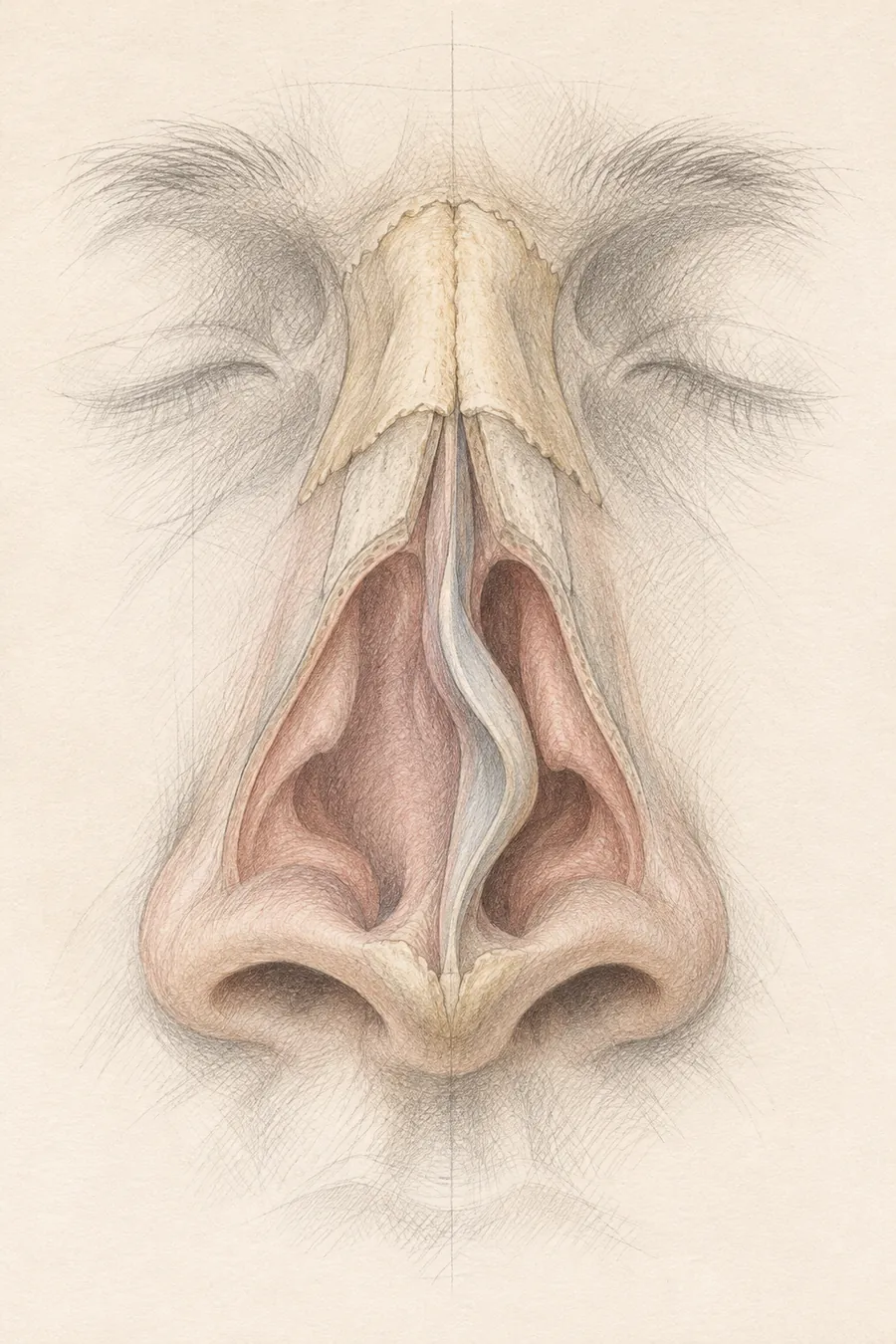
A crooked nose occurs when one or more structures—the nasal bones, septal cartilage, or nasal tip cartilage—deviate from the facial midline. It can be associated with nasal obstruction, snoring, and habitual mouth breathing, so we assess both appearance and the airway. Even if you come in because others have said your nose looks crooked, we first review photographs to identify the problem and determine the extent of correction. Depending on where the deviation is, we combine septoplasty, nasal osteotomy, and nasal tip support.
- Nasal Septum
- The wall that separates the two nasal passages. It consists of cartilage in the front and bone farther inside. A deviation can narrow the airway on one side.
- Nasal Osteotomy
- A procedure that involves cutting the deviated nasal bones and moving them to the midline. It is considered when the nasal bones are the cause.
- Spreader Graft
- A thin piece of cartilage placed between the cartilages of the nasal bridge. It helps support a crooked bridge in a straight position and maintain airway width.
- Inferior Turbinates
- Mucosa-covered folds along the side walls inside the nose. If they are swollen, obstruction may persist even after the septum is straightened.
In Crooked Nose Correction,
in Lower Blepharoplasty
We First Identify Which Layer Is Crooked
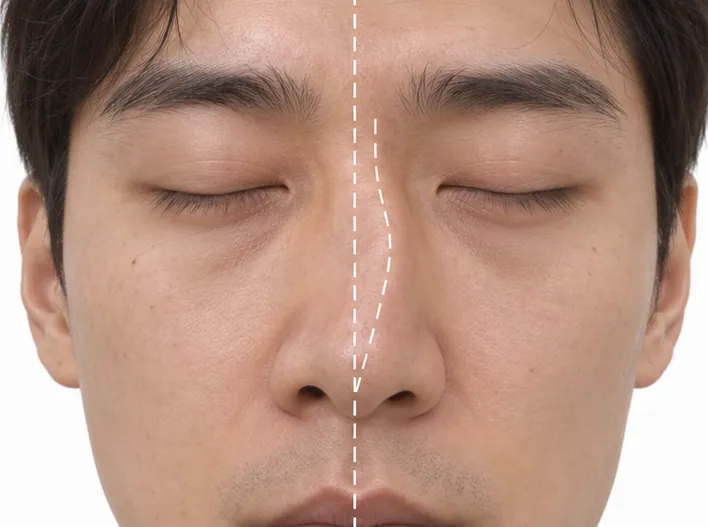
Surgery differs depending on whether the upper nasal bones, the cartilage in the middle, or only the nasal tip is deviated. Multiple layers are often involved. We draw a midline on a front-view photograph, examine the nose by touch, and look inside before deciding which layer to correct first. The external and internal deviations may point in different directions.
We Ask About Appearance and Breathing Separately
A nose may look straight on the outside while a deviated septum causes obstruction inside. Conversely, a visibly crooked nose may not affect breathing. If others tell you that you snore or breathe through your mouth, that is a reason for an assessment separate from your concerns about appearance. The surgeon reviews photographs with you and explains where the problem is and whether treatment is needed.
We Straighten the Septum While Preserving Its Support
When correcting a deviated septum, the front and upper edges that support the nose are generally preserved. Removing this support can cause the nose to collapse. Cartilage obtained during the correction can be reused to support the nasal tip or straighten the bridge, making this a natural part of rhinoplasty that primarily uses septal cartilage.
If the Nasal Bones Are the Cause, We Reposition Them With Osteotomy
If the nasal bones themselves are crooked, correcting only the cartilage leaves the upper bridge unchanged. In these cases, we consider an osteotomy to cut the nasal bones and move them to the midline. Working on the bones can cause more bruising and swelling, and the bridge must be protected from impact early on, so we discuss your schedule and daily activities in advance.
Cartilage Has a Tendency to Bend Again
Deviated cartilage retains a tendency to return to its original shape, so some deviation may recur over time after surgery. This tendency is greater when the deviation resulted from an injury. For this reason, we do more than straighten the cartilage: we add support and secure it in place. We explain the expected degree of straightening as a range rather than a certainty.
We First Explain the Limitations Related to the Airway and Facial Bone Structure
If nasal obstruction is caused by rhinitis or swollen inferior turbinates, septoplasty alone may not resolve it, so we also recommend an evaluation by an ear, nose, and throat specialist. If the facial bone structure itself is asymmetric, the nose may still look crooked even when aligned with the midline. Breathing after rhinoplasty using your own tissue was a topic the surgeon presented at PRS KOREA in 2019.
A Word from the Doctor
Dr. Hyungwoo Yim’s own words from his blog and interviews.
01Before Rhinoplasty
“The nose is not just the highest structure on the face. It is the structure that must hold up the longest.”
A nose that makes breathing difficult is unlikely to remain beautiful for long. Before surgery, the first thing I consider is how to ensure this nose will hold up over the next 10 years.”
02When I Strongly Recommend Treatment
“I rarely tell a patient, ‘You really need treatment for this.’ However, in cases of severe ptosis or a crooked nose, I do want to strongly recommend treatment.”
By its nature, plastic surgery mostly involves cosmetic procedures that are not matters of life and death.
Dr. Hyungwoo Yim, Medical Director
The Surgical Process Varies
Depending on Your Condition
When the Nasal Bones Are Also Deviated
 1
We mark the midline and direction of deviation on a front-view photograph to plan the correction.
 2
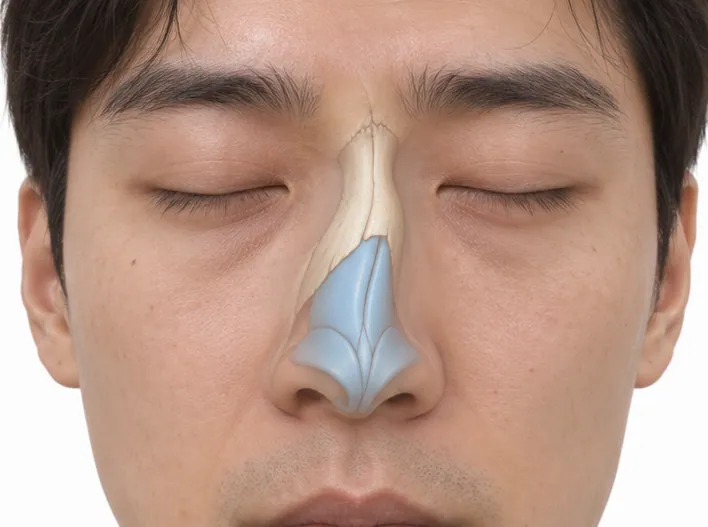
We use an open approach to expose the bones and cartilage of the nasal bridge.
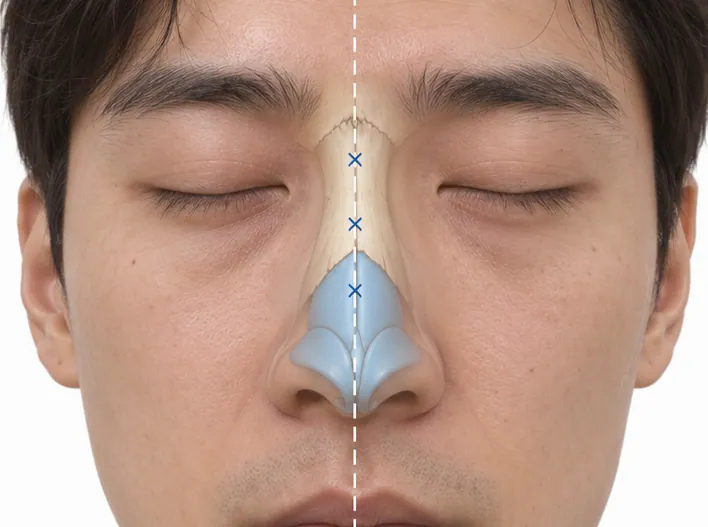 3
We reposition the nasal bones to the midline with an osteotomy and straighten the septum if needed.
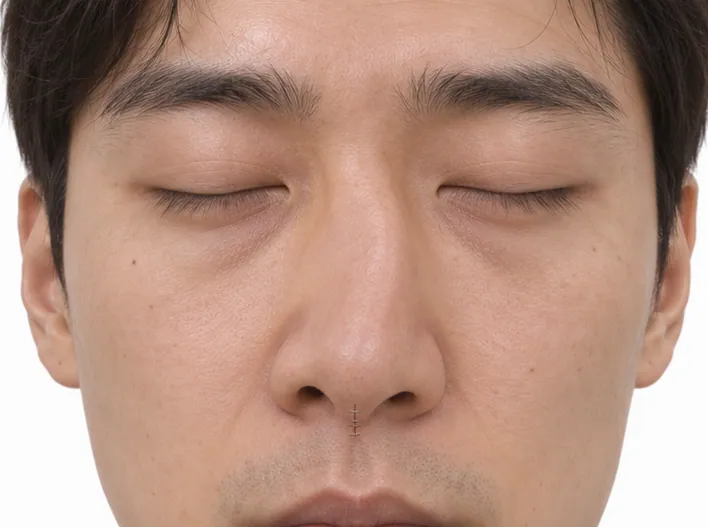 4
We check the midline alignment and close the incisions.
When a Deviated Septum Makes Breathing Difficult
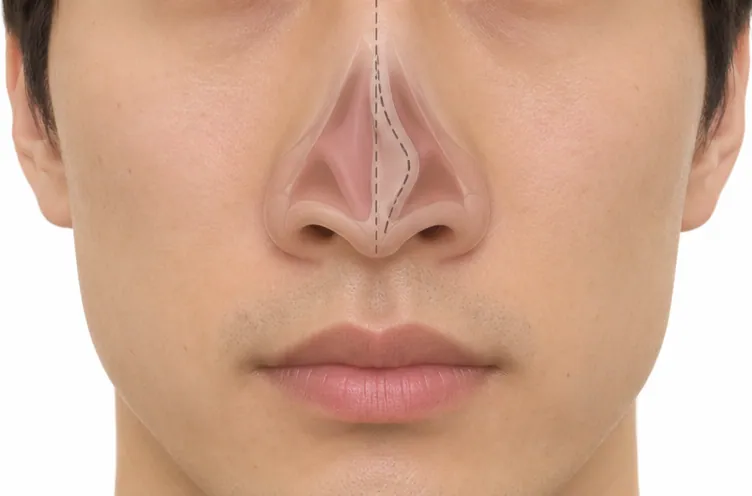 1
We identify the obstructed side and the location of the deviation inside the nose.
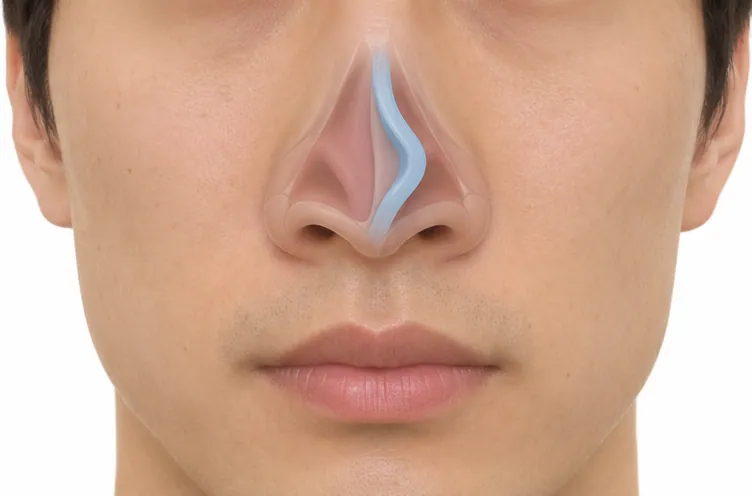 2
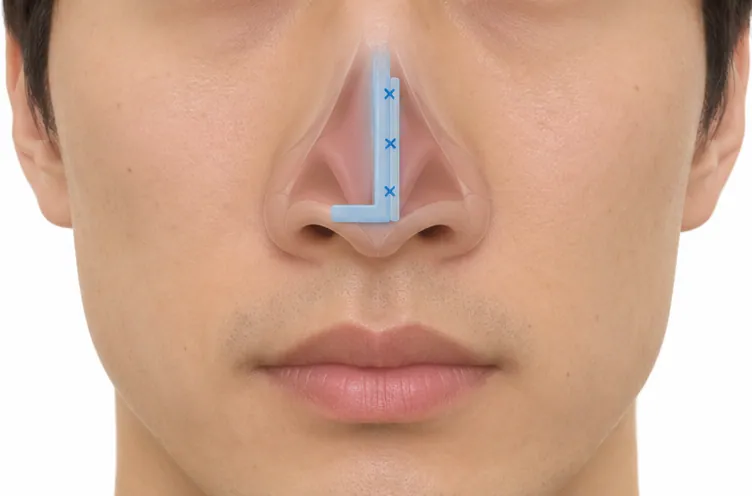
We lift the nasal mucosal lining to access the deviated septum.
 3
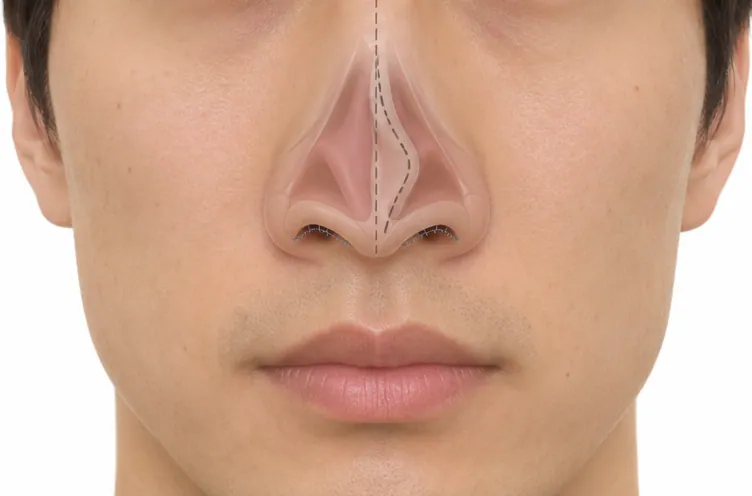
We preserve the supporting framework, reshape the deviated portion, and use the cartilage obtained to support the septum in a straight position.
 4
We suture the nasal mucosal lining.
When Only the Nasal Tip Is Turned to One Side
 1
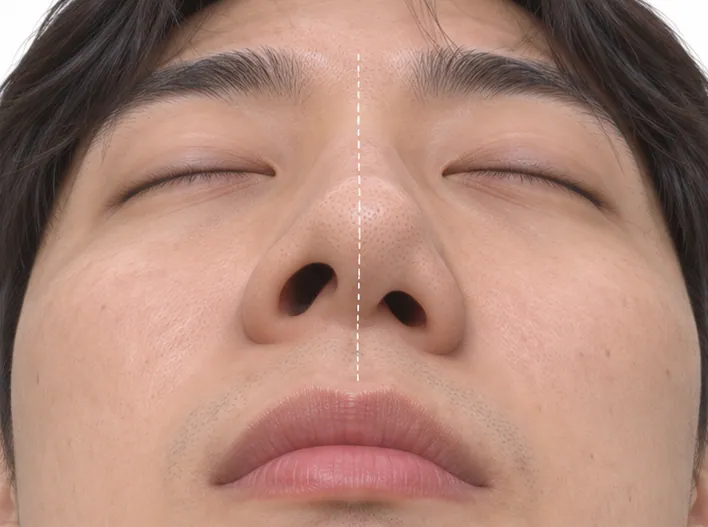
We assess the direction of the nasal tip and the shape of the nostrils to plan the correction.
 2
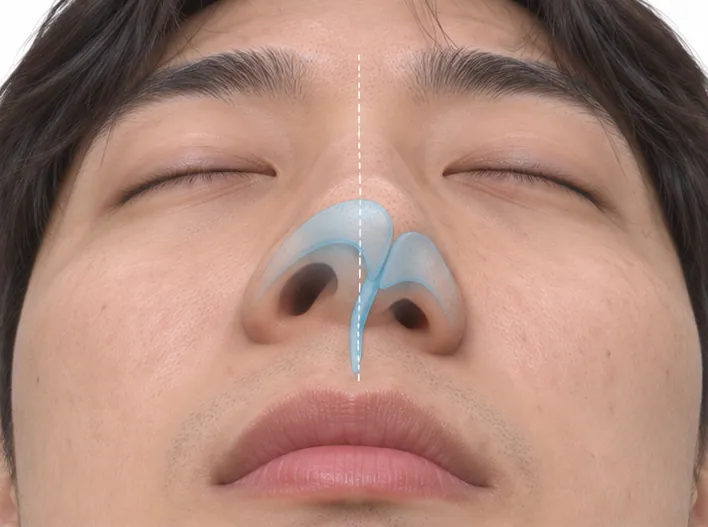
We make an incision across the columella to expose the nasal tip cartilage and the front of the septum.
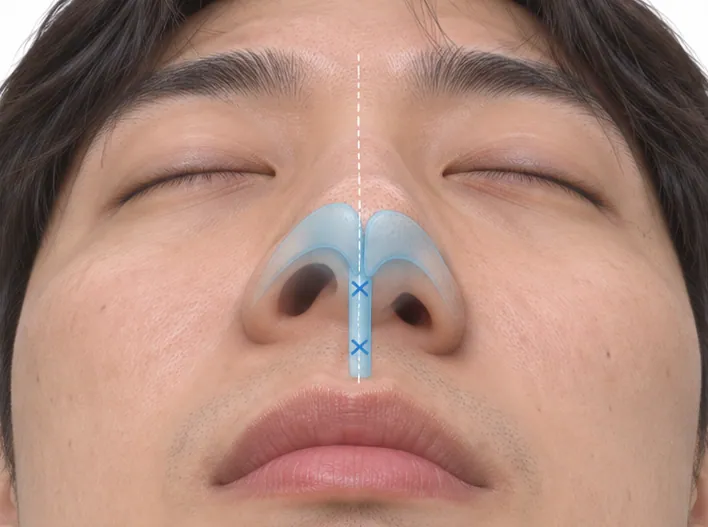 3
We place a columellar strut along the midline, bring the nasal tip cartilages together, and secure them.
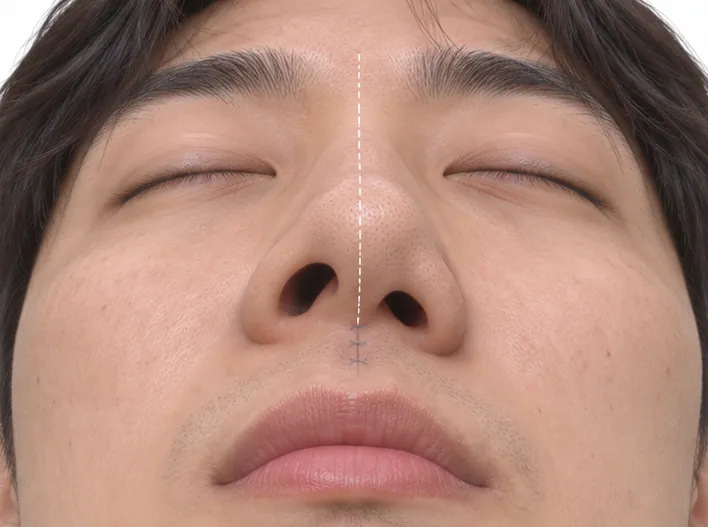 4
We check nostril symmetry and close the incision.
Illustration for explanation · Not an actual patient. This is a simplified description of typical steps. The actual technique and extent of surgery are determined after examination.
When
to consider a consultation
- When others often say your nose is crooked, or it looks crooked in photographs
- When only one side of your nose is blocked, or you habitually breathe through your mouth
- When others say you snore and you are also concerned about your nose's appearance
- When your nose changed shape after a past injury
- When you want to correct the nasal tip or a dorsal hump along with a crooked nose
When
Surgery is not our first recommendation
- When severe rhinitis or sinusitis needs treatment first
- When a recent nasal injury has left swelling and the bones have not yet stabilized
- When nasal obstruction is mainly caused by swollen inferior turbinates or allergies
- When asymmetry of the facial bones is the main reason the nose looks crooked
Preparing for surgery and
recovery by stage
- 3–4 days after surgery
Swelling is at its peak during this period. Sleep with your head slightly elevated.
- About 1 Week
The overall shape usually starts to become visible at this point. The nasal splint stays on for 1 week, nasal packing stays in place for 1–3 days, and stitches are removed after 5–7 days. The initial shape is not the final result.
- 4 weeks
If an osteotomy was performed, bruising and swelling around the eyes may last 2–4 weeks. Do not wear glasses or sunglasses for 4 weeks, and avoid alcohol, smoking, saunas, and strenuous exercise. Avoid activities that could cause an impact to the nose for 3 months. It is advisable to allow at least 2 weeks before making plans to meet people.
- 6 months–1 year
Swelling and firmness in the nasal tip gradually subside over 6 months to 1 year, and the final shape is assessed after 1 year. Follow-up visits are scheduled at 1 · 3 · 6 months · 1 year.

No smoking · No alcohol
We provide these essential instructions before surgery. Smoking and alcohol affect bleeding and wound healing.
Medications · Supplements
We recommend stopping herbal medicines and supplements such as omega-3 when possible because they may increase bleeding. Please tell us about every medication you take.
Medical history
Please tell us about your medications, chronic conditions, and allergies.
Previous Surgery · Injected or Implanted Materials
Please tell us about any implants, fillers, threads, or other materials placed in your nose, and provide surgical records. If records are unavailable, photos of your current condition are the starting point.
Recovery times are averages and vary by individual. Please contact us immediately if you experience sudden severe pain, bleeding that does not stop, rapidly worsening swelling on one side, warmth, pus, or a fever of 38°C or higher.
Common questions
during consultations
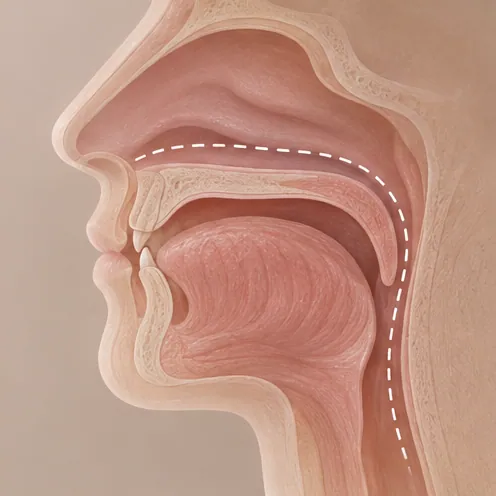
Will crooked nose surgery help my snoring?
Snoring has many possible causes beyond the nose, including the palate, tongue, and body weight. If the septum is a contributing factor, correcting the airway may help, but we cannot say that snoring will go away. If others tell you that you stop breathing during sleep, we recommend a sleep study first.
Is it okay for men to visit a plastic surgeon about their nose?
Men often come in at the urging of family members. Even if they initially say nothing is wrong, they often understand the concern once we review photographs and explain the problem. We distinguish between areas that need treatment and those that do not need treatment now.
Can I change my nasal height while correcting a crooked nose?
Cartilage obtained during septal correction can be used to raise the nasal tip, so both can be planned together. However, straightening comes first, and the height is determined within the limits of the area between the eyebrows and what the skin can accommodate.
RESERVATION
You do not need to decide the day of your consultation.
Organize questions about this page without entering your name, contact information, or medical history. This does not submit an appointment request.