PLASTIC SURGERY
MEDICAL COLUMN
Questions Answered Directly by the Doctor Before You Decide on Surgery
Revision surgery
Articles
Revision Under-Eye Fat Repositioning: Will Moving the Fat Again Resolve the Problem?
Repeating the same fat repositioning procedure is often not the answer. Repositioned fat commonly adheres to the tissues in front of it, so repeating the same surgery may create more adhesions that need to be addressed.
Medically reviewed by Dr. Hyungwoo Yim, Medical Director (Board-Certified Plastic Surgeon) · Published November 7, 2026 · Last reviewed November 11, 2026
SHORT ANSWER
First, the Short Answer
- Repeating the same fat repositioning procedure is often not the answer. Repositioned fat commonly adheres to the tissues in front of it, so repeating the same surgery may create more adhesions that need to be addressed.
- Under-eye unevenness and recurrent bulging result from more than the amount of fat alone. Weakening of the septum that holds the fat back, hollowing of the under-eye groove, and descent of cheek fat also contribute.
- VITAL Plastic Surgery first assesses adhesions from the previous surgery and the location and amount of remaining fat. We consider reinforcing the orbital septum before repeating fat repositioning. If the tissues are still healing, we do not recommend immediate surgery.
“Would another fat repositioning procedure smooth out the unevenness?”
This is a paraphrase of a question we often hear during consultations.
To answer this question, we first need to distinguish where your current concern comes from. We will explain each point below, then return to the original question at the end.
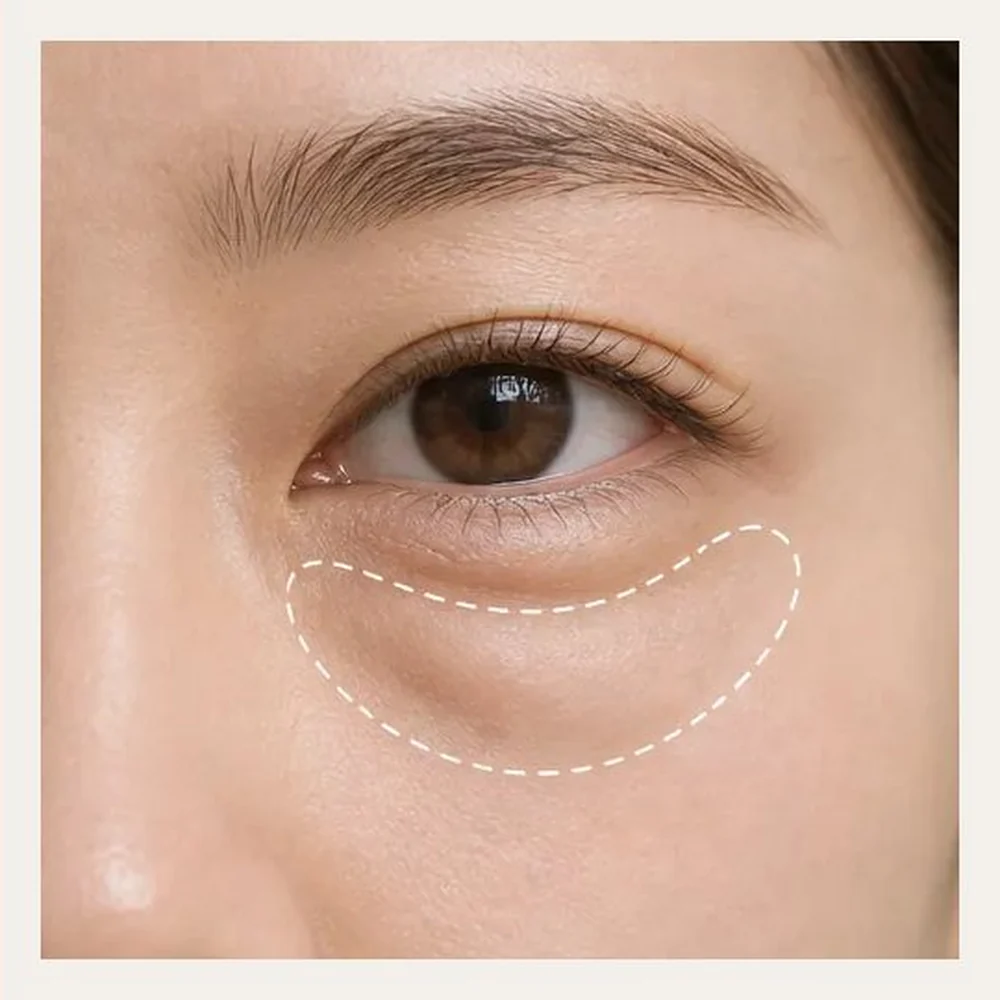
01Why does unevenness or bulging return after fat repositioning?
Answer Often, the issue is less about the amount of fat and more about its location and the wall that holds it back.
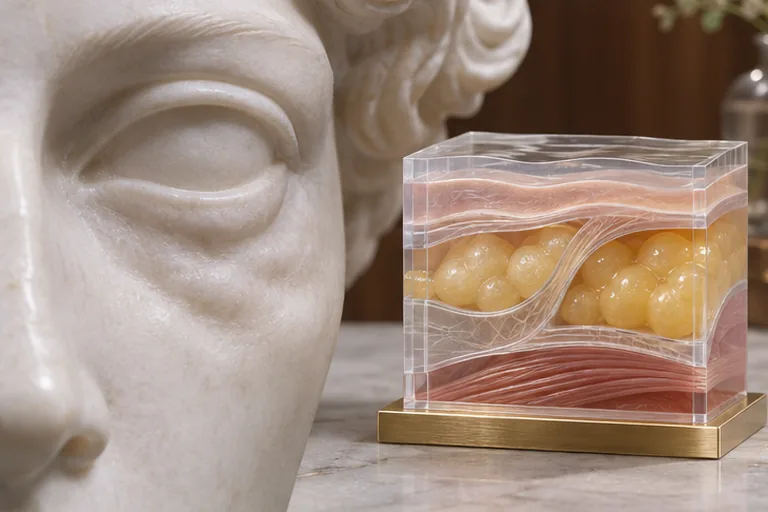
Under-eye fat normally sits in place within a thin membrane. Under-eye fat repositioning brings this fat outside the membrane and moves it into hollow areas. During revision surgery, however, we often find that the repositioned fat has adhered to the tissues in front of it. This may explain why the area feels lumpy or why its edges become visible with facial expressions.
When bulging returns, the orbital septum—the thin membrane that acts as a wall to keep fat from pushing forward—may still be weak. If the groove between the lower eyelid and cheek is also hollow and cheek fat has descended, both bulging and shadows become more noticeable. It is therefore not uncommon to have both bulging and hollow areas under the same eye.
To correct unevenness, we need to distinguish whether it comes from remaining fat, volume loss, previously injected materials, or adhesions. Even when the appearance is similar, different causes require treatment in different tissue layers and with different techniques.
The examination therefore goes beyond checking what you see in the mirror. We use photographs and palpation to mark firm or lumpy areas, then separately assess the location and amount of remaining fat while you are seated. We also check where the transition between the lower eyelid and cheek is interrupted and whether weakened lower eyelid support creates a risk of ectropion, or outward turning of the eyelid. This assessment reveals that even similar-looking unevenness may involve different areas that need to be released, supported, or filled.
| Current condition | How it looks | What we look at first |
|---|---|---|
| Unevenness that can be felt or seen | Feels lumpy, with edges that become visible with facial expressions | Location of lumps and extent of adhesions |
| Recurrent bulging | Under-eye bulging becomes noticeable again when seated | Location and amount of remaining fat, and condition of the orbital septum |
| Persistent hollowing and sagging cheeks | Deep shadows and an elongated-looking transition to the cheek | Lower eyelid–cheek transition, extent of hollowing, and cheek position |
In Simple Terms The under-eye area is similar to a tent. The fat is the gear inside, the skin is the outer fabric, and the septum and muscles are the ropes holding the fabric in place. If the gear shifts to one side and makes the fabric bulge, simply moving it around will leave the fabric bulging again or uneven as long as the ropes remain loose. Removing the gear leaves the fabric wrinkled. In revision surgery, we consider tightening the ropes again before moving the gear once more, then reinforcing the fabric if it has become thin.
Then can I have the same fat repositioning procedure again?
02Can I have the same fat repositioning procedure again?
Answer It is possible, but it is not our first recommendation. Repeating fat repositioning may create more adhesions that need to be addressed.

Choosing the same revision procedure based on appearance alone means repeatedly separating and moving tissues that have already adhered. VITAL Plastic Surgery therefore first considers keeping the fat in place and reinforcing the orbital septum that holds it back, rather than moving the fat again. During surgery, we release adhesions so the tissues can move, reinforce the weakened septum, and determine the extent of treatment based on the location and amount of remaining fat.
Reinforcing the orbital septum is one approach used in several studies. A study at a Korean university hospital followed 93 patients who underwent lower eyelid surgery for an average of 25 months. The technique preserved fat and reinforced the septum by folding it. The study reported that mild eyelid retraction seen immediately after surgery resolved within 1–2 weeks without additional treatment, and no permanent eyelid malposition or ectropion was observed2. However, this was a single-center review of patients undergoing their first surgery. It should not be interpreted as evidence that revision surgery will follow the same course.
Revision surgery involves more challenging conditions than the first surgery. Tissues have already adhered to one another, making dissection difficult, and some changes may be difficult to reverse to their original state. Before surgery, we therefore explain which aspects may improve and which may remain.
- For unevenness: After marking the location of lumps and the extent of adhesions, we use an approach through the conjunctiva to release adherent tissues and reinforce the orbital septum.
- For recurrent bulging: We mark the remaining fat while you are seated and reinforce the weakened orbital septum without moving the fat again.
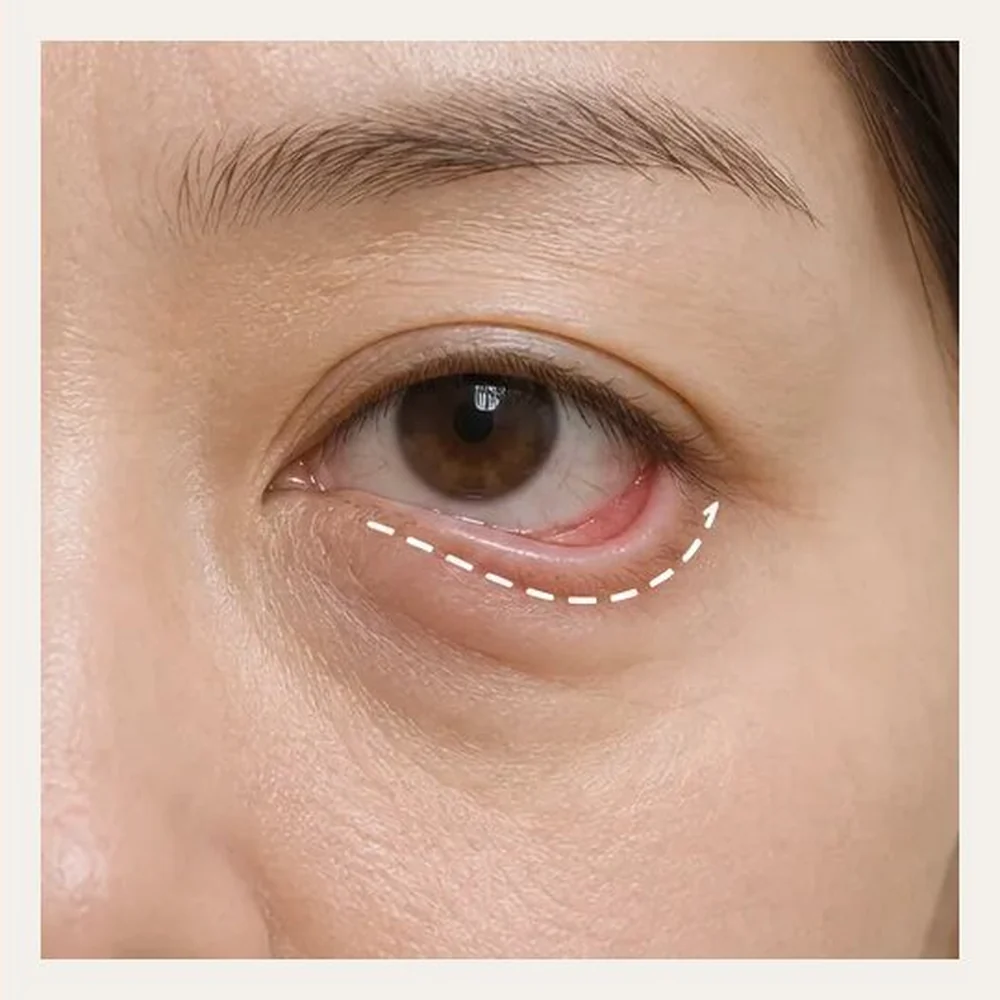
- For persistent hollowing and sagging cheeks: We consider a plan that includes an incision just below the eyelashes to release adhesions, reinforce the orbital septum, and lift the cheek fat layer.
Then could discomfort when looking up also be related to fat repositioning?
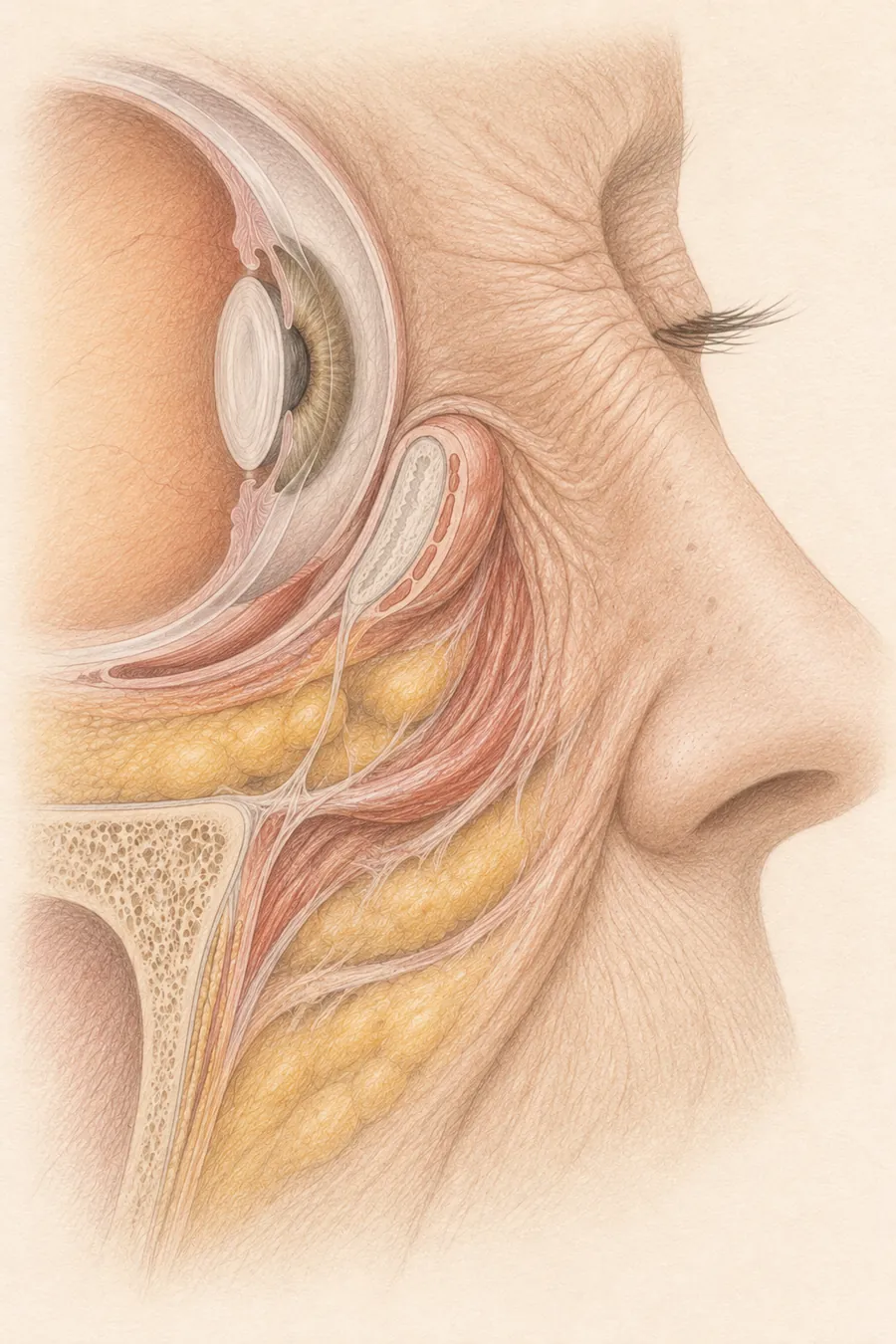
03Could discomfort when looking up also be related to fat repositioning?
Answer It may be related, because a muscle that moves the eye passes between the under-eye fat compartments.
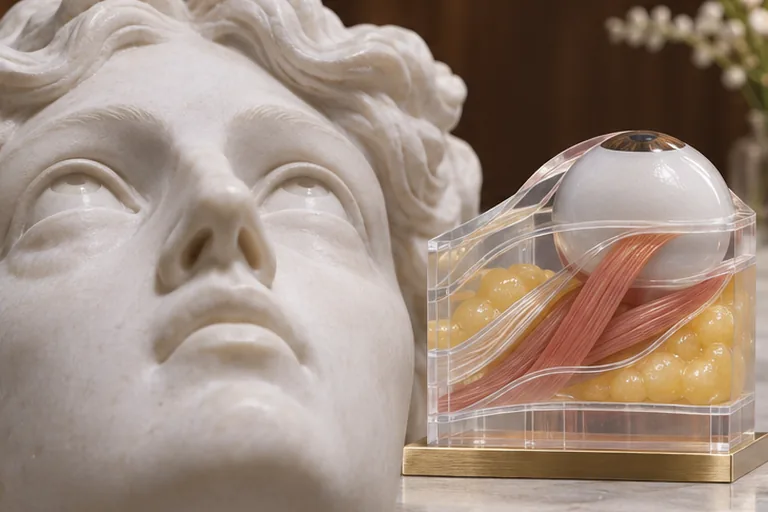
If adhesions form near this muscle during fat repositioning, you may feel pulling when moving your eyes up and down or experience double vision. During the examination, we therefore assess more than appearance: we also ask about pulling and double vision when looking up and down. If the problem appears to involve the eye itself, we also consider an ophthalmology evaluation.
These symptoms are rare but have been reported. A survey sent to 703 members of the American Society of Ophthalmic Plastic and Reconstructive Surgery received 371 responses. Of those respondents, 86 (23.2%) reported having encountered at least one case of double vision lasting more than 1 week after lower eyelid surgery1. The inferior oblique was the muscle most commonly involved, and symptoms resolved completely in 73% of cases1. As a survey, this study does not establish the actual incidence, but it shows why eye movement should also be assessed after under-eye surgery.
However, discomfort with eye movement can have other causes. We assess eye movement and the visual field rather than assuming fat repositioning is responsible. This is also why we discuss changes in appearance separately from functional discomfort. Even when revision surgery is planned, if eye movement problems are also present, we coordinate the sequence of care with an ophthalmology evaluation. If double vision persists or your vision changes, seek an examination immediately rather than waiting for your next appointment.
Then how are hollow areas and sagging cheeks addressed?
04How are hollow areas and sagging cheeks addressed?
Answer We assess bulging, the transition, and volume loss separately. If the cheeks have descended, we include cheek position in the same treatment plan.
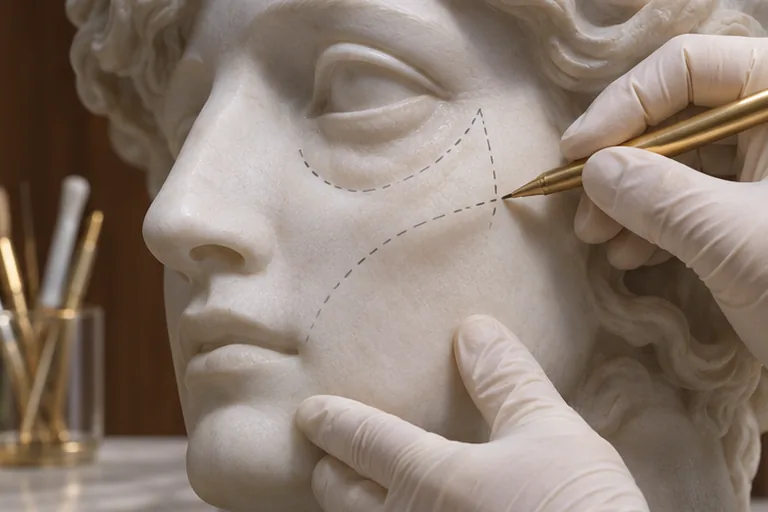
When residual bulges and hollow areas coexist, correcting only one can leave a visible transition between them. Where volume is lacking, we consider adding tissue, such as through fat grafting, only as needed. If cheek fat has descended, revising the under-eye area alone may leave the transition to the cheek unchanged, so we assess whether to lift the cheek tissue along with reinforcing the orbital septum. In these cases, we plan revision lower eyelid surgery together with a midface lift.
Research has not established a single approach to filling hollow grooves. In a retrospective study of 339 lower eyelid surgeries, researchers from Sweden and Germany compared fat repositioning with grafting small pieces of fat. There were no significant differences between the groups in complications (4%) or revision surgery (9%)3. This shows that either approach may require further correction, and that identifying the cause comes before choosing a technique.
When the cheeks are also treated, an incision is made just below the eyelashes to release adhesions and dissect into the upper cheek. After reinforcing the orbital septum, we lift and secure the suborbicularis oculi fat (SOOF, the fat layer covering the cheekbone), then suspend the orbicularis oculi muscle surrounding the eye. Excess skin is trimmed and the incision is closed. Rather than replacing all missing volume on the day of surgery, we assess the need as healing progresses.
Simply removing the fat entirely is unlikely to be the answer either. Removing fat without considering skin elasticity or cheek sagging can leave the overlying skin loose and finely wrinkled, or make the transition to the midface look more hollow.
What if the skin has become thinner and fine lines have increased?
05What if the skin has become thinner and fine lines have increased?
Answer Even after the orbital septum is reinforced, thin skin may not become smooth, so we assess the underlying skin quality separately.
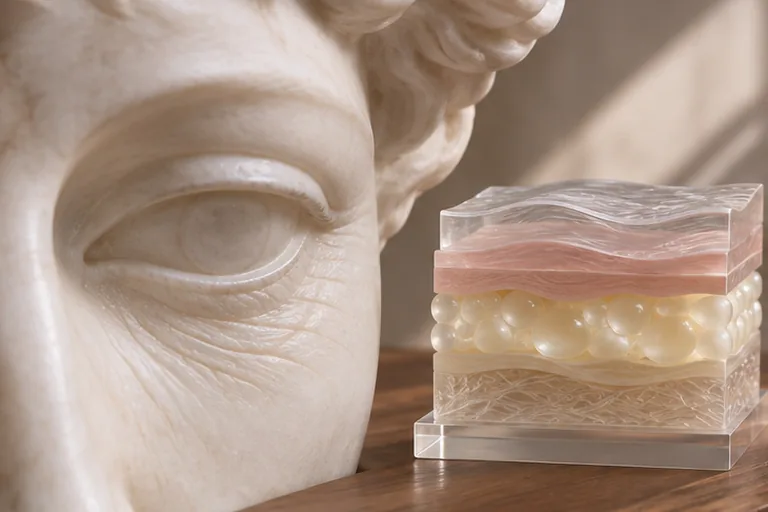
If the skin under the eyes is thin and has many fine lines, we consider the dermis—the layer beneath the skin's surface responsible for elasticity—to be damaged and consider Re2O. Re2O is a material made from decellularized extracellular matrix. At VITAL Plastic Surgery, the standard course is three treatments, using one vial per session at intervals of 3–4 weeks. When used to support recovery after surgery, treatment is performed after the swelling has subsided, usually after 4 weeks.
We do not describe swelling immediately after injection as a treatment effect. We assess changes starting one week later, when the swelling subsides, to determine the next step. We do not recommend the same combination for everyone. We assess the extent of surgery and the skin condition, and plan combined treatment only when needed.
We assess the underlying skin quality separately to avoid relying on removing more skin to smooth the area during revision surgery. Removing too much skin from an under-eye area that has already undergone surgery can pull the lower eyelid downward and increase the risk of ectropion, in which the eyelid turns outward. We therefore address only as much skin as needed and first consider approaches that reinforce the underlying structure of thinned areas.
When should revision surgery be considered, and when should you wait?
06When should revision surgery be considered, and when should you wait?
Answer For revision surgery to correct appearance, we use a waiting period of at least 6 months to 1 year after the previous surgery to allow the tissues to stabilize.

From 3 weeks to 3 months after surgery, the tissues can feel firm and tight. These are healing responses, so we do not decide on revision surgery based solely on appearance during this period. Between 3 months and 1 year, the tissues soften, redness fades, and symmetry gradually improves.
A literature review of 36 studies on complications of lower eyelid surgery concluded that most functional or cosmetic problems were resolved with conservative management or revision surgery4. It also noted that uneven study quality made accurate comparisons between techniques difficult4. This is why it is important to distinguish what needs attention now from what should be given more time, rather than rushing into another surgery.
There are things you can do while waiting. Taking photos under the same conditions at 1, 3, and 6 months allows us to compare whether changes have stopped or are still progressing. Avoiding rubbing your eyes, reducing contact lens use, and using artificial tears frequently can also help protect the eye surface. Waiting is a time to gather information needed for a decision, rather than simply enduring discomfort.
In the following situations, we do not recommend immediate surgery. We first determine what needs to be done or when to reassess.
- When tissues are still healing after the previous surgery (using at least 6 months to 1 year as a guideline)
- When filler remains and requires assessment and consideration of dissolving it first
- When problems involving the eye or ocular surface require an ophthalmology evaluation first
- When the burden of additional surgery outweighs the expected improvement
- When records and materials from the previous surgery are unavailable, making assessment difficult
What is recovery like after revision surgery?
07What is recovery like after revision surgery?
Answer Swelling and bruising peak on days 3–4, and the appearance settles over several months to 1 year.
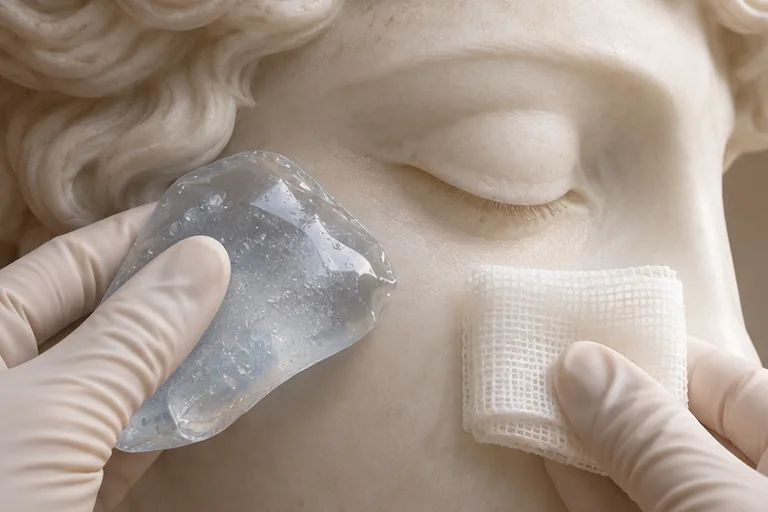
Under-eye revision surgery takes about 1 hour and 30 minutes. It is performed under local anesthesia or sedation, and you can go home the same day. You can resume light daily activities after 2–3 days, although some swelling and bruising may remain. The table below provides general averages; recovery varies from person to person.
If you experience sudden severe pain, decreased vision or an obstructed field of vision, bleeding that will not stop, or rapidly worsening swelling on one side, contact us immediately rather than waiting for your scheduled appointment.
| Timing | What Happens | What to Keep in Mind |
|---|---|---|
| 3–4 days after surgery | Swelling and bruising are at their worst | Sleep with your head slightly elevated and gently apply cold compresses, keeping ice from directly touching the skin or eyes |
| Days 5–7 | Suture removal if an incision was made | Eye makeup and contact lenses may be resumed after your doctor confirms it is safe, usually after 2–4 weeks. |
| 3 weeks–3 months | A period of tissue firmness and tightness | Do not decide on revision surgery at this point based on appearance alone. Exercise, saunas, and alcohol may be resumed after 2 months. |
| 3 months–1 year | Tissues soften and symmetry improves | Follow-up visits at 1, 3, and 6 months and 1 year |
08Three things we check first during your consultation
What we assess first during consultation
- Adhesions and scars from the previous surgery, and the distribution of remaining fat
- Whether the orbital septum holding back the fat has weakened, and the positions of the groove and cheek
- Skin elasticity and thickness, and lower eyelid support (risk of ectropion)
These are general care principles. The actual decision is made after an examination.
When other care is needed first If fewer than 6 months have passed since the previous surgery and the tissues are still healing, if under-eye filler remains, or if symptoms such as double vision or changes in vision suggest a problem with the eye itself, the priorities are observation, filler assessment and consideration of dissolving it, or an ophthalmology evaluation before revision surgery. If we determine that the burden of additional surgery outweighs the expected improvement, we will also explain why we do not recommend surgery.
The answer to the opening question, “Would another fat repositioning procedure smooth out the unevenness?” is this: before repeating the same procedure, we first assess why the area is uneven and why bulging has returned, looking separately at adhesions, remaining fat, the orbital septum, and cheek position. The cause determines whether we consider septum reinforcement, tissue supplementation, cheek repositioning, or treatment of the underlying skin quality. If the tissues are still healing, waiting may be the answer. These distinctions are difficult to make from photos alone, so we assess them together during an examination.
— VITAL Plastic Surgery
When booking, simply leave a note saying, “Please assess adhesions and remaining fat after repositioning first,” and we will start there during your consultation. You do not need to make a decision on the day of your consultation.
Related ReadingUnder-Eye Fat Repositioning · Orbital Septum Revision Consultation Guide
READ NEXT
Read Next
FAQ
Frequently Asked Questions
Can’t I just have fat repositioning again?
Repeating the same surgery may create more tissue adhesions. We first assess the remaining fat and adhesions, then plan around reinforcing the orbital septum. We explain the extent of surgery needed after an examination.
Why not remove all the fat?
We do not recommend it. The overlying skin may become more wrinkled, and if there is under-eye hollowing, the transition may look more hollow. We assess bulging, the transition, and volume loss together.
It has been two months since surgery, and the area feels firm and uneven.
From 3 weeks to 3 months, tissues may become firm and feel tight. We do not decide on revision surgery based solely on appearance during this period. We monitor healing and determine when to reassess.
Can I have a consultation without records from my previous surgery?
Yes. We use photographs showing your current condition and a physical examination to assess adhesions and remaining fat. We also explain what can be assessed without records and the limits of that assessment.
Where will the scars be?
An approach through the conjunctiva leaves no incision line on the skin. If the cheeks also need to be addressed, the incision is made just below the eyelashes. Redness immediately after surgery gradually fades as the tissues settle.
BEFORE CONSULTATION
What to Prepare Before Your Consultation
- Previous Surgery DetailsWrite down when you had surgery and as much as you know about the procedure name and technique you were told.
- PhotosPlease bring current front and side photos, along with photos from before your first surgery and during recovery, if available.
- Filler and Injection HistoryPlease let us know about any under-eye fillers or injections, including any filler-dissolving injections.
- Eye SymptomsPlease note whether you have tightness when looking up or down, double vision, or dryness.
- Medications and Medical HistoryPlease tell us about anticoagulants, herbal medicines and supplements such as omega-3, and medical conditions such as thyroid eye disease or glaucoma.
REFERENCES
References
- Becker BB. Diplopia following lower blepharoplasty. Journal of AAPOS. 2020. doi:10.1016/j.jaapos.2020.07.017 (View abstract)
- Pak C, Yim S, Kwon H, et al. A Novel Method for Lower Blepharoplasty: Repositioning of the Orbital Septum Using Inverted T-Shaped Plication. Aesthetic Surgery Journal. 2018. doi:10.1093/asj/sjy010 (View abstract)
- Hedén P, Fischer S. Comparison of Fat Repositioning Versus Onlay Segmental Fat Grafting in Lower Blepharoplasty. Aesthetic Surgery Journal. 2021. doi:10.1093/asj/sjab070 (View abstract)
- Gimenez AR, Rohrich R, Borab Z, et al. Safety and Complications in Lower Eyelid Blepharoplasty: A Systematic Review. Plastic and Reconstructive Surgery Global Open. 2025. doi:10.1097/GOX.0000000000007102 (View abstract)
The findings in these papers reflect the participants and conditions of each study and do not mean that every individual will have the same results.
This article provides general medical information and does not replace diagnosis or treatment. Surgical results and recovery vary by individual, and complications such as bleeding, infection, scarring, and asymmetry may occur.
More articlesVITAL Plastic Surgery Medical Articles
RESERVATION
You do not need to decide the day of your consultation.
Organize questions about this page without entering your name, contact information, or medical history. This does not submit an appointment request.