PLASTIC SURGERY
MEDICAL COLUMN
Questions Answered Directly by the Doctor Before You Decide on Surgery
Facelift
Articles
Double Chin Liposuction: Is Removing Fat Alone Enough to Define the Jawline?
If there is enough pinchable fat beneath the chin and the skin retains elasticity, double chin liposuction can improve the contour beneath the jawline.
Medically reviewed by Dr. Hyungwoo Yim, Medical Director and board-certified plastic surgeon · Published November 4, 2026 · Last reviewed November 11, 2026
SHORT ANSWER
First, the Short Answer
- If there is enough pinchable fat beneath the chin and the skin retains elasticity, double chin liposuction can improve the contour beneath the jawline.
- However, a double chin is often caused by more than fat alone. If the muscle at the front of the neck (the platysma) has separated or the skin is loose, removing fat alone may not sufficiently define the contour and may make the skin look looser.
- At VITAL Plastic Surgery, we separately assess pinchable fat, muscle bands visible when you lift your chin, excess skin, the salivary glands beneath the jaw, and jawbone structure. We then determine the necessary scope of liposuction, corset platysmaplasty, or a lift.
“Will removing just the fat beneath my chin make my jawline slimmer?”
This is a paraphrase of a question we often hear during consultations.
To answer this question, we first need to distinguish where your current concern comes from. We will explain each point below, then return to the original question at the end.
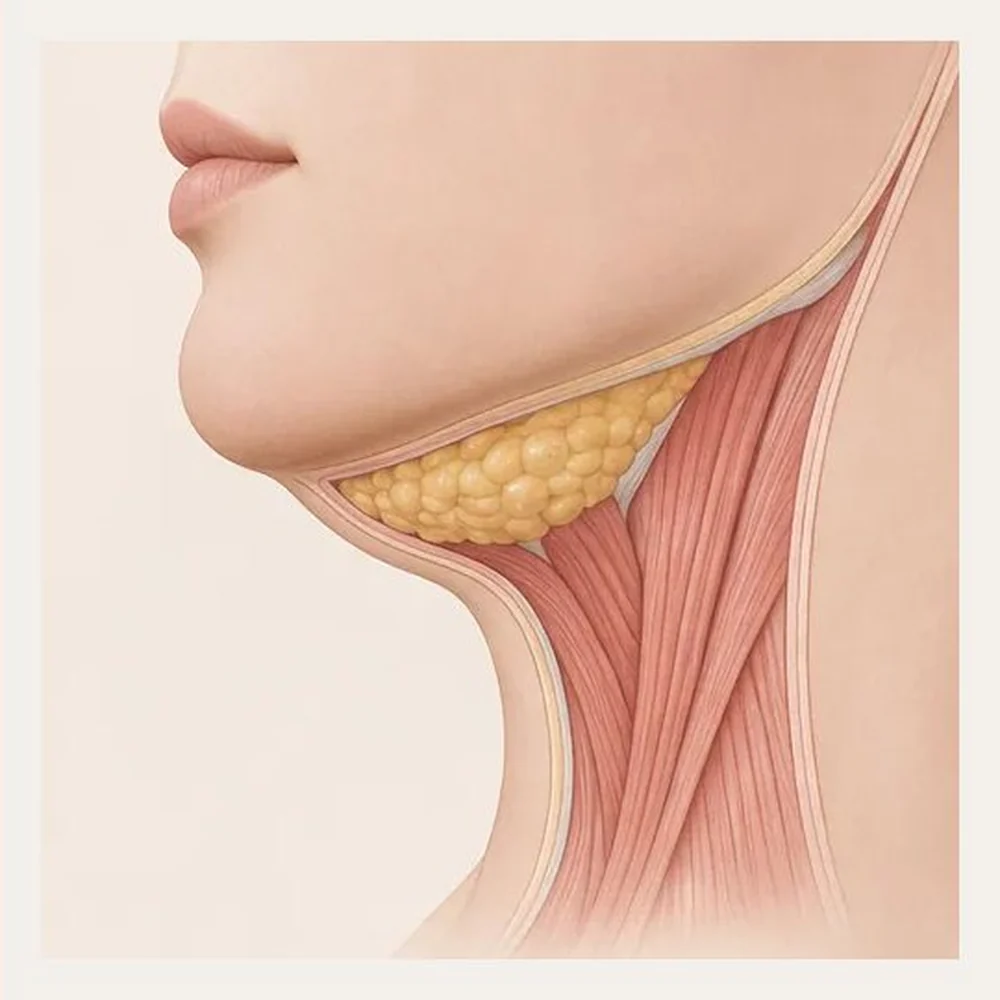
01What causes a double chin?
Answer Fat beneath the chin, separation of the muscle at the front of the neck, loose skin, salivary glands beneath the jaw, and the size and position of the jawbone can contribute individually or together.

A double chin occurs when fat accumulates beneath the chin, the muscle at the front of the neck separates, or the skin becomes loose, creating the appearance of a second fold below the jawline. Similar-looking double chins can have different causes. Pinchable fat, platysmal bands that become prominent when the muscle is tensed, loose skin, salivary glands beneath the jaw, and the size and position of the jawbone each play a role.
The platysma is a thin muscle covering the front of the neck. When it separates, vertical bands become visible and support beneath the chin weakens. Fat beneath the chin is found in two locations: directly beneath the skin and beneath the platysma. How it is treated depends on the layer it occupies.
Without assessing these causes separately, muscle bands may remain after fat removal, or the skin may look looser. At VITAL Plastic Surgery, we therefore identify the cause before choosing a procedure. A single cause is uncommon, so we assess excess neck skin, platysmal bands, fat, and the structures beneath the chin together.
The table below shows the criteria used to distinguish causes during a consultation. In practice, two or more causes often overlap, so identifying the main contributor is the starting point for planning.
The size and position of the jawbone also matter. If the chin is recessed or the jawbone is small, there is less bony support for the skin and fat beneath the chin. This can create the appearance of a double chin even when there is little fat. In these cases, liposuction can offer only limited reduction, so we first explain the changes that can reasonably be expected.
| Cause | How it looks | What we consider first |
|---|---|---|
| Fat beneath the chin | Pinchable fat and a poorly defined jawline | Double Chin Liposuction |
| Platysma separation | Vertical bands when the chin is lifted; a less defined angle between the chin and neck | Corset platysmaplasty (bringing the platysma together) |
| Excess Skin | Loose skin resembling a turkey neck | Combined with a neck lift or facelift |
| Salivary glands beneath the jaw | Bulging on both sides beneath the jaw | Usually preserved; nonsurgical options considered first |
In Simple Terms The area beneath the chin is like a hammock. Removing some of the load (fat) makes the sagging area lighter, but if the hammock’s netting (the platysma) has separated in the middle, the center stays loose even after the load is removed. If the hammock fabric itself has stretched (excess skin), the ropes need to be pulled to make it taut again. A box beneath the hammock (a salivary gland) stays in place even when the load is reduced. Whether to reduce the load, bring the netting together, or pull the ropes therefore depends on what is causing the sagging.
So what can liposuction reduce?
02What can liposuction reduce?
Answer Fat above the muscle can be reduced with liposuction, but structures beneath the muscle are not treated with liposuction.
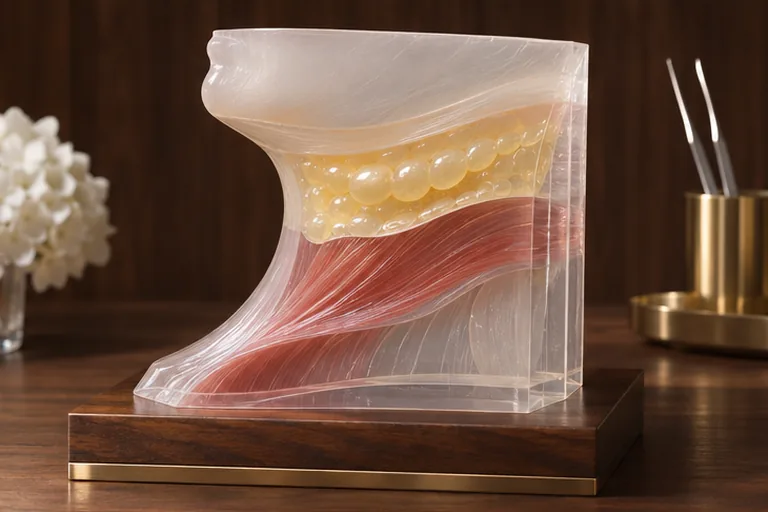
Double chin liposuction may be considered when there is enough pinchable fat beneath the chin and the skin retains elasticity. Small access openings are generally made in a crease beneath the chin or behind the ears, and a thin cannula is used to evenly reduce the fat layer above the platysma.
Liposuction has limits in how far it can reach. Deep fat beneath the platysma, salivary glands, and muscle cannot be reduced with liposuction. A U.S. study of patients who underwent deep neck contouring surgery found that an average of 22.3 cm³ of volume was removed from the central neck, with 73% coming from structures beneath the platysma. In this study, 152 patients underwent volume reduction beneath the platysma1.
This study examined surgery that also addressed structures beneath the muscle, so it does not describe the same approach used at VITAL Plastic Surgery. VITAL Plastic Surgery generally plans to preserve the salivary glands beneath the jaw. However, the findings show that a substantial portion of the fullness beneath the chin may come from layers that liposuction cannot reach. Before surgery, we therefore discuss the extent of change that can be expected from liposuction alone.
Removing too much fat should also be avoided. Excessive fat removal can leave an uneven surface or make the skin appear stuck to the muscle, so a layer of fat of a certain thickness is left beneath the skin.
When fat beneath the chin is the main cause, the procedure follows these steps. The area of pinchable fat is marked while you are seated, and a small access opening is made near a crease beneath the chin. The fat layer beneath the skin is evenly reduced, and the opening is closed with a small suture. Swelling and bruising can occur even when the treatment area is small, so it is advisable to set aside time for recovery.
So if muscle bands are visible, is liposuction alone insufficient?
03If muscle bands are visible, is liposuction alone insufficient?
Answer When vertical bands are visible and the angle between the chin and neck is less defined, reducing fat alone may not sufficiently improve the contour, so corset platysmaplasty may also be considered.

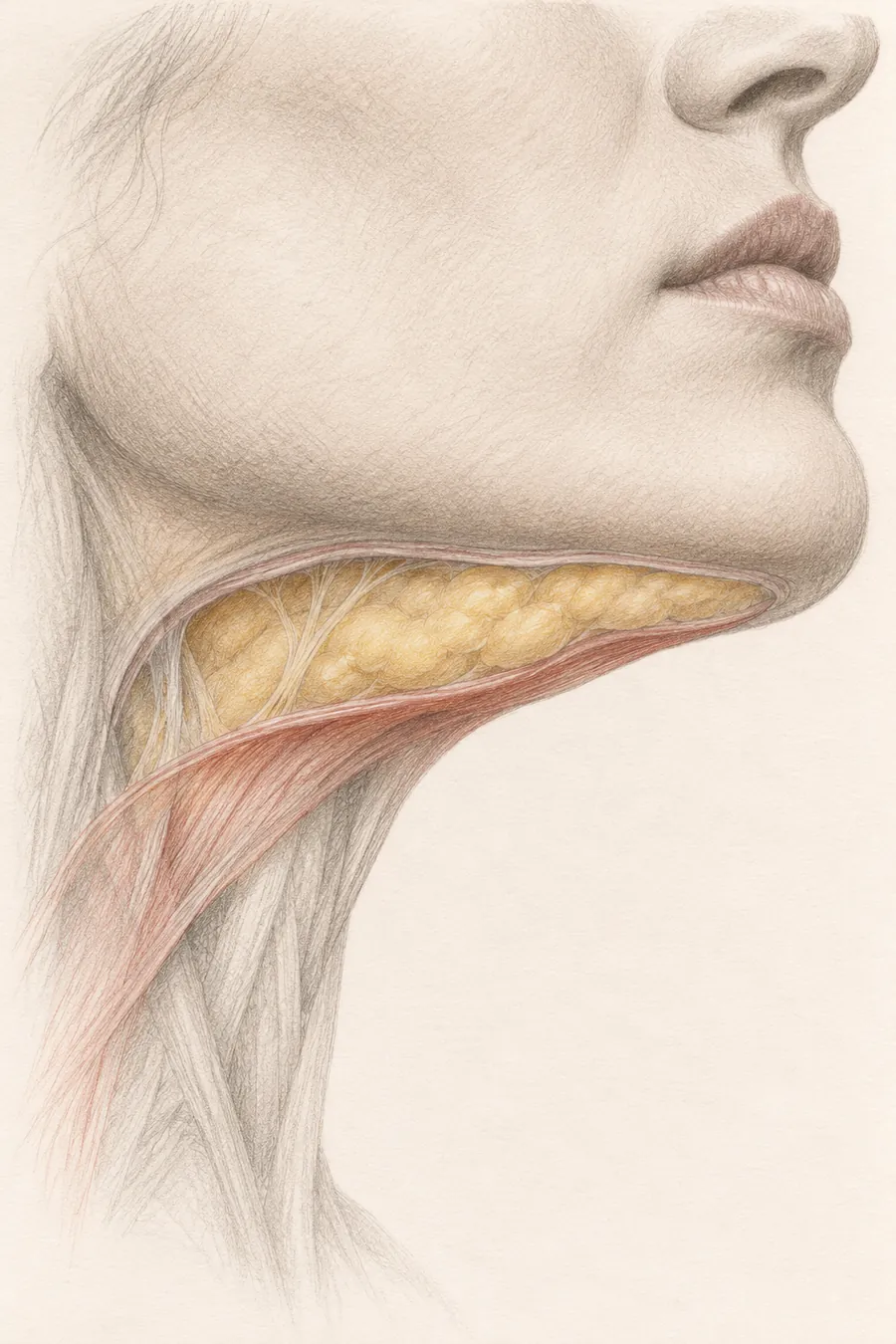
If vertical muscle bands appear at the front of the neck when you lift your chin, and the angle between the chin and neck looks less defined in profile, the platysma may have separated. In this situation, reducing fat alone may make the area beneath the chin thinner while leaving the bands and angle unchanged.
In these cases, we also consider corset platysmaplasty, which uses a small incision beneath the chin to bring the separated platysma together at the midline and secure it. The bands and fat beneath the chin are marked with the chin lifted. A small incision is then made near a crease beneath the chin, the fat is contoured, the separated muscle is brought together and secured, and the incision is closed with fine sutures.
Corset platysmaplasty may be performed alone or with a facelift. If facial sagging is also present, treating only the area beneath the chin may not sufficiently improve the transition between the jawline and neck. The extent of surgery is therefore based on the degree of facial sagging.
Muscle bands are more visible when you lift your chin or tense the muscle. We therefore mark both the bands and the fat beneath the chin with the chin lifted, then compare and explain the changes expected from fat reduction alone and from also bringing the muscle together. Because an incision is added, we also explain the additional recovery demands and scarring.
So what if the skin is loose?
04What if the skin is loose?
Answer If there is substantial excess skin, it may remain and sag after fat removal, so combining the procedure with a neck lift or facelift is considered.
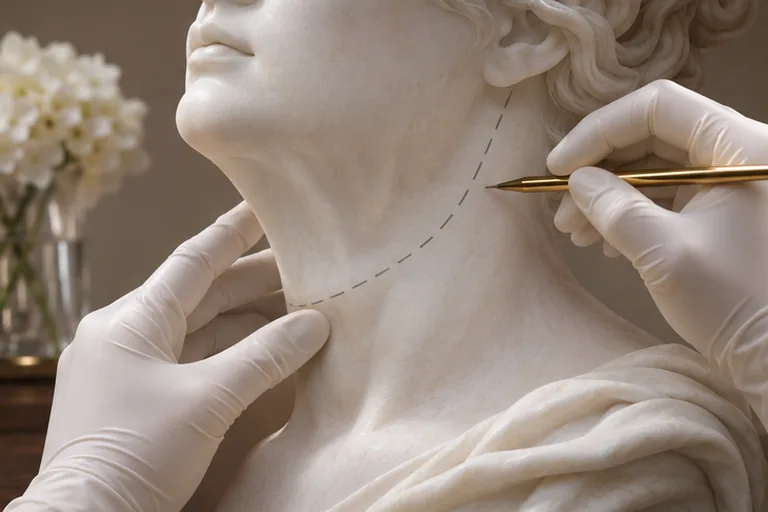
If there is substantial excess skin resembling a turkey neck, it may remain and sag after fat removal. If the skin retains elasticity, it is expected to contract to fit the reduced volume, but the degree varies with age and skin condition.
Neck skin loses elasticity with age. A German study that measured the necks of 77 young, middle-aged, and older adults found that skin elasticity decreased from 75.1% in the young group to 64.5% in the middle-aged group and 55.8% in the older group. Skin firmness and platysma muscle signals also decreased with age2. This means that even when the same amount of fat is removed, the degree of skin contraction may vary with age and skin condition.
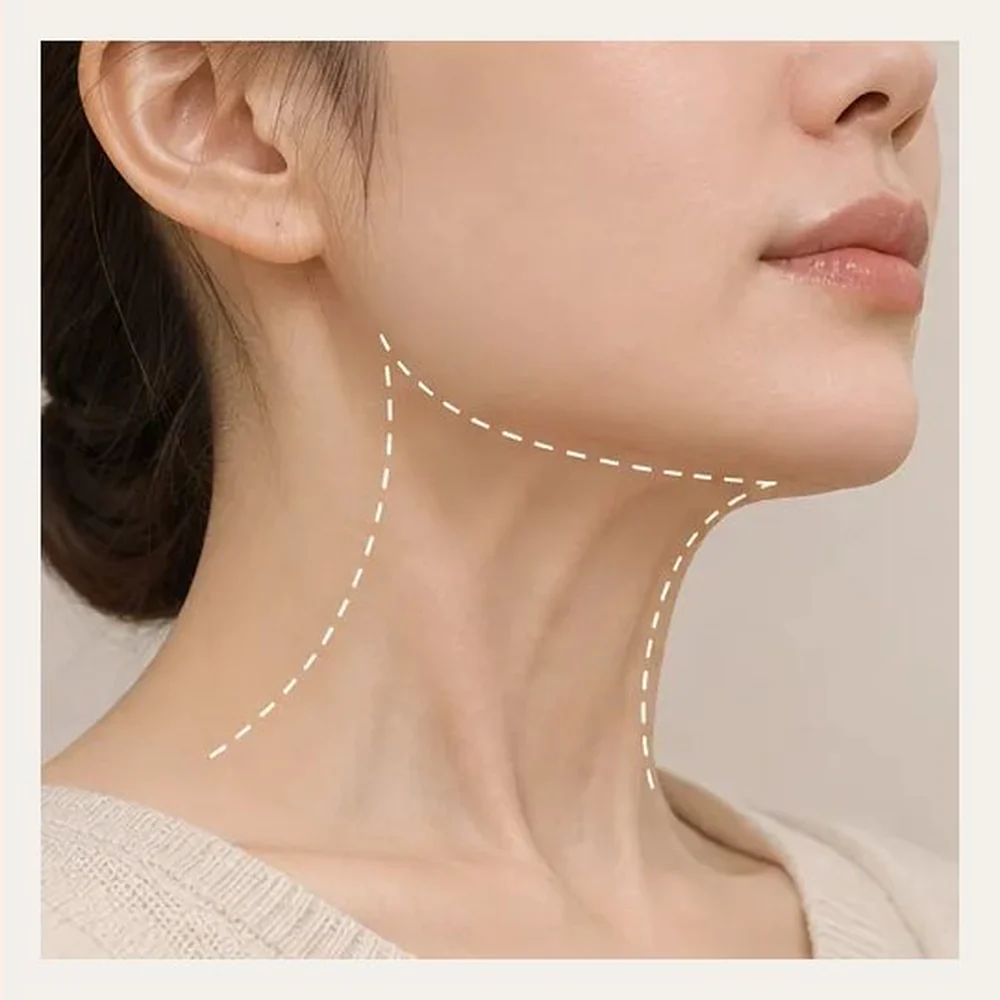
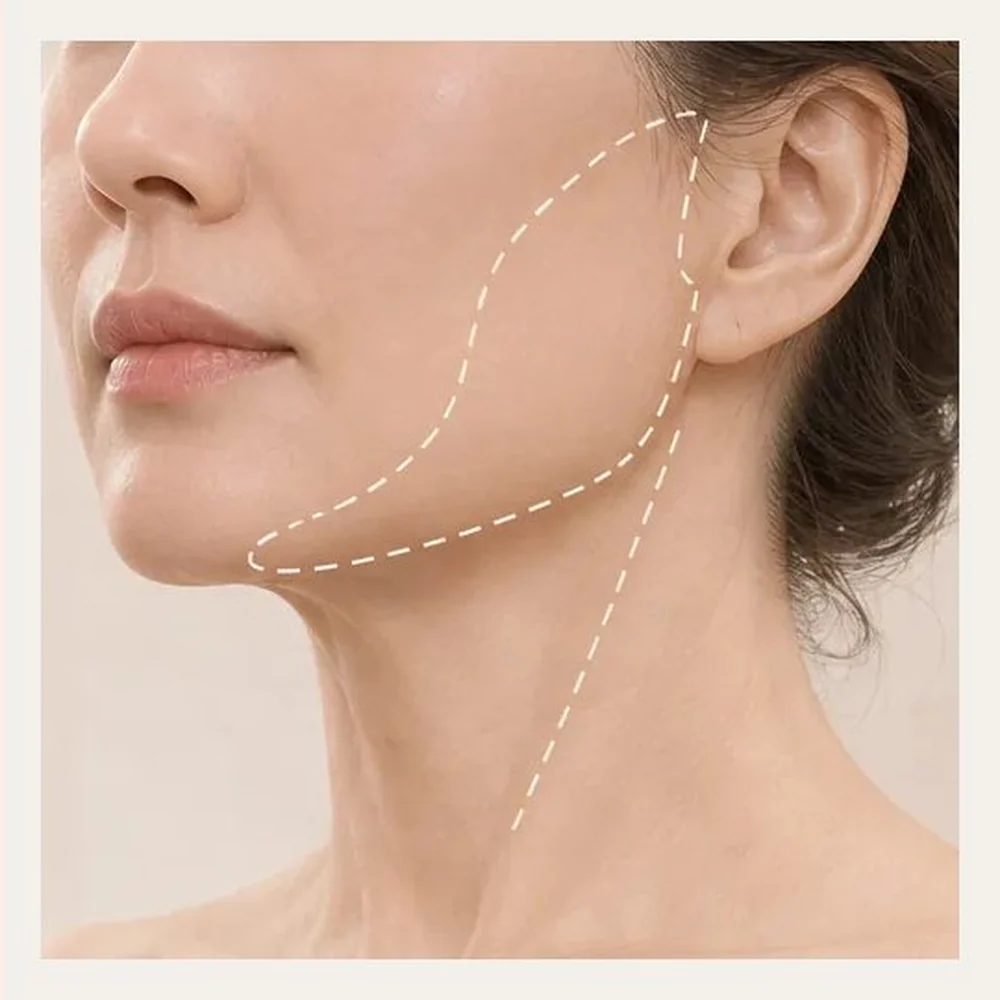
That is why, at VITAL Plastic Surgery, we assess your skin by gently pinching it before discussing surgery. If there is substantial excess skin, we consider a neck lift or facelift to lift the neck skin upward and backward. In these cases, we make an incision behind the ear along the hairline and dissect beneath the neck skin, contour the area under the chin, and pull the fascia upward and backward to secure it.
If you have substantial excess skin but want only fat removal, we do not recommend proceeding with surgery right away. Because a more extensive procedure changes the recovery involved, we explain both the changes you can expect and the demands of recovery.
If the neck is a major concern, treating only the face or only the area under the chin may not sufficiently improve the transition between the jawline and neck. When a lift is needed, we therefore assess the face and neck together and determine how much to address in one procedure.
If the salivary glands under the jaw bulge, are they removed?
05Are bulging salivary glands beneath the jaw removed?
Answer We generally aim to preserve them and, when needed, consider whether nonsurgical options such as Botox can be tried first.
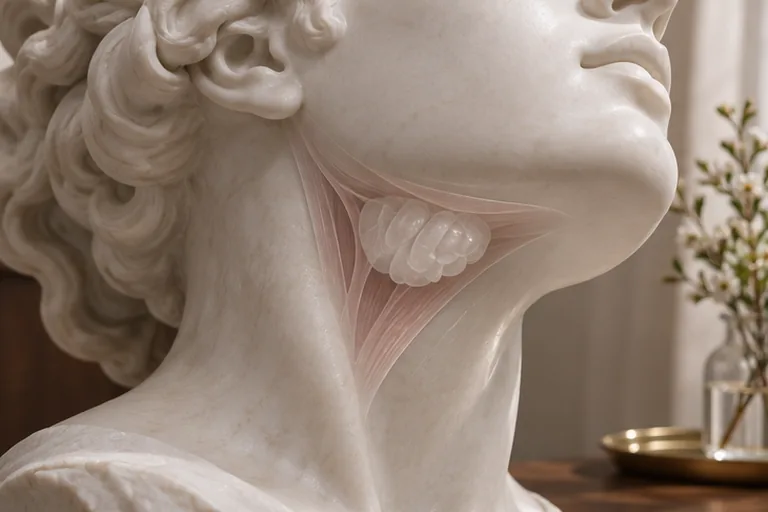
The salivary glands under the jaw, called the submandibular glands, can sometimes cause bulges on both sides under the chin. Although these glands can contribute to fullness under the chin, we first consider whether removing a healthy structure is appropriate.
At VITAL Plastic Surgery, we generally aim to preserve the salivary glands. When needed, we consider whether nonsurgical options such as Botox can be tried first. The more a treatment could compromise normal anatomy, the more carefully we weigh its benefits against its risks.
When the salivary glands appear to be the main cause and nonsurgical options should be considered first, we do not recommend liposuction right away. Removing fat may leave the gland bulges unchanged or make them more noticeable.
What if your face is already lean?
06What if my face is relatively thin?
Answer Repeated fat reduction treatments require caution in a thin, hollow face, and care is also needed around the nerve along the jawline.
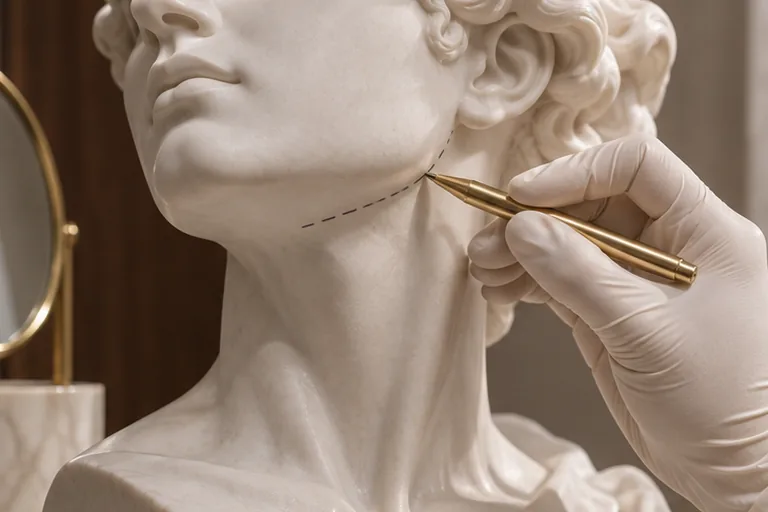
Repeated treatments intended to reduce fat require caution in people with thin, hollow faces. Reducing fat while focusing only on the area under the chin may make the facial contours look even leaner. In these cases, we do not recommend liposuction right away.
Many people would prefer treatment with devices or injections. At VITAL Plastic Surgery, we assess structural sagging, skin quality, and fat separately to select an appropriate device. However, devices have difficulty correcting structural changes such as separated muscles or substantial excess skin, and repeated treatments on a thin, hollow face require careful consideration.
A nerve that moves the corner of the mouth runs along the edge of the jaw, so care is needed when treating this area. If your weight is changing significantly, the amount of fat and the skin will continue to change, so we reassess after your weight has stabilized.
Ultimately, when contouring under the chin in someone with a lean face, preserving tissue may be more important than removing it. At VITAL Plastic Surgery, we assess volume throughout the face and determine the treatment area while considering whether reducing fullness under the chin could make the face look even leaner.
- When you want fat removal alone despite substantial excess skin
- When your face is thin and hollow, making further fat reduction difficult
- When your weight is changing substantially
- When salivary glands appear to be the main cause and nonsurgical options are considered first
What does recovery look like?
07What does recovery involve?
Answer Swelling is at its worst on days 3–4. Stitches are removed after 7–10 days, and a return to daily activities is expected after about 10 days, though recovery varies by individual.

Swelling after surgery peaks on days 3–4. During this time, sleep with your head slightly elevated and use compression only if instructed for your procedure. Recovery varies depending on whether you had liposuction alone or also had corset platysmaplasty or a lift.
We distinguish early contour changes from the time it takes for tissues to settle. Scars may initially be red and firm and can continue to change for more than a year. At VITAL Plastic Surgery, we check your progress at 1, 3, and 6 months and at 1 year.
Before surgery, we first check for high blood pressure, diabetes, and anticoagulant use. If these are not controlled or appropriately managed, surgery cannot proceed right away. Please also tell us about previous fillers, threads, and lifting procedures so we can use ultrasound to assess their location and distribution when needed.
The following is a typical timeline, and individual recovery varies. If you experience sudden severe pain, bleeding that does not stop, or rapidly worsening swelling on only one side, contact us right away without waiting for your scheduled appointment.
We document your condition before treatment and use consistent criteria to compare your progress. Along with photographs, we check for discomfort such as tightness or changes in sensation. We explain additional care based on your condition rather than recommending the same care for everyone. Resume tying your hair back only after checking that it does not pull on the incision.
| Timing | What Happens | What to Keep in Mind |
|---|---|---|
| 3–4 days after surgery | Peak Swelling | Sleep with your head slightly elevated; use compression only as instructed |
| 7–10 Days | Stitches removed after 7–10 days; return to daily activities in about 10 days | Allow for individual differences when planning your schedule |
| Several Months | Assess early contour changes separately from tissue settling | Tie your hair back only after checking that it does not pull on the incision |
| Up to 1 Year | Scars may be red and firm at first, then change over time | Follow-ups at 1, 3, and 6 months and 1 year |
08Three things we check first during your consultation
What we assess first during consultation
- Pinchable fat and skin elasticity — whether double chin liposuction alone is enough
- Vertical platysmal bands visible when you lift your chin and the angle between the chin and neck — whether corset platysmaplasty is needed
- Excess skin, the salivary glands under the jaw, jawbone structure, and whether the face is thin and hollow — whether to consider a lift or nonsurgical options first
These are general care principles. The actual decision is made after an examination.
When other care is needed first We do not recommend double chin liposuction right away if you have substantial excess skin but want only fat removal, or if your face is thin and hollow and further fat reduction would be difficult. If your weight is changing significantly or the salivary glands appear to be the main cause, we first consider weight stabilization or nonsurgical options. If high blood pressure or diabetes is uncontrolled, managing those conditions comes first.
The answer to the opening question, “Will removing only the fat under my chin give me a slimmer jawline?” is this: if fat under the chin is the main cause and the skin still has elasticity, liposuction can contour the area. However, if the muscles have separated or the skin has stretched, removing fat alone may not sufficiently define the jawline. At VITAL Plastic Surgery, we assess fat, muscle, skin, and salivary glands separately and determine the extent of treatment needed.
— VITAL Plastic Surgery
When booking, simply leave a note saying, “Please assess the different causes of fullness under my chin,” and we will start there during your consultation. You do not need to make a decision on the day of your consultation.
Related ReadingDouble Chin Liposuction · Corset Platysmaplasty Information
READ NEXT
Read Next
FAQ
Frequently Asked Questions
Will my skin sag more after liposuction?
If the skin retains elasticity, it is expected to contract to fit the reduced volume, but the degree varies with age and skin condition. If there is substantial excess skin, it may look saggy, so corset platysmaplasty or a lift may also be considered.
Can devices or injections address it?
We assess structural sagging, skin quality, and fat separately to choose an appropriate device. However, device treatments have difficulty correcting structural issues such as separated muscles or substantial excess skin, and repeated treatments on a thin, hollow face require careful consideration.
If salivary glands cause fullness under the chin, do you remove them?
We generally aim to preserve them. When needed, we assess whether nonsurgical options such as Botox can be considered first.
Where will the scars be?
Liposuction is performed through small access openings in a crease beneath the chin or behind the ears. Corset platysmaplasty requires a small incision beneath the chin. If a lift is performed at the same time, there will be incisions along the hairline behind the ears.
When can I return to my normal routine?
Stitches are removed after 7–10 days, and a return to daily activities is expected after about 10 days, though recovery varies by individual. Timing also depends on the extent of any procedures performed at the same time.
BEFORE CONSULTATION
What to Prepare Before Your Consultation
- Front and profile photosProfile photos with your head in a neutral position and with your chin slightly raised can help distinguish the causes.
- History of fillers, threads, and lifting proceduresPlease tell us about previous fillers, threads, and lifting procedures. If needed, we use ultrasound to assess their location and distribution.
- History of device treatments and injectionsPlease write down when you had treatments such as fat-dissolving injections or radiofrequency and how many sessions you received.
- Health conditions and medicationsPlease tell us whether you have high blood pressure or diabetes, or take anticoagulants. If these are not controlled or appropriately managed, surgery cannot proceed right away.
- Weight Change PlansIf you are losing weight, please tell us your goal and timeline. Assessment is more accurate after your weight has stabilized.
REFERENCES
References
- O'Daniel TG. Optimizing Outcomes in Neck Lift Surgery. Aesthetic Surgery Journal. 2021. doi:10.1093/asj/sjab056 (View abstract)
- Engerer N, Frank K, Moellhoff N, et al. Aging of the Neck Decoded: New Insights for Minimally Invasive Treatments. Aesthetic Plastic Surgery. 2022. doi:10.1007/s00266-022-02961-0 (View abstract)
The findings in these papers reflect the participants and conditions of each study and do not mean that every individual will have the same results.
This article provides general medical information and does not replace diagnosis or treatment. Surgical results and recovery vary by individual, and complications such as bleeding, infection, scarring, and asymmetry may occur.
More articlesVITAL Plastic Surgery Medical Articles
RESERVATION
You do not need to decide the day of your consultation.
Organize questions about this page without entering your name, contact information, or medical history. This does not submit an appointment request.