PLASTIC SURGERY
MEDICAL COLUMN
Questions Answered Directly by the Doctor Before You Decide on Surgery
Skin Tightening
Articles
Skin-Tightening Devices and Shot Counts: What to Look for in the Research
Shot count or a device name alone cannot tell you how suitable or effective a treatment will be. You also need to consider the concern and treatment area, the device and conditions studied, and the expected changes and risks.
Medically reviewed by Dr. Hyungwoo Yim, Medical Director (board-certified plastic surgeon) · Published October 6, 2026 · Last reviewed November 11, 2026
SHORT ANSWER
First, the Short Answer
- You cannot compare effectiveness by shot count or device name alone.
- The first step is to determine whether the sagging appearance comes from reduced skin elasticity, fat, or descent of the underlying structures, then choose a device that reaches that layer.
- Most device studies involved skin with mild to moderate laxity, and some reports suggest that results are reduced when sagging is severe or body mass index is high.1
- That is why consultations also cover options such as postponing device treatment or considering surgery first.
“Doctor, which is better, Ultherapy or Thermage? And more shots are better, right?”
This is a paraphrase of a question we often hear during consultations.
Before focusing on device names, this article starts by distinguishing the causes of a sagging appearance (01), then covers the layers each device reaches (02), shot count (03), how to read the research (04), pain and side effects (05), and when results appear and how to plan maintenance intervals (06). Section 04 explains what a study comparing two devices on opposite sides of the face tells us.
01Before talking about “lifting,” identify the underlying concern
Answer Before choosing a device, we first determine whether the sagging appearance comes from reduced skin elasticity, fat, or descent of the underlying structures. Different causes call for different approaches.


Thinner skin with reduced elasticity, excess fat below the jawline that creates a heavy appearance, and descent of the structures supporting the cheeks can all look like “sagging.” But different causes call for different approaches. The physician at VITAL first distinguishes structural sagging, skin quality, and fat before choosing a device.
The same applies under the eyes. Bulging fat, hollow grooves, and loose skin are different concerns, so results from studies of facial skin-tightening devices should not be interpreted as evidence that they address every under-eye concern.
The study populations reflect this distinction. A 2023 systematic review of 16 studies on microfocused ultrasound—a method that concentrates ultrasound at a point beneath the skin—summarized results in women with mild to moderate facial skin laxity. Excessive skin laxity or a body mass index (BMI) above 30 was associated with less favorable results and was considered a relative reason not to recommend treatment.1
A useful first question at your consultation is therefore “Does my concern come from skin, fat, or underlying structures?” rather than “Which device is best?” Device selection comes next.
| What we check | How we assess it | What can happen if overlooked |
|---|---|---|
| Fat Distribution and Hollowing | We assess whether excess fat below the jawline creates a heavy appearance and whether the cheeks are already hollow. | Repeated fat-reducing energy treatments on a face with already hollow cheeks may make the hollowing more noticeable. |
| Amount of excess skin and degree of sagging | We assess how loose the skin is and whether the structures supporting the cheeks have descended. | Reports suggest that device treatments become less effective as skin laxity increases, so postponing device treatment or considering surgery first may be necessary. |
| Type of under-eye concern | We distinguish bulging fat, hollow grooves, and loose skin. | Results from studies of facial skin-tightening devices may be overgeneralized as evidence that they address every under-eye concern. |
| Previous Procedure History | We review the dates and device names of previous treatments alongside the current condition of your skin and fat. | High-energy treatments may overlap at short intervals. |
At your consultation, you can say, “I read the article on skin-tightening devices. Please first assess whether my sagging comes from skin, fat, or underlying structures.” We will walk through the assessment in the order presented here.
Key point A useful first question at your consultation is “Does my concern come from skin, fat, or underlying structures?” rather than “Which device is best?”
Once the cause is identified, how do the layers each device reaches differ?
02Each device reaches different layers and has different supporting research
Answer Each device has different primary target layers and different supporting research. Ultrasound targets points at specific depths, radiofrequency targets the dermis, and microwaves target the fat layer.


Below is a summary of each device’s primary target layers and the studies directly reviewed for this article. Listing them together does not rank them.
- Ultherapy Prime (focused ultrasound): Concentrates ultrasound at a point at a set depth to create small thermal coagulation zones. In a case study of 30 Asian participants who received one treatment, 86.7% improved by at least one grade on the neck volume scale and 70% on the jawline sagging scale at day 90. Average pain was 4.50 out of 10. The study had no control group, and the authors disclosed consulting relationships with the manufacturer.2
- Thermage FLX (monopolar radiofrequency): Uses radiofrequency to heat broad areas of the dermis while cooling the skin’s surface. An open-label clinical trial of a latest-generation monopolar radiofrequency device in 40 people ages 30–60 reported improvement in 73% at six months based on practitioner assessments. The abstract does not specify the product name.3
- XERF (dual-frequency monopolar radiofrequency): Uses two frequencies, 6.78 MHz and 2 MHz. Computer simulations and experiments on minipig skin found that the depth of heat distribution varied with frequency and pulse mode. The papers reviewed for this article did not include studies of effectiveness in humans.4
- ONDA (microwaves): Delivers heat toward the fat layer beneath the skin using 2.45 GHz microwaves. In a study of 10 women with sagging under the chin who received two treatments 30 days apart, the average under-chin sagging score decreased from 3.6 to 2.3 after 12 weeks.5 The device’s international advisory board stated that long-term efficacy and safety assessments are not yet available.6
- InMode (bipolar radiofrequency platform): The treatment method and target layer vary with the attached handpiece. FX, the option listed at VITAL, is described as using suction to hold tissue while delivering energy toward the fat layer. The papers reviewed for this article did not include clinical studies directly examining FX. A review of radiofrequency devices reported fewer major complications with bipolar devices than with monopolar devices.7
- Choosing to defer device treatment: Repeated fat-reducing energy treatments on a face with already hollow cheeks may make the hollowing more noticeable. Reports also suggest that device treatments become less effective as skin laxity increases. In these cases, we discuss postponing device treatment or considering surgery first.1
Key point Listing them together does not imply a ranking. If the cheeks are hollow or the skin is very loose, we may defer device-based treatment or discuss surgery first.
Then, with the same device, do more shots mean better results?
03Do more shots produce proportionally better results?
Answer Shot count alone cannot establish a proportional relationship. The studies used different devices, treatment areas, depths, and energy settings, and none identified a shot count suitable for every face.


Shot count alone cannot establish a proportional relationship. Studies included in a 2023 literature review differed in their devices, treatment areas, depths, energy settings, and the number and direction of treatment lines. The authors explain that frequency determines penetration depth, energy determines the amount of heat, and the number and direction of treatment lines can also be adjusted. However, they did not identify a shot count suitable for every face.1
Numbers in a paper reflect the conditions of that study. One monopolar radiofrequency study used an average of 412 shots in 30 Thai participants, while an Ultherapy PRIME case study distributed at least 650 lines per person according to facial anatomy.82 Because the devices, units, and participants all differ, these numbers cannot be compared directly or used as a benchmark for your face.
A 2025 review of high-intensity focused ultrasound also identified the lack of standardized optimal energy settings and patient selection criteria as a major challenge.9 It is therefore safer not to interpret these findings as meaning that “more is better” or “this number is enough.”
During your consultation, ask how the proposed treatment area relates to your concerns and which changes are unlikely. This article does not provide individualized guidance on treatment depth, power settings, or shot count.
Key point It is safer not to interpret these findings as meaning that “more is better” or “this number is enough.”
How should you interpret improvement rates reported in studies?
04How should you interpret study results?
Answer A numerical measurement of “lifting” does not necessarily mean the change is visible. The numbers vary depending on who evaluates the results and when.

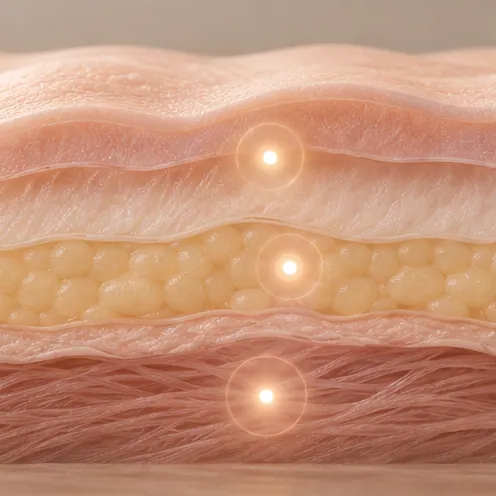
A systematic review collects and examines multiple studies using predefined criteria. A 2023 review of microfocused ultrasound included 16 studies, 11 of which used the Ulthera System. All participants were women, only results from a single treatment were examined, and no outcomes beyond one year were reported.1
The same review identified bias in subjective assessments as a limitation and noted that a numerical measurement of “lifting” does not necessarily mean the change is visible or aesthetically better.1 For this reason, this article does not use improvement rates pooled from multiple studies as promotional claims.
Responses vary even with the same device. In a retrospective study of 24 people who received one microfocused ultrasound treatment, dermatologists rated 5 (20.9%) as improved, 15 (62.5%) as unchanged, and 4 (16.7%) as worsened. Meanwhile, 11 patients (45.9%) reported improvement themselves.10 This means the numbers vary depending on who evaluates the results and when.
Some studies have directly compared the two technologies. In a study of 20 people with mild to moderate sagging, monopolar radiofrequency was applied to one side of the face and focused ultrasound to the other. At six months, there were no statistically significant differences in sagging scores, satisfaction, or adverse reactions.11 Because the study was small, it is more appropriate to read it as support for choosing based on the cause of sagging than as evidence that one is better.
Evidence for a technology category must also be distinguished from evidence for an individual product. The inclusion of Ulthera System studies in a review does not establish that results for a specific model, such as Ultherapy PRIME, have been directly validated. Nor does this ultrasound paper establish superiority or inferiority relative to radiofrequency or microwave devices.1 Many of the device studies cited included only a few dozen participants and had no control group. One radiofrequency study explicitly identified these issues, along with subjective assessments, as limitations.8
Key point Small studies are more appropriately read as support for choosing based on the cause of sagging than as evidence that one is better.
Beyond effectiveness, what do we know about pain and side effects?
05Consider pain, side effects, and uncertainties about repeated treatments
Answer Temporary redness and swelling are common, and reactions such as burns and blisters have also been reported, though rarely. Whether repeated treatments provide additional benefits remains a question for future research.

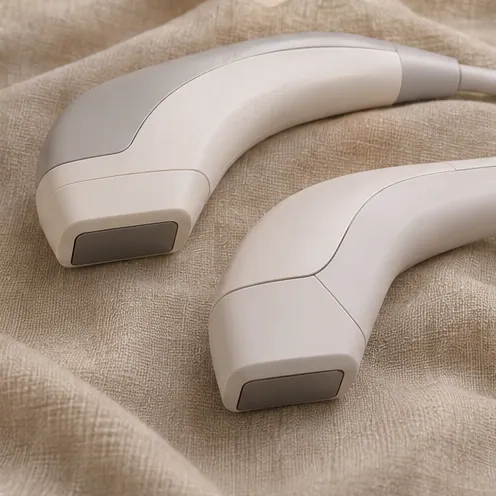
In the 2023 review, microfocused ultrasound was moderately painful, and temporary redness and swelling were common. Altered sensation, bruising, tingling, burns in the jaw area, linear marks, and contact dermatitis were recorded infrequently (2%).1 A reaction being rarely reported does not mean it cannot happen to you.
A report also described five patients who developed blisters, skin erosions or ulcers, tissue atrophy following swelling, or skin necrosis after a single treatment with an Ulthera device. The authors considered these events rare but potentially underreported.12
A review of 23 radiofrequency device studies found that most complications were mild and temporary, but major complications were more common with monopolar devices.7 An advisory board on microwave devices listed itching, numbness or tingling, tissue hardening, redness, swelling, burns, bruising, nodules, and blisters as possible reactions. It also noted that excessive pressure, overly high settings, and inappropriate patient assessment increase the risk.6
Evidence for repeated treatment must also be considered separately. The 2023 review examined only single-treatment outcomes and left the question of additional benefits from repeated treatments for future research.1 These data alone do not support a conclusion that repeating treatment or combining different devices produces better results.
If you develop severe pain, blisters, or altered sensation after treatment, contact the treating clinic immediately rather than waiting for your scheduled appointment. This article cannot determine whether symptoms are normal or substitute for instructions on safe device use.
Key point A reaction being rarely reported does not mean it cannot happen to you.
When do results appear, and how should treatment intervals be planned?
06When do results appear, and how are maintenance intervals planned?
Answer Results are more accurately assessed by comparing photos taken under the same conditions several months later than by looking in the mirror immediately after treatment. This is because tissue changes following thermal stimulation occur over several months.


Changes following thermal stimulation do not happen overnight. In a study that followed 22 women for 24 weeks after one microfocused ultrasound treatment, dermal swelling seen on day 3 had completely resolved by week 4. Skin elasticity measurements initially decreased at week 4, then increased significantly at weeks 12 and 24. Skin barrier function did not change.13
For this reason, results are more accurately assessed by comparing photos taken under the same conditions several months later than by looking in the mirror immediately after treatment.
At VITAL Plastic Surgery, the doctor's treatment schedule distinguishes between Ultherapy PRIME and Thermage once a year, and InMode and ONDA monthly. This reflects the judgment that, because tissue changes following thermal stimulation occur over several months, there is little reason to apply high-energy treatments at short intervals. However, this does not mean everyone needs monthly treatment. For thin, hollow faces, we monitor progress and reassess the treatment area to avoid repeating fat-reducing treatments.
These intervals reflect the clinic's treatment guidelines, not research findings that more treatments produce better results. When planning intervals, we consider the date and device used for previous treatments, along with the current condition of the skin and fat.
Key point Treatment intervals reflect the clinic's treatment guidelines, not research findings that more treatments produce better results.
What should you ask during a consultation?
07Five questions to bring to a device consultation
Answer Before focusing on the device name, ask about the cause of your concerns, the exact device model and supporting evidence, and which changes are unlikely. The questions below are intended to connect the scope and limitations of the literature to your consultation.
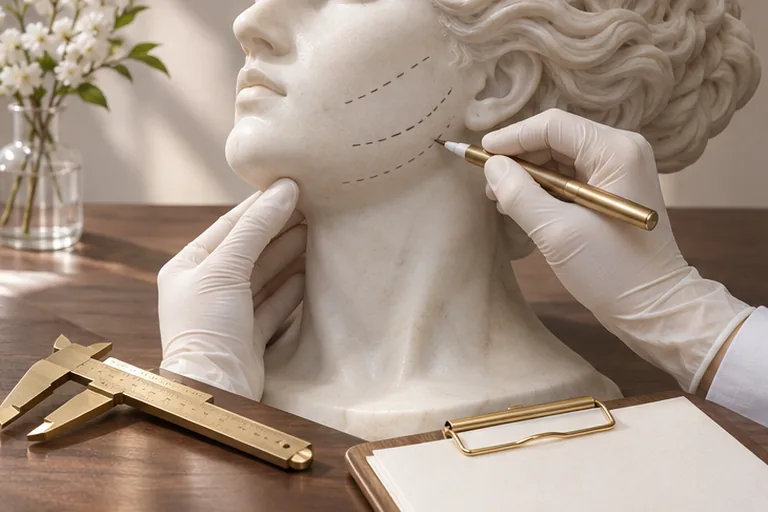
The questions below are intended to connect the scope and limitations of the literature to your consultation. Answers should be based on an examination and confirmation of the device.
What the doctor looks at first
- Structural sagging We assess whether the structures supporting the cheeks have descended and whether excess skin and deeper sagging are the main concerns.
- Skin quality We assess skin thickness and whether the skin has become thinner and less elastic.
- Fat We assess whether there is excess fat below the jawline or whether the cheeks are already hollow.
These are general care principles. The actual decision is made after an examination.
- What is the main cause of my concern, and which area and goal will this treatment address?
- What is the exact model of the proposed device, where will it be used, and is there supporting evidence?
- Why did you choose this shot count and treatment area, and which changes are unlikely?
- What are the main side effects in my case, and under what conditions should treatment be delayed or avoided?
- If you recommend repeated or combined treatments, why are they needed, what evidence supports them, and what additional burdens would they involve?
Key point This article does not provide individualized guidance on treatment depth, power settings, or shot count.
The answer to the original questions—“Which is better, Ultherapy or Thermage? More shots are better, right?”—is this: effectiveness cannot be compared by shot count or device name alone. First, we need to determine whether the appearance of sagging comes from reduced skin elasticity, fat, or descent of the underlying structures. Then we choose a device that reaches that layer. If the cheeks are already hollow or the skin is very loose, we may defer device-based treatment or discuss surgery first. I aim to provide care that appropriately balances surgery, nonsurgical procedures, and skin anti-aging treatments. The principle is to choose energy treatments for a clear reason, rather than simply using more shots.
— Dr. Hyungwoo Yim
At your consultation, say, “I read the article on lifting devices. Please help me understand what to consider first in my case,” and we will walk you through the points in the order presented here.
Related ReadingAsk about both achievable changes and limitations during your consultation
READ NEXT
Read Next

FAQ
Frequently Asked Questions
Can ultrasound skin tightening replace lower eyelid surgery?
The skin-tightening studies reviewed here do not provide direct evidence that these treatments can replace lower eyelid surgery. The studies also involved skin with mild to moderate laxity. Skin, fat, hollows, and supporting structures need to be assessed separately.1
Does a systematic review mean the evidence is conclusive?
Systematic reviews have the advantage of collecting studies methodically, but limitations in the included studies’ designs, participants, and assessment methods remain. The 2023 review also included only women and had no results beyond one year. A paper’s title alone cannot determine your individual results.1
Which is more effective, Ultherapy or Thermage?
In a study of 20 people who received one treatment on each side of the face, there were no statistically significant differences in sagging scores, satisfaction, or adverse events through 6 months.11 The two devices target different tissue layers, so we select one or plan to use both depending on the cause.
Is the treatment very painful?
A systematic review described microfocused ultrasound as moderately painful, and a case series of Ultherapy Prime reported an average pain score of 4.50 out of 10.12 The level of discomfort varies by treatment area, settings, and individual.
Does the same device name mean the same treatment?
Models, handpieces, and tip configurations can vary even under the same name. With InMode in particular, the target layer varies by handpiece, so it helps to confirm the exact product name. Manufacturer photos on the device pages are for identifying the equipment; they do not demonstrate the extent of its effects.
Are results visible right away?
Heat-induced changes develop over several weeks to months. In one study, measured skin elasticity decreased at 4 weeks, then increased at 12 and 24 weeks.13 That is why we compare photos taken under the same conditions several months later.
BEFORE CONSULTATION
What to Prepare Before Your Consultation
- Treatment records from the past 1–2 yearsWrite down as much as you know about the device name, handpiece or tip, and treatment date. If you do not know, we will assess you during the examination.
- The one area that concerns you mostStart your consultation by telling us whether your main concern is your jawline, under your chin, your cheeks, or around your eyes.
- Front and side photos without makeupPhotos from the past 3 months can make it easier to discuss changes over time.
- Medications and implanted devicesBe sure to tell us if you take blood thinners or have an implanted medical device such as a pacemaker, or facial implants.
- Future surgery plansIf you are considering surgery such as a facelift, we will plan device treatments around that schedule.
REFERENCES
References
- Contini M et al. A Systematic Review of the Efficacy of Microfocused Ultrasound for Facial Skin Tightening. International Journal of Environmental Research and Public Health. 2023. doi:10.3390/ijerph20021522 (Read the full article)
- Lim J et al. Early Experience With Ultherapy Prime in Asia Pacific: A Pilot Case Series. Plastic and Reconstructive Surgery - Global Open. 2025. doi:10.1097/gox.0000000000007269 (Read the full article)
- Angra K et al. Prospective Clinical Trial of the Latest Generation of Noninvasive Monopolar Radiofrequency for the Treatment of Facial and Upper Neck Skin Laxity. Dermatologic Surgery. 2021. doi:10.1097/dss.0000000000003005 (View abstract)
- Ko K et al. Computational modeling and histologic analysis of 6.78- and 2-MHz monopolar radiofrequency-induced thermal reactions. Lasers in Medical Science. 2025. doi:10.1007/s10103-025-04746-8 (Read the full article)
- Zappia E et al. An innovative microwave technology for the treatment of submental skin laxity. Lasers in Medical Science. 2025. doi:10.1007/s10103-024-04270-1 (Read the full article)
- Hoffmann K et al. Microwave-Energy-Based Device for the Treatment of Cellulite and Localized Adiposity: Recommendations of the “Onda Coolwaves” International Advisory Board. Bioengineering. 2024. doi:10.3390/bioengineering11121249 (Read the full article)
- Rohrich RJ et al. Minimally Invasive Approach to Skin Tightening of the Face and Body: Systematic Review of Monopolar and Bipolar Radiofrequency Devices. Plastic and Reconstructive Surgery. 2022. doi:10.1097/prs.0000000000009535 (View abstract)
- Wanitphakdeedecha R et al. Efficacy and Safety of Monopolar Radiofrequency for Treatment of Lower Facial Laxity in Asians. Dermatology and Therapy. 2022. doi:10.1007/s13555-022-00817-8 (Read the full article)
- Haykal D et al. A Systematic Review of High-Intensity Focused Ultrasound in Skin Tightening and Body Contouring. Aesthetic Surgery Journal. 2025. doi:10.1093/asj/sjaf053 (View abstract)
- Yalici-Armagan B et al. Evaluation of microfocused ultrasound for improving skin laxity in the lower face: A retrospective study. Dermatologic Therapy. 2020. doi:10.1111/dth.14132 (View abstract)
- Alhaddad M et al. A Randomized, Split-Face, Evaluator-Blind Clinical Trial Comparing Monopolar Radiofrequency Versus Microfocused Ultrasound With Visualization for Lifting and Tightening of the Face and Upper Neck. Dermatologic Surgery. 2019 (listed as 2018 in the article database). doi:10.1097/dss.0000000000001653 (View abstract)
- Friedmann DP et al. Complications from microfocused transcutaneous ultrasound: Case series and review of the literature. Lasers in Surgery and Medicine. 2017. doi:10.1002/lsm.22768 (View abstract)
- Kerscher M et al. Skin physiology and safety of microfocused ultrasound with visualization for improving skin laxity. Clinical, Cosmetic and Investigational Dermatology. 2019. doi:10.2147/ccid.s188586 (Read the full article)
The findings in these papers reflect the participants and conditions of each study and do not mean that every individual will have the same results.
More articlesVITAL Plastic Surgery Medical Articles
RESERVATION
You do not need to decide the day of your consultation.
Organize questions about this page without entering your name, contact information, or medical history. This does not submit an appointment request.