PLASTIC SURGERY
MEDICAL COLUMN
Questions Answered Directly by the Doctor Before You Decide on Surgery
Recovery
Articles
What It Means to Follow Recovery for a Year After Surgery
It is a follow-up care plan that tracks changes in appearance, function, and discomfort over time, as well as the initial wound.
Medically reviewed by Dr. Hyungwoo Yim, Medical Director (board-certified plastic surgeon) · Published October 6, 2026 · Last reviewed November 11, 2026
SHORT ANSWER
First, the Short Answer
- Recovery may seem complete once the stitches are removed and swelling subsides, but the wound beneath the skin continues changing for months.
- Reviews report that a surgical wound has about 3% of normal skin strength at 1 week and 80% at 3 months, and that red, raised scars may begin to soften around 6 months and continue changing for up to 2 years 1.
- That is why VITAL checks recovery on the day of surgery and at 1 week, 1 month, 3 months, 6 months, and 1 year, distinguishing changes to monitor from changes that need medical attention at each stage.
- Visit timing and the length of follow-up vary with the procedure and recovery.
“Doctor, my stitches are out and the swelling has gone down. Why do I need follow-up for a whole year?”
This is a paraphrase of a question we often hear during consultations.
This article walks through the three stages of wound healing, what we assess at each visit, and when we consider adjunctive treatments or revision. Section 03 explains the difference between changes that can be monitored and symptoms that call for contacting us before your scheduled visit.

01Why a Year? Wounds Heal in Three Stages
Answer “One year” is less a deadline for the final result than a period for monitoring the most active changes. Even after stitches are removed and swelling subsides, the wound beneath the skin continues changing for months.

A surgical wound does not finish healing when the stitches come out. In medicine, wound healing is divided into three stages: inflammation, proliferation, and remodeling 1. During inflammation, the body clears the wound, and swelling and bruising develop. During proliferation, new collagen—the protein fibers that fill in the wound—is laid down. During remodeling, this collagen realigns, and the scar becomes firm before gradually softening.
Visible recovery and deeper healing progress at different rates. One review reports that the surface of a sutured wound is covered with new skin within 7–10 days, but the underlying dermis can take up to 3 months to regain 90% of its original strength 2. Another review describes wound strength as 3% of normal skin strength at 1 week after surgery, 20% at 3 weeks, and 80% at 3 months 1. Although the numbers vary across publications, they agree that the wound remains weak for some time after the stitches are removed.
Collagen production and breakdown reach a balance at about 6 months. Red, raised scars generally begin losing their redness around 6 months, and flattening can continue for up to 2 years 1. The same review recommends continuing surgical scar care for 1 year 1. So “one year” is less a deadline for the final result than a period for monitoring the most active changes.
VITAL’s recovery guidance also divides this process into three periods: inflammation (up to 2 weeks), when we check swelling, bruising, and signs of bleeding or infection; scar contraction (3 weeks–3 months), when firmness and tightness may develop; and remodeling (3 months–1 year), when we monitor tissue flexibility, appearance, and function over time. However, the figures above are general descriptions from reviews covering a range of procedures. Actual healing rates vary with the surgical site, age, and skin condition.
The table below summarizes these three periods.
| Timing | What is happening in your body | What to do during recovery |
|---|---|---|
| Inflammation Immediately After Surgery–2 Weeks | The body clears the wound, and swelling and bruising develop. The surface is covered with new skin within 7–10 days 2, but wound strength is only about 3% of normal skin strength at 1 week 1. | At about 1 week, we check the sutures and swelling and decide when to remove the stitches. Contact us right away rather than waiting for your scheduled visit if you have sudden severe pain, bleeding that will not stop, rapidly worsening swelling on one side, a high fever, or pus. |
| Scar Contraction 3 Weeks–3 Months | New collagen is laid down, which may cause firmness and tightness. Wound strength is about 20% of normal skin strength at 3 weeks and 80% at 3 months 1. | Even if the two sides look different at 1 month, we do not determine whether this is normal from photos alone. If you have trouble closing your eyes or persistent pain, get evaluated without waiting. |
| Remodeling 3 Months–1 Year | Collagen realigns, and production and breakdown reach a balance at about 6 months. Red, raised scars begin losing their redness around 6 months 1. | At visits between 6 months and 1 year, we compare photos and changes in function over time with the initial records and examine you to determine whether additional care is needed. |
Key point “One year” is less a deadline for the final result than a period for monitoring the most active changes.
So what do we assess at 1 week, 1 month, 3 months, 6 months, and 1 year?
02What Do We Assess at 1 Week, 1 Month, 3 Months, 6 Months, and 1 Year?
Answer We schedule checks at different stages and assess different things at each one. Discomfort at 1 month does not mean the result is poor, and looking well at 3 months does not mean recovery is complete.

There is a reason for these separate checkpoints. In a study that followed 50 upper blepharoplasty patients for 6 months, dry eye symptoms and tear film measures were worst at 1 month, improved at 3 months, and returned to preoperative levels at 6 months 3. In another study of 29 patients who underwent levator aponeurosis surgery, the strength of the muscle that closes the eye was lower than before surgery at 2 weeks and 3 months, but there was no difference at 6 months or later 4.
This means that discomfort at 1 month does not necessarily indicate a poor result, and looking well at 3 months does not mean recovery is complete. Both were small, single-center studies, so their findings cannot be directly generalized.
That is why VITAL schedules checks from the day of surgery through 1 year, assessing different things at each stage.
- DAY 0 · Day of surgery: You rest in the recovery room. Before you go home, we check for bleeding and assess pain, and explain how to contact us if unusual symptoms develop at home.
- DAY 7 · About 1 week: We check the sutures and swelling and decide when to remove the stitches. After eyelid surgery, we also check eyelid position and whether your eyes close properly.
- 1 month: We check swelling, bruising, and the wound. Even if the two sides look different, we do not determine whether this is normal from photos alone.
- 3 months: Firmness and tightness may occur during this period. We document recovery and adjust care as needed.
- 6 months–1 year: We compare photos and changes in function over time with the initial records, then examine you to assess remaining discomfort and whether additional care is needed.
These checkpoints are part of the follow-up care plan I propose. The timing of examinations and scope of treatment vary with the procedure and recovery.

Key point Discomfort at 1 month does not mean the result is poor, and looking well at 3 months does not mean recovery is complete.
During recovery, how can you tell which changes can wait and which require an immediate call?
03Which Changes Can Wait, and Which Symptoms Require Immediate Contact?
Answer Firmness, tightness, redness, differences in swelling between the two sides, and reduced sensation often improve, but symptoms such as sudden severe pain or bleeding that will not stop are signs to contact us immediately rather than wait for your scheduled appointment. Even symptoms that often improve are evaluated in person rather than assumed to be part of normal recovery.

Firmness, tightness, redness, differences in swelling between the two sides, and reduced sensation can occur during recovery. These often improve, but VITAL evaluates symptoms in person rather than assuming they are all part of normal recovery.
Hypertrophic scars, which are red and raised, may grow within the boundaries of the original wound for 3–6 months, remain unchanged for a while, and then shrink 5. However, recommendations suggest treating hypertrophic scars that have not improved after 6 months similarly to keloids and actively considering treatments such as steroid injections 1. This is why the 3-month and 6-month follow-up visits are scheduled separately.
It also helps to understand in advance that your actual recovery may take longer than expected. In a study surveying 500 upper eyelid surgery patients at 3 months, 30 dissatisfied patients who were strongly influenced by social media cited “scars more noticeable than expected” (50%) and “swelling lasting longer than expected” (27%) as reasons 6. The researchers interpreted these cases as differences in recovery expectations rather than major failures. Dr. Hyungwoo Yim explains: “When recovery takes longer, patients can feel emotionally worn out. Over time, there are ways to improve scars with scar treatment.” (Interview with Dr. Yim, October 2026)
The following symptoms are signs to contact us immediately rather than wait for your scheduled appointment.
- Sudden severe pain
- Bleeding that will not stop or rapidly worsening swelling on one side
- Signs of possible infection, such as a high fever or pus
- Decreased vision or an obstructed field of vision after eye surgery
Key point The four symptoms above are signs to contact us immediately rather than wait for your scheduled appointment.
Does everyone need recovery treatments such as PRP, laser treatments, and scar ointments?
04Do I Need PRP, Laser Treatments, and Scar Ointment?
Answer No. Recovery care is not provided as the same package for every patient. We explain why a treatment may be needed, its supporting evidence and limitations, and whether the product or device is appropriate for your condition before deciding together.
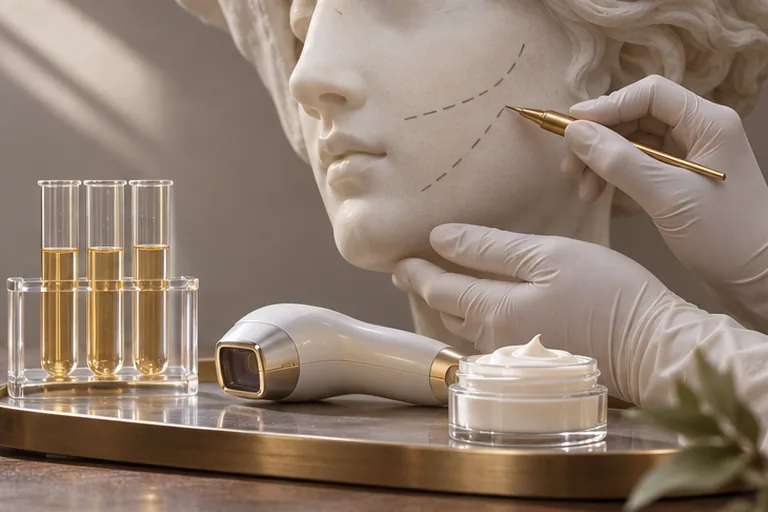
No. VITAL does not provide the same recovery care package for every patient. We explain why a treatment may be needed, its supporting evidence and limitations, and whether the product or device is appropriate for your condition before deciding together. Dr. Hyungwoo Yim summarizes this approach: “Through regular checkups at intervals over a year and personalized treatments when needed (PRP, Re2O, laser treatments, etc.), we will help you complete your recovery without anxiety.” The key phrase is “when needed.”
Treatments such as Re2O that support skin regeneration after the recovery period are considered based on each person's condition. Their scope of use and supporting evidence are explained separately during consultation. Other options and their supporting evidence are outlined below.
- Observation: This means monitoring progress through regular visits without additional treatment. Many scars fade on their own over time, so this is the default approach when there are no warning signs.
- Silicone · Tape: One described approach is to start after suture removal and continue for about 3 months. These methods are reported to be more effective while scars are still immature 5. Tape reduces tension on a healing wound 1. However, a double-blind randomized study of 96 upper eyelid surgery patients (192 eyes) found no differences in any measured outcome between silicone gel and petroleum jelly 7.
- Laser: A review emphasizes the importance of early treatment before scars become established, but there is no consensus on when to begin. Timing varies across studies, from the day of suture removal to 2–3 months after surgery 2.
- Injections: Steroid injections are considered for hypertrophic scars that have not improved after 6 months 1.
- PRP (autologous platelet-rich plasma): An analysis combining 11 randomized studies (539 patients) found no significant difference in observer-rated scar scores at 3 months. At 6 months, only patient-reported scores for pain, itching, and stiffness were significantly better 8. Among 105 studies of PRP in plastic surgery, 21.9% provided high-level evidence 9. It is a supplemental option that may help, rather than a required step for everyone.
Key point Recovery care is a supplemental option to consider “when needed,” rather than a required step for everyone.
If you are unhappy with your appearance during recovery, when should further correction be considered?
05When Do We Decide Whether a Revision Is Needed?
Answer Nonsurgical care can begin early when needed, while surgical correction is considered after the tissue has stabilized. Operating again while tissue is still changing means making decisions based on an appearance that has not yet settled.
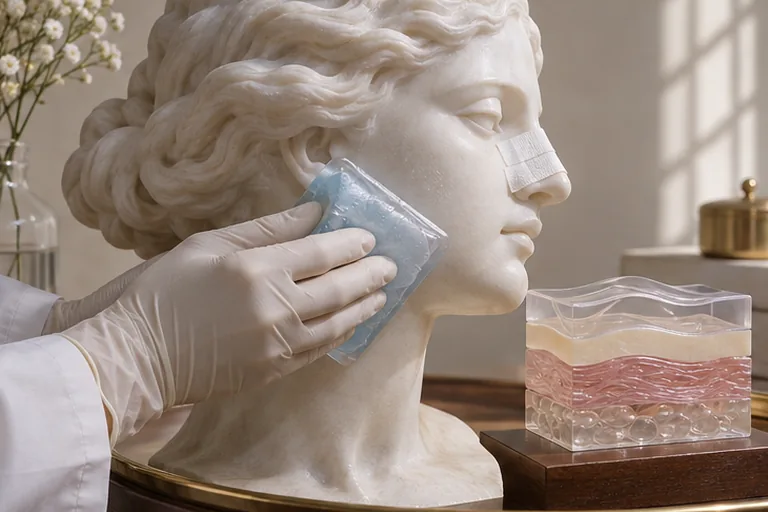
If you are unhappy with your appearance during recovery, you may want it corrected quickly. However, operating again while tissue is still changing means making decisions based on an appearance that has not yet settled.
A review of scar treatments recommends waiting until scars have matured before scar revision surgery, preferably until 1 year has passed 5. In contrast, nonsurgical care such as silicone is used earlier, when scars are still immature and treatment is more effective 52. This is why we distinguish between “nonsurgical care early when needed” and “surgical correction after tissue has stabilized.”
When considering revision surgery, VITAL also assesses whether the tissue has had at least 6 months to a year or longer to recover. If the burden of additional treatment outweighs the expected changes, or if the tissue is still healing, we may recommend observation or other care first.
Not all changes end after 1 year. Scars may continue to flatten for up to 2 years 1, so there is no fixed date when the process is complete.
At your consultation, you can say, “I read your recovery article. Please explain what you will check after my surgery and when.” We will walk you through the points in the order covered in this article.
Key point Decisions about revision surgery also take into account whether the tissue has had at least 6 months to a year or longer to recover.
What is included in the year of records used to guide that decision?
06How Are the Records Collected Over a Year Used?
Answer These records help determine whether additional care is needed and identify any remaining discomfort at 1 year. We review them alongside the initial records rather than drawing conclusions from a photograph taken at a single point in time.

Records are the foundation of long-term follow-up. VITAL maintains an individual progress file that allows side-by-side comparison of photographs taken before surgery and at 1 week, 1 month, 3 months, 6 months, and 1 year; a diagnostic chart marking the condition of fat, muscle, and skin on diagrams of the eye and facial structures; and a recovery calendar guide with precautions for each stage.
Photographs must be taken at the same angles and under the same conditions to allow comparison. A photograph taken at 1 month, when swelling remains, may make differences between the two sides look greater. We therefore review photographs alongside the initial records rather than drawing conclusions from a single point in time. We also assess function and symptoms, including eyelid closure, tightness, and sensation.
These records help us determine whether additional care is needed and identify any remaining discomfort at 1 year. Following recovery for a year after surgery means reviewing the course of changes together, rather than judging recovery by a date.
Key point We assess recovery by the course of changes, rather than by a date.
The answer to the opening question, “Why do I need a year of follow-up when my stitches are out and the swelling has gone down?” is this: visible recovery and healing beneath the skin happen at different rates. Even after sutures are removed, the wound remains weak for a while. Red, raised scars begin to fade around 6 months and may continue to change for as long as 2 years. The “1 year” is therefore less a date when the result is complete and more a period for monitoring when the most changes occur. Through regular checkups at intervals over a year and personalized treatment when needed, I will help you complete your recovery. The timing of visits and length of follow-up vary depending on the type of surgery and your recovery.
— Dr. Hyungwoo Yim
At your consultation, you can say, “I read your recovery article. Please explain what we should look at first in my case.” We will walk you through the points in the order covered in this article.
READ NEXT
Read Next
FAQ
Frequently Asked Questions
Does everyone follow the same visit schedule?
Visits are based on VITAL’s long-term follow-up plan (1 week · 1 month · 3 months · 6 months · 1 year), but their timing and the length of follow-up vary with the procedure and recovery. We also assess concerning symptoms before the scheduled visit.
Is it normal for a scar to feel firm?
Between 3 weeks and 3 months after surgery, newly deposited collagen may cause firmness or tightness 1. However, we do not assume recovery is normal based on photographs alone. We examine symptoms and function to determine whether care is needed.
Are PRP or laser treatments required?
These treatments are not applied uniformly to every patient. We explain why they may be needed, their evidence and limitations, and the suitability of the products and devices before deciding. In combined research findings, PRP is a supplemental option that showed a difference only in patient-reported symptom scores at 6 months 8.
Is recovery complete once the swelling goes down?
Even after visible swelling subsides, the dermis beneath the skin's surface takes up to 3 months to regain strength 2, collagen reaches a balance at about 6 months, and recommendations advise continuing scar care for 1 year 1. Visible swelling and tissue healing need to be assessed separately.
Do I have to use scar ointment?
It depends on the area. For upper eyelid surgery scars, no difference was found between silicone gel and petroleum jelly 7. We assess the scar during your visit and explain what care is needed.
Can I reach you 24 hours a day right now?
The contact option currently linked on our website is our main phone number (+82-2-2138-0188). We will provide details about after-hours responses and a direct contact number once those arrangements are finalized. If you have urgent symptoms such as decreased vision or bleeding that will not stop and cannot reach us, go to the nearest emergency room.
BEFORE CONSULTATION
What to Prepare Before Your Consultation
- Time you can set aside for recoveryPlease check in advance which dates you can come in for suture removal (about 1 week after surgery) and your 1-month and 3-month follow-up visits.
- Past scarringPlease let us know if scars from previous surgery or injuries became red and raised, or if you developed keloids. This is a scarring risk factor we check during your consultation. 1.
- Current medications and allergiesPlease bring a list of your medications, supplements, and allergies.
- Your biggest recovery concernStart by asking about what concerns you most: swelling, scarring, or returning to work and daily activities.
REFERENCES
References
- Son D, Harijan A. Overview of surgical scar prevention and management. J Korean Med Sci. 2014. doi:10.3346/jkms.2014.29.6.751 (Read the full article)
- Hong N et al. Early postoperative interventions in the prevention and management of thyroidectomy scars. Front Physiol. 2024. doi:10.3389/fphys.2024.1341287 (Read the full article)
- Tamer S et al. Dynamic changes in tear film parameters after upper eyelid blepharoplasty measured with anterior segment optical coherence tomography. Med Hypothesis Discov Innov Ophthalmol. 2025. doi:10.51329/mehdiophthal1512 (Read the full article)
- Krajewska-Węglewicz L et al. The Feasibility of Surface Electromyography in Monitoring Orbicularis Oculi Recovery after Anterior Approach Levator Aponeurosis Advancement. J Clin Med. 2022. doi:10.3390/jcm11030731 (Read the full article)
- Sharma M, Wakure A. Scar revision. Indian J Plast Surg. 2013. doi:10.4103/0970-0358.118621 (Read the full article)
- Al-Dossari S. Association between social media influence and postoperative satisfaction following upper eyelid blepharoplasty: a 500-patient study. Front Surg. 2026. doi:10.3389/fsurg.2026.1841059 (Read the full article)
- Karanfilian TS et al. Efficacy of Silicone Gel Versus Placebo for Postsurgical Scars of the Eyelids: A Randomized, Controlled, Double-Blinded Study. Ophthalmic Plast Reconstr Surg. 2025. doi:10.1097/IOP.0000000000002913 (View abstract)
- Alharbi Z, Zafar T. The Efficiency of Platelet-Rich Plasma (PRP) in Treating Post-Burn and Surgical Scars: A Meta-Analysis Study. J Clin Med. 2025. doi:10.3390/jcm14238490 (View abstract)
- Cho MJ, Rohrich RJ. Level of Evidence on Platelet-rich Plasma in Plastic Surgery. Plast Reconstr Surg Glob Open. 2021. doi:10.1097/GOX.0000000000003379 (View abstract)
The findings in these papers reflect the participants and conditions of each study and do not mean that every individual will have the same results.
More articlesVITAL Plastic Surgery Medical Articles
DOCTOR'S NOTE
Until your tissues stabilize,
we’re with you through the wait.
“
With scheduled checkups throughout the year and personalized treatments when needed (PRP, Re2O, lasers, and more), we will help you get through recovery without anxiety.
Dr. Hyungwoo Yim · Approach to Care
Dr. Hyungwoo Yim, Medical Director · Based on the doctor's own answers. The actual scope of care is determined after an examination.
Once you feel fully informed, schedule a consultation.
What it means to follow your recovery for a year after surgery Book a Consultation
You do not need to decide the day of your consultation.