PLASTIC SURGERY
MEDICAL COLUMN
Questions Answered Directly by the Doctor Before You Decide on Surgery
Eyes
Articles
Upper Blepharoplasty vs. Brow Lift: Remove Eyelid Skin or Raise the Brows?
VITAL Plastic Surgery views these as procedures suited to different patients, rather than one being better or worse. Upper blepharoplasty removes excess eyelid skin and orbicularis oculi muscle, the muscle used to close the eyes, while a lift raises drooping brows and the forehead.
Medically reviewed by Dr. Hyungwoo Yim, Medical Director and board-certified plastic surgeon · Published 2026.11.14 · Last reviewed 2026.11.14
SHORT ANSWER
First, the Short Answer
- VITAL Plastic Surgery views these as procedures suited to different patients, rather than one being better or worse. Upper blepharoplasty removes excess eyelid skin and orbicularis oculi muscle, the muscle used to close the eyes, while a lift raises drooping brows and the forehead.
- The deciding factor is where the sagging begins. During the exam, the doctor manually raises the brows to their proper position and reassesses the eyelids. If excess skin remains after the brows are raised, upper blepharoplasty is considered. If raising the brows alone relieves the hooding, a forehead procedure is considered first.
- VITAL Plastic Surgery selects an approach after assessing excess skin and its thickness, brow position and compensatory forehead movement, eyelid-opening strength, and eyelid closure, in that order. Removing skin without distinguishing the underlying causes may leave a feeling of heaviness.
“My upper eyelids feel hooded and heavy. Should I have eyelid skin removed or my brows lifted?”
This is a paraphrase of a question we often hear during consultations.
To answer this question, we first need to distinguish where your current concern comes from. We will explain each point below, then return to the original question at the end.
01How do upper blepharoplasty and a brow lift differ?
Answer The tissue layers treated and incision locations differ. One addresses the eyelids; the other raises the brows.
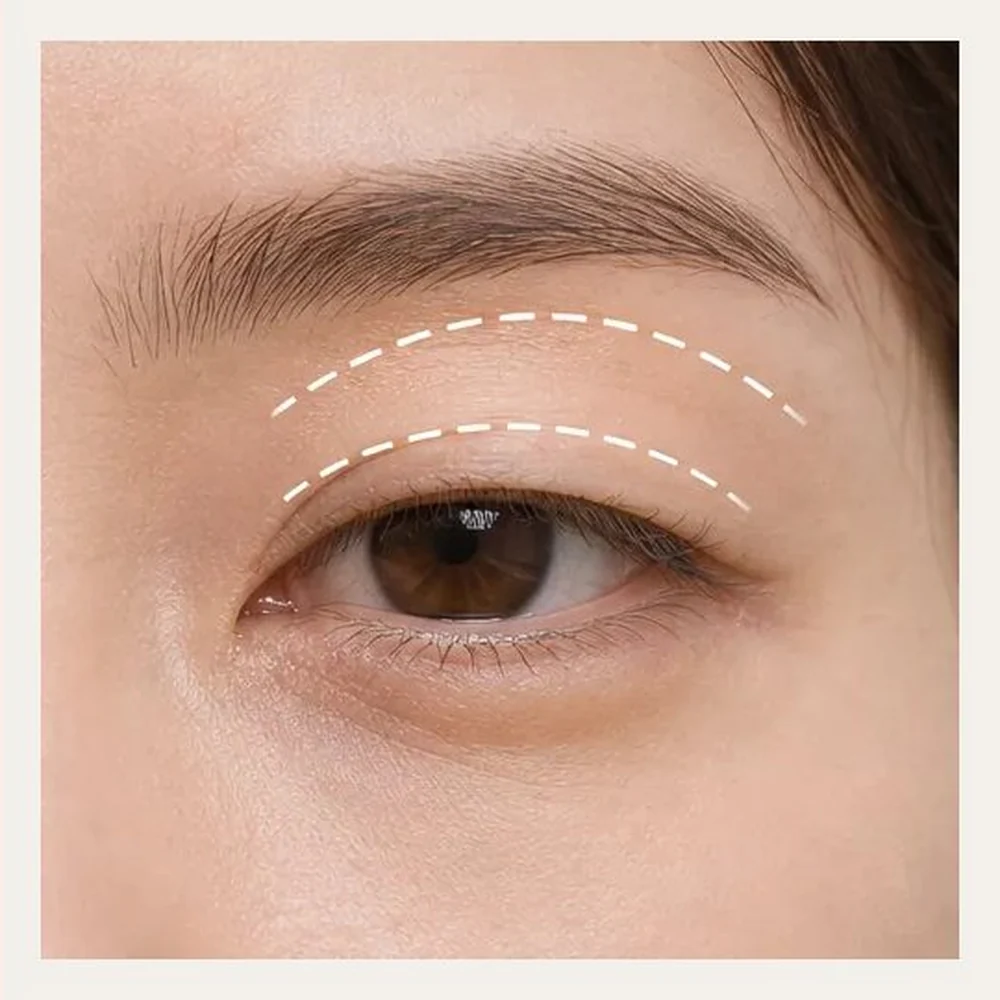
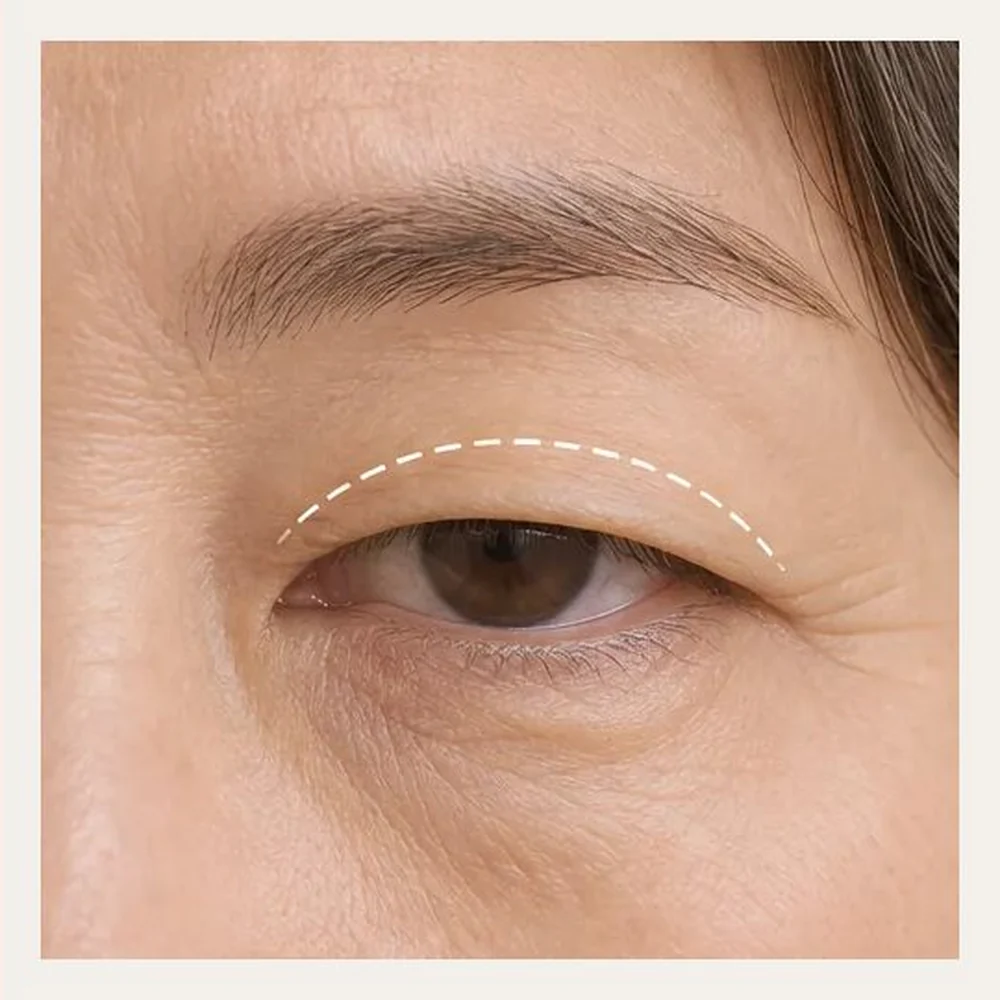
Upper blepharoplasty removes excess skin and orbicularis oculi muscle from sagging upper eyelids to reduce heaviness. The incision is placed in the eyelid crease or just below the brow. The choice depends on skin thickness, brow position, and the desired eyelid crease shape. This procedure is confined to the eyelid area.
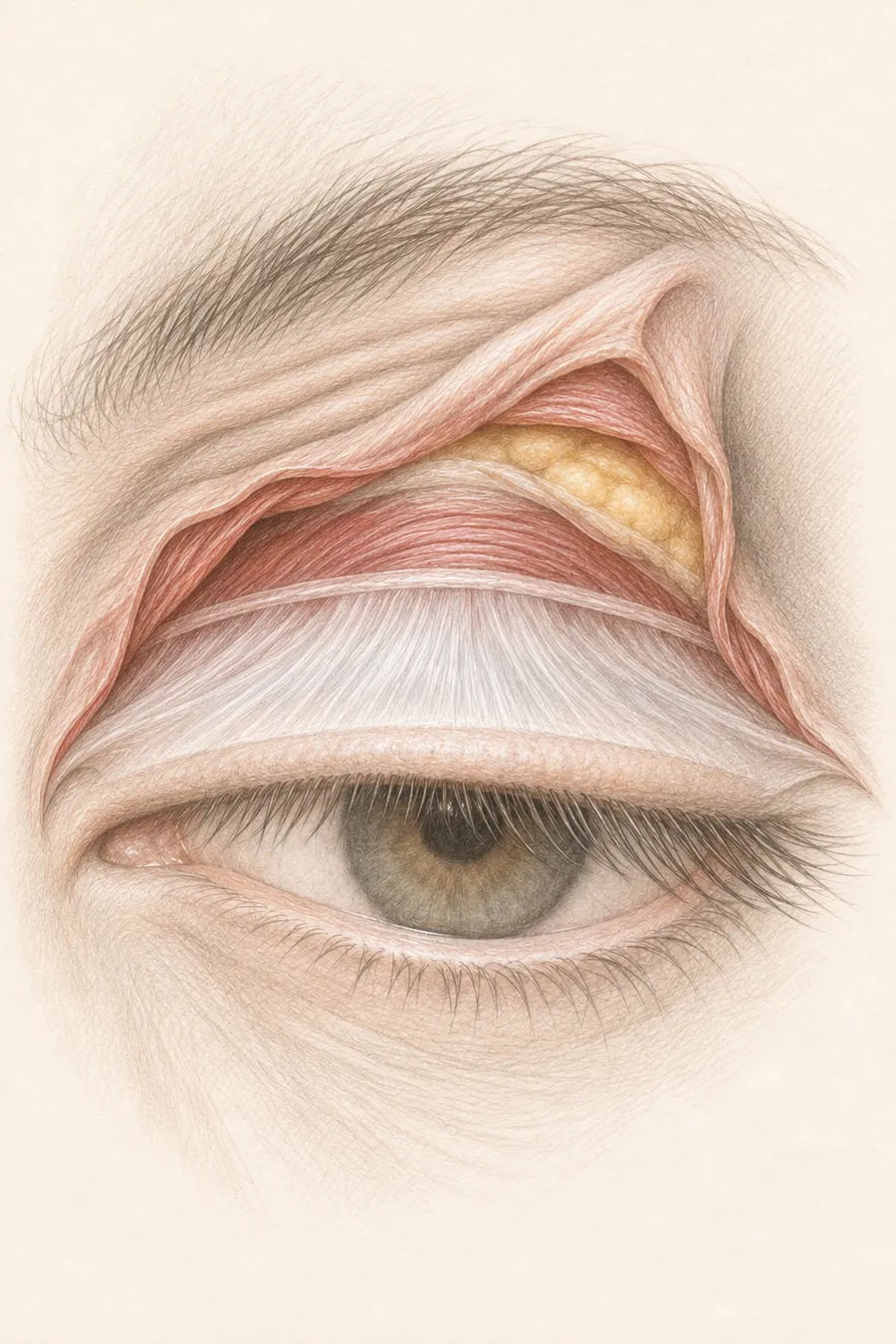
A lift addresses the area above the eyelids rather than the eyelids themselves. A forehead lift raises the forehead and brows through incisions within the hair-bearing scalp or along the hairline, without directly incising the eyelids. A sub-brow lift uses an incision just below the brow to remove sagging skin, then pulls the orbicularis oculi and muscle layer upward and secures them toward the frontalis, the forehead muscle that raises the brows.
These three procedures therefore do not replace one another. If eyelid skin is the main cause, lifting the forehead may leave a hooded feeling. If the brows have descended, reducing only the eyelid skin may further narrow the distance between the brows and eyes. This is why VITAL Plastic Surgery identifies where the sagging begins before choosing a procedure.
Scar locations also differ. An incision in the eyelid crease leaves a scar within that fold, a sub-brow lift leaves one along the lower brow border, and a forehead lift leaves one within the hair-bearing scalp or along the hairline. In each case, the scar may initially be red and firm, then gradually fade as the tissue settles. It does not disappear completely, so scar placement is also part of the decision.
- Upper blepharoplasty: An incision in the eyelid crease or below the brow is used to remove excess eyelid skin and orbicularis oculi muscle.
- Sub-brow lift: An incision below the brow is used to pull the muscle layer upward and secure it toward the frontalis muscle. A new eyelid crease does not need to be created.
- Forehead lift: Incisions within the hair-bearing scalp or along the hairline are used to raise the forehead and brows together. The eyelids are not directly incised.
In Simple Terms The relationship is similar to a window, a curtain, and a curtain rod. If the iris is the window, the eyelid skin is the curtain covering it, and the brow is the rod holding the curtain. If the curtain has stretched and is covering the window, adjusting the curtain makes sense. But if the rod itself has dropped, shortening the curtain alone will leave the window covered. Conversely, if the rod is in its proper position, raising it further leaves the stretched curtain unchanged. During the exam, we therefore first raise the rod to its proper position and see how much the window opens. Which part needs adjustment depends on whether the curtain or the rod has descended.
So how do you determine which procedure is appropriate?
02How do you determine which procedure is appropriate?
Answer During the exam, we raise the brows to their proper position and observe how the eyelids change.
Trying this in front of a mirror makes the difference clearer than a verbal explanation alone. If manually raising the brows reduces the heaviness, it means the lowered brows were pressing on the eyelids. In this case, we also assess causes in the forehead area. If eyelid skin remains after the brows are raised, upper blepharoplasty or a sub-brow lift may be considered.
It is also common for both findings to be present. From the 50s onward, excess eyelid skin, brow descent, and reduced eyelid-opening strength often occur together. The question then becomes what to address first and whether to separate or combine procedures, rather than choosing just one.
Brow sagging usually begins at the outer portion. The frontalis is the only muscle that raises the brows, and it attaches mainly to the inner portion, leaving less lifting force at the brow tail. If the skin near the outer corners of the eyes begins to feel hooded first, the outer brow should also be assessed.
Eyelid thickness also informs the decision. If the orbicularis oculi muscle and fat beneath the skin are thick, removing skin alone may leave heaviness. VITAL Plastic Surgery therefore adjusts both the skin and orbicularis oculi muscle during surgery. However, focusing on thinning the tissue may create a hollow appearance above the eyes, so we first identify which tissue to preserve. The balance between reducing thickness and preventing hollowing is determined during the exam.
| Exam finding | Interpretation | Initial consideration |
|---|---|---|
| Raising the brows substantially reduces heaviness | The lowered brows were pressing on the eyelids | Also consider a forehead lift |
| Excess eyelid skin remains after the brows are raised | Excess eyelid skin itself is the main cause | Upper blepharoplasty or sub-brow lift |
| The forehead muscles engage when opening the eyes | Eyelid-opening strength needs to be assessed first | Measure iris exposure to distinguish the cause |
| Hooding is felt only near the outer corners of the eyes | The outer brows may have descended first | Also assess outer brow position |
So what happens if only eyelid skin is removed while the brows remain low?
03What happens if only eyelid skin is removed while the brows remain low?
Answer The hooded feeling may remain, and research has reported further brow descent.
When the upper eyelids feel heavy, people unconsciously engage their forehead muscles to raise their brows. Over time, this compensation leaves horizontal forehead lines. When surgery makes the eyelids lighter, the forehead muscles may relax, allowing the brows that had been held up to return to their original position.
Research shows the same pattern. A meta-analysis of 17 studies examining brow position after upper eyelid surgery found an average postoperative drop in brow height of 1.45 mm. The amount varied by procedure: 0.67 mm after upper blepharoplasty alone, 2.52 mm after double eyelid surgery, and 2.10 mm after ptosis correction1. In the same analysis, whether skin was removed did not itself affect brow height.
Research has also examined who is more likely to experience this change. A study measuring 93 eyelid surgery patients before surgery and about a month and a half afterward found brow descent of at least 5% in 61% of patients. Sex, preoperative brow descent when closing the eyes, and the width of skin removed were associated with the descent2. It was more common in men, which was explained in relation to the greater width of skin removed.
These numbers are a reason to measure brow position before surgery, rather than a reason to avoid surgery. If the brows have descended substantially, we plan to raise them first instead of compensating by removing too much eyelid skin.
So how is it different when eyelid-opening strength is weak?
04How is it different when eyelid-opening strength is weak?
Answer Because this is a problem with eyelid-opening function rather than the skin or eyebrows, we take measurements first to tell the difference.
When the eyes do not open easily, the forehead muscles lift the eyelids to compensate. Over time, this habit can leave forehead wrinkles and raised eyebrows. In this situation, a forehead lift alone leaves the underlying cause untreated and may make things worse. That is why we check eyelid-opening strength first, especially in people with deep forehead wrinkles.
The distinction is based on how much of the pupil is visible. VITAL Plastic Surgery measures MRD1, the distance from the center of the pupil to the upper eyelid. If it is within the normal range of about 4mm, we do not perform ptosis surgery. This is more consistent with pseudoptosis, in which skin covers the pupil, so we first consider addressing the excess skin.
In contrast, if true ptosis is caused by weak eyelid-opening function, ptosis repair corrects the eyelid-opening muscle and its aponeurosis, the thin tissue connecting the end of the muscle to the plate inside the eyelid. Once opening the eyes becomes easier, the forehead may need to work less, so we reassess eyebrow height and forehead wrinkles after recovery. We take measurements to avoid unnecessary muscle surgery.
We also look at why eyelid-opening strength has weakened. The muscle inside the eyelid that opens the eye is like a thin rubber band: rubbing the eyes forcibly stretches it, and even prolonged contact lens wear can weaken its function. That is why VITAL Plastic Surgery advises patients to avoid rubbing their eyes, reduce contact lens use, and use artificial tears frequently, whether or not they have surgery.
- If pupil exposure is within the normal range: We consider excess skin coverage and compare upper blepharoplasty with a sub-brow lift.
- If eyelid-opening strength is weak: We discuss ptosis repair first and reassess the forehead after recovery.
- If you tense your forehead when opening your eyes: We first identify what is causing this compensation.
Then how much does brow lift surgery raise the eyebrows, and where?
05What areas does a brow lift raise, and by how much?
Answer The amount and location of the lift vary by technique. The changes reported in studies are measured in millimeters.
A meta-analysis of long-term outcomes after endoscopic forehead lifts combined 12 studies and found eyebrow elevation of 3.25mm at the inner brow, 3.86mm at the middle, and 4.35mm at the outer brow3. The finding that the outer brow rises the most is consistent with the fact that it tends to droop first.
Another technique supports the brow through the eyelid incision. In a study of patients who had internal brow fixation along with eyelid surgery, the outer brow rose by an average of 2.54mm. The study concluded that this approach was not suitable for severe drooping, heavy brows, or cases where the inner brow drooped more than the outer brow4. This means that even procedures with the same goal differ in how much lift they can provide.
An incision below the eyebrow is another option. A study that measured photographs before a sub-brow lift and at 1 and 6 months afterward reported improvements in all measures of eyebrow and eyelid position, along with high satisfaction5. However, this was a relatively small study performed by one surgeon at one institution, so we use the numbers as a reference and reassess each person's circumstances during the examination.
VITAL Plastic Surgery chooses the incision location for a forehead lift based on forehead length and hair density. An incision within the hair hides the scar but may make the forehead slightly longer. An incision at the hairline helps preserve forehead length but makes scar care more important. We also discuss your usual hairstyle during the consultation.
| Method | Area treated | When it may be considered |
|---|---|---|
| Upper Blepharoplasty | Eyelid skin and orbicularis oculi muscle | When excess eyelid skin remains even after lifting the eyebrows |
| Subbrow Lift | Skin and muscle layer below the eyebrow | When you want to reduce outer eyelid hooding while preserving your current eye appearance |
| Forehead Lift | Position of the entire forehead and eyebrows | When the forehead and eyebrows have descended together and press down on the eyelids |
Then how do you decide the order if both procedures are needed?
06If both procedures are needed, how is the order determined?
Answer We calculate how much eyelid skin to remove with the forehead in its lifted position.
Lifting the forehead also changes the amount of excess eyelid skin. If too much skin is removed during upper blepharoplasty before lifting the forehead, the eyes may not close fully afterward. When both procedures are needed, we calculate in advance how much eyelid skin to remove based on the forehead's lifted position.
Eyelid skin is thin and covers the eyes to protect them. Removing more skin does not necessarily produce a better result. Excessive removal can cause lagophthalmos, or incomplete eye closure, and dryness. This is why VITAL Plastic Surgery takes measurements with the eyes both closed and open to determine the width of skin to remove.
We also discuss whether to perform both procedures on the same day or in stages. Having multiple procedures at once does not simply add their recovery periods together, but it can increase swelling, discomfort, and the burden of aftercare. We consider your health, total surgery time, and schedule, and explain when staged procedures may be preferable.
When lifting the eyebrows, we also decide how high to raise them. A greater lift is not necessarily better, so we assess your usual facial expressions and eyebrow movement. If you are concerned about changes in your appearance, tell us at the consultation so we can include that preference in the plan.
Then when would you avoid proceeding directly with surgery?
07When should surgery be postponed?
Answer We first assess eye closure, dryness, eyelid-opening strength, scalp condition, hair density, and overall health.
If you have difficulty closing your eyes or symptoms of dryness, we assess those issues first. Lifting the eyebrows also raises the upper eyelids, so closing the eyes may initially feel unfamiliar. Combining this with upper blepharoplasty can add to that effect. Thyroid eye disease, glaucoma, severe dry eye, autoimmune disease, and anticoagulant use may be reasons to postpone or avoid surgery.
For a forehead lift, we also assess the scalp. If your forehead is already broad or your hair is thin, we first discuss the incision approach. Nerves run upward through the forehead from the eyebrow area, and we consider them when deciding the extent of dissection. We also explain beforehand that forehead sensation may change for a while after surgery.
Recovery time is also a consideration. Sutures are removed 5–7 days after upper blepharoplasty and 10–14 days after a forehead lift, since the incision is in the scalp. Swelling and bruising are at their worst on days 3–4. If you have health concerns that need to be managed first, such as blood pressure or blood sugar, or cannot take the time needed to recover, VITAL Plastic Surgery does not recommend proceeding with surgery immediately.
The limitations and risks discussed during consultation also differ somewhat between the two areas. For eyelid surgery, we discuss dryness, difficulty closing the eyes, scarring, asymmetry, and undercorrection or overcorrection. Forehead surgery adds the possibility of changes in sensation and hair-related issues around the incision. This is not a complete list of possible risks. Risks vary with your health, previous treatments, and the extent of surgery, and are explained again during the examination and consent process.
We advise patients to contact us without waiting for their scheduled appointment if they develop sudden severe pain, decreased or obstructed vision, bleeding that does not stop, or rapidly worsening swelling on only one side after surgery. Recovery timelines are general estimates and vary by person. We assess whether additional care is needed at follow-up examinations at 1, 3, and 6 months and 1 year.
- When eyelid closure or dryness needs to be assessed first
- When eyelid muscle function needs to be corrected first
- When a broad forehead or thinning hair requires discussing the incision approach first
- When health issues such as blood pressure or blood sugar need to be controlled first
- When it is difficult to allow enough time for recovery
08Three things we check first during your consultation
What we assess first during consultation
- Whether the cause is sagging skin, brow descent, or weak eyelid-opening function
- How much skin correction is needed, and the condition of eye closure and dryness
- Comparison with forehead and brow approaches, and whether to combine or stage the procedures
These are general care principles. The actual decision is made after an examination.
When other care is needed first We do not recommend proceeding directly with surgery if eye closure or dryness needs to be assessed first, eyelid-opening strength needs to be corrected first, or a broad forehead and thinning hair require discussing the incision approach first. The same applies if health issues such as blood pressure or blood sugar need to be controlled, or if you cannot allow enough time for recovery.
The answer to the original question, “Should I have eyelid skin removed or my eyebrows lifted?” is this: the appropriate procedure depends on where the drooping begins. First, we check whether excess eyelid skin remains after the eyebrows are lifted into position and whether eyelid-opening strength is within the normal range. These findings help narrow down the answer. If both problems are present, the question becomes how to determine the order and extent of treatment.
— VITAL Plastic Surgery
When booking, simply leave a note saying, “Please first check whether this is sagging skin or lowered eyebrows,” and we will start there during your consultation. Having a consultation does not mean you need to decide that day.
Related ReadingUpper Blepharoplasty Care Guide
READ NEXT
Read Next
FAQ
Frequently Asked Questions
Can I Have Upper Blepharoplasty First?
If skin is the main cause, upper blepharoplasty alone may be enough. However, removing skin when the eyebrows have dropped significantly can prevent the eyes from closing fully if the forehead is lifted later. We account for both procedures from the start when deciding which should come first.
Can sagging skin be removed without creating an eyelid crease?
In many cases, yes. A subbrow lift uses an incision below the eyebrow to lift drooping skin and the muscle layer without creating a new eyelid crease. If eyelid opening strength is weak or skin thickness is unsuitable, we also compare other approaches.
Will a Forehead Lift Eliminate Forehead Wrinkles?
Raising the forehead and brows may soften wrinkles, but it does not eliminate them all. If the wrinkles began with the effort of opening the eyes, the eyes should be assessed first. Wrinkles in the skin itself are evaluated separately.
Is it true that the brows can drop after surgery?
Studies have reported that when the eyelids feel lighter, the forehead muscles relax and the eyebrows descend. A meta-analysis found an average descent of 1.45mm, with differences by procedure type1. That is why we also measure eyebrow position before surgery.
Can I Have Both Procedures on the Same Day?
Performing both procedures on the same day may be considered based on your health, total operating time, and recovery demands. Swelling and aftercare needs may increase, so we also explain when separate procedures may be preferable.
Can older adults have this surgery?
We assess your current condition rather than age alone. For patients in their 60s and older, we examine the ocular surface, eyelid support, and overall health more closely. If a health issue needs to be addressed first, we do not proceed immediately with surgery.
BEFORE CONSULTATION
What to Prepare Before Your Consultation
- When your eyes feel most uncomfortableMake a note of the time of day and the position you are in when your eyes feel heaviest, and bring it with you.
- Whether you tense your foreheadChecking in a mirror to see whether your eyebrows rise when you open your eyes can help streamline the consultation.
- Past photosA front-facing photo from a few years ago can help us see whether your eyebrows or eyelids changed first.
- Eye conditions and medicationsPlease let us know if you have dry eye, glaucoma, or thyroid disease, and whether you take anticoagulants, herbal medicines, or supplements such as omega-3s.
- Previous eye surgery historyPlease share any details you know about previous procedures, such as double eyelid surgery, ptosis correction, or lifting procedures, and when you had them.
REFERENCES
References
- Liu R, Sun Y, Huang J, Long X. Brow Position Change and its Potential Risk Factors Following Upper Blepharoplasty: A Systematic Review and Meta-Analysis. Aesthetic Plastic Surgery. 2023. doi:10.1007/s00266-023-03288-0 (View abstract)
- Katayama R, Oka A, Ochiai H. Background factors for postoperative eyebrow descent in blepharoptosis: A retrospective case-control study of 93 patients. Journal of Plastic, Reconstructive & Aesthetic Surgery. 2025. doi:10.1016/j.bjps.2025.01.005 (View abstract)
- Sibar S, Dikmen AU, Erdal AI. Long-term Stability in Endoscopic Brow Lift: A Systematic Review and Meta-Analysis of the Literature. Aesthetic Surgery Journal. 2025. doi:10.1093/asj/sjae225 (View abstract)
- Nemet AY. Brow Ptosis: Is Transblepharoplasty Internal Browpexy Suitable for Everyone? Journal of Craniofacial Surgery. 2019. doi:10.1097/SCS.0000000000005680 (View abstract)
- Wang T, Li Y, Pang M. Evaluation of morphological and psychological outcomes after sub-brow blepharoplasty. Frontiers in Surgery. 2025. doi:10.3389/fsurg.2025.1658806 (View abstract)
The findings in these papers reflect the participants and conditions of each study and do not mean that every individual will have the same results.
This article provides general medical information and does not replace diagnosis or treatment. Surgical results and recovery vary by individual, and complications such as bleeding, infection, scarring, and asymmetry may occur.
More articlesVITAL Plastic Surgery Medical Articles
RESERVATION
You do not need to decide the day of your consultation.
Organize questions about this page without entering your name, contact information, or medical history. This does not submit an appointment request.