PLASTIC SURGERY
MEDICAL COLUMN
Questions Answered Directly by the Doctor Before You Decide on Surgery
Eyes
Articles
Drooping eyelids in your 50s: Is removing excess skin enough?
If excess skin is the main cause, upper blepharoplasty to remove that skin may be enough. However, from your 50s onward, hollowing, sagging, and functional problems often occur together. Removing skin alone may leave a feeling of heaviness or make hollowing more noticeable.
Medically reviewed by Dr. Hyungwoo Yim, Medical Director (Plastic Surgery Specialist) · Published November 9, 2026 · Last reviewed November 11, 2026
SHORT ANSWER
First, the Short Answer
- If excess skin is the main cause, upper blepharoplasty to remove that skin may be enough. However, from your 50s onward, hollowing, sagging, and functional problems often occur together. Removing skin alone may leave a feeling of heaviness or make hollowing more noticeable.
- Heavy-looking eyes may be caused by eyelid skin, lowered eyebrows and forehead, or reduced eyelid-opening strength. The cause determines which procedures are considered—upper blepharoplasty, a subbrow lift, ptosis repair, or a forehead lift—and in what order.
- VITAL Plastic Surgery first distinguishes sagging skin from ptosis, determines how much skin correction is needed, and then compares eyelid surgery with approaches involving the forehead and eyebrows. Only the necessary amount of skin is removed while preserving proper eyelid closure.
“My drooping eyelids feel heavy. Wouldn't removing the excess skin be enough?”
This is a paraphrase of a question we often hear during consultations.
To answer this question, we first need to distinguish where your current concern comes from. We will explain each point below, then return to the original question at the end.
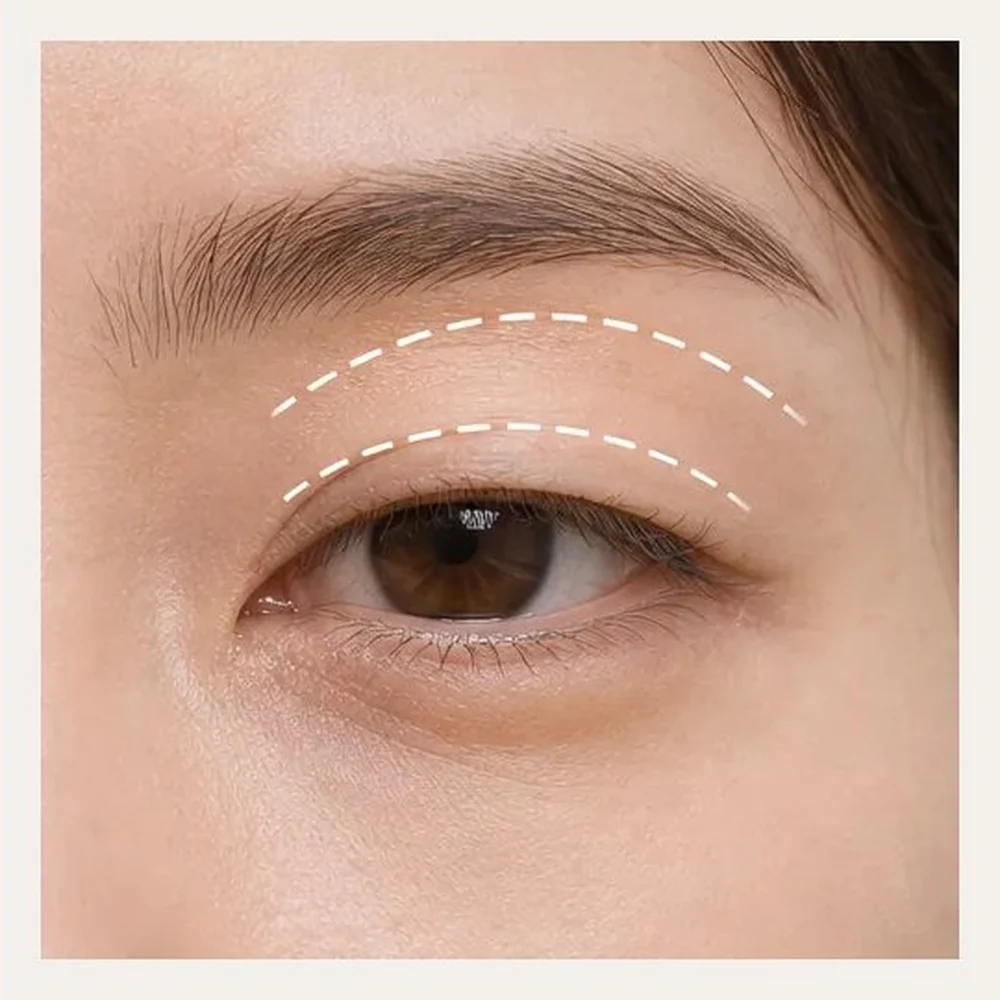
01Is there just one cause of drooping eyelids in your 50s?
Answer Usually, there is more than one cause. Sagging skin, lowered eyebrows, weakened eyelid-opening strength, and upper eyelid hollowing often overlap in the same eye.
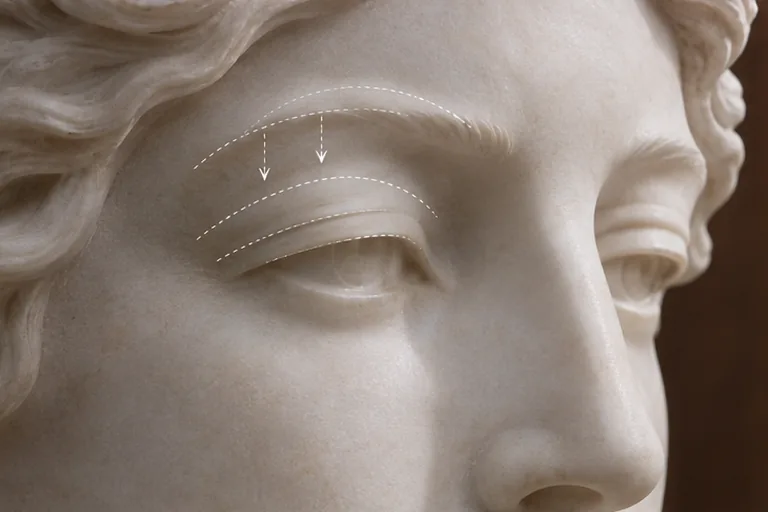
When a drooping eyelid covers the eye like a roof, it is like a window with the blinds halfway down. Drooping eyelids in your 50s can therefore involve more than a sleepy appearance. They can also lead to functional problems, such as a restricted field of vision and unconsciously straining the forehead.
Eyes that look similarly droopy can have different causes. Eyelid skin may stretch and cover the eyelashes; the forehead and eyebrows may descend together and weigh down the eyelids; weak eyelid-opening muscles may prevent the eyelids from rising fully; or upper eyelid hollowing may create shadows. VITAL Plastic Surgery checks hollowing, available skin, eyebrow position, eyelid-opening function, vision, eyelid closure, and dryness in sequence.
Ptosis, in which eyelid-opening strength weakens, becomes more common with age. In a study in which ophthalmologists examined 20,941 Korean adults age 40 and older who participated in the 2008–2011 Korea National Health and Nutrition Examination Survey, the prevalence of age-related ptosis was 13.5%, increasing with age from 5.4% among those in their 40s to 32.8% among those age 70 and older1. This means that some people who feel their eyelid skin is sagging may also have reduced eyelid-opening strength.
That is why a consultation for drooping eyelids in your 50s begins with “What has drooped?” rather than “Which surgery should I have?” Identifying the separate causes helps determine the extent and sequence of surgery needed.
| Cause | How it looks | What we look at first |
|---|---|---|
| Sagging eyelid skin | Skin covers the eyelashes and hides the eyelid crease | Available skin, skin thickness, and eyelid closure |
| Lowered eyebrows and forehead | Lifting the eyebrows by hand greatly reduces the feeling of heaviness | Eyebrow position and forehead wrinkles |
| Weakened eyelid-opening strength | Opening the eyes requires forehead effort, and the eyelids droop more in the afternoon | MRD1 and levator muscle condition |
| Upper eyelid hollowing | Hollowing below the eyebrows creates shadows and a tired appearance | Depth of hollowing and fat position |
In Simple Terms Drooping eyelids in your 50s are like well-worn window blinds. When the blinds cover half the window, the fabric may have stretched, the rail holding the blinds (the eyebrows) may have dropped, or the mechanism that pulls up the cord (the eyelid-opening muscles) may have loosened. Simply trimming the fabric leaves the window covered if the rail has dropped, and the blinds soon fall again if the lifting mechanism is loose. Identifying the problem first allows only the necessary parts to be repaired.
So what can happen if only skin is removed?
02What can happen if only skin is removed?
Answer If skin was not the cause, the feeling of heaviness may remain, the space between the eyebrows and eyes may narrow, or hollowing may become more noticeable.

Eyelid skin is thin and protects the eyes by covering them. Removing more does not make the surgery better. Excessive removal can cause lagophthalmos, in which the eyes do not close completely, or dry eyes. That is why measurements are taken with the eyes both closed and open to determine the width of skin to remove. Only the necessary amount is removed while preserving proper eyelid closure.
If the eyebrows have dropped, removing too much eyelid skin can further narrow the space between the eyebrows and eyes. This may reduce the feeling of heaviness but change your facial expression. One of the most common concerns raised during consultations is, “I don't want my expression to change.” The goal is to preserve your natural expression while reducing the heaviness and shadows caused by sagging.
When hollowing is also present, removing skin alone may make it more noticeable. If eyelid-opening strength is weak and only skin is removed, the eyes remain less exposed, leaving a feeling of heaviness after surgery. This does not mean skin surgery itself was wrong; it means the procedure did not match the cause.
The amount of skin to remove is therefore calculated last, after all other causes have been assessed. In particular, if a forehead lift or ptosis repair is also planned, the amount of skin must be determined with those changes taken into account to avoid compromising eyelid closure.
So how can you tell whether eyelid-opening strength is weak?
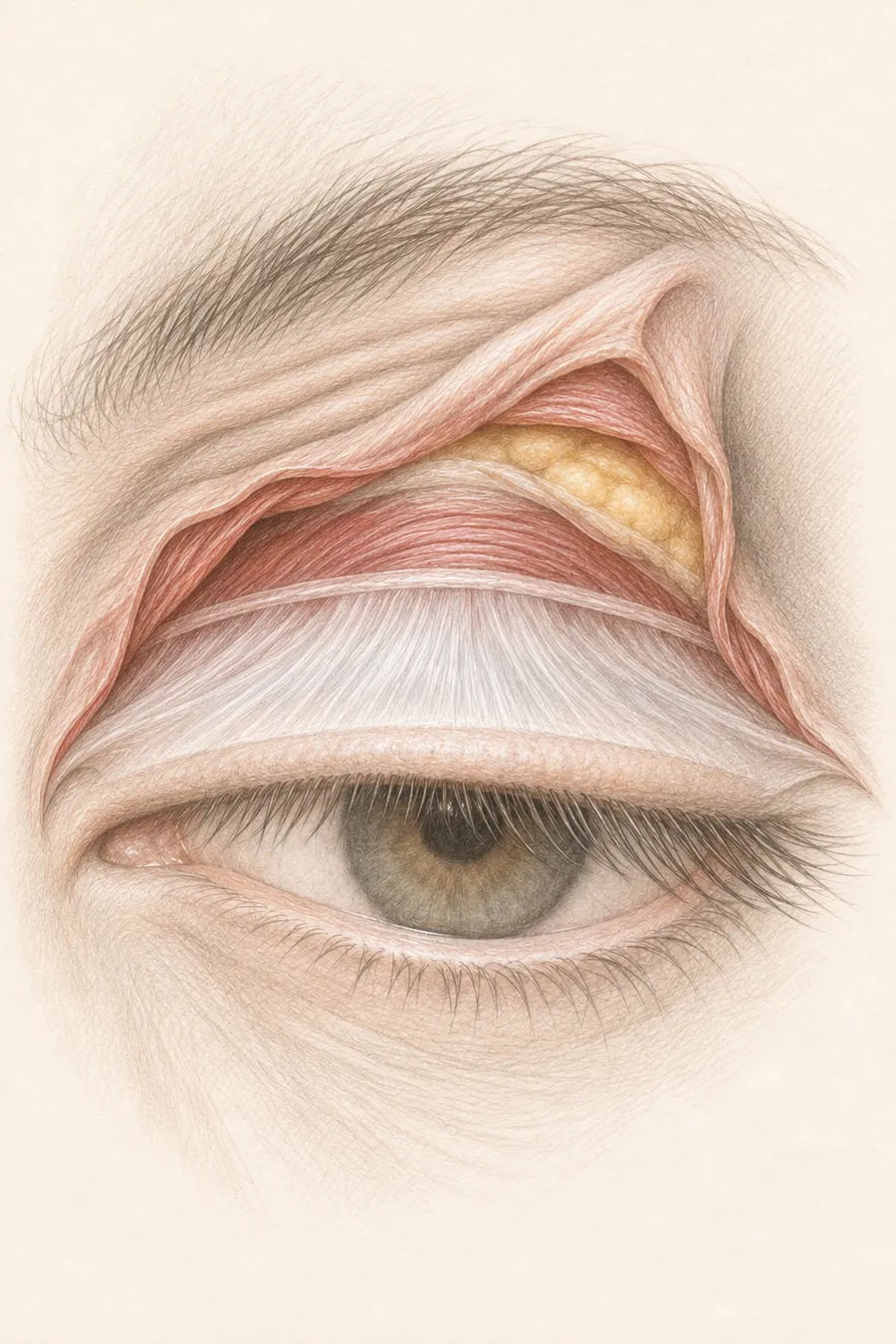
03How can you tell whether eyelid-opening strength is weak?
Answer MRD1 is measured to distinguish skin covering the eye from weak eyelid-opening strength.
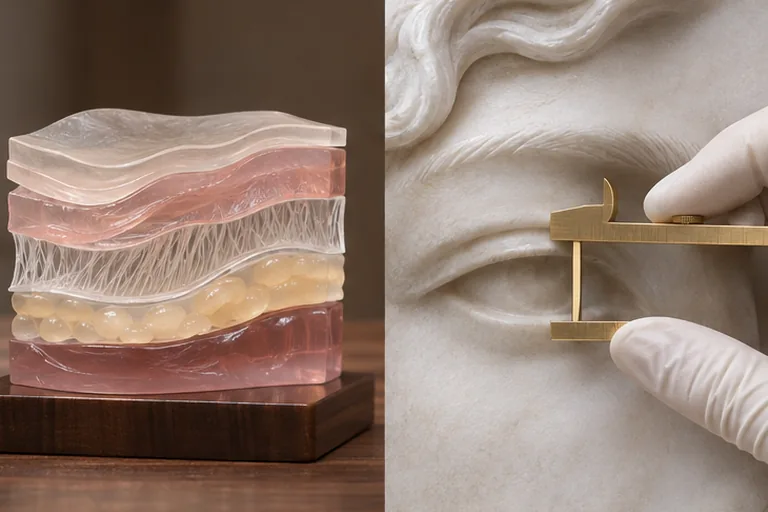
MRD1 is the distance from the light reflex at the center of the pupil to the upper eyelid margin. It measures how much of the eye is exposed. If it is within the normal range of about 4 mm, muscle strength is considered adequate and the condition is viewed as pseudoptosis, in which skin covers the eye. Skin removal is then considered first. Taking a numerical measurement helps avoid unnecessary muscle surgery.
Forehead effort when opening the eyes is also assessed. When the eyes do not open easily, the forehead muscles pull the eyelids upward. Over time, this habit can lead to deep forehead wrinkles and raised eyebrows. Lifting only the forehead in this situation can make things worse, so eyelid-opening strength is checked before forehead treatment in patients with deep forehead wrinkles.
If strength is weak, upper blepharoplasty and ptosis repair are planned together. Ptosis repair raises the eyelid by correcting the eyelid-opening muscle and its aponeurosis, the thin membrane connecting the end of the muscle to the plate inside the eyelid. Patients are advised in advance that combining the procedures involves more tissue manipulation and may cause more swelling and bruising.
Long-term contact lens use and frequent eye rubbing can also affect eyelid-opening strength. This is why patients are also advised to avoid rubbing their eyes, reduce contact lens use, and use artificial tears frequently, even after surgery.
So what if the eyebrows have dropped?
04What if the eyebrows have dropped?
Answer During the examination, the eyebrows are lifted to their proper position and the remaining excess skin is assessed to determine whether to consider an eyelid or forehead approach first.
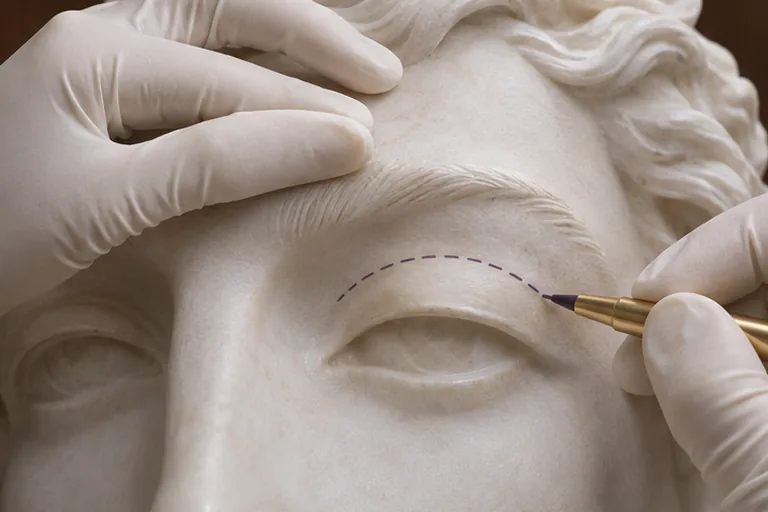
If excess skin remains after the eyebrows are lifted, upper blepharoplasty is an option. If lifting the eyebrows alone relieves the heaviness, a forehead approach is considered first. If both issues are present, both procedures are planned. Gently lifting your eyebrows by hand in front of a mirror can help you understand the difference.
The order affects how much skin is removed. A forehead lift also changes the amount of available eyelid skin. If too much skin is removed during upper blepharoplasty before the forehead is lifted, the eyes may not close fully afterward. When both procedures are needed, the amount of eyelid skin to remove is therefore calculated based on the lifted forehead position.
Conversely, the eyebrows may also drop after eyelid surgery. A meta-analysis of 17 studies from 1992–2022 found that eyebrow height decreased by an average of 1.45 mm after upper eyelid surgery: about 0.67 mm after upper blepharoplasty alone and 2.10 mm after ptosis correction2. The analysis also found greater eyebrow descent in reports by East Asian researchers2. When opening the eyes becomes easier, the forehead muscles may relax and the eyebrows may drop. This potential change is taken into account in advance.
If excess eyelid skin is the main cause and you do not want a new eyelid crease, a sub-brow lift is considered as an option. This procedure uses an incision just below the eyebrow to remove sagging skin and lift and secure the orbicularis oculi muscle and muscle layer toward the frontalis muscle. It may be considered for people who do not want a major change in their current eye shape.
What if the upper eyelids are also hollow? Should that be addressed together?
05Should upper eyelid hollowing be addressed too?
Answer Existing hollowing may become more noticeable if only excess skin is removed, so we assess whether to include fat repositioning or fat grafting.
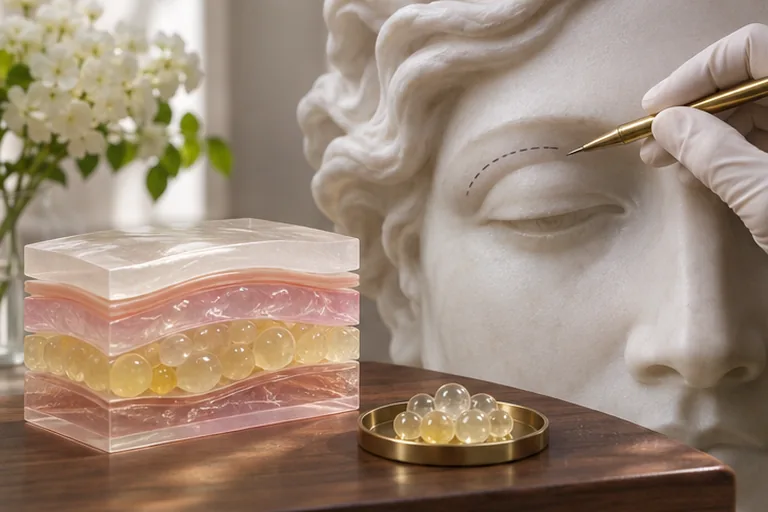
People in their 50s and older often have hollowing, sagging, and functional problems together. A lack of fat is not the only reason the upper eyelids may look hollow. When the muscles that open the eyes weaken, the eyelids may roll upward and the fat may shift backward, creating a hollow appearance below the eyebrows.
That is why we do not simply add volume whenever hollowing is visible. If the muscles that open the eyes are weak, we first assess their function, restore the eyelids to their proper position, and then reassess volume. We then evaluate each tissue layer to determine whether eyelid fat can be moved into the hollow areas or whether fat grafting is needed.
Thick eyelids are also assessed separately. If the orbicularis oculi muscle and fat beneath the skin are thick, heaviness may remain even after skin removal, so both the skin and the muscle are adjusted. However, focusing on thinning the eyelids can create upper eyelid hollowing, so we first identify which tissues to preserve.
We do not recommend the same combination for everyone. After checking what is lacking and what is excessive in each layer, we include only what is needed in the surgical plan.
How does eye function change after surgery?
06How does eyelid function change after surgery?
Answer Removing overhanging skin may widen the visual field, but the tear film and dryness may also change, so we assess these before and after surgery.

In a prospective study at a university hospital in Türkiye involving 40 patients (80 eyes) who underwent upper eyelid surgery for sagging skin, visual field testing showed a wider field of vision at both 1 and 3 months after surgery compared with before surgery3. In the same study, tear film stability decreased slightly at 3 months. The authors noted that surgery may cause dryness by changing eyelid movement3.
These findings show that functional improvement and dry eye management need to go together. VITAL Plastic Surgery checks eyelid closure and dryness before and after surgery and uses both to guide how much skin to remove. If you have severe dry eye, we may recommend managing the ocular surface condition first.
For people age 60 or older or those with systemic medical conditions, we assess the ocular surface, eyelid support, and overall health more carefully. If issues such as blood pressure or blood sugar need to be addressed first, we do not proceed with surgery right away. Current health, rather than age, guides the decision.
If you feel that your vision has worsened, you may need an ophthalmologic evaluation separate from the eyelid assessment. During the consultation, we also explain that eyelid surgery does not correct eyesight itself.
How does recovery progress, and when is surgery postponed?
07How does recovery progress, and when is surgery deferred?
Answer Swelling and bruising peak on days 3–4, and stitches are removed on days 5–7. The appearance settles over several months.

Surgery is performed under sedation. Light daily activities are possible after 2–3 days, although swelling and bruising may remain. Adding ptosis correction or fat repositioning may increase swelling and bruising. The table below provides typical guidance; individual recovery varies.
At this stage, we also decide whether to address multiple causes in one operation or in separate stages. When several procedures are performed on the same day, their recovery periods do not simply add together, but swelling, discomfort, and aftercare demands may increase. Although doing everything at once may be preferable from the surgeon's perspective, staging the procedures may sometimes be better for normal recovery. We decide based on your health, total surgery time, and schedule.
In the following situations, we do not recommend immediate surgery and first determine what needs to be addressed.
- When eyelid closure or dryness needs to be assessed first
- When significant forehead and eyebrow descent requires assessing the forehead first
- When it is difficult to allow enough time for recovery
- When health issues such as blood pressure or blood sugar need to be controlled first
| Timing | What Happens | What to Keep in Mind |
|---|---|---|
| 3–4 days after surgery | Swelling and bruising are at their worst | Sleep with your head slightly elevated and gently apply cold compresses |
| Days 5–7 | Suture Removal | Eye makeup · contact lenses after 2 weeks |
| 3 weeks–3 months | A period of tissue firmness and tightness | At this point, do not decide on revision surgery based on appearance alone. Saunas can be used after 1–2 weeks, and strenuous exercise can be resumed after 1 month. |
| 3 months–1 year | Tissues soften and the two sides become more even | Follow-ups at 1, 3, and 6 months and 1 year |
08Three things we check first during your consultation
What we assess first during consultation
- Sagging skin or ptosis
- Extent of skin correction needed
- Comparison with forehead and eyebrow approaches
These are general care principles. The actual decision is made after an examination.
When other care is needed first If lifting your eyebrows greatly relieves the feeling of heaviness, we assess the forehead first. If you have severe dryness or difficulty closing your eyes, ocular surface care comes first. If blood pressure or blood sugar needs control, medical management comes first. If reduced vision is also present, we recommend an ophthalmologic evaluation separate from the eyelid assessment.
The answer to the opening question, “Couldn't you just remove the sagging skin?” is this: if skin is the main cause, that may be possible. However, eyelid sagging in your 50s often involves eyebrow position, the strength of the muscles that open the eyes, and hollowing, so the causes need to be distinguished first. Identifying the causes helps determine which procedures are needed—upper blepharoplasty, a sub-brow lift, ptosis correction, or a forehead lift—their sequence, and how much skin to remove. These distinctions are most accurately made during an examination that includes lifting the eyebrows and measuring the strength of the muscles that open the eyes.
— VITAL Plastic Surgery
When booking, simply leave a note saying, “Please first check whether I have excess eyelid skin or ptosis,” and we will start there during your consultation. You do not need to make a decision on the day of your consultation.
Related ReadingUpper Blepharoplasty Care Guide
READ NEXT
Read Next
FAQ
Frequently Asked Questions
Does removing more skin lead to better results?
No. Removing more skin does not mean a better result, and excessive removal can cause incomplete eyelid closure or dryness. The amount removed is based on eyelid closure and the amount of skin available.
Can drooping skin be removed without creating an eyelid crease?
In many cases, yes. A subbrow lift raises sagging skin and the muscle layer without creating a new eyelid crease. If eyelid-opening strength is weak, other approaches are also compared.
Can older adults have this surgery?
We assess your current condition rather than your age alone. For people in their 60s and older, we examine the eye surface, eyelid support, and overall health more closely.
Will forehead wrinkles improve too?
If the wrinkles developed from straining to open your eyes, opening your eyes more comfortably may reduce the effort you use in your forehead. However, the wrinkles will not necessarily disappear completely, and wrinkles in the skin itself are assessed separately.
Can the surgical approach be chosen from photos alone?
Photos serve as a reference. Eyelid-opening strength, compensatory eyebrow movement, and skin condition need to be assessed in person before choosing an approach.
BEFORE CONSULTATION
What to Prepare Before Your Consultation
- Past photosFront-facing photos from 10 and 5 years ago can help us compare how the sagging has progressed.
- Symptoms and DiscomfortWrite down symptoms such as a restricted visual field, forehead fatigue, eyelashes poking your eyes, or eyelids that droop more in the afternoon.
- Eye Health HistoryTell us about diagnoses such as dry eye, glaucoma, or thyroid eye disease, and any eye drops you use.
- Contact Lenses · Daily HabitsTell us how long you have worn contact lenses and whether you frequently rub your eyes.
- Medications and Overall HealthTell us about your blood pressure and blood sugar, and whether you take anticoagulants, herbal medicines, or supplements such as omega-3.
REFERENCES
References
- Kim MH, Cho J, Zhao D, et al. Prevalence and associated factors of blepharoptosis in Korean adult population: The Korea National Health and Nutrition Examination Survey 2008-2011. Eye (London). 2017. doi:10.1038/eye.2017.43 (View abstract)
- Liu R, Sun Y, Huang J, et al. Brow Position Change and its Potential Risk Factors Following Upper Blepharoplasty: A Systematic Review and Meta-Analysis. Aesthetic Plastic Surgery. 2023. doi:10.1007/s00266-023-03288-0 (View abstract)
- Ulas B, Ozcan A, Yar K, et al. Evaluation of visual field and ocular surface parameters by clinical comparison after blepharoplasty for dermatochalasis. Journal Français d'Ophtalmologie. 2024. doi:10.1016/j.jfo.2024.104135 (View abstract)
The findings in these papers reflect the participants and conditions of each study and do not mean that every individual will have the same results.
This article provides general medical information and does not replace diagnosis or treatment. Surgical results and recovery vary by individual, and complications such as bleeding, infection, scarring, and asymmetry may occur.
More articlesVITAL Plastic Surgery Medical Articles
RESERVATION
You do not need to decide the day of your consultation.
Organize questions about this page without entering your name, contact information, or medical history. This does not submit an appointment request.