PLASTIC SURGERY
All Treatments / Surgery
Tummy tuck
A procedure considered when loose skin and a stretched abdominal wall, rather than fat, are the concern.
This may vary depending on your condition and the extent of surgery.
Tummy Tuck,
What does the surgery involve?
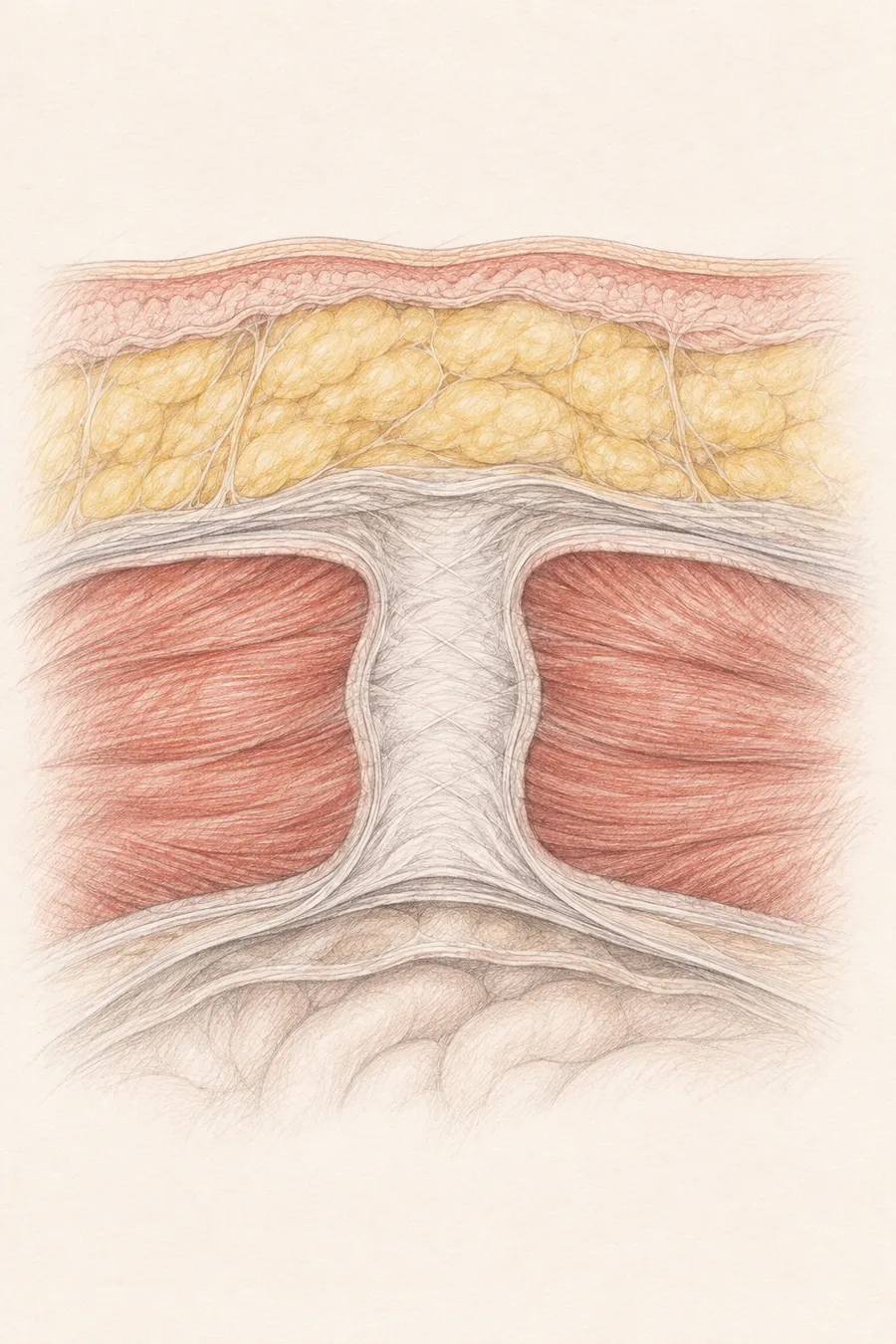
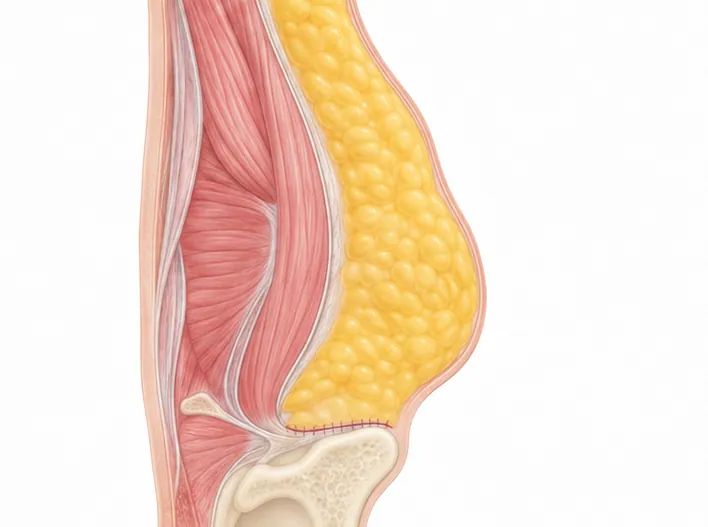
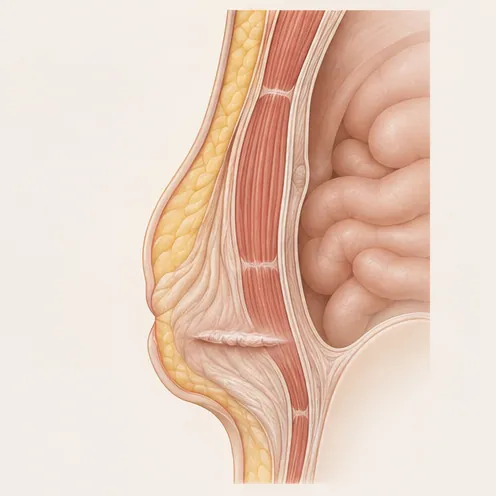
A tummy tuck removes excess abdominal skin and the fat beneath it, then pulls the remaining skin downward and closes the incision. If needed, the tissue between separated abdominal muscles is also tightened. A mini tummy tuck treats only the skin below the belly button, while a full tummy tuck lifts the skin above the belly button as well and creates a new opening for the belly button. If there is excess fat but the skin is firm, liposuction is appropriate, so this distinction is made first. Because this surgery leaves a long horizontal scar above the pubic area, its location and length are discussed beforehand.
- Diastasis Recti
- A condition in which the gap between the left and right abdominal muscles widens along the center of the abdomen after pregnancy or major weight changes. A bulge along the midline when you tense your abdomen may suggest this condition.
- Abdominal Wall Plication
- A process that brings the fascia surrounding the separated abdominal muscles together at the midline and sutures it. This tightens the supporting abdominal wall, rather than removing belly fat.
- Seroma
- A collection of clear fluid in the space beneath the skin after surgery. It is relatively common after a tummy tuck, so it is checked during follow-up visits and can be drained if it develops.
For a Tummy Tuck,
in Lower Blepharoplasty
Skin Is What Distinguishes It from Liposuction
Liposuction removes fat, so the remaining skin must have enough elasticity to contract. If the skin has stretched and developed folds after childbirth or weight changes, removing fat alone leaves that skin behind. A tummy tuck directly removes this skin but leaves a long scar. The skin is examined by gently grasping it to determine whether an option with less scarring or one that addresses excess skin is appropriate.
Mini vs. Full Depends on Whether the Area Above the Belly Button Is Involved
A mini tummy tuck is appropriate for loose skin below the belly button. The incision is shorter, and the belly button is often left in place. A full tummy tuck is considered if the skin above the belly button is also loose or muscle separation extends into the upper abdomen. A full tummy tuck lifts the abdominal skin toward the upper abdomen near the breastbone, makes a separate incision around the belly button, and brings it through a new opening, so the procedure is more extensive and recovery is more demanding.
If the Abdominal Wall Is Stretched, Treating the Skin Alone Is Not Enough
Even when abdominal sagging looks similar, removing skin may not sufficiently change the contour if the abdomen protrudes because of separated abdominal muscles. In this case, the fascia surrounding the muscles can be brought together at the midline and sutured. If the abdomen protrudes because of excess visceral fat, surgery does not resolve it, so weight and health management are addressed first. The examination also checks for a hernia.
Scar Location and Healing Time Are Discussed First
The incision is usually placed horizontally above the pubic area, where underwear or a swimsuit can cover it. A full tummy tuck also leaves a scar around the belly button. These large scars fade rather than disappear, and redness and firmness change over several months or longer. Scar care is important because this area places considerable tension on the wound. Scar treatment with injections and lasers begins one month after surgery and continues for at least six months.
Certain Risks Require Particular Attention with a Tummy Tuck
Because the procedure lifts a broad area of skin, possible complications include seroma, hematoma, infection, wound separation, and impaired blood flow to parts of the skin. Reduced sensation in the lower abdomen is also common. Blood clots in the legs are another concern because mobility decreases after surgery. Smoking and diabetes make wound healing more difficult, so they must be assessed before surgery.
Pregnancy and Weight Plans Are Discussed First
Pregnancy can stretch the abdominal skin and wall again, so surgery timing is adjusted if pregnancy is planned soon. Weight is also a consideration: repeated major changes affect the contour, so surgery is planned when weight is stable. If you are still losing weight, you are reassessed once you are closer to your goal weight. This surgery addresses excess skin and the abdominal wall; it is not a weight-loss method.
The Surgical Process Varies
Depending on Your Condition
Loose Skin Only Below the Belly Button (Mini)
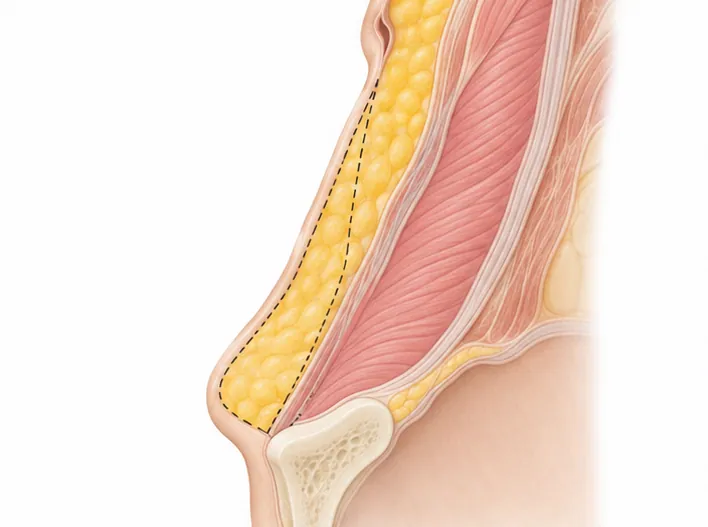 1
The extent of loose skin is assessed while you are standing, and a short incision line is marked above the pubic area.
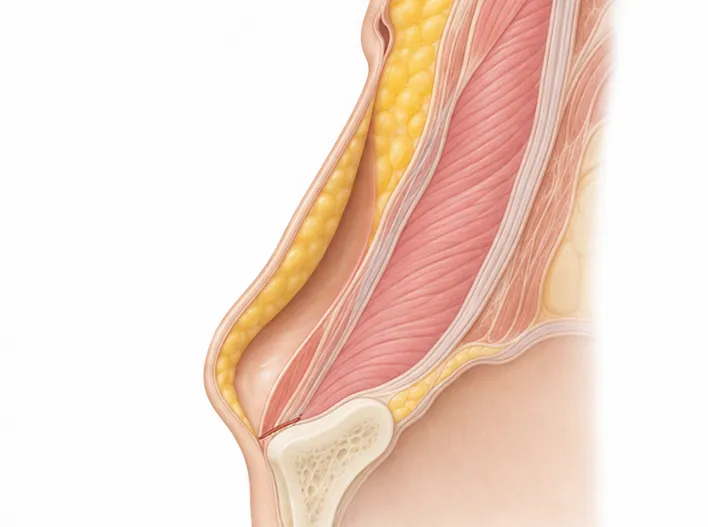 2
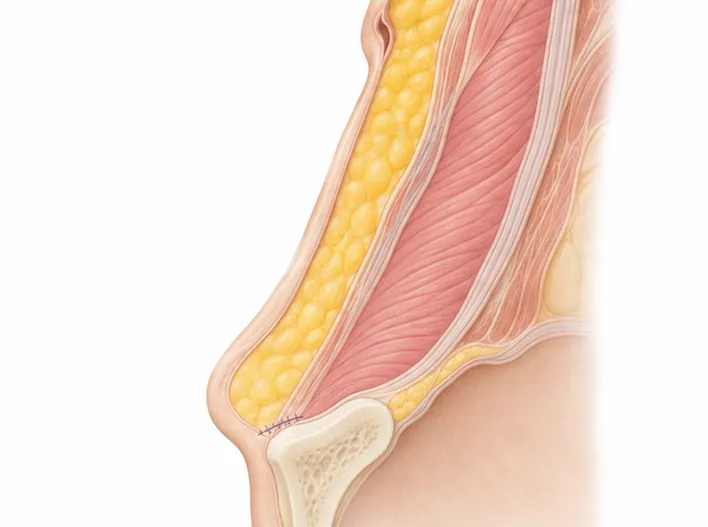
An incision is made along the marked line, and the skin and fat below the belly button are lifted from the abdominal wall.
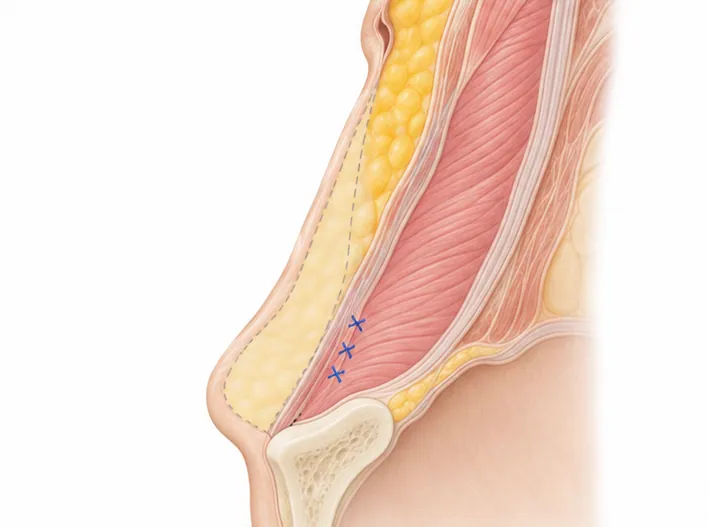 3
Excess skin is pulled down and removed, and the lower abdominal wall is tightened if needed.
 4
We close the incisions in layers
Loose Skin Above the Belly Button with Separated Abdominal Muscles (Full)
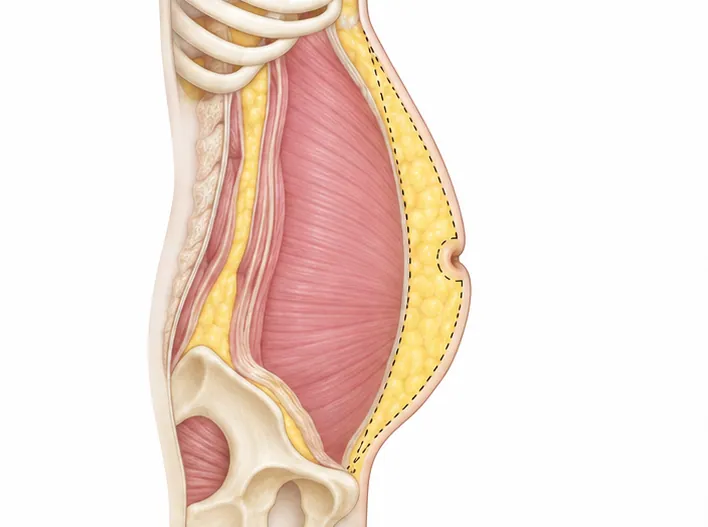 1
A horizontal line above the pubic area and a line around the belly button are drawn, and the area to be removed is marked.
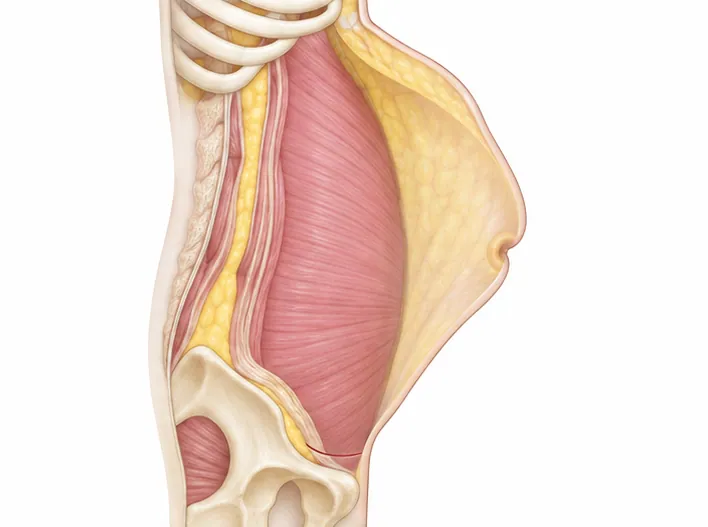 2
After the incisions are made, the skin and fat are lifted from the abdominal wall toward the upper abdomen near the breastbone, and the belly button is separated from the surrounding skin.
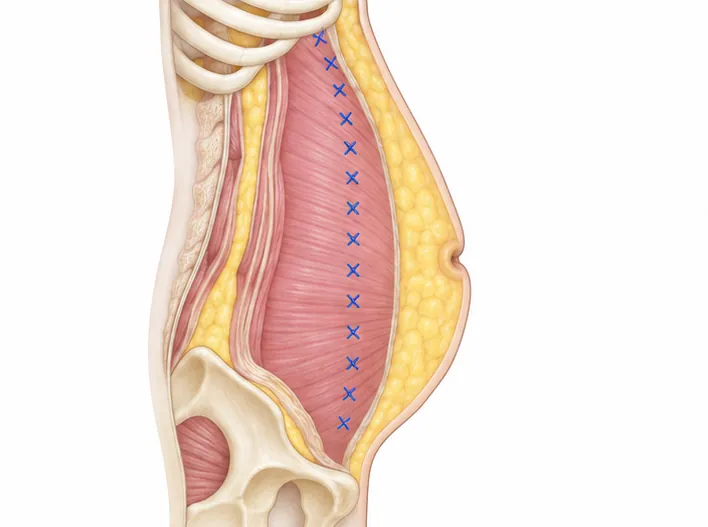 3
The fascia surrounding the separated abdominal muscles is brought together at the midline and sutured along its length.
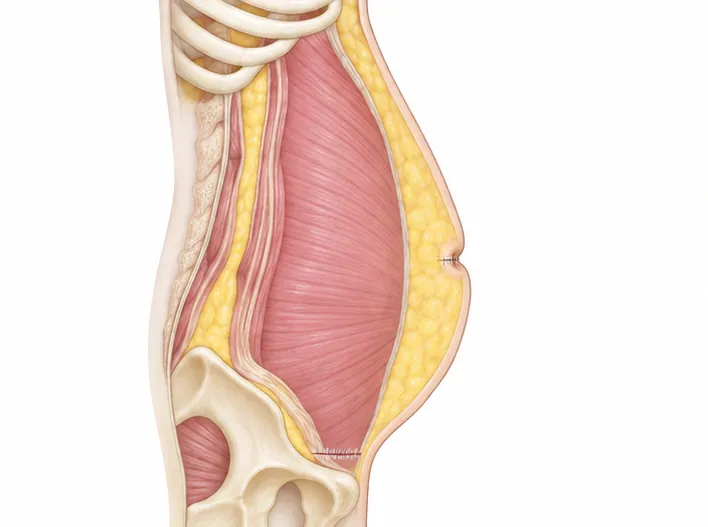 4
Excess skin is removed, a new opening is created for the belly button, and the incisions are closed in layers.
Excess Flank Fat as Well (Tummy Tuck + Liposuction)
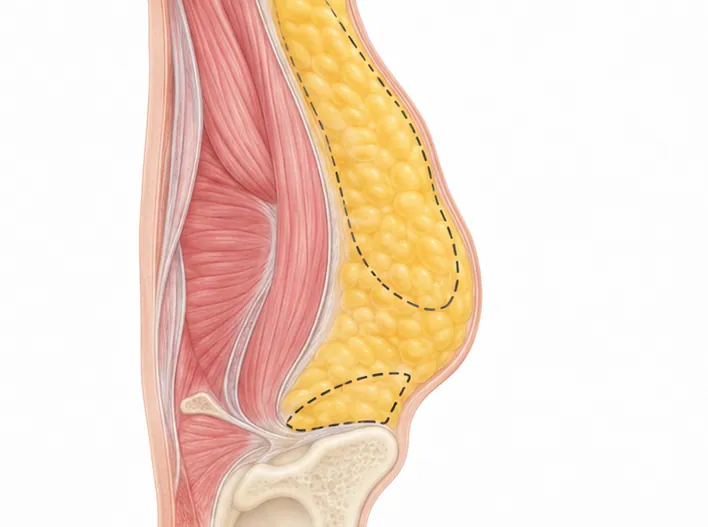 1
Fat thickness in the flanks and upper abdomen is measured, and the liposuction areas and incision lines are marked together.
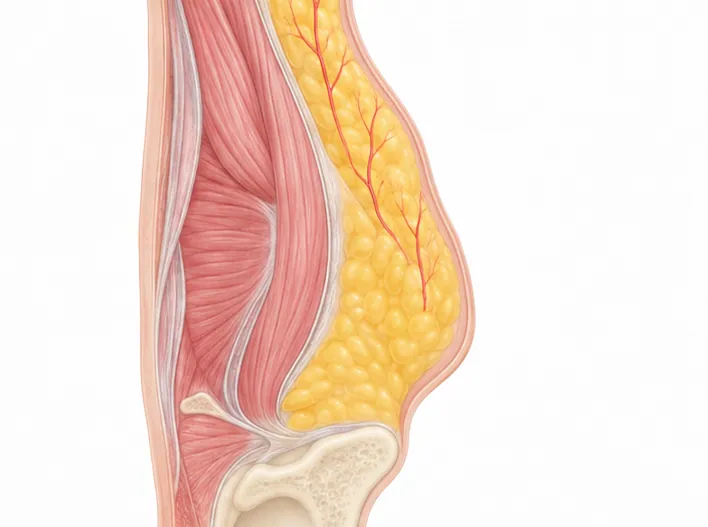 2
The treatment area is determined with skin blood flow in mind, and liposuction is performed on the flanks and waistline.
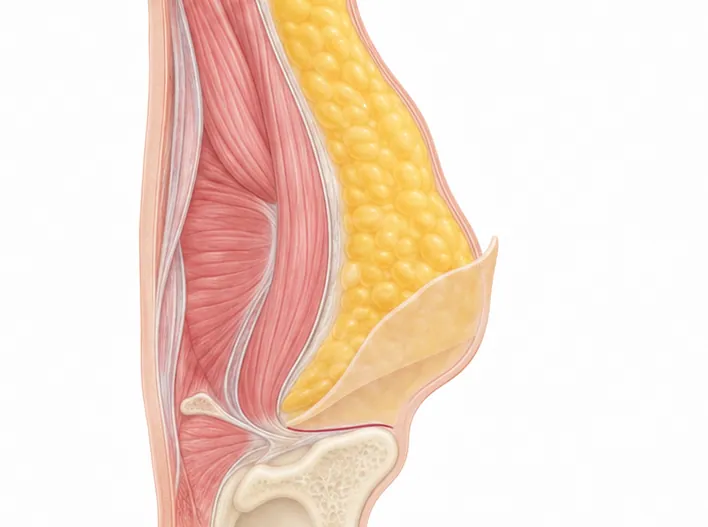 3
The abdominal skin is lifted, and excess skin is removed.
 4
We close the incisions in layers
Illustration for explanation · Not an actual patient. This is a simplified description of typical steps. The actual technique and extent of surgery are determined after examination.

When
to consider a consultation
- When abdominal skin is wrinkled and loose after childbirth or weight loss
- When the center of the abdomen protrudes despite exercise and the abdominal muscles feel separated
- When you want to determine whether liposuction alone is sufficient or a tummy tuck is also needed
- When your weight is stable and you have no plans for another pregnancy
When
Surgery is not our first recommendation
- If you plan to become pregnant soon or are still losing weight
- If abdominal protrusion is mainly caused by visceral fat
- If quitting smoking is difficult or diabetes needs to be controlled
- If it is difficult to allow enough recovery time or accept a long scar
Preparing for surgery and
recovery by stage
- 3–4 days after surgery
Swelling and bruising are significant at this stage. Take short, frequent walks starting on the day of surgery or the next day, and wear compression stockings for 2 weeks. Do not remove the drains yourself; they are usually left in place for 3–7 days.
- Early After Surgery
Wear the abdominal compression garment 24 hours a day for 6 weeks, except when showering. Walk slightly bent at the waist for 1–2 weeks, and place pillows under your knees and behind your back when sleeping. Stitches are removed after 10–14 days; stitches around the belly button after a full abdominoplasty are removed after 2–3 weeks.
- 3 weeks–3 months
The lifted skin and the area around the incision may feel firm and tight. After the first 6 weeks, wear the abdominal compression garment at night for another 2–6 weeks. Avoid heavy lifting, using your abdominal muscles, and strenuous exercise for 4–6 weeks. Discuss when to resume driving, generally after 2 weeks, and return to an office job, generally after 2–3 weeks.
- 3 months–1 year
Swelling and firmness improve over 3–6 months, and sensation below the belly button returns over 6–12 months. Scars fade over 1–2 years. Final results are assessed after 6 months to 1 year, and significant weight changes may alter the shape.

No smoking · No alcohol
Stop smoking for 4 weeks before and 4 weeks after surgery, and avoid alcohol for 4 weeks after surgery. Smoking greatly increases the risk of skin necrosis.
Medications · Supplements
We recommend stopping herbal medicines and supplements such as omega-3 when possible because they may increase bleeding. Please tell us about every medication you take.
Medical history
Diabetes, high blood pressure, blood clot risk, and medications are checked. General anesthesia is used, although sedation and local anesthesia may be used for a mini abdominoplasty. A separate consent form is required for general anesthesia.
Weight
We plan surgery when your weight is stable.
Recovery timelines are averages and vary from person to person. Please return to the clinic immediately if one side of your abdomen suddenly swells, feels like fluid is moving inside, and hurts. If you have calf pain or swelling, shortness of breath, or chest pain, go to a hospital or emergency room immediately.
Common questions
during consultations
Can I have a tummy tuck if I have a C-section scar?
In many cases, yes. Whether the C-section scar can be removed within the planned incision depends on its location, so it is assessed during surgical planning. Previous surgical scars affect blood flow, so be sure to share your surgical history.
Can I stand upright and walk immediately after surgery?
Because the abdominal skin is pulled tight and sutured, it is often more comfortable to keep your upper body slightly bent forward at first, then gradually straighten up. Walk slightly bent at the waist for 1–2 weeks, and take short, frequent walks starting on the day of surgery or the next day to reduce the risk of blood clots in the legs. Wear the abdominal compression garment 24 hours a day for 6 weeks, except when showering, then at night for another 2–6 weeks.
Is it better to combine it with liposuction?
If there is excess fat in the flanks and waistline, liposuction can be performed together with a tummy tuck, and the fee schedule includes a tummy tuck plus liposuction option. However, the liposuction area must be adjusted to account for blood flow to the lifted skin. Combining the procedures may increase swelling, discomfort, and aftercare needs.
RESERVATION
You do not need to decide the day of your consultation.
Organize questions about this page without entering your name, contact information, or medical history. This does not submit an appointment request.