PLASTIC SURGERY
Thermage FLX
Thermage FLX
We assess radiofrequency energy together with your skin condition.
This may vary depending on your condition and the extent of surgery.
SHORT ANSWER
What do we check first for Thermage FLX?
We assess radiofrequency energy together with your skin condition. During your consultation, we check skin thickness and firmness · hollowing and fat distribution · implanted medical devices and treatment history.
01 · START WITH YOUR CONCERN
Do any of these concerns
sound familiar?
What brings you in?
1
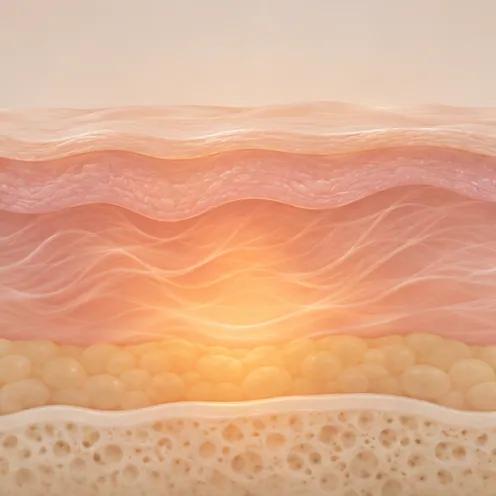
Epidermis · Skin Texture
2
Dermis · Firmness
3
Subcutaneous Fat
4
Fascial Layer (SMAS)
“I'm concerned about fine lines and loss of firmness.”
“The skin across my face feels different.”
“I'd like to know how it differs from other lifting treatments.”
We assess radiofrequency energy together with your skin condition.
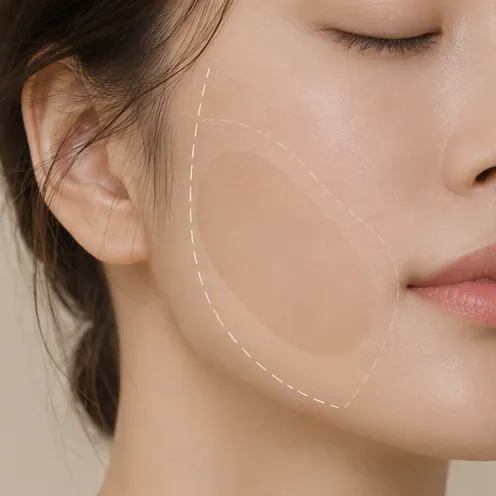
We do not choose a treatment for you based solely on the device name or shot count. We plan treatment areas by assessing skin and fat distribution and distinguishing hollowing from sagging.
PROCEDURE · STEP BY STEP
Thermage FLX: Assessing Your Skin Condition
Because radiofrequency energy heats the dermis, we first assess skin thickness and firmness.
STEP 01
Fine Lines · Firmness
We assess fine lines, firmness, and skin thickness.
STEP 02
Dermal Assessment
We check hollowing, fat distribution, and whether you have any implanted medical devices.
STEP 03
Dermal Heating
Radiofrequency evenly heats the dermis while the surface is cooled.
STEP 04
Even Application, Adjustable Intensity
We treat the entire face evenly and adjust the intensity in hollow areas.
Thermage FLX,
What Is This Treatment?
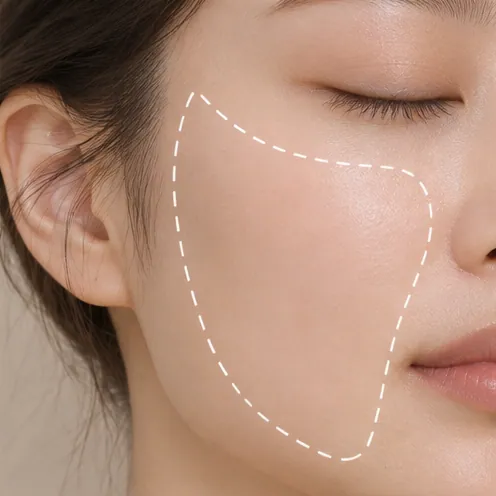
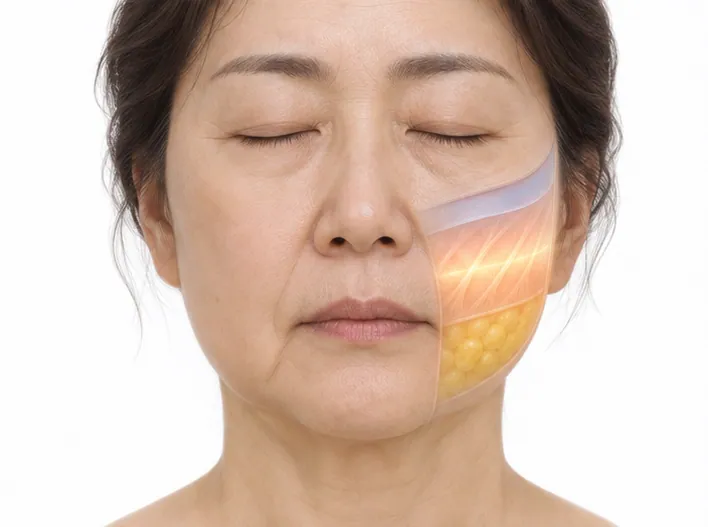
Thermage FLX is a radiofrequency device. It cools the skin surface while using radiofrequency energy to heat the dermis broadly and evenly, encouraging collagen to contract and new collagen to form over time. Unlike ultrasound, which focuses energy at individual points, it delivers heat across an area, so we consider it when addressing skin firmness and fine lines. At VITAL Plastic Surgery, we plan it together with Ultherapy on a once-a-year schedule.
- Radiofrequency (RF)
- This method generates heat through the resistance encountered as an electrical current passes through tissue. Thermage delivers this heat to the dermis.
- Dermis
- This layer beneath the epidermis provides skin elasticity and consists of collagen and extracellular matrix. These components decrease with age.
- Cooling
- This process cools the treatment surface to keep heat from remaining in the epidermis. It helps reduce the risk of burns, but does not eliminate that risk.
With Thermage FLX
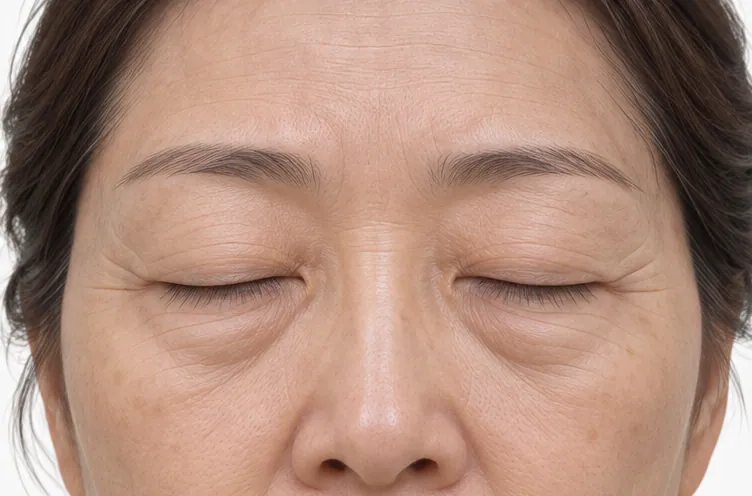
in Lower Blepharoplasty
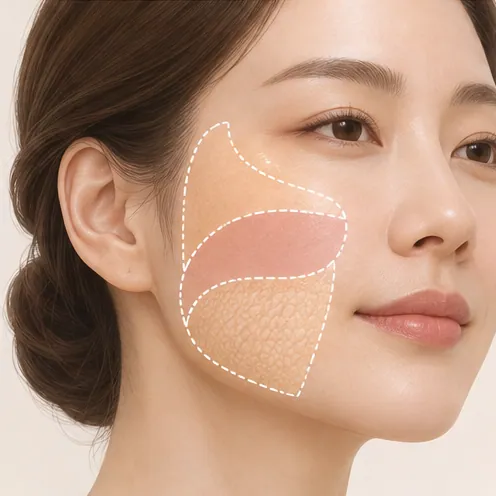
We first determine whether the concern is skin quality
When fine lines increase and your skin feels less firm than before, the first step is to identify the cause. Dr. Yim's approach is to assess the position of sagging structures, the amount of volume needed, and skin quality separately. Thermage is considered when addressing skin quality and dermal firmness.
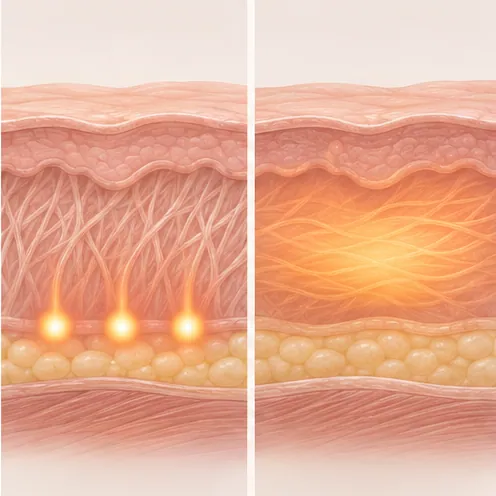
It targets a different layer than Ultherapy
Ultherapy uses focused ultrasound to concentrate heat at individual points at specific depths, while Thermage uses radiofrequency to heat areas of the dermis. Both are generally planned once a year, but they differ in the layers they target and how they feel. We do not assume one device is better; depending on your facial condition, we may choose one or plan both together.
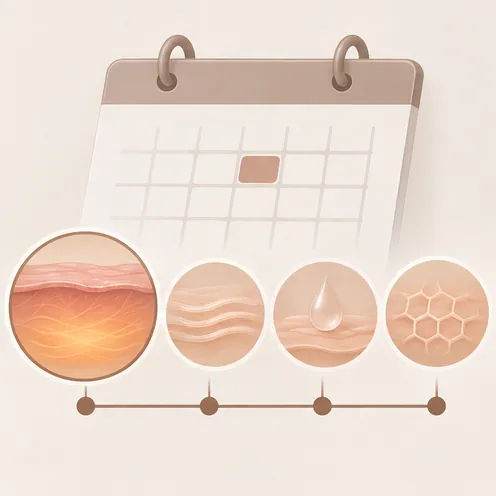
We generally plan treatment once a year
Dr. Yim recommends planning Ultherapy and Thermage once a year. Collagen changes in the dermis are known to occur over several months, so monthly treatments such as InMode or ONDA, along with skin care, continue between sessions. The interval may vary depending on your facial condition.
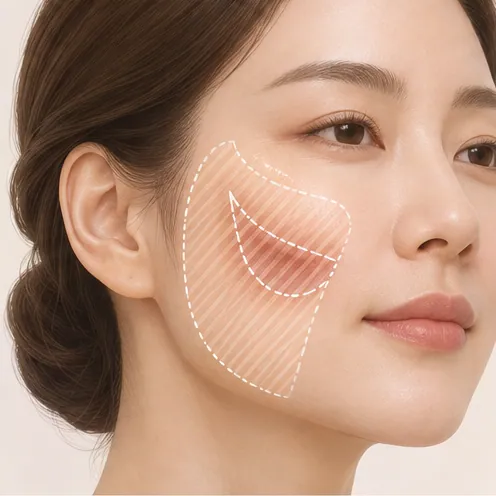
We adjust the intensity in hollow areas
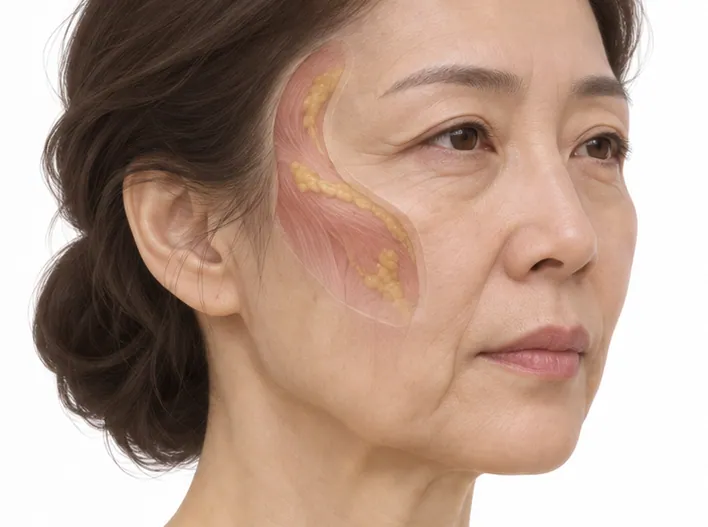
Even when treating the entire face evenly, we need to consider the heat burden in hollow areas or where bone is close to the surface. Dr. Yim's approach is to be cautious about repeating treatments that can reduce volume in a thin, hollow face. We plan the intensity and treatment area separately for each region and, when needed, assess other options for volume.

Radiofrequency treatment requires a few questions first
Because this device uses electrical current, you may need to avoid treatment if you have an implanted medical device such as a pacemaker. We also check for metal implants, possible pregnancy, medications, and recent procedures. If you develop blisters or changes that look like burns after treatment, contact us without waiting for your scheduled appointment.
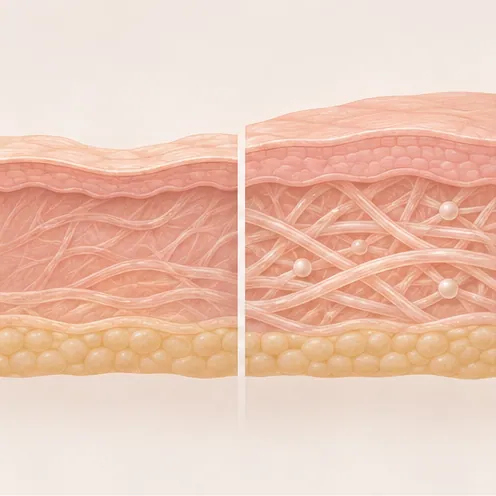
When skin has thinned, we distinguish its role from Re2O
If the dermis is damaged or significantly thinned, heat stimulation alone cannot replenish the missing structural components. In these cases, we consider Re2O to supplement the extracellular matrix. When planning both, we schedule laser treatment first and injections afterward. We assess skin thickness to determine which is needed first.
Illustration for reference · Not an actual patient
The Surgical Process Varies
The treatment process varies
When both fine lines and skin firmness are concerns
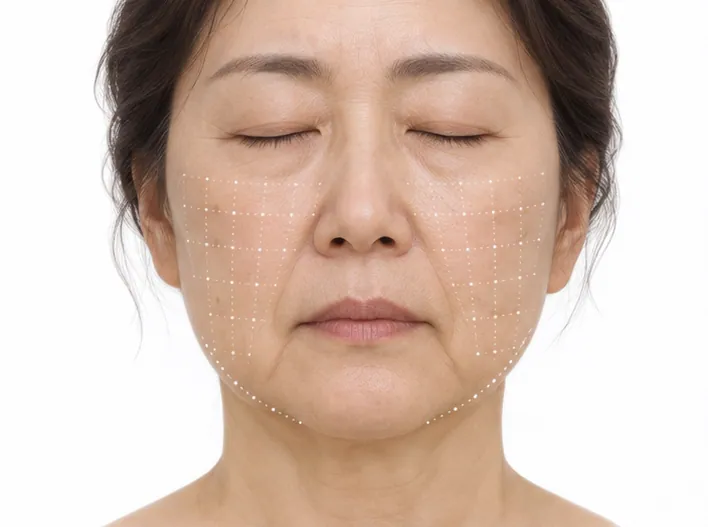 1
We check skin thickness, fine lines, and whether you have any implanted medical devices
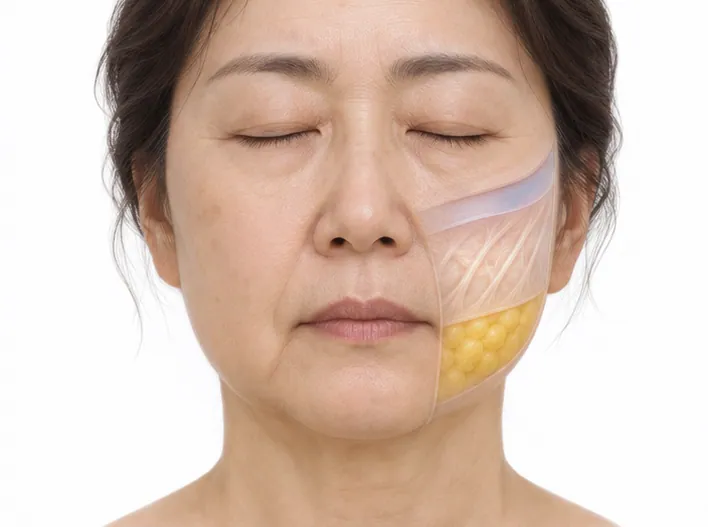 2
We apply numbing cream and mark a grid on the treatment area
 3
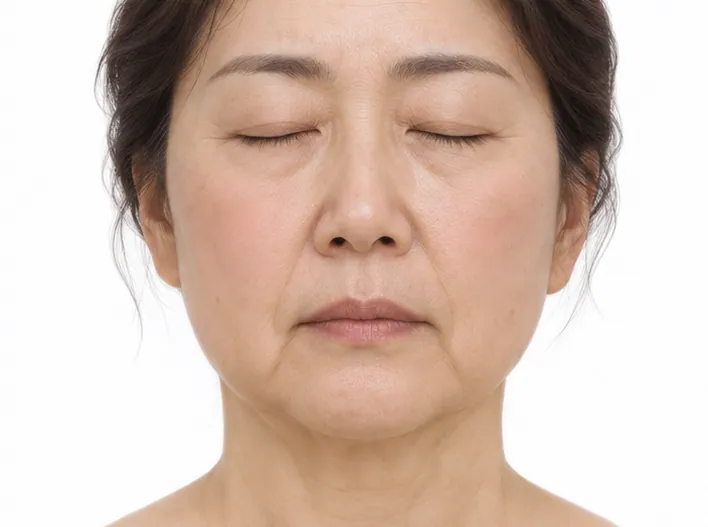
We use radiofrequency to heat the dermis evenly while cooling the surface
 4
We check for redness and provide guidance on sun protection and moisturizing
When the cheeks are hollow and the skin is thin
 1
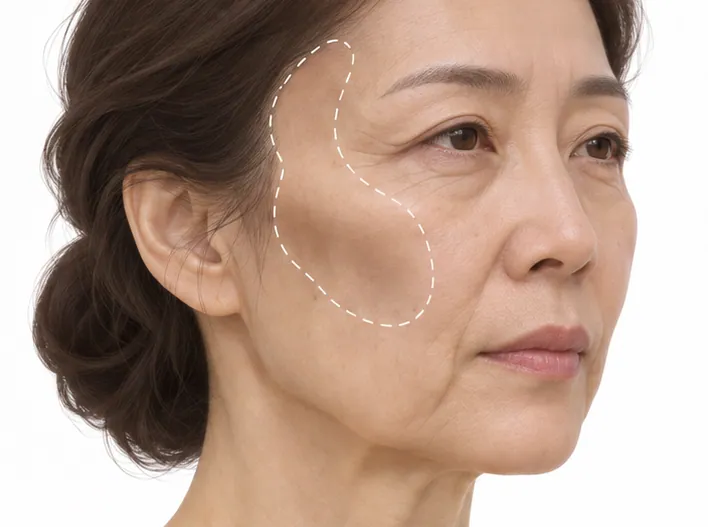
We mark hollow areas and assess volume concerns separately
 2
We lower the intensity on hollow cheeks and focus only on skin-related goals
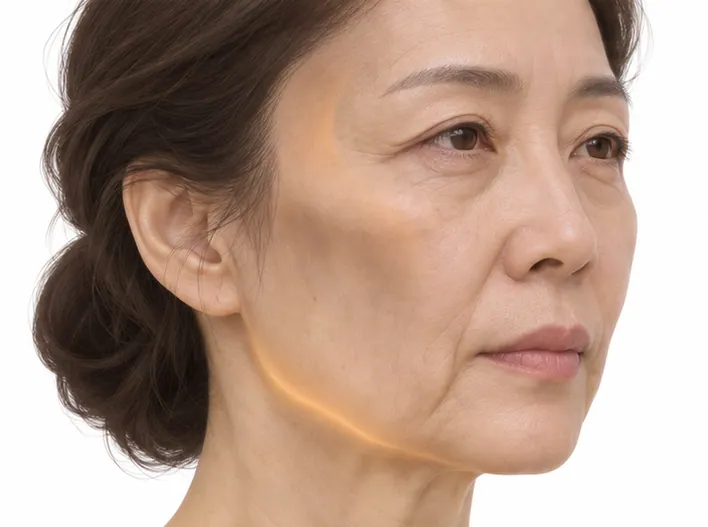 3
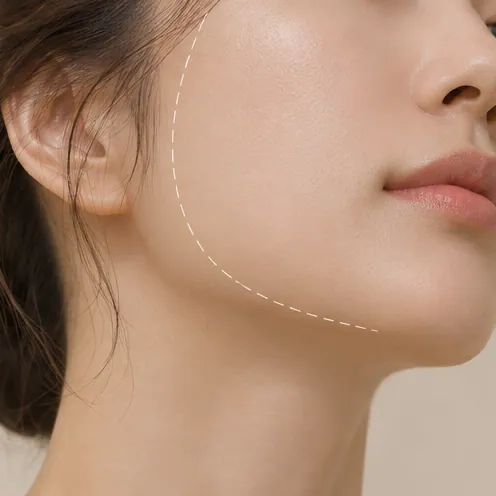
We treat the jawline and forehead separately, then monitor progress
When also treating the eye area
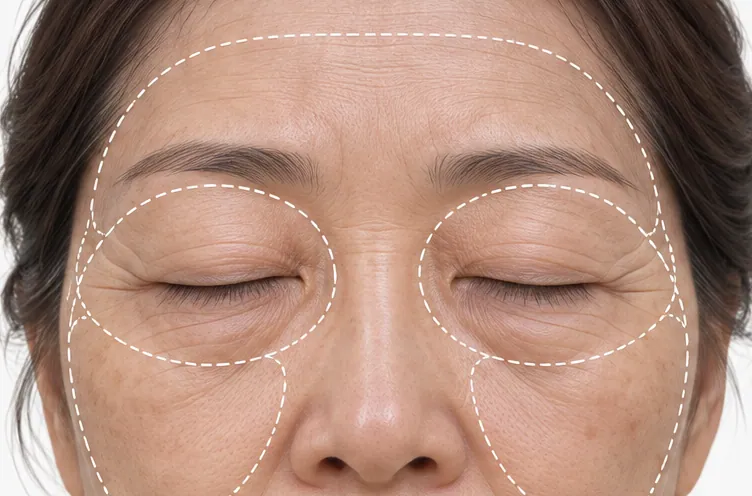 1
We first examine eyelid drooping and the ability to open the eyes
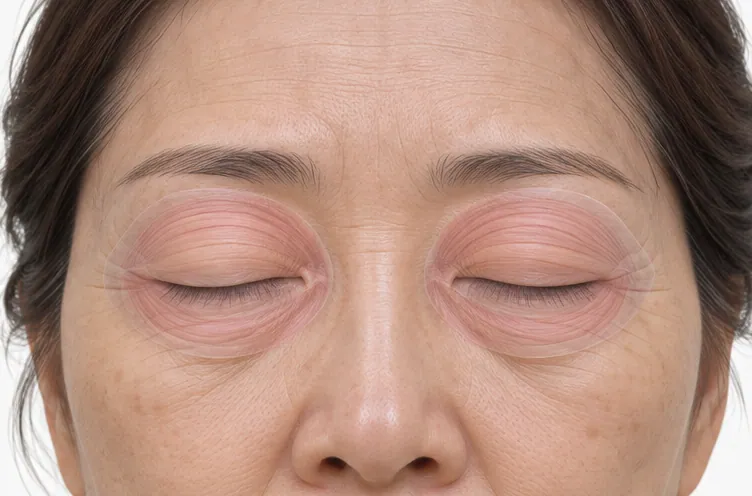 2
We use a standard tip for the face and a dedicated eye tip for the eye area
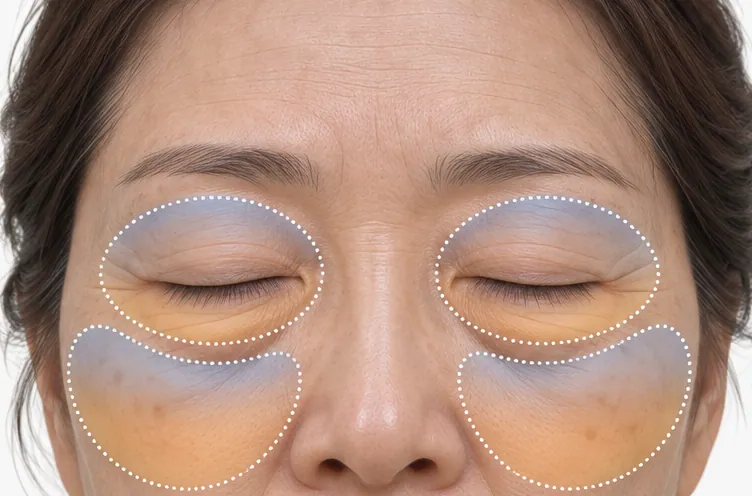 3
We use corneal protective lenses when treating the eyelids
 4
We check for eye pain or vision changes
Illustration for explanation · Not an actual patient. This is a simplified description of typical steps. The actual technique and extent of surgery are determined after examination.
02 · WHAT WE LOOK AT
Even when concerns look similar,
the factors to assess differ.
Skin Thickness and Firmness
We do not choose a treatment for you based solely on the device name or shot count.
Hollowing and Fat Distribution
We plan treatment areas by assessing skin and fat distribution and distinguishing hollowing from sagging.
Implanted Medical Devices · Treatment History
During your consultation, we must review implanted medical devices, medications, the possibility of pregnancy, and recent procedures.
03 · DOCTOR'S DECISION
When choosing an approach, Dr. Hyungwoo Yim
looks at three things first.
Assess suitability for radiofrequency treatment
Using your medical history and examination findings, we distinguish your current condition from your desired changes. At this stage, we identify the necessary conditions before choosing a treatment.
Explain the treatment areas, tips, and energy settings
When comparing available methods, we explain the expected changes, the burden on the tissues, recovery, and potential remaining problems.
Compare treatment goals with those of ultrasound treatment
We give you time to understand the explanation and ask questions. We may not recommend immediate treatment if its burden is greater or if you cannot allow enough time for recovery.
VITAL Plastic Surgery's principle is to recommend necessary treatment at the appropriate time. Having a consultation does not mean you need to decide on a procedure or surgery that day.

When
to consider a consultation
- When both skin firmness and fine lines across the face are concerns
- When you want to maintain skin firmness with yearly treatments instead of surgery
- When examination shows that changes in skin quality are a greater concern than fat
- When you want to discuss skin quality care after surgery
When
Surgery is not our first recommendation
- When you have an implanted medical device such as a pacemaker
- When structural sagging is too extensive to address with skin-firming treatment
- When skin inflammation or wounds need to heal first
- When the dermis is significantly damaged and replenishing its structural components needs to be considered first
04 · LIMITS & RISKS
Along with possible improvements,
we explain the limitations and risks.
Your desired changes — First, tell us what bothers you most and which aspects of your appearance you want to keep. We do not promise changes identical to photos or someone else's results.
Pain
Swelling
Redness
Burns
Changes in Sensation
Previous Treatments
Do not wait if you have these symptoms
If you experience skin changes resembling blisters or burns, progressively worsening pain or swelling, or signs of possible infection such as pus, contact us immediately rather than waiting for your appointment.
Conditions to address first — We first assess your health, inflammation and stage of recovery, and the range of feasible treatments. If needed, testing, observation, or other medical care may take priority.
Risks and limitations to discuss during consultation — pain, swelling, redness, burns, changes in sensation, and contour changes. This is not a complete list of possible risks. Risks may vary depending on your health, previous treatments, and the treatment method and extent. These will be explained in detail during the examination and consent process.
Pre-treatment assessment and
Care by Recovery Stage
 Treatment Day
Temporary redness and warmth may occur. Begin moisturizing and using sun protection.
 Around 1 Week
Swelling and temporary discomfort subside during this period. Avoid vigorous massage and devices used around the eyes, as they may cause irritation.
 Several Months
When changes appear varies with the device and skin condition.
 Next Treatment
We use once a year as a general guideline for Ultherapy and Thermage, and monthly for InMode and ONDA. We adjust based on your condition.

Medications
Please tell us about any medications and dietary supplements you take. We assess the risk of bruising and bleeding.
Previous Procedure History
Tell us about fillers, threads, fat-reduction treatments, and recent laser treatments.
Skin Condition
For thin, hollow faces, we assess carefully first to avoid repeated fat-reduction treatments.
Recovery timelines are general estimates and vary by individual. Contact us immediately for sudden severe pain, decreased vision, bleeding that does not stop, or rapidly worsening swelling on one side.
05 · FOLLOW THE CHANGE
We also document
and monitor changes after treatment.
01
STEP 01
Documenting your condition before treatment
We review previous treatments, your current condition, and the changes you hope to see.
02
STEP 02
Check Early Reactions · Wound Healing
We explain treatment-specific precautions and symptoms that require contacting us.
03
STEP 03
Comparison of skin texture · firmness changes
We compare photos taken under the same conditions along with your skin condition.
04
STEP 04
Assessing additional care
We explain additional treatment based on your condition rather than recommending the same treatment to everyone.
This is a general overview, not an actual patient case. Specific follow-up schedules vary by treatment method and recovery. If you experience skin changes such as blisters or burns, worsening pain, or signs of possible infection, contact a medical facility immediately rather than waiting for your appointment.
Common questions
during consultations
How painful is it?
You may feel heat as energy is delivered, and areas where bone is close to the surface may be more sensitive. Numbing cream is an option, and we determine any necessary measures during your examination. If the discomfort becomes difficult to tolerate, tell us immediately during treatment so we can adjust the energy.
What should I pay the most attention to after treatment?
Applying sunscreen is the most important step after injections or laser treatments. Avoid skin care that causes irritation, such as vigorous massage or devices used around the eyes. Contact us immediately if you develop blisters or worsening pain.
Can Thermage eliminate the need for surgery?
This treatment addresses skin quality and firmness, so it cannot reposition sagging structures. If there are no functional problems and the changes are stable, you can start with nonsurgical care. If changes along the jawline and neck do not improve enough, we then discuss surgery.
BEFORE YOU DECIDE
Before you decide,
frequently asked questions
Questions to review together before deciding.
Based on questionnaire responses from Dr. Hyungwoo Yim · Last updated October 2026 Specific methods and their scope are discussed individually after an examination.
Q
Is Thermage the same as ultrasound lifting?
−
A
The energy type and treatment plan differ. We assess suitability based on your skin condition and desired changes, without assuming that a particular device is superior for everyone.
Q
Are the cost, number of treatments, and recovery period fixed?
+
Q
Can a treatment plan be finalized through a photo consultation alone?
+
DOCTOR'S COLUMN DOCTOR'S COLUMN DOCTOR'S COLUMN
Must Read
Care Notes Written by the Doctor · Please Read Before Your First Visit
No.1
No.3
VIEW MORE →
RESERVATION
You do not need to decide the day of your consultation.
Organize questions about this page without entering your name, contact information, or medical history. This does not submit an appointment request.