PLASTIC SURGERY
All Treatments / Lifting Devices
Eye-area Thermage
Eye Thermage
Thin, sensitive skin around the eyes requires a separate assessment.
This may vary depending on your condition and the extent of surgery.
SHORT ANSWER
What do we check first for Eye Thermage?
Thin, sensitive skin around the eyes requires a separate assessment. During your consultation, we assess the skin around your eyes, eyelid drooping and function, and your history of eye conditions and ophthalmic treatment.
01 · START WITH YOUR CONCERN
Do any of these concerns
sound familiar?
What brings you in?
1
Epidermis · Skin Texture
2
Dermis · Firmness
3
Subcutaneous Fat
4
Fascial Layer (SMAS)
“I'm concerned about fine lines around my eyes.”
“I'm deciding between surgery and a nonsurgical treatment.”
“My eyelid skin is thin and sensitive.”
Thin, sensitive skin around the eyes requires a separate assessment.
We do not choose a treatment for you based solely on the device name or shot count. We plan treatment areas by assessing skin and fat distribution and distinguishing hollowing from sagging.
PROCEDURE · STEP BY STEP
Eye Thermage: A separate assessment for thin skin around the eyes
We first assess the skin around your eyes, eyelid function, and your history of ophthalmic treatment.
STEP 01
Skin Around the Eyes
We examine fine lines around the eyes and thin eyelid skin.
STEP 02
Assessing Drooping · Function
We determine whether eyelid drooping can be addressed with a nonsurgical treatment or requires surgery.
STEP 03
Dermal Heating
Radiofrequency heats the dermis of the thin skin around the eyes while cooling the surface.
STEP 04
Treatment With Protection
We use an eye-specific tip and place corneal shields when treating the eyelids.
Eye Thermage,
What Is This Treatment?
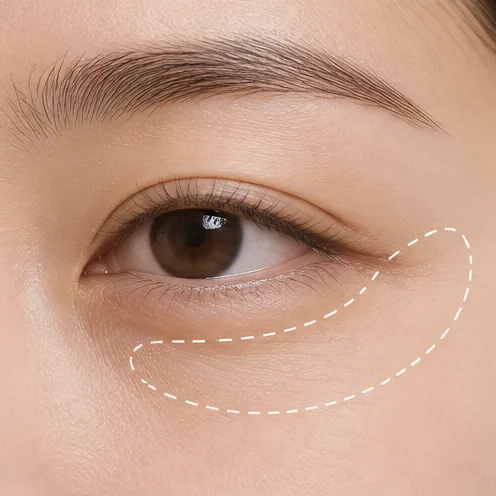
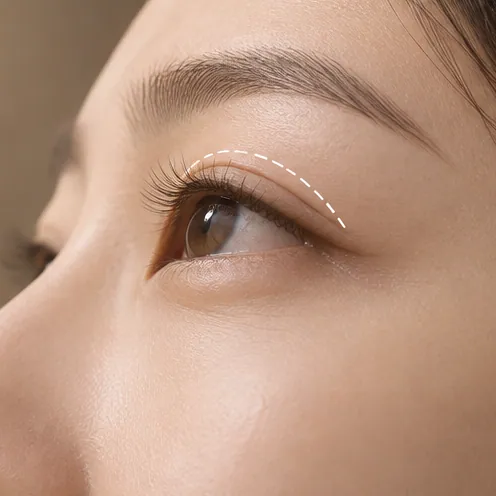
Eye Thermage uses Thermage, a radiofrequency device, with a small tip designed for the eye area. It heats the dermis of the thin skin around the eyes while cooling the surface and may be considered to address fine lines and skin firmness. Eyelid skin is among the thinnest on the body, with the eyeball directly beneath it, so treatment is planned differently from treatment of the face. Problems with eyelid opening function or significant sagging fall outside the scope of this treatment and must be distinguished first.
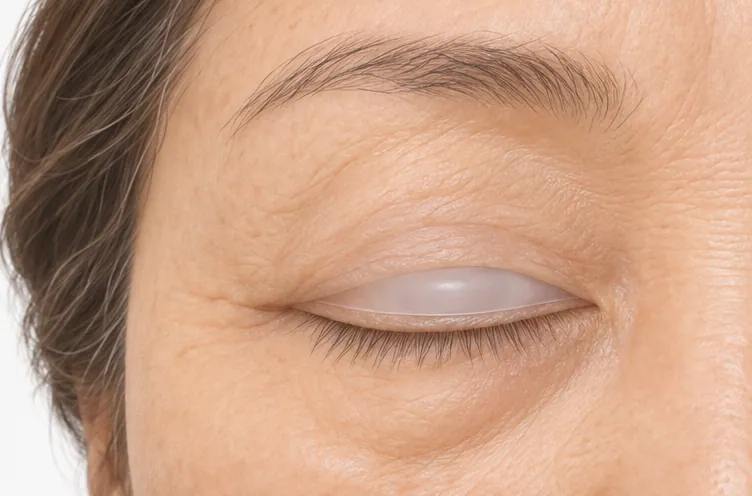
- Corneal Shields
- These shields are placed over the eyes to protect the eyeballs during eyelid treatment. You must remove your regular contact lenses before treatment.
- MRD1
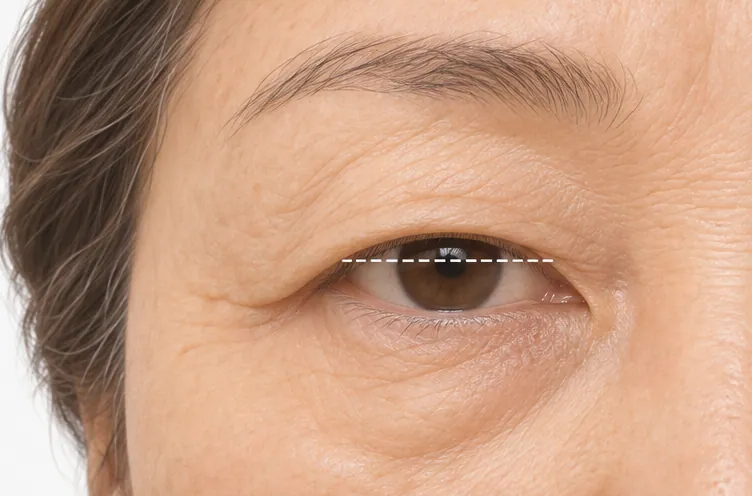
- This is the distance from the light reflex at the center of the pupil to the upper eyelid margin. Approximately 4 mm is considered normal, and the measurement is used to assess eyelid opening function.
- Pseudoptosis
- This is a condition in which sagging skin covers the pupil even though eyelid opening function is normal. Because the problem involves the skin, surgery on the eyelid-opening muscle is not needed.
For Eye Thermage,
in Lower Blepharoplasty
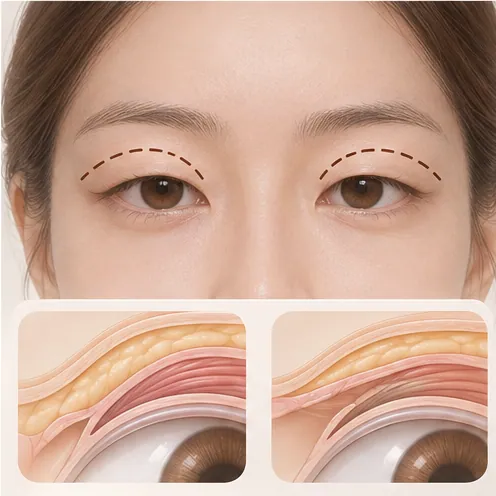
We first distinguish the causes of eyelid drooping
Skin or the eyelid-opening muscle may be the reason your eyes look small or feel heavy. If MRD1 is within the normal range of approximately 4 mm, the eyes are obscured by skin; if it is lower, we assess for a problem with eyelid opening function. When this function is weak, we do not describe eye-area devices as a way to correct it. That is why we measure how much of the pupil is visible before treatment.
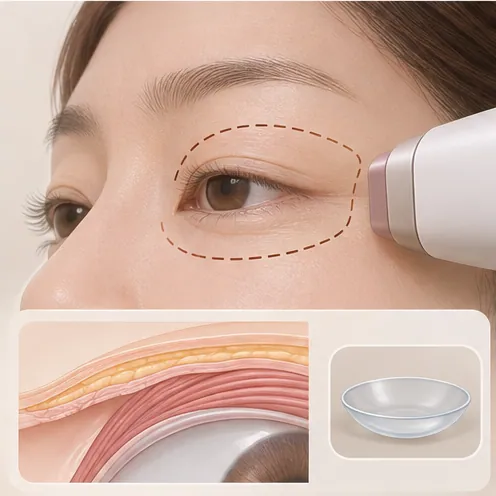
We select the tip and energy level specifically for thin skin
The eye area has the thinnest skin on the face, with muscle and the eyeball directly underneath. We therefore use a smaller tip than the one used for the face and select the energy level separately. When treating the eyelids, we place corneal shields over the eyes to protect the eyeballs. Before treatment, we explain the possibility of pain, swelling, burns, and eye injury.
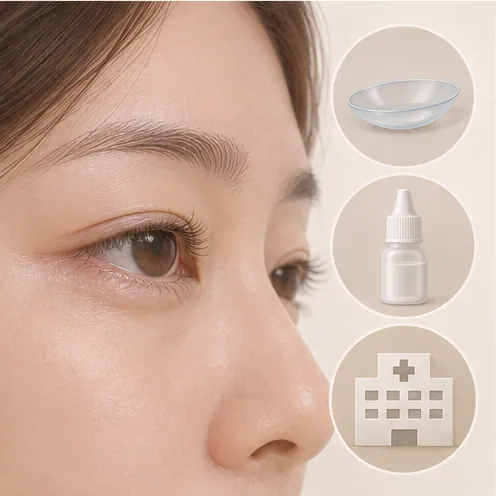
We also ask about dry eyes and contact lens use
Long-term contact lens use may weaken eyelid opening function, and dry eye disease may increase discomfort after treatment around the eyes. We first review your history of ophthalmic treatment, recent eye surgery, and artificial tear use. If dryness is severe, we recommend postponing treatment or addressing the dryness first.
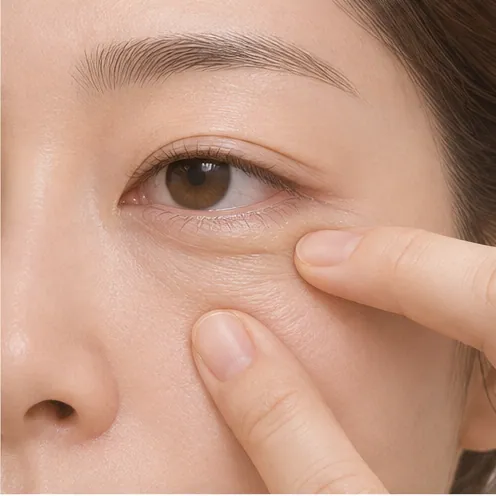
We assess skin and orbicularis oculi muscle elasticity by touch
We assess the elasticity of the under-eye skin and orbicularis oculi muscle through examination and palpation. If Re2O or laser treatment may address the concern, we consider nonsurgical care first. If we determine that these approaches are unlikely to be sufficient, we plan a separate treatment for that area. Because this cannot easily be determined by a single measurement, the doctor examines the area by touch and explains the findings.
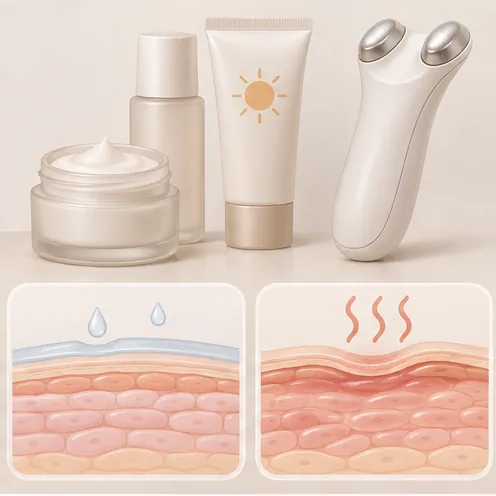
We distinguish this treatment from at-home eye-area devices
Eye creams and moisturizers may help support the skin barrier and manage fine lines caused by dryness, but they cannot reverse bulging fat or significant sagging. Vigorous massage and at-home eye-area devices require consideration of the risks of irritation, burns, and eye injury. Basic care includes moisturizing, sun protection, and avoiding vigorous eye rubbing.
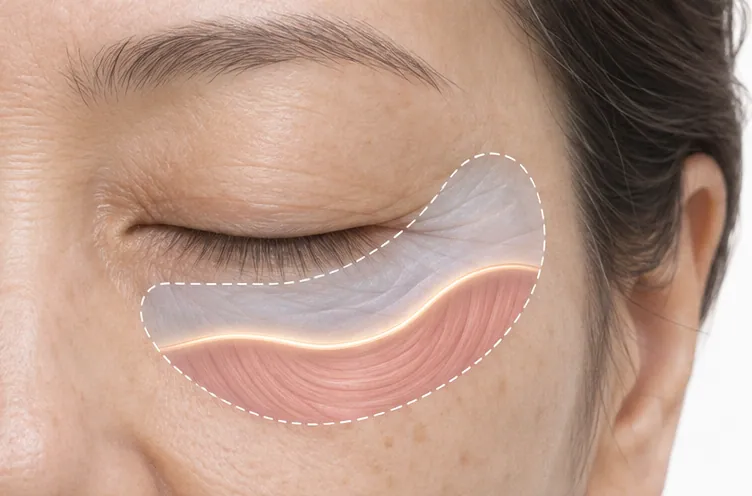
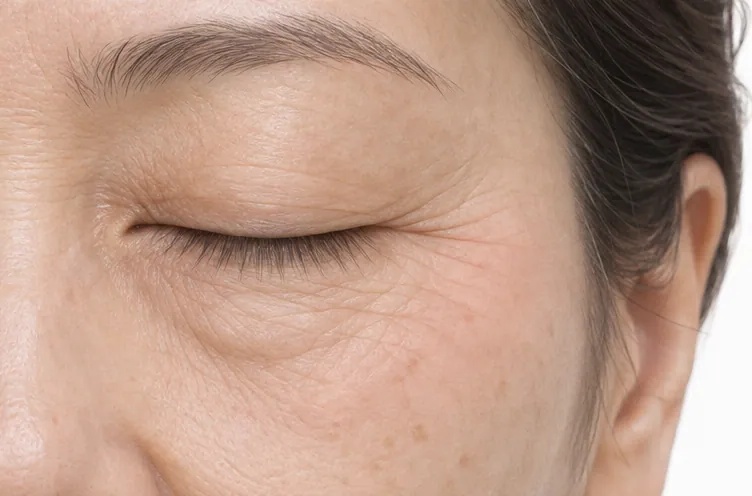
Illustration for reference · Not an actual patient
The Surgical Process Varies
The treatment process varies
When fine lines around the eyes are the main concern
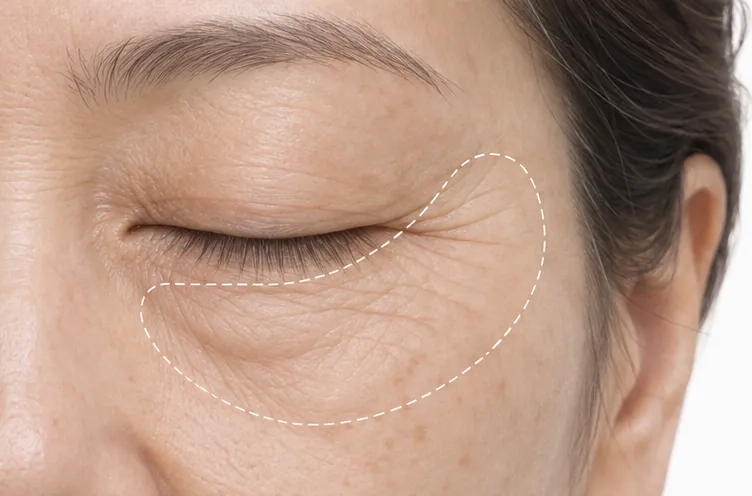 1
We examine skin thickness, fine lines, and dryness around the eyes
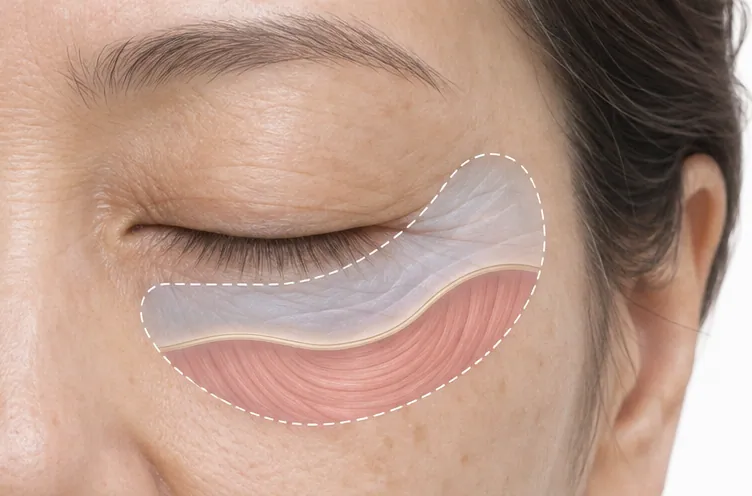 2
After contact lenses are removed and numbing cream is applied, we mark the treatment area
 3
We use an eye-specific tip to heat the dermis while cooling the surface
 4
We check for redness and assess the eyes, then provide sun protection instructions
When considering treatment of the upper eyelids as well
 1
We measure MRD1 to distinguish reduced eyelid opening function from sagging skin
 2
After reviewing your ophthalmic history, we place corneal shields
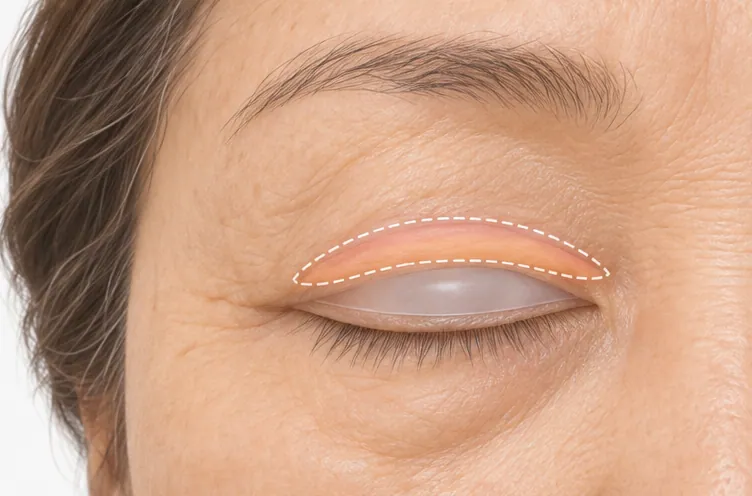 3
We treat the upper eyelids with an eye-specific tip, starting at a low setting
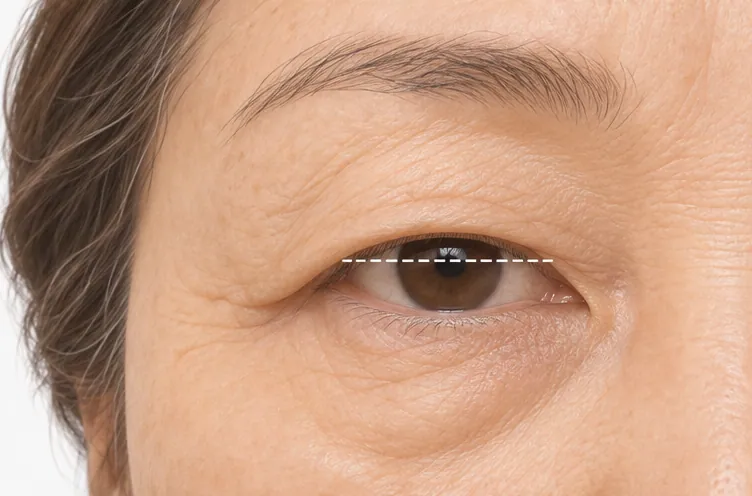 4
We remove the shields and check for eye pain and changes in vision
When significant sagging calls for considering surgery first
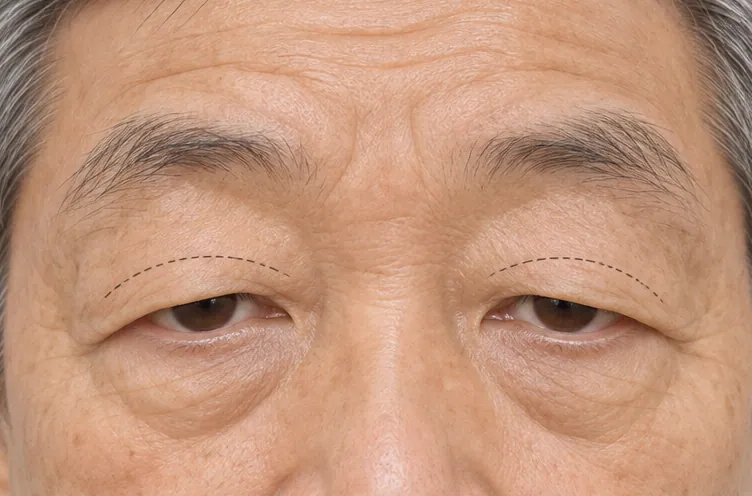 1
We assess excess skin, eyebrow position, and eyelid opening function together
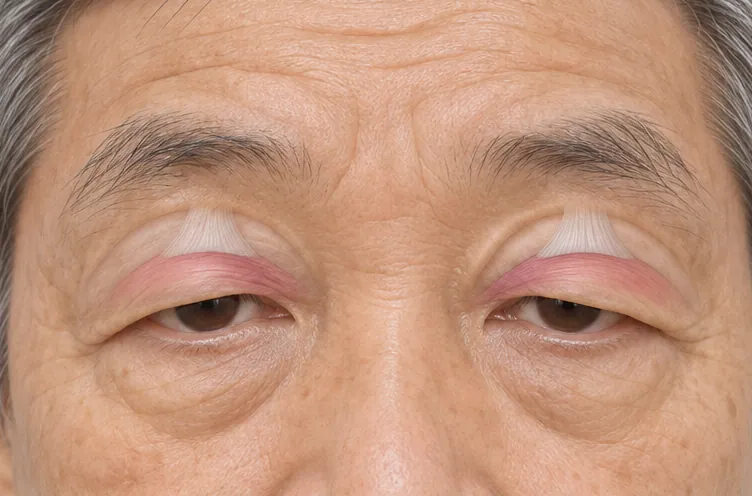 2
We first correct the underlying structure through skin excision or ptosis repair
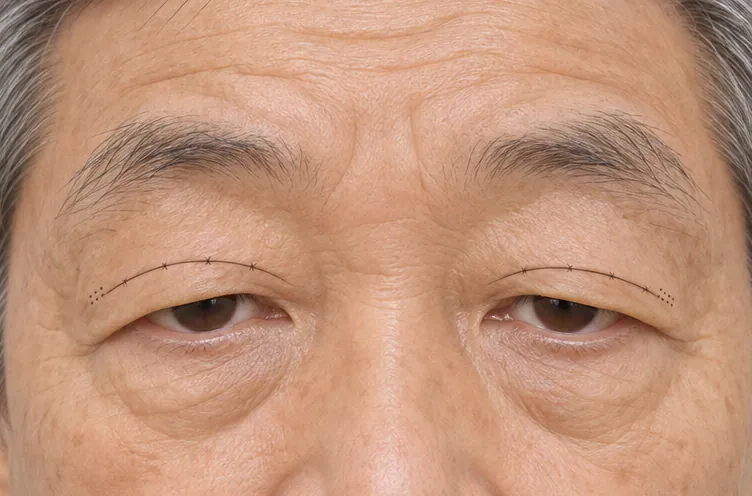 3
Once the tissue has stabilized, we use an eye-specific tip on fine lines at the outer corners of the eyes
Illustration for explanation · Not an actual patient. This is a simplified description of typical steps. The actual technique and extent of surgery are determined after examination.
02 · WHAT WE LOOK AT
Even when concerns look similar,
the factors to assess differ.
Skin Around the Eyes
We do not choose a treatment for you based solely on the device name or shot count.
Eyelid Drooping and Function
We plan treatment areas by assessing skin and fat distribution and distinguishing hollowing from sagging.
History of Eye Conditions and Ophthalmic Treatment
During your consultation, we must review implanted medical devices, medications, the possibility of pregnancy, and recent procedures.
03 · DOCTOR'S DECISION
When choosing an approach, Dr. Hyungwoo Yim
looks at three things first.
Assess suitability and contraindications for treatment around the eyes
Using your medical history and examination findings, we distinguish your current condition from your desired changes. At this stage, we identify the necessary conditions before choosing a treatment.
Explain safety procedures, including the appropriate tip and eye protection
When comparing available methods, we explain the expected changes, the burden on the tissues, recovery, and potential remaining problems.
Distinguish concerns that require surgery
We give you time to understand the explanation and ask questions. We may not recommend immediate treatment if its burden is greater or if you cannot allow enough time for recovery.
VITAL Plastic Surgery's principle is to recommend necessary treatment at the appropriate time. Having a consultation does not mean you need to decide on a procedure or surgery that day.

When
to consider a consultation
- When fine lines and thin skin around the eyes are concerns and eyelid opening function is normal
- When you do not want surgery yet and have no functional problems
- When you want to discuss fine lines remaining after eyelid surgery
- When skin texture around the eyes is a concern without skin sagging
When
Surgery is not our first recommendation
- When low MRD1 means eyelid opening function needs to be addressed first
- When you have eye inflammation or severe dry eye disease
- When you are recovering from recent eye surgery or ophthalmic treatment
- When excess skin is too significant to be addressed with a nonsurgical treatment
04 · LIMITS & RISKS
Along with possible improvements,
we explain the limitations and risks.
Your desired changes — First, tell us what bothers you most and which aspects of your appearance you want to keep. We do not promise changes identical to photos or someone else's results.
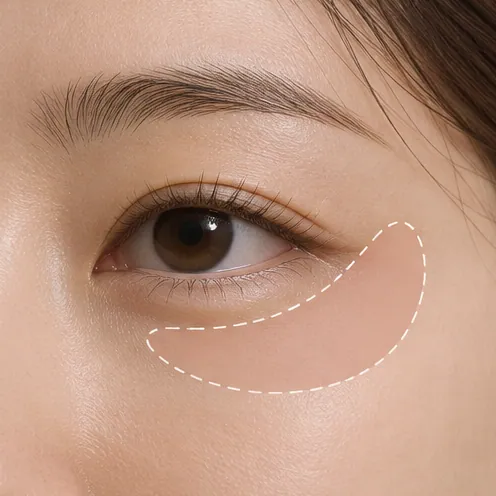
Pain
Swelling
Burns
Eye Area
Previous Treatments
Do not wait if you have these symptoms
If you experience eye pain, changes in vision, skin changes that look like blisters or burns, or progressively worsening swelling, contact us immediately without waiting for your scheduled appointment.
Conditions to address first — We first assess your health, inflammation and stage of recovery, and the range of feasible treatments. If needed, testing, observation, or other medical care may take priority.
Risks and limitations to review during consultation — pain, swelling, burns, and possible injury to the eye area or eyeball. This is not a complete list of possible risks. Risks may vary depending on your health, previous treatments, and the treatment method and area. We explain these in detail during the examination and informed consent process.
Pre-treatment assessment and
Care by Recovery Stage
 Treatment Day
Temporary redness and warmth may occur. Begin moisturizing and using sun protection.
 Around 1 Week
Swelling and temporary discomfort subside during this period. Avoid vigorous massage and devices used around the eyes, as they may cause irritation.
 Several Months
When changes appear varies with the device and skin condition.
 Next Treatment
We use once a year as a general guideline for Ultherapy and Thermage, and monthly for InMode and ONDA. We adjust based on your condition.

Medications
Please tell us about any medications and dietary supplements you take. We assess the risk of bruising and bleeding.
Previous Procedure History
Tell us about fillers, threads, fat-reduction treatments, and recent laser treatments.
Skin Condition
For thin, hollow faces, we assess carefully first to avoid repeated fat-reduction treatments.
Recovery timelines are general estimates and vary by individual. Contact us immediately for sudden severe pain, decreased vision, bleeding that does not stop, or rapidly worsening swelling on one side.
05 · FOLLOW THE CHANGE
We also document
and monitor changes after treatment.
01
STEP 01
Documenting your condition before treatment
We review previous treatments, your current condition, and the changes you hope to see.
02
STEP 02
Check Early Reactions · Wound Healing
We explain treatment-specific precautions and symptoms that require contacting us.
03
STEP 03
Comparison of skin texture · firmness changes
We compare photos taken under the same conditions along with your skin condition.
04
STEP 04
Assessing additional care
We explain additional treatment based on your condition rather than recommending the same treatment to everyone.
This is a general explanation of the process, not an actual patient case. The specific care schedule varies depending on the treatment method and recovery. If you experience eye pain, changes in vision, or skin changes such as blisters or burns, contact a medical provider immediately without waiting for your scheduled appointment.
Common questions
during consultations
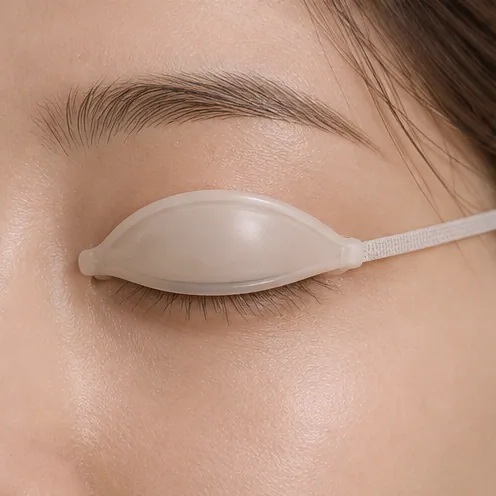
Do I need to keep my eyes open during treatment?
When treating the eyelids, we use protective shields and proceed with your eyes closed. If your eyes sting or hurt, tell us immediately instead of tolerating it. If you experience eye pain or changes in vision after treatment, contact us without waiting for your scheduled appointment.
Can I have treatment if I wear contact lenses?
You must remove your contact lenses before treatment. Because long-term contact lens use may also affect eyelid opening function, the doctor recommends avoiding them when possible. We also advise using artificial tears frequently and avoiding rubbing your eyes.
Can I have treatment after eye surgery?
Once the wound, inflammation, and sensation have stabilized, we determine the timing based on the area and depth of treatment. Previous surgery may have changed the tissue, so please bring your surgical records if available. If you are considering revision surgery, we establish that plan first.
BEFORE YOU DECIDE
Before you decide,
frequently asked questions
Questions to review together before deciding.
Based on questionnaire responses from Dr. Hyungwoo Yim · Last updated October 2026 Specific methods and their scope are discussed individually after an examination.
Q
Can treatment around the eyes also correct ptosis?
−
A
Skin treatments and surgery to address eyelid opening function have different purposes. We do not describe these treatments as correcting ptosis or functional problems in the same way.
Q
Are the cost, number of treatments, and recovery period fixed?
+
Q
Can a treatment plan be finalized through a photo consultation alone?
+
DOCTOR'S COLUMN DOCTOR'S COLUMN DOCTOR'S COLUMN
Must Read
Care Notes Written by the Doctor · Please Read Before Your First Visit
No.1
No.3
VIEW MORE →
RESERVATION
You do not need to decide the day of your consultation.
Organize questions about this page without entering your name, contact information, or medical history. This does not submit an appointment request.