PLASTIC SURGERY
Mouth corner surgery
Mouth Corner Lift Surgery
We assess both the shape at rest and movement during facial expressions.
This may vary depending on your condition and the extent of surgery.
SHORT ANSWER
What do we assess first for a mouth corner lift?
We assess both the shape at rest and movement during facial expressions. During your consultation, we examine mouth corner position · the skin and tissue around the lips · movement when smiling and making facial expressions.
01 · START WITH YOUR CONCERN
Do any of these concerns
sound familiar?
What brings you in?
1
Philtrum Length
2
Upper Lip Show
3
Mouth Corner Angle
“The corners of my mouth look downturned.”
“My face looks somber at rest.”
“I want my smile to look natural, too.”
We assess both the shape at rest and movement during facial expressions.
We assess proportions from the front and side, along with movement during facial expressions. Before surgery, we explain the extent of the incision needed and where the scar will be.
Mouth Corner Lift,
What does the surgery involve?
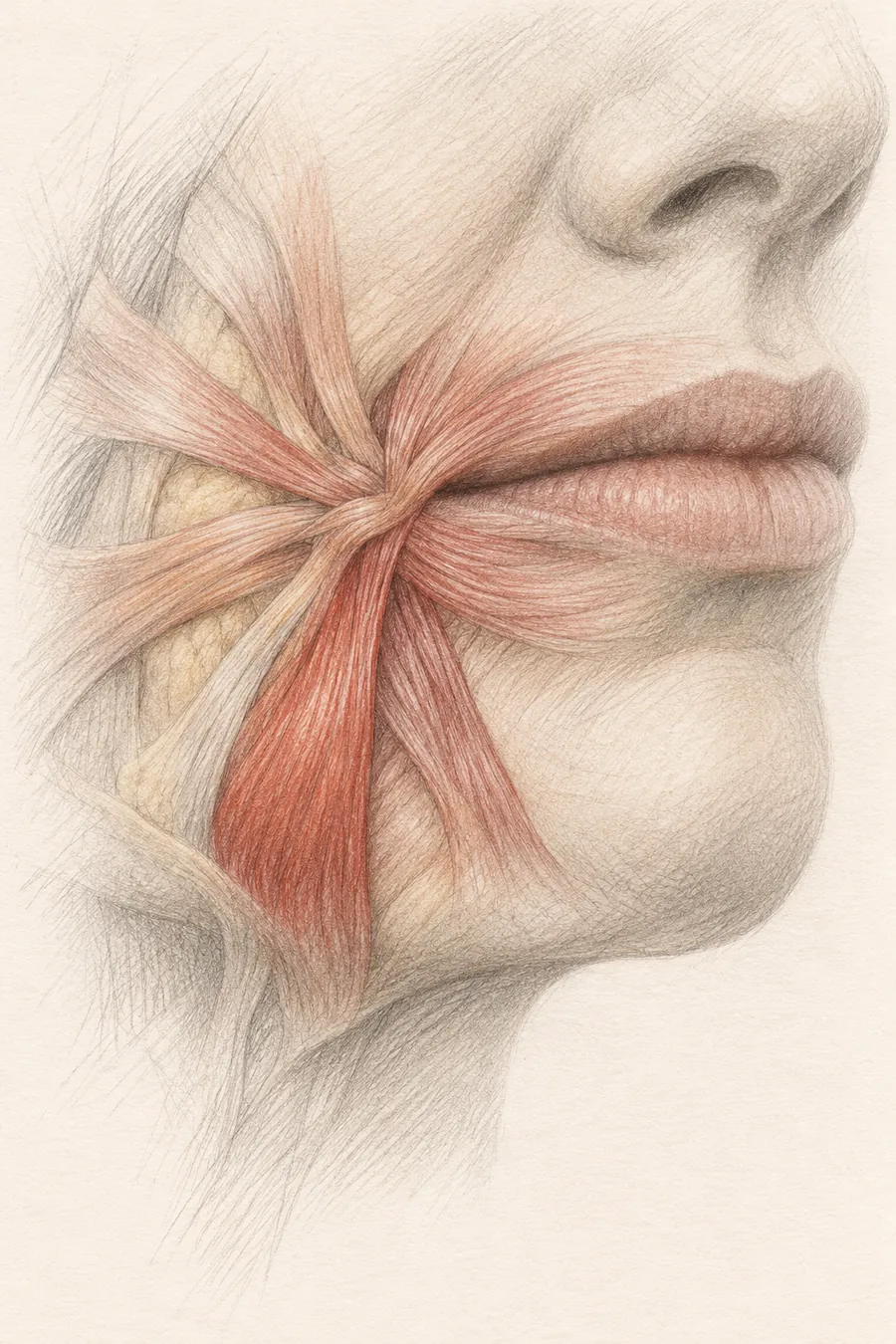
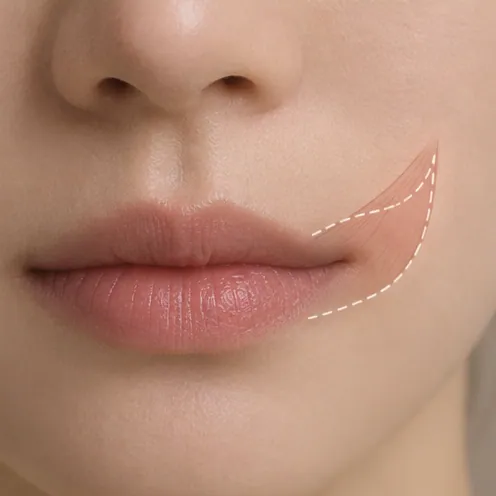
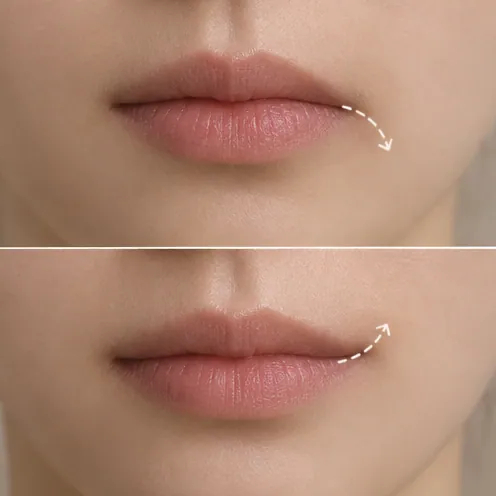
A mouth corner lift raises mouth corners that appear downturned to soften the resting facial expression. A common approach removes a small amount of skin just outside the mouth corners to move them upward, leaving incision scars around the corners. Because several facial expression muscles meet at the mouth corners, we assess their shape at rest separately from their movement when smiling. If movement is the main cause, we compare nonsurgical options before considering surgery.
- Depressor Anguli Oris Muscle
- This muscle extends from the mouth corner toward the chin and pulls the corner downward. If it pulls strongly, the mouth corners may look downturned even at rest.
- Modiolus
- This is the point just outside the mouth corner where several facial expression muscles come together. It determines the direction and force of mouth corner movement when smiling.
- Mouth Corner Lift
- This procedure surgically raises the position of the mouth corners. Unlike Botox, which reduces muscle activity, it moves the position itself and therefore leaves scars.
In Mouth Corner Lift Surgery,
in Lower Blepharoplasty
We distinguish shape from muscle pull
If the mouth corners sit low even at rest, the issue is their shape. If they are pulled downward when speaking or making facial expressions, the issue is muscle pull. When muscle pull is a major factor, we may first compare an approach that temporarily weakens the depressor anguli oris muscle with Botox. Botox temporarily inhibits nerve signaling to the muscle, so muscle activity returns as its effects wear off. Surgery differs in that it changes the position but leaves scars.
It serves a different purpose from a lip lift
A lip lift raises the upper lip by removing skin at the lip border (internal) or beneath the nose (external), while mouth corner lift surgery changes the angle and height of the corners of the mouth. Raising the upper lip with a lip lift can also change how the angle of the mouth corners appears, so the order of the procedures is considered together. The fee schedule therefore lists external lip lift plus mouth corner lift and internal lip lift plus mouth corner lift as separate combinations. The choice is made after assessing which has a greater effect on your overall appearance.
Scars can be noticeable in this area
The incisions are placed in the skin outside the mouth corners. There are few natural borders to conceal them, and the area moves whenever you speak or eat, so scars take time to settle. Before surgery, we explain how they may look without makeup. Redness and firmness continue to change over several months or longer, so we begin injection and laser care at one month and continue for at least 6 months.
Lifting more does not create a smile
Raising the mouth corners too much can make you appear to be smiling even at rest, which may look unnatural. The connection between the lip line and incision line may also look unnatural, or a pulling sensation may persist when opening the mouth wide. We therefore aim to soften the resting expression rather than create a pronounced angle. The extent of the lift is determined after an examination that includes assessing the direction the mouth corners move when smiling.
Differences between the two sides are often preexisting
Mouth corner height and movement naturally differ slightly between the two sides. If these differences are not recognized before surgery, they may feel like new asymmetry afterward. We therefore first compare the two sides using front-view photos and photos of facial expressions, and may plan different amounts of skin removal on each side. Swelling may also resolve unevenly after surgery, making differences between the two sides appear more noticeable early on.
We assess the condition of the skin around the mouth separately
Downturned-looking mouth corners may reflect not only their position but also thinning skin and deepening fine lines around the mouth. The dermis diminishes with age, and the area around the mouth is well suited to Re2O treatment. This is why we assess position through surgery and skin quality through dermal reinforcement separately. Because this area has many blood vessels, injections are administered carefully to avoid bruising and hematomas. When used to support recovery after surgery, treatment is usually performed at 3 weeks.
The Surgical Process Varies
Depending on Your Condition
When the mouth corners themselves sit low
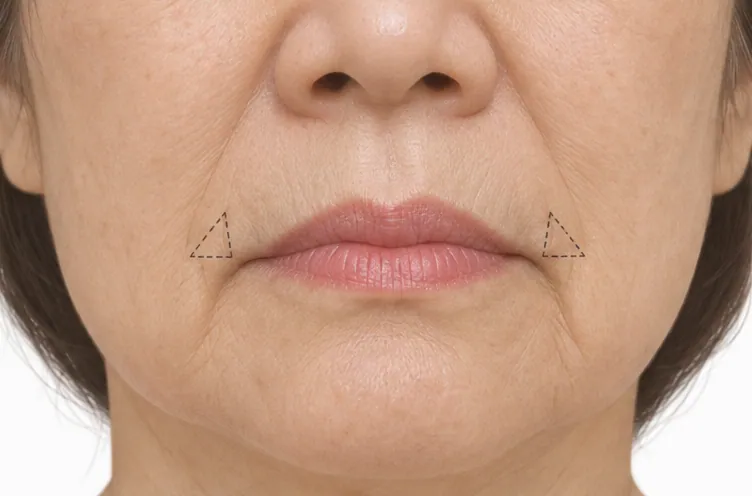 1
With you seated, we measure mouth corner height and differences between the two sides, then mark the planned lift
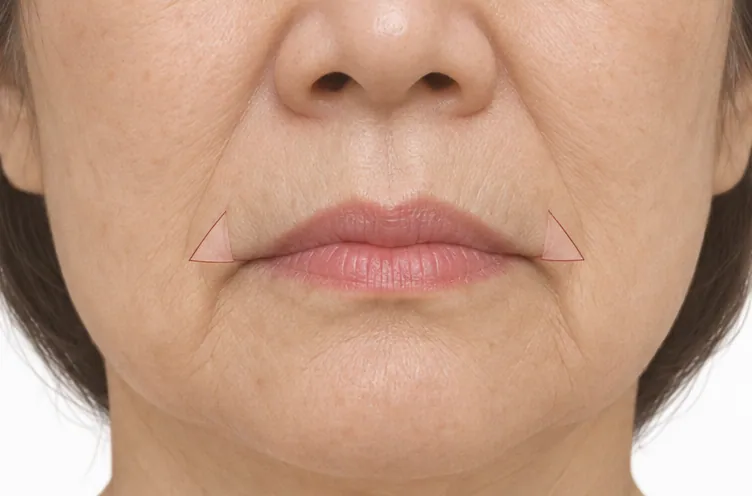 2
The skin just outside the corners of the mouth is incised and removed in a triangular or butterfly shape.
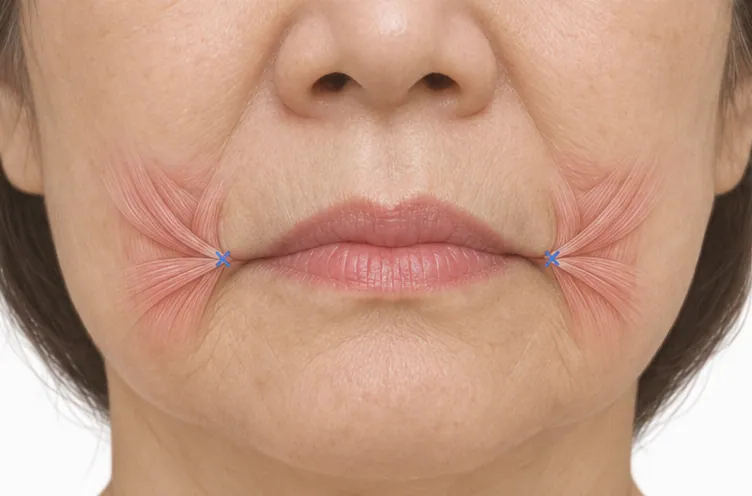 3
We examine the underlying muscle layer and adjust where the mouth corners will sit
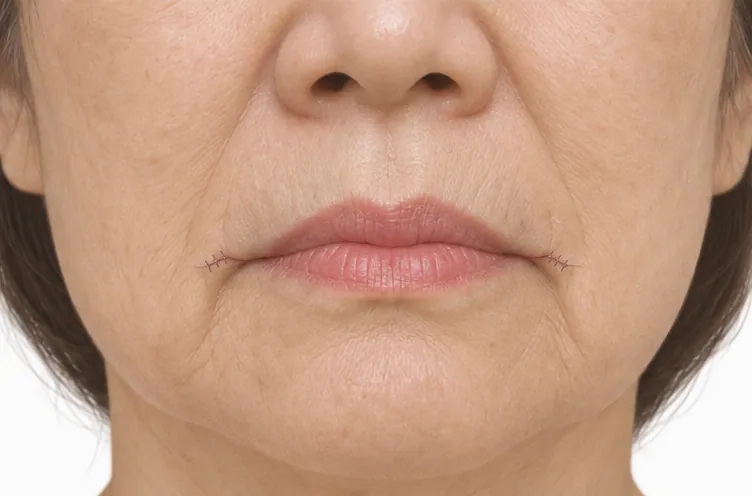 4
We carefully align the lip border and close the incisions with fine sutures
When depressor anguli oris muscle pull is also present
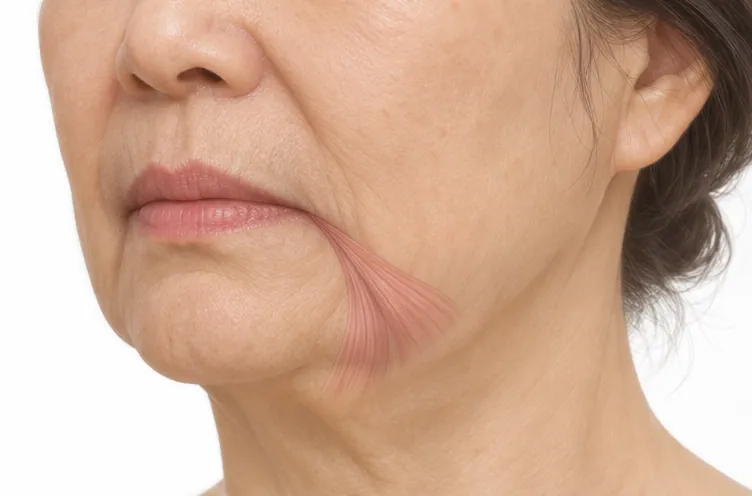 1
We assess how much the mouth corners are pulled downward when speaking and smiling, and compare Botox first
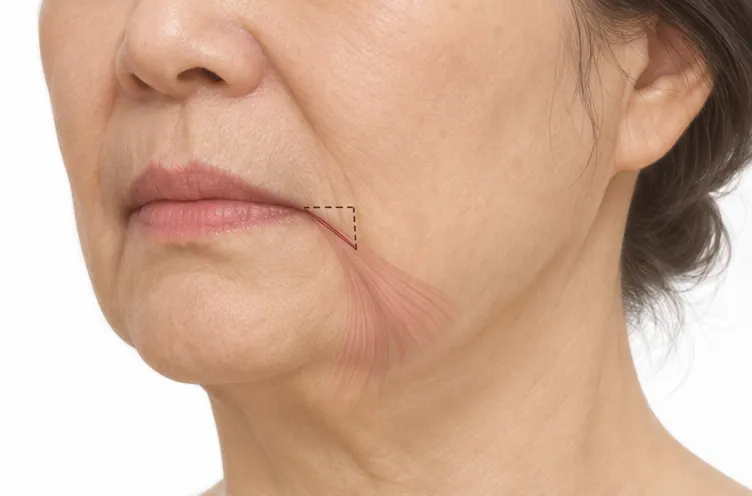 2
If surgery is needed, we plan the incisions outside the mouth corners and remove skin
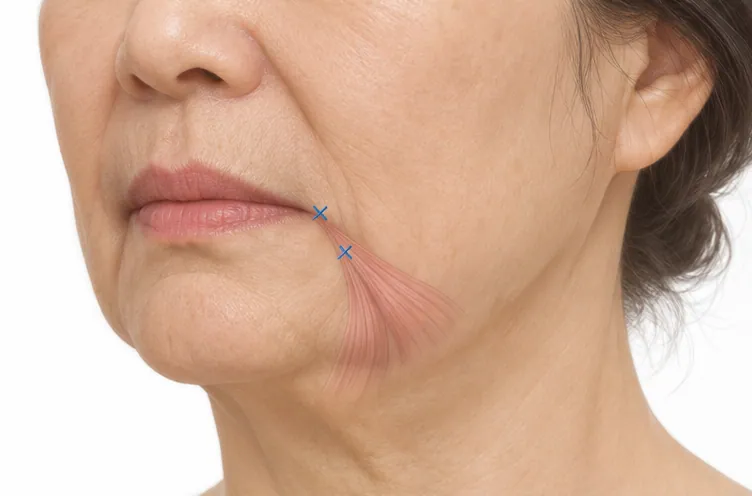 3
We assess the pull of the depressor anguli oris muscle below the mouth corners and decide whether to adjust it
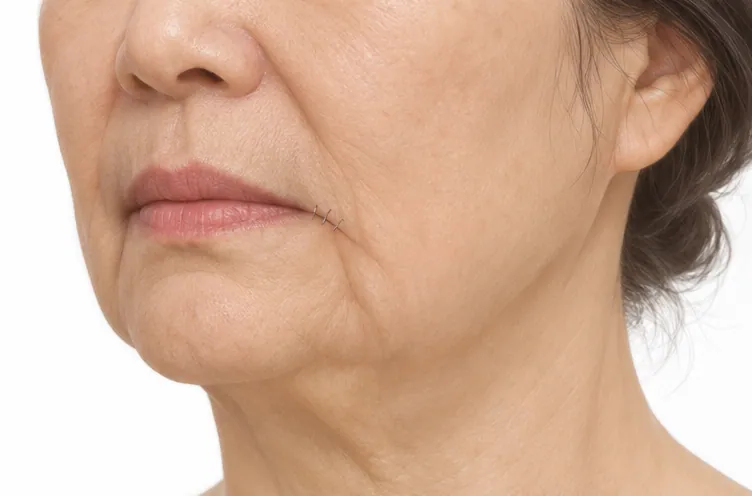 4
We check facial muscle movement and align the tissue layers before closing with sutures
When mouth corner height differs between the two sides
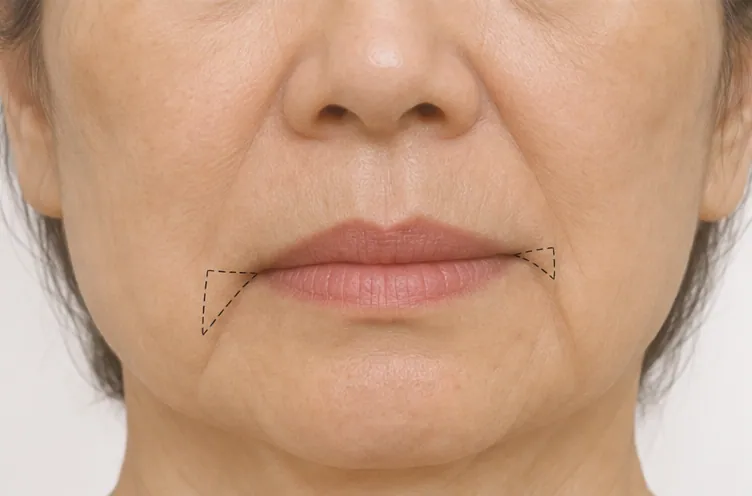 1
We first identify preexisting differences using front-view photos and photos of facial expressions
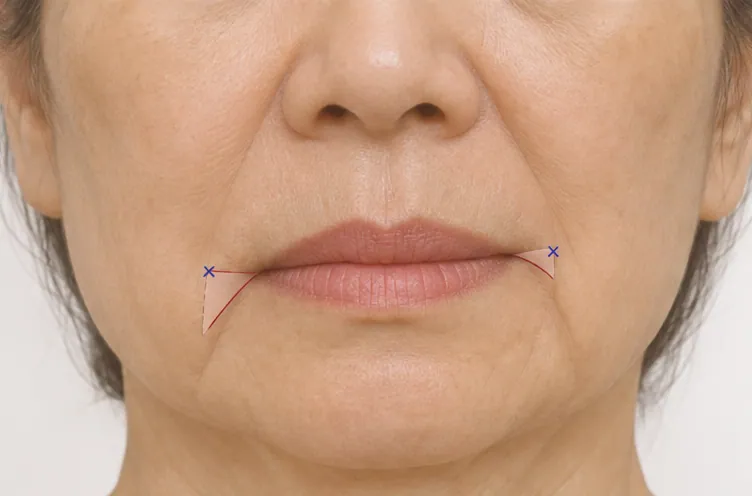 2
We plan different widths of skin removal on the lower and higher sides, then make the incisions
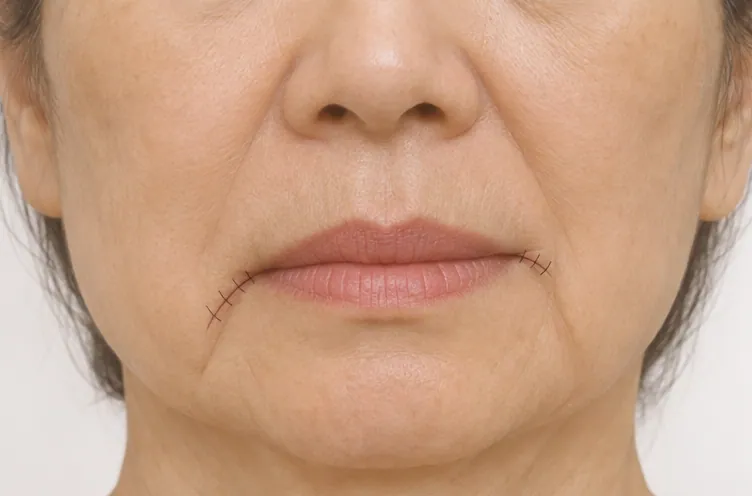 3
We align the height with the mouth closed, then suture along the lip border
Illustration for explanation · Not an actual patient. This is a simplified description of typical steps. The actual technique and extent of surgery are determined after examination.
02 · WHAT WE LOOK AT
Even when concerns look similar,
the factors to assess differ.
Mouth Corner Position
We assess proportions from the front and side, along with movement during facial expressions.
Skin and Tissue Around the Lips
Before surgery, we explain the extent of the incision needed and where the scar will be.
Movement When Smiling and Making Facial Expressions
Evaluating the philtrum, mouth corners, and lips together does not mean combining every procedure.
03 · DOCTOR'S DECISION
When choosing an approach, Dr. Hyungwoo Yim
looks at three things first.
Review the shape to be corrected and the expected change
Using your medical history and examination findings, we distinguish your current condition from your desired changes. At this stage, we identify the necessary conditions before choosing a treatment.
Explain the extent of incisions and scarring
When comparing available methods, we explain the expected changes, the burden on the tissues, recovery, and potential remaining problems.
Discuss what is possible without overcorrection
We give you time to understand the explanation and ask questions. We may not recommend immediate treatment if its burden is greater or if you cannot allow enough time for recovery.
VITAL Plastic Surgery's principle is to recommend necessary treatment at the appropriate time. Having a consultation does not mean you need to decide on a procedure or surgery that day.

When
to consider a consultation
- When you are often told you look angry or tired even at rest
- When the mouth corners sit below the lip line
- When differences in mouth corner height bother you
- When you are unsure whether the philtrum and mouth corners should be assessed together
When
Surgery is not our first recommendation
- When pulling during facial expressions is the main cause and nonsurgical options may be considered first
- When you find it difficult to accept scars around the mouth corners
- When you have a history of raised scars or find it difficult to stop smoking
- When the change you expect is beyond what is medically possible
04 · LIMITS & RISKS
Along with possible improvements,
we explain the limitations and risks.
Your desired changes — First, tell us what bothers you most and which aspects of your appearance you want to keep. We do not promise changes identical to photos or someone else's results.
Scarring
Asymmetry
Changes in Facial Expression
Tightness
Previous Treatments
Do not wait if you have these symptoms
If you experience sudden severe pain, bleeding that does not stop, rapidly worsening swelling on one side, or signs of possible infection such as a high fever or pus, contact us immediately rather than waiting for your appointment.
Conditions to address first — We first assess your health, inflammation and stage of recovery, and the range of feasible treatments. If needed, testing, observation, or other medical care may take priority.
Risks and limitations to discuss during consultation — scarring, asymmetry, changes in facial expression, tightness, and the possibility of revision surgery. This is not a complete list of possible risks. Risks may vary depending on your health, previous treatments, and the technique and extent of treatment. These will be explained in detail during the examination and consent process.
Preparing for surgery and
recovery by stage
- Early After Surgery
Apply cold compresses for three days. Stitches are removed after 5–7 days. For two weeks, avoid opening your mouth wide, such as when yawning, laughing broadly, or taking large bites. Cut food into small pieces and eat with a spoon.
- Starting at One Month
Injection and laser treatments begin depending on the condition of the scar. Consistent care is needed for at least 6 months.
- 3 weeks–3 months
This is a period when the incision may become red and firm. This can be part of healing, and raised scars are evaluated early.
- 3 months–1 year
Redness and firmness gradually decrease. The degree of scarring varies with individual healing tendencies, location, and wound tension.

No smoking · No alcohol
We provide these essential instructions before surgery. Smoking and alcohol affect bleeding and wound healing.
Medications · Supplements
We recommend stopping herbal medicines and supplements such as omega-3 when possible because they may increase bleeding. Please tell us about every medication you take.
Scar History
Please tell us how scars elsewhere on your body have healed. This helps with the assessment.
Dental · Lip Treatments
Please tell us about any orthodontic treatment or lip fillers you have had.
Recovery times are averages and vary by individual. Please contact us immediately if you experience sudden severe pain, bleeding that does not stop, rapidly worsening swelling on one side, warmth, pus, or a fever of 38°C or higher.
05 · FOLLOW THE CHANGE
We also document
and monitor changes after treatment.
01
STEP 01
Documenting your condition before treatment
We review previous treatments, your current condition, and the changes you hope to see.
02
STEP 02
Check Early Reactions · Wound Healing
We explain treatment-specific precautions and symptoms that require contacting us.
03
STEP 03
Comparing appearance and function
Along with photos, we assess discomfort and changes in function.
04
STEP 04
Assessing additional care
We explain additional treatment based on your condition rather than recommending the same treatment to everyone.
This is a general overview, not an actual patient case. Specific follow-up schedules vary by treatment method and recovery. If you experience sudden severe pain, persistent bleeding, or signs of possible infection, contact a medical facility immediately rather than waiting for your appointment.
Common questions
during consultations
Should I try Botox or surgery first?
If downward muscle pull is the main cause, we may compare Botox first. If the mouth corners themselves sit low, Botox offers limited change. We will advise you after reviewing photos of your facial expressions to determine which applies.
Could surgery change how I look when I smile?
Several facial expression muscles meet at the mouth corners, so smiling may feel tight or awkward early after surgery. We therefore assess the natural direction of your smile when planning the procedure and avoid lifting too much. Before surgery, we review what may change and the limitations.
How long will I need scar care?
After the wounds close, we provide guidance on silicone products, sun protection, and reducing friction. Injection and laser care begins at one month. Consistent care is needed for at least 6 months. If a scar becomes raised, we evaluate it right away rather than waiting for a scheduled time.
BEFORE YOU DECIDE
Before you decide,
frequently asked questions
Questions to review together before deciding.
Based on questionnaire responses from Dr. Hyungwoo Yim · Last updated October 2026 Specific methods and their scope are discussed individually after an examination.

Q
Will my facial expression itself change?
−
A
Mouth corner shape and facial expression are related but distinct. We assess movement when smiling along with your natural facial appearance, then explain the expected changes and limitations.
Q
Are the cost, number of treatments, and recovery period fixed?
+
Q
Can a treatment plan be finalized through a photo consultation alone?
+
DOCTOR'S COLUMN DOCTOR'S COLUMN DOCTOR'S COLUMN
Must Read
Care Notes Written by the Doctor · Please Read Before Your First Visit
No.1
No.3
VIEW MORE →
RESERVATION
You do not need to decide the day of your consultation.
Organize questions about this page without entering your name, contact information, or medical history. This does not submit an appointment request.