PLASTIC SURGERY
All Procedures / Philtrum · Lips
Lips & Expression
Lip Lift · Corner Lip Lift · Lip Definition
Beyond length and volume, we assess how lip movement and facial expressions work together.
This may vary depending on your condition and the extent of surgery.
We assess the philtrum, mouth corners, and lips as connected parts.
Key Questions Answered
Lip Shape Correction: What Do We Check First?
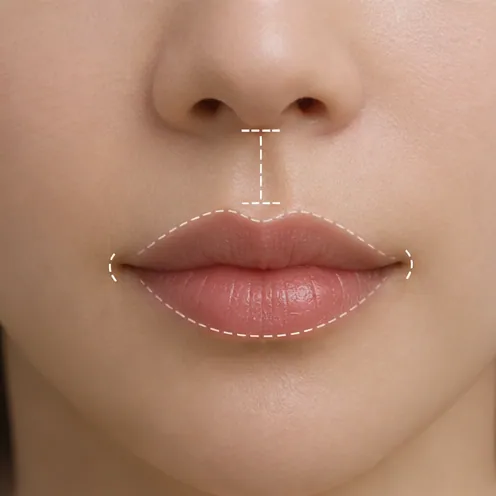
We assess philtrum length, nose-to-lip proportions, mouth corner position, lip thickness and contour, tooth show, lip closure, and movement when smiling together. Before surgery, we explain where incisions are needed and where scars will be located.
— Philtrum Length
— Mouth Corner Position
— Lip Contour
— Facial Movement
YOUR CONCERN
Do any of these concerns
sound familiar?
1
Philtrum Length
2
Upper Lip Show
3
Mouth Corner Angle
“My philtrum looks long.”
“My mouth corners droop, making my resting expression look stern.”
“My lip contour looks poorly defined.”
Planning Lip Surgery,
What does the surgery involve?
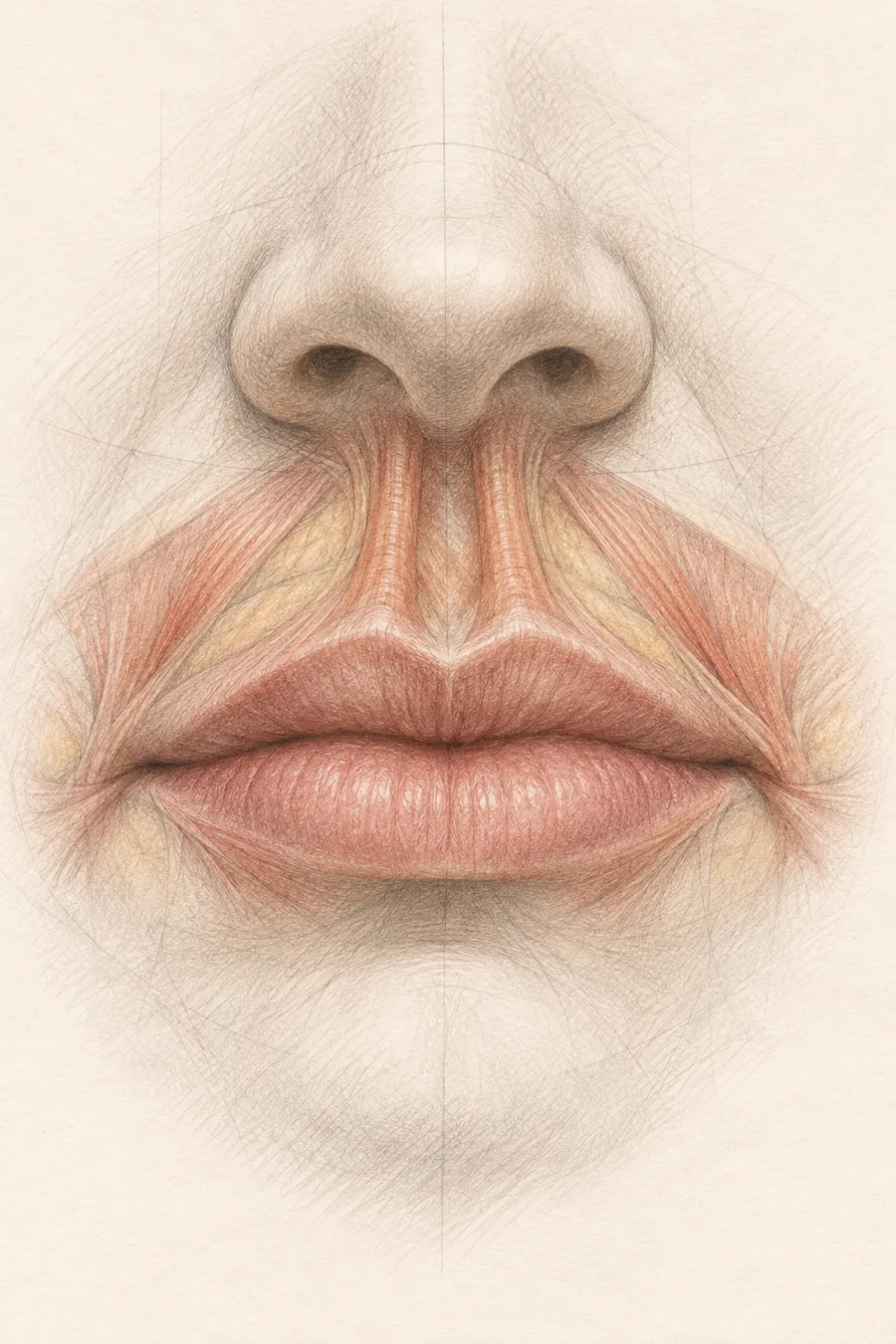
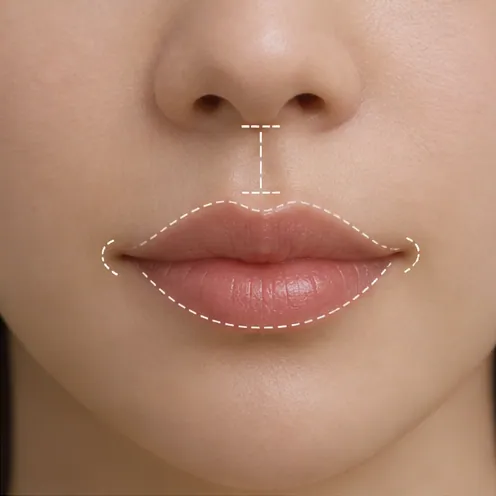
The philtrum, corners of the mouth, and philtral groove are connected parts of the area around the mouth. Philtrum reduction shortens the philtrum by removing skin at the lip border with the inner approach or beneath the nose with the outer approach. Philtral groove surgery addresses the depth of the center, while mouth corner lift addresses the position of the corners of the mouth. These are three procedures around the mouth that the surgeon has specialized in, but all three are not often needed. We first determine which change will have the greatest effect on your appearance, then decide whether to combine the procedures or stage them, taking scarring and recovery into account.
- Combined Surgery
- This means having two or more procedures on the same day. Recovery times do not simply add together, but swelling, discomfort, and aftercare demands may increase.
- Static Position
- This is the position of the lips and mouth corners at rest. It can be changed through tissue excision.
- Dynamic Movement
- This is movement when smiling and speaking. It varies with muscle strength and direction, so we assess it separately from static position.
When Planning Lip Surgery
in Lower Blepharoplasty
The Four Procedures Address Different Dimensions
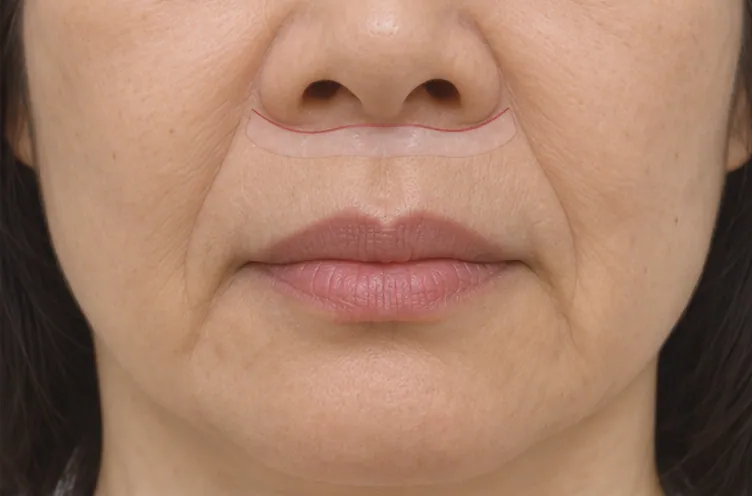
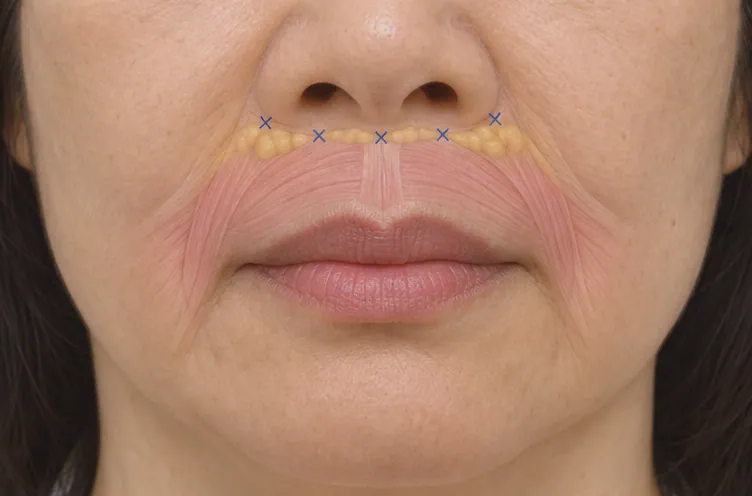
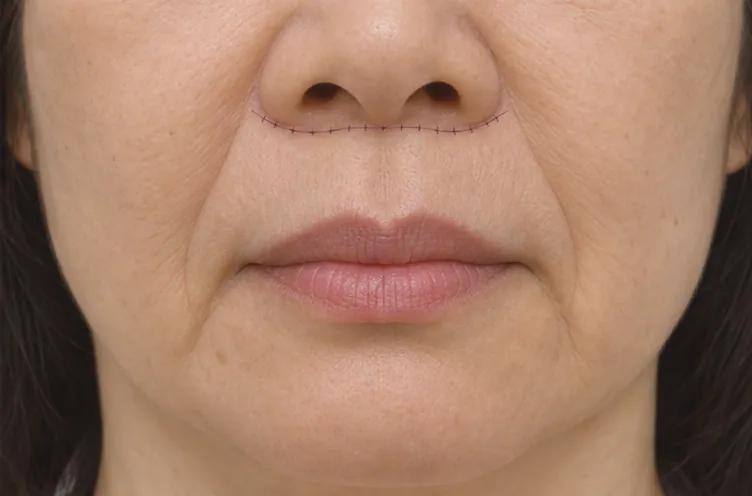
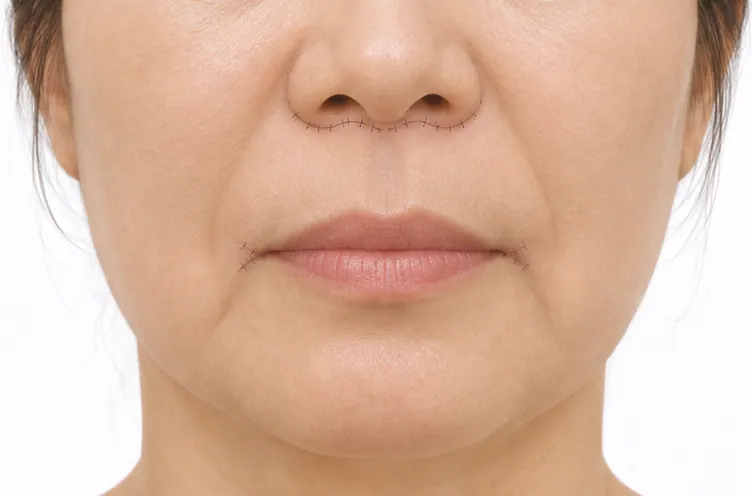
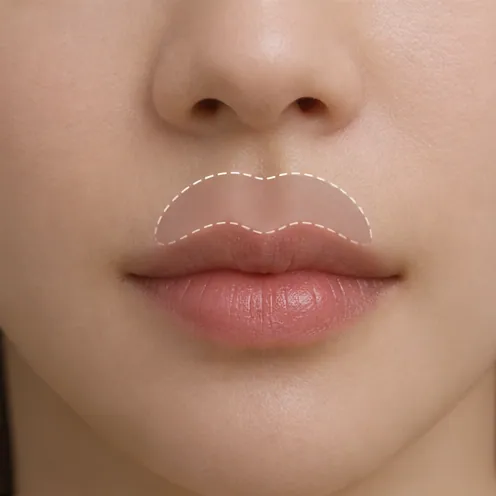
Inner philtrum reduction approaches the area from the lip and removes skin along the border between the red portion of the upper lip and the skin. The scar remains at the lip border, and the shape of the lip line also changes. Outer philtrum reduction approaches the area from beneath the nose and removes skin along the base of the nostrils and the lower border of the columella. The scar remains in the shadow beneath the nose. Philtral groove surgery creates depth and shadow rather than changing length, while a mouth corner lift changes the height and angle of the corners of the mouth. Dividing your concerns into length, definition, and mouth corners—and, for length, deciding where to place the scar—helps narrow down the procedures you may need.
We Identify the One Change with the Greatest Effect
At a first visit, patients usually begin by saying, “This bothers me.” We write their main concern at the top of the chart and start there. Sometimes, however, the area that bothers them is the result of another issue. Mouth corners may appear droopy because the upper lip is long, so we review the cause and effect together in photographs before setting priorities.
Decisions About the Philtrum Change How the Rest Looks
Changing the height of the upper lip also changes the apparent angle of the mouth corners and the shadow of the philtrum. If the philtrum is clearly long, we assess it first, then reconsider the need for a corner lip lift and philtral dimpling based on that anticipated change. Reversing this order may lead to unnecessary additional surgery. If procedures are staged, we determine the scope of the next procedure after the first has settled.
Each Additional Incision Requires Consideration
Combining the inner and outer approaches creates scars in two places: at the lip border and beneath the nose. It also places greater strain on blood flow to the upper lip. Adding a mouth corner lift creates another incision outside each corner of the mouth. More scar locations mean more areas to care for. We give this greater weight for people who have had raised scars or who smoke. When choosing a combination, we show you the total scarring alongside the expected changes before surgery.
We Use Specific Criteria to Decide Whether to Combine or Stage Procedures
From the surgeon’s perspective, it is preferable to perform combined procedures in one session. For patients, however, staging them is often better for normal recovery. We assess overall health, total surgery time, and recovery demands, and consider combinations that affect blood flow and swelling in the same area more carefully. Because the philtrum and mouth corners are close together, combining procedures may increase swelling around the mouth and aftercare demands.
We First Identify Concerns That Can Be Addressed Without Surgery
Botox can be considered for the downward pull on the mouth corners, fillers for insufficient volume, and Re2O for skin quality around the mouth. These are not all the same type of nutrient injection; each is selected according to the goal and treatment area. Surgery is reserved for aspects such as position and length that injections cannot change. This may reduce the number of incisions, and we will tell you when a procedure is not needed yet.
The Surgical Process Varies
Depending on Your Condition
When Philtrum Length Is the Main Concern
 1
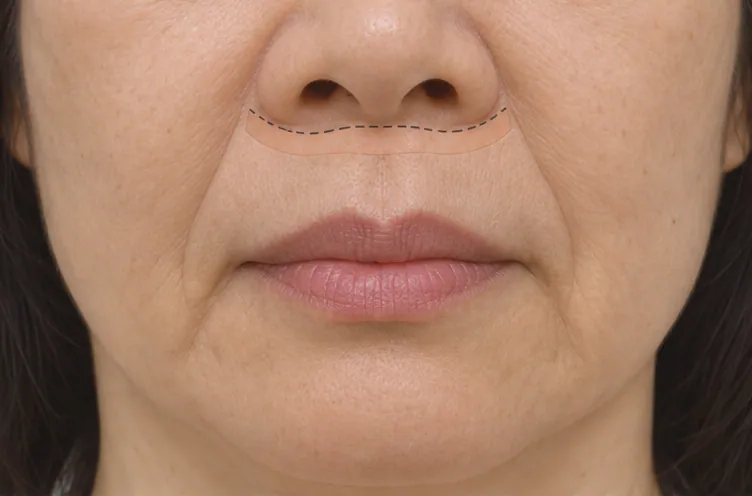
We assess philtrum length, front tooth show, and your tendency to scar, then choose the lip-side (inner) approach, the under-the-nose (outer) approach, or both.
 2
Depending on the chosen method, an incision is made along the lip border or the border beneath the nose, and the planned width of skin is removed.
 3
If the area was approached from beneath the nose, the underlying tissue is secured toward the base of the nose to reduce tension on the suture line.
 4
We close the incision in layers and reassess the need for a corner lift and philtral dimpling as healing progresses
When the Mouth Corners Are the Main Concern
 1
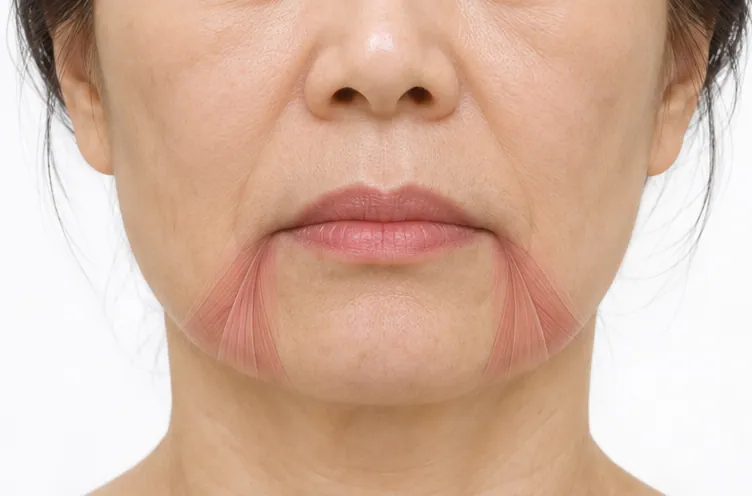
We assess resting position and the pull during facial expressions separately and compare surgery with Botox
 2
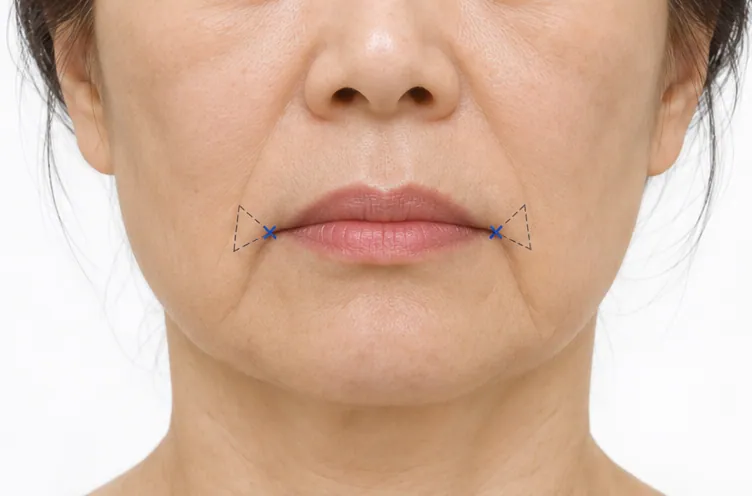
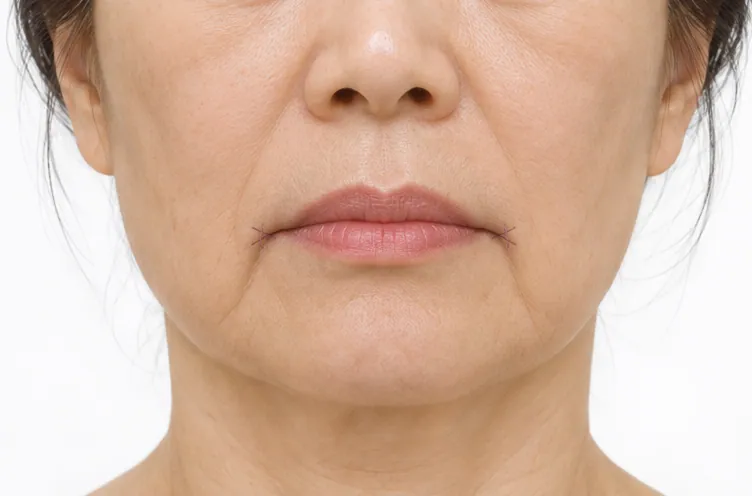
If surgery is needed, we mark the planned lift on the skin outside the mouth corners and make the incisions
 3
We examine the muscle layer around the mouth corners, adjust their position, and close the incisions along the lip border
When Length, Depth, and Mouth Corners Are All Concerns
 1
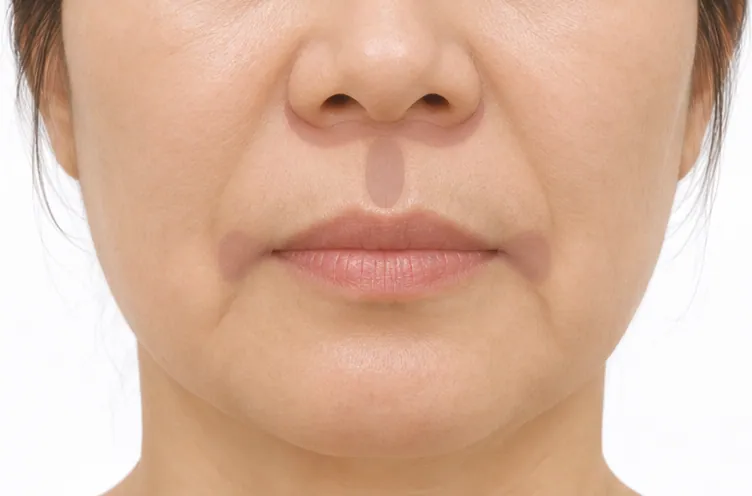
We prioritize the procedures by their expected effect and consider recovery demands when deciding whether to combine or stage them
 2
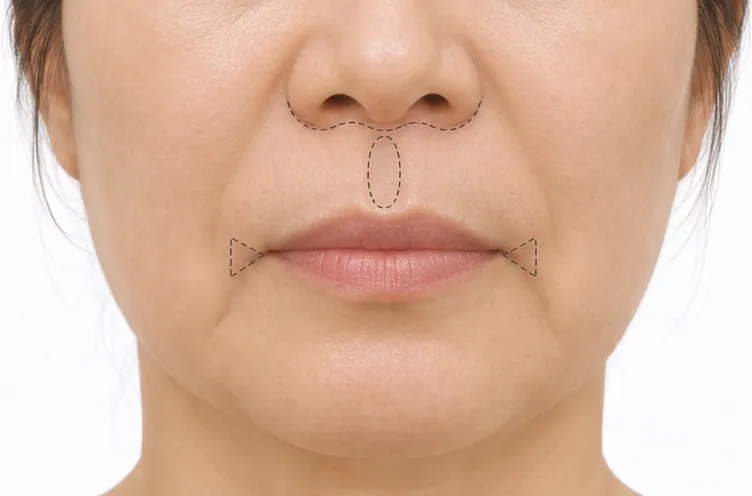
The incision lines at the lip border, beneath the nose, and outside the corners of the mouth are drawn together on one plan.
 3
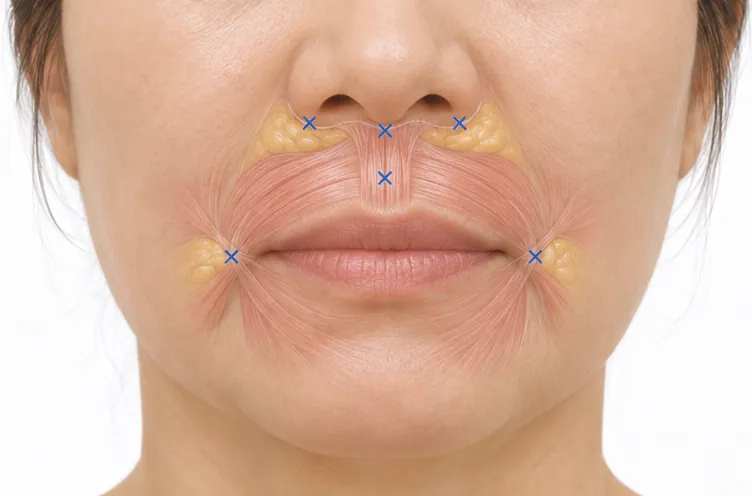
The inner or outer approach shortens the philtrum. Philtral groove surgery creates depth by suturing and reinforcing the philtral columns or adjusting the tissue in the center.
 4
After adjusting the mouth corners, we close each area and schedule scar care
Illustration for explanation · Not an actual patient. This is a simplified description of typical steps. The actual technique and extent of surgery are determined after examination.
DOCTOR’S NOTE
We plan for both the resting shape and movement during facial expressions.
The philtrum, mouth corners, and lips form the overall shape of the mouth. We assess results beyond shortening length or raising angles, considering proportions from the front and side as well as movement during facial expressions.
— Dr. Hyungwoo Yim
MYTH → FACT
“Does a shorter philtrum make you look younger?”
Overall facial proportions and lip movement matter. We do not judge results by the amount of shortening alone, and we avoid excessive correction.
IN HIS WORDS
I Don’t Want My Overall Appearance to Change
“This is what patients tell us most often. Because the shape of the mouth is so closely tied to a person’s overall appearance, we first define the limits that preserve their existing look.”
THE DETAIL
Scar Location and Scarring Tendency
Assessing where incisions can be concealed and how your skin tends to scar beforehand helps determine how natural the result looks.
VITAL PROTOCOL
How We Assess Lip Shape Correction
STEP 01
Proportion Analysis
We measure philtrum length, nose-to-lip proportions, and mouth corner angles.
STEP 02
Facial Expression Assessment
We assess movement when smiling and at rest.
STEP 03
Procedure Selection
We determine the needed combination of lip lift, corner lip lift, and lip definition procedures.
STEP 04
Scar Care
We explain incision locations and the scar care plan.
WHAT WE CHECK
We Assess Proportions and Movement Beyond Length
Philtrum Length and Proportions
We assess their relationship to the nose and lips.
Mouth Corner Position
We assess position at rest and during movement.
Lip Thickness and Contour
We assess three-dimensional definition.
Tooth Show · Lip Closure
We assess function.
Skin Characteristics and Scarring Tendency
We incorporate these into the incision plan.
Your Existing Appearance
We define what to preserve.

When
to consider a consultation
- When it is difficult to tell whether your concern involves the philtrum, mouth corners, or lips
- When you want to decide whether to combine or stage several procedures while considering your schedule
- When you are told that your mouth shape makes your resting expression look stern or your face look long
- When you want to choose only what is needed while preserving your existing appearance
When
Surgery is not our first recommendation
- When the change you expect is beyond what is medically possible
- When your scarring tendency makes additional incisions particularly risky
- When it is difficult to allow enough time for recovery
- When health conditions such as diabetes or high blood pressure require more urgent attention
WHEN WE WAIT
In These Cases
We do not recommend immediate surgery.
When the changes you expect are beyond what is medically possible
When your scarring tendency poses a high risk
When it is difficult to allow enough time for recovery
Preparing for surgery and
recovery by stage
- Early After Surgery
Apply cold compresses for three days. Stitches are removed after 5–7 days. For two weeks, avoid opening your mouth wide, such as when yawning, laughing broadly, or taking large bites. Cut food into small pieces and eat with a spoon.
- Starting at One Month
Injection and laser treatments begin depending on the condition of the scar. Consistent care is needed for at least 6 months.
- 3 weeks–3 months
This is a period when the incision may become red and firm. This can be part of healing, and raised scars are evaluated early.
- 3 months–1 year
Redness and firmness gradually decrease. The degree of scarring varies with individual healing tendencies, location, and wound tension.

No smoking · No alcohol
We provide these essential instructions before surgery. Smoking and alcohol affect bleeding and wound healing.
Medications · Supplements
We recommend stopping herbal medicines and supplements such as omega-3 when possible because they may increase bleeding. Please tell us about every medication you take.
Scar History
Please tell us how scars elsewhere on your body have healed. This helps with the assessment.
Dental · Lip Treatments
Please tell us about any orthodontic treatment or lip fillers you have had.
Recovery times are averages and vary by individual. Please contact us immediately if you experience sudden severe pain, bleeding that does not stop, rapidly worsening swelling on one side, warmth, pus, or a fever of 38°C or higher.
LIMITS & RISKS
Along with possible improvements,
we explain the limitations and risks.
Scarring
Asymmetry
Changes in Facial Expression
Lip Tightness
Changes in Sensation
Overcorrection
Possible Revision Surgery
Do not wait if you have these symptoms
If you experience sudden severe pain, bleeding that does not stop, rapidly worsening swelling on one side, or signs of possible infection such as a high fever or pus, contact us immediately rather than waiting for your appointment.
This is not a complete list of possible risks. Risks may vary depending on your health, previous treatments, and the technique and extent of surgery. Surgical results vary by individual.
Common questions
during consultations
Does combining three procedures triple the recovery time?
Recovery times do not simply add together. However, swelling, discomfort, and the number of scars needing care increase. We therefore consider overall health and total surgery time together when making this decision.
What order is best if the procedures are staged?
We usually assess the procedure that would have the greatest effect on the overall mouth shape first. If the philtrum is clearly long, we assess it first, then reconsider the need for a corner lip lift and philtral dimpling after that change has settled. The interval depends on tissue condition and your schedule.
Are there cases where surgery is not needed yet?
If there are no functional problems, discomfort is minimal, and the changes are stable, you can start with observation or nonsurgical care. We do not recommend rushing simply to have surgery before you get older. You do not need to decide on surgery right after a consultation, either.
Q & A
Before you decide,
frequently asked questions

Q
Will my facial expression itself change?
−
A
Mouth corner shape and facial expression are related but distinct. We assess movement when smiling along with your natural facial appearance, then explain the expected changes and limitations.
Q
Do I need all three procedures at once?
−
A
Not everyone needs all three. After assessing proportions and movement, we recommend only the combination you need.
Q
Are the cost, number of treatments, and recovery period fixed?
−
A
They depend on the examination findings and the scope of treatment. Exact costs and scheduling are discussed during the consultation after your examination.
Q
Can a treatment plan be finalized through a photo consultation alone?
−
A
Photos are for reference. We determine the treatment plan after an in-person assessment of nasal function, tissue condition, and overall health, followed by a thorough explanation.
AFTER SURGERY
After lip contour correction, care continues with VITAL LASTING CARE.
~ 1 WEEK
Check the wound · bleeding · infection · early function, remove sutures
1 MONTH
Early scar contracture: assess tightness · firmness and begin regenerative care if needed
3 MONTHS
Peak contracture · transition phase: assess remodeling and consider continued injections · laser treatment
6 MONTHS
Compare with initial photos and decide whether additional treatment is needed
1 YEAR
Check tissue maturation · long-term progress
RELATED SURGERY
DOCTOR'S COLUMN DOCTOR'S COLUMN DOCTOR'S COLUMN
Must Read
Care Notes Written by the Doctor · Please Read Before Your First Visit
No.1
No.3
VIEW MORE →
RESERVATION
You do not need to decide the day of your consultation.
Organize questions about this page without entering your name, contact information, or medical history. This does not submit an appointment request.