PLASTIC SURGERY
MEDICAL COLUMN
Questions Answered Directly by the Doctor Before You Decide on Surgery
Eyes
Articles
Ptosis Surgery Cost: Why Does It Vary by Procedure?
The cost of ptosis surgery first depends on whether you have true ptosis. If your eyelid-opening strength is normal and skin covers the pupil, this is pseudoptosis. In that case, skin correction is considered first rather than muscle surgery, so the procedure itself is different.
Medically reviewed by Dr. Hyungwoo Yim, Medical Director and board-certified plastic surgeon · Published 2026.11.26 · Last reviewed 2026.11.26
SHORT ANSWER
First, the Short Answer
- The cost of ptosis surgery first depends on whether you have true ptosis. If your eyelid-opening strength is normal and skin covers the pupil, this is pseudoptosis. In that case, skin correction is considered first rather than muscle surgery, so the procedure itself is different.
- If ptosis correction is needed, the treatment plan varies depending on whether the approach is non-incisional, partially incisional, or incisional; whether double eyelid or upper eyelid surgery is performed at the same time; and whether it is a revision following previous surgery. Health insurance coverage is determined through the official notice and insurance review, so it cannot be confirmed in advance.
- At VITAL Plastic Surgery, we use MRD1 to measure how much of the pupil is exposed and first check whether the eyebrows are compensating, how much excess skin is present, and whether the eyes close fully. You can check actual prices in the guide to fees for services not covered by insurance. The final cost is provided after an examination, based on the treatment plan.
“I’m looking into ptosis correction because I look sleepy. Why am I quoted a different price from other people?”
This is a paraphrase of a question we often hear during consultations.
To answer this question, we first need to distinguish where your current concern comes from. We will explain each point below, then return to the original question at the end.
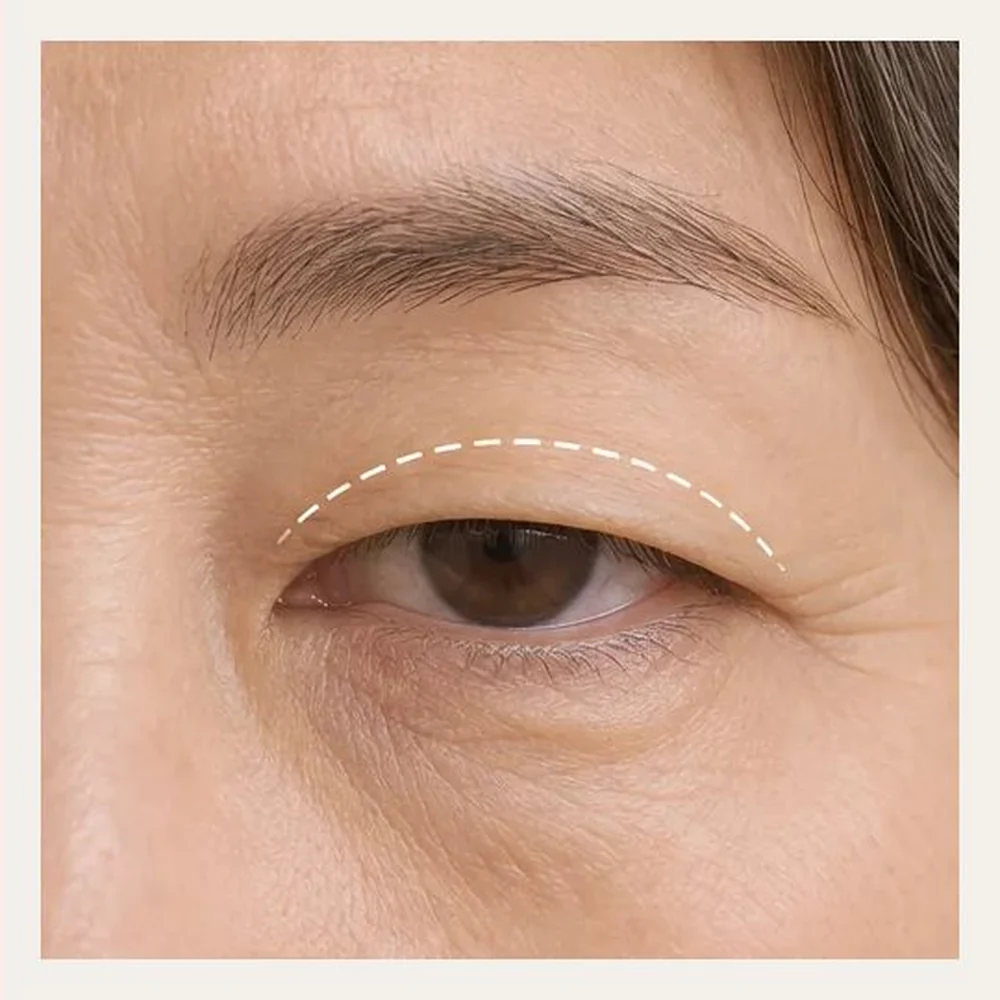
01What determines the cost of ptosis surgery?
Answer The cause, whether muscle or skin, the correction method, any procedures performed at the same time, and whether it is revision surgery all affect the cost.
Ptosis is a condition in which the upper eyelid covers part of the pupil because the muscle and aponeurosis that lift the eyelid are weak. The aponeurosis is a thin membrane that connects the end of the eyelid-lifting muscle to a plate inside the eyelid. If it stretches or detaches, the muscle cannot effectively transmit its force to the eyelid. Even when eyes look similarly “sleepy,” the surgery needed depends on the underlying cause.
When looking into the cost of ptosis surgery, many people simply ask, “How much is ptosis correction?” Unlike surgery that only creates a double eyelid crease, ptosis correction directly affects eyelid function and height, and the approach depends on your condition. The price you hear before an examination is therefore only a starting point and may not reflect the final treatment plan.
At VITAL Plastic Surgery, the evaluation follows this sequence: distinguishing true ptosis from pseudoptosis, checking function and vision, choosing a correction method, and planning for any hollowing or excess skin. Eye appearance and eyelid function are assessed separately; ptosis is not diagnosed based on a sleepy appearance alone. The list below describes what is checked during the examination, and the table summarizes the factors in this process that affect the cost.
- Eyelid-lifting muscle strength — Measure muscle function to determine whether ptosis is present
- Eyelid position — Check how much of the pupil is covered
- Forehead and eyebrow compensation — Check whether forehead muscles are used to open the eyes
- Excess skin — Check whether sagging skin covers the pupil
- Eye closure and dryness — Check the eye surface when deciding how much correction is appropriate
- Daily habits — Check for acquired factors such as contact lens wear and eye rubbing
| Factors that affect cost | What VITAL looks at | What to check during your consultation |
|---|---|---|
| True ptosis or pseudoptosis | MRD1 and eyelid-lifting muscle strength | Whether muscle surgery is needed or skin removal is sufficient |
| Correction method | Degree of eyelid-lifting weakness and skin sagging | Whether a non-incisional, partial-incision, or incisional approach is used |
| Procedures performed at the same time | Double eyelid crease, excess skin, and hollow eyes | Whether double eyelid surgery or upper eyelid surgery is performed at the same time |
| Whether it is revision surgery | Adhesions and structural changes from previous surgery | Stage of tissue recovery and surgical difficulty |
In Simple Terms Ptosis is similar to a problem with window blinds. What needs fixing depends on whether the blind cord (the eyelid-lifting muscle) has stretched, leaving the blind halfway down, or a curtain (sagging skin) is covering the window from above. If the cord has stretched a little, it can be tied shorter; if both the cord and the curtain are causing problems, both need attention. Before asking about the repair cost, the first step is to check whether the problem lies with the cord or the curtain.
So, does everyone with sleepy-looking eyes need ptosis correction?
02Does everyone who looks sleepy need ptosis correction?
Answer No. If MRD1 is within the normal range of about 4 mm, we do not perform ptosis surgery. Instead, we consider it pseudoptosis caused by skin covering the eye and first assess whether to remove excess skin.
MRD1 is the distance from the light reflex at the center of the pupil to the upper eyelid. It is a measure of how much of the eye is exposed. At VITAL Plastic Surgery, we do not decide whether to perform ptosis correction based on a sleepy appearance alone. We measure this distance, and if it is within the normal range of about 4 mm, we do not perform ptosis surgery. Measuring it helps us avoid unnecessary muscle surgery.
Pseudoptosis occurs when muscle strength is normal, but sagging skin covers the eye. In this case, we consider removing excess skin and orbicularis oculi muscle (the muscle that closes the eye), then suturing along the double eyelid crease. Because the eye-opening muscle is not treated, the procedure and the charges differ from those for ptosis correction.
A report by the American Academy of Ophthalmology reviewing 13 studies found that correcting ptosis and sagging eyelid skin leads to meaningful improvements in vision, peripheral visual fields, and daily activities. The report identified an MRD1 of 2 mm or less and a reduction in the upper visual field of 12 degrees or 24% or more, among other measures, as indicators that functional improvement may be expected after surgery1. However, these are findings from an American professional association, not South Korean National Health Insurance criteria.
When the eyes do not open easily, people use their forehead muscles to lift their eyelids. Over time, this habit can leave forehead wrinkles and raised eyebrows. For that reason, we check eye-opening strength before treating deep forehead wrinkles. If the underlying cause is in the eyes, lifting the forehead alone may make things worse, so the first step is to identify the cause before spending money on treatment.
What is the difference between non-incisional, partial-incision, and incisional approaches?
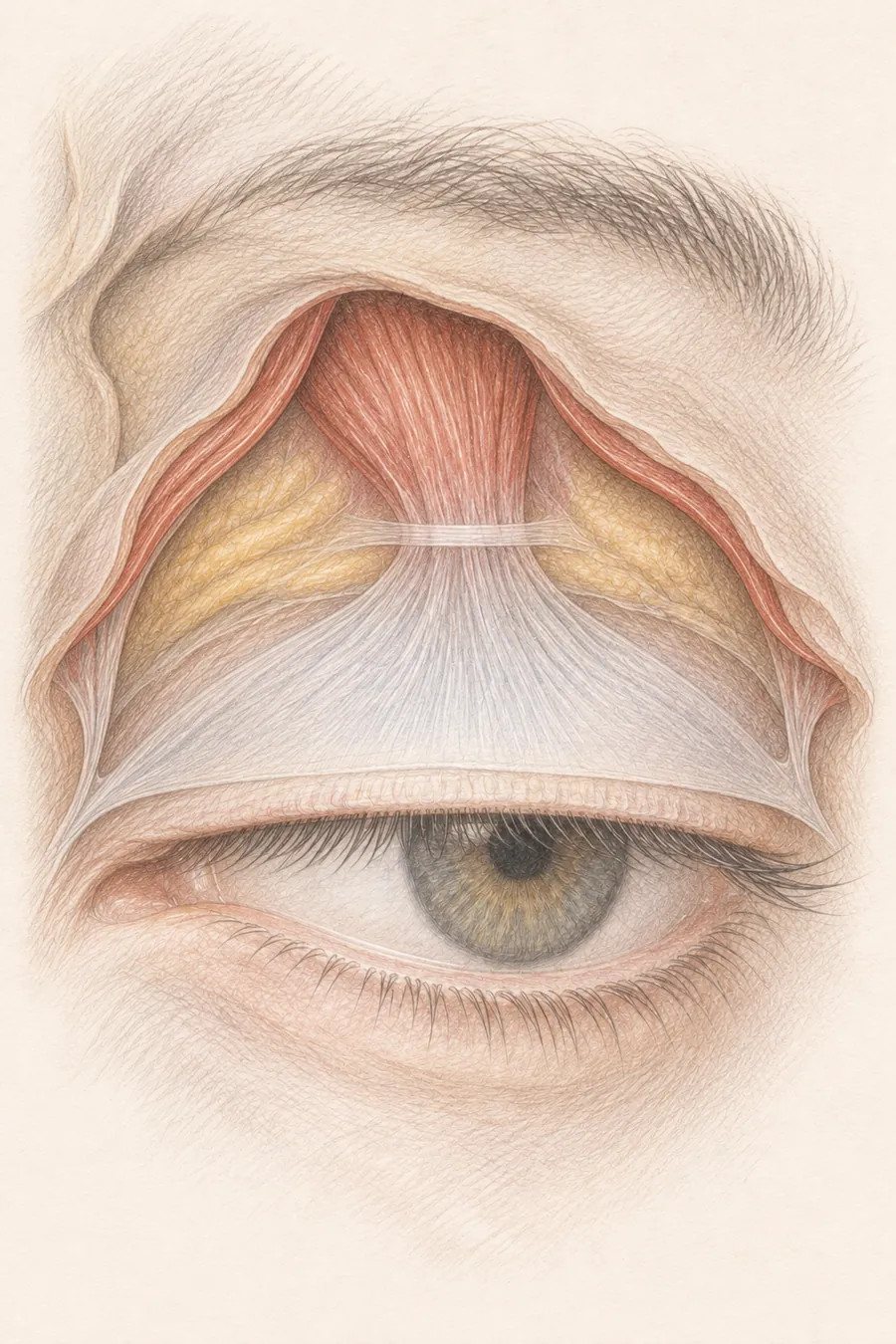
03What is the difference between non-incisional, partially incisional, and incisional methods?
Answer The approach depends on the patient's condition. Non-incisional or partial-incision methods may be used when eye-opening strength is slightly weak, while an incisional approach may be used when it is much weaker or the skin is also sagging.
When eye-opening strength is slightly weak, we measure differences in how much of each eye is exposed and in eyelid height to determine how much lift is needed. Using a non-incisional approach without a long skin incision or a partial-incision approach with a small opening, we fold part of the eye-opening muscle and its aponeurosis and secure them to the tarsal plate inside the eyelid.
When eye-opening strength is much weaker or the skin is also sagging, we evaluate muscle function, excess skin, and dry eye symptoms together and plan the incision line. We make an incision along the double eyelid crease, reattach the aponeurosis to the tarsal plate inside the eyelid, and adjust the height. We then remove excess skin and orbicularis oculi muscle and suture the eyelid to create a subtle inner crease or a crease at the desired height.
VITAL Plastic Surgery's guide to fees for services not covered by insurance also lists non-incisional, partial-incision, and incisional ptosis correction as separate items. Surgery takes about one hour and is performed under sedation. If an incision is made, stitches are removed on days 5–7. The appropriate method is determined by the strength of the muscles used to open the eyes and the condition of the skin, rather than by the preferred approach.
Ptosis correction involves more eyelid tissue than surgery that only creates a double eyelid crease, so it causes more swelling and bruising. Swelling is most pronounced on days 3–4. Light daily activities can be resumed after 2–3 days, although some swelling and bruising may remain.
| Condition | Approach | What we look at first |
|---|---|---|
| Skin covering the pupil (pseudoptosis) | Removal of excess skin and orbicularis oculi muscle | Whether muscle strength is normal, assessed using MRD1 |
| When eyelid-opening strength is slightly reduced | Non-incisional or partial-incision | Differences in pupil exposure and height between the eyes |
| When weakness is pronounced or sagging skin is also present | Incision along the double eyelid crease | Muscle function, available skin, and dry eye symptoms |
What if double eyelid surgery or upper eyelid surgery is performed at the same time?
04What happens if I have double eyelid or upper eyelid surgery at the same time?
Answer The double eyelid crease or sagging skin can be addressed as part of the same plan to improve eye-opening function. The details depend on which procedures are performed together.
Hollow eyes or sagging skin are addressed as part of the same plan as ptosis correction. The fee guide also lists ptosis correction as a separate “additional” item when it is performed with double eyelid surgery or upper eyelid surgery. “Additional” means the item is added when performed with another procedure.
If you are concerned about a change in your appearance, the double eyelid crease can be placed low as a subtle inner crease while improving eye-opening function. The goal of correction is not just the size of the crease, so we explain the options with your eye-opening function, skin condition, and desired appearance in mind.
The skin is measured and only a minimal amount is removed, while preserving the ability to close the eyes properly. Removing too much can cause lagophthalmos, in which the eyes cannot close completely, or dryness. The extent of the combined procedures is therefore determined by eyelid closure and available skin rather than the desired appearance.
Why does revision surgery require a separate examination?
05Why is revision surgery evaluated separately?
Answer Adhesions and structural changes from the previous surgery must first be evaluated, and the plan depends on whether at least 6 months to a year or more has passed for tissue recovery.
Revision surgery is possible on eyes that have undergone surgery before, but adhesions and structural changes caused by the previous surgery must be accurately evaluated. We consider your surgical history, current concerns, and stage of tissue recovery together to explain the limitations and expected effects of additional surgery. A consultation is also recommended if you have difficulty opening your eyes after previous double eyelid surgery.
That is why the fee guide states that the final price for revision ptosis surgery is determined after a consultation, depending on the complexity. There is more to assess during the examination than with a first surgery, and the plan for revision surgery varies depending on the condition of the tissue.
Research also suggests that the likelihood of needing another procedure may vary depending on the method used in the first surgery. An analysis of 7 studies involving 1,038 eyelids reported lower rates of overcorrection and revision surgery with a technique that shortens the Müller muscle through the inside of the eyelid than with a technique that advances the levator aponeurosis through the skin2. These two techniques do not correspond exactly to VITAL's non-incisional, partial-incision, and incisional categories. The possibility of undercorrection or overcorrection is explained before surgery, whichever method is used.
From 3 weeks to 3 months, the tissue may feel firm and tight, so a decision about revision surgery is not made based on appearance during this period alone. If the tissue is still healing from the previous surgery, immediate surgery is not recommended.
- Previous surgical history — when the surgery was performed and which method was used
- Current concerns — opening and closing the eyes, and dryness
- Stage of tissue healing — whether at least 6 months to a year or more have passed
- Limitations and expected effects of additional surgery — reviewed together before surgery
Is ptosis surgery covered by national health insurance?
06Is ptosis surgery covered by National Health Insurance?
Answer Coverage is determined according to official guidelines and insurance review, so it cannot be guaranteed in advance. During your examination, we will review the information used to make that determination.
The current official guidelines do not specify numerical thresholds, such as an MRD1 measurement in millimeters or a visual field measurement in degrees. The clearest evidence used in the assessment is photographs showing whether the eyelid covers the pupil when looking straight ahead, along with medical records documenting a ptosis diagnosis and reduced function of the muscle that opens the eye.
In most cases, the decision is made through an insurance review, so coverage is not determined by the doctor's judgment alone. The fee guide states that VAT is charged separately for cosmetic procedures, so even for the same eyelid surgery, how the cost is classified may differ depending on its purpose and diagnosis.
Private indemnity insurance coverage depends on your policy terms and the insurer's review, so it cannot be determined in this article. If you need documentation, check with your insurer first, and have your eyes assessed during a consultation.
Problems with vision itself require a separate evaluation by an eye doctor. If you have symptoms that need an eye evaluation first, immediate surgery is not recommended.
Should I also consider care after surgery?
07Should I also consider care after surgery?
Answer Follow-up visits are scheduled at 1 week, 1, 3, and 6 months, and 1 year. Regenerative treatments or laser treatments are considered based on how you are healing, so they are not the same for everyone.
VITAL Plastic Surgery continues care after ptosis correction through Lasting Care. At around 1 week, we check the wound, bleeding, infection, and early function, and remove the stitches. At 1 month, we check for tightness and firmness and begin regenerative care if needed. At 3 months, we assess tissue remodeling and consider whether to continue injections or laser treatments.
At 6 months, we compare your progress with your initial photos to decide whether further treatment is needed. At 1 year, we check tissue maturity and long-term progress. Care is determined after an examination based on your recovery, so it is a good idea to discuss which services are included in the surgery cost and which may be added if needed during your consultation.
Dry eyes and incomplete eyelid closure can occur after surgery. Even if dryness lasts 1 to 2 months, it usually improves with artificial tears. In a report reviewing 20 quality-of-life studies, the American Academy of Ophthalmology found that 5 of the 7 studies examining dry eye symptoms reported no subjective worsening, and 1 reported temporary worsening. Three studies examining the long-term effects of ptosis correction reported continued improvement for an average of 1.5 to 3.6 years after surgery3.
Eye rubbing and contact lenses are also among the causes. In a small study examining eyelid tissue from 12 women who had worn contact lenses for a long time, fibrosis was observed in the Müller muscle, which helps open the eye4. For this reason, we also advise patients to avoid rubbing their eyes, wear contact lenses less often, and use artificial tears frequently after surgery.
| Timing | What Happens | What to Keep in Mind |
|---|---|---|
| 3–4 days after surgery | When swelling and bruising are most pronounced | Keep your head slightly elevated and apply a gentle cold compress |
| Days 5–7 | Suture removal if an incision was made | Eye makeup · contact lenses after 2 weeks |
| 3 weeks–3 months | A period of tissue firmness and tightness | Do not decide on revision surgery based only on appearance at this stage |
| 3 months–1 year | Tissue softens and the two sides gradually become more balanced | Follow-ups at 1, 3, and 6 months and 1 year |
08Three things we check first during your consultation
What we assess first during consultation
- Eyelid position and movement
- Whether the brow muscles are compensating
- Excess skin and eyelid closure
These are general care principles. The actual decision is made after an examination.
When other care is needed first When MRD1 is within the normal range and removing excess skin is sufficient, we do not recommend ptosis surgery. Other issues must also be addressed first if you have a medical history that needs evaluation, such as thyroid eye disease, glaucoma, or an autoimmune disease; if you take anticoagulants or have uncontrolled high blood pressure or diabetes; or if the surface of the eye needs treatment first, as with severe dry eye.
Here is the answer to the original question: “I’m looking into ptosis correction because I look sleepy. Why does the quoted cost vary from person to person?” The procedure differs depending on whether you have true ptosis, which method is suitable—non-incisional, partial-incision, or incisional—whether double eyelid or upper eyelid surgery is performed at the same time, and whether it is a revision surgery. At VITAL Plastic Surgery, we first measure MRD1 and eyelid lifting strength to determine which procedure is needed, then provide the final cost after an examination based on our listed fees for non-covered services.
— VITAL Plastic Surgery
When booking, simply let us know, “Please check whether I have true ptosis by measuring my eyelid lifting strength first,” and we will start there during your consultation. You do not need to make a decision on the day of your consultation.
Related ReadingPtosis · Eye Surgery for Middle-Aged Patients
READ NEXT
Read Next
FAQ
Frequently Asked Questions
Can I have a non-incisional procedure if I request one?
The method is determined by your eyelid-opening strength and skin condition rather than your preferred approach. If the strength is mildly reduced, a non-incisional or partially incisional approach may be used. If it is significantly reduced or the skin is sagging, an incisional approach is used.
Can you tell if I have ptosis and how much treatment will cost from a photo?
A photo is only a reference. The method and cost are determined after an in-person assessment of eyelid movement and function and whether the eyebrows are compensating.
Is ptosis surgery covered by health insurance?
It cannot be determined in advance. The official notice does not specify numerical criteria, and most cases are decided after an insurance review. A front-facing photo and medical records documenting the diagnosis and reduced muscle function are used in the assessment.
When can I return to work?
You can return to light work after 2–3 days. Avoid eye makeup, eyelash extensions, and contact lenses for 2 weeks. You can use a sauna after 1–2 weeks and resume strenuous exercise after 1 month.
Do I need surgery now?
Observation may be appropriate if there is no functional problem, discomfort is mild, and the changes are stable. If the eyelid obstructs vision or functional problems persist, we evaluate without delay.
BEFORE CONSULTATION
What to Prepare Before Your Consultation
- Note when you experience discomfortIt can help us assess your eyelid function if you note when you experience discomfort, such as whether your eyes close more in the afternoon or you tense your forehead.
- Previous surgery recordsIf you have had double eyelid surgery or ptosis correction, please tell us when you had surgery and share your records. For revision surgery, we also consider the stage of tissue healing.
- Medical history and medicationsPlease let us know if you have thyroid eye disease, glaucoma, severe dry eye, or an autoimmune disease, or if you take anticoagulants. These may be reasons to postpone surgery.
- Eye care habitsPlease tell us how long you have worn contact lenses, whether you tend to rub your eyes, and whether you use double eyelid tape or glue.
- Check insurance documentsIf you are considering filing a claim with your indemnity health insurance, please check with your insurer first about the required documents.
REFERENCES
References
- Cahill KV, Bradley EA, Meyer DR, et al. Functional indications for upper eyelid ptosis and blepharoplasty surgery: a report by the American Academy of Ophthalmology. Ophthalmology. 2011. doi:10.1016/j.ophtha.2011.09.029 (View abstract)
- Karam M, Alsaif A, Abul A, et al. Muller's muscle conjunctival resection versus external levator advancement for ptosis repair: systematic review and meta-analysis. International Ophthalmology. 2023. doi:10.1007/s10792-023-02633-1 (View abstract)
- Vagefi MR, Aakalu VK, Foster JA, et al. Health-Related Quality-of-Life Outcomes for Upper Blepharoplasty and Blepharoptosis Surgery: A Report by the American Academy of Ophthalmology. Ophthalmology. 2025. doi:10.1016/j.ophtha.2025.07.014 (View abstract)
- Gao S, Feng Z, Tu L, et al. Contact Lens Induce Blepharoptosis Through Fibrosis of Müller's Muscle. Journal of Craniofacial Surgery. 2025. doi:10.1097/SCS.0000000000011887 (View abstract)
The findings in these papers reflect the participants and conditions of each study and do not mean that every individual will have the same results.
This article provides general medical information and does not replace diagnosis or treatment. Surgical results and recovery vary by individual, and complications such as bleeding, infection, scarring, and asymmetry may occur.
More articlesVITAL Plastic Surgery Medical Articles
RESERVATION
You do not need to decide the day of your consultation.
Organize questions about this page without entering your name, contact information, or medical history. This does not submit an appointment request.