PLASTIC SURGERY
MEDICAL COLUMN
Questions Answered Directly by the Doctor Before You Decide on Surgery
Eyes
Articles
Ptosis Repair Without a Double Eyelid Crease: Can Eyelid-Opening Strength Be Corrected on Its Own?
In many cases, yes. During ptosis correction, the double eyelid crease can be placed low enough to remain mostly hidden or planned so it is not visible externally.
Medically reviewed by Dr. Hyungwoo Yim, Medical Director (board-certified plastic surgeon) · Published November 6, 2026 · Last reviewed November 11, 2026
SHORT ANSWER
First, the Short Answer
- In many cases, yes. During ptosis correction, the double eyelid crease can be placed low enough to remain mostly hidden or planned so it is not visible externally.
- However, the eyelid still needs a place to fold when the eye opens. The plan is therefore closer to an eyelid that folds so low the crease is hidden than an eyelid with no crease at all. We assess the appropriate height together during the examination.
- VITAL Plastic Surgery does not recommend ptosis correction based on a sleepy appearance alone. We measure upper eyelid position using MRD1. If it is within the normal range of about 4 mm, we first consider removing excess skin rather than operating on the muscle. We also assess eyelid position and movement, compensatory eyebrow lifting, excess skin, and eyelid closure.
“I don't want a double eyelid crease. Can I just open my eyes a little more fully?”
This is a paraphrase of a question we often hear during consultations.
To answer this question, we first need to distinguish where your current concern comes from. We will explain each point below, then return to the original question at the end.
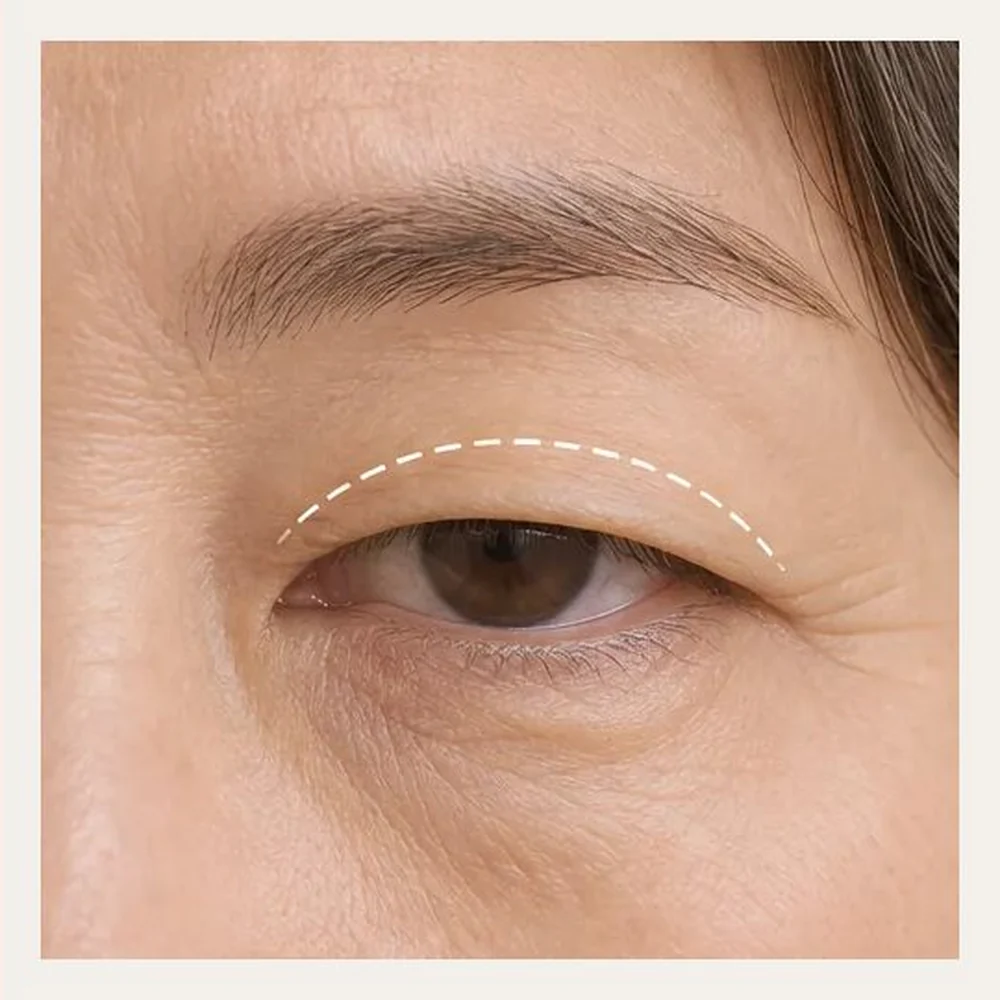
01When do monolids need ptosis correction?
Answer The reason is not the monolid itself, but reduced eyelid-opening muscle strength that leaves less of the eye exposed.
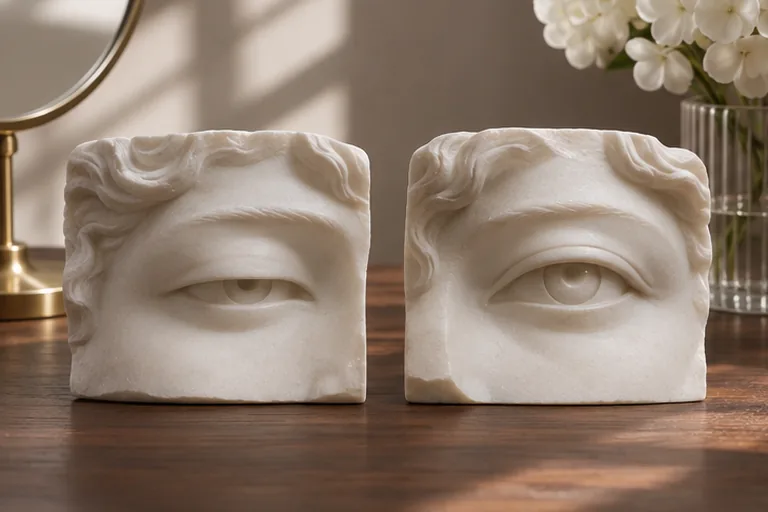
A monolid is simply an eyelid without a crease in the upper lid when the eye opens. It is not, in itself, a condition that needs correction. Whether ptosis correction is needed depends on whether the eyelid-opening muscle and its aponeurosis—a thin sheet connecting the end of the muscle to the firm plate inside the eyelid—provide sufficient lifting strength, rather than whether a crease is present.
Sleepy-looking monolids fall into two categories. True ptosis involves actual weakness in eyelid lifting, while pseudoptosis occurs when muscle strength is normal but eyelid skin covers the eye. True ptosis requires ptosis correction, a procedure that adjusts the muscle's lifting action. Pseudoptosis may improve with removal of drooping skin or creation of a crease alone.
Mild ptosis accompanying monolids is not uncommon. Researchers at a university hospital in China noted that about half of Asian people are born without a double eyelid crease and that mild ptosis of 2 mm or less accompanying monolids can easily be overlooked1. That is why, when someone with monolids says their eyes look small, we measure eyelid-opening strength before creating a crease.
We take measurements to avoid unnecessary muscle surgery. If MRD1—the distance from the central corneal light reflex to the upper eyelid margin—is within the normal range, we do not perform ptosis surgery. Instead, we consider pseudoptosis caused by overlying skin and first assess options for removing excess skin.
| Monolid condition | How it looks | First steps |
|---|---|---|
| Normal eyelid-opening strength, no overlying skin | No crease, but the eye is adequately exposed | Discuss whether surgery is needed at all |
| Skin covers the eye (pseudoptosis) | Skin hangs over the eyelashes, making the eyes feel heavy | Check MRD1, then first consider excess skin removal and crease creation |
| Reduced eyelid-opening strength (true ptosis) | Requires forehead effort to open the eyes, with more drooping in the afternoon | Consider ptosis correction to adjust the muscle's lifting action |
In Simple Terms Think of the eyelid as a window blind and the eyelid-opening muscle as the cord that raises it. If the cord has stretched and the blind hangs halfway down, tightening the cord comes before adding a new fold—a double eyelid crease—to the blind's fabric. However, the place where the blind folds upward must also be set so the fabric does not slip down again. Monolid ptosis correction places that fold low enough to be barely visible from the outside.
So, can I have ptosis correction without a double eyelid crease?
02Can I have ptosis correction without a double eyelid crease?
Answer Eyelid-opening function can be corrected while keeping the crease low and mostly hidden, or planning it so it is not visible externally. However, the eyelid still needs a place to fold.
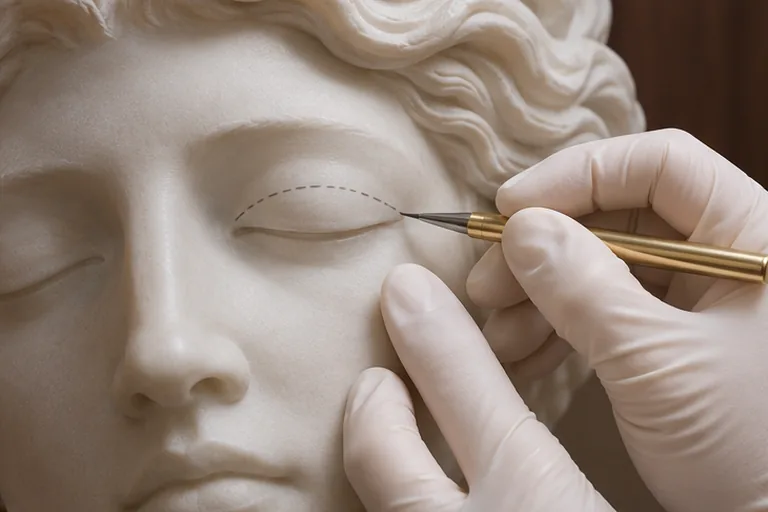
We explain two points to people who hesitate because they are concerned about changes in appearance. First, eyelid-opening function can be corrected while keeping the double eyelid crease low and mostly hidden. Second, if the eyelid covers the pupil, there is a reason for correction beyond appearance. We view the double eyelid crease as a structure that protects the eye, with aesthetic improvement as an additional change.
VITAL Plastic Surgery explains ptosis correction as a procedure for the field of vision rather than for the shape of a double eyelid crease. A drooping eyelid covering the pupil is like a window blind left halfway down. The first priority is to raise the eyelid and open the path for light; improvement in appearance comes next. Problems with visual acuity itself require a separate ophthalmologic evaluation.
Why is a folding point necessary? A double eyelid crease helps lift the eyelid skin and eyelashes. It also supports the eyelashes along the eyelid's path of movement so they do not poke the eye. When raising the eyelid with ptosis correction, we therefore need to determine where the skin will fold upward so it does not fall back over the eye.
Placing that fold very low creates a mostly hidden crease or an appearance close to a monolid, with almost no visible crease from the outside. The same principle is used in men's eyelid surgery to address overlying skin while maintaining a monolid or a very low, hidden crease. If you prefer a visible crease, the plan is adjusted accordingly.
The intended crease is a dynamic fold that follows the muscle when the eye opens and smooths out when it closes. A static crease that remains indented even when the eye is closed can make the eyelid look operated on. We therefore choose the fixation position and depth so the skin folds with muscle movement, without tightly anchoring it to deeper layers.
So, how do you choose between non-incisional, partial-incision, and incisional approaches?
03How do you choose between non-incisional, partial-incision, and incisional approaches?
Answer The choice depends on the degree of eyelid-opening weakness and the amount of skin drooping and thickness. Incision length alone does not determine the approach.
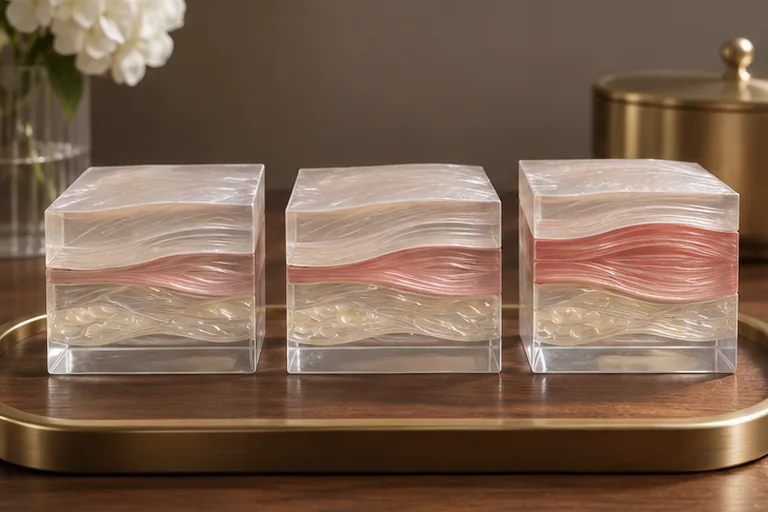
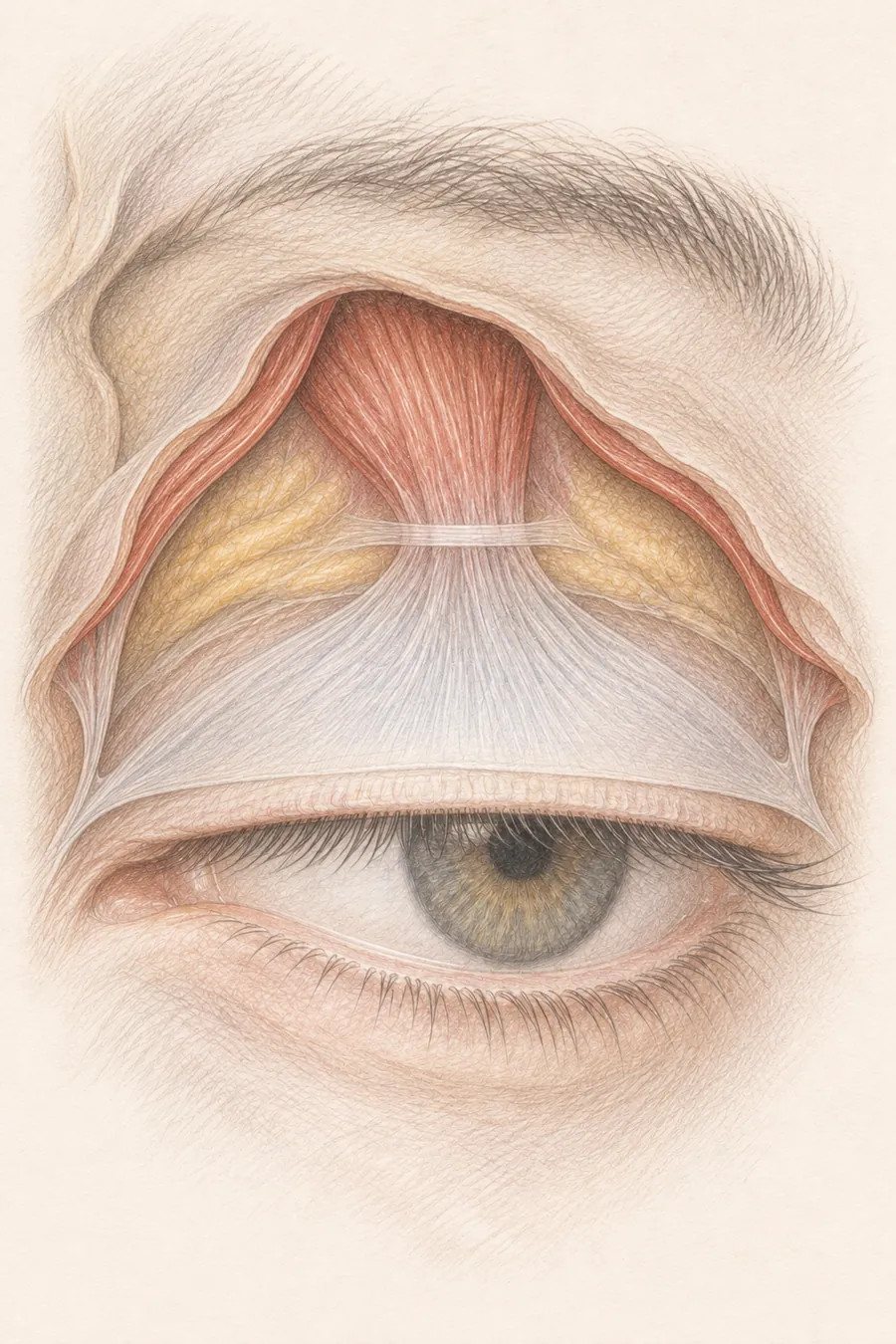
For mild eyelid-opening weakness, we measure differences in eye exposure and eyelid height between the two sides to determine how much to raise the eyelids. We then use a non-incisional approach without a long skin incision or a partial-incision approach with a small opening. Portions of the eyelid-opening muscle and aponeurosis are folded and secured to the tarsal plate inside the eyelid, with height and symmetry checked before completion.
For more pronounced weakness or accompanying skin drooping, we assess muscle function, excess skin, and dry eye symptoms together, then make an incision along the double eyelid crease. The aponeurosis is reattached to the tarsal plate to adjust eyelid height. Excess skin and orbicularis oculi muscle are then trimmed, and the incision is closed at a low, hidden crease or the desired height. If you want a monolid appearance, the height at this final step is kept low.
Skin thickness also affects the approach. Thin skin with little drooping may suit a method with less scarring, while thick skin or substantial excess skin and fat may make it difficult for sutures alone to hold the crease. Choosing based only on incision length may lead to the crease loosening or eyelid bulk remaining, so we assess the eyelid's condition first.
Surgery takes about 1 hour and is performed under sedation. With any approach, the degree of adjustment to the muscle's lifting action affects both comfortable eyelid closure and a natural appearance. The key is determining the range between overcorrection and undercorrection.
So, how much can ptosis correction change my appearance?
04How much can ptosis correction change my appearance?
Answer Your appearance may change somewhat as more of the eye becomes visible and previously raised eyebrows settle lower, but the procedure does not make you look like a different person.
When opening the eyes is difficult, the forehead muscles help pull the eyelids upward. Over time, this habit can leave forehead wrinkles and elevated eyebrows. If ptosis correction makes opening the eyes easier, less forehead effort may allow the eyebrows to settle lower. This can bring the eyebrows closer to the eyes and change your appearance.
Research also documents this change. In a meta-analysis of 17 studies on eyebrow position after upper eyelid surgery, the eyebrows moved downward by an average of about 2.10 mm after ptosis correction.3. We account for this change before surgery when determining the crease height and how much skin to remove.
A low crease is one way to limit changes in your appearance, but raising the eyelid itself will make your eyes look more open and defined. We first listen to how you want to look, then determine the height together by reviewing how your iris and eyelid will appear when your eyes are open.
Some patients come in because their double eyelid creases look different in size. Often, the issue is not the crease itself: one eye opens less fully, causing them to raise the eyebrow on that side. Adjusting only the crease may leave the difference visible again, so we first measure how much of the iris is visible. We also listen to what concerns you most before explaining the cause.
Why do you ask about contact lenses and eye rubbing?
05Why do you ask about contact lenses and eye rubbing?
Answer Both can contribute to reduced eyelid lifting strength, so we take them into account in care before and after surgery.
The muscle inside the eyelid that opens the eye is like a thin rubber band: rubbing forcibly stretches it each time. This can cause an existing double eyelid crease to fade or ptosis to develop. During surgery, we sometimes see damage to the inner tissues in people who have rubbed their eyes for years.
Contact lens use can also affect eyelid lifting strength. A U.S. study analyzing photographs of 96 pairs of identical twins (192 people) found average eyelid drooping of 1.0 mm in twins who did not wear contact lenses, 1.41 mm in soft contact lens wearers, and 1.84 mm in hard contact lens wearers2. Because the study compared twins with the same genes, it offers evidence of the influence of lifestyle habits.
If your eyes gradually look smaller after years of contact lens use or eye rubbing, we recommend a consultation. Even if you have surgery, we advise avoiding eye rubbing, limiting contact lens use as much as possible, and briefly closing your eyes and using artificial tears when they itch.
If these habits continue, the same forces will act on the corrected muscle again. Your habits after surgery also help maintain the surgical changes over time.
What are the risks and limitations?
06What are the risks and limitations?
Answer Possible risks include asymmetry, undercorrection or overcorrection, discomfort when closing the eyes, dryness, crease changes, swelling, and bruising.
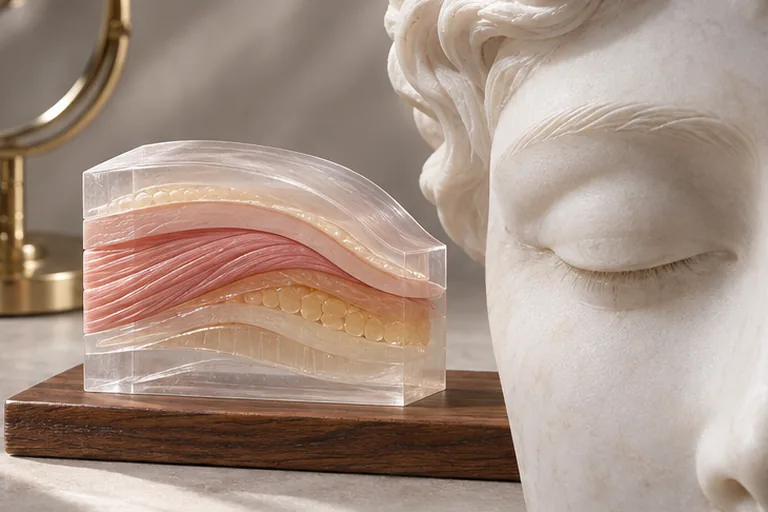
Ptosis correction involves more eyelid tissue than surgery that only creates a crease, so it causes more swelling and bruising. Dry eyes and incomplete eyelid closure can occur after surgery. Dryness may last 1–2 months, but usually improves with artificial tears. If symptoms persist, we monitor your recovery and reassess.
There can be some error in adjusting eyelid height. In the Chinese study mentioned earlier, 108 patients (155 eyelids) with monolids underwent both double eyelid surgery and ptosis correction. Average MRD1 increased from 2.93 mm to 4.21 mm. Of the 155 eyelids, 148 (95.5%) were adequately corrected, 5 (3.2%) were undercorrected, and 2 (1.3%) were overcorrected1. These results document one technique at one institution and cannot be used to predict an individual's outcome.
Even in patients with dry eye disease, we generally proceed with ptosis correction if it is necessary. However, we first check the severity of dryness and whether the eyes close completely. We do not recommend immediate surgery when the eye surface needs treatment first, as with severe dry eye disease.
We do not promise changes identical to a photograph or another person's results. Results and recovery time vary depending on your condition and the extent of surgery. Risks include bleeding, infection, scarring, and asymmetry.
What is recovery like, and when is surgery postponed?
07What is recovery like, and when is surgery deferred?
Answer Swelling peaks on days 3–4. You can return to light work after 2–3 days, and stitches are removed on days 5–7.

We recommend wearing makeup starting the day after your stitches are removed, using a sauna after 1–2 weeks, and resuming strenuous exercise after 1 month. The table below provides average guidelines; individual experiences may vary. If you have no functional problems, your discomfort is minor, and the changes are stable, you may choose to monitor them. We do not recommend rushing simply because you are getting older.
We do not recommend immediate surgery in the following situations.
- When MRD1 is within the normal range and removing excess skin is sufficient
- When you take anticoagulants or have uncontrolled high blood pressure or diabetes
- When symptoms require an ophthalmologic evaluation first
- When ocular surface conditions, such as severe dry eye, need to be managed first
- When the changes you expect are beyond what is medically possible
| Timing | What Happens | What to Keep in Mind |
|---|---|---|
| 3–4 days after surgery | Swelling and bruising are at their worst | Sleep with your head slightly elevated and gently apply cold compresses |
| Days 5–7 | Suture Removal | Eye makeup · contact lenses after 2 weeks |
| 3 weeks–3 months | A period of tissue firmness and tightness | Do not decide on revision surgery based only on appearance at this stage |
| 3 months–1 year | Tissues soften and the two sides become more even | Follow-ups at 1, 3, and 6 months and 1 year |
08Three things we check first during your consultation
What we assess first during consultation
- Eyelid position and movement
- Whether the brow muscles are compensating
- Excess skin and eyelid closure
These are general care principles. The actual decision is made after an examination.
When other care is needed first If MRD1 is within the normal range, skin removal or crease creation takes priority over ptosis correction. If you take anticoagulants or have uncontrolled high blood pressure or diabetes, those issues need to be managed first. Symptoms requiring an eye evaluation, such as vision changes, should be assessed by an ophthalmologist first. If you have inflammation, such as eyelid eczema or a stye, we reassess after treatment.
The answer to the opening question, “I don't want a double eyelid crease. Can I just make my eyes open a little more fully?” is this: if your eyelid lifting strength is truly reduced, we can plan ptosis correction with a low, hidden crease or without a visible crease. First, however, we use MRD1 to distinguish reduced eyelid lifting strength from overhanging skin. We determine where the eyelid should fold by examining it in person. Having monolids alone does not mean you need surgery.
— VITAL Plastic Surgery
When booking, simply leave a note saying, “I'd like to keep my monolids and have my eyelid lifting strength measured first.” We will start there during your consultation. You do not need to make a decision on the day of your consultation.
Related ReadingPtosis · Ptosis Correction Consultation Guide
READ NEXT
Read Next
FAQ
Frequently Asked Questions
Can you improve eyelid muscle function without creating a double eyelid crease?
In many cases, yes. The crease can be planned low enough to remain hidden or barely visible. However, the eyelid still needs a place to fold when the eye opens, so we determine the height together during the examination.
Can you diagnose ptosis from photos alone?
Photos are for reference. An in-person examination is needed to assess eyelid movement and function, along with compensatory eyebrow lifting.
What if my eyes feel dry after surgery?
Dryness may last 1–2 months, but usually improves with artificial tears. If symptoms persist, we reassess based on your recovery.
Do I need surgery now?
Observation is an option if there is no functional problem, discomfort is minor, and changes are stable. If the eyelid covers the pupil and affects your field of vision, evaluation should not be delayed.
Does the double eyelid crease need to be high for the correction to work?
No. The goal is to improve eyelid-opening function, not crease size. We determine the height based on your skin condition and desired appearance.
BEFORE CONSULTATION
What to Prepare Before Your Consultation
- Your preferred appearanceCome prepared to discuss whether you want to keep your monolids, have a very low hidden crease, or have a visible crease.
- Everyday PhotosPlease bring front-facing photos with your eyes comfortably open and your forehead relaxed, along with older photos.
- Contact Lenses · Eye HabitsTell us what type of contact lenses you use, how long you have worn them, and whether you frequently rub your eyes.
- Eye HealthTell us about dry eye disease, conjunctivitis, your eye care records, and any eye drops you use.
- Medications and Medical HistoryPlease provide a complete list of your medications, including anticoagulants, and tell us whether you have high blood pressure or diabetes.
REFERENCES
References
- Hao DY, Cang ZQ, Cui JB, et al. Simultaneous Double Eyelid Blepharoplasty and Blepharoptosis Correction With Levator Aponeurosis Plication Technique: Clinical Experience of 108 Cases. Annals of Plastic Surgery. 2022. doi:10.1097/SAP.0000000000003111 (View abstract)
- Satariano N, Brown MS, Zwiebel S, et al. Environmental factors that contribute to upper eyelid ptosis: a study of identical twins. Aesthetic Surgery Journal. 2015. doi:10.1093/asj/sju070 (View abstract)
- Liu R, Sun Y, Huang J, et al. Brow Position Change and its Potential Risk Factors Following Upper Blepharoplasty: A Systematic Review and Meta-Analysis. Aesthetic Plastic Surgery. 2023. doi:10.1007/s00266-023-03288-0 (View abstract)
The findings in these papers reflect the participants and conditions of each study and do not mean that every individual will have the same results.
This article provides general medical information and does not replace diagnosis or treatment. Surgical results and recovery vary by individual, and complications such as bleeding, infection, scarring, and asymmetry may occur.
More articlesVITAL Plastic Surgery Medical Articles
RESERVATION
You do not need to decide the day of your consultation.
Organize questions about this page without entering your name, contact information, or medical history. This does not submit an appointment request.