PLASTIC SURGERY
MEDICAL COLUMN
Questions Answered Directly by the Doctor Before You Decide on Surgery
Eyes
Articles
Male Ptosis Correction: How Is It Planned Differently for Men and Women?
Male ptosis correction follows the same principle of improving the strength of the muscles and aponeurosis that open the eyes. What differs is the plan. Men often have thicker skin and tissue beneath the eyebrows, as well as lower-set eyebrows, so the crease height, amount of skin to remove, and choice of technique must be considered individually.
Medically reviewed by Dr. Hyungwoo Yim, Chief Director and board-certified plastic surgeon · Published 2026.11.27 · Last reviewed 2026.11.27
SHORT ANSWER
First, the Short Answer
- Male ptosis correction follows the same principle of improving the strength of the muscles and aponeurosis that open the eyes. What differs is the plan. Men often have thicker skin and tissue beneath the eyebrows, as well as lower-set eyebrows, so the crease height, amount of skin to remove, and choice of technique must be considered individually.
- A double eyelid crease is not required. The function of opening the eyes can be improved while keeping the crease out of sight or placing it low as a hidden double eyelid. However, your appearance may change somewhat as the previously covered pupil becomes visible and the eyebrows, which had been raised using the forehead, come down. We discuss these changes together before surgery.
- At VITAL Plastic Surgery, we first ask about the look you want: no double-eyelid crease, a subtle hidden crease, or a visible crease. We then measure how much of the pupil is exposed using MRD1 to determine whether you have true ptosis. Next, we check whether your eyebrows are compensating, assess your skin thickness and excess skin, and see how well your eyes close before choosing an approach.
“If a man has ptosis correction, will it change his appearance too much or make his eyes look like they’ve had surgery?”
This is a paraphrase of a question we often hear during consultations.
To answer this question, we first need to distinguish where your current concern comes from. We will explain each point below, then return to the original question at the end.
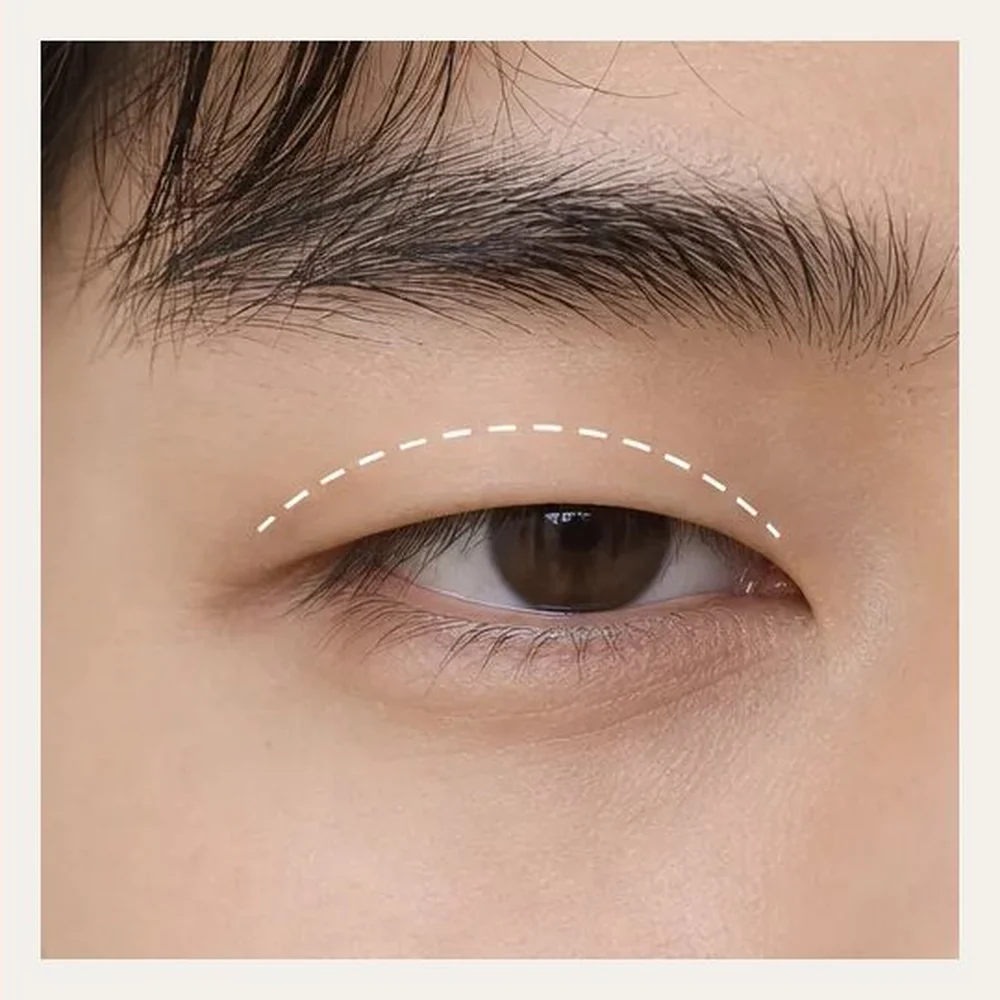
01How is ptosis correction planned differently for men?
Answer The principle of correction is the same, but thick eyelids, low eyebrows, and a preference for keeping the crease hidden can change the crease height, the amount of skin removed, and the surgical approach.
Ptosis correction is surgery to correct a drooping upper eyelid that covers the pupil because the eye-opening muscle and its aponeurosis are weak. The aponeurosis is a thin membrane that connects the end of the eye-opening muscle to a plate inside the eyelid. If it stretches or detaches, the muscle’s force is not effectively transferred to the eyelid. This principle is the same for men and women.
The differences lie in the shape of the eyelids and eyebrows and the desired result. Men often have thicker skin and tissue beneath the eyebrows, so a heavy appearance may remain even after skin is removed near the double-eyelid crease. Their eyebrows are also often lower, so planning based on the eyelids alone can leave the eyes and eyebrows closer together than expected after surgery.
The desired look also differs. The goal of eyelid surgery for men is often to address the drooping rather than create a crease, and many prefer no double-eyelid crease or a very low, hidden crease. That is why consultations for men at VITAL Plastic Surgery begin by asking about the look they want.
One study compared surgical records by sex. In a retrospective study at a Korean university hospital of 78 patients (28 men and 50 women) who underwent upper eyelid surgery for sagging skin, the average crease height did not differ between men and women. However, significantly less skin and muscle were removed in men, and fat was removed less often. To avoid giving older men a more feminine eye appearance, the authors recommended a low crease, limited skin and muscle removal, preservation of the outer portion of the orbicularis oculi muscle, and minimal fat removal1. This study examined surgery for sagging skin, not ptosis correction, so it should be read only as a reference for planning surgery on male eyelids.
| Common features in men | What Changes in the Surgical Plan | What to check during your consultation |
|---|---|---|
| Thick skin and tissue below the eyebrows | Crease fixation method and comparison with a sub-brow lift | Skin thickness and excess skin |
| The eyebrows have descended or are being raised with the forehead | Amount of skin to remove and crease height | Whether the forehead muscles are used to open the eyes |
| Preference for a crease that is not visible | Plan for no crease or a low, hidden crease | Desired appearance and degree of crease visibility |
| The muscles that open the eyes may be weak | Whether to remove excess skin alone or also correct ptosis | MRD1 and eyelid-lifting muscle strength |
In Simple Terms Ptosis correction in men is similar to repairing a heavy rolling shutter. When the cord that lifts the shutter (the muscle that opens the eye) stretches, a person supports the shutter with their hand (the forehead muscle). Shortening the cord allows the person to let go, and the awning above the shutter (the eyebrow) also comes down a little. In men, the shutter itself is often heavy, so the surgeon must consider whether to repair the cord alone or also reduce the weight of the shutter, and how far the awning will descend once the hand is released. All of these factors must be considered for the shutter to open comfortably.
Do all sleepy-looking eyes in men have ptosis?
02Do all sleepy-looking eyes in men have ptosis?
Answer No. If MRD1 is within the normal range of approximately 4 mm, we do not perform ptosis surgery. Instead, we consider it pseudoptosis, in which sagging skin covers the pupil, and first assess whether to remove excess skin.
MRD1 is the distance from the light reflex at the center of the pupil to the upper eyelid. It is a measure of how much of the eye is exposed. Rather than deciding on ptosis correction based on a sleepy appearance alone, we measure this distance to determine whether muscle surgery is truly needed. Measuring it helps avoid unnecessary muscle surgery.
In men, aging or overhanging skin on an eyelid without a crease often causes the eyelashes to poke the eye and obstruct vision. This can lead them to use their forehead muscles without realizing it, potentially causing pain or fatigue in the eyes and neck. If the strength needed to open the eyes is normal and only the skin is covering them, removing excess skin may help. If that strength is also weak, we consider ptosis correction as well.
Men often come for a consultation at a family member's suggestion and may initially say they feel fine. At VITAL Plastic Surgery, we look at photos together, explain how much the eyelid covers the pupil, and distinguish areas that need treatment from those that do not. If there is no functional problem and the discomfort is not significant, we explain that observation is also an option.
- Skin overhang — whether skin covers the eyelashes
- Eyelash direction — whether the lashes poke the eye
- Eye-opening strength — whether ptosis is also present
- Forehead muscle use — whether there is a habit of raising the eyebrows to open the eyes
- Skin thickness — whether it affects the crease fixation method
Can the eyelid crease be left uncreated or kept low?
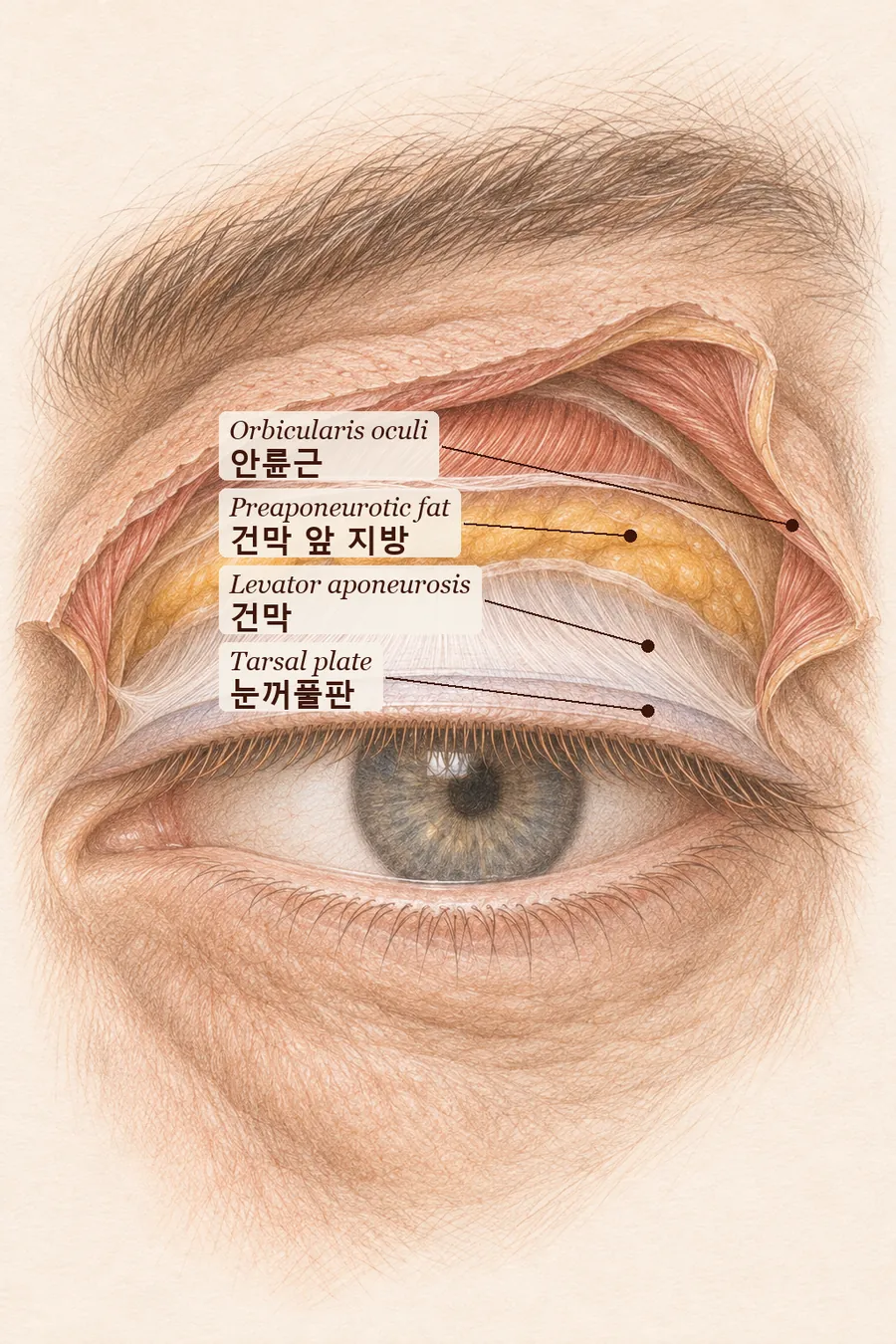
03Can the double-eyelid crease be omitted or kept low?
Answer In many cases, yes. During ptosis correction, the crease can be kept hidden or made low as an inner double eyelid crease, but there must be a point where the eyelid folds when the eyes open.
A double eyelid crease is not required in male eyelid surgery. Eyelid skin that covers the eyes can also be addressed without a visible crease or with a very low inner crease, reducing concerns about a change in appearance. If you want a visible crease, the procedure is planned accordingly.
However, having no visible crease is different from having no point where the eyelid folds. Even after ptosis correction, the eyelid must fold somewhere when the eyes open to prevent the skin from settling back down over the eyelashes. VITAL Plastic Surgery looks at the dynamic crease: the line that forms only when the eyes open and smooths out when they close. The height of the crease is decided together by looking at how the eyes and eyelids will appear when open.
Studies also show a preference for a low crease. In a large survey of 11,153 respondents (including 1,455 men) about their preferred double eyelid shape, the infold crease, which curves inward near the inner corner of the eye and is less visible, was the most popular overall. This preference was especially pronounced among men and people aged 40 and older2. The survey measured preferences, not surgical outcomes.
There is also a report focused specifically on male patients. The authors of a study reviewing 40 Asian men explained that male patients wanted a less made-up-looking crease and a quick recovery with less swelling. They reported results using a muscle-preserving incision and six small openings to secure the crease3. This method is not the same as VITAL's surgical approach; it is a reference that illustrates what men may consider important.
Does the approach change if the eyelids are thick and the eyebrows are low?
04Does the approach change if the eyelids are thick and the eyebrows are low?
Answer It can. Depending on how much the skin covers the eyes, eyelid thickness, and the strength used to open the eyes, the appropriate treatment may include a low-crease incision, a sub-brow lift, ptosis correction, or a combination of these.
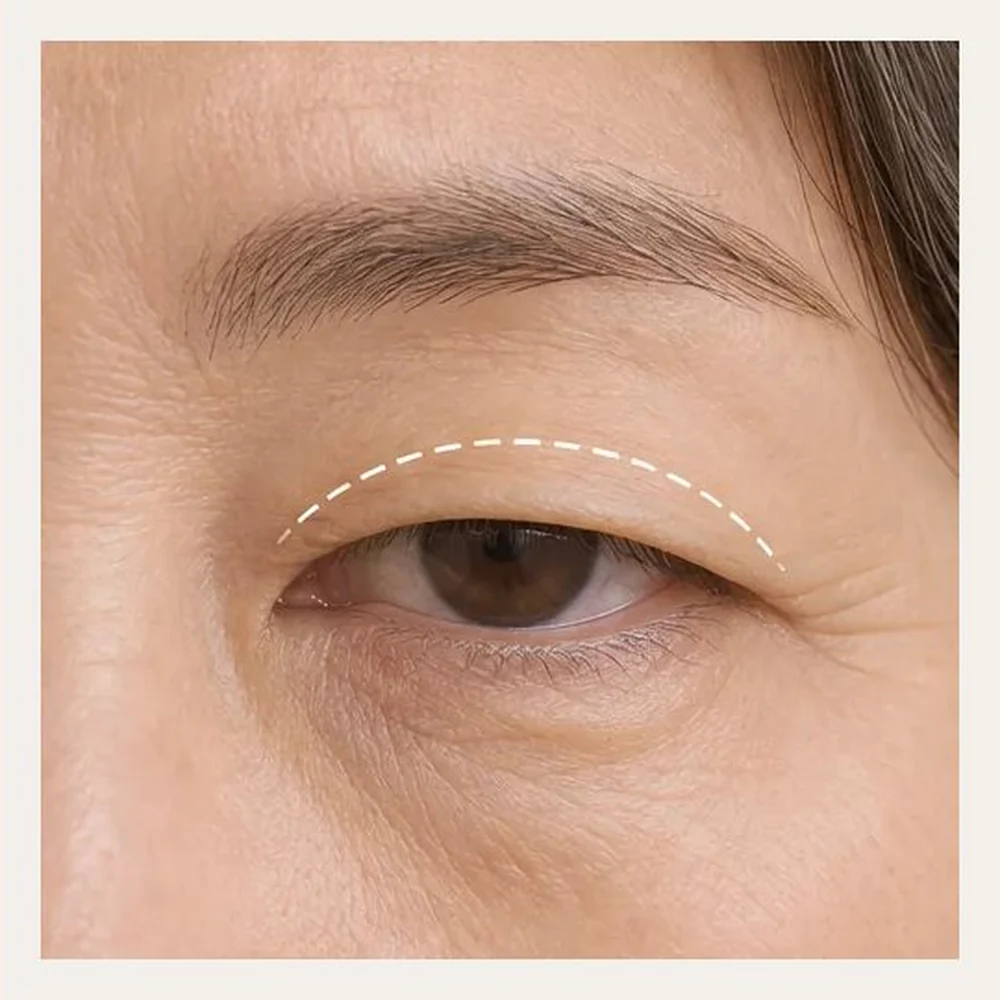
When skin covers the eyes, the amount of excess skin and the position of the eyebrows are measured, and the width of skin to be removed is marked. An incision is then made along a low crease, and excess skin and orbicularis oculi muscle, which closes the eyes, are removed. The crease is secured so that it is hidden or low, and the incision is closed with sutures.
If the eyelids are thick and the patient does not want a double eyelid crease, a sub-brow lift is considered as an alternative. An incision is made along the lower edge of the eyebrow to remove sagging skin, and the orbicularis oculi and muscle layer are pulled upward and secured toward the forehead muscle. The choice takes into account both the incision line left along the eyebrow and the fact that a double eyelid crease does not need to be created.
If the muscles that open the eyes are weak, MRD1 is used to check for ptosis, and a low incision line is marked. An incision is made to locate the muscle that opens the eye and its aponeurosis. The aponeurosis is secured to the tarsal plate inside the eyelid to adjust the height, and the eyelid is sutured to form a subtle, inner double-eyelid crease. If the weakness is mild, a non-incisional approach that avoids a long skin incision or a partial-incision approach using a small opening may be used.
Whichever method is used, only the minimum amount of skin is removed, measured to preserve the ability to close the eyes properly. Removing too much can cause incomplete eyelid closure, known as lagophthalmos, or dryness.
| Condition | Approach Considered | Other points to consider |
|---|---|---|
| When skin covers the eyes | Removal of skin and orbicularis oculi muscle along a low line | Skin Laxity and Eyebrow Position |
| For thick eyelids when no crease is desired | Subbrow Lift | An incision along the eyebrow border; no crease needs to be created |
| When eyelid muscle strength is weak | Suturing to form a subtle, inner double-eyelid crease after ptosis correction | MRD1, differences in height between the eyes, and eyelid closure |
After surgery, can the eyebrows come down in men who used their forehead muscles to open their eyes?
05Will the eyebrows come down after surgery in men who used their foreheads to open their eyes?
Answer They can. After eyelid surgery, less effort may be needed from the forehead muscles, allowing the eyebrows to come down. This change is considered when deciding how much skin to remove and where to place the crease.
When the eyes do not open easily, the forehead muscles lift the eyelids. If this habit continues for a long time, it can leave forehead wrinkles and raised eyebrows. When less forehead effort is needed after eyelid surgery, the eyebrows may come down, bringing the eyes and eyebrows closer together and sometimes changing the overall appearance.
In a study comparing 93 people before and 1.5 months after eyelid surgery for ptosis, the eyebrows came down by at least 5% in 61% of patients. Eyebrow descent was associated with sex, the extent to which the eyebrows came down when the eyes were closed before surgery, and the height of skin removed. It was more common in men. The authors interpreted this as likely related to the greater amount of skin removed in men.4.
For this reason, VITAL Plastic Surgery separately assesses whether the eyebrows are compensating before surgery. If skin is removed without anticipating the eyebrow position after the forehead muscles relax, the lowered eyebrows may make the upper eyelids look heavy again. For the same reason, raising only the forehead when the cause lies in the eyes can make the appearance worse.
Will that change my appearance a lot?
06Will my appearance change a lot?
Answer Your appearance may change to some extent as more of the previously covered eyes becomes visible and the raised eyebrows come down. The goal is not to make you look like a different person, but to reduce a heavy or sleepy appearance while retaining your natural look.
For those who hesitate because they are concerned about a change in their appearance, I explain two things. First, the ability to open the eyes can be corrected while keeping the double-eyelid crease low and hidden or making it unnoticeable. Second, a double-eyelid crease is not purely cosmetic; it is also a structure that lifts the eyelashes away from the eye so they do not poke it.
Ptosis correction involves more eyelid tissue than surgery that only creates a crease. If you have ptosis, both your ability to open your eyes and your appearance may change. How much the eye-opening strength is adjusted affects both the comfort of closing your eyes and your appearance, so the key is to determine the appropriate range between overcorrection and undercorrection.
If the look you want differs significantly from what is medically possible, I do not recommend surgery right away. The same applies if you decide you do not want surgery after hearing the explanation. Before surgery, I also explain the limitations and risks, including asymmetry, changes in the crease, swelling, bruising, scarring, undercorrection or overcorrection, discomfort when closing the eyes, and dryness.
When can I return to work, and what is recovery like?
07When can I return to work, and what is recovery like?
Answer You may be able to return to light work after 2–3 days, but returning to in-person work after only three days of leave cannot be guaranteed. Allowing at least two weeks gives you more flexibility.
The timing of a return to work is one of the most common questions during consultations with men. It is difficult to guarantee that you will be ready for in-person activities after just three days of leave. With one week off, some eye surgeries may be considered, but swelling and bruising may remain. Allowing at least two weeks gives you more flexibility. If you have an important event, please schedule a consultation well in advance.
Swelling and bruising are most pronounced 3–4 days after surgery. Ptosis correction involves more tissue manipulation than surgery that only creates a crease, so it causes more swelling and bruising. If an incision was made, stitches are removed after 5–7 days. You can use a sauna after 1–2 weeks and resume strenuous exercise after 1 month. Dry eyes and difficulty fully closing the eyes may occur after surgery. Even if dryness lasts for 1–2 months, it usually improves with artificial tears.
Between 3 weeks and 3 months, the tissue may feel firm and tight, so a decision about revision surgery is not made based only on how it looks during this period. Stopping smoking and drinking is essential because both affect bleeding and wound healing, and this is explained before surgery. Herbal medicines and supplements such as omega-3 are preferably stopped because they may increase bleeding. If you experience sudden severe pain, reduced vision, bleeding that does not stop, or rapidly worsening swelling on one side, contact us immediately rather than waiting for your appointment.
| Timing | What Happens | What to Keep in Mind |
|---|---|---|
| 2–3 days after surgery | When light daily activities and work become possible | Swelling and bruising may remain |
| 3–4 days after surgery | When swelling and bruising are most pronounced | Keep your head slightly elevated and apply a gentle cold compress |
| Days 5–7 | Suture removal if an incision was made | Allow extra time before in-person commitments |
| 3–4 weeks | Resume strenuous exercise and sauna use | Avoid rubbing your eyes |
| 3 weeks–3 months | A period of tissue firmness and tightness | Do not decide on revision surgery based only on appearance at this stage |
| 3 months–1 year | Tissue softens and the two sides gradually become more balanced | Follow-ups at 1, 3, and 6 months and 1 year |
08Three things we check first during your consultation
What we assess first during consultation
- Eyelid position and movement
- Whether the brow muscles are compensating
- Excess skin and eyelid closure
These are general care principles. The actual decision is made after an examination.
When other care is needed first We do not recommend ptosis correction when MRD1 is within the normal range and skin removal alone is sufficient, when there is no functional problem and little discomfort, or when you do not want it after hearing the explanation. Other issues should be addressed first if you cannot set aside enough time for recovery; if you have a medical history that needs to be checked first, such as thyroid eye disease, glaucoma, or an autoimmune disease; if you take anticoagulants or have uncontrolled high blood pressure or diabetes; or if you have symptoms that require an eye evaluation first.
Here is the answer to the initial question: “If a man has ptosis correction, will it change his appearance too much or make his eyes look operated on?” Your appearance may change to some extent as more of your eyes become visible and your eyebrows settle lower, but the crease can be kept hidden or placed low as a subtle double-eyelid crease. At VITAL Plastic Surgery, we first listen to the look you want, then measure your MRD1, eyelid-opening strength, the effort your eyebrows use to compensate, and skin thickness to plan around your natural appearance.
— VITAL Plastic Surgery
When you book, just let us know, “I'd like a low crease, and I'd like you to measure my eyelid-opening strength first.” We'll start by looking at those concerns together during your consultation. You do not need to make a decision on the day of your consultation.
Related ReadingMen's Eyelid Surgery Consultation Guide
READ NEXT
Read Next
FAQ
Frequently Asked Questions
My family recommended it. Do I have to have surgery?
Not necessarily. We look at photos together to see how much of the pupil is covered by the eyelid. If there is no functional problem and it does not bother you much, we may recommend monitoring it.
Can you improve eyelid muscle function without creating a double eyelid crease?
In many cases, yes. The crease can be planned low as a hidden double eyelid or kept out of sight. However, the eyelid needs a place to fold when the eye opens, so we determine the appropriate height during your examination.
Can I return to work after three days of leave?
Light work may be possible after 2–3 days, but a return to face-to-face work cannot be guaranteed. Swelling and bruising may remain after a week off; two weeks or more allows more flexibility in your schedule.
Where will the incision be?
Incisions are placed along less noticeable boundaries, such as the eyelid crease, the line below the eyelashes, or the conjunctiva inside the eyelid. A sub-brow lift leaves an incision along the edge of the eyebrow. There may be redness at first, but it gradually fades as the tissue settles.
Can you tell if I need male ptosis correction from a photo alone?
Photos are only a reference. An in-person examination is needed to assess eyelid movement and function, eyebrow compensation, and skin thickness.
BEFORE CONSULTATION
What to Prepare Before Your Consultation
- Your preferred appearanceConsider whether you want no eyelid crease, a subtle double-eyelid crease, or a visible crease. Your consultation can begin with that conversation.
- Time offPlease tell us how much time you can take off and about any important in-person commitments. If it is difficult to set aside enough recovery time, we will reconsider the timing of surgery.
- Medical history and medicationsPlease tell us about any thyroid eye disease, glaucoma, severe dry eye, or autoimmune disease; whether you take anticoagulants; and any supplements you use, such as herbal medicines or omega-3s.
- Smoking and alcoholWe provide guidance on stopping smoking and drinking before surgery because they affect bleeding and wound healing.
- Eye habits and previous surgeryPlease let us know if you wear contact lenses, have a habit of rubbing your eyes, or have had previous eye surgery.
REFERENCES
References
- Lee H, Shin H, Park M, et al. Comparison of surgical techniques and results of upper blepharoplasty between Asian males and females. Annals of Plastic Surgery. 2013. doi:10.1097/SAP.0b013e318230995b (View abstract)
- Li Z, Zhang S, Yu J, et al. Double Eyelid Shape Preference: A Large Sample Survey. Aesthetic Plastic Surgery. 2022. doi:10.1007/s00266-022-02880-0 (View abstract)
- Lee MK, Lee S, Jun D. Muscle-Sparing Six-Point Upper Blepharoplasty for Asian Male Patients. Journal of Craniofacial Surgery. 2022. doi:10.1097/SCS.0000000000008514 (View abstract)
- Katayama R, Oka A, Ochiai H. Background factors for postoperative eyebrow descent in blepharoptosis: A retrospective case-control study of 93 patients. Journal of Plastic, Reconstructive & Aesthetic Surgery. 2025. doi:10.1016/j.bjps.2025.01.005 (View abstract)
The findings in these papers reflect the participants and conditions of each study and do not mean that every individual will have the same results.
This article provides general medical information and does not replace diagnosis or treatment. Surgical results and recovery vary by individual, and complications such as bleeding, infection, scarring, and asymmetry may occur.
More articlesVITAL Plastic Surgery Medical Articles
RESERVATION
You do not need to decide the day of your consultation.
Organize questions about this page without entering your name, contact information, or medical history. This does not submit an appointment request.