PLASTIC SURGERY
MEDICAL COLUMN
Questions Answered Directly by the Doctor Before You Decide on Surgery
Lower Blepharoplasty
Articles
Lower Eyelid Surgery Recovery: When Will Swelling and Bruising Go Away?
Swelling and bruising after lower blepharoplasty are most severe on days 3–4 after surgery. You can resume light daily activities after 2–3 days, although some swelling and bruising may remain. If an incision was made, stitches are removed on days 5–7. Avoid eye makeup, eyelash extensions, and contact lenses for 2 weeks.
Medically reviewed by Dr. Hyungwoo Yim, Chief Surgeon and Board-Certified Plastic Surgeon · Published 2026.11.25 · Last reviewed 2026.11.25
SHORT ANSWER
First, the Short Answer
- Swelling and bruising after lower blepharoplasty are most severe on days 3–4 after surgery. You can resume light daily activities after 2–3 days, although some swelling and bruising may remain. If an incision was made, stitches are removed on days 5–7. Avoid eye makeup, eyelash extensions, and contact lenses for 2 weeks.
- Even after bruising fades, the tissue can feel firm and tight from 3 weeks to 3 months. Over 3 months to 1 year, the tissue softens, redness decreases, and the two sides gradually become more even. For this reason, we do not decide on revision surgery based only on how it looks during this period.
- At VITAL Plastic Surgery, we determine whether to use a transconjunctival approach, make a skin incision, or also address the cheeks based on the condition of the under-eye area. At 1 week and 1, 3, 6, and 12 months, we check swelling, appearance, and eye function.
“How much time will I need to take off work because of swelling and bruising after lower eyelid surgery?”
This is a paraphrase of a question we often hear during consultations.
To answer this question, we first need to distinguish where your current concern comes from. We will explain each point below, then return to the original question at the end.
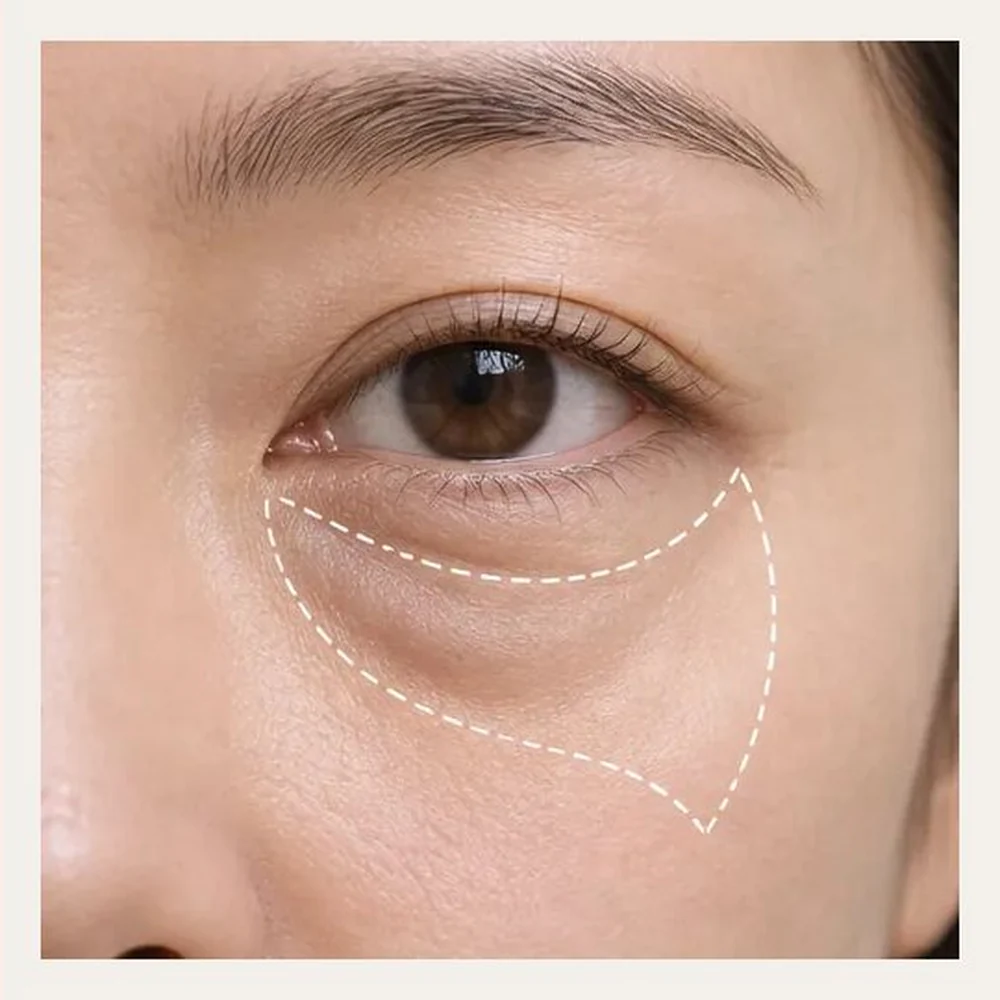
01What are the stages of recovery after lower eyelid surgery?
Answer Swelling and bruising are at their worst on days 3–4. If an incision was made, stitches are removed on days 5–7. Tightness and firmness may occur from 3 weeks to 3 months, followed by gradual softening of the tissue from 3 months to 1 year.
Lower blepharoplasty addresses under-eye bulging and hollows, loose skin and muscle, and support for the lower eyelid together. At VITAL Plastic Surgery, the procedure is performed under sedation, and patients go home the same day. Transconjunctival lower blepharoplasty, which is performed through the conjunctiva, takes about 30 minutes, while lower blepharoplasty with a skin incision takes about 1 hour.
Swelling and bruising gradually increase after surgery and are most severe on days 3–4. You can resume light daily activities after 2–3 days, although some swelling and bruising may still remain. If an incision was made, stitches are removed on days 5–7. Avoid eye makeup, eyelash extensions, and contact lenses for 2 weeks.
Recovery continues even after visible swelling and bruising have subsided. Between 3 weeks and 3 months, the tissue may feel firm and tight. Between 3 months and 1 year, the tissue softens, redness decreases, and the two sides gradually become more symmetrical.
The table below shows the average recovery timeline provided by VITAL Plastic Surgery; individual experiences vary. Adding a midface lift that also treats the cheeks can increase the extent of surgery, which may lead to more swelling and greater care needs.
| Timing | What Happens | What to Keep in Mind |
|---|---|---|
| 3–4 days after surgery | When swelling and bruising are most pronounced | Sleep with your head slightly elevated; apply cold compresses gently |
| After 2–3 days | Light daily activities are possible; swelling and bruising may remain | Avoid rubbing your eyes |
| Days 5–7 | Suture removal if an incision was made | Eye makeup · contact lenses after 2 weeks |
| 3 weeks–3 months | A period of tissue firmness and tightness | Sauna after 1–2 weeks; strenuous exercise after 1 month |
| 3 months–1 year | The tissue softens, redness decreases, and the two sides gradually become more even | Follow-ups at 1, 3, and 6 months and 1 year |
In Simple Terms Recovery after lower blepharoplasty is like a campsite the day after a tent has been pitched again. Even if the ropes have been tightened to make the fabric taut, rain-soaked fabric hangs heavily on the first night, and the surrounding ground is muddy. After a few days, the moisture dries and the shape of the tent becomes visible, but it takes several more weeks for the soil around the newly placed stakes to become firm, and the ropes may feel a little stiff in the meantime. So, rather than pitching the tent again while the ground around the stakes is still soft, you wait for the soil to settle before checking the tension in the ropes again.
What can I do to help swelling and bruising go away faster?
02What can I do to reduce swelling and bruising faster?
Answer For 3–4 days, rest with your head slightly elevated, apply cold compresses gently without letting ice touch your skin or eyes directly, and avoid rubbing your eyes.
During the first 3–4 days, when swelling is increasing, it is best to sleep with your head slightly elevated. When you lie down with your head low, swelling can collect more easily in your face. Apply cold compresses gently, without letting ice touch your skin or eyes directly. The skin under the eyes is the thinnest on the body, so do not press hard.
In a systematic review of 29 randomized controlled trials involving 2,287 patients who underwent eyelid and periocular surgery, cold compresses helped relieve symptoms in the short term, while herbal and supplemental therapies such as arnica and bromelain showed no clear benefit1. This means that cold compresses are a helpful part of basic care, but they do not make swelling go away all at once.
Rather than taking supplements marketed for swelling, we recommend stopping herbal medicines and supplements such as omega-3s when possible because they may increase the tendency to bleed. We also advise all patients to stop smoking and drinking alcohol before surgery because both can affect bleeding and wound healing.
You continue to use your eyes during recovery. Throughout your recovery, try to limit contact lens use, use artificial tears frequently, and avoid rubbing your eyes. You can use a sauna after 1–2 weeks and resume strenuous exercise after 1 month.
- Sleep with your head slightly elevated for the first 3–4 days
- Apply cold compresses gently without letting ice touch your skin or eyes directly
- Avoid rubbing your eyes and use artificial tears often
- Limit contact lens use as much as possible
- Sauna after 1–2 weeks; strenuous exercise after 1 month
Is recovery faster with a transconjunctival approach than with a skin incision?
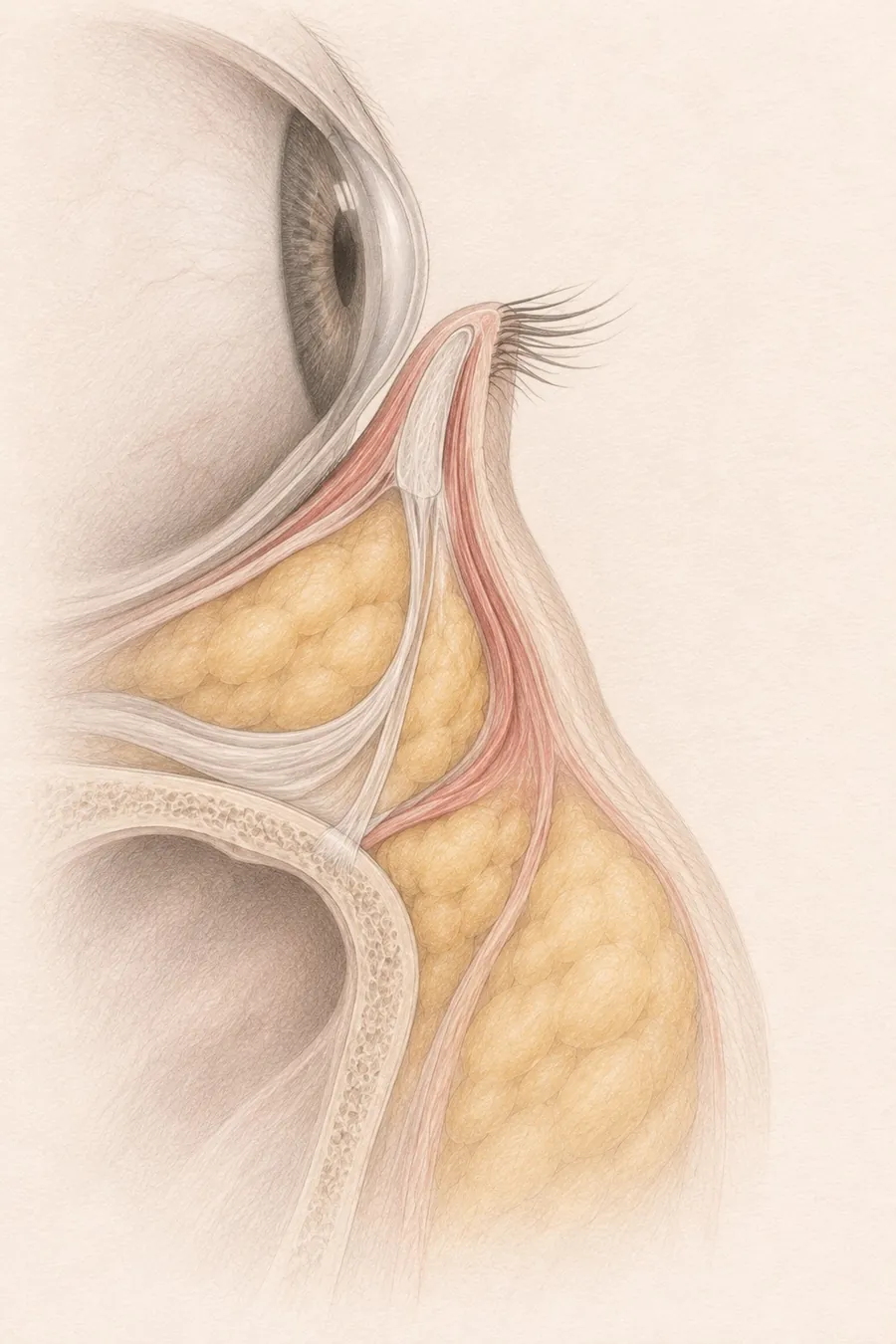
03Is recovery faster with a transconjunctival approach than with a skin incision?
Answer Transconjunctival lower blepharoplasty leaves no skin incision and requires no skin sutures to be removed. However, swelling and bruising can occur with either approach, so we cannot assume that a shorter surgery means less swelling.
Transconjunctival lower blepharoplasty is performed through the conjunctiva on the inside of the lower eyelid, leaving no incision on the skin. This means there are no skin sutures to remove. Lower blepharoplasty performed through an incision just below the eyelashes also involves the muscle and skin; sutures are removed 5–7 days after surgery.
It is easy to assume that a shorter surgery means less swelling, but the length of surgery and the amount of swelling are not the same thing. With either approach, swelling is most pronounced on days 3–4. Even after the initial shape becomes visible, it takes several months for swelling to subside and the tissues to settle.
The choice of approach depends on the condition under the eyes, not the length of recovery. During the examination, we check the elasticity of the skin and orbicularis oculi muscle (the muscle that encircles the eye) by hand. If Re2O or laser treatment appears sufficient, we perform surgery through the conjunctiva and then treat the skin with one of those options. If those treatments appear insufficient, we plan a skin incision.
During recovery, chemosis—a swelling of the conjunctiva, the thin membrane covering the white of the eye—can occur. In a study at an Italian hospital that followed 1,047 lower blepharoplasty patients for up to 24 months, persistent chemosis was more common after a skin incision combined with lateral canthoplasty than after a transconjunctival approach2. Please tell us at your follow-up if your eyes sting or the white of your eye appears swollen.
| Category | Transconjunctival Lower Blepharoplasty | Transcutaneous Lower Blepharoplasty |
|---|---|---|
| Incision location | Conjunctiva inside the lower eyelid | Skin just below the eyelashes |
| Surgery Time | About 30 minutes (approximately 15 minutes per side) | About 1 hour |
| Suture Removal | No skin sutures | Days 5–7 |
| Swelling and bruising | Most severe on days 3–4 | Most severe on days 3–4 |
| Consider for these under-eye conditions | When bulging fat and a groove are the main concerns | When skin and muscle sagging are also present |
Then why does the area under my eyes feel firm and tight three weeks later, even though the bruising has faded?
04Why does the area under my eyes feel firm and tight after 3 weeks, even though the bruising has faded?
Answer From 3 weeks to 3 months, tissues heal and may feel firm and tight. This is a response to healing, so revision surgery is not decided based on appearance during this period alone.
Around 3 weeks, as swelling and bruising subside and you appear to have recovered on the outside, the area under your eyes may feel firm or tight. VITAL Plastic Surgery explains that tissues may feel firm and tight from 3 weeks to 3 months.
For lower blepharoplasty, VITAL Plastic Surgery first considers leaving protruding fat in place and reinforcing the septum, the thin membrane that keeps fat from bulging forward, rather than removing or repositioning the fat. If the skin and muscle are also sagging, the loosened orbicularis oculi muscle and supporting structures are lifted outward and upward and secured near the outer corner of the eye. As the areas where these internal structures were treated heal, they may feel firm and tight for a while.
The appearance during this period is a response to healing, so revision surgery is not decided immediately, even if the two sides look slightly different. During follow-up, we check together whether the tissues soften, redness fades, and the two sides become more even over 3 months to 1 year.
For up to 3 months after surgery, we continue to manage swelling and bruising and check the wound and scar. If needed, we consider laser treatment to help with scarring and recovery. After the recovery period, we consider regenerative treatments such as Re2O or PRP based on your individual condition. When Re2O is used to support recovery, it is administered after surgical swelling has subsided, usually after 4 weeks. Whether it is needed and when to use it are determined through an examination, and it is not recommended to everyone in the same way.
So, if my eyes feel dry or my lower eyelids look lower, is that part of recovery?
05Are dry eyes or a lower eyelid that appears to droop part of the recovery process?
Answer Swelling can temporarily make them appear that way, but lower eyelid sagging and ectropion are risks of lower blepharoplasty, so we check for them separately during follow-up.
The risks discussed for lower blepharoplasty include swelling, bruising, asymmetry, lower eyelid sagging or ectropion (outward turning of the eyelid), scarring, and undercorrection. It is easy to think that removing more skin will make the area tighter, but removing too much can cause ectropion, lagophthalmos (inability to close the eyes completely), or dry eyes. For this reason, skin is removed only to the extent that the eyes remain comfortable.
In a study at a US institution that followed 100 people for at least 3 months after incisional lower blepharoplasty in which the skin and muscle were lifted together, the lower eyelid position dropped by an average of about 0.3 mm, and 2 people underwent revision surgery for eyelid position problems. In the same study, 25 people developed new dry eye symptoms after surgery3. This means that even though major changes are rare, dryness can occur in a substantial number of people.
Before surgery, we check for thyroid eye disease, glaucoma, severe dry eye, and autoimmune diseases. These conditions may be reasons to postpone or forgo surgery. During recovery, use artificial tears frequently, and be sure to tell us at your follow-up if your eyes continue to sting or feel as though they do not close fully.
At follow-up visits, we check for discomfort and changes in function as well as reviewing photos. We assess swelling, bruising, wounds, and eye function at 1 week, 1 month, 3 months, 6 months, and 1 year. Whether additional care is needed is determined through an examination at that time.
When can I start wearing makeup, exercising, and seeing people?
06When can I start wearing makeup, exercising, and seeing people again?
Answer We recommend resuming eye makeup and contact lens use after 2 weeks, sauna use after 1–2 weeks, and strenuous exercise after 1 month. Guidance on returning to work and scheduling social activities depends on the extent of surgery and your recovery.
You can resume light daily activities after 2–3 days. However, swelling and bruising are usually at their worst on days 3–4 and may remain afterward, so it is best to consider this when scheduling activities where your face will be visible. We provide separate guidance on returning to work, wearing makeup, and other daily activities based on the extent of surgery and your recovery.
If an incision was made, avoid eye makeup, eyelash extensions, and contact lenses for 2 weeks. If surgery was performed only through the conjunctiva, there are no skin stitches, but it is still best to avoid irritation from rubbing around the eyes.
You can use a sauna after 1–2 weeks and resume strenuous exercise after 1 month. If you are unsure whether your exercise is strenuous, please tell us about it at your follow-up visit.
If you have surgery on both the upper and lower eyelids or have other procedures at the same time, swelling and the amount of care needed may increase. The decision to combine procedures depends on your health and the extent of surgery.
| Activity | When | Note |
|---|---|---|
| Light daily activities | After 2–3 days | Swelling and bruising may remain |
| Makeup | Starting the day after stitch removal | If an incision was made, stitches are removed on days 5–7 |
| Strenuous exercise · Sauna | After 3–4 weeks | Overlaps with the period when tissue feels firm and tight |
| Return to work | Guidance depends on the extent of surgery and recovery | Allow extra time before events where your face will be visible |
Do not wait if you experience these symptoms
07Do not wait if you have these symptoms
Answer If you have sudden severe pain, reduced vision or an obstructed field of vision, bleeding that does not stop, or rapidly worsening swelling on one side, contact us immediately rather than waiting for your scheduled appointment.
Normal swelling and bruising appear similarly on both sides and begin to decrease after days 3–4. If the area around just one eye swells rapidly and hurts, or if you cannot see clearly or your field of vision is obstructed, blood may have collected around the eye and should be checked immediately.
In a survey of 237 members of the American Society of Ophthalmic Plastic and Reconstructive Surgery covering more than 269,000 cosmetic eyelid procedures, orbital hemorrhage (bleeding in the bony space that contains the eye) occurred in about 1 in 2,000 procedures, and permanent vision loss occurred in about 1 in 22,000. Most cases occurred within three hours after surgery, and the risk dropped substantially after 24 hours, though some occurred several days later4.
Factors also observed in the same survey included high blood pressure, aspirin use before or after surgery, vomiting after surgery, and increased physical activity4. Because the survey relied on memory, the exact numbers have limitations, but they show why it is important to rest and avoid overexertion on the first day. For the same reason, VITAL Plastic Surgery checks for anticoagulant use before surgery and recommends stopping supplements.
Other risks to discuss include asymmetry, scarring, and undercorrection. This is not a complete list of possible risks. Risks can vary depending on your health, previous treatments, and the technique and extent of surgery, so they are explained in detail during the examination and consent process.
08Three things we check first during your consultation
What we assess first during consultation
- Whether protruding fat is the main cause
- Whether there is also loose skin — skin and orbicularis muscle elasticity help determine whether an incision is needed
- Whether there is also cheek sagging — whether to consider a midface lift as well
These are general care principles. The actual decision is made after an examination.
When other care is needed first We do not recommend immediate surgery when increased pigmentation or visible blood vessels are the main cause of darkness; when lack of sleep and swelling are the main causes; when filler remains under the eyes and needs to be evaluated and considered for dissolving first; or when problems with the eye surface or lower eyelid support need to be assessed first. Thyroid eye disease, glaucoma, severe dry eye, autoimmune disease, and anticoagulant use may also be reasons to postpone or avoid surgery.
The answer to the original question, “How much time will I need to take off work after lower blepharoplasty because of swelling and bruising?” is as follows. Swelling and bruising are at their worst on days 3–4. You can resume light daily activities after 2–3 days, though swelling and bruising may remain. If an incision was made, stitches are removed on days 5–7, so your return to work is determined by the extent of surgery and your recovery. VITAL Plastic Surgery considers firmness and tightness lasting from 3 weeks to 3 months part of the healing process and checks both appearance and eye function at 1 week, 1 month, 3 months, 6 months, and 1 year.
— VITAL Plastic Surgery
When booking, simply mention, “Please discuss my recovery timeline and whether I need an incision,” and we can start with those topics during your consultation. You do not need to make a decision on the day of your consultation.
Related ReadingLower Blepharoplasty · Midface Care Guide
READ NEXT
Read Next
FAQ
Frequently Asked Questions
When are stitches removed?
If a skin incision was made, stitches are removed on days 5–7. If surgery was performed only through the conjunctiva, there is no skin incision and no skin stitches to remove.
When can I wear makeup?
We recommend waiting until the day after your stitches are removed. Be careful not to rub around your eyes when removing makeup.
It has been about 3 weeks, and the area under my eyes feels hard and tight. Is that okay?
From 3 weeks to 3 months, the tissue can feel firm and tight. This is a response to the healing process, so we do not decide on revision surgery based only on how it looks at this stage. Please let us know if pain persists.
When can I wear contact lenses?
During recovery, we recommend limiting contact lens use as much as possible and using artificial tears frequently. We will discuss when you can wear them again after checking your eyes at a follow-up visit.
BEFORE CONSULTATION
What to Prepare Before Your Consultation
- Clear Your SchedulePlease plan around the first 3–4 days, when swelling and bruising are at their worst, and, if an incision is made, the removal of stitches on days 5–7.
- Stop Smoking and Avoid AlcoholWe provide these essential instructions before surgery. Smoking and alcohol affect bleeding and wound healing.
- Medications and SupplementsWe recommend stopping herbal medicines and supplements such as omega-3 when possible because they may increase bleeding. Please tell us about every medication you take.
- Eye-Related Medical HistoryThyroid eye disease, glaucoma, severe dry eye, autoimmune disease, or anticoagulant use may be reasons to postpone or avoid surgery.
- Eye Habits and Previous TreatmentsPlease minimize contact lens use and apply artificial tears frequently. Also let us know if you have used double eyelid tape or glue, or received under-eye filler.
REFERENCES
References
- Alamoudi A, Albishry AM, Alnabihi AN, et al. Interventions for reducing bleeding and swelling in eyelid and periocular surgeries: a systematic review of randomized controlled trials. Orbit. 2025. doi:10.1080/01676830.2025.2581622 (View abstract)
- Di Maria A, Barone G, Gaeta A, et al. Persistent Conjunctival Chemosis after Lower Lid Blepharoplasty: A Comparison of Different Surgical Techniques. Journal of Clinical Medicine. 2024. doi:10.3390/jcm13072093 (View abstract)
- Sultan B, Genther DJ, Perkins SW. Measurement of Change in Lower Eyelid Position in Patients Undergoing Transcutaneous Skin-Muscle Flap Lower Eyelid Blepharoplasty. JAMA Facial Plastic Surgery. 2016. doi:10.1001/jamafacial.2016.0673 (View abstract)
- Hass AN, Penne RB, Stefanyszyn MA, et al. Incidence of postblepharoplasty orbital hemorrhage and associated visual loss. Ophthalmic Plastic and Reconstructive Surgery. 2004. doi:10.1097/01.iop.0000143711.48389.c5 (View abstract)
The findings in these papers reflect the participants and conditions of each study and do not mean that every individual will have the same results.
This article provides general medical information and does not replace diagnosis or treatment. Surgical results and recovery vary by individual, and complications such as bleeding, infection, scarring, and asymmetry may occur.
More articlesVITAL Plastic Surgery Medical Articles
RESERVATION
You do not need to decide the day of your consultation.
Organize questions about this page without entering your name, contact information, or medical history. This does not submit an appointment request.