PLASTIC SURGERY
MEDICAL COLUMN
Questions Answered Directly by the Doctor Before You Decide on Surgery
Lower Blepharoplasty
Articles
Lower blepharoplasty scars: How visible will the incision below the eyelashes remain?
Whether a scar remains on the skin depends on the surgical approach. An approach through the conjunctiva inside the lower eyelid leaves no skin incision. When skin and muscle sagging are also addressed, an incision is made just below the lashes, leaving a line along that border.
Medically reviewed by Dr. Hyungwoo Yim, Medical Director and board-certified plastic surgeon · Published November 5, 2026 · Last reviewed November 11, 2026
SHORT ANSWER
First, the Short Answer
- Whether a scar remains on the skin depends on the surgical approach. An approach through the conjunctiva inside the lower eyelid leaves no skin incision. When skin and muscle sagging are also addressed, an incision is made just below the lashes, leaving a line along that border.
- Preserving support to prevent the lower eyelid from drooping or turning outward is just as important as the scar. Removing more skin does not simply make the result tighter. Excessive removal can cause ectropion, incomplete eyelid closure, and dry eyes.
- At VITAL Plastic Surgery, we decide whether a skin incision is needed by directly assessing the elasticity of the skin and orbicularis oculi muscle by hand during an examination. If Re2O or laser treatment can adequately address the skin concerns, we use a transconjunctival approach and follow with those skin treatments. When a skin incision is needed, we explain why and discuss alternatives.
“Will lower blepharoplasty leave a surgical scar under my eyes?”
This is a paraphrase of a question we often hear during consultations.
To answer this question, we first need to distinguish where your current concern comes from. We will explain each point below, then return to the original question at the end.
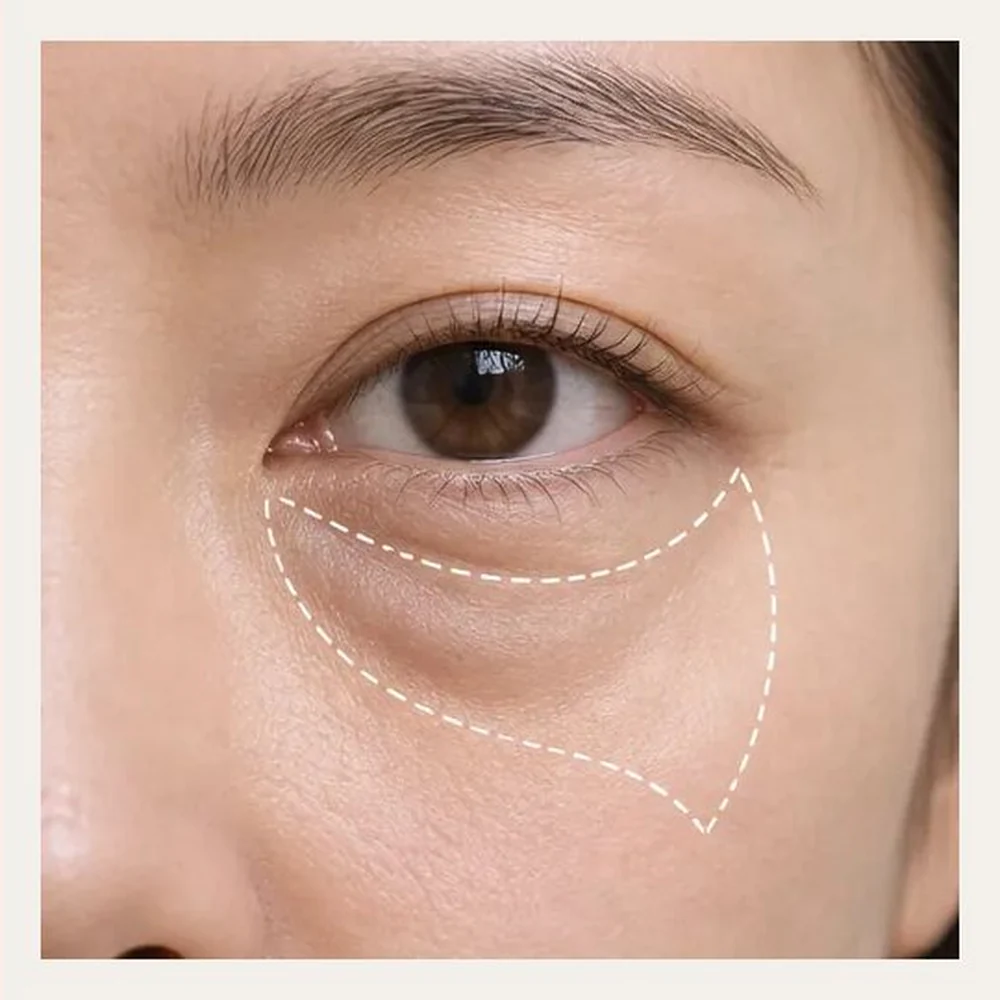
01Where are lower blepharoplasty scars located?
Answer A transconjunctival approach leaves no skin incision, while an incision just below the lashes leaves a line along that border.
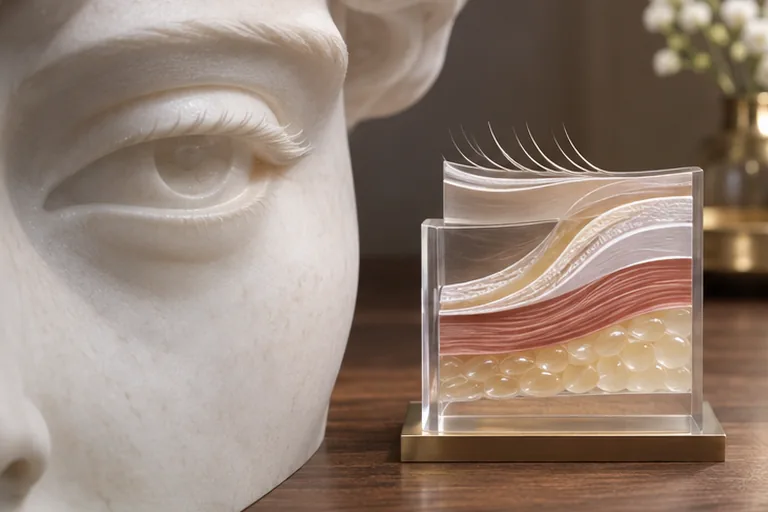
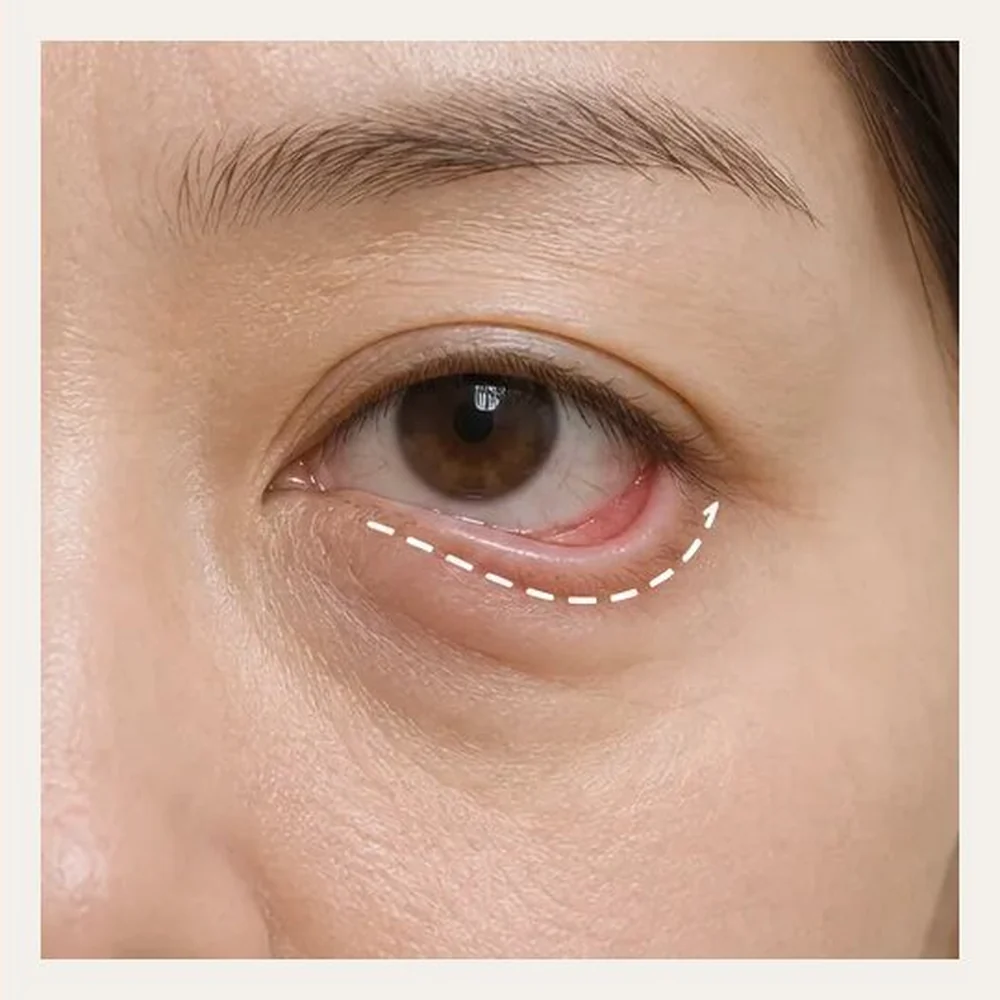
Lower blepharoplasty is surgery that evaluates and addresses under-eye bulging and hollowing, loose skin and muscle, and lower eyelid support together. There are two approaches: a transconjunctival approach through the conjunctiva—the pink lining inside the eyelid—which leaves no skin incision, and an approach through an incision just below the lashes that also addresses the muscle and skin.
When bulging and a groove are the main concerns, we mark the boundary between them while the patient is seated. We then enter through the conjunctiva, leave the fat in place, reinforce the septum—the thin membrane that keeps fat from pushing forward—and finish on the conjunctival side. This leaves no skin incision.
When skin and muscle sagging are also present, we make an incision just below the lashes and dissect beneath the muscle. We lift the orbicularis oculi muscle and supporting structures upward and outward, secure them near the outer corner of the eye, remove only the excess skin, and close the incision with fine sutures. If the cheeks also sag, we consider adding a midface lift through the same incision to address the fat layer in the upper cheek.
The incision just below the lashes is placed along a less noticeable border. There may be redness immediately after surgery, but the line gradually fades as the tissue settles. However, the scar does not disappear, so we carefully consider whether a skin incision is needed in the first place.
| Method | Scarring | When it is typically considered |
|---|---|---|
| Transconjunctival Lower Blepharoplasty | No skin incision line | When bulging fat and a groove are the main concerns |
| Subciliary Lower Blepharoplasty | A line along the border just below the lashes | When skin and muscle sagging are also present |
| Lower Blepharoplasty + Midface Lift | Incision below the lashes (dissection extends to the upper cheek) | When cheek sagging is also present |
In Simple Terms The under-eye area is like a tent swaying in the wind. Cutting away loose outer fabric may make it look taut briefly, but too little fabric can cause the tent opening to lift or tear. Tightening the ropes anchored to the ground is what makes the tent taut. In lower blepharoplasty, those ropes are the orbicularis oculi muscle and supporting structures. Removing less skin also reduces pulling on the stitched line—the scar.
So how do you decide whether a skin incision is needed?
02How do you decide whether a skin incision is needed?
Answer The decision is based on a hands-on assessment of skin and orbicularis oculi muscle elasticity, rather than a fixed measurement.

During the examination, we directly assess the elasticity of the skin and orbicularis oculi—the muscle surrounding the eye—by hand. If Re2O or laser treatment can adequately address the skin concerns, we use a transconjunctival approach and follow with those skin treatments. If those treatments appear insufficient, we either treat that area separately later or plan a skin incision.
This judgment relies on extensive clinical examination experience rather than a fixed numerical cutoff, so we explain the reasoning during the consultation. When the desire to avoid a scar conflicts with the desire to remove sagging skin, we decide together which priority should carry more weight.
Research also does not establish that one approach is better. Researchers in Lebanon reviewed 24 studies published from 2000 through May 2025 and concluded that fat-preserving lower eyelid surgery can be performed safely through either a skin incision or a conjunctival incision2. They also noted that a lack of studies rigorously reporting complications and outcomes makes it difficult to determine the most appropriate approach2.
The approach is therefore chosen by considering not only the scar, but also the bulging, hollows, skin elasticity, and cheek position. A transconjunctival approach takes about 30 minutes (around 15 minutes per side), while incisional lower blepharoplasty takes about one hour. Both are performed under local anesthesia or sedation, and patients go home the same day.
So is there anything more important to consider than scarring?
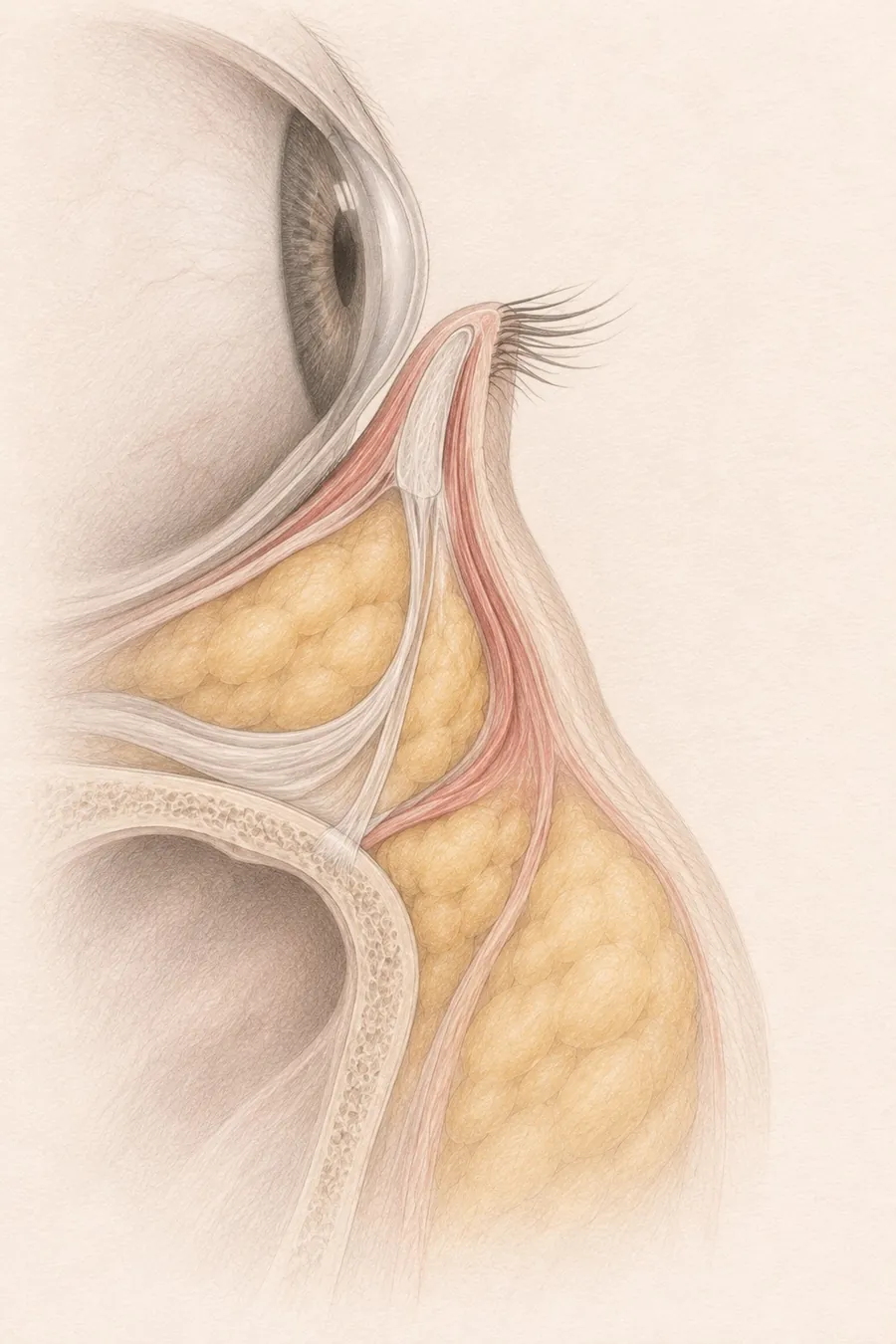
03Is there anything more important to consider than scarring?
Answer The position of the lower eyelid. Drooping or outward turning of the eyelid can cause more disruption to daily life than a single line beneath the eye.

Removing too much skin can cause ectropion, in which the lower eyelid turns outward; lagophthalmos, or incomplete eyelid closure; and dry eyes. The under-eye area has the thinnest skin on the body, leaving little to spare. We therefore remove skin only to the extent that the eye remains comfortable and focus on lifting and securing the loosened orbicularis oculi muscle and supporting structures.
This is why outer eyelid corner support is added to lower eyelid surgery performed through a skin incision. In a study reviewing 264 patients over 10 years, a U.S. physician routinely added outer corner support to subciliary lower blepharoplasty. Eyelid malposition requiring surgical correction occurred in 9 patients (3.5%)1. In the same study, 31 patients (11.7%) underwent minor revisions for issues such as small cysts or granulomas along the incision line or inflammation at the outer corner suture site1.
Another study examined whether nerve injury near the incision causes eyelid drooping. Electromyography of the orbicularis oculi muscle before and after subciliary lower blepharoplasty in 9 patients (18 eyes) showed no signs of acute nerve injury at 34 of 36 sites (94%). The authors concluded that nerve injury alone cannot explain postoperative eyelid malposition and emphasized the importance of lower eyelid support4.
Ultimately, reducing scarring and protecting the lower eyelid work toward the same goal. Removing less skin and providing support through the muscle and supporting structures also reduces tension on the incision line.
So is the transconjunctival approach completely risk-free?
04Is the transconjunctival approach completely risk-free?
Answer No. It leaves no skin scar, but each approach has its own potential complications.
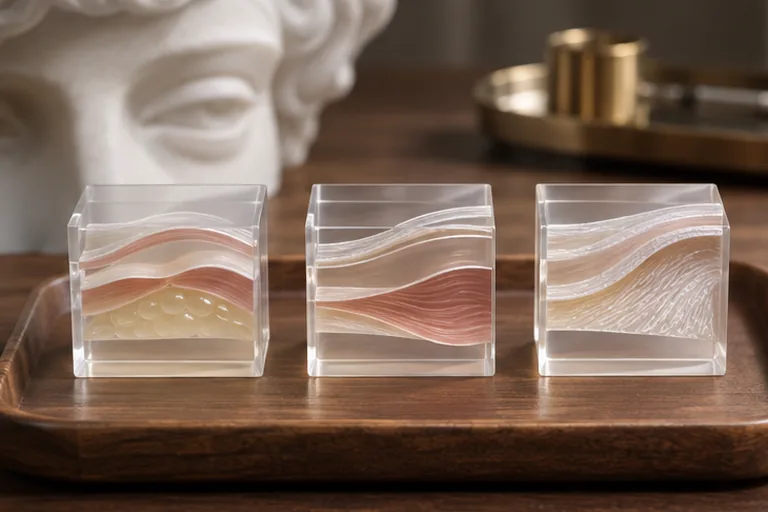
Although it is not cosmetic surgery, research on fracture repair around the eye offers useful context because it uses similar incisions. In a network meta-analysis of 27 studies involving 2,790 patients, researchers in Taiwan found that the subciliary approach had the highest risks of ectropion and scleral show, or visible white below the iris. The transconjunctival approach had the lowest risks of ectropion and scarring, but the highest risk of entropion, in which the eyelid turns inward3.
Fracture surgery involves deeper dissection down to the bone, so its rates cannot be directly compared with those of cosmetic lower blepharoplasty. However, the same principle applies: each approach has its own risks, and the absence of a skin scar does not mean the absence of risk.
Even with a transconjunctival approach, removing and repositioning fat involves working near a muscle that moves the eye and passes between the fat compartments. This is one reason VITAL Plastic Surgery first considers reinforcing the septum while leaving the fat in place, rather than removing and repositioning it.
Possible complications after lower blepharoplasty include swelling, bruising, asymmetry, lower eyelid drooping or ectropion (outward turning), scarring, and undercorrection. This is not a complete list of possible risks. Risks vary depending on your health, previous treatments, and the surgical technique and extent.
So how does the scar change over time?
05How does the scar change over time?
Answer They are red for the first few weeks, feel firm and tight from 3 weeks to 3 months, and soften over 3 months to 1 year.

Swelling and bruising peak on days 3–4. If a skin incision is made, stitches are removed on days 5–7. Light daily activities are possible after 2–3 days, although swelling and bruising may remain. From 3 weeks to 3 months, the tissue can feel lumpy and tight, making the incision line look more noticeable.
These changes are part of healing, so we do not decide on revision surgery based only on how the area looks at this stage. Between 3 months and 1 year, the tissue softens, redness fades, and the two sides gradually become more even. The table below provides general guidance based on average recovery times; individual recovery varies.
Early in recovery, sleep with your head slightly elevated and apply cold compresses gently, keeping ice from touching your skin or eyes directly. If you develop sudden severe pain, reduced or obstructed vision, bleeding that will not stop, or rapidly worsening swelling on one side, contact us immediately rather than waiting for your scheduled appointment. Unlike changes in a scar, these symptoms should not be watched while waiting for them to improve.
| Timing | What Happens | What to Keep in Mind |
|---|---|---|
| 3–4 days after surgery | Swelling and bruising are at their worst | Sleep with your head slightly elevated and gently apply cold compresses |
| Days 5–7 | Suture removal if an incision was made | Eye makeup · contact lenses after 2 weeks |
| 3 weeks–3 months | The incision line feels firm and tight | At this point, appearance alone is not enough to judge. Saunas after 1–2 weeks; strenuous exercise after 1 month. |
| 3 months–1 year | The scar softens and redness decreases | Follow-ups at 1, 3, and 6 months and 1 year |
How are scars cared for?
06How should I care for the scar?
Answer Care differs by stage. Early on, we check the wound and scar. After the recovery period, we consider treatments for the underlying skin tissue based on your individual condition.

For the first 3 months after surgery, we manage swelling and bruising, check the wound and scar, and use laser treatments for scarring and recovery if needed. After the recovery period, we consider regenerative treatments such as Re2O or PRP based on your individual condition. Through 6 months to 1 year, we care for skin quality and elasticity alongside scheduled follow-up checks at 1 week, 1 month, 3 months, 6 months, and 1 year.
Care is determined after an examination, based on the extent of surgery and your recovery. We do not recommend the same care for everyone. Consistent scar care for at least 6 months is standard, and sunscreen is the most important part of care after a procedure or surgery.
For thin under-eye skin, we compare approaches that replenish the dermis instead of removing skin to smooth it. Under the eyes, we place Re2O Fine, a product specifically designed for this area, in a sheetlike layer using a cannula (a thin tube with a rounded tip). This is because injections placed at individual points may look like nodules beneath thin skin. This approach allows us to address the underlying skin tissue without increasing the amount removed.
When should another approach come before lower blepharoplasty?
07When should other options be considered before lower blepharoplasty?
Answer Surgery is not the first step if the darkness is caused by pigmentation or blood vessels, or if swelling and lack of sleep are the main causes.
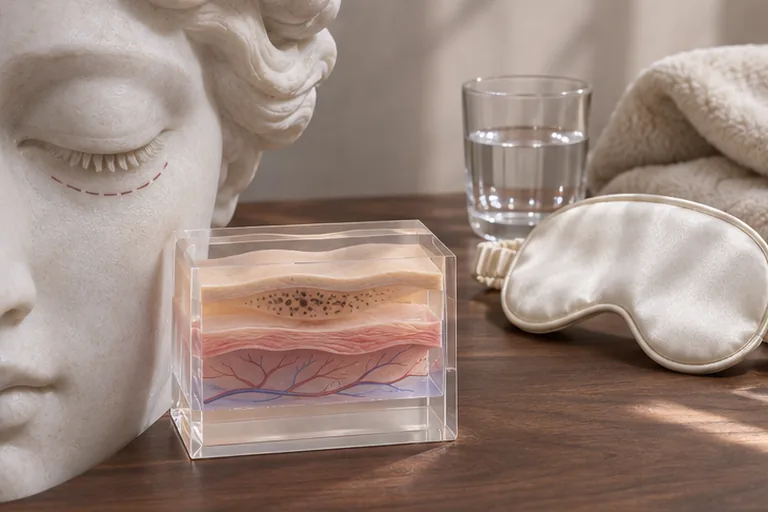
Dark circles are a description of a dark appearance, not a disease name. Causes include increased pigmentation, blood vessels and muscle showing through thin skin, and shadows created by hollows and bulges. Several causes may overlap. Surgery cannot remove pigmentation itself, and pigmentation treatments have difficulty correcting structural shadows.
We first identify the main cause by changing the lighting and gently stretching the skin. Eye creams and moisturizers may help support the skin barrier and manage fine lines caused by dryness, but they cannot reverse bulging fat or significant sagging. Vigorous massage and devices used around the eyes require consideration of the risks of irritation, burns, and eye injury.
Our priorities when examining the eye area also vary with age. In your 40s, we assess excess skin, changes in the upper and lower eyelids, and the transition to the midface. In your 50s, we check whether hollowness, sagging, and functional problems coexist. In your 60s and beyond, we examine the ocular surface, eyelid support, and overall health more closely. This is not a list of treatments required at each age. Even among people of the same age, the examination determines whether a skin incision is needed.
We do not recommend proceeding directly to lower blepharoplasty in the following situations.
- When increased pigmentation or visible blood vessels are the main cause of darkness
- When lack of sleep and puffiness are the main causes
- When remaining under-eye filler needs to be evaluated and dissolving it considered first
- When the eye surface or lower eyelid support needs to be assessed first
08Three things we check first during your consultation
What we assess first during consultation
- Whether protruding fat is the main cause
- Whether loose skin is also present
- Whether sagging cheeks are also present
These are general care principles. The actual decision is made after an examination.
When other care is needed first If pigmentation or visible blood vessels are the main cause of darkness, or if lack of sleep and swelling are the main causes, care directed at those causes comes before surgery. If under-eye filler remains, evaluation and consideration of dissolving it come first. If there are problems with the ocular surface or lower eyelid support, those need to be evaluated first. We do not describe this as surgery that leaves no scars.
The answer to the opening question, “Will lower blepharoplasty leave an incision scar under my eyes?” is this: a transconjunctival approach leaves no incision line on the skin, while addressing both skin and muscle sagging leaves a line along the border just below the eyelashes. We determine which approach is appropriate by directly examining the elasticity of the skin and orbicularis oculi muscle by touch. Preserving the lower eyelid's position takes priority over the scar. Your consultation can begin with a discussion of whether a skin incision is necessary.
— VITAL Plastic Surgery
When booking, simply leave a note saying, “Please assess my skin elasticity first to see whether a skin incision is necessary,” and we will start there during your consultation. Having a consultation does not mean you need to decide that day.
Related ReadingLower Blepharoplasty · Midface Care Guide
READ NEXT
Read Next

FAQ
Frequently Asked Questions
Is there a method that leaves no scar?
An approach through the conjunctiva leaves no incision line on the skin. However, this approach alone may not be enough if the skin and muscle sag significantly. The decision is made after directly assessing tissue elasticity.
Why shouldn't too much skin be removed?
The risk of lower eyelid drooping or outward turning, called ectropion, may increase. We limit tissue removal to what is necessary and also explain whether additional support is needed.
My incision line looks more noticeable at week 3.
It can look this way between 3 weeks and 3 months, when the tissue becomes firm and tight. We assess healing at follow-up visits rather than judging the result by its appearance during this period alone.
Can eye cream or massage be used instead?
They may help with hydration and skin barrier care, but they cannot reverse bulging fat or significant sagging. Vigorous massage and devices used around the eyes carry risks of irritation and burns.
Can you decide whether I need a skin incision from photos alone?
That is difficult. An in-person examination is needed because the decision depends on a hands-on assessment of the elasticity of the skin and orbicularis oculi muscle.
BEFORE CONSULTATION
What to Prepare Before Your Consultation
- PhotosFront-facing photos taken in natural light, along with photos showing how your under-eye area changes when sitting and lying down, can be helpful.
- Previous Procedure HistoryPlease tell us about any previous under-eye fillers, injections, or laser treatments and when you had them.
- Scarring HistoryPlease let us know if scars from other surgeries have ever become thick and raised.
- Eye HealthPlease tell us about dry eye, contact lens use, and any history of conditions such as thyroid eye disease or glaucoma.
- Medications and SupplementsPlease provide a complete list of what you take, including anticoagulants, herbal medicines, and supplements such as omega-3.
REFERENCES
References
- Codner MA, Wolfli JN, Anzarut A. Primary transcutaneous lower blepharoplasty with routine lateral canthal support: a comprehensive 10-year review. Plastic and Reconstructive Surgery. 2008. doi:10.1097/01.prs.0000295377.03279.8d (View abstract)
- Atiyeh B, Chrabieh E, Makkawi K, et al. Transconjunctival or Transcutaneous Approach for Fat-preserving Lower Lid Blepharoplasty? Plastic and Reconstructive Surgery Global Open. 2025. doi:10.1097/GOX.0000000000007345 (View abstract)
- Chen YY, Chen TY, Liang CM, et al. Comparison of Lower Eyelid Complications Among Surgical Approaches for Orbital and Zygomaticomaxillary Fracture Repair: A Network Meta-Analysis. Journal of Clinical Medicine. 2026. doi:10.3390/jcm15051842 (View abstract)
- DiFrancesco LM, Anjema CM, Codner MA, et al. Evaluation of conventional subciliary incision used in blepharoplasty: preoperative and postoperative videography and electromyography findings. Plastic and Reconstructive Surgery. 2005. doi:10.1097/01.prs.0000173446.21513.47 (View abstract)
The findings in these papers reflect the participants and conditions of each study and do not mean that every individual will have the same results.
This article provides general medical information and does not replace diagnosis or treatment. Surgical results and recovery vary by individual, and complications such as bleeding, infection, scarring, and asymmetry may occur.
More articlesVITAL Plastic Surgery Medical Articles
RESERVATION
You do not need to decide the day of your consultation.
Organize questions about this page without entering your name, contact information, or medical history. This does not submit an appointment request.