PLASTIC SURGERY
MEDICAL COLUMN
Questions Answered Directly by the Doctor Before You Decide on Surgery
Breasts
Articles
Gynecomastia surgery: Is liposuction alone enough?
Liposuction may be considered first when fat is the main component. However, if firm glandular tissue can be felt beneath the areola, the liposuction cannula may have difficulty passing through it, and gland removal may be needed.
Medically reviewed by Dr. Hyungwoo Yim, Medical Director (board-certified plastic surgeon) · Published November 6, 2026 · Last reviewed November 11, 2026
SHORT ANSWER
First, the Short Answer
- Liposuction may be considered first when fat is the main component. However, if firm glandular tissue can be felt beneath the areola, the liposuction cannula may have difficulty passing through it, and gland removal may be needed.
- If your chest has recently enlarged suddenly or only one side feels firm, evaluating possible causes such as medications, hormones, or systemic disease, or performing a breast examination, comes before surgery.
- VITAL Plastic Surgery first evaluates the proportions of glandular tissue and fat, excess skin, and medications or medical conditions that may be contributing before deciding how much gland removal and liposuction to perform.
“I lost weight through exercise, but my chest is still enlarged. Is liposuction alone enough?”
This is a paraphrase of a question we often hear during consultations.
To answer this question, we first need to distinguish where your current concern comes from. We will explain each point below, then return to the original question at the end.
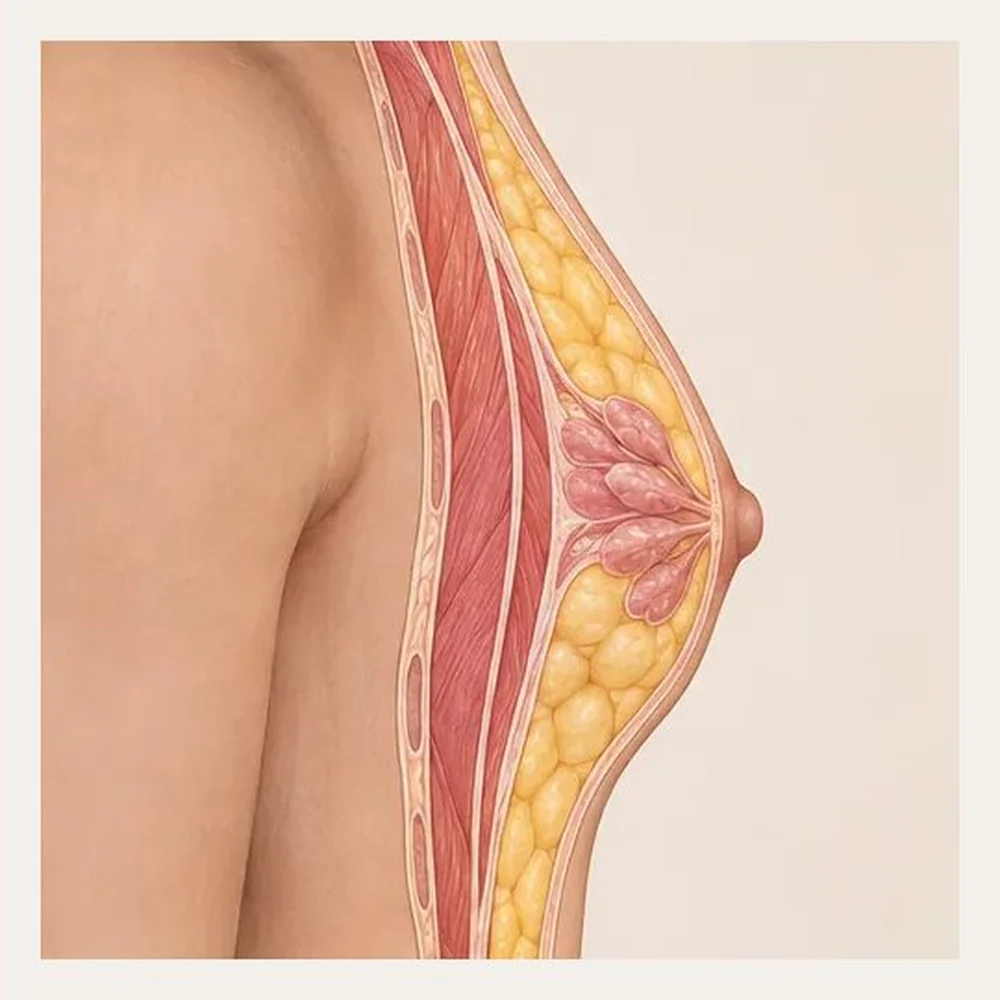
01What causes gynecomastia?
Answer This is a condition in which a man's chest appears enlarged because of glandular tissue or fat, and the cause varies from person to person.

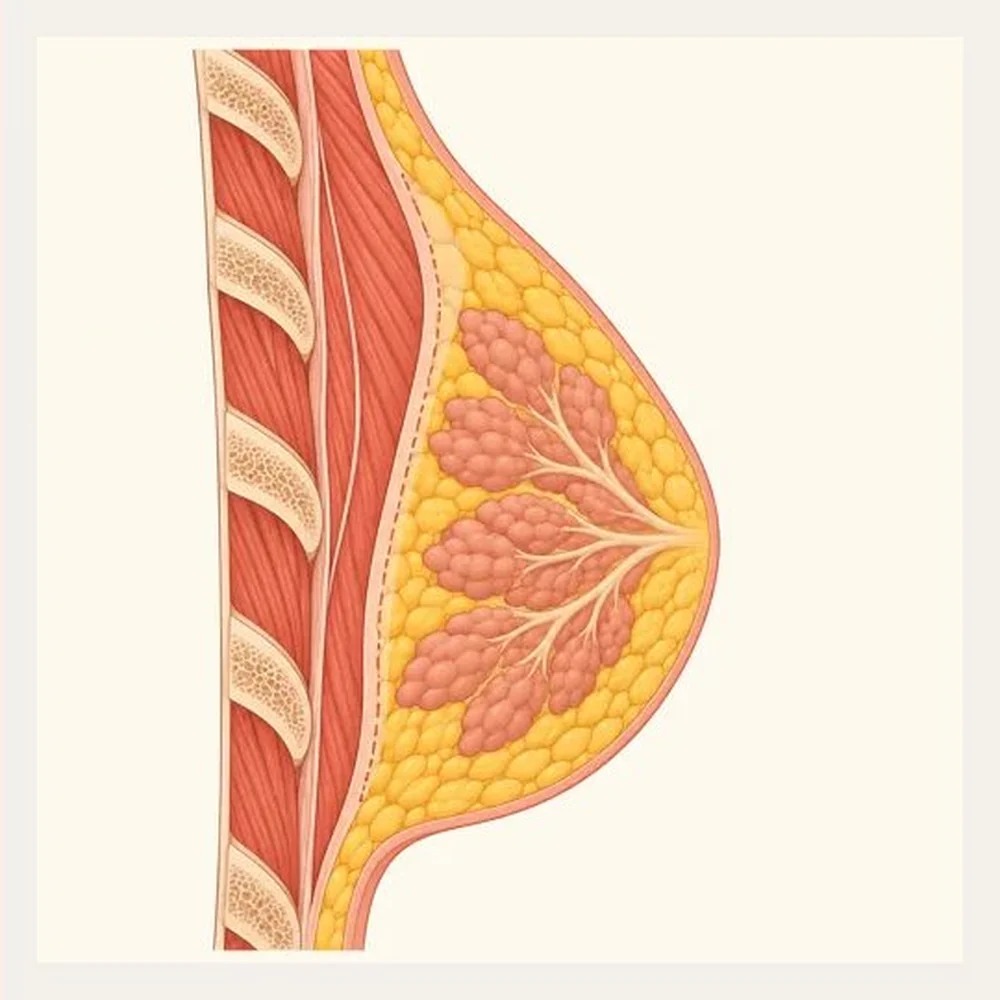
Gynecomastia refers to an enlarged appearance of the male chest due to glandular tissue (the firm tissue that makes up the breast glands) or fat. Enlargement may involve glandular tissue, excess fat, or a combination of both, and treatment varies accordingly. When the chest appears enlarged only because of fat accumulation, without enlarged glands, it is called pseudogynecomastia.
Gynecomastia can also occur naturally at certain ages. A review article (an article summarizing multiple studies) published in the German Medical Journal reported that gynecomastia can occur physiologically in newborns, adolescents during puberty, and men age 65 and older1. Because it often improves on its own in adolescents during puberty, VITAL Plastic Surgery also considers observation first at this stage.
In addition to hormonal changes during puberty, certain medications, anabolic steroids, and problems involving the liver, kidneys, thyroid, or testicles may be associated with gynecomastia. The same review listed a detailed medical history and physical examination, breast and testicular ultrasound, and blood tests for male and female sex hormones among the basic evaluations. It described treatment options ranging from observation to medication and surgery, depending on the cause and symptom severity1.
In Simple Terms Gynecomastia is like a pillow filled with both soft stuffing and a firm piece of sponge. The stuffing (fat) can be removed through a thin tube, but the firm sponge in the center (glandular tissue) cannot be suctioned out and must be removed directly. Removing too much sponge leaves a hollow in the center; removing too little leaves a bulge. To help the shape last after treatment, you first need to understand why the pillow became swollen and whether it is still expanding because of medications, hormones, or weight changes.
So how can you tell glandular tissue from fat?
02How can you tell glandular tissue from fat?
Answer A firm lump beneath the areola suggests glandular tissue, while soft, diffuse fullness is more consistent with fat. Most cases involve a combination of both.
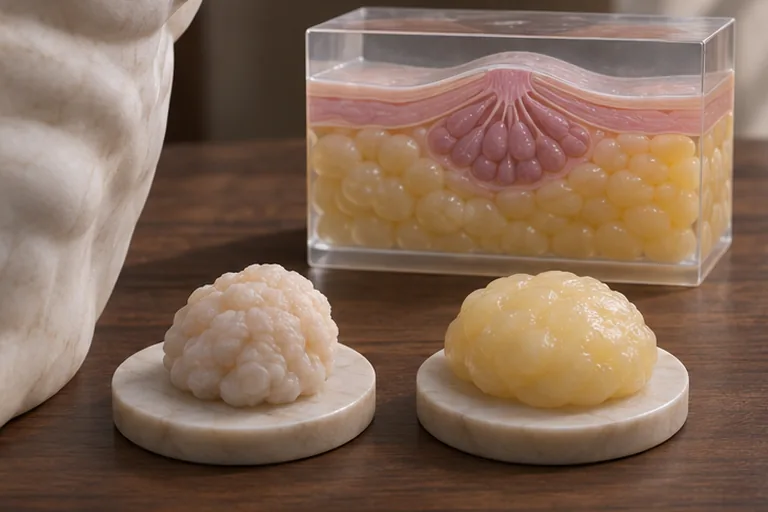
Although they may look similar, they can feel different on examination. A firm, disc-shaped lump beneath the areola suggests enlarged glandular tissue, while soft, diffuse fullness is more consistent with fat. In practice, both are often present, so their relative proportions are assessed. Imaging such as ultrasound can be used for confirmation when needed.
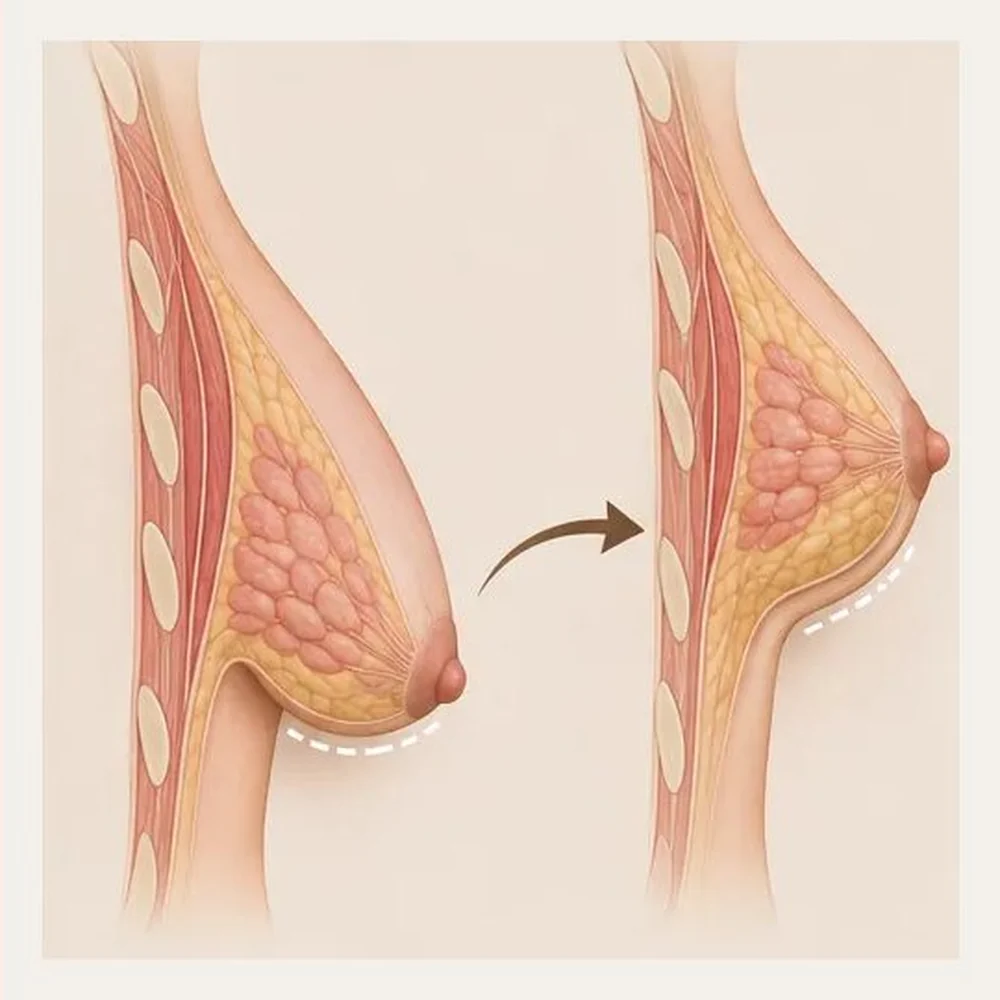
This distinction matters because it affects the surgical approach. Fat can be suctioned out through a thin tube, but firm glandular tissue is difficult for the liposuction cannula to pass through and may remain. The balance between gland removal and liposuction therefore depends on which tissue is more prominent. If there is significant loose skin, excess skin and the position of the areola must also be assessed.
During a hands-on examination, the size and firmness of the lump beneath the areola, the thickness of the surrounding fat, excess skin, and areola position are assessed, and both sides are compared. It matters whether both sides feel similarly soft or one side is particularly firm. Firmness on only one side is itself a sign that testing should come first.
| Category | How it looks | What we consider first |
|---|---|---|
| Mostly glandular tissue | Firm lumps can be felt beneath both areolas | Gland removal |
| Mostly fat | Soft fullness throughout the chest | Liposuction |
| A combination of both | Firm beneath the areola and soft around it | Removal of remaining glandular tissue after liposuction |
| Large chest with loose skin | The chest sags and the areolas sit lower | Excess skin removal and areola repositioning |
So when is liposuction alone enough?
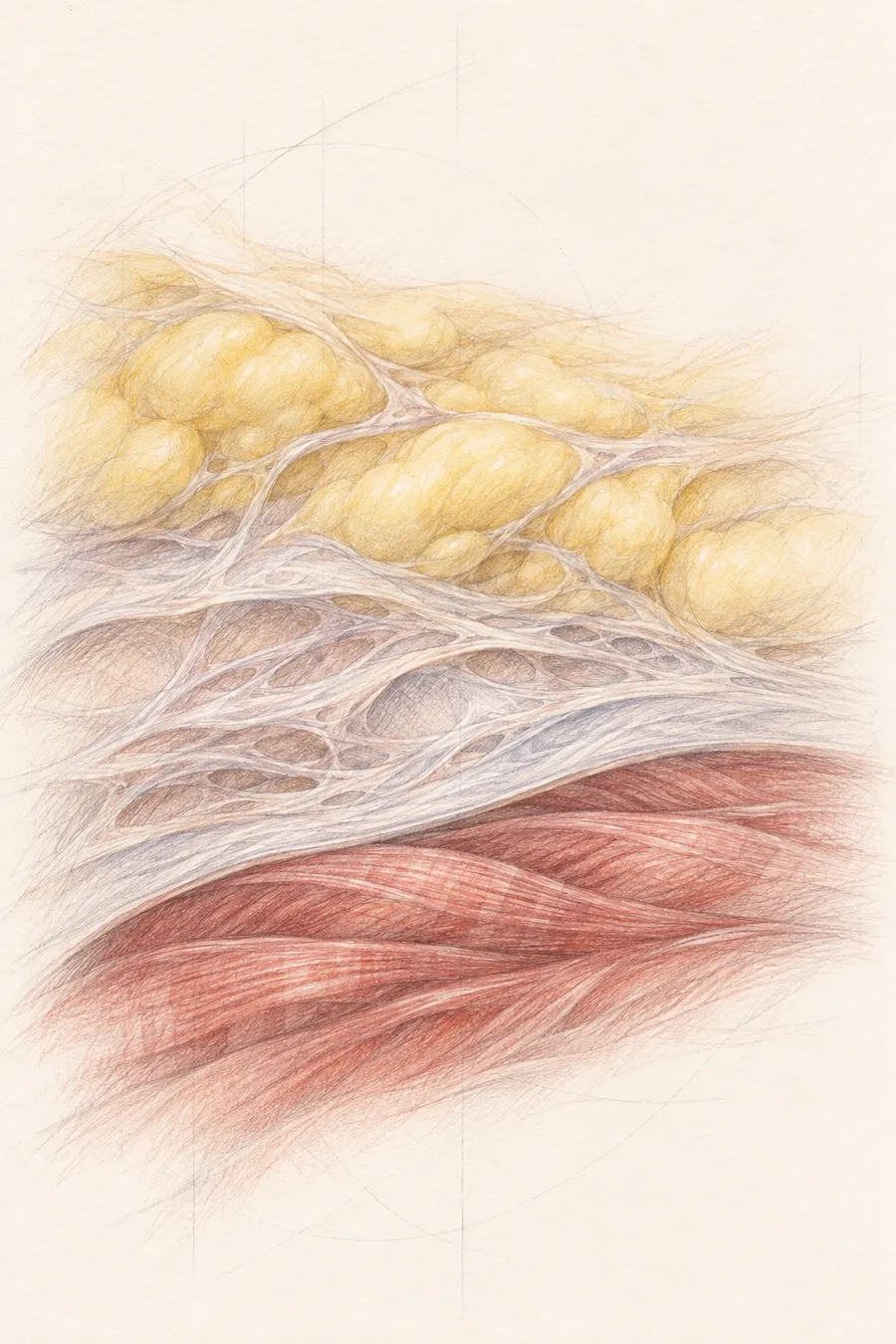
03When is liposuction alone enough?
Answer Liposuction may be considered first when fat is the main component, but gland removal may be needed if firm glandular tissue can be felt.
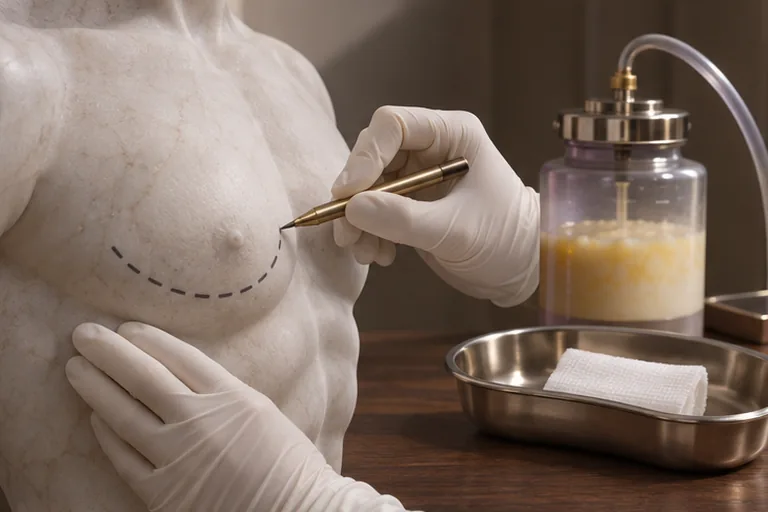
Whether to use liposuction alone or add gland removal has long been discussed in gynecomastia surgery. A randomized study in Iran divided 60 men ages 20–27 into two groups: one received liposuction alone without an areolar incision, and the other received liposuction with an areolar incision. Satisfaction was higher in the group treated without an incision, and the difference in complications was not statistically significant2.
However, these findings cannot be applied to every case of gynecomastia. The participants were young men, and results may vary depending on the amount of firm glandular tissue. VITAL Plastic Surgery considers that gland removal may be necessary when firm glandular tissue can be felt because the liposuction cannula may have difficulty passing through it. Some patients also return for another consultation because a bulge beneath the areola remains after liposuction alone.
Whether liposuction alone will be sufficient is therefore assessed before surgery based on the size of the glandular tissue felt on examination, the amount of fat, and skin elasticity. When there is substantial fat, the two methods may be combined: fat is first suctioned through small openings to create an even overall chest contour, and the remaining glandular tissue is then removed through an incision along the areolar border.
When liposuction alone is sufficient, it offers the advantage of reducing incision scars. Conversely, if there is substantial glandular tissue and only liposuction is performed, a bulge may remain beneath the areola. The chest may become smaller overall while the area around the nipple looks more prominent. The advantages and disadvantages of either approach are considered together.
So when should the cause be evaluated before surgery?
04When should the cause be evaluated before surgery?
Answer If your chest has recently enlarged suddenly, only one side feels firm, or there is nipple discharge or a change in the skin, evaluating the cause and performing tests comes first.
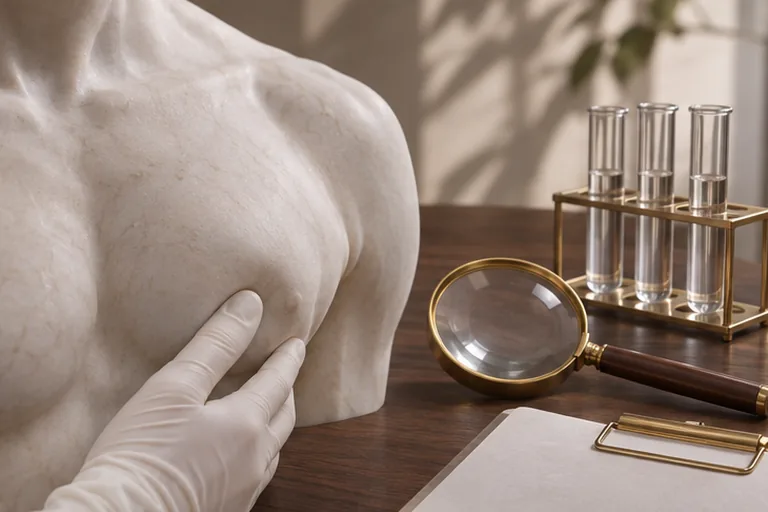
Most gynecomastia affects both sides and feels soft beneath the areolas. However, if there is a firm lump on only one side, nipple discharge, or inward pulling of the skin, testing to rule out male breast cancer comes first, although it is rare. In these cases, VITAL Plastic Surgery does not recommend proceeding directly to surgery.
If your chest has recently enlarged suddenly, evaluating the cause may need to come before surgery. Sharing all medications and supplements you take helps determine whether an internal medicine evaluation is needed. Continuing a medication that causes the enlargement may lead to recurrence after surgery, so addressing the cause also helps preserve the surgical result.
Surgery is also deferred while you are still losing weight. More fat may be lost, and the amount of excess skin may change once weight loss is complete. It is best to discuss surgery after you have been evaluated for underlying medical conditions and the changes have stabilized.
The tests used to identify the cause vary from person to person. Examination findings, medications, and the timing of the enlargement help determine whether an internal medicine evaluation or additional testing is needed. Any existing screening results are reviewed first. Planning surgery after the cause has been addressed and the size has stabilized can help maintain the results.
- When a firm lump on only one side, nipple discharge, or skin changes require evaluation first
- When recent sudden enlargement requires checking for medication or hormonal causes
- When observation may be considered first during puberty
- When you are still losing weight
So how is gland removal performed, and where are the scars?
05How is gland removal performed, and where are the scars?
Answer A common approach is to remove the glandular tissue through a small semicircular incision along the lower border of the areola. The scar lies along the boundary where the skin color changes.
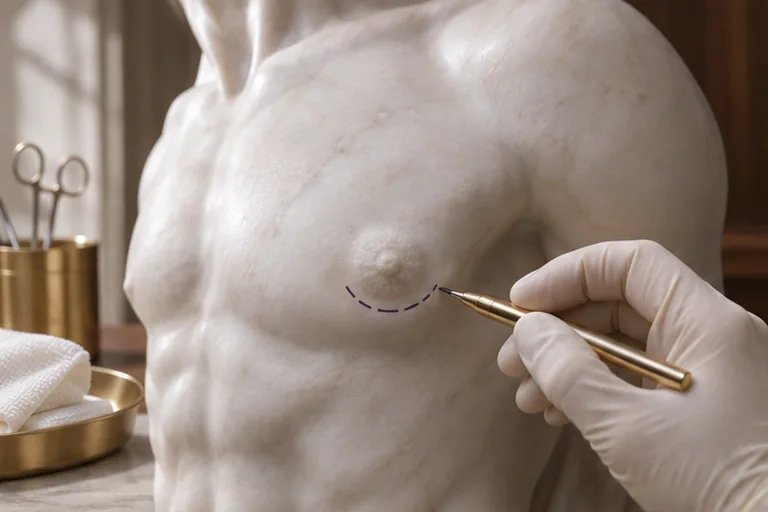
Breast gland excision is commonly performed through a semicircular incision along the lower edge of the areola. The scar lies along the border where the skin color changes, which tends to make it less noticeable, but it does not disappear. If there is also a substantial amount of fat, liposuction is performed first through a small opening to create a more even contour across the chest.
What matters here is how much tissue is left behind. Removing too much glandular tissue can create a depression beneath the areola or cause the skin to adhere to the chest muscle. Leaving too much can leave a bulge. A consistent thickness of tissue is therefore preserved beneath the areola, with a gradual transition to the surrounding area. The amount on each side is also compared to help achieve symmetry.
When the breasts are large and the skin is sagging, the amount of excess skin and the position of the areolas are measured to plan the surgery. Incisions, including those around the areolas, are then made to reduce glandular tissue and fat, remove excess skin, and lift and secure the areolas in position. Because this requires more extensive incisions and scars, their locations are explained before surgery. Removed tissue may be sent for a pathology examination when needed.
The surgical process varies by case. When firm glandular tissue can be felt, its extent is marked, and a semicircular incision is made along the lower edge of the areola. The glandular tissue is removed while leaving a small amount beneath the areola, bleeding is checked and controlled, and the incision is closed. When a mixture of glandular tissue and fat makes the entire chest thick, their distributions are marked separately. Fat is first removed with liposuction through a small incision, followed by removal of the remaining glandular tissue to create a smooth transition.
What are the risks and limitations of gynecomastia surgery?
06What are the risks and limitations of gynecomastia surgery?
Answer Possible complications include hematoma, seroma, changes in sensation, asymmetry, and contour irregularities. Glandular tissue may also remain or grow back.

Because the surgery involves the chest, a hematoma (a collection of blood) can develop. If one side suddenly becomes larger early in recovery, prompt examination is needed. Changes in sensation, asymmetry, contour irregularities, and remaining or regrowing glandular tissue are also possible. After surgery, you will receive instructions to wear a compression garment for a specified period.
Complications are not uncommon. In a study of 448 patients who underwent gynecomastia surgery in India (average age, 26.6 years), 116 patients (25.9%) experienced some form of complication. The most common was seroma (a collection of clear fluid at the surgical site), followed by superficial skin necrosis. The authors reported that complications were common but mostly manageable, and satisfaction was high.3.
Whether liposuction and excision are performed together or separately, the results are not judged by the appearance immediately after surgery. Swelling needs time to subside, and the skin needs time to settle into the new contour. We also explain in advance that the breasts may enlarge again if you continue taking a medication that caused the condition or gain a substantial amount of weight.
| Timing | What Happens | What to Keep in Mind |
|---|---|---|
| 3–4 days after surgery | Peak Swelling | Gentle walking, adequate nutrition and hydration |
| Early After Surgery | Protect the wounds and check for infection or wound separation | Wear your compression garment for the instructed period |
| Several Months | The early appearance continues to change | Contact us right away if one side suddenly becomes larger |
| Up to 1 Year | Scar redness and firmness change | Silicone products and sun protection if needed |
Is it okay for a man to visit a plastic surgeon about his chest?
07Is it okay for a man to see a plastic surgeon about his chest?
Answer Yes. Using photos and a physical examination, we can show you which tissue is involved and explain what may need treatment and what can be monitored.
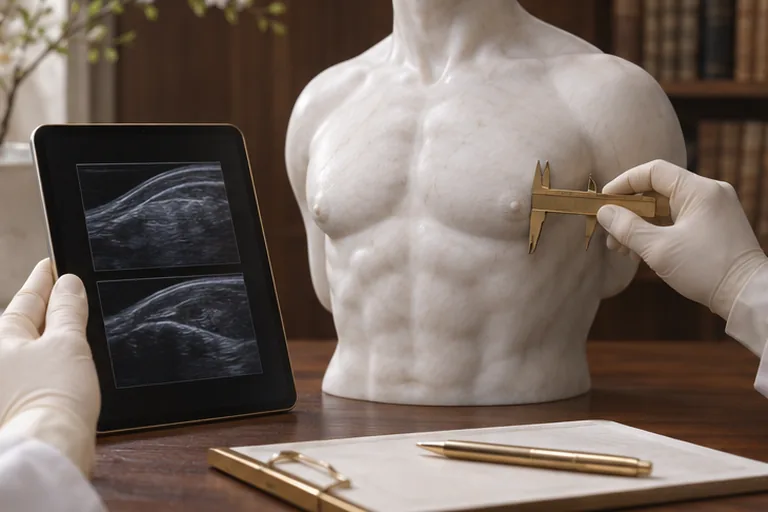
Men often feel embarrassed or come at a family member's urging. Common reasons for seeking care include a chest that looks prominent even under clothing, breast fullness that remains despite losing weight through exercise, or a bulge beneath the areola that remains after liposuction.
Before discussing whether to have surgery, we assess what tissue makes up your chest and whether any medications or medical conditions could be contributing. Based on those findings, we explain whether liposuction, excision, a combination of both, observation, or another medical evaluation should come first. You do not need to make a decision on the day of your consultation.
Honest information is the most helpful thing you can bring to your consultation. Even details that may be difficult to discuss, such as muscle-building drug or supplement use and recent weight changes, directly affect how we identify the cause and help prevent recurrence. Please share them openly. We give you enough time to understand the explanation and ask questions.
- When firm lumps can be felt beneath both areolas
- When your chest is noticeable through clothing and bothers you
- When your chest remains enlarged despite losing weight through exercise
- When fullness beneath the areola remains after liposuction
- When you have been evaluated for underlying conditions and the enlargement has stabilized
08Three things we check first during your consultation
What we assess first during consultation
- Glandular tissue or fat — whether a firm lump can be felt beneath the areola and the proportion of each
- Possible causes, such as medications, supplements, anabolic steroids, or liver, kidney, thyroid, or testicular problems — whether enlargement has occurred suddenly and recently
- Firmness on only one side, nipple discharge, or skin pulling inward — testing comes first if any are present
These are general care principles. The actual decision is made after an examination.
When other care is needed first If only one side is firm, or if there is nipple discharge or a skin change, testing to rule out male breast cancer comes first. If enlargement has occurred suddenly and recently, checking for medication-related or hormonal causes comes first. We also do not recommend immediate surgery when the condition can be monitored during puberty or when weight loss is still in progress.
The answer to the opening question, “I lost weight through exercise, but my chest is still enlarged. Is liposuction alone enough?” is this: If the remaining tissue is fat, liposuction may be considered first. But if there is firm glandular tissue beneath the areola, excision may also be needed. VITAL Plastic Surgery first checks the proportions of glandular tissue and fat, medications and medical conditions that could be contributing, and whether firmness is present on only one side before choosing an approach.
— VITAL Plastic Surgery
When booking, simply leave a note saying, “Please check whether it is glandular tissue or fat first,” and we will start there during your consultation. You do not need to make a decision on the day of your consultation.
Related ReadingGynecomastia Gland Excision: Treatment Information
READ NEXT
Read Next
FAQ
Frequently Asked Questions
Can liposuction alone address it?
When fat is the main cause, liposuction may be considered first. If firm glandular tissue can be felt, it may be difficult for the liposuction cannula to pass through it, so glandular tissue removal may be needed.
What happens to the removed tissue?
The tissue can be sent for pathological examination when needed. If there was a lump on only one side or the findings are atypical, we discuss testing first.
Can my chest enlarge again after surgery?
Your chest may enlarge again if you continue taking a medication that causes it or gain a significant amount of weight. Glandular tissue may also remain or grow back. Identifying the cause and maintaining a stable weight are both necessary.
Will the scars be noticeable?
The scars tend to be less noticeable because they lie along the lower border of the areola, where the skin color changes, but they do not disappear. If significant loose skin needs to be removed, the scars will be more extensive.
Can teenagers have surgery?
Because gynecomastia often improves on its own during puberty, observation is considered first. It is reassessed once the changes have stabilized.
BEFORE CONSULTATION
What to Prepare Before Your Consultation
- Medication and Supplement ListBring a complete list, including prescription medications, hair loss medications, muscle-building drugs, and supplements. This is the most important information for identifying the cause.
- When Enlargement Began and How It Has ChangedNote when the enlargement began, whether it has increased suddenly and recently, and whether it affects only one side.
- Health Screening and Blood Test ResultsBring any results related to liver, kidney, or thyroid function.
- Weight Change PlansIf you are losing weight, let us know your goal and timeline. It is better to plan surgery after your weight has stabilized.
- Stop Smoking and Avoid AlcoholBecause smoking and alcohol affect bleeding and wound healing, you will be advised to stop before surgery.
REFERENCES
References
- Faridi A, Gerber B, Hartmann S. Diseases of the Male Breast: Gynecomastia and Breast Cancer. Deutsches Ärzteblatt International. 2025. doi:10.3238/arztebl.m2025.0071 (View abstract)
- Abdali H, Rasti M, Adib Parsa M, et al. Liposuction versus Periareolar Excision Approach for Gynecomastia Treatment. Advanced Biomedical Research. 2023. doi:10.4103/abr.abr_374_21 (View abstract)
- Ramasamy K, Tripathee S, Murugesh A, et al. A Single-Center Experience With Gynecomastia Treatment Using Liposuction, Complete Gland Removal, and Nipple Areola Complex Lifting Plaster Technique: A Review of 448 Patients. Aesthetic Surgery Journal Open Forum. 2023. doi:10.1093/asjof/ojac095 (View abstract)
The findings in these papers reflect the participants and conditions of each study and do not mean that every individual will have the same results.
This article provides general medical information and does not replace diagnosis or treatment. Surgical results and recovery vary by individual, and complications such as bleeding, infection, scarring, and asymmetry may occur.
More articlesVITAL Plastic Surgery Medical Articles
RESERVATION
You do not need to decide the day of your consultation.
Organize questions about this page without entering your name, contact information, or medical history. This does not submit an appointment request.