PLASTIC SURGERY
MEDICAL COLUMN
Questions Answered Directly by the Doctor Before You Decide on Surgery
Breasts
Articles
Breast implant rupture symptoms: Could an implant rupture without any symptoms?
Yes. Silicone implants can rupture without pain or a noticeable change in shape, so a rupture may go unnoticed. Touch alone cannot reliably confirm a rupture.
Medically reviewed by Dr. Hyungwoo Yim, Medical Director (Board-Certified Plastic Surgeon) · Published November 7, 2026 · Last reviewed November 11, 2026
SHORT ANSWER
First, the Short Answer
- Yes. Silicone implants can rupture without pain or a noticeable change in shape, so a rupture may go unnoticed. Touch alone cannot reliably confirm a rupture.
- That is why imaging, such as ultrasound, is advisable when a breast becomes firm or changes shape, and also for implants that have been in place for some time, even without symptoms.
- VITAL Plastic Surgery first assesses the implant type, whether it has ruptured, the thickness and firmness of the capsule, and the surrounding tissue, then compares and explains whether removal, replacement, or reconstruction is appropriate.
“Could my implant have ruptured even though I have no pain?”
This is a paraphrase of a question we often hear during consultations.
To answer this question, we first need to distinguish where your current concern comes from. We will explain each point below, then return to the original question at the end.
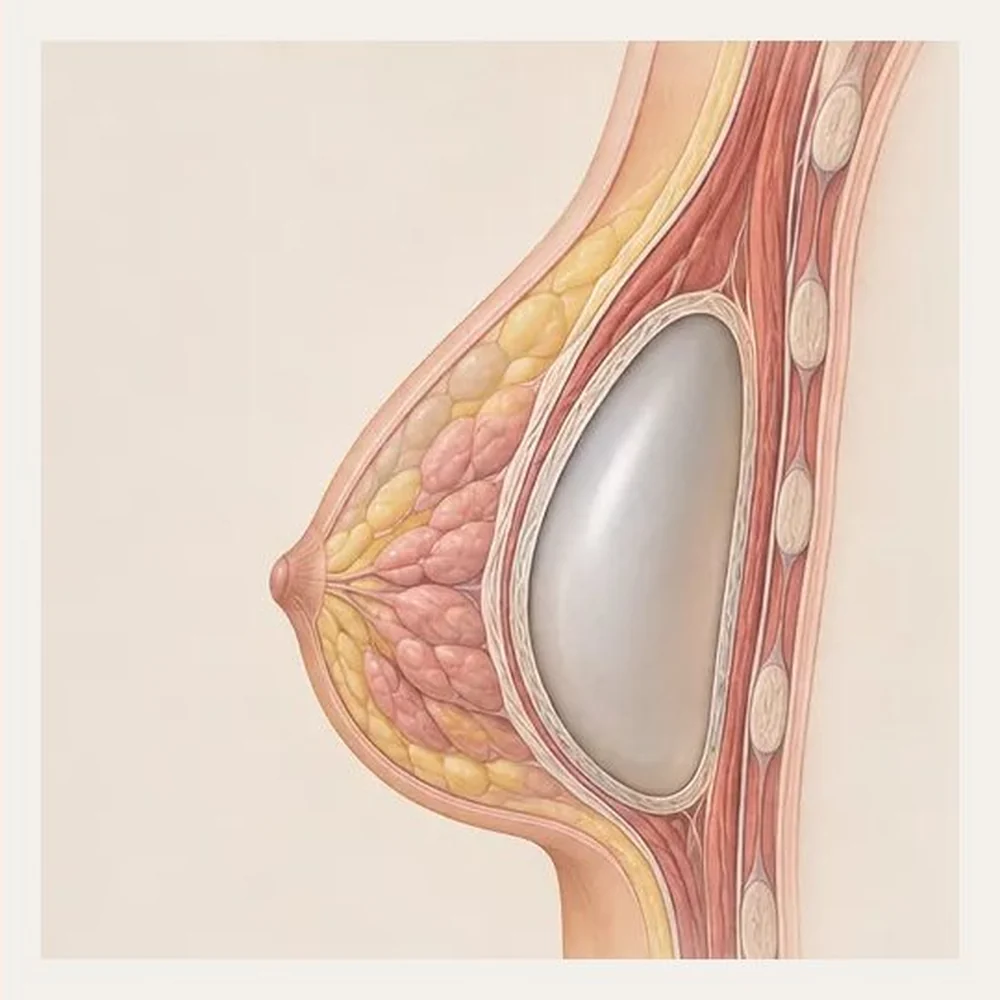
01What changes can occur when an implant ruptures?
Answer A breast may become firm or change in shape or size, but a rupture can also occur without noticeable changes.
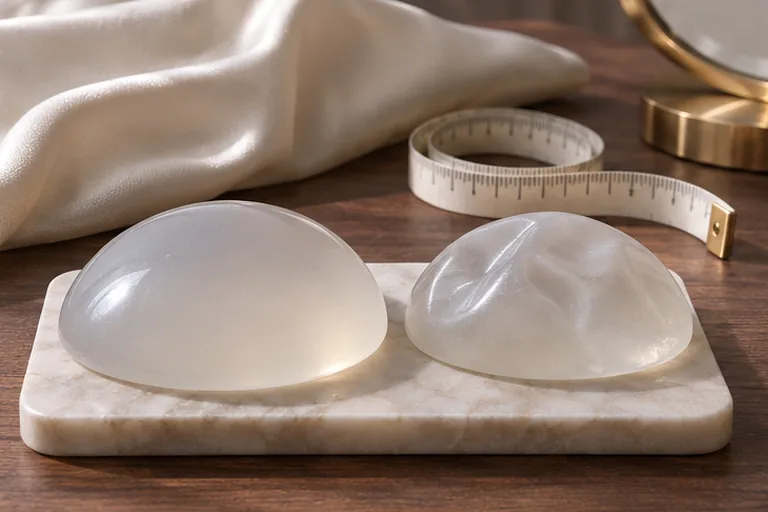
An implant rupture means that the implant's outer shell has torn or developed a leak. When a saline implant ruptures, the body absorbs the saline inside, so the decrease in size tends to be relatively noticeable. In contrast, silicone gel implants contain a thick gel that does not immediately flow out. It often stays within the layer of scar tissue the body forms around the implant, called the capsule, so there may be little visible change.
Possible changes include a breast becoming firmer, changing shape, or appearing uneven in size or height compared with the other breast. However, these changes can also result from capsular contracture, in which the capsule tightens around the implant. Even when the symptom is the same—a firm breast—the extent of removal and the reconstruction method can differ depending on the cause, so we identify the cause before focusing on the symptom label.
The table below summarizes changes commonly discussed during consultations and what we check first. It is a reference for understanding what may need assessment, not a diagnosis.
Along with whether an implant has ruptured, how long it has been in place and what changes have occurred since the original surgery are important clues. If it has been many years since surgery and you have never had imaging, checking the implants even without current symptoms can help with future planning.
| Change | Possible causes | What we look at first |
|---|---|---|
| Breast becomes firm and changes shape | Capsular contracture, rupture | Capsule thickness and firmness, imaging |
| One breast becomes smaller | Saline implant rupture or other causes | Implant type and previous records |
| No noticeable changes | A rupture may have occurred without changes | Check implant condition with routine imaging |
| Sudden swelling of one breast some time after surgery | Rarely, implant-associated lymphoma or other causes | Seek medical evaluation right away |
In Simple Terms An implant is more like a pouch filled with jelly than a water balloon. A water balloon visibly deflates when it bursts, but if a jelly-filled pouch develops a crack in its shell, the jelly does not easily flow out and may remain within the outer wrapping—the capsule. That is why it may seem intact when felt from the outside. Imaging lets us look inside without opening that wrapping. Whether to replace or remove the cracked pouch, and how to manage the empty wrapping afterward, depends on the condition of the capsule and surrounding tissue.
Then why should I be concerned about a rupture if I have no symptoms?
02Why should I be concerned about a rupture if I have no symptoms?
Answer Ruptures become more common over time, and some cause no symptoms and are detected only through imaging.
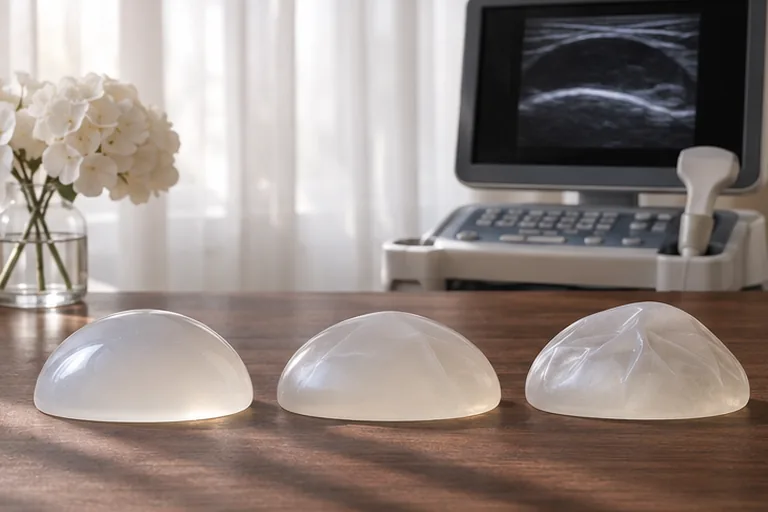
It is best not to think of implants as devices that can stay in place unchanged for life. In a study that followed one silicone implant product for 10 years, the cumulative rupture rate among 552 patients undergoing their first breast augmentation was 24.2%. Over the same period, the rate of severe capsular contracture was 12.1%, the rate of implant removal or replacement was 11.6%, and the rate of repeat surgery for any reason was 25.5%1. Because the study examined one manufacturer's product, its findings cannot be applied directly to other implants. However, it shows that issues requiring assessment become more common over time.
To detect ruptures without symptoms, the U.S. Food and Drug Administration (FDA) recommends imaging every 2–3 years, starting 5–6 years after silicone implant placement. Researchers at New York University summarized this recommendation in a literature review on managing asymptomatic rupture in older patients, noting that regular screening may detect silent ruptures and reduce the spread of silicone3.
The same review also described the downsides: screening can lead to false-positive results, overdiagnosis, and anxiety. The authors also found no guidelines on how to manage asymptomatic rupture in older patients3. This is why a confirmed rupture does not lead to the same decision for everyone.
Then can't I tell if an implant has ruptured by feeling it?
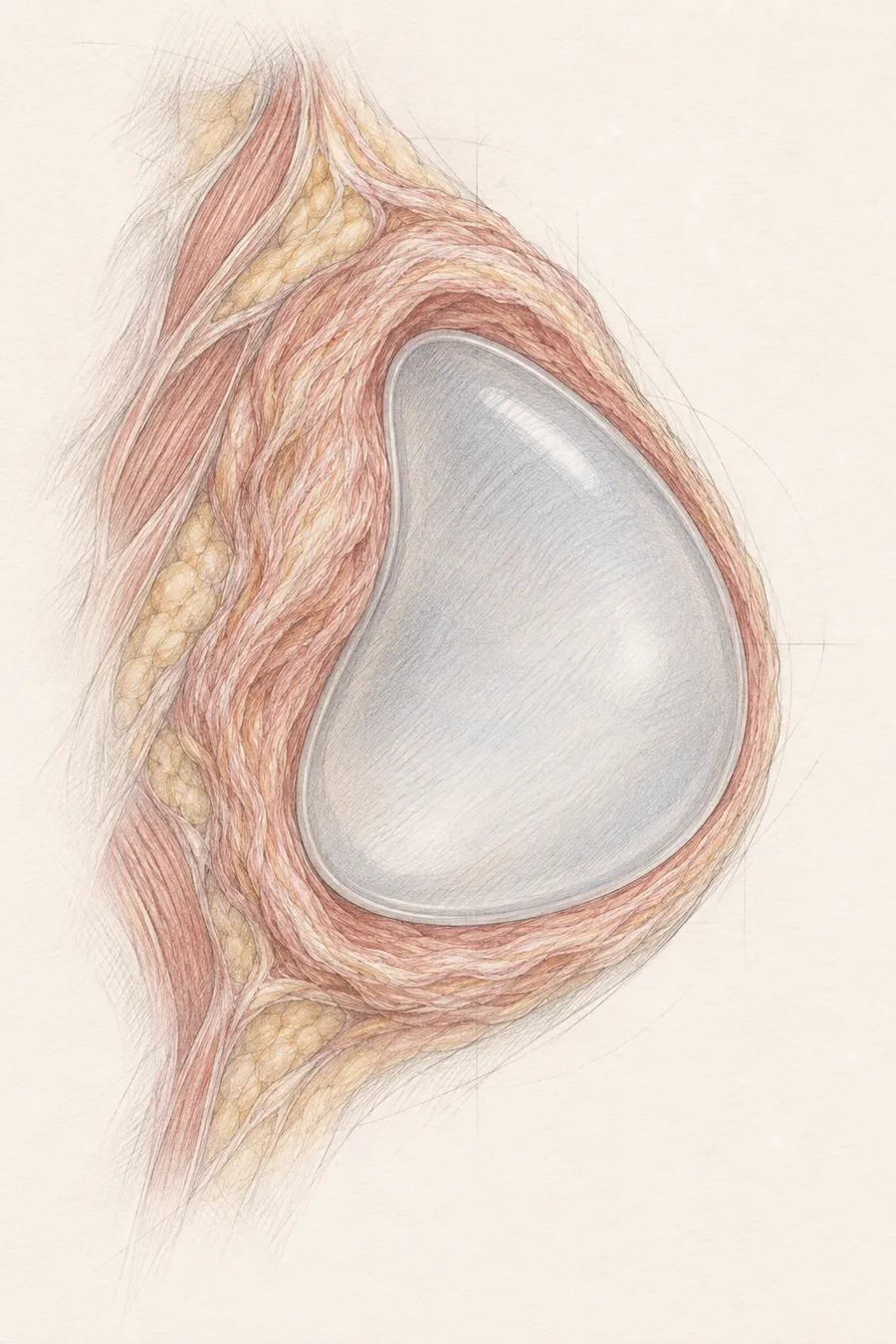
03Can't I tell if an implant has ruptured by feeling it?
Answer Touch alone cannot reliably confirm a rupture, so imaging such as ultrasound is used when needed.
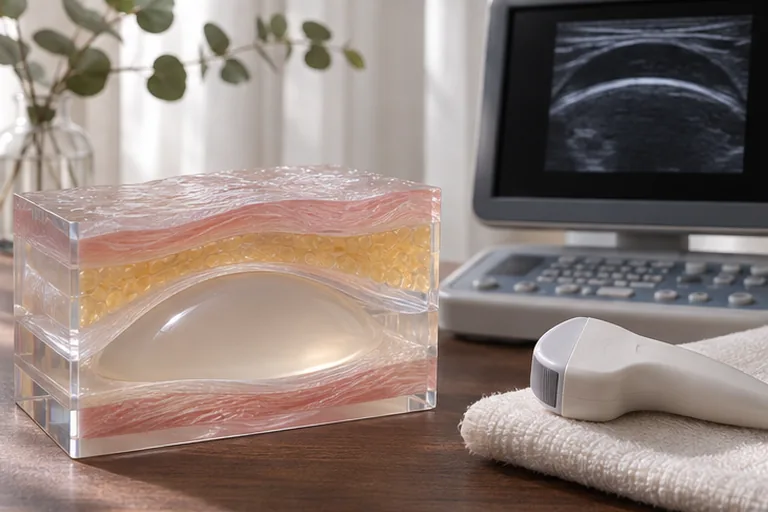
Layers of skin, breast tissue, and the capsule cover the implant, so small defects in its shell cannot be felt with the fingertips. VITAL Plastic Surgery first checks the implant type, whether it has ruptured, the thickness and firmness of the capsule, and the condition of the surrounding tissue. We do not draw conclusions from touch alone and consider imaging such as ultrasound when needed.
Each imaging method has strengths and limitations. A French study comparing imaging with surgical findings in 234 patients with 367 silicone implants found that MRI had the highest sensitivity for detecting rupture, at 99%. However, only 78% of implants identified as ruptured on MRI were actually ruptured. This means that about one in five positive MRI findings could indicate a rupture when the implant is intact. When ultrasound and MRI showed no rupture, the likelihood that the implant was actually intact was high, at 93% and 99%, respectively2.
The authors suggested that ultrasound was the most reliable method for patients under 50, with additional tests used when findings were uncertain2. The choice of initial test depends on age, implant type, symptoms, and previous test results.
If you have previous test results, we review them first rather than repeating the same test. To reduce the testing burden, we add another method when the results are unclear or do not match the physical examination findings.
| Assessment method | What it assesses well | Limitations |
|---|---|---|
| Physical examination (by touch) | Firmness, shape, and differences between breasts | Small ruptures cannot be felt |
| Ultrasound | Implant shell, surrounding area, and location of filler material | Results vary by examiner and implant position |
| MRI | Rarely misses a rupture | May indicate a rupture when the implant is intact |
Then if a rupture is confirmed, does the implant have to be removed right away?
04If a rupture is confirmed, does the implant have to be removed right away?
Answer We consider implant type, capsule condition, symptoms, and overall health when comparing removal, replacement, and reconstruction.
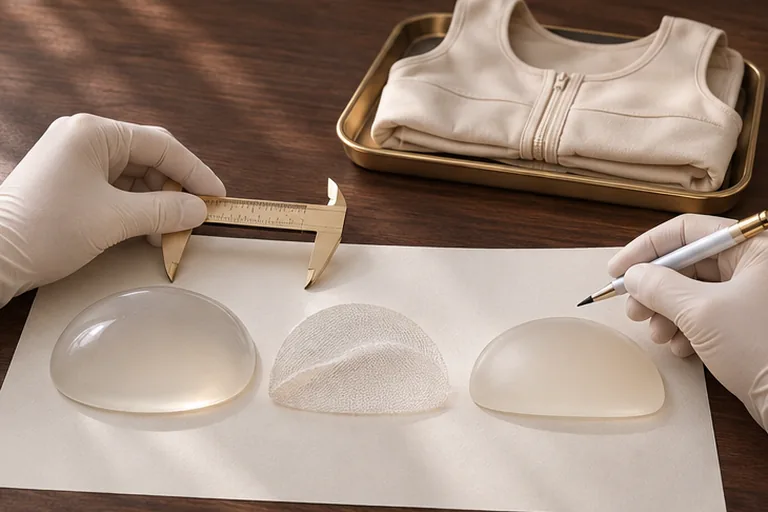
When a rupture is confirmed, the discussion generally turns to removal or replacement rather than leaving the implant in place. The capsule is assessed as well. If it is thick and firm, or if inflammation or rupture is present, removing the capsule along with the implant may be considered. If the capsule is thin and has no problems, it may be left in place. If it adheres to the ribs or muscles, this can affect the extent of removal and the risk of bleeding, which are explained before surgery.
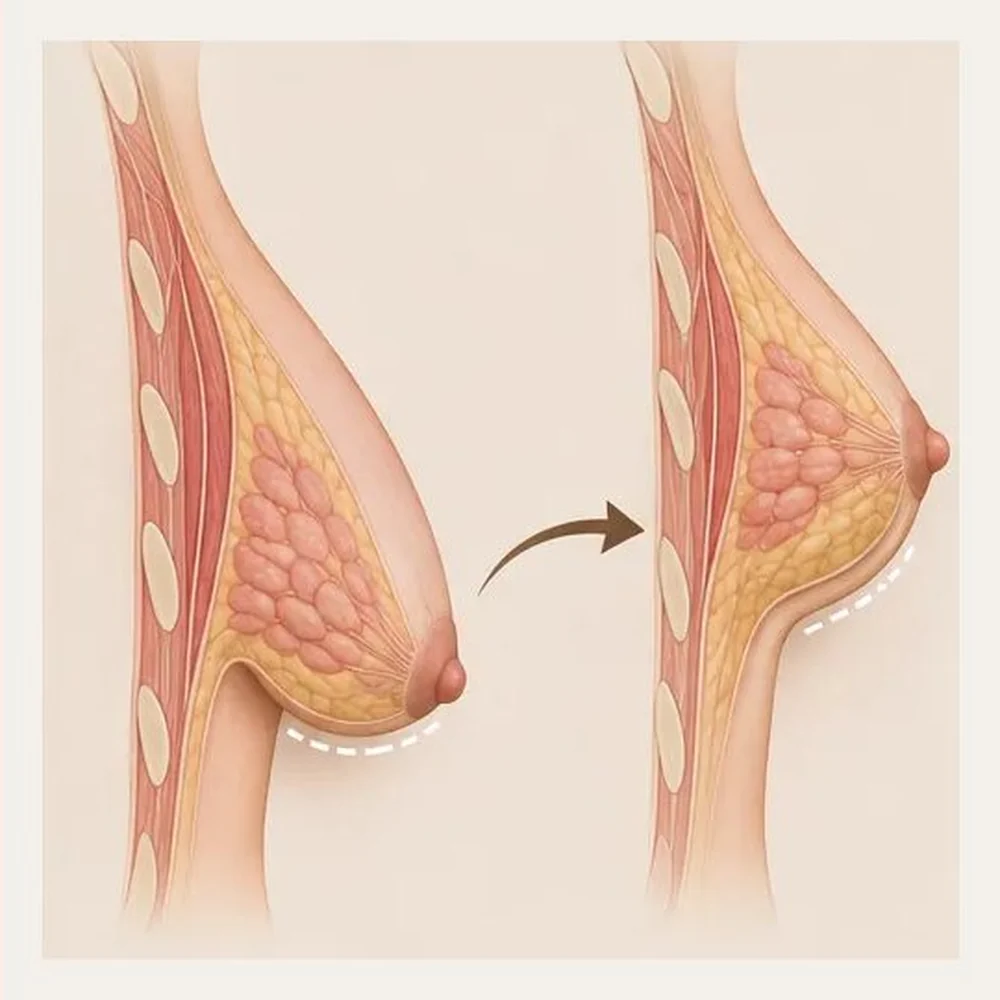
We also plan for how your breasts may look after removal. Stretched skin and reduced tissue can leave the breasts looking flat or sagging after the implants are removed. We assess nipple position, the remaining tissue, and excess skin to compare implant replacement, removal alone, or removal with a breast lift or fat transfer. If there is inflammation or extensive capsule surgery is needed, it may be better to plan reconstruction after the tissues have stabilized following removal.
As discussed in the literature review above, if older age or health conditions make surgery more burdensome, monitoring a rupture that causes no symptoms may also be considered3. VITAL Plastic Surgery may not recommend immediate surgery if the burden of treatment is greater or you cannot allow enough time for recovery.
Whichever option you choose, breast shape continues to change over several months after implant removal or replacement. When discussing your decision, we therefore focus on how your breasts may look once they have settled a few months later, rather than immediately after surgery.
- Replacement: When you want to maintain volume and your skin and tissue can provide support
- Removal alone: When you want to live without implants and your skin has enough ability to retract
- Removal with a breast lift: When the nipples would sit lower and excess skin would remain after removal
- Removal with fat transfer: When little breast volume remains and fat is available for harvesting
- Monitoring: When there are no symptoms and the burden of surgery outweighs the expected benefit
Besides rupture, what changes need prompt medical evaluation?
05What changes other than rupture need prompt medical attention?
Answer If one breast suddenly swells or you suspect an infection, do not wait until your scheduled appointment.
Although rare, implant-associated lymphoma, a type of blood cancer, has been reported. If one breast suddenly swells long after implant surgery, this possibility needs to be checked before rupture, so prompt medical evaluation is necessary. A new lump or skin changes also call for a breast evaluation before implant surgery.
Some symptoms should not wait, even immediately after surgery or during recovery. If you have any of the symptoms below, contact us right away, regardless of your scheduled appointment.
- Sudden severe pain
- Bleeding that does not stop
- Rapidly worsening swelling on one side
- Signs of possible infection, such as a high fever or pus
What routine care should you keep up with if you have breast implants?
06What should I keep track of if I have breast implants?
Answer Let your provider know you have implants whenever you have a breast examination or imaging, and plan for follow-up imaging such as ultrasound.
Implants can affect how breast examination and imaging results are interpreted, so mention them every time you are evaluated. Keeping a record of when your implants were placed, what type they are, and where the incisions were made can help guide decisions more quickly if a problem develops later. Your condition can still be assessed through an examination and any necessary testing without these records, but they provide useful additional information.
Not all implants need to be replaced on a fixed schedule. However, capsular contracture, rupture, or changes in shape may lead to a discussion about replacement or removal, so regular checks are advisable. Pregnancy, breastfeeding, and major weight changes can also affect breast shape, so let us know in advance if you have plans for these.
After implant removal or replacement surgery, swelling is usually greatest on postoperative days 3–4, and the initial breast height and shape continue to change over several months. Redness and firmness can change for nearly a year, so we may recommend silicone products and sun protection when needed. These recovery timelines are averages, and individual recovery varies.
Normal imaging results do not mean follow-up is complete. The condition of implants can change over time, so it is advisable to schedule your next check and seek an earlier evaluation if your breasts become firm or change shape in the meantime. If imaging shows an abnormality, bring the report so we can discuss the next steps based on the findings.
What do you assess first during a consultation for a possible rupture?
07What do you assess first at a consultation about a possible rupture?
Answer We ask when the changes began, then assess the implants, the capsules, and the tissue that would remain after removal.
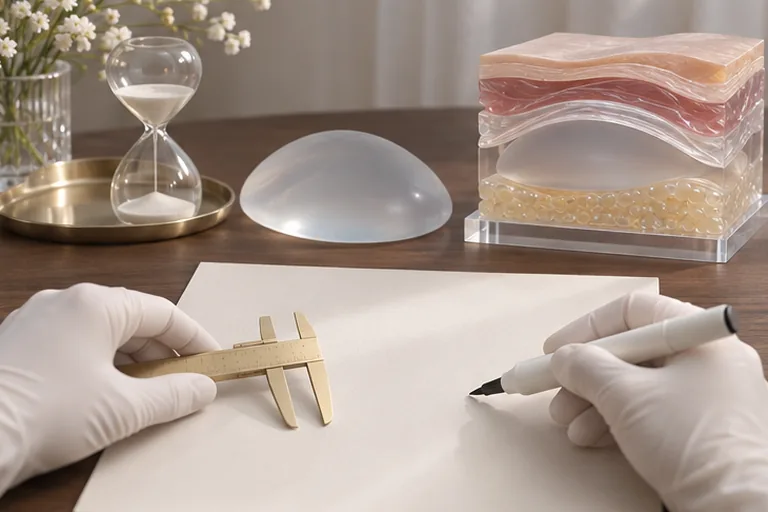
The consultation has four steps. First, we check when firmness and changes in shape began, the implant type, and previous records. Next, we assess the capsules surrounding the implants and the nearby tissue, then determine how much to remove based on the condition of the capsules. Finally, we compare and explain replacement, removal, and reconstruction options.
We also ask about your body shape, excess skin, differences between the breasts, current discomfort, plans for childbirth and breastfeeding, and your history of breast examinations and surgery. When comparing the available approaches, we discuss the expected changes as well as the impact on the tissue, recovery, and problems that may remain. We do not promise results identical to a photograph or another person's outcome.
We plan breast revision surgery as simple, complex, or highly complex based on the previous incision locations, the extent of the capsules and adhesions, and whether a breast lift or added volume is also needed. Even with the same type of rupture, the level of surgery needed is determined after an examination.
- Review changes: Firmness, changes in shape, implant type, and previous records
- Implants and capsules: Condition of the capsules and surrounding tissue
- Extent of removal: Determined by the condition of the capsules
- Reconstruction options: Compare replacement, removal, and reconstruction
08Three things we check first during your consultation
What we assess first during consultation
- Implant type and whether rupture is present — Assessment is not based on touch alone; imaging such as ultrasound is used when needed
- Capsule thickness and firmness, and surrounding tissue — Whether to remove the capsule along with the implant or leave it in place
- Nipple position, the tissue that would remain, and excess skin — Which option is appropriate: replacement, removal, or reconstruction
These are general care principles. The actual decision is made after an examination.
When other care is needed first If one breast suddenly swells, or you have a high fever or pus, the first priority is an evaluation for a possible acute infection, hematoma, or rare lymphoma. A new lump or skin changes require a breast evaluation first, and reconstruction timing is adjusted if pregnancy or breastfeeding is planned soon.
The answer to the opening question, “Could my implant be ruptured even if I have no pain?” is yes. That is why we use imaging to check, rather than relying on how the breast feels. If rupture is confirmed, we also assess the capsules and remaining tissue to choose an appropriate option among replacement, removal, and reconstruction. VITAL Plastic Surgery explains the findings and the burdens of each option. Having a consultation does not mean you need to decide that day.
— VITAL Plastic Surgery
When booking, simply leave a note saying, “I'd like to check whether my implant has ruptured,” and we will start there during your consultation. Having a consultation does not mean you need to decide that day.
Related ReadingBreast Implant Removal and Revision Surgery Information
READ NEXT
Read Next
FAQ
Frequently Asked Questions
Does silicone spread through the body if an implant ruptures?
It usually stays within the capsule surrounding the implant, but it can spread if left in place, which is why regular checks are recommended. Imaging is used to assess the condition.
Do implants have to be replaced every few years?
Not all implants need to be replaced on a fixed schedule. However, capsular contracture, rupture, or changes in shape may lead to a discussion about replacement or removal, so regular checks are advisable.
Can you check for a rupture without my surgical records?
Yes. Photos showing the current condition and a physical examination are most important, along with any tests needed to assess the implants. Surgical records can provide additional information.
If an MRI suggests a rupture, is it certain?
MRI rarely misses a rupture, but it can sometimes show a rupture when the implant is intact. The findings are considered alongside the physical examination and other test results.
If a rupture is confirmed, can the implant be replaced right away?
Immediate replacement may be considered if the capsule and surrounding tissue are clear of problems. If there is inflammation or extensive work on the capsule is needed, it may be better to wait until the tissue has stabilized before reconstruction.
BEFORE CONSULTATION
What to Prepare Before Your Consultation
- Implant informationWrite down as much as you know about when your implants were placed, their type (saline or silicone), size, and incision locations.
- Recent imaging resultsIf you have had a breast ultrasound or MRI, please bring the report and images.
- Changes and when they beganNote when firmness, changes in shape or size, or pain began.
- Health conditions and medicationsTell us about all chronic conditions, medications, and supplements, including herbal medicines and omega-3 supplements.
- Pregnancy and breastfeeding plansIf you plan to become pregnant or breastfeed soon, we adjust the timing of replacement or reconstruction.
REFERENCES
References
- Caplin DA, Calobrace MB, Wixtrom RN, et al. MemoryGel Breast Implants: Final Safety and Efficacy Results after 10 Years of Follow-Up. Plastic and Reconstructive Surgery. 2021. doi:10.1097/PRS.0000000000007635 (View abstract)
- Goldammer F, Pinsolle V, Dissaux C, et al. Accuracy of mammography, sonography and magnetic resonance imaging for detecting silicone breast implant ruptures: A retrospective observational study of 367 cases. Annales de Chirurgie Plastique Esthétique. 2021. doi:10.1016/j.anplas.2020.09.001 (View abstract)
- Vernice NA, Boyd CJ, Hemal K, et al. Management of Asymptomatic Breast Implant Rupture in Older Adult Patients: A Scoping Review, Discussion, and Recommendations. Plastic and Reconstructive Surgery Global Open. 2026. doi:10.1097/GOX.0000000000007821 (View abstract)
The findings in these papers reflect the participants and conditions of each study and do not mean that every individual will have the same results.
This article provides general medical information and does not replace diagnosis or treatment. Surgical results and recovery vary by individual, and complications such as bleeding, infection, scarring, and asymmetry may occur.
More articlesVITAL Plastic Surgery Medical Articles
RESERVATION
You do not need to decide the day of your consultation.
Organize questions about this page without entering your name, contact information, or medical history. This does not submit an appointment request.