PLASTIC SURGERY
MEDICAL COLUMN
Questions Answered Directly by the Doctor Before You Decide on Surgery
Revision surgery
Articles
Will Removing a Silicone Nasal Implant Restore Your Original Nose?
Removing the silicone implant alone does not return your nose to its preoperative shape. The nasal bridge becomes lower, and the capsule and scar tissue around the implant may make the contour look uneven. If nasal tip support is weak, the tip may also appear to sink further.
Medically reviewed by Dr. Hyungwoo Yim, Medical Director (Board-Certified Plastic Surgeon) · Published November 8, 2026 · Last reviewed November 11, 2026
SHORT ANSWER
First, the Short Answer
- Removing the silicone implant alone does not return your nose to its preoperative shape. The nasal bridge becomes lower, and the capsule and scar tissue around the implant may make the contour look uneven. If nasal tip support is weak, the tip may also appear to sink further.
- For this reason, VITAL Plastic Surgery plans removal and reconstruction together. If inflammation is present, treatment and removal come first. Whether reconstruction is performed at the same time or in stages after tissue recovery depends on inflammation and skin condition. When possible, we rebuild using your own tissue, such as septal cartilage.
- VITAL Plastic Surgery first checks for inflammation requiring immediate treatment, determines the sequence of removal and reconstruction, and assesses whether your own tissue can be used and what its limitations are.
“Will removing the silicone implant return my nose to its preoperative shape?”
This is a paraphrase of a question we often hear during consultations.
To answer this question, we first need to distinguish where your current concern comes from. We will explain each point below, then return to the original question at the end.
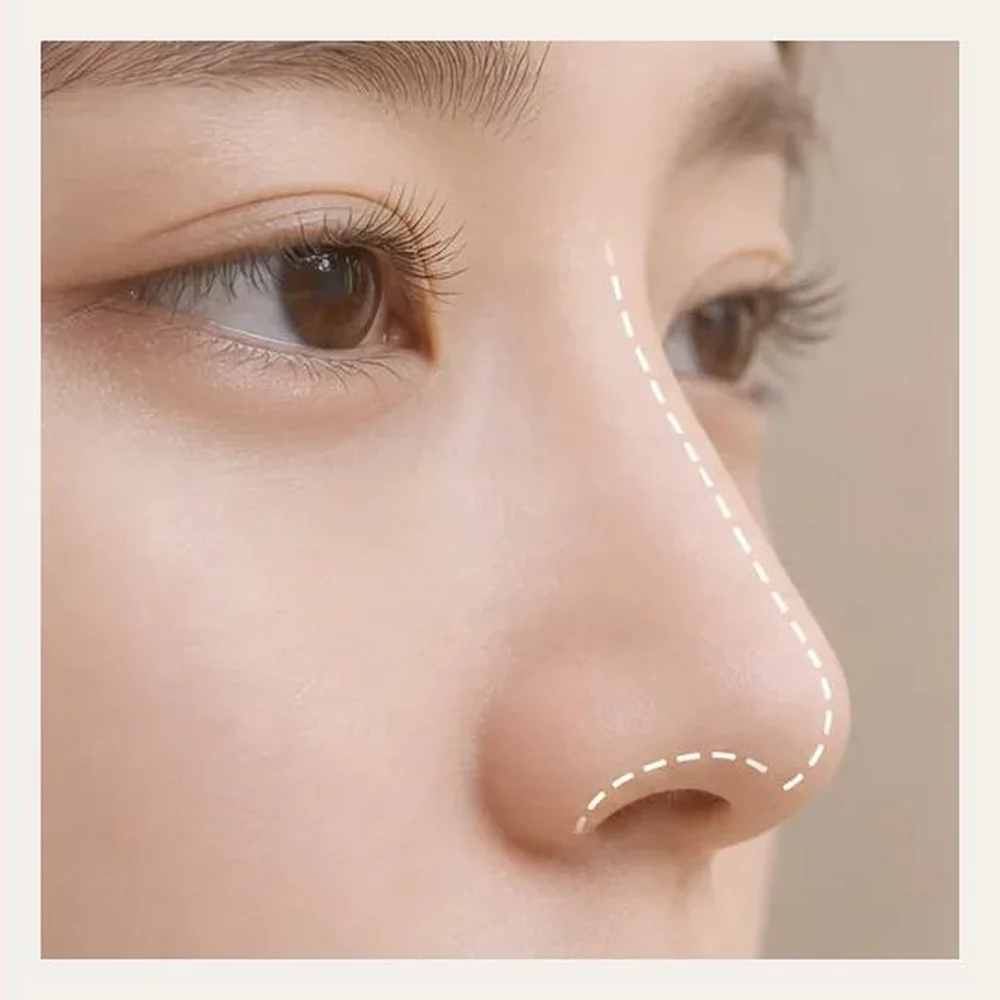
01Why are silicone nasal implants removed?
Answer Common reasons include contracture, in which the capsule contracts and causes the nose to become upturned or shortened, as well as deviation, implant visibility, and inflammation.

When an implant is placed, the body forms a thin membrane called a capsule around it. If this capsule thickens or shrinks, the nose may become upturned or distorted. Contracture refers to the tightening of the capsule and scar tissue that pulls on the nose. Other reasons to consider removal include thinning skin that reveals the implant’s outline, bending of the implant, and inflammation around it.
A Korean study classified changes in nasal appearance after silicone rhinoplasty. In a photographic study of 695 patients who underwent nasal augmentation with silicone, with an average follow-up of 11.4 months, 71.7% were classified as Grade 1, with a natural appearance as though no implant were present; 14.5% as Grade 2, with unnatural implant edges; 10.8% as Grade 3, with obvious deviation; and 3.0% as Grade 4, with nasal shortening1. The authors considered the 13.8% classified as Grades 3 and 4 to be candidates for revision surgery.
Implants that have been in place for a long time can develop other changes. A study analyzing 221 silicone implants removed during revision surgery found that they had been in place for 1 month to 25 years, averaging 6 years and 7 months. Calcification, a hardening caused by calcium deposits, was visible microscopically as early as 4 years and to the naked eye as early as 5 years and 8 months. Localized calcification was present in half of the implants that had been in place for more than 9 years2. However, these changes do not mean that every implant needs to be removed. VITAL Plastic Surgery’s guidance on foreign material removal also states that immediate removal is not recommended when there are no symptoms and the burden of removal outweighs the expected improvement. Decisions are based on both the current appearance and symptoms.
- When implant deformation or contracture is present
- When the Implant Is Visible or Nasal Tip Skin Has Thinned
- When the Nose Has Become Upturned and Shorter After Previous Surgery
- When You Are Considering Removal Because of Implant-Related Concerns
- When You Are Worried About Your Nose's Shape After Removal
In Simple Terms It is similar to removing a thick carpet that has been in place for years. Lifting the carpet does not reveal the original floor unchanged; it exposes a floor with pressure marks and tape residue. If the floor is wet and lifting, drying and repairing it come before laying a new floor. You also need to check how much flooring material remains in storage. The new flooring can only be thick enough to allow the door to open and close—in other words, only as much as the skin allows. With silicone implant removal, the outcome depends less on taking it out than on what is used to rebuild afterward, when it is done, and how much is added.
So what happens to the nose if only the silicone implant is removed?
02What happens to the nose if only the silicone implant is removed?
Answer The nasal bridge becomes lower, and the capsule and scar tissue may make the contour look uneven.

Removing the implant that supported the nose changes the height of the nasal bridge and support for the nasal tip. VITAL Plastic Surgery’s guidance explains that removing the implant alone lowers the nasal bridge, that the capsule and scar tissue may make the contour look uneven, and that the tip may appear to sink further if its support is weak. We therefore first assess the expected shape after removal, then determine the extent of reconstruction.
The nose does not return to its preoperative shape because conditions inside it have changed over time. A capsule has formed around the implant, scar tissue has developed beneath the skin, the skin may have thinned, and cartilage may have been used in previous surgery. Although removal may be relatively straightforward, the remaining tissue determines how the nose can be supported afterward.
The first question during consultation is therefore less “Can it be removed?” and more “What will remain after removal?” Only after assessing the remaining cartilage, skin, and scar tissue can we determine what should accompany removal.
- Lower nasal bridge
- Possible uneven contour due to the capsule and scar tissue
- Possible further sinking of the nasal tip if support is weak
- Breathing is also assessed if you have felt nasal blockage since previous surgery
So how does the treatment sequence vary by problem?
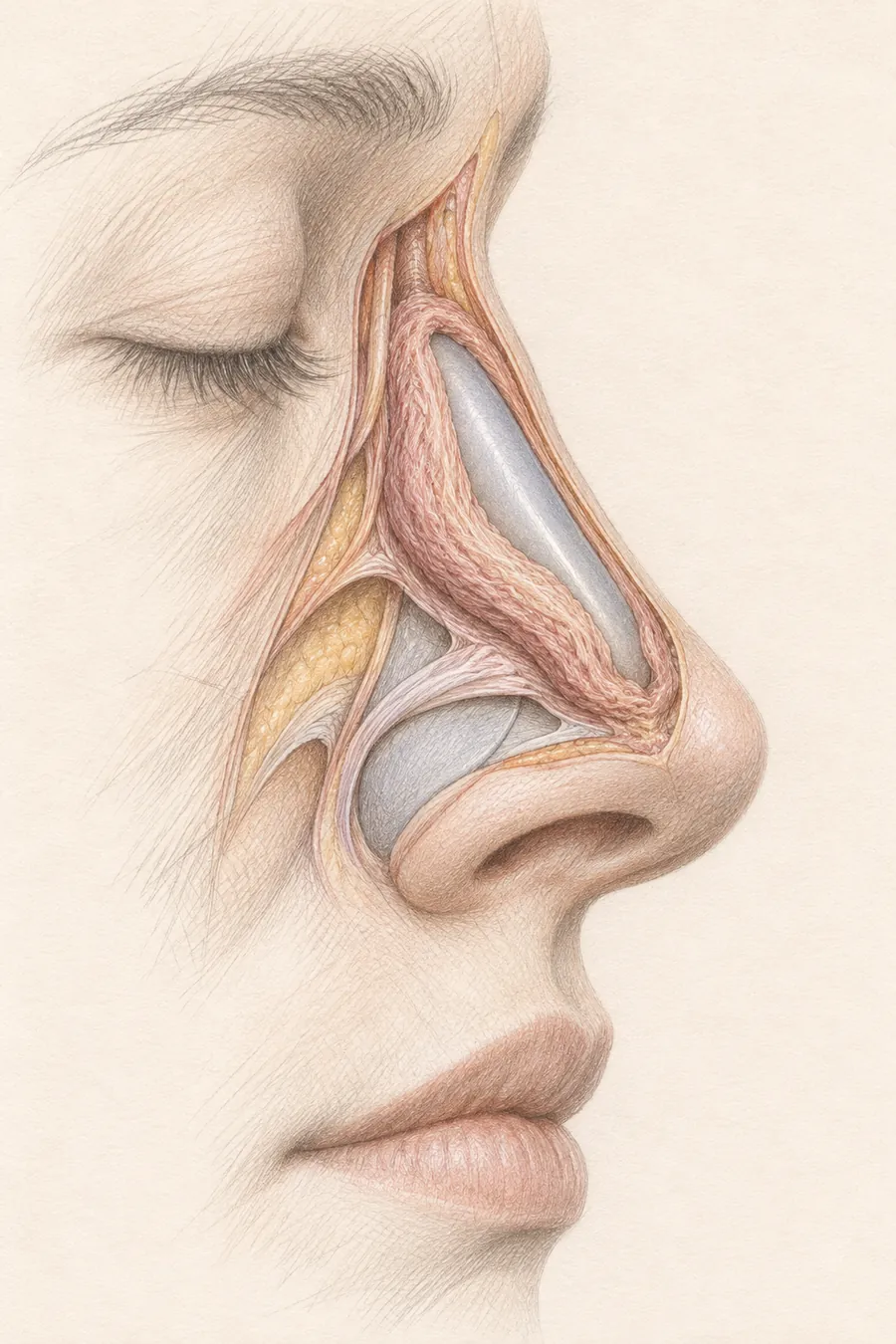
03How does the treatment sequence vary by problem?
Answer With inflammation, treatment and removal come first. With contracture, the key is how extensively to release the capsule. With implant visibility, the key is the relationship between skin and nasal height.
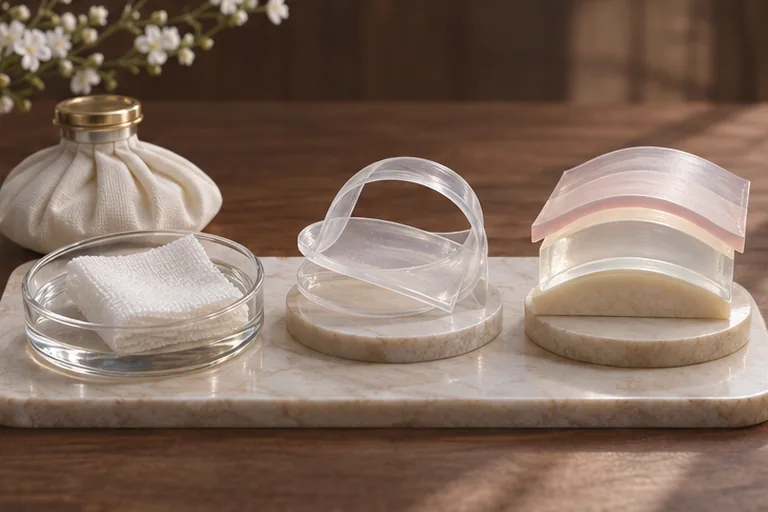
Inflammation, implant visibility, deviation, and an upturned nose have different causes and require different treatment sequences. At VITAL Plastic Surgery, revision surgery is not based on appearance alone or performed the same way in every case. If inflammation is present, we remove the implant, inflamed tissue, and capsule, then determine whether to delay reconstruction until the inflammation subsides. If contracture has made the nose upturned and shortened, we address the contracted capsule and scar tissue, then rebuild nasal tip support and length using the remaining cartilage and nasal septum.
If the implant is deviated or looks unnatural without inflammation, we plan the correction based on the direction of deviation and the height of the nasal bridge relative to the area between the eyebrows. We then make an incision in the columella, remove the implant, and assess the capsule. Next, we support the nasal tip with septal cartilage and refine the bridge with your own tissue.
If implant visibility is the concern, we assess the relationship between skin and nasal height. A height that does not account for dermal thickness and skin tension can lead to skin thinning, implant visibility, and inflammation. We therefore also discuss adjusting the height to what the skin can accommodate instead of recreating the same height.
| Problem | How it looks | First steps |
|---|---|---|
| Inflammation | Swelling, redness, pus, or pain | Treat inflammation, remove the implant and inflamed tissue, and determine reconstruction timing |
| Contracture | Nose appears shortened and upturned | Determine how extensively to release the contracted capsule and scar tissue and whether to restore nasal length |
| Visible Implant or Cartilage | Implant outline visible through the skin | Assess the relationship between skin thickness and nasal height and whether to reduce the height |
| Deviation | Nasal bridge tilts to one side | Remove the implant, then reconstruct along the midline using your own tissue |
So what is used to rebuild the nose after removal?
04What is used to rebuild the nose after removal?
Answer When possible, we build a support structure with septal cartilage and supplement the nasal bridge contour with your own tissue.
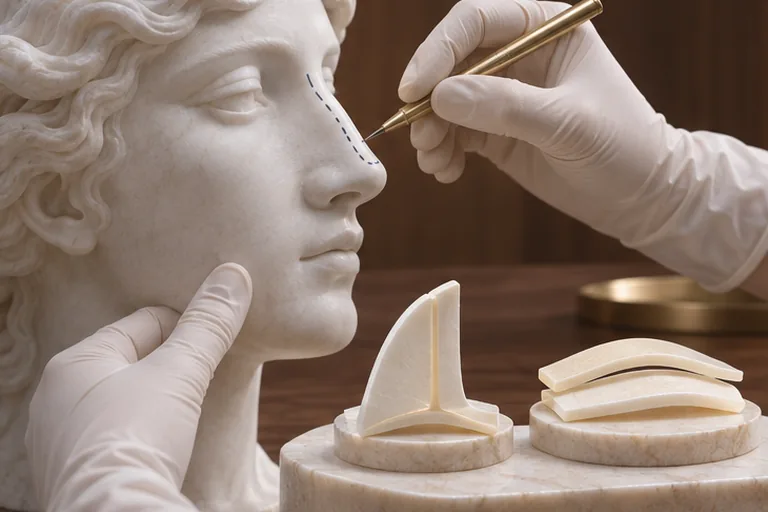
When possible, VITAL Plastic Surgery builds a support structure with septal cartilage and supplements the nasal bridge contour with your own tissue. Because we consider reconstruction with ear cartilage alone prone to substantial deformation, we use septal cartilage or tissue with at least comparable structural support as our baseline. Rib cartilage is not our first recommendation because harvesting it involves removing part of a normal structure. We discuss materials for reinforcing areas with insufficient tissue by weighing the need against the risks.
The amount of available material determines the extent of possible change. If septal cartilage was already used in a previous surgery, there may be insufficient material, so taking stock of the remaining cartilage is the starting point for reconstruction planning. We also assess whether ear cartilage has already been used and whether a graft of your own dermis is needed. If the material plan needs to be established first, we begin with that discussion.
It is also important to plan within what the skin can accommodate. Substantially stretching contracted, thinned skin all at once can strain its blood supply and delay wound healing. We therefore first explain the height your skin can currently accommodate, before discussing your desired height. Your own tissue can also be absorbed or become deformed, so we do not describe it as unconditionally safe.
- Amount of remaining septal cartilage
- Whether ear cartilage or other materials have already been used
- Skin thickness and tension, and the extent of scarring
- The difference between your desired height and the height your skin can accommodate
Can removal and reconstruction be done in one surgery?
05Can removal and reconstruction be performed together?
Answer They may be done together or in stages, depending on whether infection is present and the condition of the skin and soft tissue.

From a surgeon’s perspective, doing both at once may be preferable, but staging the procedures may sometimes be better for normal healing. At VITAL Plastic Surgery, we decide based on inflammation and skin condition. We do not commit to simultaneous surgery before an examination or tell you in advance how many procedures will be needed. If the skin has thinned or there is extensive scarring, we also discuss a staged approach.
Studies of outcomes after rhinoplasty with implants also show that revision surgery is not uncommon. A meta-analysis of 27 studies involving 3,803 patients who underwent nasal bridge augmentation with synthetic materials reported an overall complication rate of 2.75%, an infection rate of 1.91%, and a revision surgery rate of 6.40%3. At VITAL Plastic Surgery, we also classify revision rhinoplasty as simple, complex, or highly complex. The category is determined after examining the remaining cartilage, scarring, skin condition, and extent of reconstruction needed.
Breathing function is also part of the plan. If your nose became blocked after a previous surgery or you already had a deviated septum, reshaping alone may not be enough. Revision surgery can also narrow the nasal passages through scarring, so we first ask which side feels blocked and when it started. If an implant, a nasal hump, and a crooked nose are all present, we plan the sequence more carefully because the nasal bridge must be addressed before the tip position can be determined.
What if filler or other injected materials are also present?
06What if fillers or other injected materials are also present?
Answer Whether a material can be dissolved or needs to be removed depends on what it is, so we first check its location and distribution.
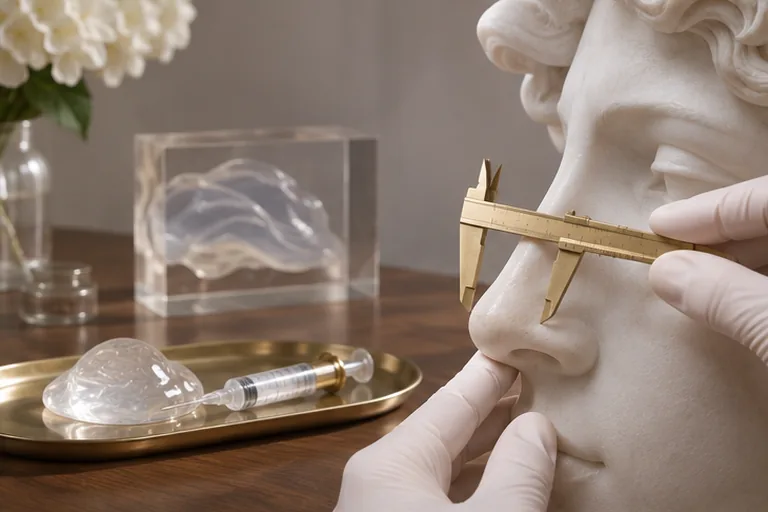
Some patients also have nasal filler or injected materials of an unknown type. At VITAL Plastic Surgery, we consider dissolving hyaluronic acid filler, using ultrasound to assess it when needed. Other materials cannot be dissolved in the same way, so the explanation differs. Whether to dissolve material before surgery and how long to wait also depend on the material and tissue condition.
Ultrasound helps identify location and distribution, but it cannot definitively identify the type and amount of every foreign material in a single examination. Most injected material that has formed lumps can be removed, but material that has spread into the tissue may not be completely removable. Some may be intentionally left in place to protect nerves or normal tissue. We discuss and decide how much to remove before surgery.
Removal leaves an empty space, which can lead to depressions or uneven contours. After a nasal implant is removed, reconstruction is usually performed with septal cartilage. Sharing whatever you remember about what was placed and when helps with the assessment. In many cases, we evaluate the area after the tissue has stabilized rather than filling it again immediately.
When should it be removed, and what is recovery like?
07When should the implant be removed, and what is recovery like?
Answer Inflammation or a hematoma should be addressed without waiting, while revision surgery to change the shape is generally better delayed until the tissue has healed.

Not every revision procedure needs to wait until the scars mature. An acute hematoma or infection needs immediate evaluation. If an injection site suddenly becomes swollen and painful, or you develop a fever, contact us without waiting for your scheduled appointment. If pus has accumulated, treating the inflammation takes priority over reshaping surgery. In contrast, cosmetic revision to change the shape is generally considered after 6 months to a year or more of tissue healing.
Recovery generally follows the course of other nasal surgery, but revision surgery requires more careful planning because its extent can vary. We do not recommend proceeding immediately if a major event is too close to allow time for residual swelling and scar changes, or if your desired height exceeds what your skin can accommodate with any material. Risks include inflammation, skin damage, deformity, asymmetry, breathing difficulties, and the possibility of additional surgery. This is not a complete list. Follow-up visits are at 1 week, 1, 3, and 6 months, and 1 year.
- When Recovery From Previous Surgery Is Still Ongoing and the Goal Is Cosmetic Revision
- When acute inflammation or infection needs treatment first
- When the Skin Is Too Thin to Increase Height Further
- When Limited Remaining Cartilage Requires Planning the Graft Material First
- When a major event is too close to allow time for residual swelling and scar changes
| Timing | What Happens | What to Keep in Mind |
|---|---|---|
| 3–4 days after surgery | Peak Swelling | Sleep with your head slightly elevated |
| About 1 Week | The overall shape usually starts to become visible around this time | Check the wound, bleeding, and signs of infection; the early shape is not the final result |
| 1 Month or Longer | Residual tip swelling and scar tightness or firmness may begin | Allow at least 2 weeks before social engagements |
| 3 months–1 year | The tissue softens and the shape settles | Around 6 months, compare with the initial photos to determine whether additional treatment is needed |
08Three things we check first during your consultation
What we assess first during consultation
- Whether Inflammation Requires Immediate Treatment
- The sequence of removal and reconstruction (together or in stages)
- Whether your own tissue can be used and its limitations (remaining septal cartilage and skin thickness)
These are general care principles. The actual decision is made after an examination.
When other care is needed first We do not recommend immediate revision surgery if you are still healing from a previous surgery and the goal is cosmetic revision, if acute inflammation needs treatment first, if the skin is too thin to allow further height, or if limited remaining cartilage means a material plan is needed first. In these cases, treating inflammation, waiting, or planning the materials comes first.
The answer to the opening question, “Will removing the silicone restore my nose to how it was before surgery?” is this: removal alone does not restore your preoperative nose. Instead, your nose will have new conditions shaped by the capsule, scarring, remaining cartilage, and skin. The first step is therefore to check for inflammation, then decide together on the sequence of removal and reconstruction and how much support your own tissue can provide before removing the implant.
— VITAL Plastic Surgery
When booking, simply leave a note saying, “Please start by checking for inflammation and discussing the removal sequence.” We will begin with those concerns at your consultation. You do not need to make a decision on the day of your consultation.
Related ReadingConsultation Information for Nasal Implant Removal and Revision Rhinoplasty
READ NEXT
Read Next
FAQ
Frequently Asked Questions
Can I have just the silicone implant removed without putting anything else in?
This is possible in some cases, but the nasal bridge will become lower, and the capsule and scar tissue may make the contour look uneven. We first assess the expected shape after removal, then determine the extent of reconstruction.
Can I Have a Consultation Without Previous Surgical Records?
Yes. Photos showing your current condition are the most important, and surgical records are helpful if available. If you do not have records, we assess the remaining structures during the examination.
Will One Revision Surgery Be Enough?
This depends on inflammation and skin condition, and we do not promise a specific number of procedures in advance. In some cases, dividing treatment into stages is better for normal healing.
Does an old silicone implant always need to be removed?
Research shows that older implants can develop changes such as calcification, but time alone does not determine whether removal is needed. We assess the current condition, including contracture, deviation, implant visibility, and inflammation.
Are Removal and Reconstruction Always Performed Together?
Staged treatment may be needed depending on whether infection is present and the condition of the skin and soft tissue. We do not confirm that removal and reconstruction can be performed together before an examination.
BEFORE CONSULTATION
What to Prepare Before Your Consultation
- Current photosPlease prepare photos from the front, both sides, and below. These are the starting point for assessment.
- Previous surgery recordsSummarize what you know, including when you had surgery, the implant type, and whether cartilage was used.
- Injection HistoryTell us when and where you received filler or other injections, and whether you have had injections to dissolve them.
- Current SymptomsWrite down whether you have swelling, redness, or pain, and when your nose began to look upturned or crooked.
- Medications and Medical HistoryTell us about your medications, chronic conditions, and allergies. You must stop smoking and drinking alcohol before surgery.
REFERENCES
References
- Kim YK, Shin S, Kang NH, Kim JH. Contracted Nose after Silicone Implantation: A New Classification System and Treatment Algorithm. Archives of Plastic Surgery. 2017. doi:10.5999/aps.2017.44.1.59 (View abstract)
- Jung DH, Kim BR, Choi JY, et al. Gross and pathologic analysis of long-term silicone implants inserted into the human body for augmentation rhinoplasty: 221 revision cases. Plastic and Reconstructive Surgery. 2007. doi:10.1097/01.prs.0000287323.71630.e6 (View abstract)
- Keyhan SO, Ramezanzade S, Yazdi RG, et al. Prevalence of complications associated with polymer-based alloplastic materials in nasal dorsal augmentation: a systematic review and meta-analysis. Maxillofacial Plastic and Reconstructive Surgery. 2022. doi:10.1186/s40902-022-00344-8 (View abstract)
The findings in these papers reflect the participants and conditions of each study and do not mean that every individual will have the same results.
This article provides general medical information and does not replace diagnosis or treatment. Surgical results and recovery vary by individual, and complications such as bleeding, infection, scarring, and asymmetry may occur.
More articlesVITAL Plastic Surgery Medical Articles
RESERVATION
You do not need to decide the day of your consultation.
Organize questions about this page without entering your name, contact information, or medical history. This does not submit an appointment request.