PLASTIC SURGERY
MEDICAL COLUMN
Questions Answered Directly by the Doctor Before You Decide on Surgery
Skin Tightening
Articles
Re2O vs. Rejuran: What Is the Difference, and How Do You Choose?
It is difficult to say that one is better. The two materials belong to different categories and serve different functions. Within the scope of our search for this article, we did not identify a study directly comparing them.
Medically reviewed by Dr. Hyungwoo Yim, Medical Director (Board-Certified Plastic Surgeon) · Published November 3, 2026 · Last reviewed November 11, 2026
SHORT ANSWER
First, the Short Answer
- It is difficult to say that one is better. The two materials belong to different categories and serve different functions. Within the scope of our search for this article, we did not identify a study directly comparing them.
- Re2O is a powdered extracellular matrix material made by removing cells from human dermis. Its role is closer to supplementing the dermis. Rejuran is classified as a PN product within the category of DNA-derived nucleic acid materials.
- At VITAL Plastic Surgery, we first define the purpose of treatment rather than starting with a material’s name. We assess sagging structures, volume loss, and skin quality separately, then choose materials and treatment sequence based on skin thickness, previous treatments, and the treatment area.
“Which is better, Re2O or Rejuran?”
This is a paraphrase of a question we often hear during consultations.
To answer this question, we first need to distinguish where your current concern comes from. We will explain each point below, then return to the original question at the end.

01What are Re2O and Rejuran made from?
Answer Re2O consists of the structural components of the dermis with the cells removed—its extracellular matrix. Rejuran is a nucleic acid–based PN product. They are fundamentally different materials.

Re2O is a powdered extracellular matrix (ECM) material made by removing cells from human dermis. The extracellular matrix consists of structural components, including collagen, that surround and support cells. Re2O uses only this structure, with the cells removed. It is classified as a human tissue product based on acellular dermal allograft.
Rejuran is a PN (polynucleotide) product. PN and PDRN are related DNA-derived nucleic acid materials, but VITAL Plastic Surgery does not group them under the same name. We describe Rejuran specifically as a PN product.
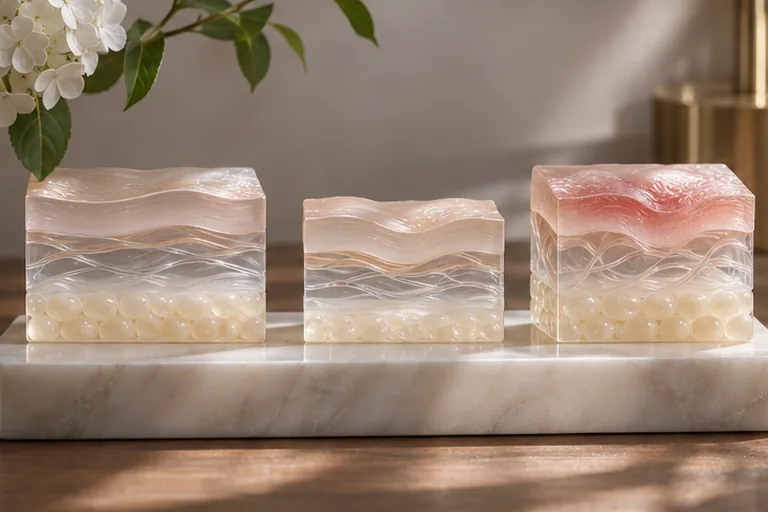
Both are commonly called “skin boosters,” but VITAL Plastic Surgery does not consider Re2O, pearl injections, Rejuran, PRP, collagen stimulators, fillers, and Botox to be the same type of skin-nourishing injection. Each serves a different function, making it difficult to rank them in a single comparison chart.
We also distinguish them from hyaluronic acid fillers. Hyaluronic acid fillers primarily add shape and volume and can be dissolved with a specific enzyme. All three materials belong to different categories, so the choice depends on the treatment goal, area, and evidence for each product.
| Material | Composition | How VITAL describes it |
|---|---|---|
| Re2O | Powdered extracellular matrix made by removing cells from human dermis | A material that supplements the dermis; does not replace volume |
| Rejuran | A DNA-derived, nucleic acid–based PN product | Classified as PN, rather than grouped with PDRN under the same name |
| Hyaluronic Acid Filler | Hyaluronic acid | Primarily adds shape and volume; can be dissolved with a specific enzyme |
In Simple Terms Re2O and Rejuran are different tools in the same toolbox. Just as it is difficult to say whether a hammer or a screwdriver is better, these materials serve different purposes. You need to know whether you are driving a nail or tightening a screw before choosing a tool. Similarly, you need to determine whether the skin concern involves structure, volume, or skin quality before choosing a material.
So, are PN and PDRN the same?
02Are PN and PDRN the same?
Answer They are related nucleic acid materials, but we do not group them under the same name. The terms have also been used interchangeably in research publications, creating confusion.

PDRN and PN are similar DNA-derived polymers that have been studied for wound healing and skin regeneration since the 1990s. A Swiss research team noted that papers had used the two names interchangeably for chains of different lengths, creating confusion even within the medical community1.
The team proposed a molecular size cutoff of 1,500 kDa: shorter and medium-length chains below that threshold would be called PDRN, while longer chains at or above it would be called PN1. Their reasoning was that chain length affects physical properties and therapeutic effects1.
However, this paper was a narrative review of the literature, and several authors disclosed affiliations with related companies1. It is therefore best read as a discussion of inconsistent terminology rather than an official classification agreed upon by the scientific community.
Before asking whether PDRN or PN is better, first confirm which category the product being discussed belongs to. Even within the same category, formulations and treatment areas can vary by product.
There is one point for patients to remember: similar names do not necessarily mean the same material. During your consultation, ask which category and specific product are being discussed.
What research is available for each?
03What research is available for each?
Answer Both materials have been studied in small trials, but the comparison treatments differ, so the results cannot establish which material is better.

A research team at a Korean university hospital conducted a randomized, double-blind study of a nucleic acid–based PN filler in 27 people to assess improvements in the skin around the eyes. PN filler was injected on one side and non-cross-linked hyaluronic acid filler on the other, with three treatments at two-week intervals. Overall aesthetic improvement scores were similar on both sides, while the PN side showed greater rates of improvement in elasticity, hydration, roughness, and pore volume2. No serious adverse effects were reported2.
A study that specifically used Rejuran was conducted at a plastic surgery clinic in Korea. In 25 women, PN was injected on one side and saline on the other immediately after radiofrequency microneedling, with the two sides compared six weeks later4. The PN side showed greater improvements in pore and wrinkle scores and skin hydration, while there were no statistically significant differences between the sides in dermal thickness or elasticity4.
For Re2O, a randomized, double-blind study enrolled 20 adults with rough cheek skin. Human-derived acellular dermal particles were injected on one side and hyaluronic acid on the other, with the two sides compared over 20 weeks3. The dermal particle side showed greater improvements in several measures, including skin density, elasticity, wrinkle depth, pores, and hydration. There were no serious adverse effects, and one author disclosed serving as an advisor for Re2O product development3.
The three studies used different comparison treatments—hyaluronic acid or saline—and had small samples of 20–27 participants. A larger numerical result in one study therefore does not establish that one material is better than another. Within the scope of our search for this article, we did not identify a study directly comparing the two materials under the same conditions.
The same principles apply when evaluating research. Consider whether a study examined the same area and goal as your concern, what the treatment was compared with, how many people were followed and for how long, and whether relationships with the product manufacturer were disclosed. This can help you avoid placing too much weight on a single number.
| Study | Comparison treatment | Sample size · Duration | Points to consider |
|---|---|---|---|
| PN filler, eye area2 | Non-cross-linked hyaluronic acid filler | 27 participants, 3 treatments at 2-week intervals | Limited to the eye area; small sample |
| Rejuran, immediately after radiofrequency treatment4 | Saline | 25 women, 6 weeks | Recovery immediately after treatment; single center |
| Acellular dermal particles, cheeks3 | Hyaluronic acid | 20 participants, 20 weeks | Small sample; author disclosed a product development advisory role |
So, how do you decide which to choose?
04How do you decide which to choose?
Answer Start by identifying the current skin concern, rather than choosing a material by name.

Skin treatments address the texture and quality of the underlying dermis, separately from the larger structures addressed by surgery. When planning regenerative treatment, VITAL Plastic Surgery assesses sagging structures, volume loss, and skin quality separately, then selects the materials, devices, and treatment sequence accordingly.
If sagging structures are the concern, another form of treatment may take priority over injections. If volume itself is lacking, we first consider tissue augmentation. Only when skin quality is the concern do we determine which category of material is appropriate.
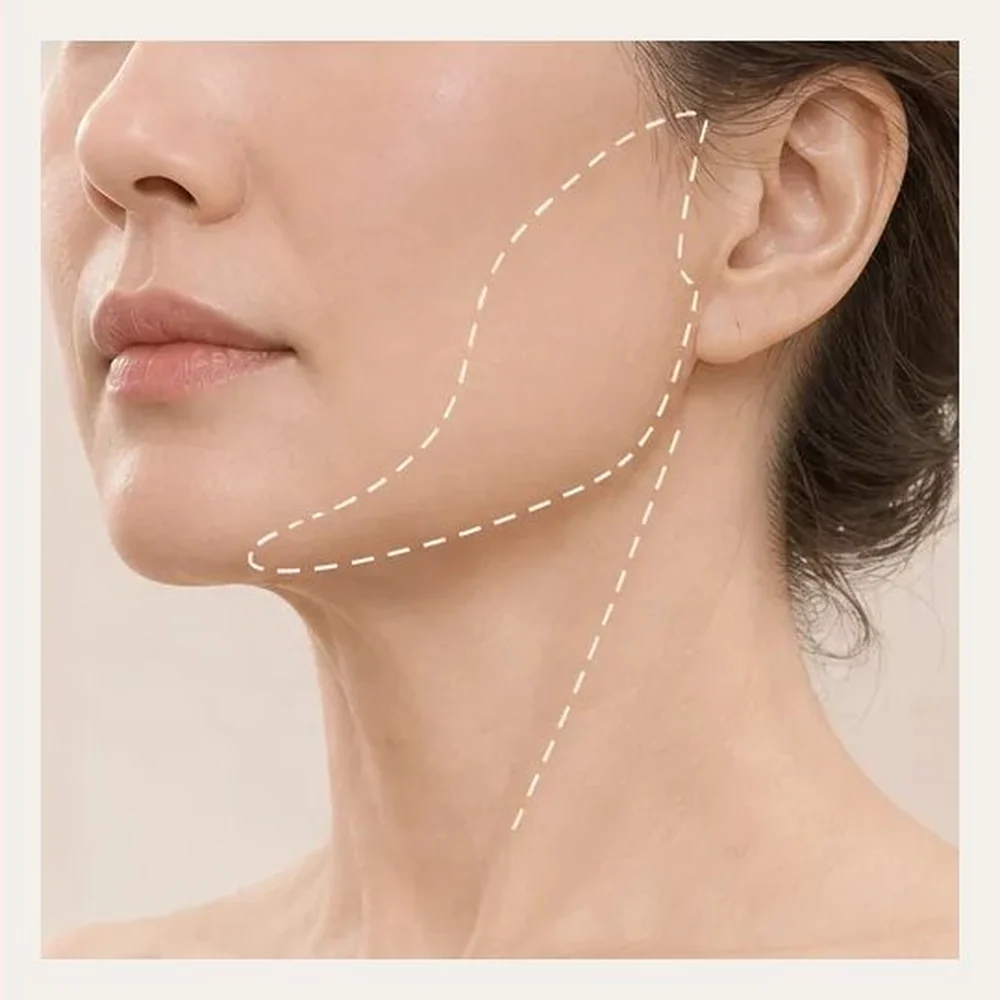
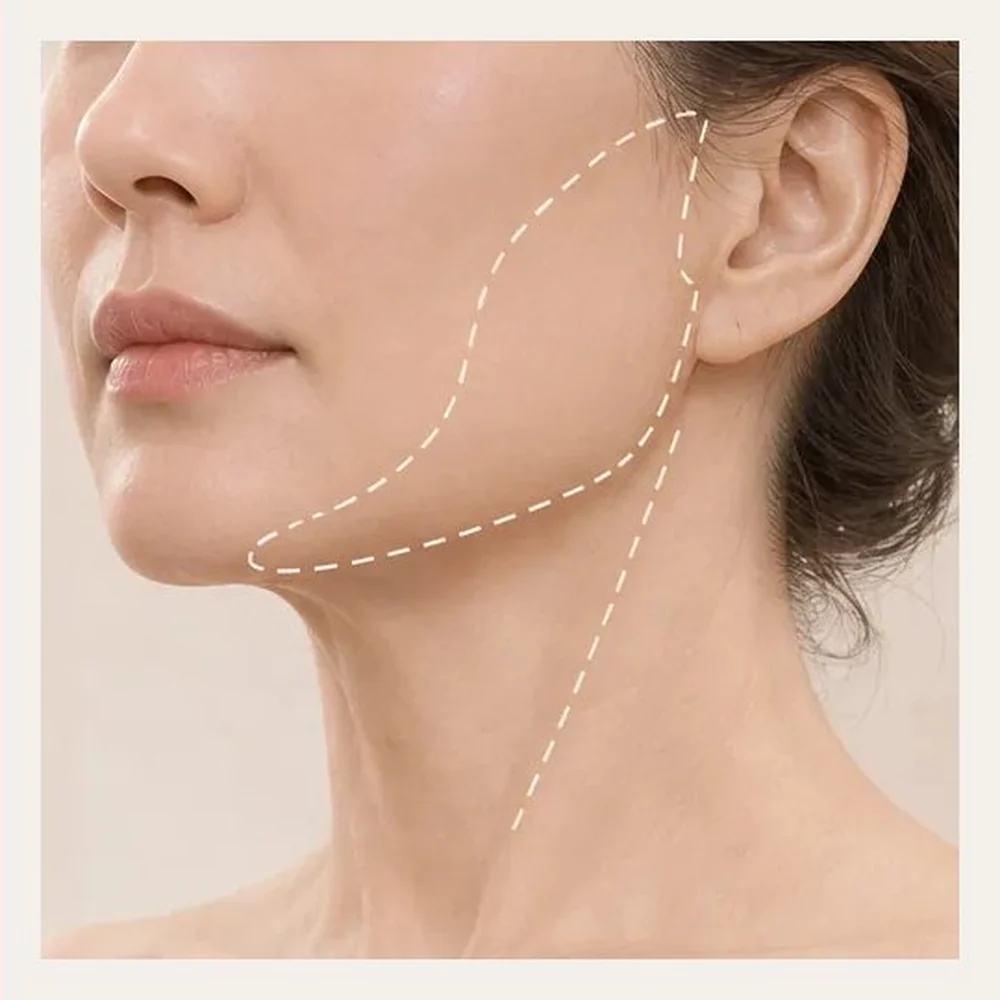
Even for the same skin quality concern, considerations differ by treatment area and skin thickness. In thin-skinned areas such as under the eyes, injection technique and product selection take priority. In areas with many blood vessels, such as the neck, around the mouth, and the backs of the hands, we first consider how to avoid bruising and hematomas. This is why we determine an area-specific technique even after selecting the material category.
Re2O may be considered when damage to the dermis has left the skin thin with many fine lines, when thin under-eye skin makes skin removal a concern, when skin changes on the neck, around the mouth, or on the backs of the hands are bothersome, or when reduced dermal elasticity is seen during recovery after surgery. On the other hand, it may not be recommended if skin hydration, pores, and overall skin condition are already good.
During the consultation, we assess the skin barrier, sensitivity, tendency toward pigmentation, and any inflammation. We also review previous treatments, the stage of recovery, treatment areas, and expected changes. Our approach is to clearly distinguish the ingredients and products, how they are administered, and their intended purposes.
What is different in thin-skinned areas like under the eyes?
05What is different in thin-skinned areas such as under the eyes?
Answer In thinner areas, injection technique and product selection affect the results more than the material itself.

Under-eye skin is very thin, so injections placed as individual deposits can look like nodules. Instead of injecting Re2O in separate dots under the eyes, we use a cannula (a thin tube with a rounded tip) to spread it across a plane. The injection depth and amount are determined by skin thickness.
For the under-eye area, we use Re2O Fine, which is designed for thin skin. Fine can reduce the likelihood of swelling and lumps. Because it tends to be less effective in areas other than under the eyes, we select different products for different areas.
Regardless of the material, we do not use the same product and technique for everyone in thin-skinned areas. If other materials are used together, we explain the purpose of each one separately. If you have had fillers or other injectable products before, we first assess their effects.
If under-eye darkness or puffiness comes from protruding fat, hollows, or sagging cheeks rather than skin quality, injections have a limited role. In these cases, we assess the underlying structure first.
Can they be used together? In what order?
06Can they be used together? In what order?
Answer They can be planned together, but we define the purpose of each material separately and coordinate the treatment sequence.

When Rejuran and Re2O are used together, VITAL Plastic Surgery explains the purpose of each material separately. Because the evidence and purpose differ for each treatment, we do not consider giving several injections at once to be a better treatment plan.
When Re2O is planned alongside laser treatment, the laser is performed first, followed by the injections. The standard Re2O course is one vial per session for three sessions, spaced 3–4 weeks apart. Swelling immediately after injection is not considered a treatment effect; changes are assessed after the swelling subsides, usually in about one week.
Timing is even more important when treatment is combined with surgery. When Re2O is used to support recovery after surgery, it is administered after the surgical swelling has subsided, usually after 4 weeks. For lower eyelid ectropion reconstruction, Re2O treatment is given for approximately 3 months before surgery.
With any combination, we document progress to determine the next step. We record the pretreatment condition, compare photographs taken under the same conditions and assess the skin, then decide whether additional care is needed.
You do not need to decide on treatment on the day of your consultation. We give you time to understand the explanation and ask questions. If the burden of treatment is greater or it is difficult to allow enough recovery time, we may not recommend starting treatment right away.
When is it not recommended?
07When is it not recommended?
Answer We do not recommend treatment right away if your skin is already in good condition, if you have volume loss, or if inflammation needs to be treated first.
All skin injections carry risks related to how they are administered, including swelling, bruising, infection, inflammatory reactions, and nodules. In areas with many blood vessels, such as the neck, around the mouth, and the backs of the hands, injection technique is important to avoid bruising or hematomas. Before treatment, we review medications and supplements that affect blood clotting.
If you notice skin changes that look like blisters or burns, worsening pain or swelling, or signs of possible infection such as pus, please contact us immediately rather than waiting for your scheduled appointment.
Regardless of the material used, sunscreen is the most important part of aftercare. Treatments that address the skin's underlying condition also require daily care afterward to maintain changes. If scar care or recovery care is also involved, continue it consistently for at least six months.
We do not recommend Re2O right away in the following cases.
- When skin condition, including hydration and pores, is already good
- When a lack of volume requires tissue augmentation to be considered first
- When inflammation or a skin condition needs treatment first
- When it is too soon after surgery for treatment intended to support recovery
08Three things we check first during your consultation
What we assess first during consultation
- Skin thickness and condition (barrier function · sensitivity · tendency toward pigmentation · inflammation)
- Previous treatments and stage of recovery
- Treatment areas and expected changes
These are general care principles. The actual decision is made after an examination.
When other care is needed first If your concern is caused by sagging structures or volume loss, those issues should be evaluated and addressed before any skin injections. Inflammation or skin conditions should be treated first. If you have just had surgery, we wait until the appropriate time for treatment to support recovery. We do not describe one material as superior. Instead, we first work with you to determine what the treatment is intended to address in your skin.
Here is the answer to the original question, “Which is better, Re2O or Rejuran?” Re2O is an extracellular matrix material that supplements the dermis, while Rejuran is a nucleic acid–based PN product. Because the materials have different starting points, it is difficult to rank one above the other. The studies also differ in their comparison groups and sizes, so they do not establish superiority. Identifying what is currently affecting your skin helps clarify which material may be appropriate—or whether injections are needed at all.
— VITAL Plastic Surgery
When booking, simply leave a note saying, “Please first assess which type of product is right for my skin,” and we will start there during your consultation. You do not need to make a decision on the day of your consultation.
Related ReadingRe2O Treatment Guide
READ NEXT
Read Next

FAQ
Frequently Asked Questions
Which is better, Re2O or Rejuran?
It is difficult to say that one is better. They belong to different categories and serve different functions, and we have not identified a study directly comparing them. The choice depends on your goals and skin condition.
Aren’t they both skin boosters?
They are commonly called skin boosters, but we do not consider them the same type of skin-nourishing injection. Re2O is an extracellular matrix material, while Rejuran is a PN product.
How many Re2O treatments are needed?
The standard course is one vial per session for three sessions, spaced 3–4 weeks apart. We document your progress and use it to determine the next treatment.
Is Re2O also different from fillers and stem cells?
Yes. Hyaluronic acid fillers primarily add shape and volume. We do not describe Re2O as equivalent to conventional fillers or stem cells.
Can I have treatment if I have had other injections before?
Tell us which fillers and injectable products you have received, along with any recent laser treatments. We assess their effects and your stage of recovery before deciding the treatment sequence.
BEFORE CONSULTATION
What to Prepare Before Your Consultation
- Previous Procedure HistoryPlease tell us the names of fillers and injectable products you have received, when you received them, and any recent laser treatments.
- Your main concernWrite down which concerns you most: thin skin, fine lines, pores, or loss of elasticity.
- MedicationsPlease tell us about any medications and dietary supplements you take. We assess the risk of bruising and bleeding.
- Skin ConditionPlease let us know about any recent inflammation, skin conditions, or areas that have become sensitive.
- Current photosIf you have front and side photos taken under the same lighting, we can use them to compare your progress later.
REFERENCES
References
- Marques C, Porcello A, Cerrano M, et al. From Polydeoxyribonucleotides (PDRNs) to Polynucleotides (PNs): Bridging the Gap Between Scientific Definitions, Molecular Insights, and Clinical Applications of Multifunctional Biomolecules. Biomolecules. 2025. doi:10.3390/biom15010148 (View abstract)
- Lee YJ, Kim HT, Lee YJ, et al. Comparison of the effects of polynucleotide and hyaluronic acid fillers on periocular rejuvenation: a randomized, double-blind, split-face trial. Journal of Dermatological Treatment. 2022. doi:10.1080/09546634.2020.1748857 (View abstract)
- Lee YI, Chau NH, Nguyen NH, et al. Injectable Particulated Human Acellular Dermal Matrix Booster for Skin Restoration: An Integrated Randomized, Split-Face, Double-Blinded Clinical Trial and Preclinical Study. International Journal of Molecular Sciences. 2026. doi:10.3390/ijms27052193 (View abstract)
- Kim J. A Prospective Split-face Trial Evaluating Skin Recovery and Enhancement with Polynucleotide (Rejuran) Following Fractional Needle Radiofrequency Treatment. Plastic and Reconstructive Surgery Global Open. 2026. doi:10.1097/GOX.0000000000008109 (View abstract)
The findings in these papers reflect the participants and conditions of each study and do not mean that every individual will have the same results.
This article provides general medical information and does not replace diagnosis or treatment. Surgical results and recovery vary by individual, and complications such as bleeding, infection, scarring, and asymmetry may occur.
More articlesVITAL Plastic Surgery Medical Articles
RESERVATION
You do not need to decide the day of your consultation.
Organize questions about this page without entering your name, contact information, or medical history. This does not submit an appointment request.