PLASTIC SURGERY
MEDICAL COLUMN
Questions Answered Directly by the Doctor Before You Decide on Surgery
Nose
Articles
Dorsal Hump Reduction: Is Removing the Bump Enough?
Dorsal hump correction involves more than shaving down the bump. Removing the prominence can leave the nasal roof open, making the bridge look flat and wide or the tip appear droopy. The resulting contour must be planned as well.
Medically reviewed by Dr. Hyungwoo Yim, Medical Director (Board-Certified Plastic Surgeon) · Published November 7, 2026 · Last reviewed November 11, 2026
SHORT ANSWER
First, the Short Answer
- Dorsal hump correction involves more than shaving down the bump. Removing the prominence can leave the nasal roof open, making the bridge look flat and wide or the tip appear droopy. The resulting contour must be planned as well.
- VITAL Plastic Surgery first determines whether the prominence is bone or cartilage, then plans whether nasal osteotomies, additional tip support, and bridge contouring with your own tissue are needed together. A small hump may need only contouring.
- VITAL Plastic Surgery first assesses the bony and cartilaginous prominence, the transition between the bridge and tip, the skin, and nasal support, and asks about any difficulty breathing.
“Can't you just shave down the hump a little?”
This is a paraphrase of a question we often hear during consultations.
To answer this question, we first need to distinguish where your current concern comes from. We will explain each point below, then return to the original question at the end.
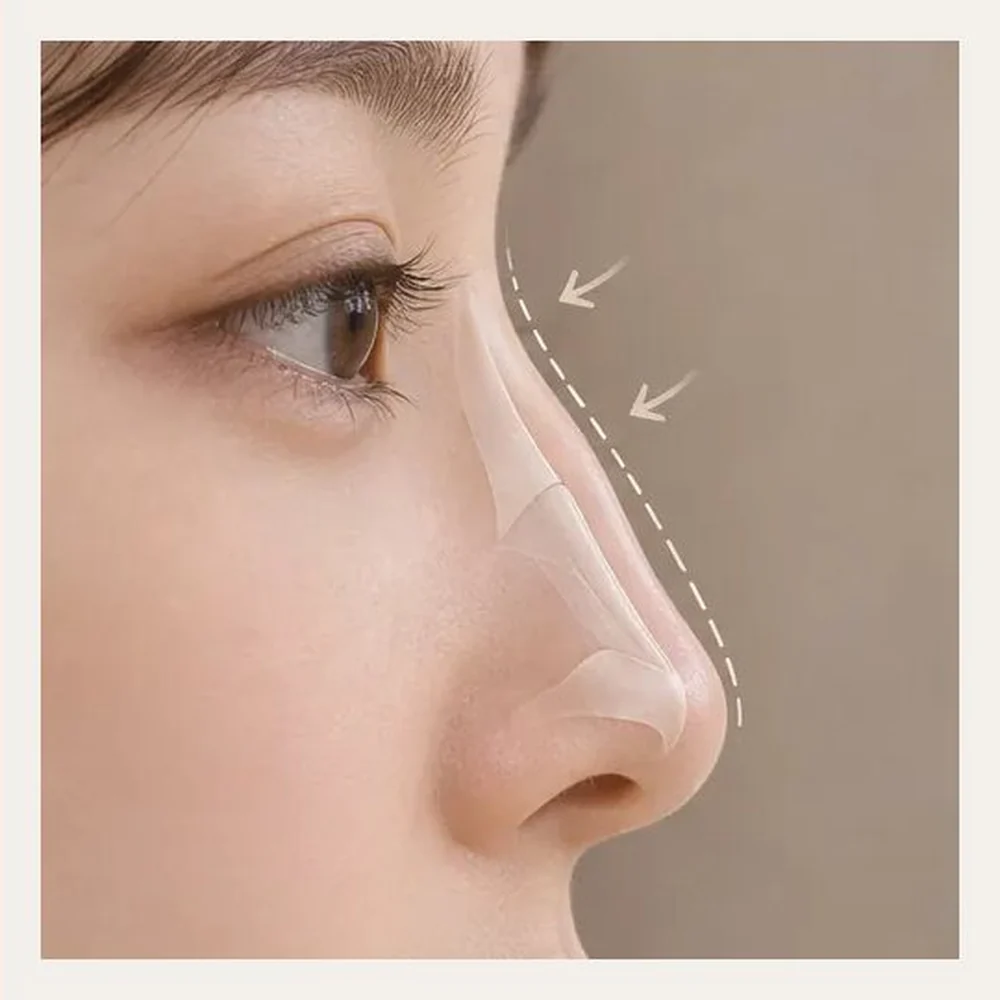
01What forms a dorsal hump?
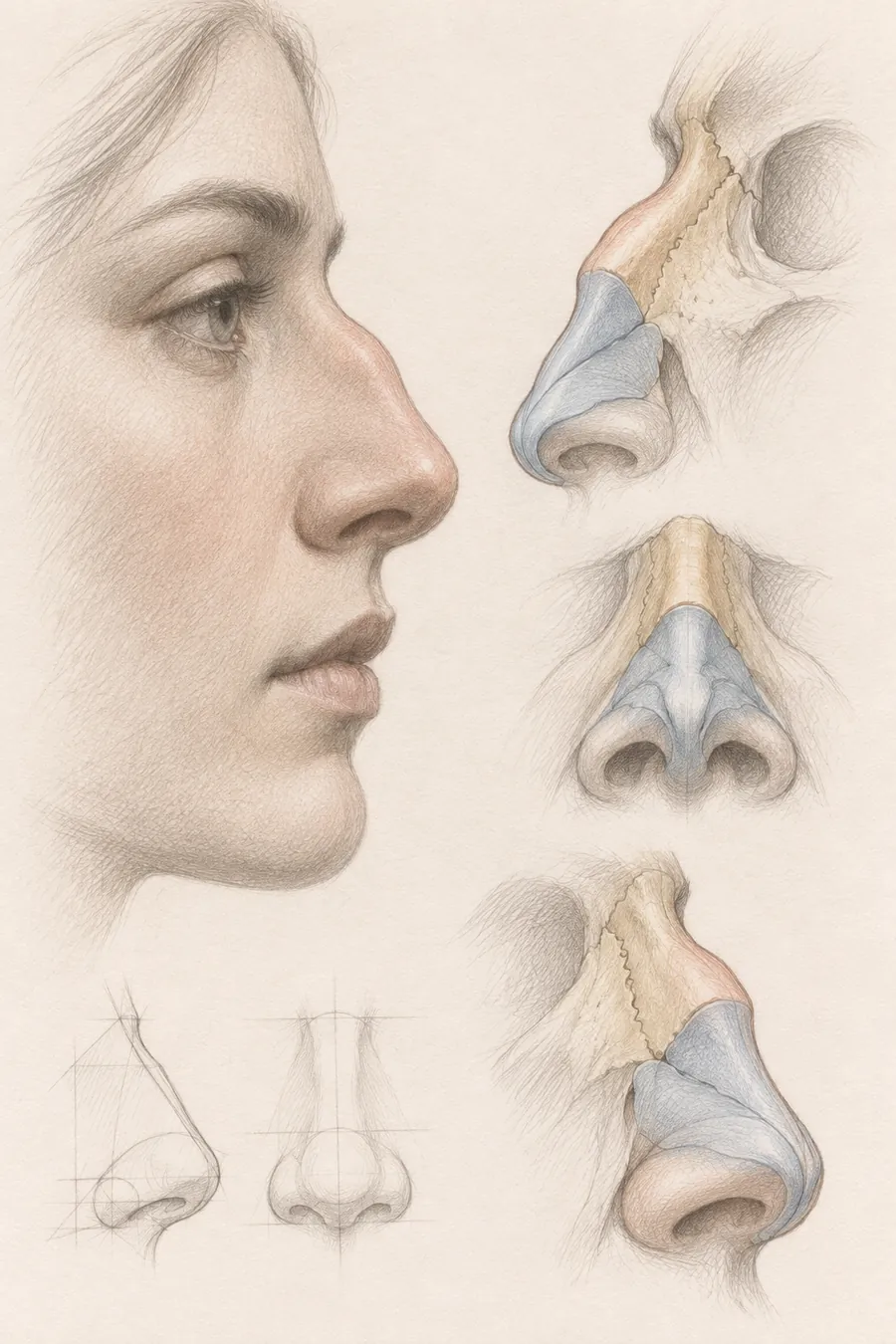
Answer The prominence usually occurs where the nasal bones meet the cartilage below them. Which component contributes more varies from person to person.
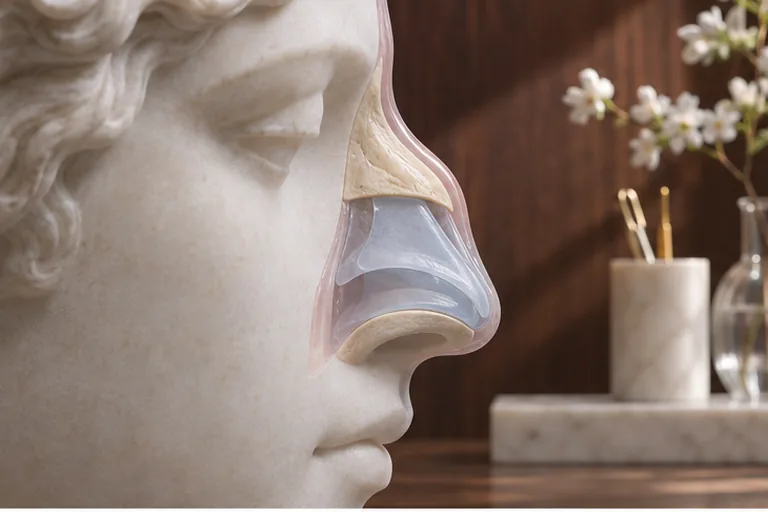
VITAL Plastic Surgery's guide to dorsal hump correction explains that the hump usually occurs where the nasal bones meet the cartilage below them, and that the relative contributions of bone and cartilage vary by person. We first identify its location because the techniques differ: bone is contoured, while cartilage is excised. This is why the extent of surgery depends on the proportions of bone and cartilage, even when humps look similar from the outside.
Research has compared the structures beneath dorsal humps across ethnic groups. A multicenter study analyzed CT scans from 600 people across 6 ethnic groups, including East Asians, with 254 people who had dorsal humps. S-shaped nasal bones were associated with dorsal humps, but the angle of the bend in the nasal bones itself was not related to hump height1. This means the visible angle alone makes it difficult to assess the size and composition of the prominence.
During consultation, we therefore examine more than profile photographs: we also feel the bridge to identify the location and extent of the prominence. Whether it is mainly in the upper bony portion or extends into the cartilage below helps determine whether contouring or excision is needed.
- Whether the prominence is mainly in the nasal bones or extends into the cartilage below
- Whether the nasal bridge also looks wide
- Whether a drooping tip makes the hump look larger
- Whether there is also difficulty breathing
In Simple Terms It is similar to leveling a hill in a road. Cutting down the hill makes the road wider at that point, so the shoulders on both sides need to be brought inward. If the end of the road has sunk, the hill looks higher than it is; raising the end first means less needs to be removed. If the cut surface is uneven, it needs resurfacing, and the drainage pipe beneath the road—the airway—must be located from the start so it is not disturbed. Dorsal hump correction likewise involves rebuilding the entire path from the forehead to the nasal tip, beyond simply removing the hill.
So why isn't removing just the bump enough?
02Why isn't removing just the bump enough?
Answer Because reduction can make the bridge wider or the tip appear droopy, the resulting contour must also be shaped.

Removing the prominence can separate the upper edges of the nasal bridge, which previously met like a roof. This is called an open roof. Left as it is, it can make the bridge look flat and wide, so nasal osteotomies—cuts that allow the nasal bones to be repositioned—may be needed to bring the bones together and close it. This is why VITAL Plastic Surgery explains that removing only the prominence can leave the bridge wider or make the tip appear droopy.
Once the prominence is removed, the contour in that area must be reshaped. If the bone and cartilage surfaces are uneven or a low area remains along the bridge, we refine the contour with your own tissue. Planning is guided by the angle between the forehead and nose and the bridge height between the eyes, within the limits that the skin's thickness and tension can accommodate. When possible, we also consider your own tissue first for contour refinement.
Excessive lowering of the bridge should also be avoided. If there is a risk that the bridge would become too low relative to the face, we may not recommend proceeding right away. The amount to remove is based on both the size of the prominence and the remaining bridge height and facial proportions.
| Situation | What may happen with reduction alone | Also Assessed |
|---|---|---|
| Large prominence and a wide bridge | An open nasal roof makes the bridge look flat and wide | Whether to bring the bones together and close the roof with nasal osteotomies |
| Drooping nasal tip | Removing too much from the bridge alone makes the nose look low and short | Whether supporting and lifting the tip could reduce the amount removed |
| Uneven surface after reduction | Low areas or irregularities remain along the bridge | Whether to refine the contour with your own tissue |
| Preexisting deviated septum | Breathing difficulty persists or worsens | Whether to consider correcting the septum during the same surgery |
So are nasal osteotomies always necessary?
03Are nasal osteotomies always necessary?
Answer They are not necessary for every hump. They are considered when removing a larger amount leaves an open nasal roof or when the bridge is wide.
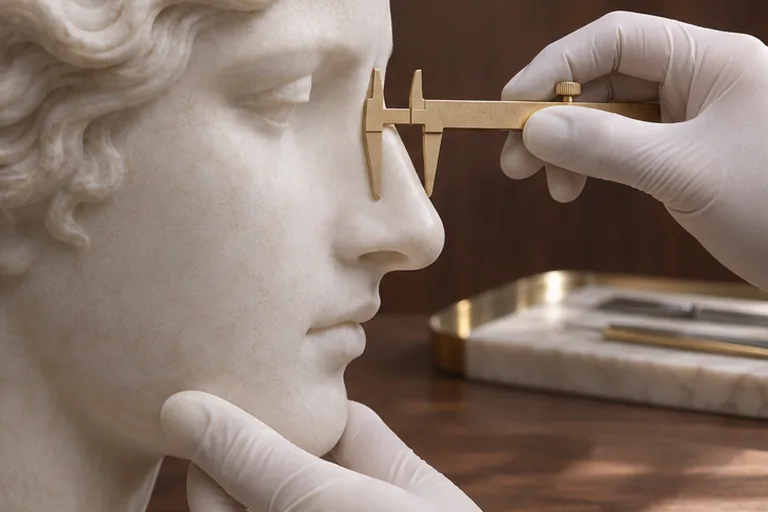
A small prominence may need only contouring. VITAL Plastic Surgery estimates the amount to be removed in advance to determine whether osteotomies are needed and explains the reason during the examination. When the prominence is large and the bridge is wide, we anticipate an open roof after removal and plan the osteotomy lines accordingly. Through an open approach, we remove the bony and cartilaginous hump, then use nasal osteotomies to bring the bones together and close the open roof. Osteotomies are also used to narrow a wide bridge or straighten deviated bones, so concerns about bridge width or deviation are addressed within the same plan.
Osteotomies also affect recovery. Work on the nasal bones can cause bruising and swelling that extend to the eye area, which should be considered when scheduling surgery. If the bones are treated, care is needed early on to avoid impact to the bridge. It is also best to avoid placing the weight of glasses on the bridge while the bones settle. We advise when to resume wearing them based on whether osteotomies were performed and how recovery is progressing.
If your schedule does not allow time for bruising and swelling after osteotomies, we do not recommend proceeding right away. It is best to allow at least 2 weeks before social engagements, so the surgery date is chosen with recovery in mind.
- Small prominence: Access through the columella or inside the nose to gradually contour the bone and cartilage and smooth the profile
- Large prominence and a wide bridge: Remove the hump through an open approach, then use nasal osteotomies to bring the bones together and close the nasal roof
- Refine the contour with your own tissue if needed, then close the incisions
- The specific technique and extent of surgery are determined after examination
So what changes if the nasal tip droops?
04What changes if the nasal tip droops?
Answer A drooping tip makes the hump look larger, so we assess whether supporting and lifting the tip could reduce the amount that needs to be removed.
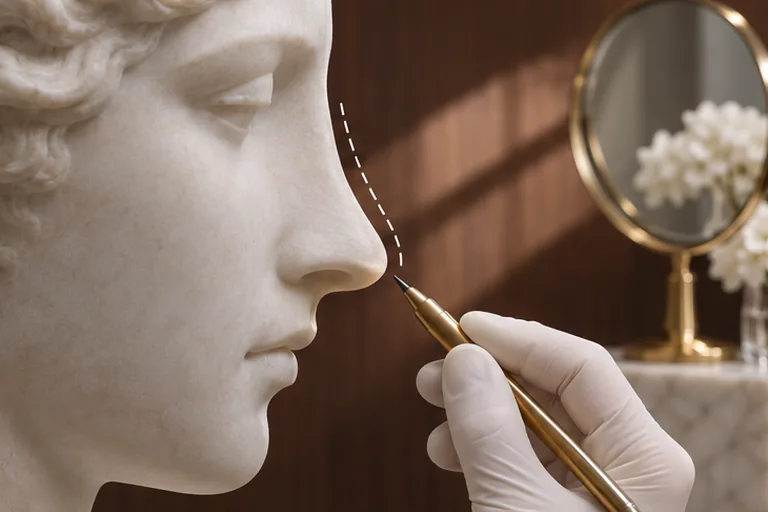
When the tip droops downward, the prominence on the bridge looks more pronounced than it is. Removing too much from the bridge alone can then make the nose look low and short. VITAL Plastic Surgery first maps the profile with the tip elevated to determine how much to remove. After reducing the prominence, we place a columellar strut to support and secure the tip. Septal cartilage is generally our first choice for this support. Removing less also reduces concern about lowering the bridge too much.
The bridge and tip form a continuous line, so changing one can alter how the other looks. We therefore map a single line from the forehead to the tip and assess hump removal, nasal osteotomies, and tip support together. We use the same approach when removal of an implant from previous nasal surgery reveals a bony and cartilaginous prominence.
To refine the bridge while supporting the tip, we make an incision across the columella to expose the prominence and tip cartilage, then harvest septal cartilage. After reducing the prominence, we place a columellar strut to secure the tip, check the transition between the bridge and tip, and close the incisions. Because we consider ear cartilage alone insufficient for lasting tip support, we generally use septal cartilage or tissue with at least comparable support.
So can it affect breathing?
05Can it affect breathing?
Answer Lowering the cartilage along the nasal bridge can change the structures supporting the airway inside the nose, so we assess this beforehand.
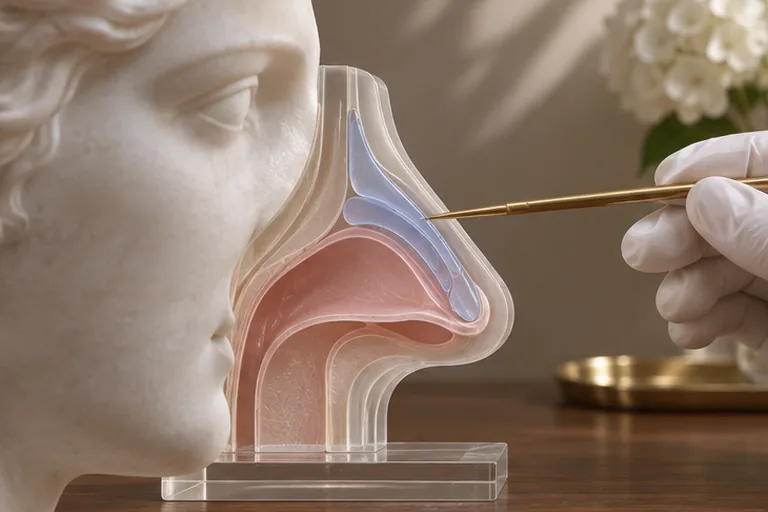
Lowering the cartilage along the nasal bridge can also change the structures supporting the internal nasal airway, which may make the nose feel narrower inside. When needed, VITAL Plastic Surgery considers placing thin cartilage grafts to maintain airway width. If you already have a deviated septum, correction may be considered during the same surgery, so we check for breathing difficulties beforehand. Let us know about any breathing difficulties before surgery so we can include the scope of treatment in your plan along with changes to the shape.
Studies comparing dorsal hump reduction techniques also assess nasal function. An analysis of 25 studies involving 1,706 patients compared techniques that remove and reconstruct the nasal bridge with techniques that lower it while preserving its structure. Satisfaction rates were high, at 84% or more across studies, with no significant difference between the two approaches. About 2 in every 100 patients underwent revision surgery2. However, nasal obstruction symptom scores improved by 27.3 points with the resection approach and 19.5 points with the preservation approach. The authors concluded that resection may be preferable for patients with substantial breathing concerns.
A meta-analysis of 22 studies involving 5,660 patients treated with preservation techniques found that 4.18% had a residual or recurrent hump after surgery, and 3.48% underwent revision surgery3. This means that with either approach, part of the hump may remain or become visible again. VITAL Plastic Surgery's guide describes reducing the prominence, then reshaping the contour with osteotomies and the patient's own tissue. We also explain the risks, including residual prominence, depressions, asymmetry, breathing difficulties, scarring, and the possibility of revision surgery.
Can I leave a little of the hump?
06Can a small hump be left in place?
Answer Yes. The nasal bridge can be made straight, or a slight curve can be left.
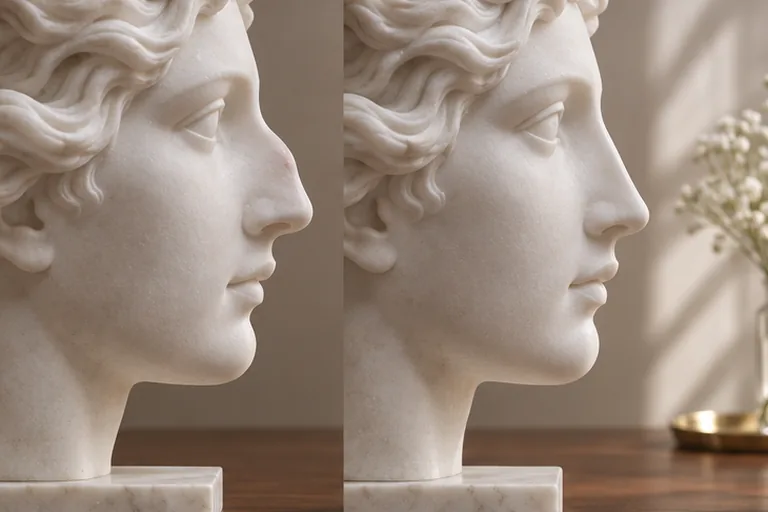
Tell us first what appearance you want in profile, and we will determine together how much to reduce. Some people want a completely straight line, while others prefer to leave a slight curve to preserve their natural facial character. However, subtle differences in the contour may remain depending on the condition of the skin and bone.
If the prominence is small and visible only from certain angles, we do not recommend surgery right away. The burden of osteotomies and swelling may outweigh the change surgery can achieve. Waiting is also the first step if you recently injured your nose and the bone and swelling have not yet stabilized. Taking photos while postponing surgery can help us compare changes at your next consultation.
The starting points for choosing your desired contour are the height of the nasal root between the eyes and the angle where the forehead meets the nose. Even with the same amount of reduction, a low nasal root and a high nasal root create different profiles. Rather than copying the bridge from a single photo, we redraw the contour using your own facial landmarks.
- Desired profile contour: straight or slightly curved
- The starting height of the nasal bridge between the eyebrows
- Whether to also change the nasal tip's height and direction
- A schedule that allows for bruising and swelling after osteotomies
What is recovery like?
07What is recovery like?
Answer Swelling peaks on days 3–4. The overall shape is usually visible by 1 week, while residual tip swelling takes more than a month to subside.

Dorsal hump correction is performed under sedation and local anesthesia. General anesthesia may be used if rib cartilage is used. You can go home the same day. About 90% of the overall nasal shape is usually visible after one week, but the initial shape is not the final result. It takes 3 months to 1 year for the tissue to soften and settle. Follow-up visits are at 1, 3, and 6 months and 1 year. Residual swelling at the nasal tip takes more than a month to resolve, so the result should not be judged by its initial appearance alone.
We document and monitor your recovery. We first record your condition before surgery and the changes you expect. Early on, we provide guidance on wound care and symptoms that require you to contact us. Later, we compare not only photos but also changes in discomfort and breathing. Additional care is explained according to each person's condition rather than prescribed uniformly for everyone.
If you have sudden severe pain, bleeding that does not stop, rapidly worsening swelling on one side, or signs of possible infection such as a high fever or pus, contact us immediately rather than waiting for your scheduled appointment. We do not promise changes identical to a photo or someone else's results. We first listen to what bothers you most and the appearance you want to preserve, then develop a plan.
| Timing | What Happens | What to Keep in Mind |
|---|---|---|
| 3–4 days after surgery | Peak Swelling | Sleep with your head slightly elevated; bruising around the eyes may occur after osteotomies |
| About 1 Week | The overall shape usually starts to become visible around this time | The early shape is not the final shape; protect the nasal bridge from impact |
| 1 Month or Longer | Residual tip swelling remains | Allow at least 2 weeks before social engagements |
| 3 months–1 year | The tissue softens and the shape settles | Follow-ups at 1, 3, and 6 months and 1 year |
08Three things we check first during your consultation
What we assess first during consultation
- Bone and cartilage prominence (location and proportions)
- How the bridge connects to the tip (whether a drooping tip makes the hump look larger)
- Skin, nasal support, and breathing difficulties
These are general care principles. The actual decision is made after an examination.
When other care is needed first We do not recommend surgery right away if the prominence is small and visible only from certain angles, your schedule does not allow time for bruising and swelling after osteotomies, substantial bridge reduction could leave the bridge too low for your face, or you recently injured your nose and the bone and swelling have not yet stabilized. In these cases, we first consider waiting or reducing the scope of surgery.
The answer to the opening question, “Can't you just shave down the hump a little?” is this: a small prominence may only need contouring, but in most cases, the plan also needs to address the bridge widening after reduction, a drooping-looking tip, and an airway that may become narrower. First determining whether the prominence is bone or cartilage and how it connects to the tip helps establish how much to reduce and whether osteotomies are needed.
— VITAL Plastic Surgery
When booking, simply leave a note saying, “Please assess how much reduction I need and whether osteotomies are necessary,” and we will start there during your consultation. You do not need to make a decision on the day of your consultation.
Related ReadingDorsal Hump Correction Consultation Guide
READ NEXT
Read Next
FAQ
Frequently Asked Questions
Cutting the nasal bones sounds frightening. Is it necessary?
Not every dorsal hump requires osteotomies. A small hump may need only contouring. Osteotomies are considered when removing a larger amount leaves an open nasal roof or when the bridge is wide.
Can I keep a slight hump?
The bridge can be made straight or retain a slight curve. Tell us your preferred profile first so we can decide together how much to remove.
When can I wear glasses after surgery?
If you have had an osteotomy, it is advisable to avoid placing weight on the bridge while the bones settle. We will advise you on timing based on whether osteotomy was performed and how you are healing.
Will removing the hump make my nose lower?
It can, so we calculate how much to remove in advance. If the tip droops, we also assess whether supporting and lifting it could reduce the amount that needs to be removed.
Can the hump come back?
With any technique, part of the hump may remain or become visible again. We also discuss residual prominence and the possibility of revision surgery before the procedure.
BEFORE CONSULTATION
What to Prepare Before Your Consultation
- Profile PhotosBring left and right profile photos and 45-degree photos, and be ready to describe your desired nasal bridge contour.
- Breathing difficultiesTell us which side feels blocked, whether you snore, and whether you have ever been told you have a deviated septum.
- History of Nasal InjuryIf you recently injured your nose, tell us when. We plan surgery after the bone and swelling have stabilized.
- Previous surgery and materials placed in your noseTell us about anything placed in your nose, including implants, fillers, or threads, and provide your surgical records.
- SchedulingOsteotomies may cause bruising around the eyes, so allow at least 2 weeks before social engagements.
REFERENCES
References
- Rodrigues Dias D, Santos M, Sharafi M, et al. Nasal Dorsum Anatomy of Major Different Ethnicities—Surgical Implications: A Multicenter Radiologic Study. Plastic and Reconstructive Surgery. 2024. doi:10.1097/PRS.0000000000011238 (View abstract)
- Foppiani JA, Joy N, Hernandez Alvarez A, et al. Dorsal Preservation versus Component Dorsal Hump Reduction Rhinoplasty: An Assessment of Patient-reported Outcomes. Plastic and Reconstructive Surgery Global Open. 2024. doi:10.1097/GOX.0000000000006103 (View abstract)
- Tham T, Bhuiya S, Wong A, et al. Clinical Outcomes in Dorsal Preservation Rhinoplasty: A Meta-Analysis. Facial Plastic Surgery & Aesthetic Medicine. 2022. doi:10.1089/fpsam.2021.0312 (View abstract)
The findings in these papers reflect the participants and conditions of each study and do not mean that every individual will have the same results.
This article provides general medical information and does not replace diagnosis or treatment. Surgical results and recovery vary by individual, and complications such as bleeding, infection, scarring, and asymmetry may occur.
More articlesVITAL Plastic Surgery Medical Articles
RESERVATION
You do not need to decide the day of your consultation.
Organize questions about this page without entering your name, contact information, or medical history. This does not submit an appointment request.