PLASTIC SURGERY
MEDICAL COLUMN
Questions Answered Directly by the Doctor Before You Decide on Surgery
Body
Articles
Liposuction Cost: How Do the Areas and Extent of Treatment Affect the Price?
Liposuction costs vary most according to how many areas are treated and how extensive the treatment is. VITAL Plastic Surgery's price list is also organized by area, including the double chin, arms, accessory breast tissue, bra line, flanks, abdomen, back, and thighs.
Medically reviewed by Dr. Hyungwoo Yim, Chief Director and Plastic Surgery Specialist · Published 2026.11.23 · Last reviewed 2026.11.23
SHORT ANSWER
First, the Short Answer
- Liposuction costs vary most according to how many areas are treated and how extensive the treatment is. VITAL Plastic Surgery's price list is also organized by area, including the double chin, arms, accessory breast tissue, bra line, flanks, abdomen, back, and thighs.
- Other factors include whether a tummy tuck is needed based on skin elasticity, whether fat grafting is performed to transfer the removed fat, and whether the procedure is a revision of previous liposuction. More extensive treatment also increases the risks of bleeding and blood clots and places a greater demand on recovery, so cost planning also takes into account whether to treat the areas at once or in stages.
- During the consultation, we first assess the distribution of subcutaneous fat, skin elasticity and laxity, body shape, and health. Actual prices are available on the non-covered medical services price list page, and the final cost is provided after the extent of treatment is determined during the examination.
“I'd like to have my arms and abdomen treated together. Is the cost of liposuction set separately for each area?”
This is a paraphrase of a question we often hear during consultations.
To answer this question, we first need to distinguish where your current concern comes from. We will explain each point below, then return to the original question at the end.
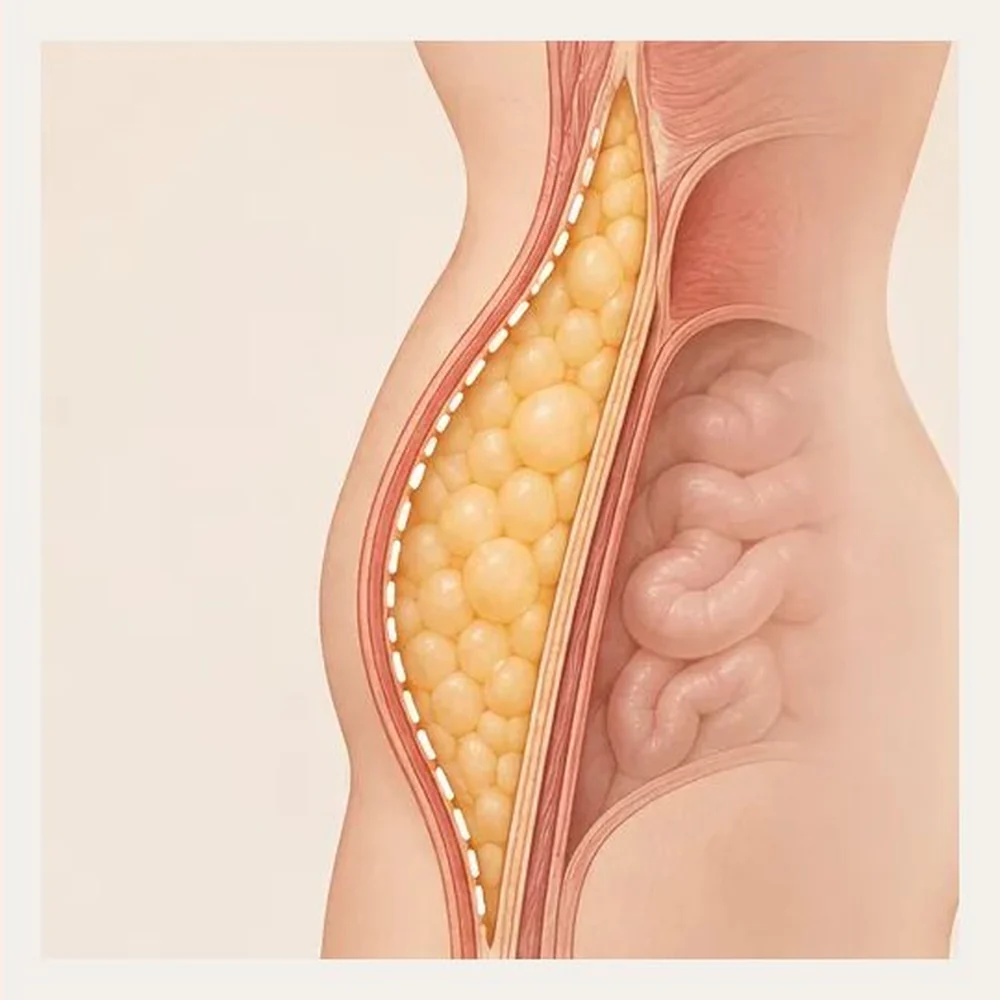
01What determines the cost of liposuction?
Answer The main factors affecting cost are the number and size of areas treated, the choice of surgery based on skin condition, any procedures performed at the same time, and whether it is revision surgery.
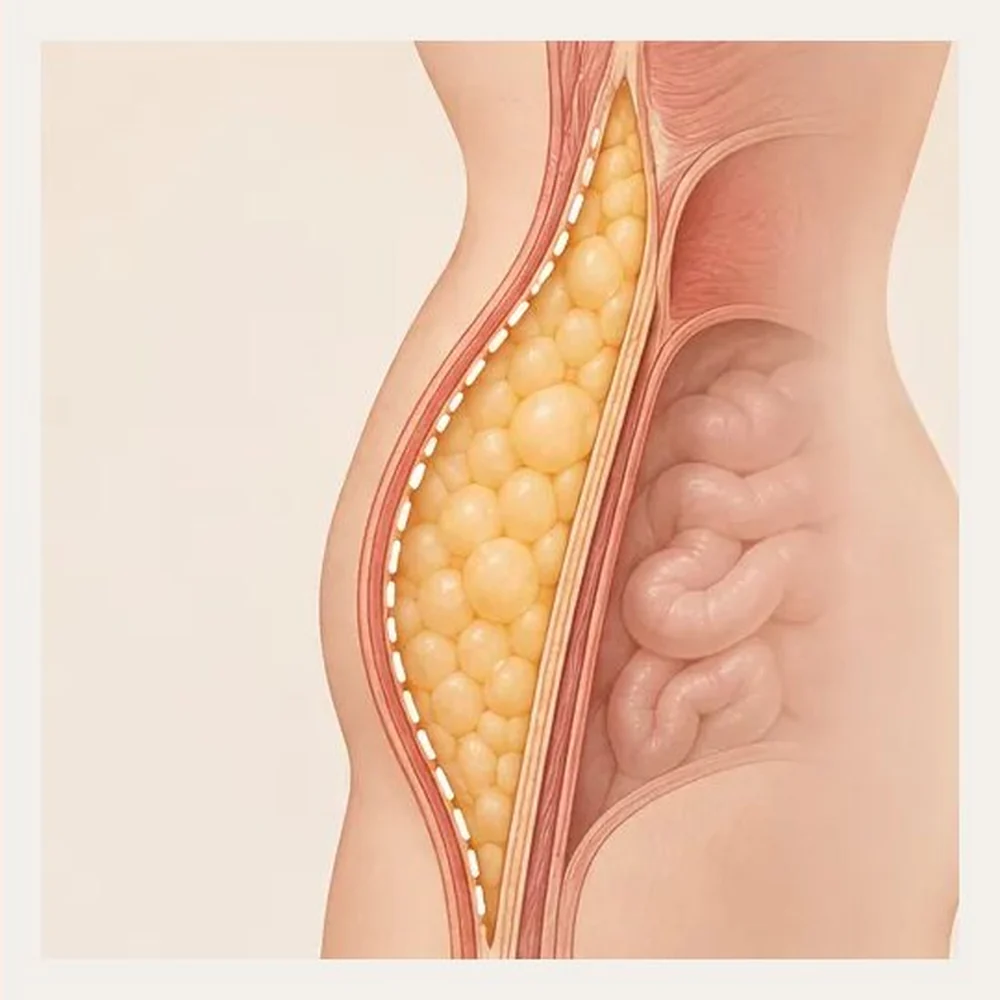
Liposuction is surgery that uses a thin tube to remove localized deposits of fat beneath the skin and refine body contours. It is not a weight-loss treatment, so the cost is determined after deciding which areas to contour and how much to remove.
The liposuction section of VITAL Plastic Surgery's fee guide lists procedures by area. Double chin, both arms, arms and accessory breast tissue, bra line, flanks, entire abdomen, back, and both thighs in their entirety are listed separately. There are also combined entries for adjoining areas, such as the arms and accessory breast tissue. Before looking at the price, check which entry covers the area you want treated.
Other factors also come into play. The items included vary depending on whether the skin is loose enough to require an abdominoplasty, whether the removed fat is transferred elsewhere, and whether the procedure is a revision of a previous surgery. The fee guide lists a separate surcharge for revision liposuction, and abdominoplasty and fat grafting are listed separately as well.
Before surgery, we check for diabetes, high blood pressure, blood clot risk, and medications you take. If your medical history requires further evaluation, we discuss the treatment scope and cost after that evaluation is complete.
| Factor | What VITAL considers | Factors Affecting Cost |
|---|---|---|
| Number of areas | Double chin · arms · accessory breast tissue · bra line · flanks · abdomen · back · thighs | Fees by area; whether to treat them at once or in stages |
| Scope and amount | Fat layer thickness, skin elasticity, differences between sides | First, determine a reasonable treatment scope |
| Skin Firmness | Amount of loose skin assessed by hand | Whether to use liposuction alone or also consider abdominoplasty |
| Procedures performed at the same time | Fat grafting, abdominoplasty | Whether to perform them on the same day or at separate times |
| Revision surgery | Adhesions, remaining fat, and indented areas | Revision surgery surcharge |
In Simple Terms The cost of liposuction is much like a home repair estimate. The estimate varies depending on whether one room or several rooms need work, whether only the wallpaper needs attention or the wall itself is sagging and needs separate repair, and whether traces of earlier work must first be removed. Renovating several rooms at once can reduce the work to a single schedule, but it also places a greater burden on the whole house. Just as it is difficult to give one estimate before seeing the house, we provide a liposuction cost estimate after an examination determines the scope of treatment.
So what changes when multiple areas are treated at once?
02What changes when multiple areas are treated at once?
Answer The larger the treatment area, the greater the risk of bleeding and blood clots and the greater the burden of recovery. We consider the total amount to be removed and your health to decide whether to proceed in one surgery or divide it into stages.
Many patients want to treat several areas at once, such as the arms, abdomen, and thighs. However, removing a large amount of fat across a wide area in one surgery also increases the burden on the body, including bleeding, fluid shifts, and blood clots. Before expanding the treatment area, we first determine what can be done safely in a single surgery.
If treating all the areas at once would be too much, we divide the procedure into stages. In many cases, staging is better for a normal recovery. Because this means two surgeries and two recovery periods, we discuss the overall schedule along with the cost.
A study using cosmetic surgery complication insurance data (CosmetAssure) reviewed 31,010 liposuction procedures performed from 2008 to 2013. For liposuction alone, the rate of major complications requiring an emergency room visit, hospitalization, or additional surgery was 0.7%. When liposuction was combined with other cosmetic procedures, the risk of major complications was about 4.8 times higher, and the risk also increased with age and body mass index1.
These data come from Western populations, and the combined procedures varied, so the findings cannot be directly applied to an individual's risk. Still, they show that doing more at once is not always beneficial. During your consultation, we discuss all the areas you want treated, first identify the area that bothers you most and a safe treatment range, and exclude areas that can be reduced through diet and exercise.
Wouldn't removing more fat give better results?
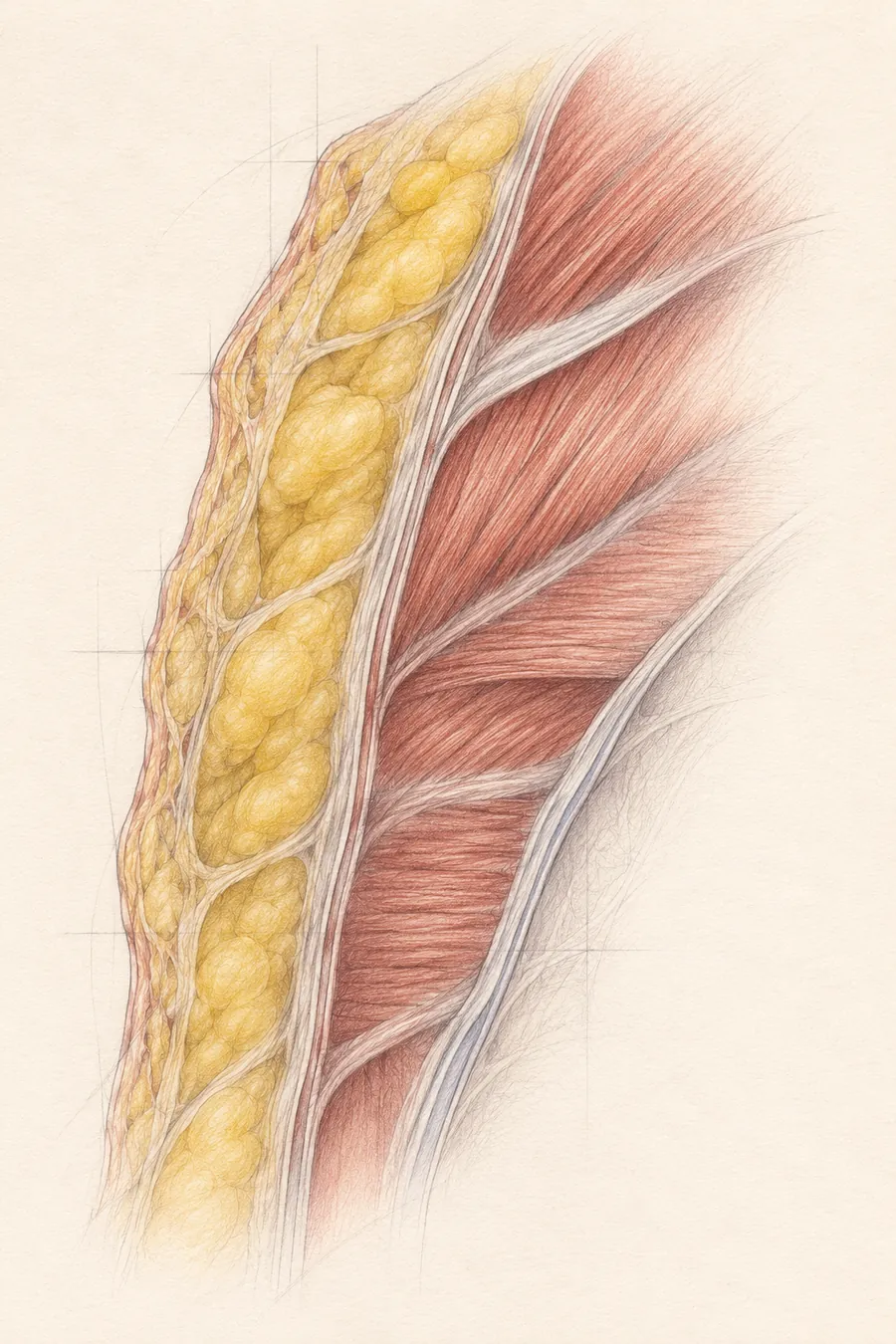
03Isn't it better to remove more fat?
Answer No. Removing more fat increases the risk of excess skin and an uneven surface, so we determine the amount by considering safety and changes to the skin before the amount removed.
Liposuction is not a procedure where removing more fat is always better. Working extensively in the superficial fat layer just beneath the skin can lead to an uneven surface, so fat is removed through small entry points, focusing on the deeper fat layer near the muscles. We also consider potential skin sagging after liposuction when deciding how much to remove.
A study analyzing 4,534 liposuction patients using surgical outcomes data from American plastic surgeons reported that both the amount removed and body mass index were associated with complications. It also found that removing more than 100 mL per unit of body mass index was an independent risk factor for complications2. This means that a fixed amount does not have the same significance for everyone; the risk varies with body size.
Even for the same area, such as the abdomen, the safe treatment range varies depending on fat thickness, body size, and skin elasticity. To determine this range, we assess fat thickness and skin elasticity while you are standing and mark the treatment area with contour lines.
The number of fat cells in the treated area decreases, but if you gain a significant amount of weight, the remaining fat and fat in other areas may increase. We therefore plan surgery for a time when your weight is stable. If your main goal is to lose a significant amount of weight, we do not recommend proceeding directly to surgery.
Does loose skin change the cost?
04Does loose skin change the cost breakdown?
Answer Yes. If the skin cannot contract, liposuction alone may leave wrinkled skin. For the abdomen, we compare a tummy tuck with a tummy tuck combined with liposuction.
If the skin can contract after the fat is removed, liposuction is enough. If the skin has already stretched due to pregnancy or weight changes, liposuction alone may leave wrinkled skin. We examine the skin by hand and assess its elasticity and looseness before making a recommendation.
This difference can be significant in the abdomen and may even change the name of the procedure. The fee schedule lists a mini tummy tuck, a full tummy tuck, and a tummy tuck combined with liposuction separately from liposuction. A mini tummy tuck addresses only the skin below the belly button. A full tummy tuck lifts the skin above the belly button and creates a new opening for it, so it involves a larger area and a more demanding recovery.
A tummy tuck directly removes excess skin but leaves a long horizontal scar above the pubic area. We decide whether a procedure with less scarring or one that addresses the skin is more appropriate by considering the scar and recovery as well as the cost.
A double chin is similar. Liposuction can reduce fat above the platysma, the broad muscle in the neck, but structures beneath the muscle are not treated with liposuction. If there is substantial excess skin, we compare it with a neck lift. The costs involved can differ for the same concern depending on its cause.
What if I also have fat grafting or another procedure?
05What if I have fat grafting or another procedure at the same time?
Answer Fat grafting, which transfers the removed fat, is billed separately. We decide together whether to do it on the same day or at a different time, taking the demands of recovery into account.
The removed fat can be transferred to areas that have lost volume. The fee schedule lists separate fat grafting procedures for the face, upper eyelids, neck wrinkles, backs of the hands, buttocks, and breasts. Only some of the transferred fat survives, and the contour can become uneven, so we assess where fat is needed and how much to transfer to each area.
Treating multiple areas at once makes recovery more demanding, so we also decide together whether to do them on the same day. In the study of 31,010 cases mentioned earlier, the risk of confirmed venous thromboembolism—a condition in which a blood clot forms in a vein, such as in the leg, and travels to the lungs—was higher when liposuction was added to another cosmetic surgery than when that surgery was performed alone1. Combining procedures reduces the number of surgical sessions to one, but that single session places greater demands on the body. We consider this alongside the cost.
The anesthesia method is also determined based on the extent of surgery. Before fat is removed, a fluid containing medication (tumescent fluid) is injected into the fat layer to reduce bleeding and pain. As the surgical area becomes larger and more procedures are added, the operation and anesthesia monitoring take longer. The anesthesia method is therefore determined and explained during the consultation after assessing the extent of surgery and your health.
We recommend stopping herbal medicines and supplements such as omega-3 when possible because they may increase the tendency to bleed. We also advise all patients to stop smoking and drinking alcohol before surgery. These preparations become even more important as more procedures are performed together.
Why does revision surgery cost more or less?
06Why does revision surgery cost more or less?
Answer Revision surgery requires treatment of adhesions, remaining fat, and depressed areas. The fee schedule therefore includes a separate additional charge for revision surgery, with the final amount determined by the difficulty and extent of the procedure.
Depressions or unevenness remaining after previous liposuction require a different approach from the initial surgery. While you are standing, the surgeon marks the depressed areas, adhesions, and remaining fat around them. The surgeon then enters through small incisions nearby, releases the adhesions, and evenly contours the surrounding fat.
If needed, filler is placed in small amounts in the depressed areas. The amount used is 10 cc, or up to 15 cc at most. Blood vessels need to grow into any tissue for it to settle stably. If a large amount clumps together like a ball in one place, blood vessels cannot reach the center, which can lead to inflammation and infection.
In the fee schedule, the additional charge for liposuction revision is marked “additional · starting at.” “Additional” means the amount added when performed with another procedure, and “starting at” means the final amount is determined after consultation based on the difficulty and extent of surgery. Because the extent of revision surgery is difficult to determine without seeing the condition firsthand, an examination comes first.
Records from your previous surgery can help us check which areas were treated and how much work was done. If you do not have records, we start by examining your current condition.
How does recovery care and follow-up continue?
07How do recovery care and follow-up appointments work?
Answer We check your progress at each stage: swelling and bruising in the first 3–4 days, the initial wound, firmness from 3 weeks to 3 months, and contour settling from 3 months to 1 year. Compression instructions depend on the area and extent of surgery.
Swelling and bruising are most severe during the first 3–4 days after surgery. We recommend gentle walking, adequate nutrition, and plenty of fluids. Early on, we check the wound for infection and fluid buildup. Wear your compression garment 24 hours a day for the first 2 weeks after surgery, then at least 12 hours a day for the next 4–6 weeks.
A compression garment applies pressure to the surgical area to reduce swelling and help the skin adjust to its new contours. How long you need to wear it depends on the area and extent of surgery, so it is a good idea to ask about recovery care when discussing the cost.
Between 3 weeks and 3 months, the treated area may feel firm and uneven. Over the following months, from 3 months to 1 year, the tissue softens and the contours gradually settle. VITAL Plastic Surgery’s Lasting Care follows your progress at 1 week, 1 month, 3 months, 6 months, and 1 year, comparing photos and changes in function over time. An examination is used to determine whether additional care is needed. The timing of checkups and scope of care depend on the type of surgery and how you are recovering.
If you are traveling from abroad, there is no set length of stay for liposuction. Your schedule, including stitch removal and your first follow-up, will be arranged after assessing the extent of surgery and your health. If you experience sudden severe pain, bleeding that does not stop, rapidly worsening swelling on one side, or signs of infection such as a high fever or pus, please contact us right away rather than waiting for your appointment.
| Timing | What Happens | What to Keep in Mind |
|---|---|---|
| 3–4 days after surgery | When swelling and bruising are pronounced | Gentle walking, nutrition, and hydration |
| Early After Surgery | Check for wounds, infection, and fluid buildup | Compression as directed for your surgery |
| 3 weeks–3 months | The treated area may feel firm and uneven | Follow-Up |
| 3 months–1 year | Tissue softens and contours settle | Avoid major weight changes |
08Three things we check first during your consultation
What we assess first during consultation
- Whether weight loss should come first or localized contour correction is appropriate
- The treatment area and resulting skin changes
- Recovery care and limitations
These are general care principles. The actual decision is made after an examination.
When other care is needed first In some cases, other care should come before liposuction. These include when your main goal is to lose a significant amount of weight, when a protruding abdomen is primarily caused by visceral fat or an abdominal wall issue, when significant skin laxity makes it difficult to improve your contours with liposuction alone, or when your medical history includes conditions that need to be assessed first, such as diabetes, high blood pressure, or use of blood thinners.
Here is the answer to the original question, “I want to have my arms and abdomen done together. Is the cost of liposuction set separately for each area?” VITAL Plastic Surgery’s fee guide lists charges by area. The cost is then determined by factors including the extent of treatment, skin condition, any procedures performed at the same time, and whether it is revision surgery. Whether to treat the arms and abdomen in one session or separately is decided with safety in mind, based on the total amount to be removed and your health. The final cost is provided after the treatment area is determined during your examination.
— VITAL Plastic Surgery
When booking, simply let us know, “Please first assess how much can be done in one session,” and we will start there during your consultation. You do not need to make a decision on the day of your consultation.
Related ReadingLiposuction · Body Contouring Care Guide
READ NEXT
Read Next
FAQ
Frequently Asked Questions
Does the cost of upper arm liposuction vary depending on the extent of treatment?
The price list has separate entries for both arms and for the arms combined with accessory breast tissue. The applicable entry depends on whether treatment covers only the arms or also includes accessory breast tissue near the armpits.
Is it better to treat several areas at once?
The decision to treat areas at once or in stages is based on safety. More extensive treatment increases the risks of bleeding and blood clots and places a greater demand on recovery. If treating the areas at once would be too much, they are treated in stages.
Is it covered by insurance or supplemental medical insurance?
Coverage may depend on the purpose of treatment and the diagnosis, so we cannot make a general determination here. Please discuss it during your consultation.
Can I find out the cost by sending photos?
Photos are for reference. The extent of treatment can only be determined after an in-person assessment of fat thickness, skin elasticity, and health, so an exact price is provided after the examination.
Where can I find actual prices?
The website's non-covered medical services price list (/ko/price.html) includes entries for each area. Value-added tax is charged separately for cosmetic procedures, and the final amount is determined after consultation based on the procedures included.
BEFORE CONSULTATION
What to Prepare Before Your Consultation
- Your desired treatment areas and prioritiesWrite down all the areas you would like treated and rank them starting with the area that bothers you most. This makes it easier to decide together on a reasonable scope of treatment.
- Weight Change PlansPlease tell us about any recent weight changes and your future diet or pregnancy plans. Treatment is planned for a time when your weight is stable.
- Medical history and medicationsPlease tell us about any diabetes, high blood pressure, risk of blood clots, and all medications you take. We recommend stopping herbal medicines and supplements such as omega-3s whenever possible.
- Previous treatment and surgery historyIf you have records of previous liposuction, fat grafting, or fillers, please bring them with you. They are needed to determine the scope of revision surgery.
- Recovery TimelineSwelling and bruising are most severe for 3–4 days, and you will need to wear a compression garment. If you are traveling from abroad, please allow enough time for stitch removal and your first follow-up visit.
REFERENCES
References
- Kaoutzanis C, Gupta V, Winocour J, et al. Cosmetic Liposuction: Preoperative Risk Factors, Major Complication Rates, and Safety of Combined Procedures. Aesthetic Surgery Journal. 2017. doi:10.1093/asj/sjw243 (View abstract)
- Chow I, Alghoul MS, Khavanin N, et al. Is There a Safe Lipoaspirate Volume? A Risk Assessment Model of Liposuction Volume as a Function of Body Mass Index. Plastic and Reconstructive Surgery. 2015. doi:10.1097/PRS.0000000000001498 (View abstract)
The findings in these papers reflect the participants and conditions of each study and do not mean that every individual will have the same results.
This article provides general medical information and does not replace diagnosis or treatment. Surgical results and recovery vary by individual, and complications such as bleeding, infection, scarring, and asymmetry may occur.
More articlesVITAL Plastic Surgery Medical Articles
RESERVATION
You do not need to decide the day of your consultation.
Organize questions about this page without entering your name, contact information, or medical history. This does not submit an appointment request.