PLASTIC SURGERY
MEDICAL COLUMN
Questions Answered Directly by the Doctor Before You Decide on Surgery
Body
Articles
Back Liposuction: Is Removing Bra-Line Fat Enough to Smooth the Back?
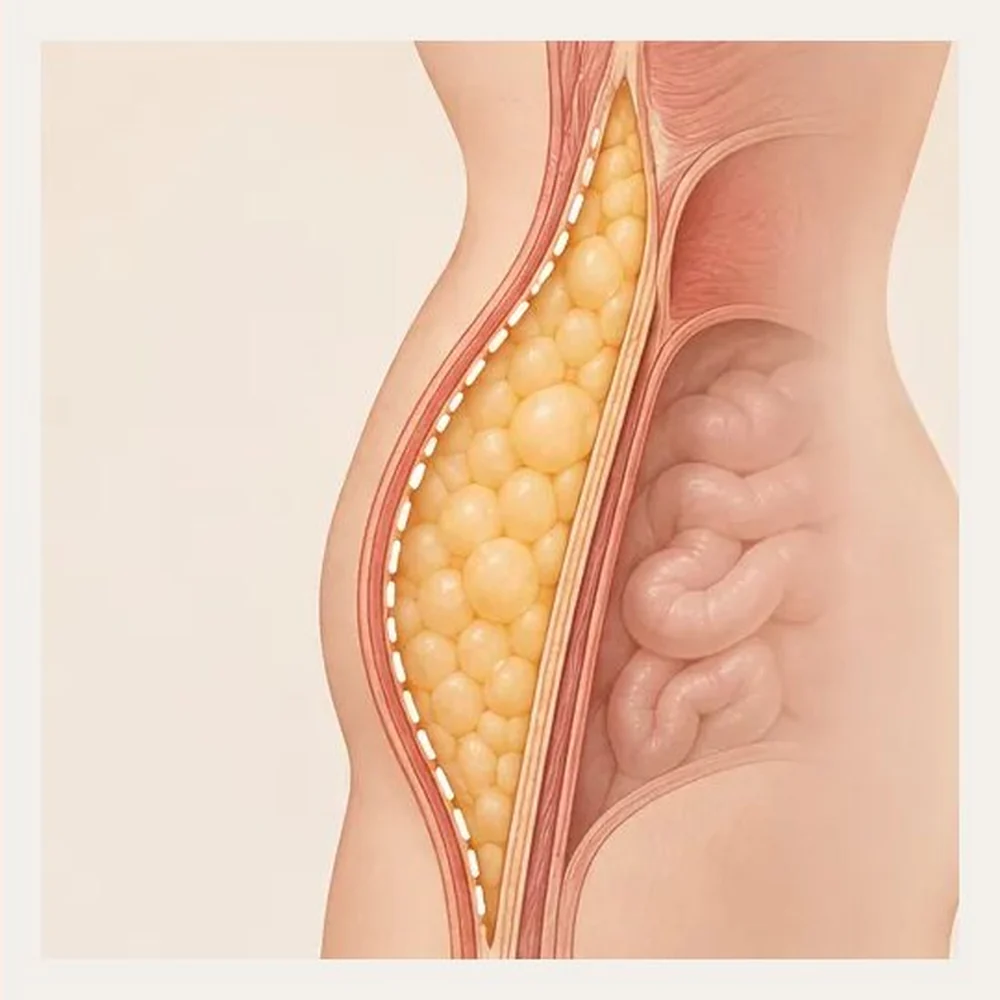
Removing only the fold beneath the bra line can reduce that fold. However, if fat extending above and below it across the back and flanks remains, a visible edge may form and make the area look more prominent.
Medically reviewed by Dr. Hyungwoo Yim, Medical Director (plastic surgery specialist) · Published November 12, 2026 · Last reviewed November 12, 2026
SHORT ANSWER
First, the Short Answer
- Removing only the fold beneath the bra line can reduce that fold. However, if fat extending above and below it across the back and flanks remains, a visible edge may form and make the area look more prominent.
- Back fat is firm because it contains substantial fibrous tissue, and its attachments to the skin vary by area. Treatment is therefore planned around the contours of the entire back, rather than a single line. As with liposuction elsewhere, it is not a weight-loss procedure.
- At VITAL Plastic Surgery, we assess fat thickness, skin elasticity, and differences between the two sides while you are standing. We then review your plans for weight changes, your health, and any related areas before defining the treatment area.
“Wouldn't removing just the fold beneath the bra line make my back smooth?”
This is a paraphrase of a question we often hear during consultations.
To answer this question, we first need to distinguish where your current concern comes from. We will explain each point below, then return to the original question at the end.
01Why is back fat hard to lose even with exercise?
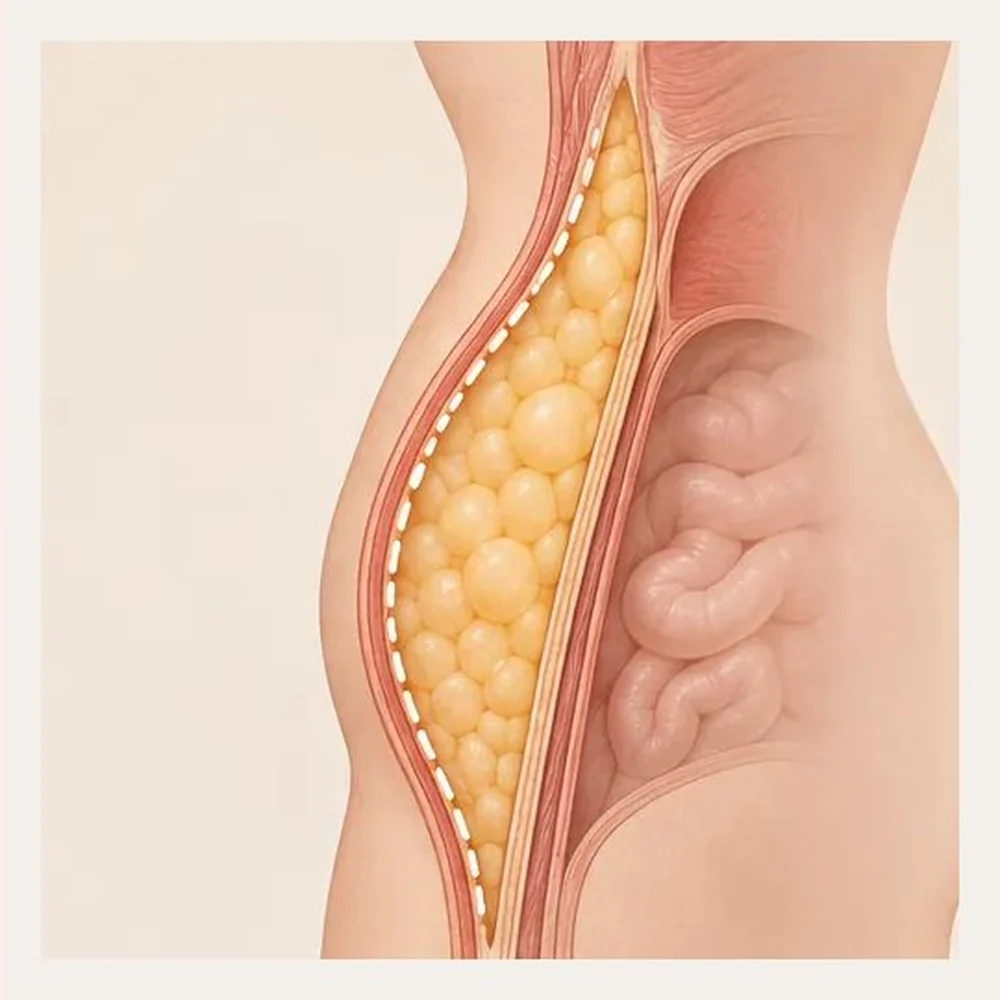
Answer The fibers connecting the skin and fascia in the back are dense in some areas and loose in others. This makes fat more likely to appear concentrated along certain lines rather than decrease evenly.

Common concerns include folds above and below the bra band, bulges behind the armpits, and fat sitting above the waist. During consultations, patients often tell us these areas remain even after they lose weight. Because the back is difficult to see yourself, many people first notice these areas in photos of themselves wearing clothes or in a mirror.
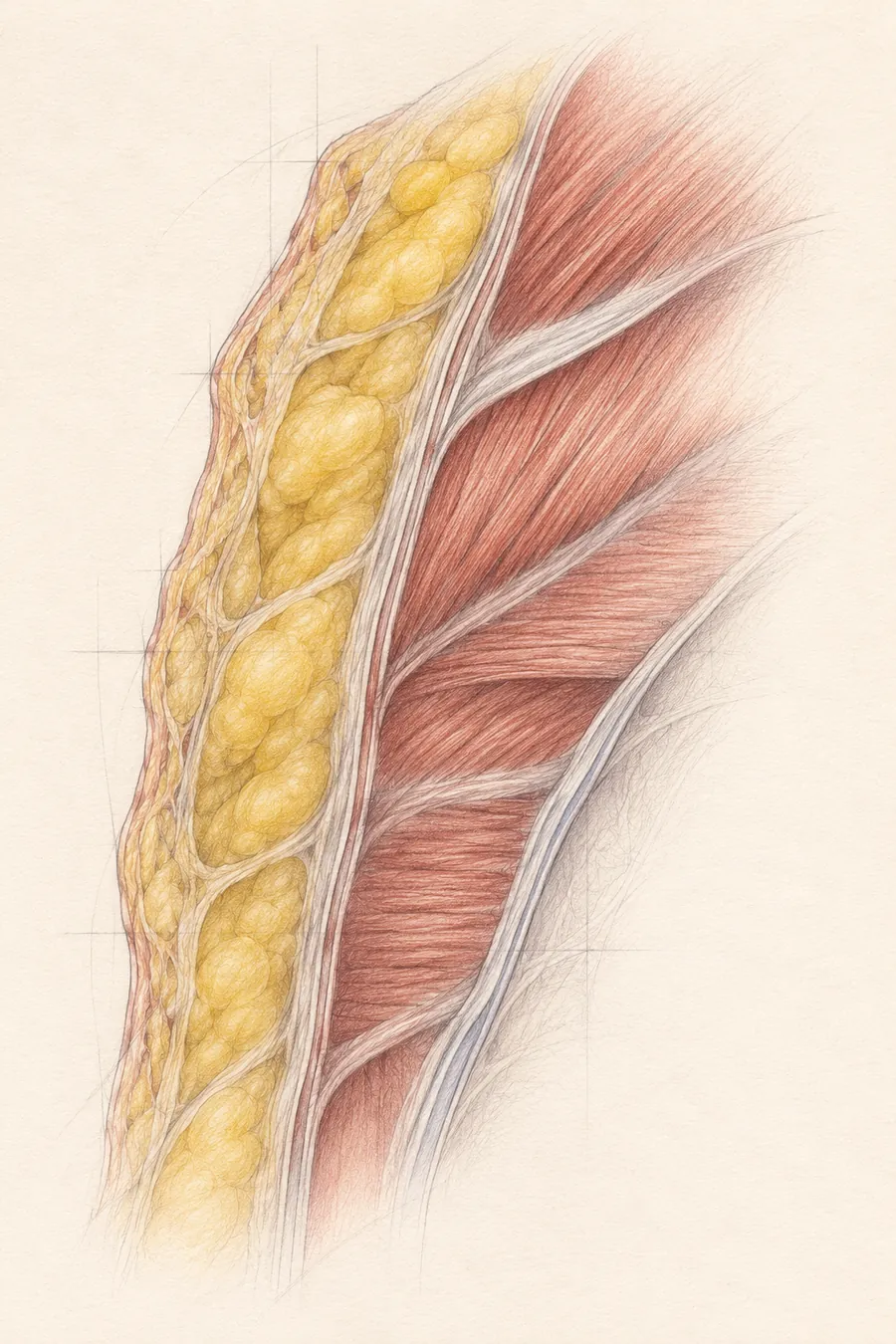
Between the layers of fat beneath the skin are thin sheets of tissue and bundles of fibers that connect the skin to the deep fascia, known as the superficial fascial system. A study that dissected the backs of 12 cadavers layer by layer found that these structures were dense around the shoulder blades and in a triangular area of the lower back, but loose below the shoulder blades. The researchers reported that these differences corresponded to patterns of back contour deformities seen in Asian female patients and proposed them as a basis for dividing the back into liposuction treatment areas1.
Simply put, fat gathers and folds where the fibers are loose, while densely attached areas form boundaries that create lines. Even fat that appears as a single line, such as a bra-line fold, is shaped by the structures both above and below it.
Back fat tends to be firmer and more fibrous than fat in the abdomen or thighs, making it harder to treat evenly during liposuction. On the back, where and how much fat is left behind matters as much as how much is removed.
This is why the location and depth of back folds vary from person to person, even at the same weight. During consultation, we assess you with your arms lowered and raised, ask which areas bother you when wearing clothes, and pinch the tissue to distinguish folds caused by fat from those caused by excess skin.
In Simple Terms Back fat is similar to the filling in a quilted jacket. Filling does not move easily in tightly stitched sections, while it can collect and bulge in loosely stitched sections. Removing too much filling from just one bulging section can leave it sunken, creating a step next to the adjacent section. We therefore first assess how each section is attached, then plan to remove more from prominent areas and less from the edges so the overall surface looks even.
So when is back liposuction appropriate?
02When is back liposuction appropriate?
Answer It is appropriate when your weight is stable but localized fat remains on the back, bra line, and flanks, and the skin has enough elasticity to contract after liposuction.
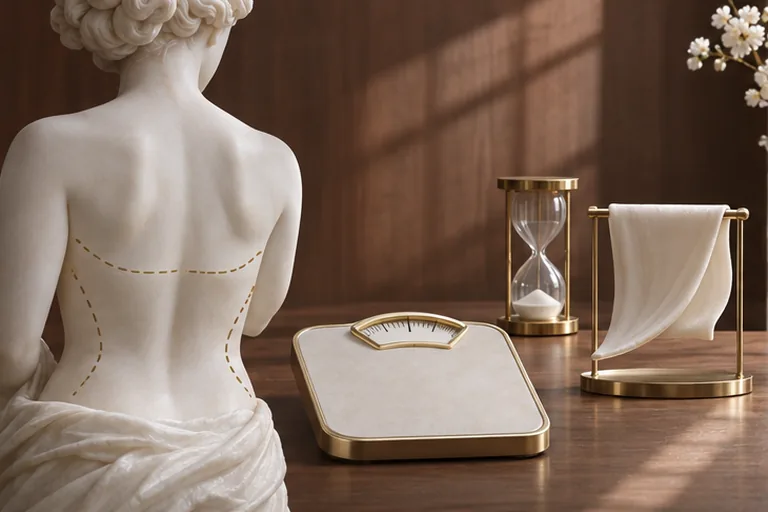
Liposuction is a procedure that uses a thin tube to remove prominent deposits of fat beneath the skin and refine body contours. VITAL Plastic Surgery treats the double chin, arms, accessory breast tissue, bra line, flanks, abdomen, back, and thighs. Because the back connects with the bra line and flanks, these areas are often discussed together.
Liposuction is not a weight-loss treatment, so we first determine whether weight loss should come first or localized contouring is appropriate. If the thickness of the back is related to overall body weight, areas that can be reduced through diet and exercise are excluded from the surgical treatment area.
We do not recommend proceeding directly with liposuction when the main goal is substantial weight loss or when significant skin laxity makes contour improvement unlikely with liposuction alone. Medical issues that require assessment first, such as diabetes, high blood pressure, or anticoagulant use, must also be reviewed before proceeding.
Many patients are also concerned about their upper arms or accessory breast tissue. The back, arms, and front of the armpits appear connected when wearing clothes, so we first identify which area bothers you most, then discuss how much to treat in one procedure.
- When your weight is stable but fat on the back and bra line persists
- When bra-line and flank fat bothers you when wearing clothes
- When you want to improve the balance between your left and right sides
- When the skin retains enough elasticity to contract after liposuction
- When you want an assessment of dents or unevenness after previous liposuction
So isn't removing just the bra-line fat enough?
03Isn't removing just the bra-line fat enough?
Answer Removing too much along a single line can create a visible edge above and below it. We therefore assess the contours extending from the bra line through the lower back and flanks when defining the treatment area.
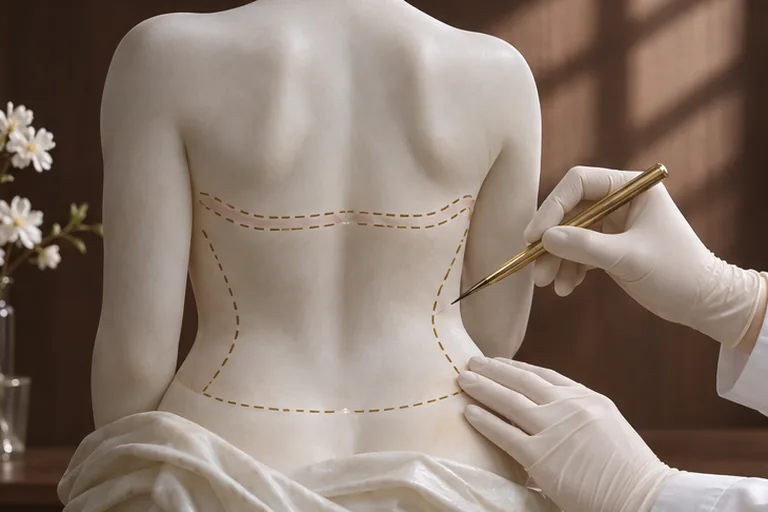
Bra-line fat extends from the middle of the back toward the armpits and downward toward the waist and flanks. Removing too much from just the fold can leave that area sunken while the fat above and below remains, creating a step-like appearance.
We therefore assess fat thickness and skin elasticity while you are standing and mark the treatment areas like contour lines on a map. The goal is to remove more from the most prominent areas and less from the edges so the contours blend naturally with surrounding areas.
The flanks and waistline connect with the abdomen when viewed from the front and with the back when viewed from behind. We assess both views to plan contours that look natural from either direction and decide which areas to treat together and which to treat separately.
Small access incisions are made in less noticeable locations. Their placement depends on the treatment area, and we also explain that small scars may remain.
When defining the treatment area, we go beyond a verbal description of your desired shape and identify which line bothers you most when wearing clothes. Whether it is the bra band or the elastic waistband affects which area receives the most attention.
| Back Condition | How it looks | What we look at first |
|---|---|---|
| Prominent bra-line fat | Folds above and below the bra band | Extent of fat above and below the fold, and skin elasticity |
| Fat extending to the flanks and waist | Fat sitting above the waistline | Whether to treat it with the abdomen or separately |
| Significant skin laxity | Thin fat layer with wrinkled skin | Liposuction alone is unlikely to help, so it is not recommended as an immediate next step |
| High overall body weight | Fullness throughout the body, including the back | Weight management comes first |
So what matters more than how much fat is removed?
04What matters more than how much fat is removed?
Answer Safety comes before the amount removed. Liposuction focuses on the deeper fat layer near the muscles, with caution around the shallow layer just beneath the skin.
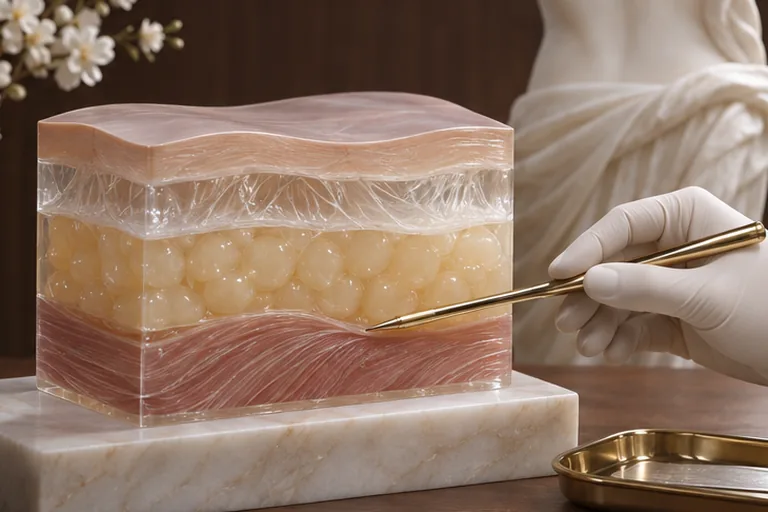
The more fat is removed, the greater the risk of excess skin and an uneven surface. Removing large amounts across a wide area in one procedure also increases systemic risks, including bleeding, fluid shifts, and blood clots. Before expanding the treatment area, we therefore determine what can reasonably be treated in a single surgery.
Before liposuction, a fluid containing medications, called tumescent solution, is injected into the fat layer to reduce bleeding and pain and aid fat removal. Through small access incisions, suction focuses on the deeper fat layer near the muscles, while the shallow layer and surface are checked by touch for evenness. This assessment is especially important with firm back fat.
A study analyzing 31,010 liposuction procedures in a U.S. cosmetic surgery complication registry found a major complication rate of 0.7% for liposuction alone. The risk of major complications was about 4.8 times higher when liposuction was combined with other procedures. Risk also increased with age and body mass index.2.
Although this study did not examine the back separately, it shows that treating a larger area and adding other procedures increases the burden. Whether to treat the back, arms, and abdomen together is therefore decided based on the total amount to be removed and your health.
The back is also difficult to compare from side to side on your own. Fat thickness may naturally differ between the two sides, so it is important to aim for a similar remaining thickness rather than removing the same amount. These differences are marked during the examination before surgery.
Possible problems after liposuction include bleeding, infection, contour irregularities, asymmetry, loose skin, and blood clots. This is not a complete list of possible risks. Risks may vary with your health, previous treatments, and the extent of surgery, and are explained in detail during the examination and informed consent process.
Will removing back fat cause weight gain elsewhere?
05Will removing back fat cause weight gain elsewhere?
Answer Liposuction reduces the number of fat cells in the treated area, but substantial weight gain can enlarge the remaining fat cells and increase fat in other areas.

Liposuction reduces the number of fat cells in the treated area. However, substantial weight gain after surgery can enlarge the remaining fat cells or cause fat to accumulate elsewhere, while rapid weight loss can make the skin look loose. That is why maintaining a stable weight before and after surgery is important.
A U.S. study measuring 301 cases of liposuction or abdominoplasty using standardized photographs found a clear reduction in the width of treated areas. Upper-body measurements did not differ between women who also had breast surgery and women who had breast surgery alone. No evidence of fat reaccumulation was seen in the 46 patients followed for at least one year.3.
However, these findings were from people whose weight did not change substantially. VITAL Plastic Surgery asks about planned weight changes in advance and considers both weight stability and adequate nutrition. Managing your weight using your postoperative contour as a baseline can help maintain the changes longer.
Because the back is difficult to see yourself, changes can be easy to miss until later. Keeping preoperative photographs as a baseline can help you compare which areas change first if your weight changes.
What if bumps or indentations develop after liposuction?
06What if uneven areas or dents develop after liposuction?
Answer The area may feel firm and uneven between 3 weeks and 3 months after surgery. Indentations that persist afterward are assessed for scar tissue adhesions and remaining fat before correction.
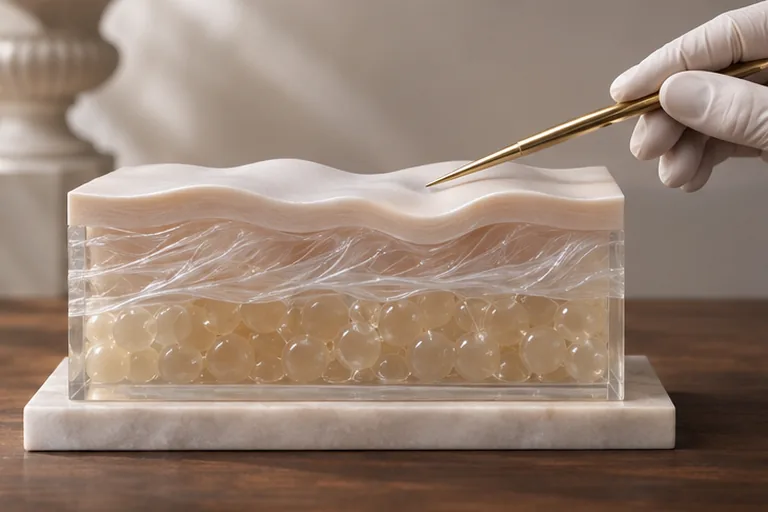
Between 3 weeks and 3 months after surgery, the treated area may become firm and feel uneven. These changes are often part of recovery, so we assess how the area changes between 3 months and 1 year, as the tissue softens.
If an indentation remains after that, we mark the indentation, scar tissue adhesions, and surrounding remaining fat while you are standing. Through a small nearby access point, we release the adhesions and smooth the surrounding fat. You can also have indentations evaluated after liposuction performed elsewhere.
Filler is sometimes used to smooth indentations, but the amount is limited to 10 cc, or at most 15 cc. If a large amount forms a ball-like lump in one spot, blood vessels may not grow into its center, which can lead to inflammation and infection.
The firm texture of back fat may remain noticeable to the touch for a while after liposuction. Even if early unevenness makes you want it corrected right away, assessment is more accurate after allowing time for the tissue to soften.
What does recovery look like?
07What does recovery involve?
Answer Swelling and bruising peak on days 3–4. The area becomes firm between 3 weeks and 3 months, and the contours settle over 3 months to 1 year.

Below is the typical recovery timeline provided by VITAL Plastic Surgery. Individual experiences vary. Recovery becomes more demanding as the treatment area increases or more areas are treated together.
After surgery, you will wear a compression garment to reduce swelling and help the skin adapt to the new contour. Instructions on how long to wear it depend on the area and extent of treatment. If it feels too tight or causes significant numbness or tingling, please let us know rather than putting up with it.
Because the back bears your weight when you lie down, lying down and getting up may be uncomfortable for the first few days. Reduced sensation or tingling often changes during recovery, but how long it lasts varies from person to person.
If you experience sudden severe pain, bleeding that will not stop, rapidly worsening swelling on one side, or signs of possible infection such as a high fever or pus, contact us immediately rather than waiting for your scheduled appointment.
| Timing | What Happens | What to Keep in Mind |
|---|---|---|
| 3–4 days after surgery | When swelling and bruising are pronounced | Gentle walking, adequate nutrition and hydration |
| Early After Surgery | Check wounds, infection, and fluid buildup | Compression garment: 24 hours a day for 2 weeks, then at least 12 hours a day for 4–6 weeks |
| 3 weeks–3 months | May feel firm and uneven | Avoid judging results too soon |
| 3 months–1 year | Tissue softens and contours settle | Significant weight changes also change the shape |
08Three things we check first during your consultation
What we assess first during consultation
- Whether weight loss should come first or localized contour correction is appropriate
- Treatment area and related skin changes — extension from the bra line to the flanks, and skin elasticity
- Recovery care and limitations — treating multiple areas together or separately, health, and medications
These are general care principles. The actual decision is made after an examination.
When other care is needed first We do not recommend proceeding right away if your main goal is substantial weight loss, or if significant skin laxity makes contour improvement with liposuction alone unlikely. If your medical history includes issues that need to be checked first, such as diabetes, high blood pressure, or anticoagulant use, that evaluation comes first.
The answer to the opening question, “Wouldn't removing just the fold below the bra line make my back smooth?” is this: the fold is formed by the back's fibrous structure together with the fat above and below it, so removing fat deeply along just one line may leave a visible edge. VITAL Plastic Surgery first assesses the contour from the bra line through the back and flanks, along with the skin's ability to contract, then determines the treatment area while considering the demands of recovery.
— VITAL Plastic Surgery
When booking, simply leave a note saying, “Please first assess whether my bra line and entire back should be treated together.” We will start with that during your consultation. Having a consultation does not mean you need to decide that day.
Related ReadingLiposuction · Body Contouring Care Guide
READ NEXT
Read Next
FAQ
Frequently Asked Questions
Is back liposuction a weight-loss procedure?
No. Weight loss and localized body contouring have different goals. We first assess your health, skin laxity, and the appropriate extent of contouring.
Can just the bra line be treated?
If fat is prominent only along the bra line, with little fat extending into surrounding areas, treatment can be limited to that area. If fat also extends above and below it, we discuss whether to expand the treatment area to avoid creating a visible edge.
Can the back, arms, and flanks be treated at the same time?
Treating larger areas increases bleeding, blood clot risks, and the demands of recovery, so the decision depends on the total amount to be removed and your health. If treating everything at once would be too much, the areas are treated in separate procedures. Separating procedures is often preferable to support normal recovery.
Will I gain fat elsewhere after liposuction?
Liposuction reduces the number of fat cells in the treated area, but significant weight gain can enlarge the remaining fat cells and fat deposits elsewhere. Keeping your weight stable before and after surgery is important.
Can I travel from overseas for surgery?
There is no fixed length of stay for liposuction. After assessing the treatment area and your health, we plan a schedule that includes stitch removal and the first follow-up visit.
BEFORE CONSULTATION
What to Prepare Before Your Consultation
- Weight Changes and PlansBring a record of your weight changes over the past year and your future weight-loss plans. Treatment is planned when your weight is stable.
- Areas of ConcernTell us which area concerns you most when wearing clothes: the bra line, behind the armpits, or above the waist.
- Previous Procedures and SurgeriesIf you have had liposuction, fat-dissolving injections, or similar treatments, tell us when and which areas were treated.
- Health conditions and medicationsTell us about diabetes, high blood pressure, blood clot risks, and all medications you take. We recommend stopping herbal medicines and supplements such as omega-3s when possible because they can increase bleeding tendencies.
- Recovery TimelineIt helps to clear your schedule with the first few days of pronounced swelling and bruising and the compression garment period in mind.
REFERENCES
References
- Si L, Li H, Li Z, et al. The Superficial Fascia System: Anatomical Guideline for Zoning in Liposuction-Assisted Back Contouring. Plastic and Reconstructive Surgery. 2023. doi:10.1097/PRS.0000000000010077 (View abstract)
- Kaoutzanis C, Gupta V, Winocour J, et al. Cosmetic Liposuction: Preoperative Risk Factors, Major Complication Rates, and Safety of Combined Procedures. Aesthetic Surgery Journal. 2017. doi:10.1093/asj/sjw243 (View abstract)
- Swanson E. Photographic measurements in 301 cases of liposuction and abdominoplasty reveal fat reduction without redistribution. Plastic and Reconstructive Surgery. 2012. doi:10.1097/PRS.0b013e3182589ef7 (View abstract)
The findings in these papers reflect the participants and conditions of each study and do not mean that every individual will have the same results.
This article provides general medical information and does not replace diagnosis or treatment. Surgical results and recovery vary by individual, and complications such as bleeding, infection, scarring, and asymmetry may occur.
More articlesVITAL Plastic Surgery Medical Articles
RESERVATION
You do not need to decide the day of your consultation.
Organize questions about this page without entering your name, contact information, or medical history. This does not submit an appointment request.