PLASTIC SURGERY
MEDICAL COLUMN
Questions Answered Directly by the Doctor Before You Decide on Surgery
Body
Articles
Abdominal Liposuction: Can It Fully Flatten a Protruding Abdomen?
If your belly protrudes because of subcutaneous fat you can pinch, abdominal liposuction can reduce its contour. However, visceral fat cannot be removed by liposuction, so the fullness it causes will remain.
Medically reviewed by Dr. Hyungwoo Yim, Medical Director (board-certified plastic surgeon) · Published November 2, 2026 · Last reviewed November 11, 2026
SHORT ANSWER
First, the Short Answer
- If your belly protrudes because of subcutaneous fat you can pinch, abdominal liposuction can reduce its contour. However, visceral fat cannot be removed by liposuction, so the fullness it causes will remain.
- If pregnancy or weight changes have stretched the skin or separated the abdominal muscles, removing fat alone may not improve the contour enough. In these cases, we also compare a tummy tuck with a tummy tuck combined with liposuction.
- At VITAL Plastic Surgery, we pinch the skin to assess fat thickness and skin elasticity, then check for abdominal muscle separation, scars from previous surgery, weight goals, and overall health before deciding on the approach and treatment area.
“Will abdominal liposuction fully flatten my protruding belly?”
This is a paraphrase of a question we often hear during consultations.
To answer this question, we first need to distinguish where your current concern comes from. We will explain each point below, then return to the original question at the end.
01What causes a belly to protrude?
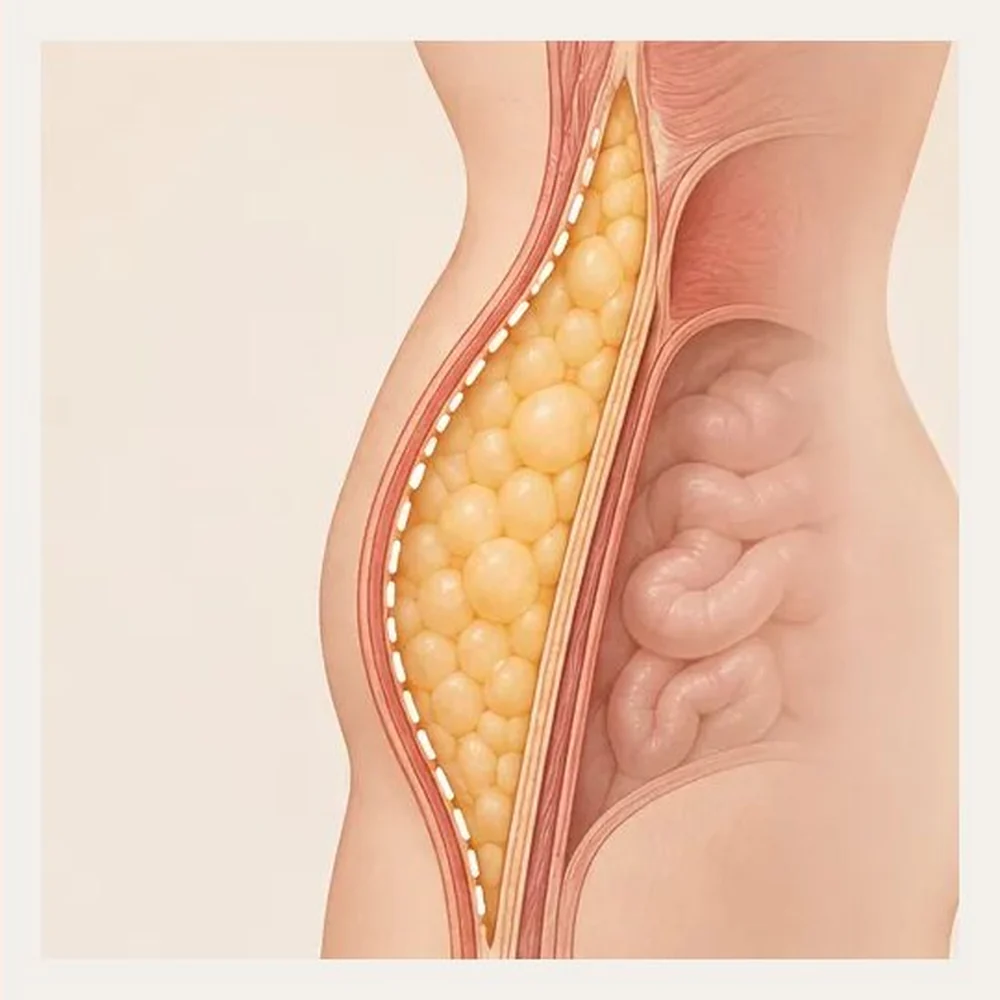
Answer Subcutaneous fat, visceral fat, stretched skin, and separated abdominal muscles can contribute individually or together. Of these, only subcutaneous fat can be reduced with liposuction.

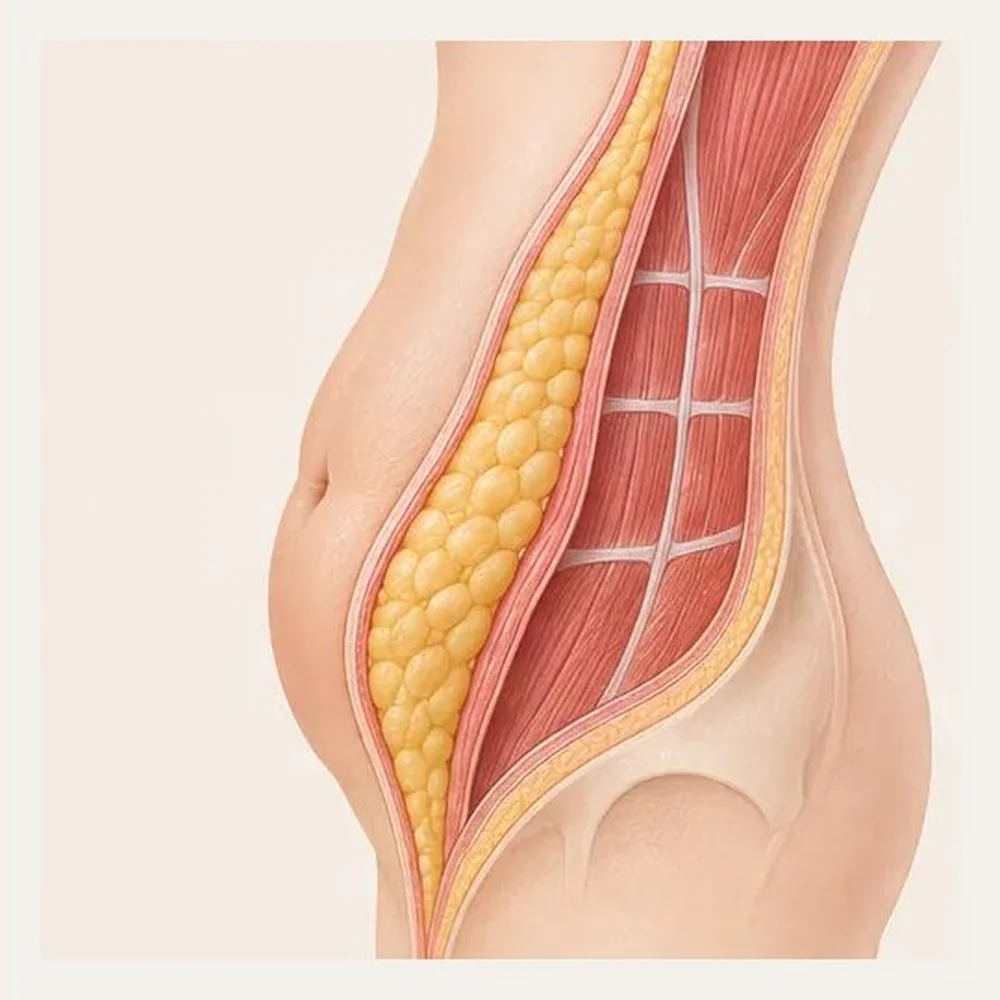
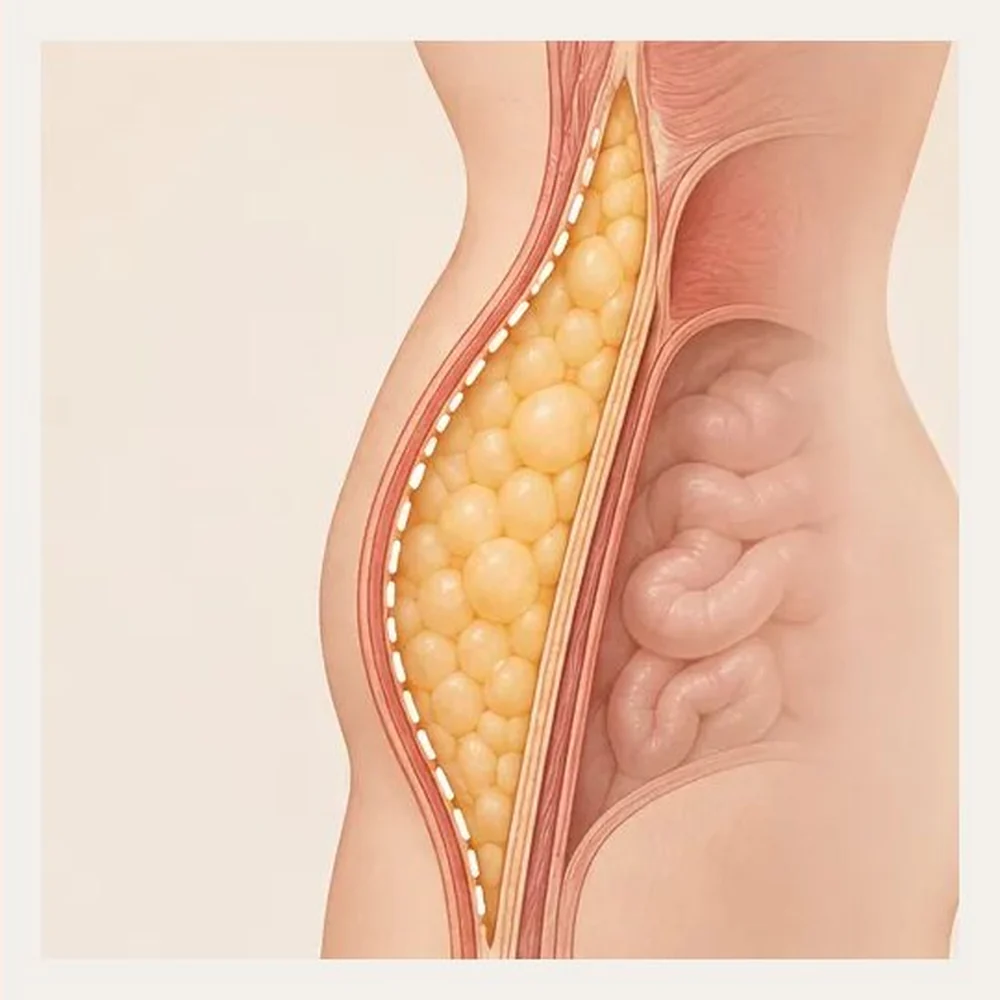
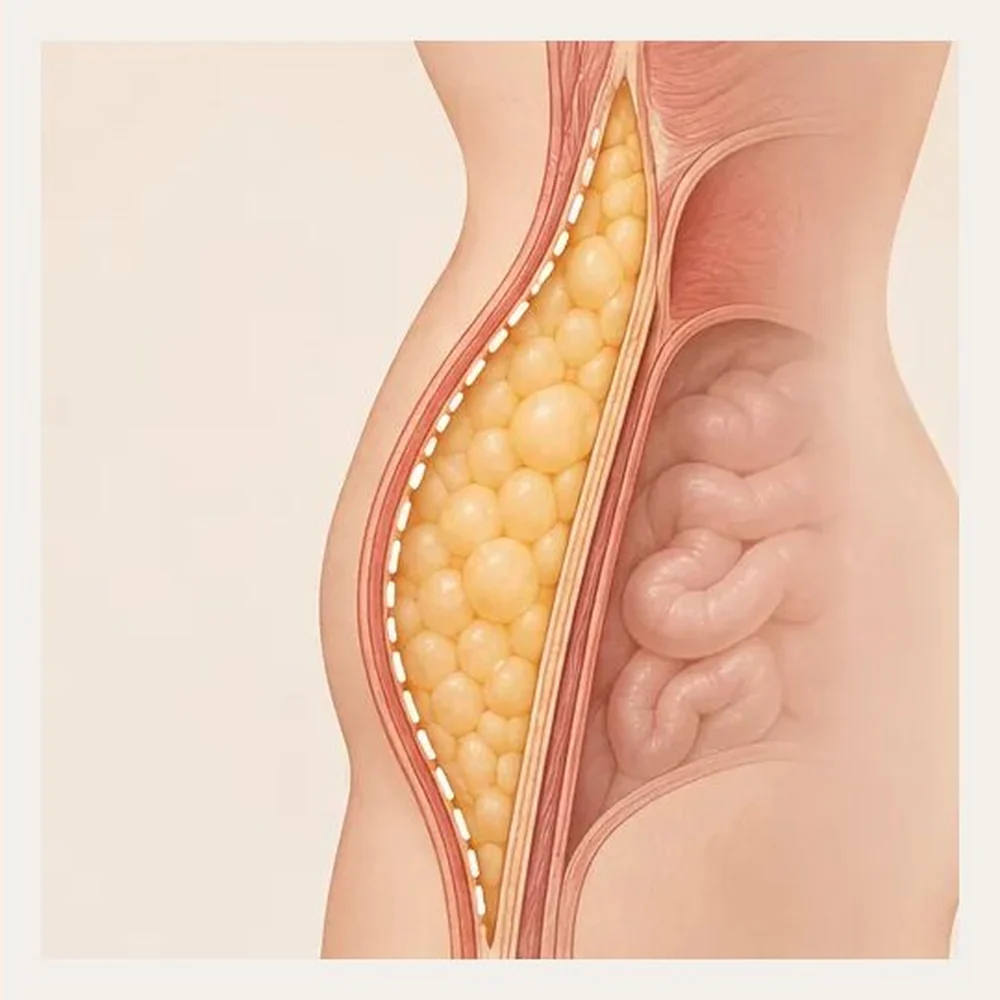
The abdomen has several layers. The skin is on the outside, followed by the subcutaneous fat you can pinch, then the abdominal wall that supports the abdomen—the abdominal muscles and the tissue covering them—and visceral fat between the organs inside the abdominal wall. A protruding belly may be caused by one of these factors or a combination of several.
Liposuction can remove subcutaneous fat, but it does not target visceral fat. Visceral fat lies inside the abdominal wall, beyond the reach of the cannula. For this reason, we do not recommend proceeding directly with abdominal liposuction when visceral fat or an abdominal wall issue is the main cause of the protrusion.
After pregnancy or major weight changes, the skin and abdominal muscles also need to be assessed. If pregnancy widens the gap between the left and right abdominal muscles along the midline (diastasis recti), a bulge along the center when you engage your abdominal muscles may suggest this separation. In this case, the abdomen may still protrude even after fat is removed.
The table below outlines the features assessed during consultation to distinguish these causes. Many people have two or more contributing factors, so identifying the main one is the starting point for planning.
| Cause | How it looks | What we consider first |
|---|---|---|
| Subcutaneous Fat | A thick layer of fat can be pinched, while the skin is firm | Abdominal Liposuction |
| Stretched skin | The skin is wrinkled and sags downward | Tummy tuck alone or combined with liposuction |
| Abdominal muscle separation | The midline bulges when the abdomen is tensed | Tummy tuck to tighten the abdominal wall |
| Visceral fat | Little fat can be pinched, but the belly is firm and protrudes | Weight and health management first |
In Simple Terms The abdomen is like a suitcase. A suitcase may bulge because of items in its outer pocket (subcutaneous fat), items packed deep inside (visceral fat), stretched fabric (skin), an open zipper (abdominal muscle separation), or a combination of these. Liposuction removes items from the outer pocket; it cannot remove what is inside, and the stretched fabric or open zipper remains. That is why we first look inside to see what is where, then decide whether to remove items, reduce the fabric, or repair the zipper.
Does abdominal liposuction also improve metabolism?
02Does abdominal liposuction also improve metabolism?
Answer No. Abdominal liposuction is a contouring procedure and does not replace the metabolic improvements that come with weight loss.

Some people expect removing abdominal fat to improve their health as well. A U.S. study evaluated 15 women with obesity 10–12 weeks after liposuction to reduce abdominal subcutaneous fat. Abdominal subcutaneous fat volume decreased by 44% in participants with normal glucose metabolism and by 28% in those with diabetes. Body fat also decreased by about 18–19%, but measures such as insulin action, blood pressure, blood glucose, and blood lipids did not change significantly1.
The researchers concluded that reducing the amount of fat tissue alone does not provide the metabolic benefits of weight loss1. It is helpful to be clear that abdominal liposuction is a contouring procedure, rather than a treatment to improve health.
For this reason, VITAL Plastic Surgery does not recommend proceeding directly with liposuction when substantial weight loss is the main goal. We recommend first reducing what can be addressed through diet and exercise, excluding those areas from the surgical plan, and then treating localized fat that remains once weight is stable.
This study had few participants and a short follow-up period, so its findings cannot be applied directly to everyone. However, it illustrates the distinction between surgery to remove abdominal fat and changes that improve overall health, helping set expectations before surgery.
Can liposuction treat a belly with loose skin?
03Can liposuction treat a belly with loose skin?
Answer Liposuction may be sufficient if the skin can contract, but skin that is already stretched and wrinkled may remain after liposuction alone.

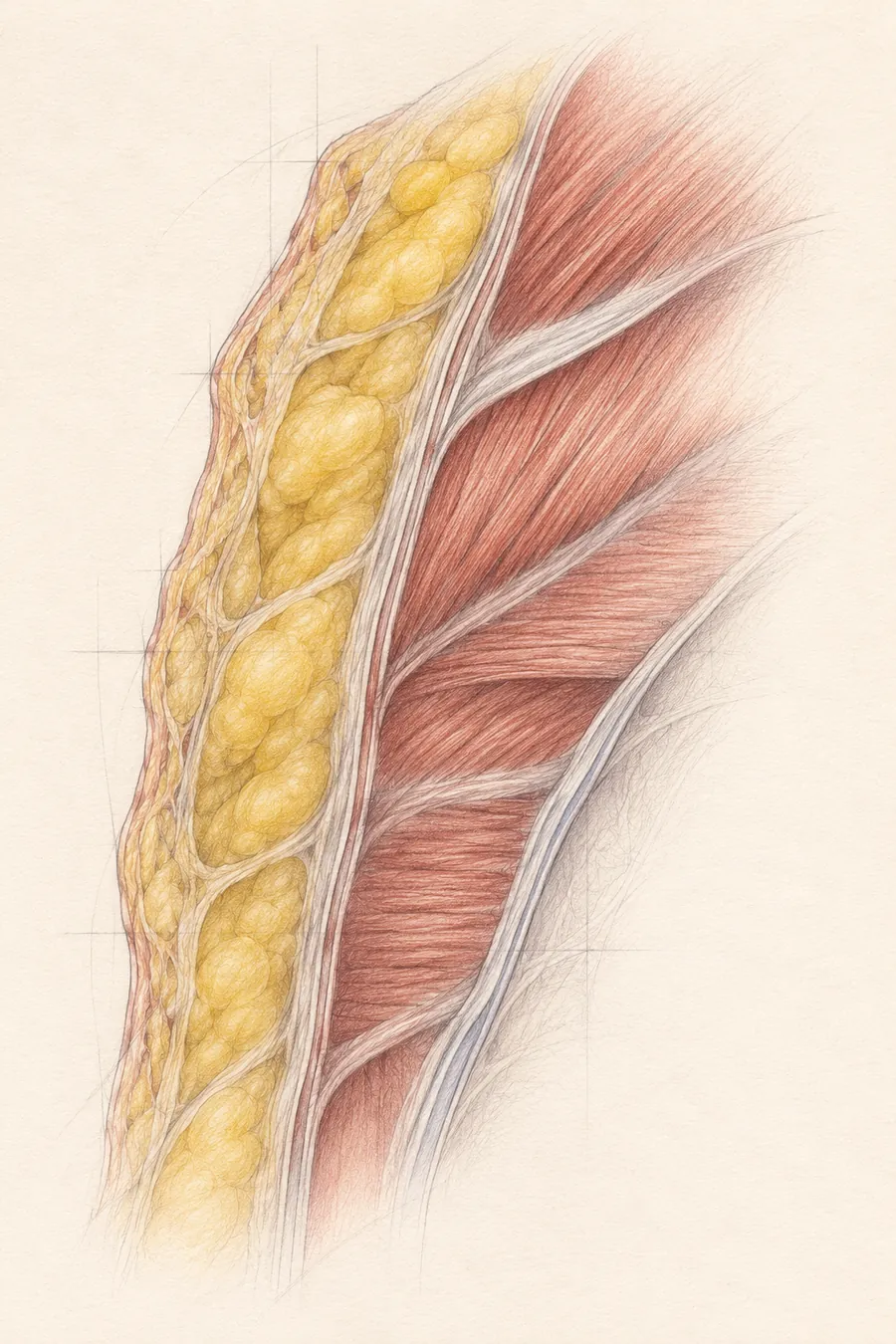
If the skin can contract after fat removal, liposuction may be sufficient. If pregnancy or weight changes have already stretched the skin, wrinkled skin may remain after liposuction alone. This distinction is especially significant in the abdomen, so VITAL Plastic Surgery also compares a tummy tuck with a tummy tuck combined with liposuction.
A tummy tuck removes stretched abdominal skin and the fat beneath it, then pulls the remaining skin downward and sutures it closed. If needed, the gap between separated abdominal muscles is tightened as well. Removing skin directly leaves a long horizontal scar above the pubic area. We pinch and assess the skin to determine whether an approach with less scarring or one that addresses excess skin is more appropriate.
In the previously mentioned photographic measurement study of 301 cases, abdominal width at the level of the navel and hip width decreased more with abdominoplasty combined with liposuction than with liposuction alone3. This means liposuction alone may not meet expectations when the skin and abdominal wall also need to be addressed.
Conversely, if the skin is firm and the only issue is a thick layer of fat, liposuction is more appropriate than a tummy tuck with its long scar. This is why skin condition can change the choice of procedure, even when both concerns are described as “belly fat.”
How is the amount of fat to remove determined?
04How is the amount of fat to remove determined?
Answer Removing more fat does not necessarily make the procedure better. We first establish an appropriate scope for a single operation, then determine the amount to remove while considering skin laxity.
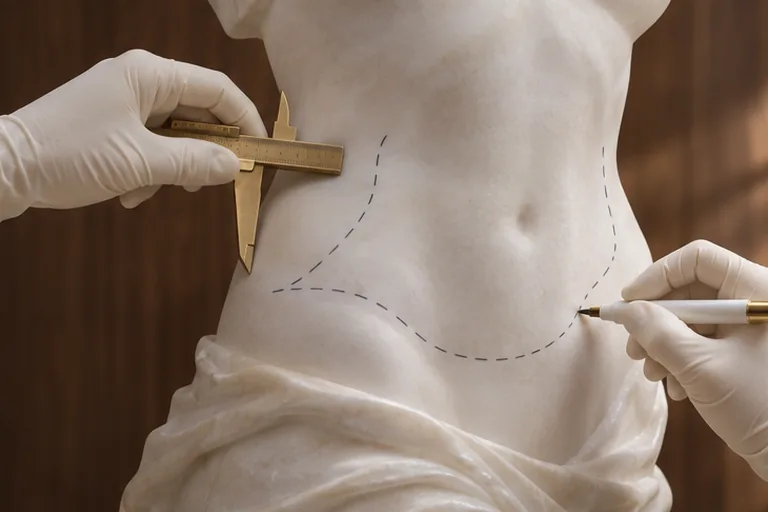
The more fat is removed, the greater the risk of excess skin and an uneven surface. Removing large amounts across a wide area in one procedure also increases systemic risks, including bleeding, fluid shifts, and blood clots. Before expanding the treatment area, we therefore determine what can reasonably be treated in a single surgery.
When fat is prominent in the abdomen and flanks, we assess fat thickness and skin elasticity while you are standing and mark the treatment area with contour lines. Small access incisions are made in less noticeable locations, and a medicated fluid (tumescent solution) is infused to reduce bleeding and pain. Fat is then suctioned primarily from the deep layer near the muscles. The shallow layer just beneath the skin is treated carefully because excessive removal can create an uneven surface, and we check the contour by touch.
Large-scale data also show that treatment extent and combined procedures affect risk. A U.S. study analyzing 31,010 liposuction procedures found a major complication rate of 0.7% with liposuction alone. When liposuction was combined with other procedures, the risk of major complications was about 4.8 times higher, and risk increased with age and body mass index4.
For this reason, even if you would like your abdomen, flanks, back, and thighs treated at once, the plan depends on the total amount to be removed and your health. If treating everything at once would be too taxing, we divide treatment into separate procedures. Staging treatment is often preferable to support normal recovery.
Fillers are sometimes used to smooth out depressions after liposuction, but the amount used is 10 cc, or at most 15 cc. If a large amount forms a ball-like lump in one spot, blood vessels may not reach the center, which can lead to inflammation and infection. Avoiding excessive fat removal in the first place can also reduce the need for these corrections.
Can fat return to the abdomen after liposuction?
05Can I gain fat in my abdomen again after liposuction?
Answer Liposuction reduces the number of fat cells in the treated area, but the remaining fat cells and fat in other areas can enlarge with weight gain, so maintaining a stable weight is important.

Research findings on this question are mixed. A U.S. study randomly assigned 32 women who were not obese to either small-volume liposuction of areas with prominent fat in the lower abdomen, hips, or thighs, or no surgery, and compared the groups for 1 year. The difference in body fat percentage seen 6 weeks after liposuction had disappeared by 1 year, and fat had accumulated again in the abdomen. The thighs maintained their reduction2.
In contrast, a study that used photographs to measure 301 cases found no evidence of fat returning or shifting to the upper body among 46 patients followed for at least 1 year3. Differences in study populations and measurement methods appear to account for the conflicting findings, so it is difficult to draw a firm conclusion either way.
What is clear is that substantial weight gain can enlarge the remaining fat cells and cause fat to accumulate in other areas. That is why VITAL Plastic Surgery asks about your weight-change plans in advance and works with you to plan for a stable weight before and after surgery. The abdomen is an area where weight changes are especially visible.
Fat removed during liposuction can also be transferred to areas that lack volume. However, only some of the transferred fat survives, and uneven contours can develop, so we assess each area and the amount needed separately. Treating several areas at once increases the recovery burden, so we also decide together whether to perform the procedures on the same day.
What needs to be checked before abdominal liposuction?
06What needs to be checked before abdominal liposuction?
Answer We first check for abdominal muscle separation, hernias, scars from previous abdominal surgery, diabetes, high blood pressure, blood clot risk, and medications you take.

The abdomen requires more assessment than other areas. Abdominal muscle separation or a hernia can create weak areas in the abdominal wall and change the liposuction plan, so we check for these during the examination. Scars from previous abdominal surgery, such as a C-section, can also affect the underlying tissue and blood flow, so please tell us about your surgical history.
We also review your overall health. We first check for diabetes, high blood pressure, blood clot risk, and medications such as anticoagulants. If your medical history requires further evaluation, that comes first. We recommend stopping herbal medicines and supplements such as omega-3s whenever possible because they may increase bleeding.
Smoking affects wound healing, so we advise stopping before surgery. Surgery is planned when your weight is stable, and the timing is adjusted if you plan to become pregnant soon. This is because pregnancy can stretch the abdominal skin and abdominal wall again.
During the consultation, we assess fat thickness and skin elasticity while you are standing, and check whether the middle of your abdomen bulges when you tense your abdominal muscles. Pinching the skin helps us estimate whether excess skin will remain after fat removal. Deciding how much fat to remove without these assessments can leave a shape that differs from your expectations.
- Whether the abdominal bulge is caused by subcutaneous fat, visceral fat, or an abdominal wall problem
- Skin elasticity and excess skin — whether liposuction alone is sufficient or a comparison with a tummy tuck is needed
- Abdominal muscle separation, hernias, and scars from previous abdominal surgery
- Diabetes, high blood pressure, blood clot risk, and medications
- Plans for weight changes and pregnancy
What does recovery look like?
07What does recovery involve?
Answer Swelling and bruising peak on days 3–4. The area becomes firm between 3 weeks and 3 months, and the contours settle over 3 months to 1 year.

After surgery, you will wear a compression garment that applies pressure to the treated area to reduce swelling and help the skin adapt to its new contours. Wear it 24 hours a day for the first 2 weeks after surgery, then at least 12 hours a day for the next 4–6 weeks. Early follow-up includes checking the wounds and looking for signs of infection or fluid buildup.
Between 3 weeks and 3 months, treated areas may become firm and feel uneven. This is often part of recovery, so we assess changes over 3 months to 1 year as the tissue softens. If depressions remain after that, we can assess scar tissue adhesions and remaining fat and discuss correction.
The following is a typical timeline, and individual recovery varies. If you experience sudden severe pain, bleeding that does not stop, or rapidly worsening swelling on only one side, contact us right away without waiting for your scheduled appointment.
The timing of your return to daily activities depends on the extent of treatment and your individual recovery. During the first few days, gentle walking, adequate nutrition, and hydration are recommended. Avoiding prolonged bed rest also helps reduce the risk of blood clots in the legs. We will advise you on when to resume exercise based on your recovery.
| Timing | What Happens | What to Keep in Mind |
|---|---|---|
| 3–4 days after surgery | When swelling and bruising are pronounced | Gentle walking, adequate nutrition and hydration |
| Early After Surgery | Check wounds, infection, and fluid buildup | Compression garment: 24 hours a day for 2 weeks, then at least 12 hours a day for 4–6 weeks |
| 3 weeks–3 months | May feel firm and uneven | Avoid judging results too soon |
| 3 months–1 year | Tissue softens and contours settle | Significant weight changes also change the shape |
08Three things we check first during your consultation
What we assess first during consultation
- Whether weight loss should come first or localized contouring is appropriate — distinguishing subcutaneous fat from visceral fat
- Treatment areas and resulting skin changes — skin elasticity, abdominal muscle separation, and comparison with a tummy tuck
- Recovery care and limitations — whether to treat multiple areas together, health conditions, and medications
These are general care principles. The actual decision is made after an examination.
When other care is needed first Liposuction is not the first step if your main goal is substantial weight loss or if your abdominal bulge is mainly caused by visceral fat or an abdominal wall problem. If significant loose skin makes contour improvement with liposuction alone unlikely, we compare it with a tummy tuck. If your medical history requires evaluation first, such as diabetes, high blood pressure, or anticoagulant use, that evaluation comes first.
The answer to the opening question, “Will abdominal liposuction completely flatten my protruding abdomen?” is this: if the cause is subcutaneous fat you can pinch, it can be reduced. But if the cause is visceral fat, loose skin, or separated abdominal muscles, liposuction alone may not flatten the abdomen as much as you expect. VITAL Plastic Surgery first identifies the cause of the abdominal bulge, then works with you to decide whether liposuction, a tummy tuck, or weight management should come first.
— VITAL Plastic Surgery
When booking, simply leave a note saying, “Please first assess what is causing my abdominal bulge,” and we will start there during your consultation. You do not need to make a decision on the day of your consultation.
Related ReadingLiposuction · Body Contouring Care Guide
READ NEXT
Read Next
FAQ
Frequently Asked Questions
Is liposuction a weight-loss surgery?
No. Weight loss and localized body contouring have different goals. We first assess your health, skin laxity, and the appropriate extent of contouring.
Can it remove visceral fat too?
Liposuction can remove subcutaneous fat, but it does not target visceral fat. If visceral fat is the main reason your belly protrudes, weight and health management come first.
Can I have a tummy tuck if I have a C-section scar?
Scars from previous surgery can affect the underlying tissue and blood supply, so they are assessed during your examination. Be sure to tell us about your surgical history.
Can I have my abdomen, flanks, and thighs treated at once?
Treating a larger area increases bleeding, blood clot risks, and the demands of recovery, so the decision depends on the total amount to be removed and your health. If treating both would be too much, the areas are treated in separate procedures.
What if the area looks uneven after liposuction?
The area may feel firm and uneven between 3 weeks and 3 months, so we first monitor how it heals. If indentations remain afterward, we assess scar tissue adhesions and remaining fat and discuss correction.
BEFORE CONSULTATION
What to Prepare Before Your Consultation
- Weight Changes and PlansTell us about recent weight changes, future weight-loss plans, and pregnancy plans.
- Previous Abdominal SurgeryIf you have had a C-section, laparoscopic surgery, hernia repair, or other abdominal surgery, bring a written list with the dates.
- Health conditions and medicationsBe sure to tell us about diabetes, high blood pressure, blood clot risk, anticoagulants, herbal medicines, and supplements such as omega-3.
- The Shape That Concerns You MostThink about which area concerns you most—the lower abdomen, upper abdomen, or flanks—and consider how it looks when standing and when sitting.
- Recovery Schedule and Quitting SmokingClear your schedule with the first few days of pronounced swelling and bruising and the compression garment period in mind, and stop smoking before surgery.
REFERENCES
References
- Klein S, Fontana L, Young VL, et al. Absence of an effect of liposuction on insulin action and risk factors for coronary heart disease. The New England Journal of Medicine. 2004. doi:10.1056/NEJMoa033179 (View abstract)
- Hernandez TL, Kittelson JM, Law CK, et al. Fat redistribution following suction lipectomy: defense of body fat and patterns of restoration. Obesity (Silver Spring). 2011. doi:10.1038/oby.2011.64 (View abstract)
- Swanson E. Photographic measurements in 301 cases of liposuction and abdominoplasty reveal fat reduction without redistribution. Plastic and Reconstructive Surgery. 2012. doi:10.1097/PRS.0b013e3182589ef7 (View abstract)
- Kaoutzanis C, Gupta V, Winocour J, et al. Cosmetic Liposuction: Preoperative Risk Factors, Major Complication Rates, and Safety of Combined Procedures. Aesthetic Surgery Journal. 2017. doi:10.1093/asj/sjw243 (View abstract)
The findings in these papers reflect the participants and conditions of each study and do not mean that every individual will have the same results.
This article provides general medical information and does not replace diagnosis or treatment. Surgical results and recovery vary by individual, and complications such as bleeding, infection, scarring, and asymmetry may occur.
More articlesVITAL Plastic Surgery Medical Articles
RESERVATION
You do not need to decide the day of your consultation.
Organize questions about this page without entering your name, contact information, or medical history. This does not submit an appointment request.